

Hyaluronic acid has owned the hydration category for more than a decade, but a lesser-known ingredient is gaining on it. Polyglutamic acid, or PGA, binds up to 5,000 times its weight in water. That’s roughly five times the 1,000 figure hyaluronic acid built its reputation on. If your skin still feels tight and looks dull no matter how many serums you stack, this fermented-soybean derivative may be the piece your routine is missing. A growing number of dermatologists expect PGA to shape the hydration conversation in 2026, and the reasons are worth understanding.
What Is Polyglutamic Acid?
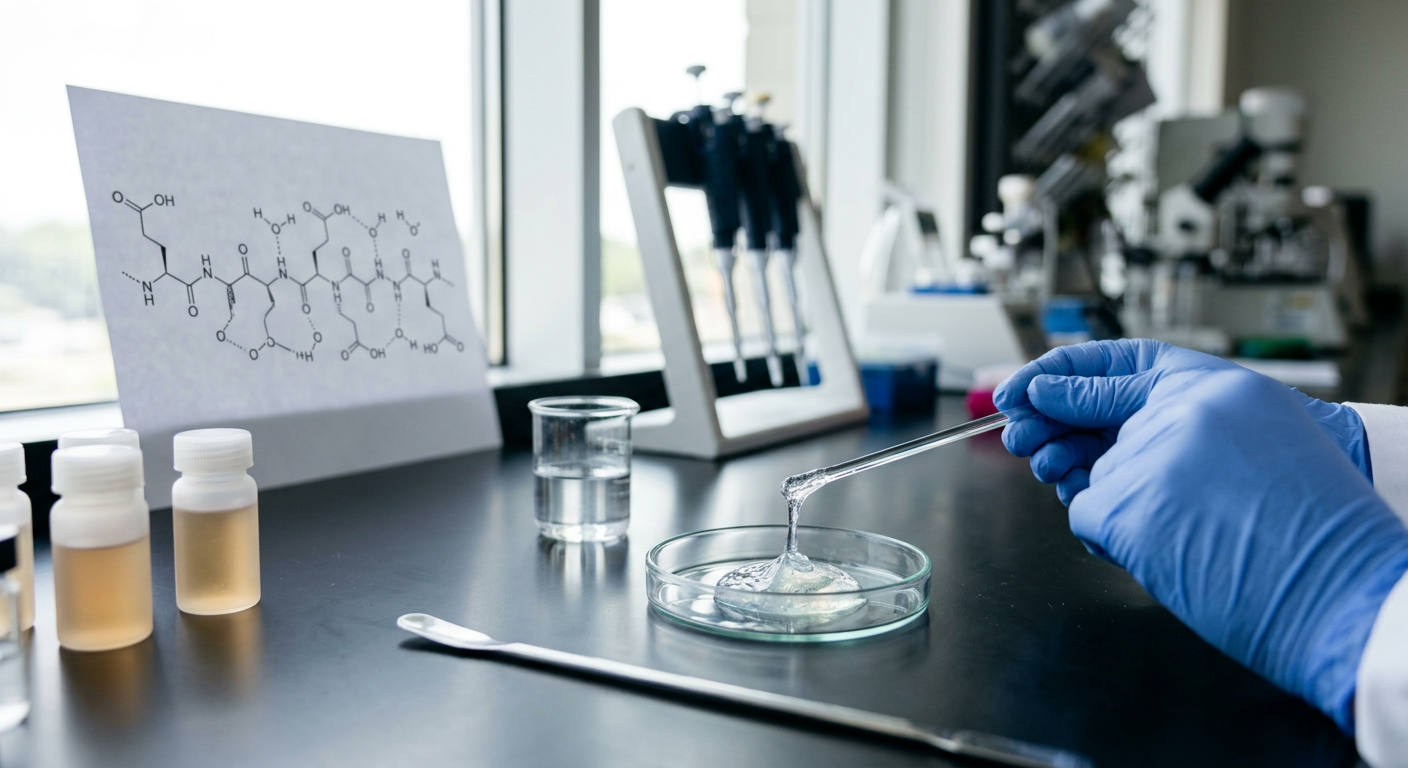
Polyglutamic acid is a water-soluble peptide built from repeating units of the amino acid glutamic acid. It comes from nattō, a traditional Japanese dish of fermented soybeans, and was a fixture in Japanese skincare long before it reached Western shelves.
Its high molecular weight is what makes it useful. PGA forms a lightweight film on the skin’s surface, so it works as a humectant (an ingredient that attracts water) and as a film-forming moisturizer that holds that water in place.
“In skincare, it is used mainly as a humectant and film-forming moisturising ingredient, helping to attract and retain water in the superficial layers of the skin,” explains Dr. Jason Thomson, consultant dermatologist and head of medical at Skin+Me, in Harper’s Bazaar. The “acid” label is misleading: PGA does not exfoliate the way glycolic or salicylic acid does.
How Polyglutamic Acid Works on Your Skin
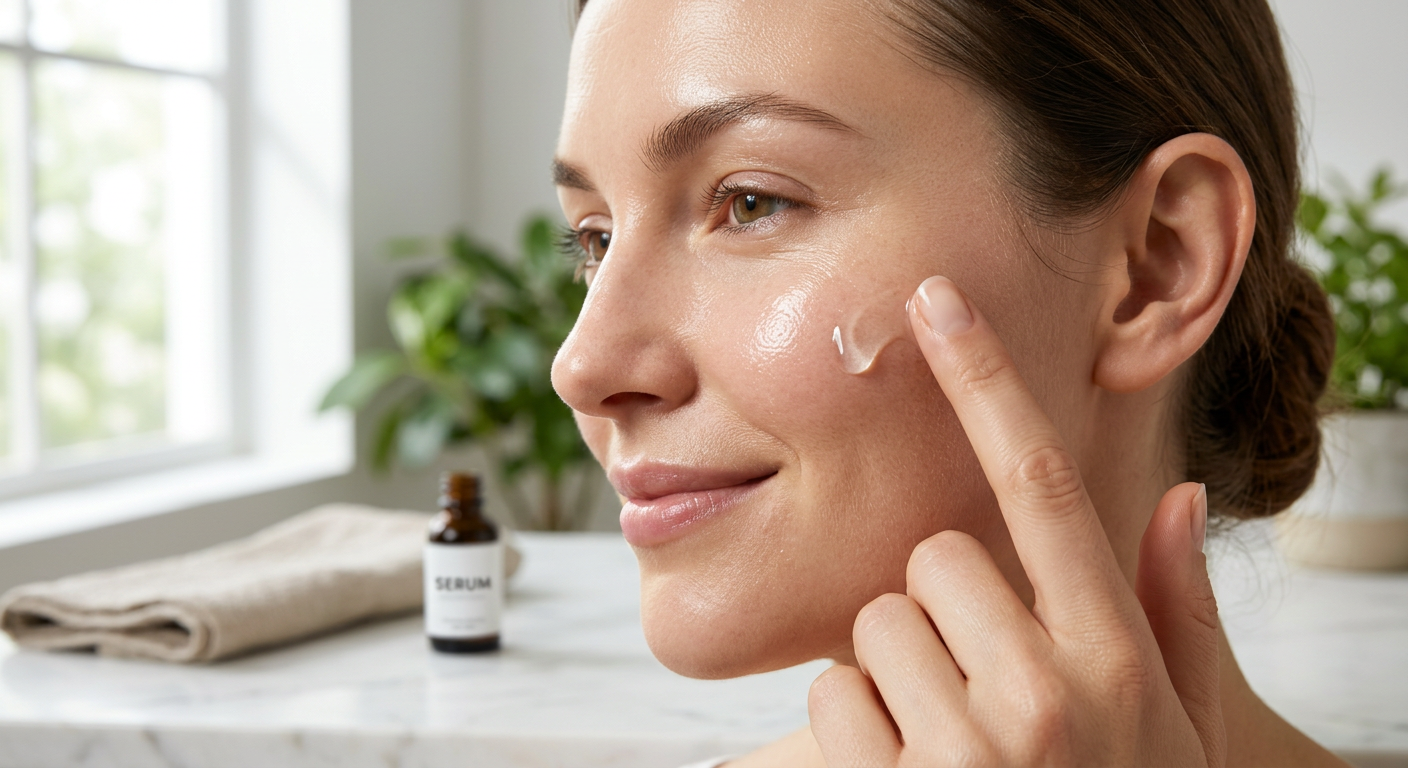
PGA does its work at the skin’s surface rather than penetrating deep into the dermis. There it builds a hydrating barrier that does two jobs at once: it pulls moisture toward the skin and seals existing moisture in.
That sealing function matters more than it might sound. By forming a film across the surface, polyglutamic acid cuts trans-epidermal water loss, the slow evaporation of moisture from your skin over the course of a day.
A Humectant and an Occlusive
Most hydrating ingredients do one thing. Polyglutamic acid does two.
“Polyglutamic acid helps to reduce trans-epidermal water loss, so that means it functions as an occlusive,” dermatologists told Vogue. That combination of humectant and occlusive action is the reason PGA gets associated with dewy, plumped-looking skin.
There’s a secondary effect worth knowing about. According to the RNA Corporation, PGA encourages the skin’s own production of Natural Moisturizing Factors, hyaluronic acid among them, so it supports hydration from within rather than only on top.
Polyglutamic Acid vs. Hyaluronic Acid
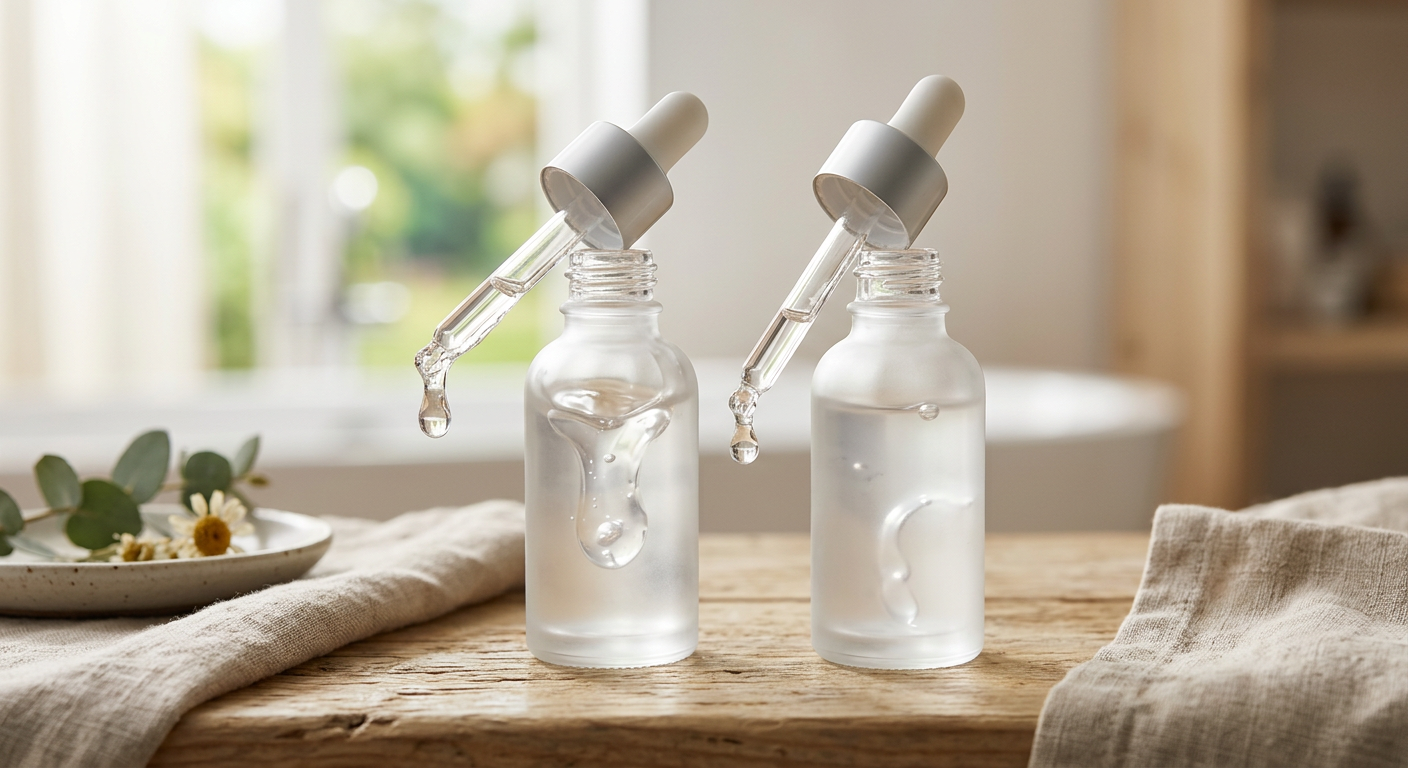
The comparison is unavoidable, and PGA holds its own. Both are humectants, both are gentle, and both belong in a hydration-focused routine. The differences come down to water capacity and where each ingredient does its work.
| Feature | Polyglutamic Acid (PGA) | Hyaluronic Acid (HA) |
|---|---|---|
| Water-binding capacity | Up to 5,000x its weight | Up to 1,000x its weight |
| Primary location | Skin’s surface | Deeper into the epidermis |
| Function | Humectant + occlusive film | Humectant |
| Source | Fermented soybeans (nattō) | Fermented or synthetic |
| Best for | Dry, dehydrated, barrier-compromised skin | All skin types |
| Extra benefit | Boosts natural NMF and HA production | Plumps deeper layers |
HA penetrates deeper into the epidermis while PGA stays on the surface and forms its film. That makes the two complementary rather than rivals.
“While they’re both effective hydrators, polyglutamic acid has better performance and additional benefits to moisturize that hyaluronic acid does not have,” dermatologists noted in coverage from AOL. The smartest routines tend to use both.
The Benefits of Polyglutamic Acid

Hydration is the headline, but PGA’s effects reach past surface moisture. Consistent use can deliver:
- Intense, lasting hydration that holds moisture in the upper layers of skin
- Reduced trans-epidermal water loss, thanks to its film-forming seal
- A dewy, glowing finish — “It’s a phenomenal moisturizer and it gives you dewy skin,” says Dr. Karan Lal in IPSY
- Improved skin elasticity, with research pointing to measurable gains
- Support for your skin barrier, especially when skin is dry or compromised
The elasticity finding stands out. “Studies show that during a 28-day period, PGA favorably improves elasticity of the skin, more so than collagen and hyaluronic acid,” dermatologists told The Zoe Report.
Dry and barrier-compromised skin has the most to gain. Lighter formulations work for oilier skin types too, since how well PGA sits on your skin depends on the whole formula rather than the single ingredient.
How to Add Polyglutamic Acid to Your Routine
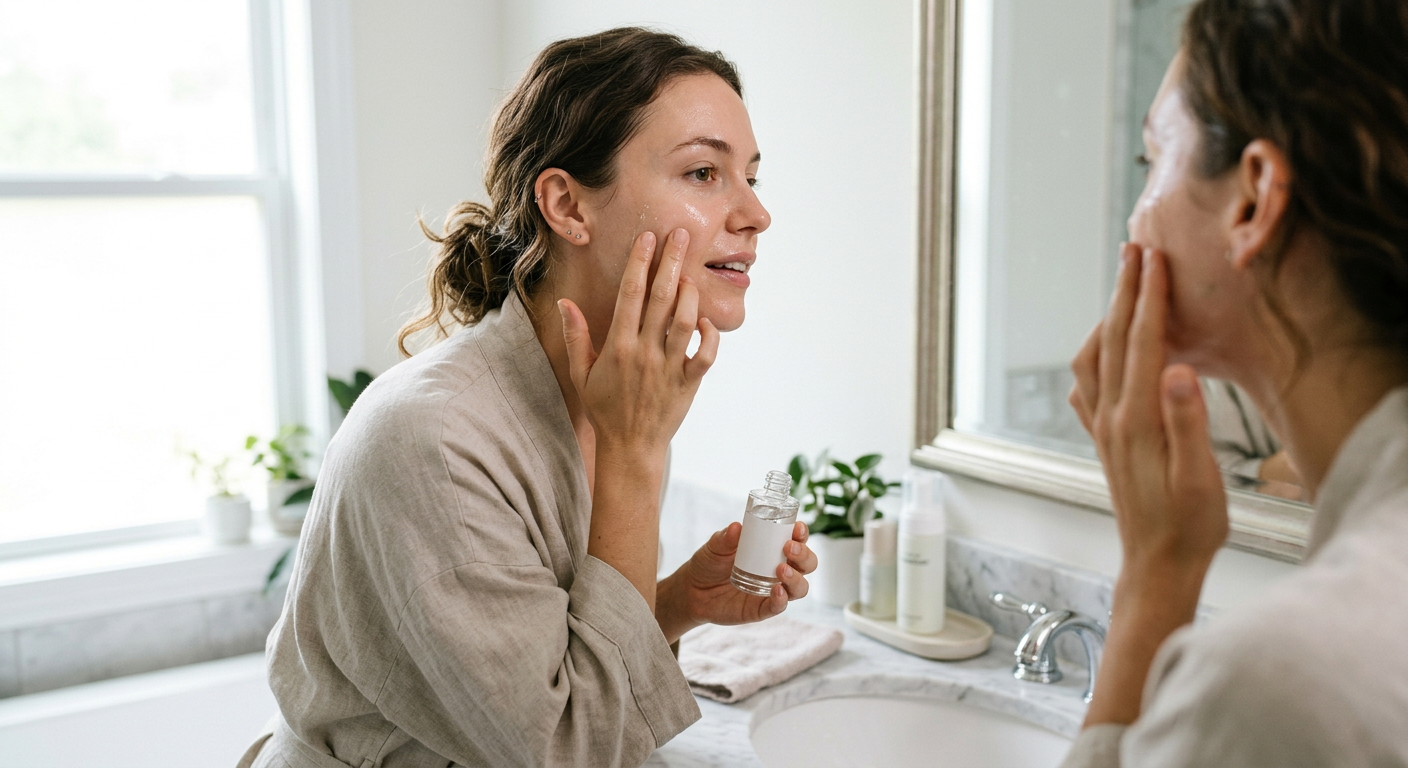
Apply polyglutamic acid to damp skin to get the most from its humectant action; it performs best when there’s water on hand to draw in and seal. Layer it after lightweight serums and before your heavier moisturizer.
Pair It With Hyaluronic Acid
PGA works on the surface and HA works deeper, so using them together builds a layered hydration system. Apply your hyaluronic acid first to hydrate the deeper epidermis, then follow with PGA to seal everything in.
Make It a Winter Staple
PGA earns its keep when the air is dry. “Polyglutamic acid is the perfect winter ready ingredient,” facialist Renee Lapino told Vogue. “We’re constantly bouncing between environments, and spending most of our time in overheated, dry, recycled air during the winter months.”
For anyone logging long hours in heated offices or in front of screens, PGA’s film helps counter the dehydration those conditions cause. You’ll find it in serums, essences, and daily moisturizers.
Why 2026 Is Polyglutamic Acid’s Moment

Three trends are pushing PGA toward the spotlight. The first is education: consumers increasingly understand the difference between dry skin, which lacks oil, and dehydrated skin, which lacks water. PGA targets the second problem directly.
The second is the shift toward barrier-focused skincare, which favors gentle, film-forming ingredients over aggressive actives. PGA fits that demand, delivering results without irritation.
The third is supply. Formulators are putting PGA into more products every season, which makes it easier to find and cheaper than it was a year ago. As both availability and awareness grow, PGA is likely to graduate from “the new hyaluronic acid” to a category staple on its own terms.
Conclusion
Polyglutamic acid backs up its 2026 hype with numbers: up to 5,000 times its weight in water, combined humectant and occlusive action, and clinical support for improved elasticity over both collagen and hyaluronic acid. It hydrates the surface, seals in moisture, and prompts your skin to produce more of its own hydrating factors.
The takeaway is straightforward. If you deal with dehydrated, dull, or barrier-compromised skin, PGA deserves a spot in your routine, ideally layered with hyaluronic acid for hydration at every depth.
Start with one PGA serum or essence, apply it to damp skin, and track how your complexion looks and feels over four weeks. Your skin barrier, and your winter glow, should show the difference.
FAQ
Q: Is polyglutamic acid better than hyaluronic acid?
Polyglutamic acid holds up to 5,000 times its weight in water versus hyaluronic acid’s 1,000, and it adds an occlusive film that HA lacks. They work best together, since PGA hydrates the surface while HA hydrates deeper layers.
Q: Can I use polyglutamic acid every day?
Yes. PGA is gentle and suitable for daily use, morning and night. Apply it to damp skin and follow with a moisturizer to lock in the hydration.
Q: Is polyglutamic acid safe for sensitive skin?
PGA is generally well-tolerated and a strong option for dry or barrier-compromised skin. Because it isn’t an exfoliating acid, it rarely causes the irritation associated with AHAs or BHAs, though how well you tolerate it always depends on the full formula.
Q: What is polyglutamic acid made from?
Polyglutamic acid is a peptide derived from nattō, a Japanese food made from fermented soybeans. It’s composed of repeating units of the amino acid glutamic acid.
Q: When should I apply polyglutamic acid in my routine?
Apply PGA to damp skin after lightweight, water-based serums and before heavier moisturizers or oils. If you use hyaluronic acid, layer it first, then follow with PGA to seal moisture in.
Q: Does polyglutamic acid help with fine lines?
PGA plumps the skin with hydration, which can temporarily soften the look of fine lines. Research also suggests it improves skin elasticity over a 28-day period, which supports firmer-looking skin over time.