

Most skincare problems aren’t caused by using the wrong products — they’re caused by using the right products too often. Retinol, AHAs, vitamin C: layer all three every night and your skin doesn’t get stronger, it gets exhausted. Skin cycling, the rotational method developed by dermatologist Dr. Whitney Bowe, addresses this directly. The version circulating in 2026 has moved well past the four-night TikTok formula that first spread the concept — it’s more flexible, more individually calibrated, and grounded in a clearer picture of how skin barrier repair actually works.
What Skin Cycling Actually Means
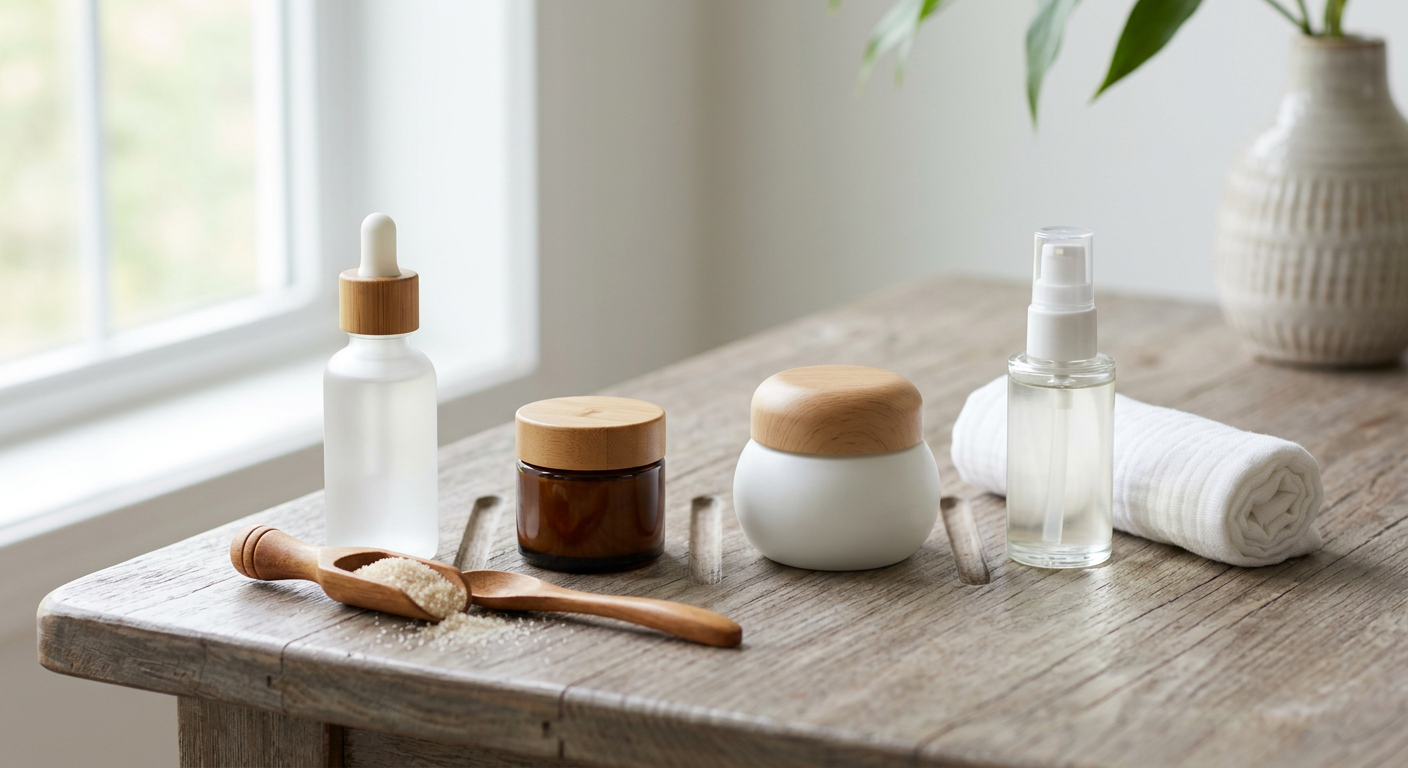
Skin cycling is a structured rotation between active ingredient nights and recovery nights. Instead of applying every product every evening, you alternate deliberately — giving your skin time to process and repair between exposures to potent ingredients.
The underlying logic: your skin barrier needs time after contact with actives like retinol and AHAs. Using them nightly creates chronic low-grade inflammation that reduces their effectiveness and degrades the barrier over time, according to Vine Vera’s 2026 skin cycling breakdown.
Think of it like a training block. Lifting maximum weight seven days a week doesn’t produce better results — the recovery periods are where adaptation happens.
The Original Four-Night Formula

The classic structure that spread across social media followed a simple pattern:
The appeal was its specificity. Simple enough to follow without a spreadsheet, structured enough to feel grounded in something, and gentle enough for people who had already burned their skin out trying to use everything at once.
The Ordinary’s beginner guide to skin cycling describes the method as a way to maximize product benefits while leaving skin clearer, smoother, and firmer — without the reactivity that comes from daily active use.
For sensitive skin types and skincare beginners, this four-night cycle remains a solid starting point. It prevents the most common mistake in modern skincare: doing too much, too often.
What’s Changed in 2026: Personalization Leads
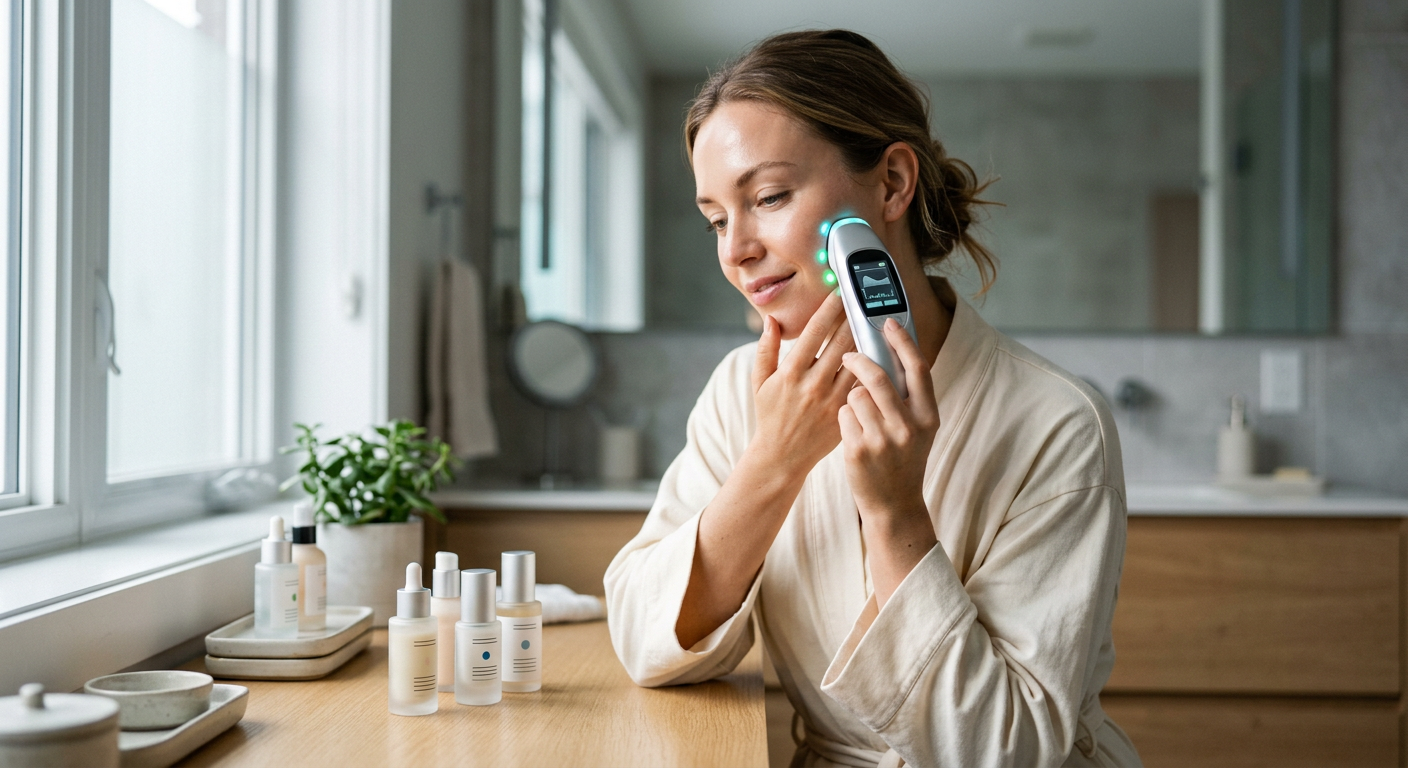
The most significant shift in skin cycling 2026 isn’t a new ingredient or an additional night. It’s the recognition that skin doesn’t function on a flat, linear timeline — and a fixed four-night rotation doesn’t account for that.
According to Vine Vera, resilient skin that has already adapted to actives may thrive on a three-night cycle with just one recovery night. Someone managing a compromised barrier, rosacea, or perimenopause-related sensitivity might need three or four recovery nights between active exposures.
Adapting the Cycle to Your Skin Type
- Sensitive or reactive skin: Extend recovery to three nights; introduce one active at a time
- Balanced or adapted skin: Standard four-night cycle or a compressed three-night version
- Resilient skin with high active tolerance: Three-night cycle (exfoliation, retinoid, one recovery night)
- Barrier-compromised skin: Pause actives entirely for one to two weeks before restarting
This shift toward personalization aligns with the broader 2026 skincare trend identified by Allure: as formulas and delivery systems become more sophisticated, consumers are moving back toward fundamentals — smarter, more tailored ones.
The Role of New Delivery Systems
Ingredient delivery has improved significantly by 2026. Encapsulated retinoids release more slowly, reducing irritation without sacrificing efficacy. The old “buffer” approach — applying moisturizer before retinol to dilute it — is less necessary for many users than it was in 2022. Your cycling schedule can reflect that improved tolerance.
What Has Not Changed (And Should Not)
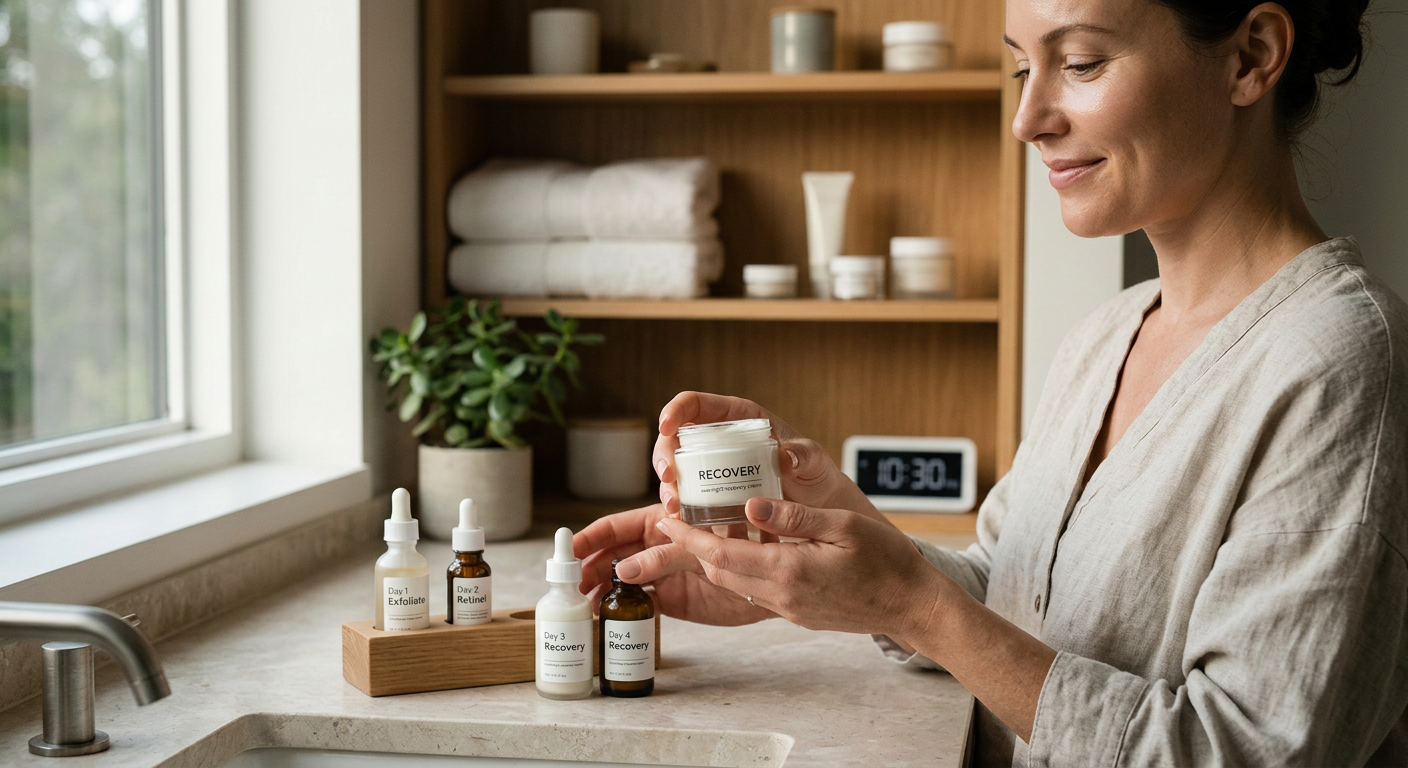
Despite the evolution, the core logic of skin cycling remains intact. Recovery nights are not optional filler between active nights — they’re where the work of repair actually happens.
Ceramides, peptides, and hyaluronic acid actively rebuild the lipid barrier that actives temporarily disrupt. Shortening recovery nights to fit in more actives defeats the entire purpose of the method.
Allure’s 2026 skincare trends report notes that peptides are taking center stage this year, with more targeted formulations entering the market. Recovery nights are the right time to use them — skin is primed to absorb reparative ingredients after an active night.
The other constant: sunscreen every morning, without exception. Exfoliation and retinoids both increase photosensitivity. No cycling protocol compensates for skipping daytime UV protection.
How to Build Your 2026 Skin Cycling Routine

Starting a skin cycling routine in 2026 doesn’t require a complete product overhaul. It requires a clear inventory of what you already own and an honest assessment of where you sit on the sensitivity spectrum.
Step One: Audit Your Actives
List every active ingredient currently in your routine — retinoids, exfoliating acids, vitamin C, benzoyl peroxide. These are the ingredients that need to be cycled. Hydrating serums, moisturizers, and SPF are not actives and can be used daily.
Step Two: Choose Your Cycle Length
Use this decision framework:
- New to actives or sensitive skin → Start with the classic four-night cycle
- Six or more months of consistent active use → Try a three-night cycle
- Currently experiencing redness, peeling, or tightness → Begin with recovery nights only until skin stabilizes
Step Three: Stack Smartly on Active Nights
On exfoliation night, keep the rest of your routine minimal — a gentle cleanser, your acid, and a light moisturizer. On retinoid night, apply your retinoid to clean, dry skin, then layer a ceramide-rich moisturizer on top. Resist the urge to add vitamin C, niacinamide, or other actives on these nights.
Step Four: Treat Recovery Nights as Seriously as Active Nights
Recovery is not doing nothing. It’s a targeted application of barrier-rebuilding ingredients. A recovery night routine might include: micellar or gentle foam cleanser, hyaluronic acid serum, ceramide moisturizer, and a peptide-rich face oil if your skin is particularly dry.
Common Skin Cycling Mistakes to Avoid
Even with a solid framework, a few errors consistently undermine results.
Mixing actives on the same night. Combining an AHA with retinol on Night 1 or 2 spikes irritation risk without proportionally increasing benefit. Keep active nights focused on one category.
Ignoring skin signals. Visible irritation after Night 2 is not a sign to push through — it’s a signal to extend recovery. The cycle is a guideline, not a contract.
Treating the morning routine as irrelevant. Skin cycling is a nighttime framework, but your morning routine either supports or undermines it. A fragrance-heavy toner or a physical scrub the morning after an exfoliation night will compromise your barrier before it has a chance to recover.
Cycling too many products at once. Introducing a new exfoliant and a new retinoid simultaneously makes it impossible to identify what’s causing a reaction. Introduce one new active at a time, give it two to three full cycles, then evaluate.
Skin Cycling and the Bigger 2026 Skincare Picture

Skin cycling reflects a larger shift in how consumers and clinicians think about skincare efficacy — fewer products, applied more strategically.
The 2026 skincare statistics from Market.us Media confirm that consumers are increasingly ingredient-aware and routine-conscious. The era of buying every trending product is giving way to a more deliberate approach.
This aligns with what Allure describes as a “back to basics” movement — where established ingredients like retinol and vitamin C are being reformulated with better delivery systems rather than replaced by novelties. Skin cycling is the routine structure that makes those better formulas work harder.
For anyone exploring in-office treatments like chemical peels or laser resurfacing, skin cycling integrates well with post-procedure recovery protocols. Many dermatologists now recommend pausing actives for one to two weeks post-treatment and then re-entering a cycling routine gradually — a medically supervised version of the same principle.
Conclusion
Skin cycling in 2026 is a flexible framework built on one durable principle: give your skin time to recover between active exposures. The original four-night structure still works, especially for beginners and sensitive skin types. The smarter version adapts cycle length, active selection, and recovery depth to your skin’s current state.
The practical summary: audit your actives, choose a cycle length that matches your skin’s tolerance, take recovery nights as seriously as active nights, and adjust when your skin signals a need for change. Pair that with consistent SPF in the morning and a clean, minimal daytime routine, and skin cycling becomes one of the more sustainable skincare frameworks available.
To start: identify your current actives, pick your cycle length, and commit to two full rotations before evaluating results. Four to eight nights of consistent cycling will tell you more about your skin than months of nightly active overload ever could.
Frequently Asked Questions
Q: How is skin cycling different from just using actives a few times a week?
Skin cycling is a structured rotation with intentional recovery nights built in, not just a reduced frequency of use. The recovery nights are active steps — focused on barrier repair — rather than simply skipping your routine.
Q: Can you do skin cycling if you use prescription tretinoin?
Yes, and many dermatologists recommend it for tretinoin users, particularly during the adjustment phase. You may start with one tretinoin night and three recovery nights, then gradually compress the cycle as your skin adapts.
Q: Does skin cycling work for acne-prone skin?
It can, but the approach requires some adjustment. Salicylic acid (a BHA) is often better suited to acne-prone skin than AHAs on exfoliation night, and benzoyl peroxide should be used carefully — typically not on the same night as other actives.
Q: How long before you see results from skin cycling?
Most people notice improved texture and reduced irritation within two to four weeks. More significant changes — reduced hyperpigmentation, smoother tone — typically take six to twelve weeks of consistent cycling.
Q: Is skin cycling appropriate for all ages?
Yes, though the specific actives and cycle structure will vary. Younger skin may focus on AHAs and light retinoids; mature or perimenopausal skin may benefit from longer recovery phases and peptide-rich recovery products, as noted in Allure’s 2026 trends coverage.
Q: Do you need to use the same products every cycle?
No. The structure stays consistent, but you can rotate products within each category. For example, you might alternate between glycolic acid and lactic acid on exfoliation nights depending on your skin’s current condition.