


The most effective skincare tool you own might already be in your bedroom. While you sleep, your body shifts into repair mode: regenerating skin cells, producing collagen, and balancing the hormones that decide how rested you look by morning. Beauty sleep isn’t folk wisdom anymore. Panda London’s 2026 Sleep Report found that 72% of people now treat sleep as a core part of their beauty, health, and wellness routine, and the research backs them up.
The difference between waking up dull and waking up radiant usually comes down to a handful of deliberate habits before lights out. This guide covers what to do before bed to support a healthy glow.
Why Sleep Is Your Skin’s Repair Window

Your skin runs on a circadian rhythm, like the rest of your body. During the deepest stages of sleep, blood flow to the skin rises and your body increases production of collagen, the protein that keeps skin firm and elastic.
Cell turnover also peaks overnight. Dead surface cells shed faster while new cells move up to replace them, which is part of why people who sleep consistently tend to have clearer, more even-toned skin. Disrupt the cycle and you interrupt that repair process partway through.
Cortisol, the stress hormone, drops at night to allow this recovery. Cut your sleep short or sleep badly and cortisol stays elevated, which breaks down collagen and triggers the inflammation that surfaces as puffiness, dullness, and breakouts.
Build a Consistent Sleep Schedule First

No serum can outperform a broken sleep schedule. The foundation of beauty sleep is consistency: aim for 7 to 9 hours of quality sleep each night, and go to bed and wake up at roughly the same time every day, weekends included.
A regular rhythm supports your body’s repair cycles, keeps hormones balanced, and promotes healthy cell turnover, which matters for both skin clarity and hair strength. Irregular sleep confuses your circadian rhythm, and your skin pays for it.
Make Consistency Easy
When discipline alone doesn’t cut it, build in support. Set a phone or smart-speaker alarm to remind you when to wind down, not just when to wake up. Treat that bedtime alert as seriously as your morning alarm, and your skin will fall in line with your schedule instead of fighting it.
Layer the Right Overnight Skincare
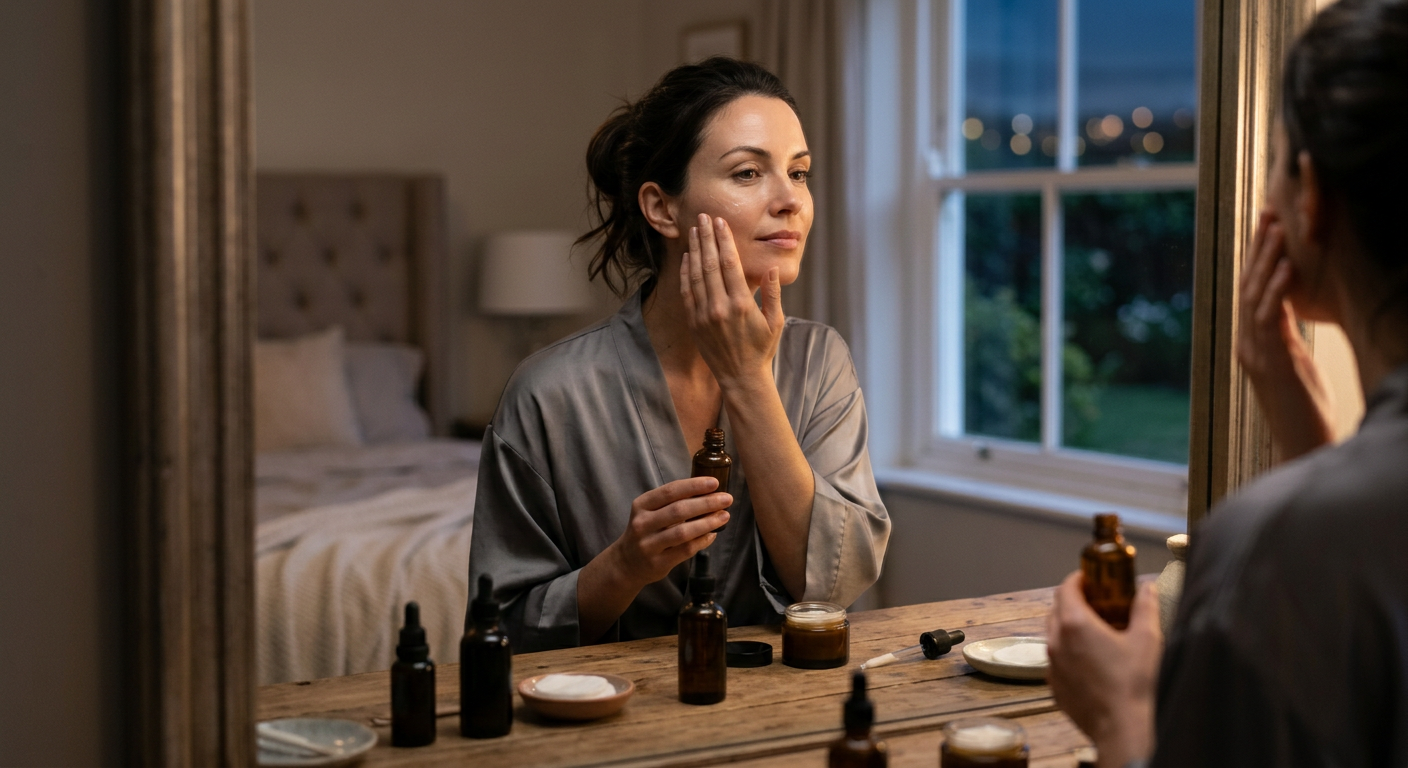
Nighttime is when active ingredients do their best work, with no sun exposure or makeup in the way. A good routine doesn’t need ten steps, but the order and the ingredients matter.
Start with a clean face. Remove every trace of makeup and sunscreen, then apply targeted actives like retinol or peptides to stimulate collagen, followed by a barrier-supporting moisturizer to lock everything in. Biossance recommends sealing your routine with a rich night cream and points to ingredients like ectoin and squalane that help repair daytime damage and strengthen the skin barrier overnight.
A Simple Overnight Routine Order
| Step | Product Type | Purpose |
|---|---|---|
| 1 | Cleanser | Remove makeup, sunscreen, and debris |
| 2 | Treatment (retinol/peptides) | Boost collagen and cell turnover |
| 3 | Hydrating serum | Bind water to plump skin |
| 4 | Night cream or sleeping mask | Seal in moisture, support barrier repair |
| 5 | Eye cream | Target puffiness and fine lines |
Once or twice a week, swap your night cream for an overnight sleeping mask. These richer, occlusive treatments deliver concentrated hydration and give your routine a weekly reset.
Upgrade Your Sleep Environment

What you sleep on affects how you wake up. Cotton pillowcases create friction that tugs at skin and hair, which contributes to creases and breakage over time.
Switch to silk or satin. The smooth surface cuts friction, helps skin hold onto moisture, and reduces the sleep lines that can deepen into wrinkles under repeated pressure. It’s a one-time purchase that pays off every night.
Control Temperature and Light
A cool, dark room tells your body to produce melatonin, the hormone that governs sleep quality. Keep your bedroom between 60 and 67 degrees Fahrenheit, and block out light with blackout curtains or a sleep mask. Better sleep quality means better recovery and a clearer complexion.
Hydrate Inside and Out

Glowing skin depends on hydration from two directions. On the surface, a moisturizer prevents the transepidermal water loss that leaves skin looking tired and flat by morning.
Internal hydration matters too, but timing is the trick. Drink water through the day rather than chugging a glass right before bed, which leads to disrupted sleep and morning puffiness. Taper your intake in the hour before sleep.
A humidifier helps in dry climates and heated rooms. Adding moisture to the air keeps your skin barrier from drying out overnight, backing up the work your night cream is already doing.
Wind Down to Lower Cortisol

The hour before bed shapes the quality of your sleep, and with it your skin. Screens are the biggest disruptor: the blue light from phones and laptops suppresses melatonin and keeps your brain alert.
Beauty editor Jolene Hart ranks shutting off devices at a reasonable hour as her top beauty sleep ritual. Replace scrolling with something calmer, whether that’s a warm shower, light stretching, reading, or a few minutes of deep breathing.
A Simple 30-Minute Wind-Down
- Minutes 0–10: Power down screens and dim the lights
- Minutes 10–20: Complete your overnight skincare routine
- Minutes 20–30: Read, stretch, or breathe deeply to lower cortisol
This sequence does two things at once. It lowers the stress hormones that damage collagen and signals to your body that it’s time to start repairs.
Conclusion: Make Beauty Sleep Intentional
A healthy glow doesn’t come from one miracle product. It comes from stacking small, consistent habits: a steady sleep schedule, a focused overnight skincare routine, a friction-free sleep surface, smart hydration, and a calming wind-down that keeps cortisol down.
Your body is already programmed to repair your skin every night. Your job is to give it the conditions to do that work well. Pick one ritual from this guide tonight, build from there, and let your overnight routine carry the load while you sleep.
Frequently Asked Questions
Q: How many hours of sleep do I need for healthy skin?
Aim for 7 to 9 hours of quality sleep each night. That range gives your body enough time to complete its repair cycles, produce collagen, and balance the hormones that affect skin clarity and tone.
Q: Do silk pillowcases actually improve your skin?
Yes. Silk and satin create less friction than cotton, which reduces sleep creases, helps skin retain moisture, and minimizes the tugging that can lead to wrinkles and hair breakage over time.
Q: What skincare ingredients work best overnight?
Retinol and peptides stimulate collagen and cell turnover, while ingredients like ectoin, squalane, and hyaluronic acid support hydration and barrier repair. Night is the ideal time to use actives because skin isn’t exposed to sun or makeup.
Q: Can poor sleep cause breakouts and dull skin?
Yes. Insufficient sleep keeps cortisol elevated, which triggers inflammation, breaks down collagen, and can lead to breakouts, puffiness, and a dull complexion. Consistent quality sleep helps keep these effects in check.
Q: How often should I use an overnight sleeping mask?
Once or twice a week is enough for most people. Sleeping masks are richer and more occlusive than nightly creams, delivering a concentrated hydration boost that resets and replenishes skin between regular routines.
Q: Should I drink water right before bed for better skin?
Hydrate steadily through the day rather than right before bed. Drinking large amounts late at night can disrupt your sleep and cause morning puffiness, so taper your intake in the final hour before sleep.