

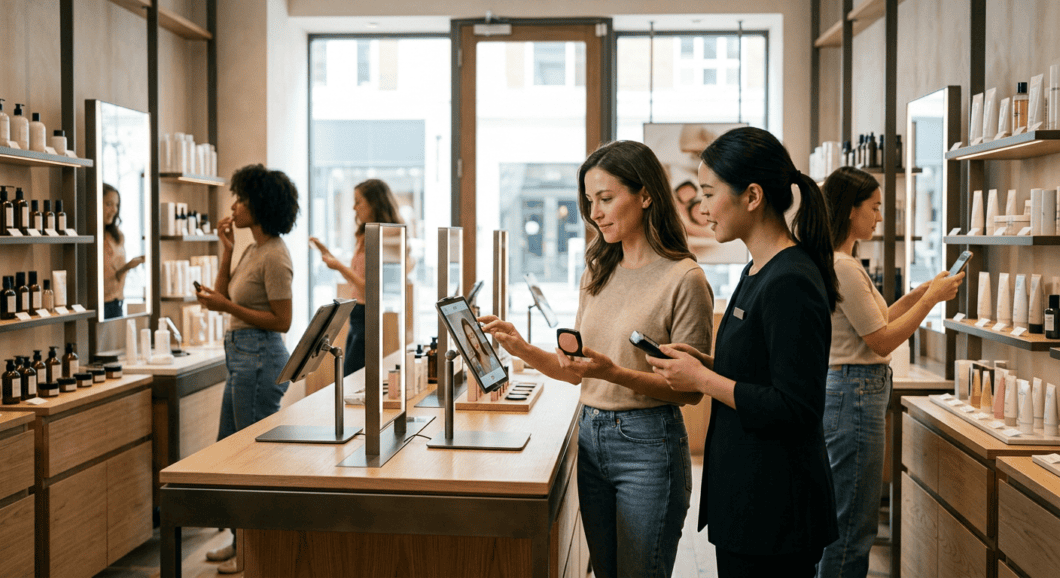
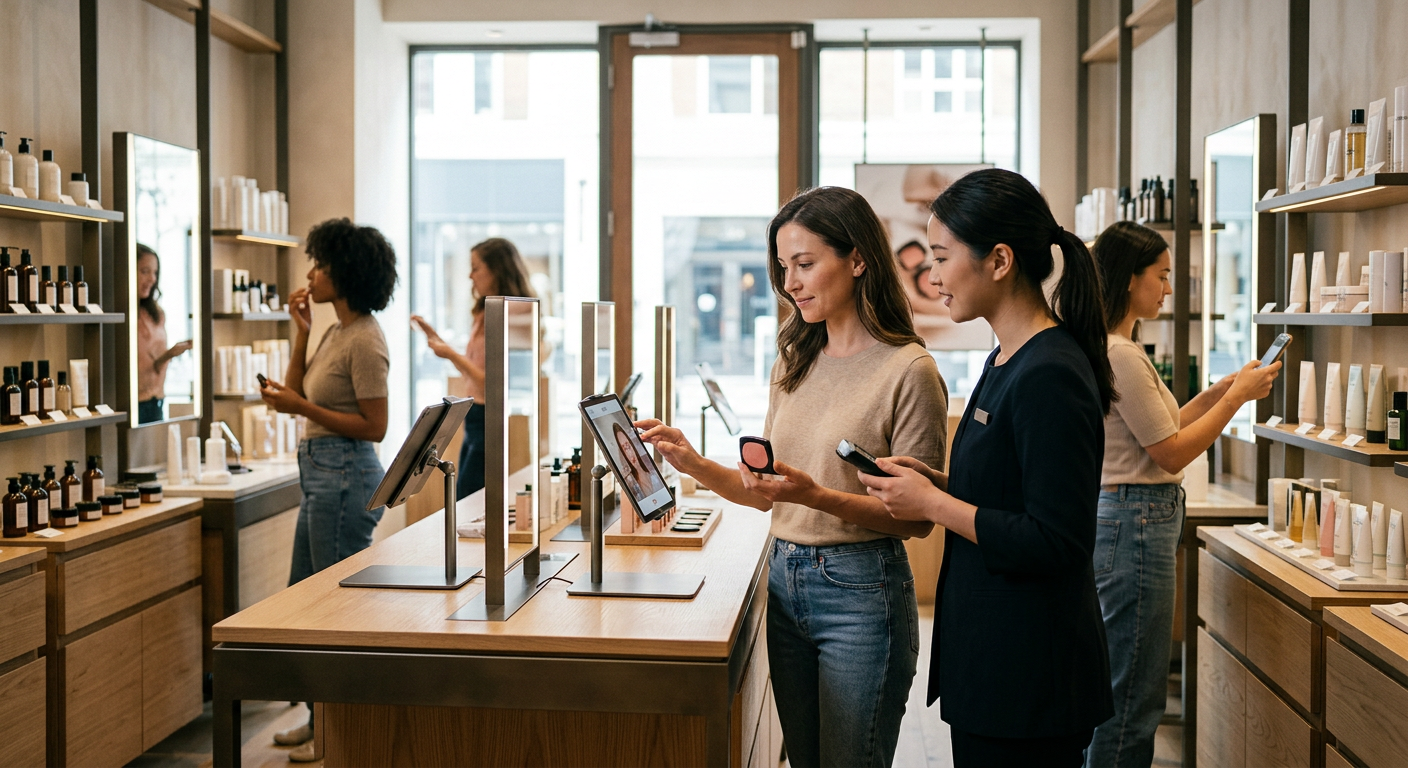
The line between shopping online and shopping in-store is disappearing, and beauty is out in front. According to Outform data cited by Cosmoprof, 73% of beauty shoppers visited a physical store last year, and 54% used their phones inside those stores. That second figure explains a lot of what’s changing this year. The old rules about where and how people buy skincare, makeup, and fragrance no longer hold. If you sell, market, or just spend money on beauty products, the shifts ahead will change your options and your strategy.
Three forces are driving the churn: cooling demand, aggressive competition between channels, and a generation of consumers who expect wellness and technology baked into every purchase. Below is what to watch.
The End of the Online vs. In-Store Divide
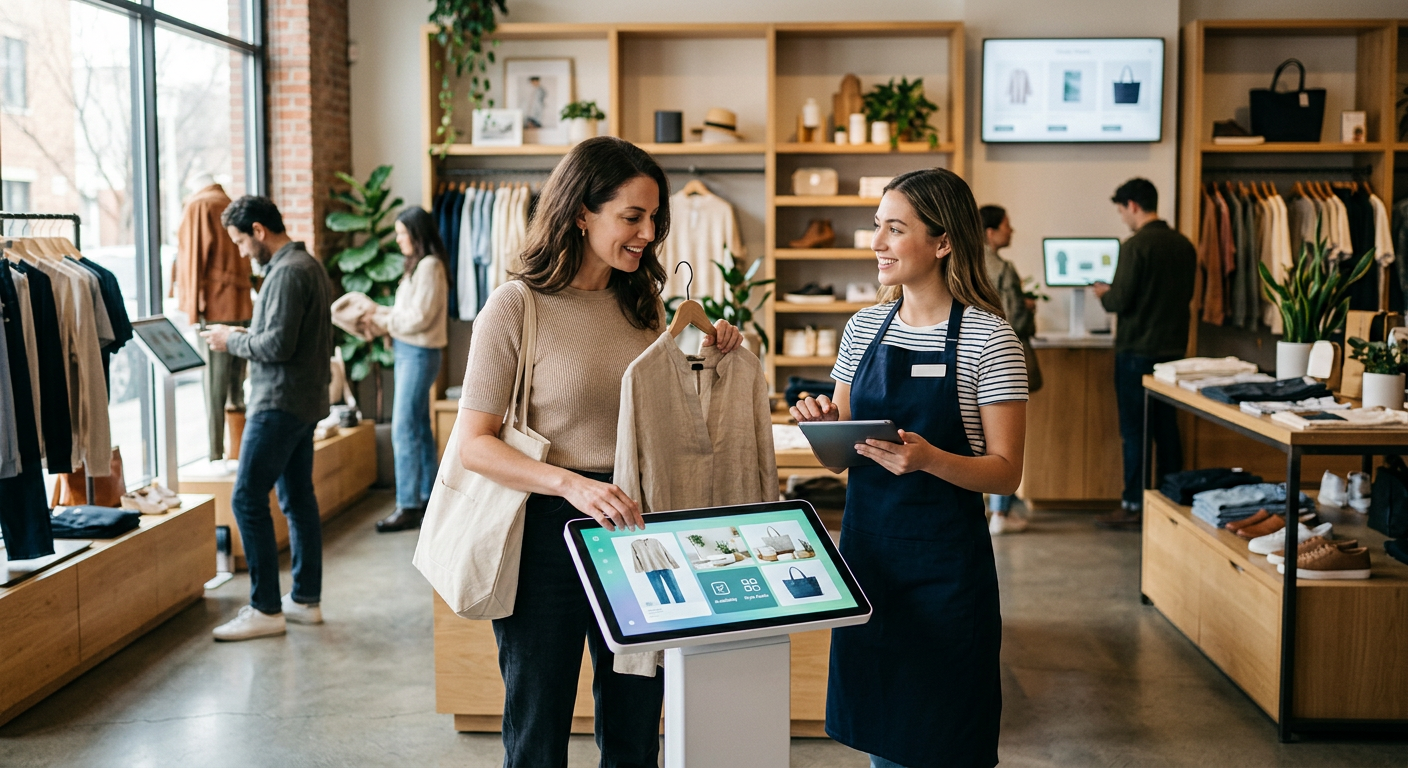
Retailers spent years treating e-commerce and brick-and-mortar as separate battlegrounds. That framing is obsolete now. GlobalData’s Zoe Mills and other analysts describe the divide between online and in-store in beauty as “dissolving,” replaced by what the industry calls unified retail.
Unified retail means omnichannel is no longer a strategy to pursue. It’s a baseline shoppers assume. Someone researches a serum on TikTok, checks reviews on their phone in the aisle, then buys wherever it’s easiest. The 2% year-over-year increase in store footfall shows physical retail is far from dead, but stores now have to serve digitally native shoppers.
For brands, every touchpoint has to line up. A disjointed experience drives customers away. That includes the in-store price that differs from the app, or the sales associate who can’t pull up a customer’s online cart.
Cooling Growth Forces Retailers to Rethink Value
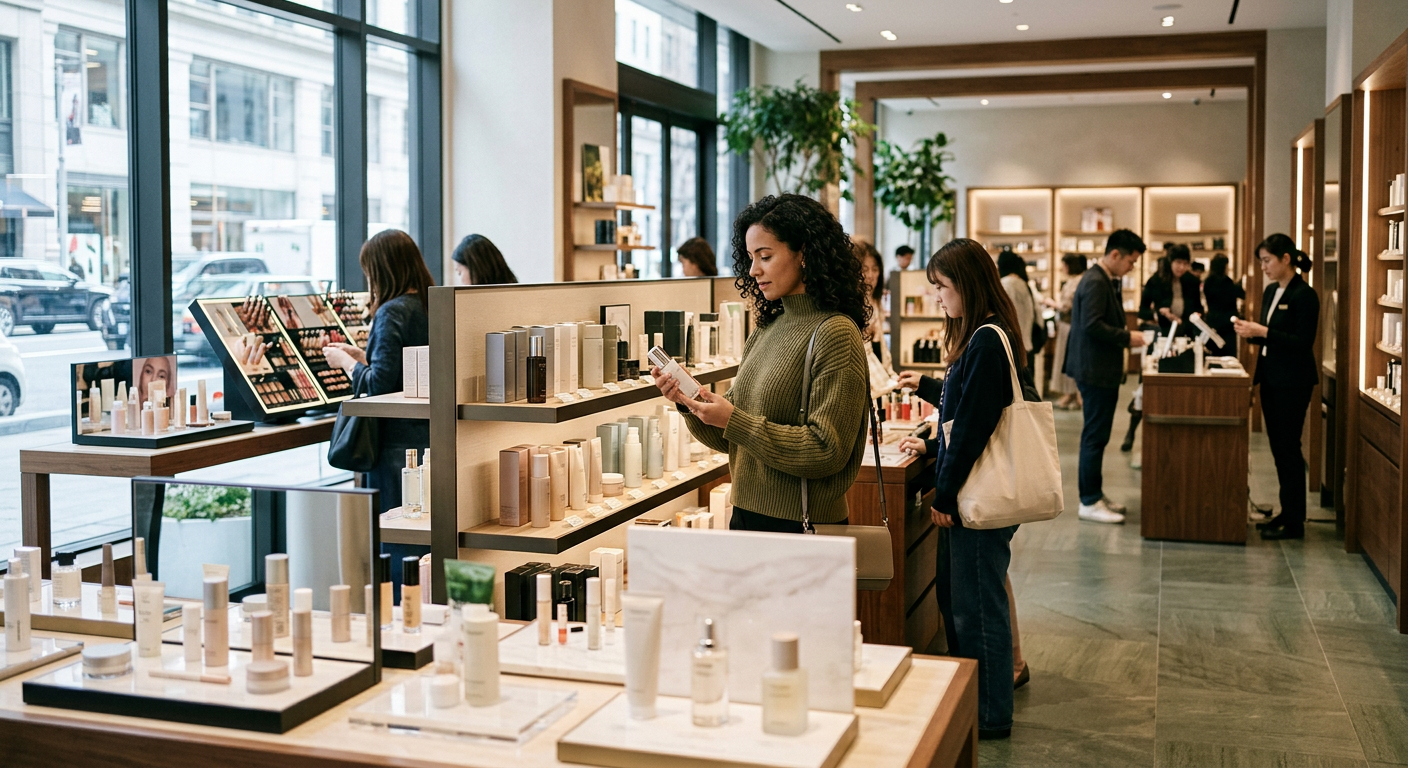
Beauty was a pandemic-era outlier, growing visitation while other discretionary categories fell. That momentum has cooled. Placer.ai reports a clear deceleration, with major brands tying waning sales to changing consumer behavior rather than a simple move from physical to digital.
Growth hasn’t stopped, though. Circana puts prestige retail dollar sales up 6% to $8.1 billion in Q1 2026, with mass retail sales up 7%. The market is still expanding. It’s just slower, and less forgiving of retailers who can’t justify the trip.
Why Retailers Must Earn the Trip
Ulta Beauty drove much of the industry’s post-pandemic growth by positioning itself as a destination for both mass and prestige products. Every retailer now faces the same problem: giving consumers a concrete reason to show up. Expect more services, exclusive launches, and experiential elements as retailers compete for a shrinking pool of discretionary spending.
Amazon and TikTok Shop Keep Taking Share
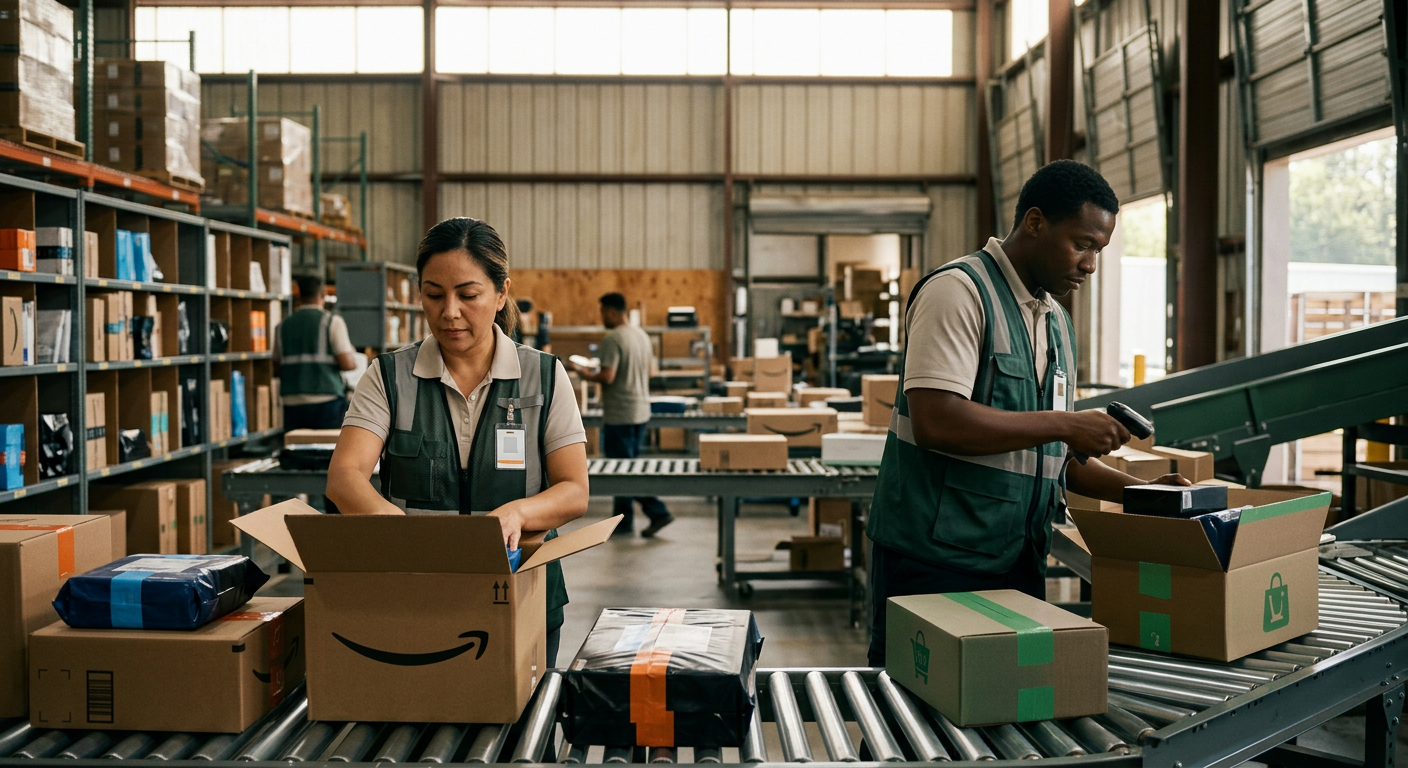
Two channels show no signs of slowing this year: Amazon and TikTok Shop. NielsenIQ’s Anna Mayo, quoted in Retail Brew, says these online channels keep gaining beauty dollar share against stagnant brick-and-mortar stores.
TikTok Shop has become a launchpad for brands nobody had heard of a year ago. Its mix of entertainment, creator recommendations, and instant checkout compresses the discovery-to-purchase funnel in a way traditional retail can’t match.
The lesson for brands is straightforward. A presence on these platforms is no longer optional. The retailers and brands that treat social commerce as a core channel, not an experiment, will capture the growth legacy stores are giving up.
GEO Replaces SEO as the New Optimization Battle

One of the most consequential and least understood changes this year is how consumers find products in the first place. As large language models reshape online search, brands have to think about GEO, or generative engine optimization: the practice of shaping content so AI tools surface and recommend your products.
Mayo argues GEO could be “where a lot of the winners and losers are made” this year. When a shopper asks an AI assistant for the best retinol under $50, the brands in that answer win the sale. The ones that aren’t may never get seen.
This doesn’t kill traditional search optimization, but it adds a demanding new layer. Brands that understand how AI models pull and synthesize product information will hold a decisive advantage over those still optimizing for a list of blue links.
Wellness and Self-Care Redefine the Category
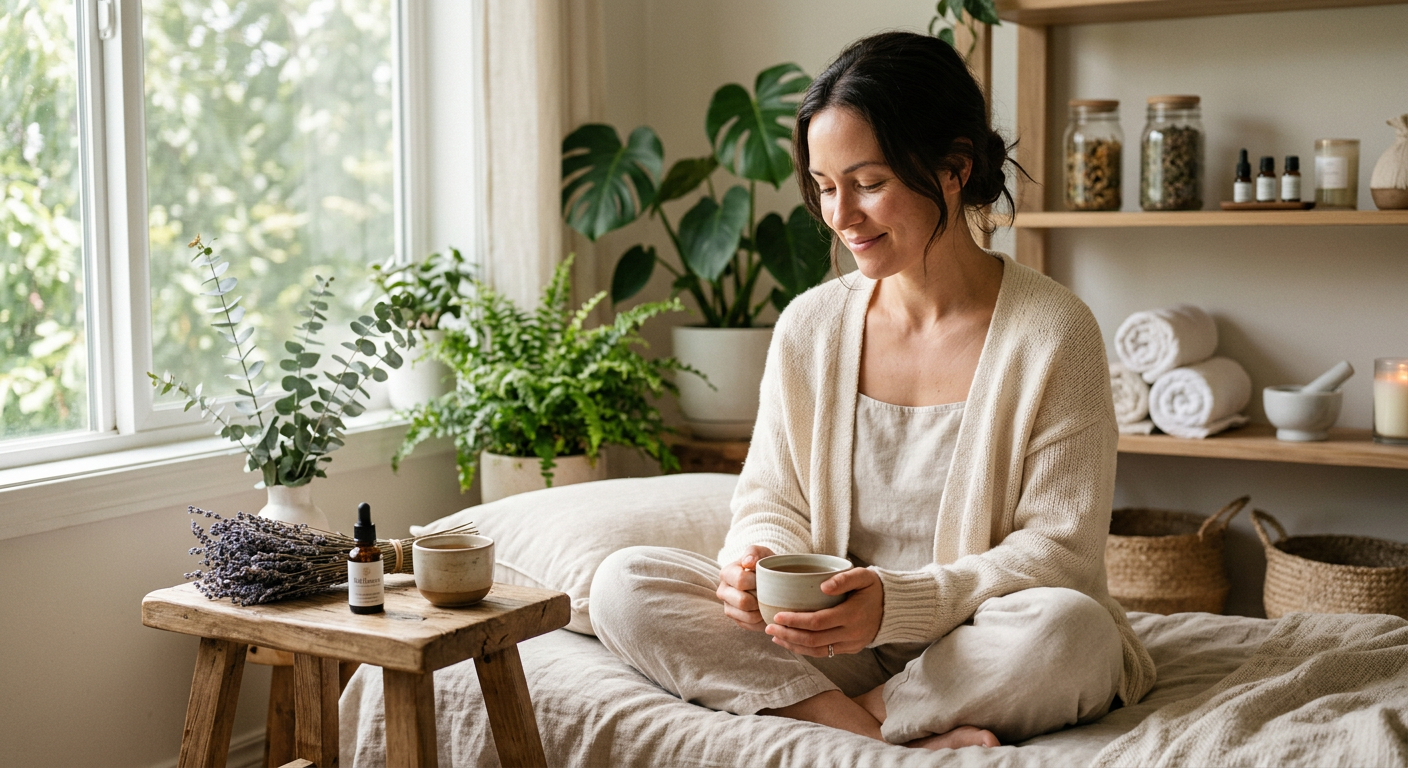
Beauty is getting hard to separate from wellness. GlobalData’s Mills attributes much of the market’s expected growth to “rising demand for wellness and consumer willingness to invest in self-care.” That blurring is changing what shows up on retail shelves.
Take Korean collagen drink brand Clöud Café, which entered Ulta Beauty and reached more than 1,000 Target doors in roughly a month, per Yahoo Shopping. Ingestible beauty, longevity products, and skin-health supplements now sit alongside traditional cosmetics.
Skincare remains the anchor. The global beauty market generated about $446 billion in retail sales, with skincare accounting for roughly 44% of that revenue, according to data cited by Tricoci University. The point where skincare meets wellness is where much of this year’s innovation will land.
New Expansions and Portfolio Shakeups Reshape the Shelf
The brands you find in stores this year will look different, thanks to both aggressive expansion and strategic pruning. Retail door counts are shifting fast as newer brands chase distribution and legacy players streamline.
Here is a snapshot of notable moves reshaping beauty retail this year:
| Brand | Change | Details |
|---|---|---|
| Prequel | First retail debut outside the U.S. | Enters all SpaceNK doors in the U.K.; on track for $100M in sales |
| Ormonde Jayne | U.S. expansion | Debuts at Saks Fifth Avenue; grows Neiman Marcus from 3 to 13 stores |
| Clöud Café | Rapid mass expansion | 1,000+ Target doors after entering Ulta |
| Estée Lauder | Portfolio review | Reportedly exploring sales of Dr. Jart and Too Faced |
On the growth side, dermatologist-founded Prequel made its first international retail debut in the U.K., while British fragrance house Ormonde Jayne, which grew 550% over three years, is expanding across U.S. prestige retail.
At the other end, Retail Brew reports Estée Lauder, in the middle of a turnaround, is reportedly exploring the sale of brands including Dr. Jart and Too Faced. Even makeup is under pressure, needing to win Gen Z back to grow after a stretch where most of the growth came from consumers over 30.
Key Takeaways and What to Do Next
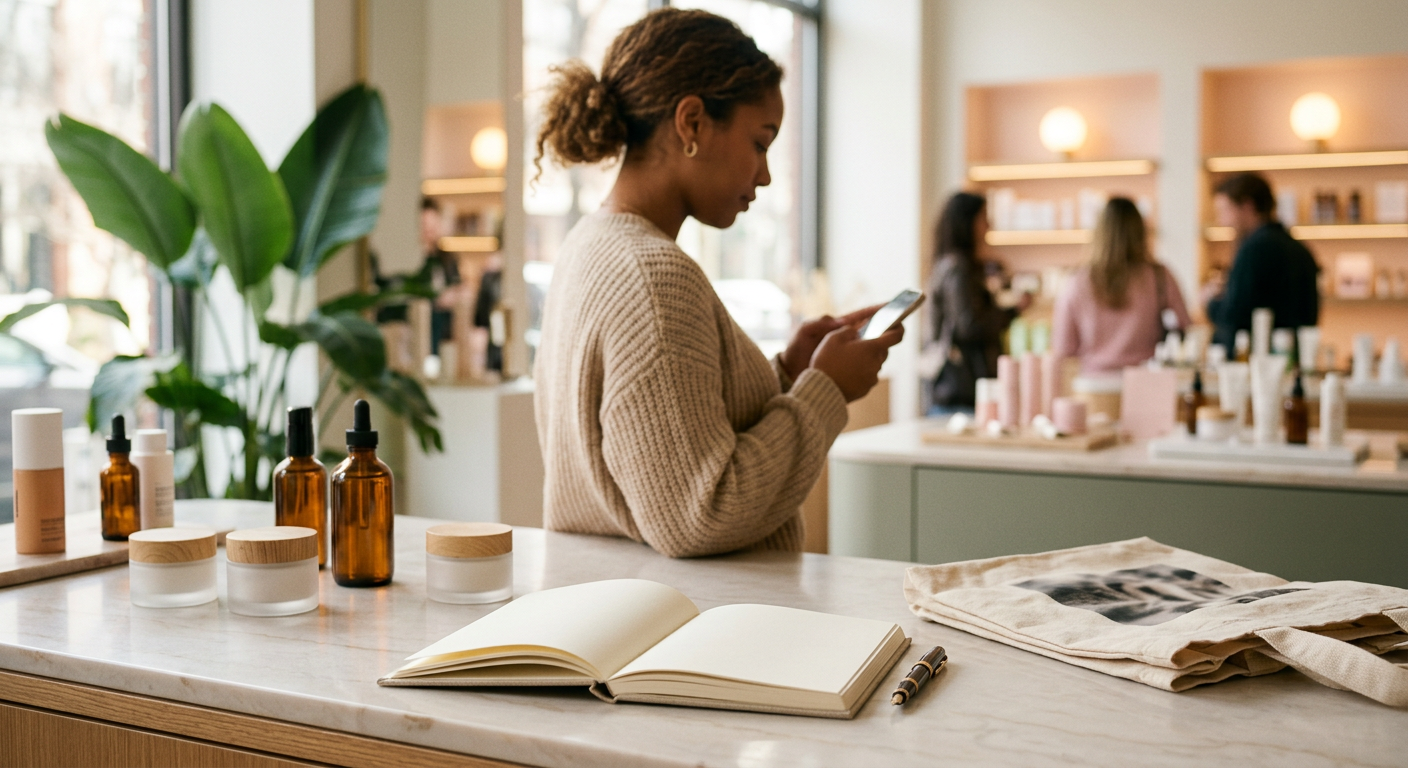
The biggest beauty retail changes this year share one thread: consumers hold more power, and they expect seamless, wellness-driven, technology-enabled experiences wherever they shop. Growth continues, but it rewards retailers and brands that earn attention instead of assuming it.
To stay ahead, focus on these priorities:
- Build true unified retail so online and in-store experiences reinforce each other.
- Invest in Amazon and TikTok Shop as core channels, not side projects.
- Start optimizing for GEO alongside traditional search.
- Lean into wellness and self-care as the category’s fastest-growing frontier.
- Watch the shelf shakeups to spot emerging brands and category gaps.
Whether you run a brand, manage a store, or just shop smarter, this is the time to act. Audit your channel strategy against these shifts and pick the one change that will move the needle most for you this year.
Frequently Asked Questions
Q: What is the biggest beauty retail change this year?
The most significant change is the collapse of the divide between online and in-store shopping into a single unified retail experience. Shoppers now expect seamless movement between digital and physical channels as a baseline, not a bonus.
Q: Is the beauty industry still growing?
Yes, but more slowly. Circana reports prestige retail sales grew 6% and mass retail rose 7% in Q1 2026, showing steady growth even as the rapid post-pandemic momentum cools.
Q: What is GEO and why does it matter for beauty brands?
GEO, or generative engine optimization, is the practice of shaping content so AI tools recommend your products. As shoppers increasingly ask AI assistants for recommendations, GEO is becoming as important as traditional SEO for capturing sales.
Q: Which channels are gaining the most beauty market share?
Amazon and TikTok Shop are gaining beauty dollar share against stagnant brick-and-mortar stores, according to NielsenIQ. TikTok Shop in particular has become a powerful launchpad for emerging brands.
Q: Why is wellness so important in beauty retail now?
Analysts attribute much of the market’s growth to rising demand for wellness and self-care. Products like ingestible collagen and skin-health supplements are increasingly sold alongside traditional cosmetics.
Q: What major brand changes should shoppers expect?
Expect new entrants like Prequel and expanding brands like Ormonde Jayne, alongside portfolio pruning from legacy players. Estée Lauder is reportedly exploring the sale of brands including Dr. Jart and Too Faced.