

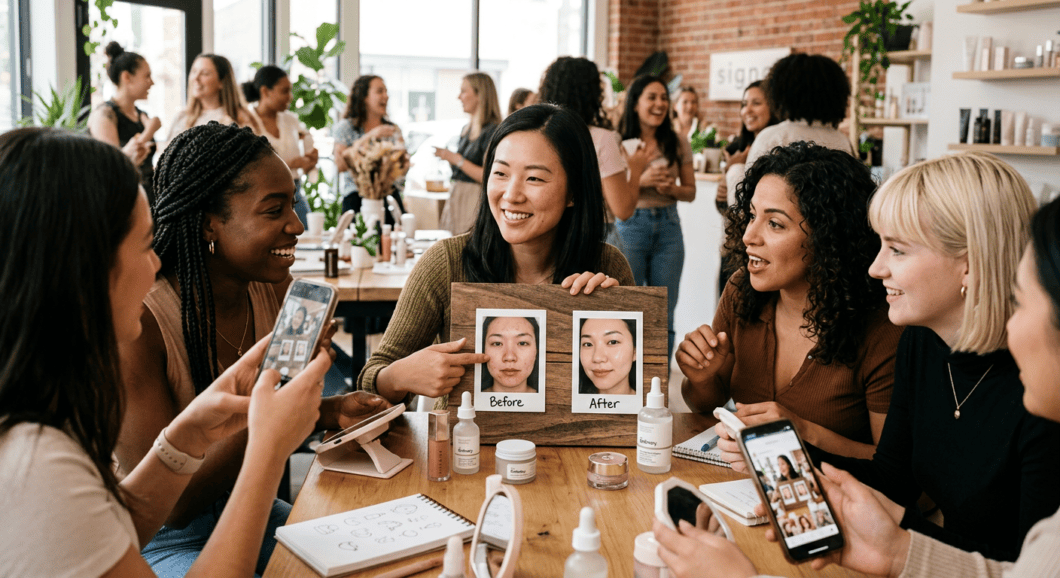
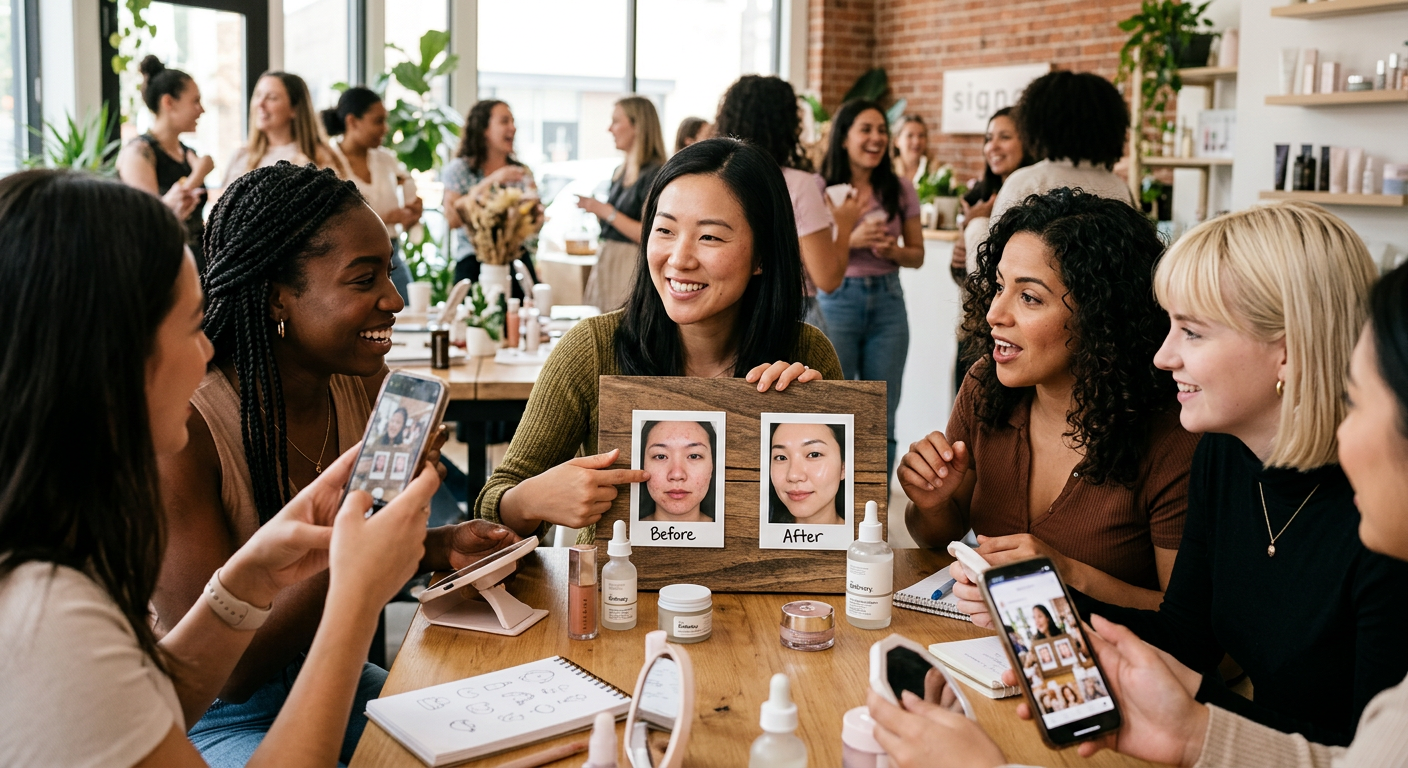
A stranger’s before-and-after photo now moves more product than a national ad campaign. Beauty micro-communities—small groups organized around specific skin concerns, ingredients, or aesthetic identities—are outperforming the mass-market playbook that defined the industry for decades. The U.S. beauty and personal care market is projected to reach $114.8 billion in 2026 (Amra & Elma), yet the brands winning attention are getting smaller, not bigger. That shift is changing how beauty products get discovered, recommended, and defended.
What Are Beauty Micro-Communities?
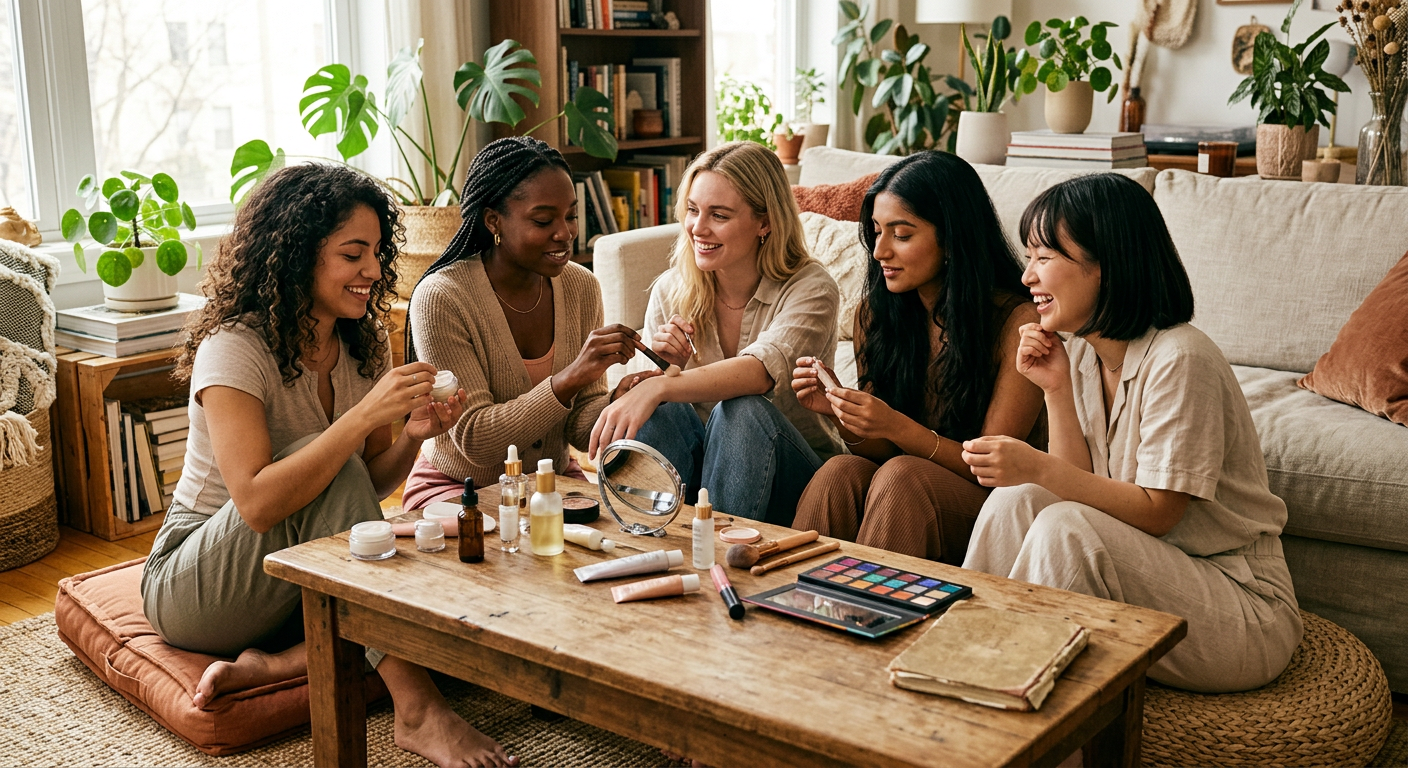
Micro-communities are small, highly focused online groups built around a shared interest, identity, or problem (Medium). In beauty, that focus gets granular fast. Instead of a broad “skincare” audience, you find groups dedicated to fungal acne treatment, mineral sunscreen for melanin-rich skin, or fragrance-free routines for eczema.
These groups are intentionally narrow. A member of a curly-hair porosity forum or a Reddit skincare community isn’t looking for everything. They want expertise on one specific concern, and that narrowness is the whole point. It filters out noise and keeps trust high.
Shared values hold the group together. Members get a closer connection to a brand instead of a wall of advertising (AMA UNH). Because the groups stay small, people form real relationships, and those relationships feed straight into what they buy.
Why Beauty Consumers Are Retreating Into Niche Groups

Mass messaging is losing ground to micro-engagement. Consumers are moving toward spaces where they control what they see, who they engage with, and how they interact (Medium). In beauty, the driver is trust fatigue.
Authenticity Over Reach
Gen Z and Gen Alpha are pushing beauty innovation by demanding authenticity and inclusivity in every product and campaign (Amra & Elma). A polished influencer post carries less weight than a candid before-and-after from someone with the same skin type. Micro-communities supply that peer credibility at scale.
Solving Specific Problems
Beauty is personal, and mass advice rarely fits. Someone with rosacea needs different guidance than someone with oily, acne-prone skin. Niche groups let members skip the generic tips and get answers from people who share their exact concern. Those spaces hold onto members long after a single purchase.
How Micro-Communities Compare to Traditional Beauty Marketing

The economics favor small, engaged audiences over broad reach. Micro-influencers with 10K–100K followers average a 3.86% engagement rate, against just 1.21% for mega-influencers with over 1M followers (Digital Applied). The same logic scales down to community building.
| Factor | Traditional Mass Marketing | Beauty Micro-Communities |
|---|---|---|
| Audience size | Large, broad | Small, niche |
| Engagement rate | ~1.21% (mega-influencers) | ~3.86% (micro-influencers) |
| Cost | High | ~60% lower per engagement |
| Trust level | Lower, ad-driven | High, peer-driven |
| Loyalty | Transactional | Relationship-based |
| Word-of-mouth | Limited | Strong, member-led |
Micro-influencers deliver 3.2x higher engagement at roughly 60% lower cost (Digital Applied). For beauty brands working on tight margins, that ratio makes community investment much easier to justify than a single expensive celebrity campaign.
The Business Case: Small Audiences, Big Loyalty

The value of a micro-community isn’t just engagement. It’s advocacy. Members are more likely to recommend and defend a brand outside the community, which strengthens reputation and influence (AMA UNH). A satisfied member becomes an unpaid, trusted salesperson.
Social commerce is now a primary discovery channel, which raises the stakes. Online sales are projected to hit 68.4% of U.S. beauty revenue in 2026, with TikTok Shop and Instagram Checkout together accounting for $9.2 billion in social commerce transactions (Amra & Elma). Micro-communities feed straight into that pipeline, sparking purchases without a formal ad ever running.
Trust and loyalty can outweigh mass reach (AMA UNH). A brand with 5,000 deeply loyal community members often beats one with 500,000 passive followers on the metrics that count: repeat purchase rate, customer lifetime value, and organic referral.
How Beauty Brands Can Build Their Own Micro-Communities

Building a micro-community isn’t about broadcasting louder. It’s about creating a space where members lead the conversation. The LEGO Ideas community and Nike Run Club work because they give members a role, not just a feed to scroll (AMA UNH).
Practical Steps to Get Started
- Pick a genuine niche. Anchor your community to a specific concern—sensitive skin, clean fragrance, or textured hair—rather than “beauty” broadly.
- Be authentic and aligned. Your brand should reflect the community’s values and interests for trust to grow (AMA UNH).
- Explore private spaces. Fashion and beauty brands are increasingly using private channels to get closer to customers (Vogue).
- Combine digital and IRL. A full 360 strategy spanning events and activations deepens connection beyond the screen (Karla Otto).
- Recruit micro-influencers. Their higher engagement and lower cost make them ideal community seeds.
Optimize for Social Search
Social search and social commerce are the next trends brands can’t afford to miss (mmmake). Structure your community content with searchable, specific language—the exact terms members use to describe their concerns. That helps new members find your space and reinforces your authority on the niche.
Common Mistakes to Avoid

The fastest way to kill a micro-community is to treat it like an ad channel. Members join for connection, not constant promotion. When every post pushes a product, the intimacy that made the group valuable falls apart.
Going too broad is another common error. A community that tries to serve everyone serves no one deeply. Resist the urge to widen your niche the moment growth slows. Depth, not breadth, is the source of loyalty here.
Brands also abandon communities that don’t scale quickly. Micro-communities compound slowly, building trust over months. The return shows up in retention and advocacy rather than overnight follower spikes, so measure accordingly.
Conclusion
Beauty micro-communities mark a shift away from mass reach toward intimate, high-trust engagement. The data points the same direction: smaller, niche-focused audiences deliver higher engagement, lower costs, and stronger loyalty than broad campaigns. With social commerce driving most of beauty revenue and younger consumers demanding authenticity, the brands that build genuine communities will own the recommendation loop that increasingly decides what sells.
Start small and specific. Pick one concern your brand can authentically serve, create a space for those people to connect, and put relationships ahead of reach. Audit your current audience this week, choose your niche, and build a community that markets for you.
FAQ
Q: What is a beauty micro-community?
A beauty micro-community is a small, tightly knit group organized around a specific beauty concern, ingredient, or identity—such as sensitive skin or textured hair. Members share values and advice, creating high-trust connections that broad audiences lack.
Q: Why are micro-communities better than large followings for beauty brands?
Smaller communities produce far higher engagement and loyalty. Micro-influencers average 3.86% engagement versus 1.21% for mega-influencers, at roughly 60% lower cost (Digital Applied).
Q: How do beauty micro-communities drive sales?
Members recommend and defend brands outside the community, feeding directly into social commerce channels. With social commerce transactions reaching $9.2 billion in 2026, these peer recommendations convert into purchases without traditional ads (Amra & Elma).
Q: How do I start building a beauty micro-community?
Choose a specific niche, align your brand authentically with its values, and create a dedicated space—often a private channel—for members to connect. Seed it with micro-influencers and combine digital engagement with in-person activations.
Q: What is the biggest mistake brands make with micro-communities?
Treating the community as an advertising channel. Constant promotion erodes the authentic connection that gives these groups their value, so prioritize genuine conversation and support over sales messaging.
Q: Are micro-communities a short-term trend?
No. They reflect a lasting shift toward authenticity, control, and peer trust, especially among Gen Z and Gen Alpha. Social search and social commerce trends indicate micro-communities will grow in importance through 2026 and beyond (mmmake).