

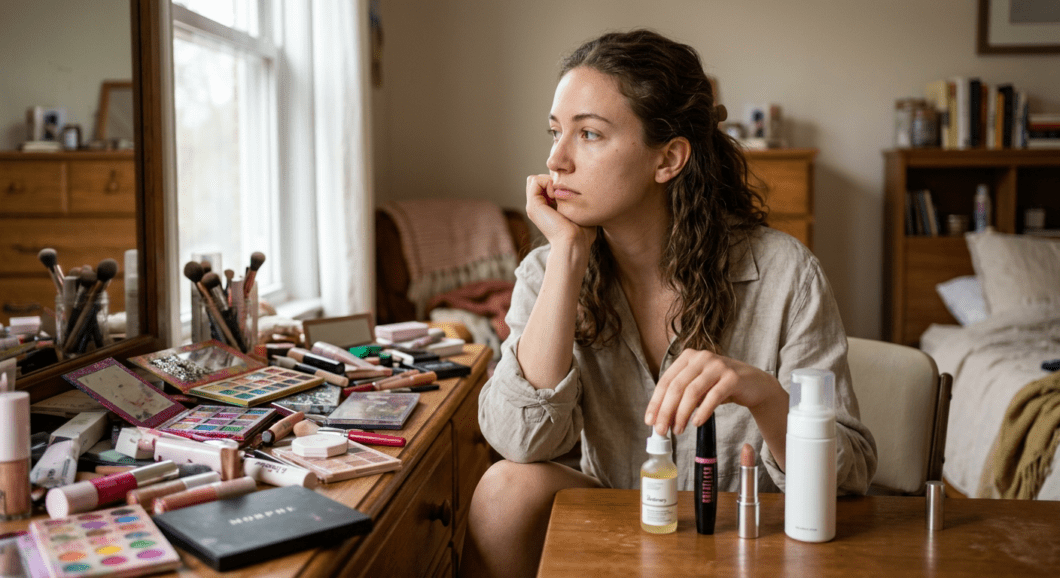
Seventy-two percent of consumers say they feel overwhelmed by the sheer volume of new beauty product launches, according to Drug Store News. That number marks a real shift in how people shop, what they buy, and which brands they trust. After years of chasing viral serums and 12-step routines, shoppers are walking back toward products that simply work. The change rewards quality, proven ingredients, and longevity over novelty and hype.
What Is Beauty Trend Fatigue?
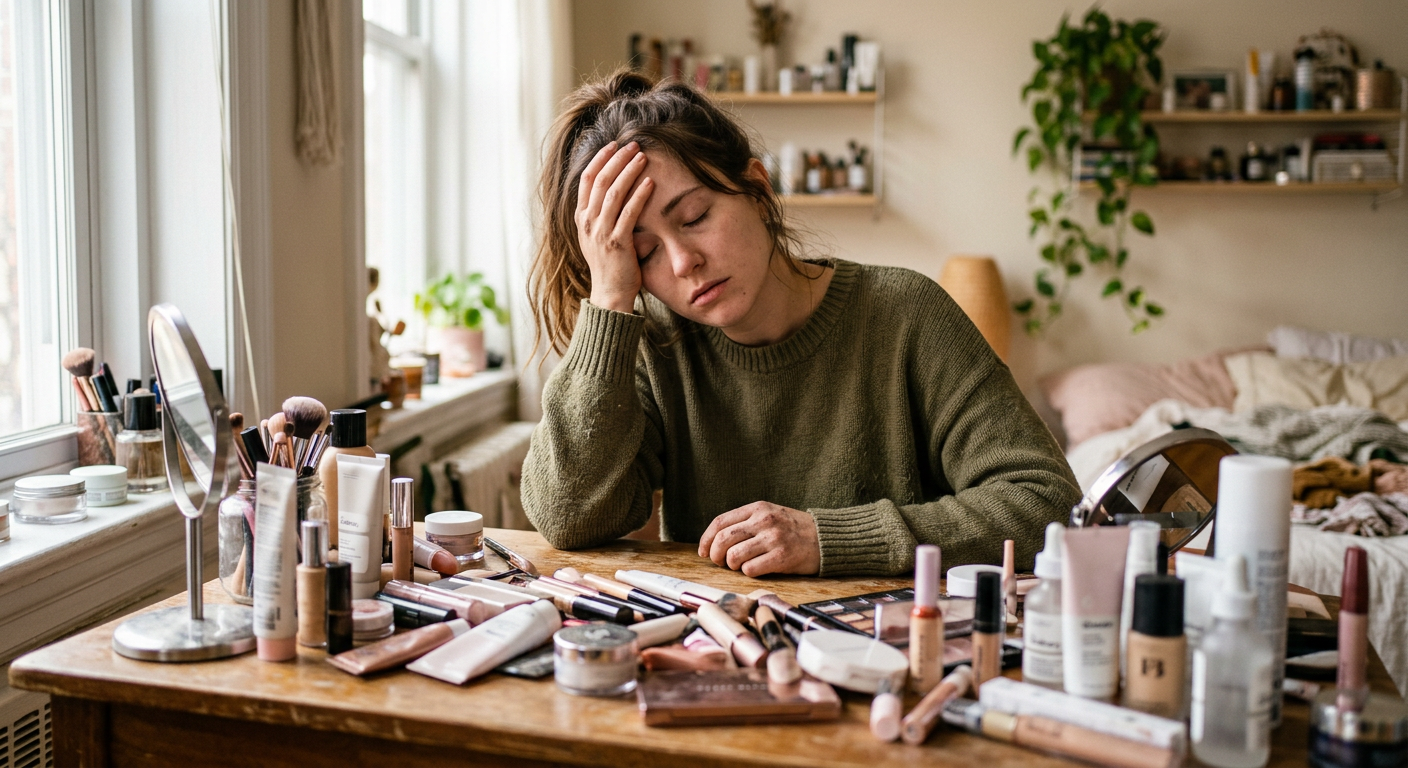
Beauty trend fatigue is the exhaustion consumers feel when faced with an endless cycle of new products, aesthetics, and routines promoted as essential. It isn’t boredom with beauty itself. It’s a rejection of the pace and pressure that come with constant novelty.
The fatigue runs deepest among younger shoppers, who report the highest levels of overwhelm despite being the most active on platforms like TikTok. They see slugging one month, glass skin the next, and a new must-have acid by quarter’s end. The result is decision paralysis rather than excitement.
This isn’t just a feeling. Consumer insights firm Quid finds people reacting against aesthetics that feel “socially mandatory, algorithmically repeated, or disconnected from personal identity.” When trends get dictated by algorithms instead of genuine need, fatigue follows.
Why Consumers Are Burning Out on Trends
Several forces are converging to push shoppers toward simplicity. Understanding them explains why timeless products are gaining ground.
Information Overload
The beauty market floods consumers with conflicting advice. Industry analysts at Beauty Independent note that demand is shifting away from “fixing and symptom-focused, fragmented products” toward integrative formulations. Instead of feeling informed, many shoppers feel confused about which products actually meet their needs.
The Cost of Chasing Trends
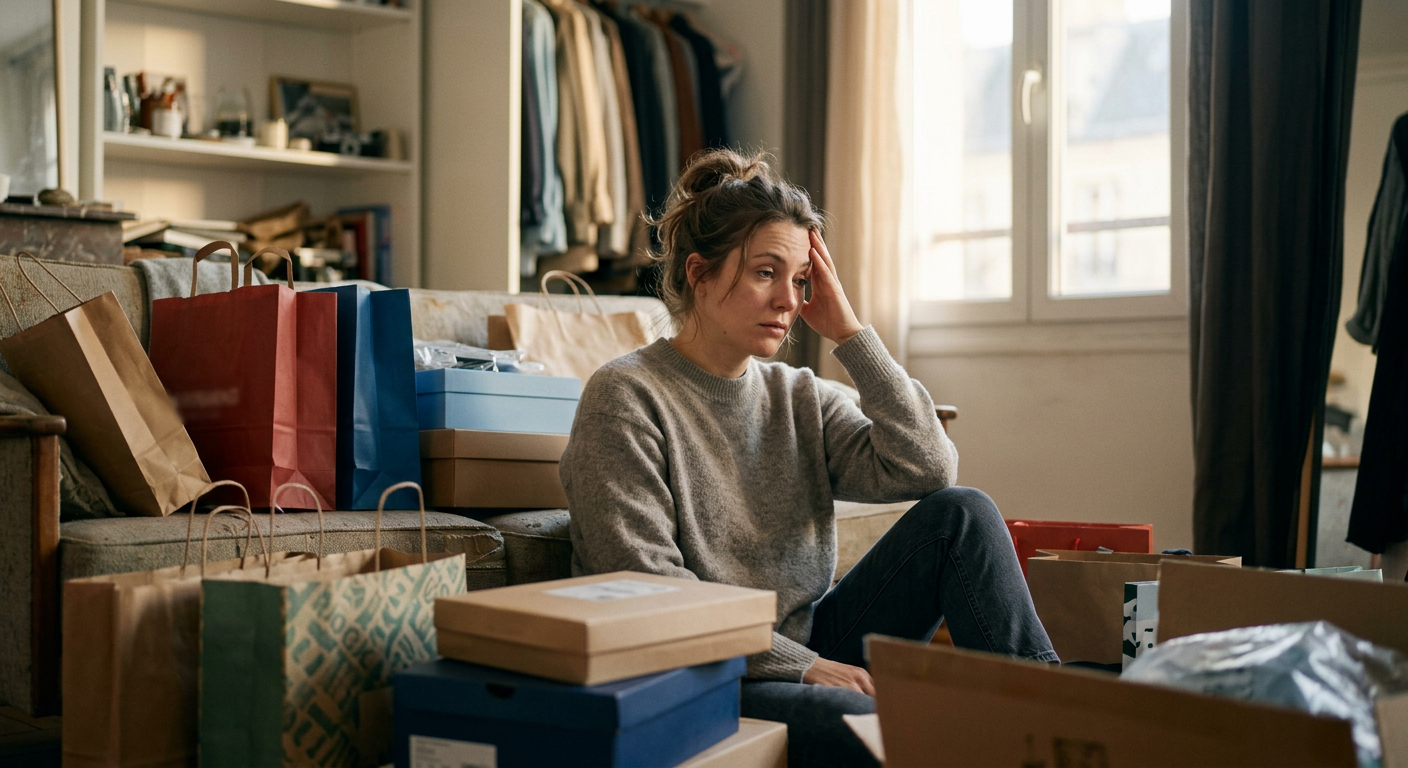
Every new trend carries a price tag. Buying into each viral product means a bathroom shelf full of half-used bottles and wasted money. Consumers are doing the math and finding that novelty rarely justifies the spend.
Performance Beats Hype
Once shoppers compare a viral natural fad against proven, science-backed ingredients, the novelty wears off fast. Real-world results matter more than a trending hashtag, and that recognition is steering people back to formulations with a track record.
The Return to Timeless Beauty Products
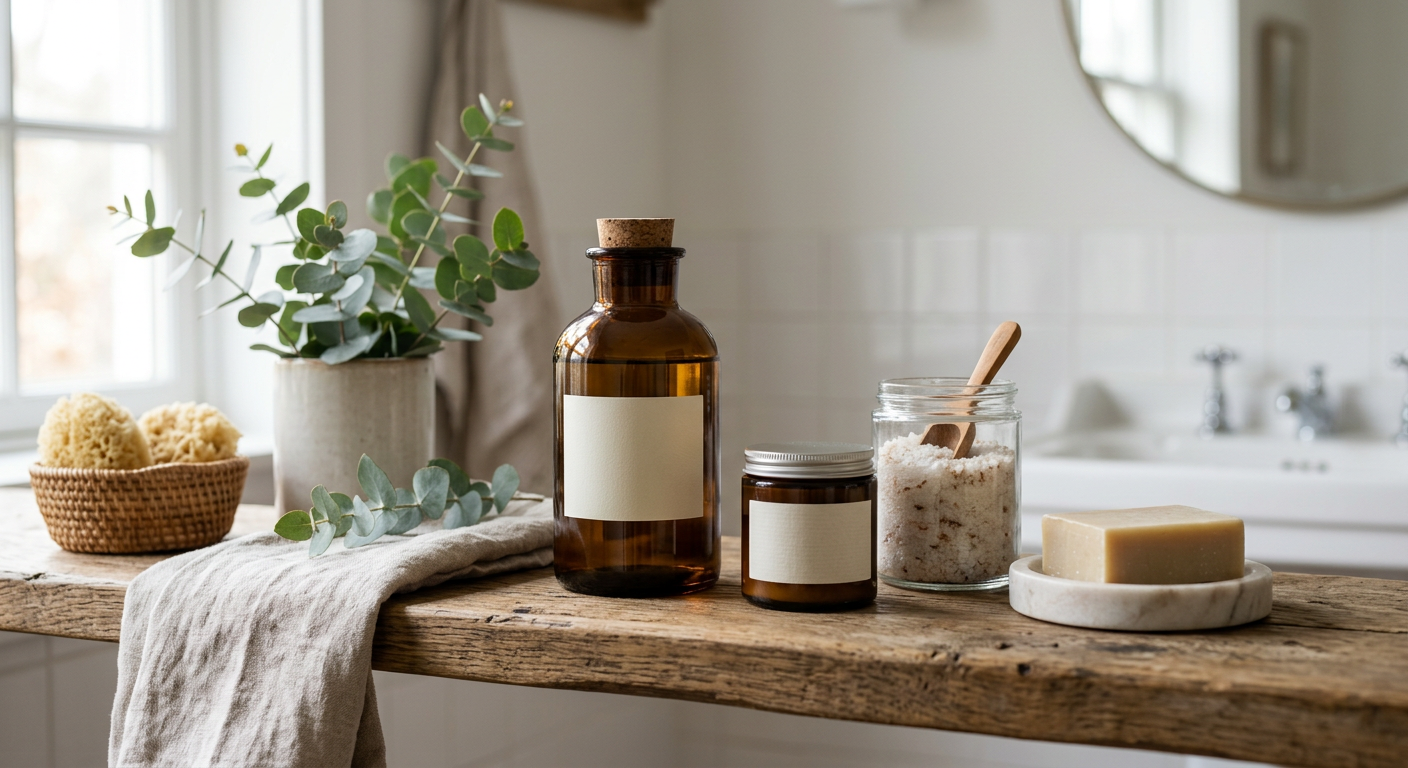
Timeless products share a distinct profile. They grow quietly across regions and price points, and they get adopted by consumers who actually finish the bottle, as FSM Cosmetics observes. That last detail matters: a finished product signals satisfaction, not impulse buying.
The new definition of luxury is built on rituals, not trends. Avant Skincare frames trend fatigue as the beauty world’s way of saying quality matters more than novelty. Consumers want products they can rely on for years, not weeks.
That preference favors brands with proven hero ingredients and consistent formulas. A well-made hyaluronic acid serum, a reliable retinoid, or a quality cleanser outlasts any seasonal craze. These products earn loyalty through results.
Trend Products vs. Timeless Products
| Factor | Trend Products | Timeless Products |
|---|---|---|
| Lifespan | Weeks to months | Years |
| Driven by | Algorithms, virality | Proven performance |
| Ingredient focus | Novel, untested | Science-backed staples |
| Consumer behavior | Impulse purchase, often abandoned | Repurchased, finished |
| Value over time | Diminishes fast | Holds steady |
| Emotional payoff | Excitement, then fatigue | Trust and consistency |
How Skinimalism Reflects the Shift
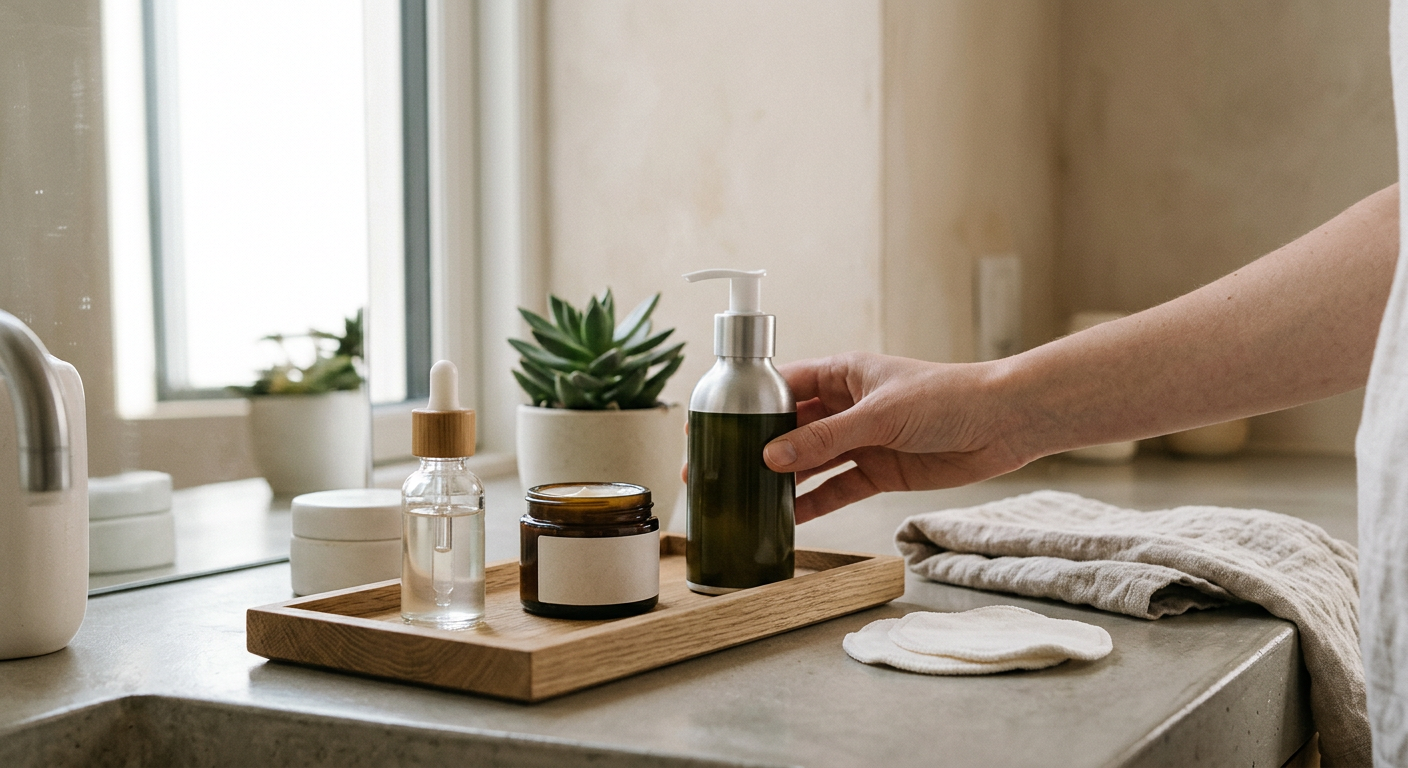
Skinimalism, the practice of paring routines down to a few effective products, is the clearest expression of trend fatigue in action. Rather than layering ten steps, consumers focus on a cleanser, a treatment, and a moisturizer that deliver measurable results.
The approach is gaining momentum because it solves the overwhelm problem directly. Fewer products mean fewer decisions, lower costs, and less risk of irritating the skin barrier with conflicting actives. It rewards intention over accumulation.
Skinimalism also aligns with a broader move toward long-term skin health. Beauty Independent reports that consumers increasingly expect skincare to support “long-term skin resilience, barrier health and signs of aging at the source.” The goal has moved from quick fixes to lasting function.
The Rise of Proactive, Science-Backed Beauty
Trend fatigue coincides with a more sophisticated consumer. Research from Barefaced, which analyzed 15 leading trend reports and over 4,000 Reddit comments, found the industry shifting from reactive “anti-aging” to proactive “prejuvenation.” Aging is being reframed as a biological process to optimize rather than fight.
That reframing changes how consumers evaluate products. They’re no longer swayed by promises to erase wrinkles overnight. They look for ingredients with mechanisms they understand and evidence they can verify.
Skincare literacy is going mainstream too. As more people learn to read ingredient lists and understand active concentrations, they grow harder to impress with marketing alone. An educated buyer gravitates toward proven formulations over trending unknowns.
How to Build a Trend-Proof Beauty Routine
Escaping the cycle of beauty trend fatigue takes a deliberate strategy. The goal is a routine built on results, not hype.
Start With Proven Ingredients
Anchor your routine in ingredients with strong clinical support. These have earned their place through decades of evidence.
- Retinoids for cell turnover and signs of aging
- Vitamin C for antioxidant protection and brightness
- Hyaluronic acid for hydration
- Niacinamide for barrier support and tone
- SPF as the single most effective anti-aging step
Audit Before You Add
Before buying any new product, ask whether it solves a problem your current routine doesn’t. If the answer is no, skip it. This one habit eliminates most impulse purchases.
Prioritize Finishability
Choose products you’ll actually finish. A bottle that runs out is a vote of confidence in its value. If you keep abandoning products halfway, treat that as a signal to simplify rather than expand.
Conclusion
Beauty trend fatigue isn’t a temporary mood. It reflects a lasting change in how consumers value their time, money, and attention. With 72% of shoppers overwhelmed by new launches, the market is rewarding products that deliver consistent, proven results over fleeting novelty.
Three patterns stand out: timeless products outlast trends, science-backed ingredients beat viral fads, and skinimalism solves the overwhelm problem at its root. Build your routine around proven staples, audit before you buy, and choose products worth finishing.
Take inventory of your shelf this week. Keep what performs, retire what was bought on hype, and put the savings toward a few timeless products that earn their place every day.
FAQ
Q: What is beauty trend fatigue?
Beauty trend fatigue is the exhaustion consumers feel from the constant cycle of new products and aesthetics marketed as essential. It drives shoppers toward simpler routines and proven, timeless products instead of viral trends.
Q: Why are consumers choosing timeless beauty products again?
Consumers are choosing timeless products because they deliver reliable results, save money, and reduce decision fatigue. After comparing viral fads to science-backed ingredients, many find the novelty rarely justifies the cost.
Q: What is skinimalism?
Skinimalism is the practice of simplifying your beauty routine to a few highly effective products. It addresses trend fatigue by cutting overwhelm, lowering costs, and protecting the skin barrier from conflicting actives.
Q: Which skincare ingredients are considered timeless?
Retinoids, vitamin C, hyaluronic acid, niacinamide, and SPF are widely regarded as timeless because they have strong clinical evidence. These ingredients consistently outperform trending alternatives over the long term.
Q: How do I know if a beauty trend is worth following?
Timeless trends grow quietly across regions and price points and get adopted by consumers who finish their products. If a trend relies on virality rather than proven performance, it’s likely to fade quickly.
Q: Is trend fatigue affecting younger or older consumers more?
Younger shoppers report the highest levels of fatigue despite being the most active on social platforms. Constant exposure to new trends online intensifies their sense of overwhelm.