

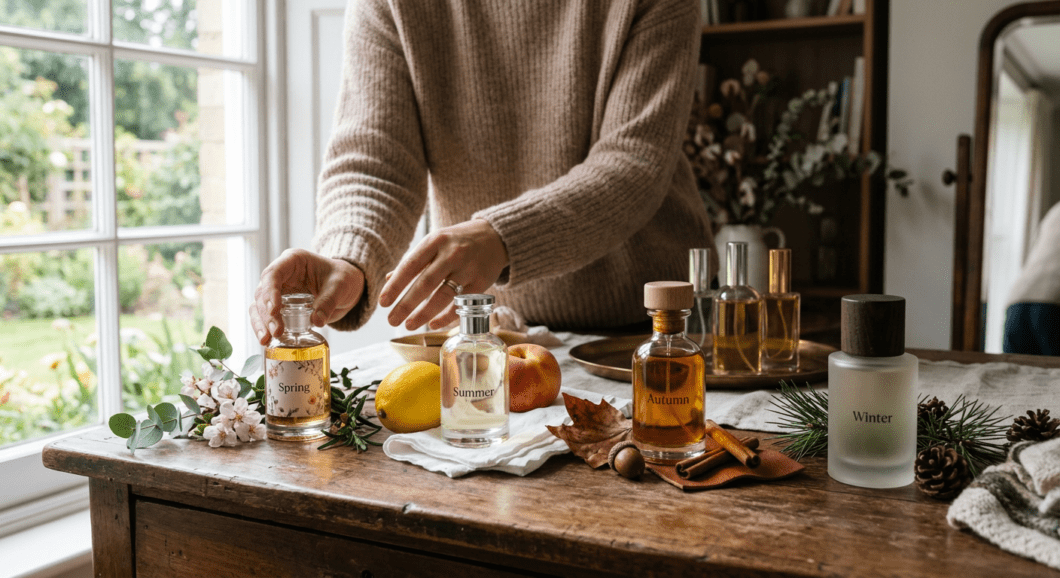
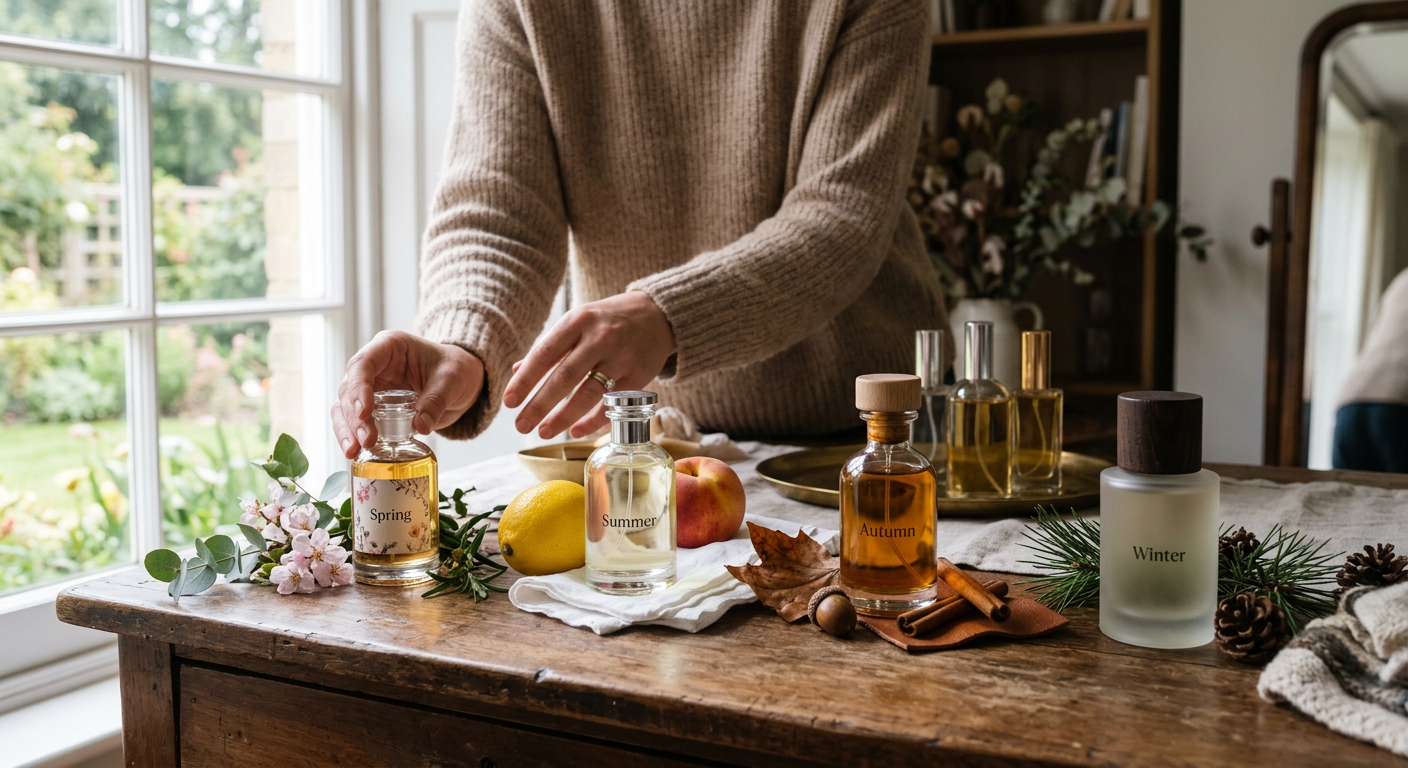
The single signature scent is on its way out. Most fragrance lovers now own somewhere between 8 and 12 different perfumes, choosing variety over a one-bottle commitment, according to Scento’s Gen Z fragrance research. Building a collection that shifts with the seasons means matching your fragrance to the weather, your mood, and the occasion. This guide covers how to put together a seasonal fragrance wardrobe that actually feels like yours, from sorting out scent families to layering tricks that turn ordinary perfumes into something personal.
Why a Seasonal Scent Collection Beats One Signature Fragrance
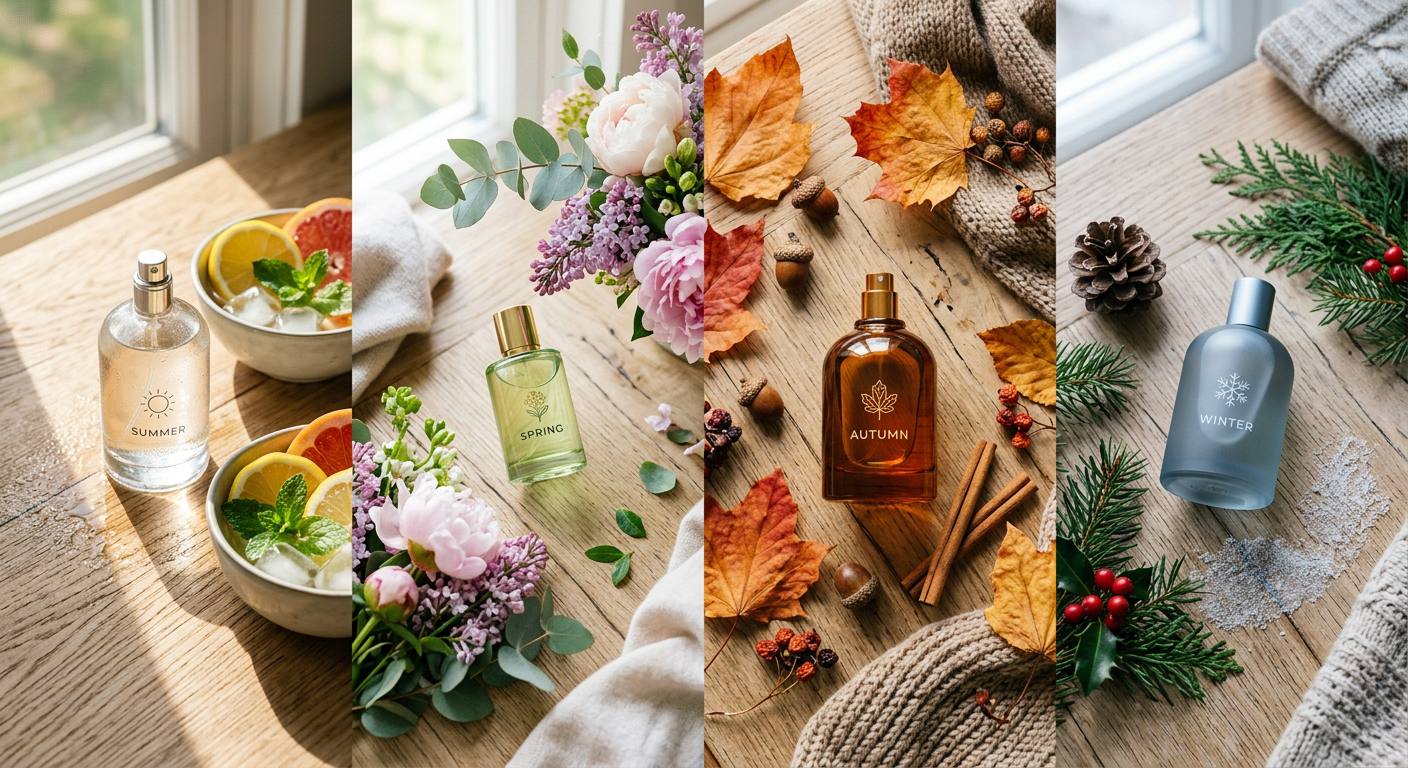
Fragrance behaves differently depending on temperature and humidity. Heat amplifies projection, which is why a heavy oud that smells luxurious in December turns suffocating in July. A seasonal approach lets your fragrance work with the weather instead of fighting it.
The trend reflects a bigger shift in how people think about scent. Nordstrom beauty director Autumne West put it this way to Vogue: “People are more open than ever to exploring, layering, and treating fragrance like an accessory they can shift with mood, moment, or season.” Treat scent like a wardrobe rather than a uniform and you get more room to play.
The math works in your favor too. Gen Z spends an average of €204 a year on fragrance, 23% more than the average consumer, largely because variety pays off across more occasions. Build the collection well and the right scent is always within reach.
Understanding Fragrance Notes and Scent Families
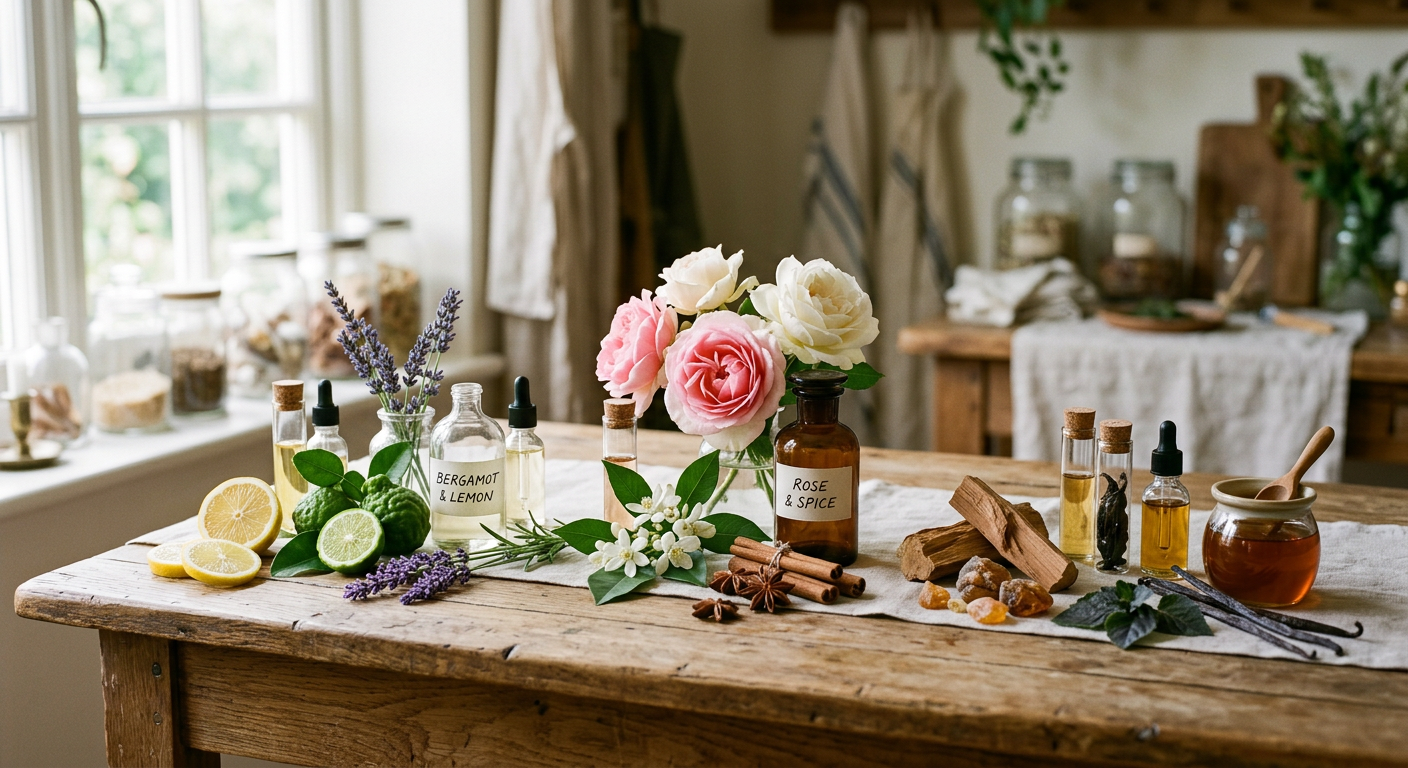
Before you start buying, get familiar with the building blocks. Every fragrance unfolds in three stages, and knowing them helps you predict how a scent will behave on your skin.
The Three Fragrance Notes
- Top notes: The first thing you smell on application. Light and quick to evaporate, usually within 15 minutes (citrus, bergamot, light herbs).
- Heart notes: The core that emerges as the top notes fade, lasting two to four hours (florals, spices, green notes).
- Base notes: The foundation that sticks around longest, often six hours or more (woods, musk, amber, vanilla).
The Main Scent Families
Most fragrances fall into one of four broad families. Once you know your preferences across these categories, building a balanced collection gets a lot easier.
| Scent Family | Common Notes | Best Season | Mood |
|---|---|---|---|
| Fresh | Citrus, aquatic, green | Spring/Summer | Energizing, clean |
| Floral | Rose, jasmine, peony | Spring | Romantic, soft |
| Woody | Sandalwood, cedar, vetiver | Fall | Grounding, warm |
| Oriental/Amber | Vanilla, amber, spice | Winter | Rich, sensual |
Treat this table as a starting map. Once you know which family you lean toward, you can deliberately fill the gaps for seasons you tend to ignore.
Building Your Spring and Summer Lineup
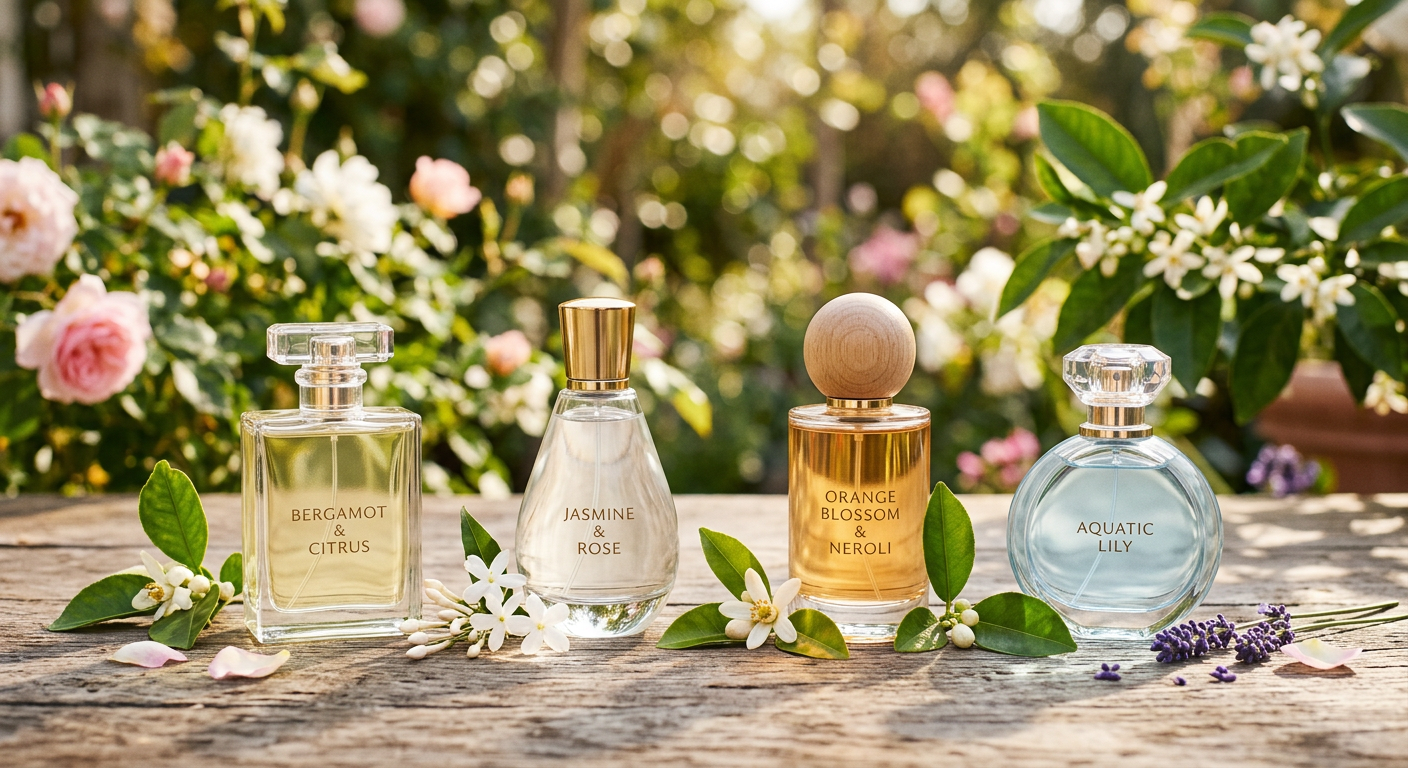
Warm-weather fragrances need to feel light, bright, and wearable in high heat. The fresh and floral families do the heavy lifting here, since their citrus and green notes burn off cleanly instead of turning cloying.
Spring Selections
Spring suits fragrances that echo new growth. Soft florals like peony and lily-of-the-valley, paired with green stems and light citrus, capture the season’s freshness. They project gently, which matches the milder temperatures.
Summer Selections
Summer rewards aquatic and citrus-forward compositions that hold their own against heat and humidity. Body mists have become a popular summer pick because they layer easily and refresh throughout the day. As Vogue notes, today’s hair and body mists are “more grown-up and even serve as part of a broader body-care ritual,” which makes them a flexible option for the hottest months.
Curating Fall and Winter Scents
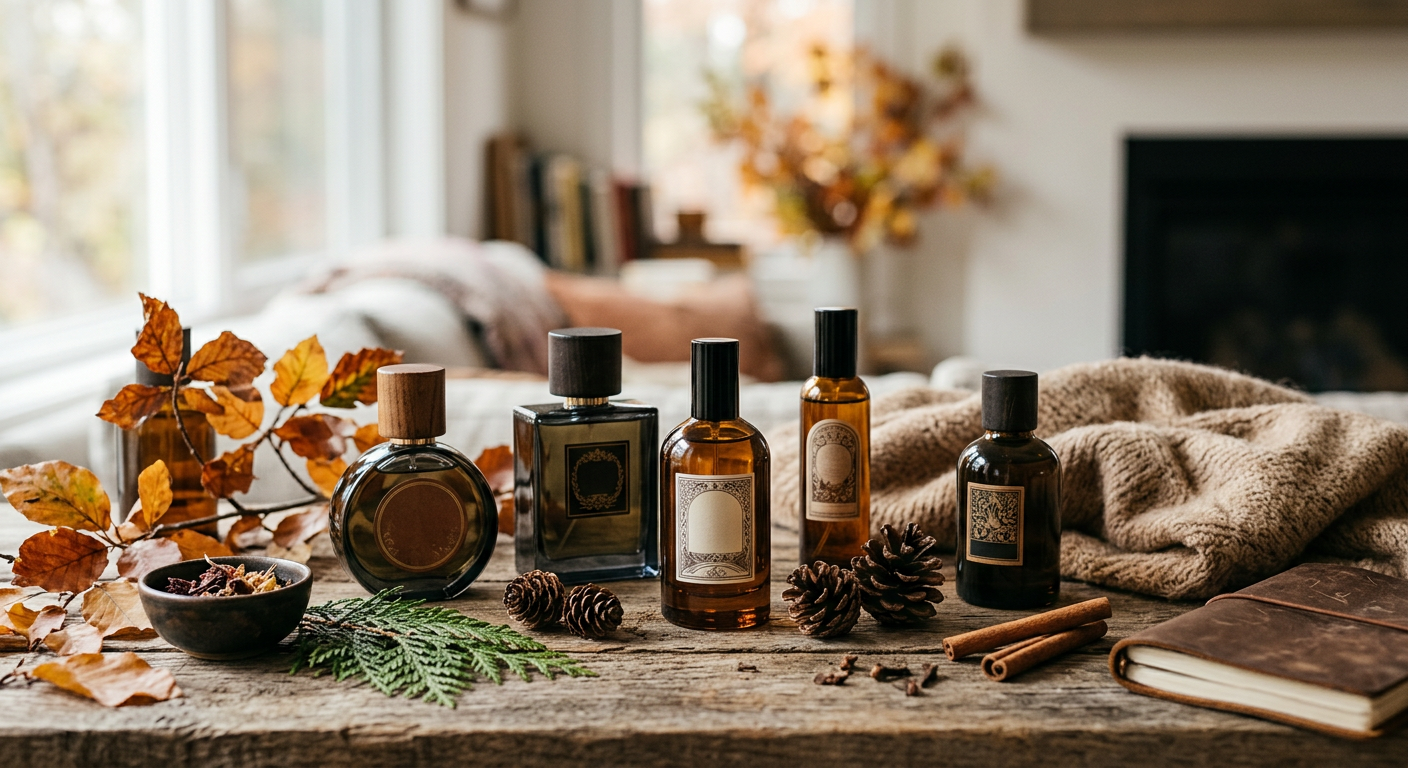
When temperatures drop, your fragrances can get richer and more complex. Cold air mutes projection, so the heavier base notes that would steamroll a summer afternoon become balanced and inviting.
Fall Favorites
Fall belongs to woody and spiced scents. Cedar, vetiver, and warm amber pair beautifully with crisp air, and notes of cardamom, clove, and dried fruit add the depth that defines autumn.
Winter Warmers
Winter is where the richest fragrances in your collection earn their keep: oriental and amber families built on vanilla, oud, incense, and resins. The holiday stretch from November to December accounts for nearly 35% of annual perfume revenue, according to WiFiTalents industry data, which tracks how strongly we tie deep, warm scents to the cold months. These fragrances also last longer in low temperatures, so a couple of sprays goes a long way.
Scent Stacking: How to Layer for a Personal Signature
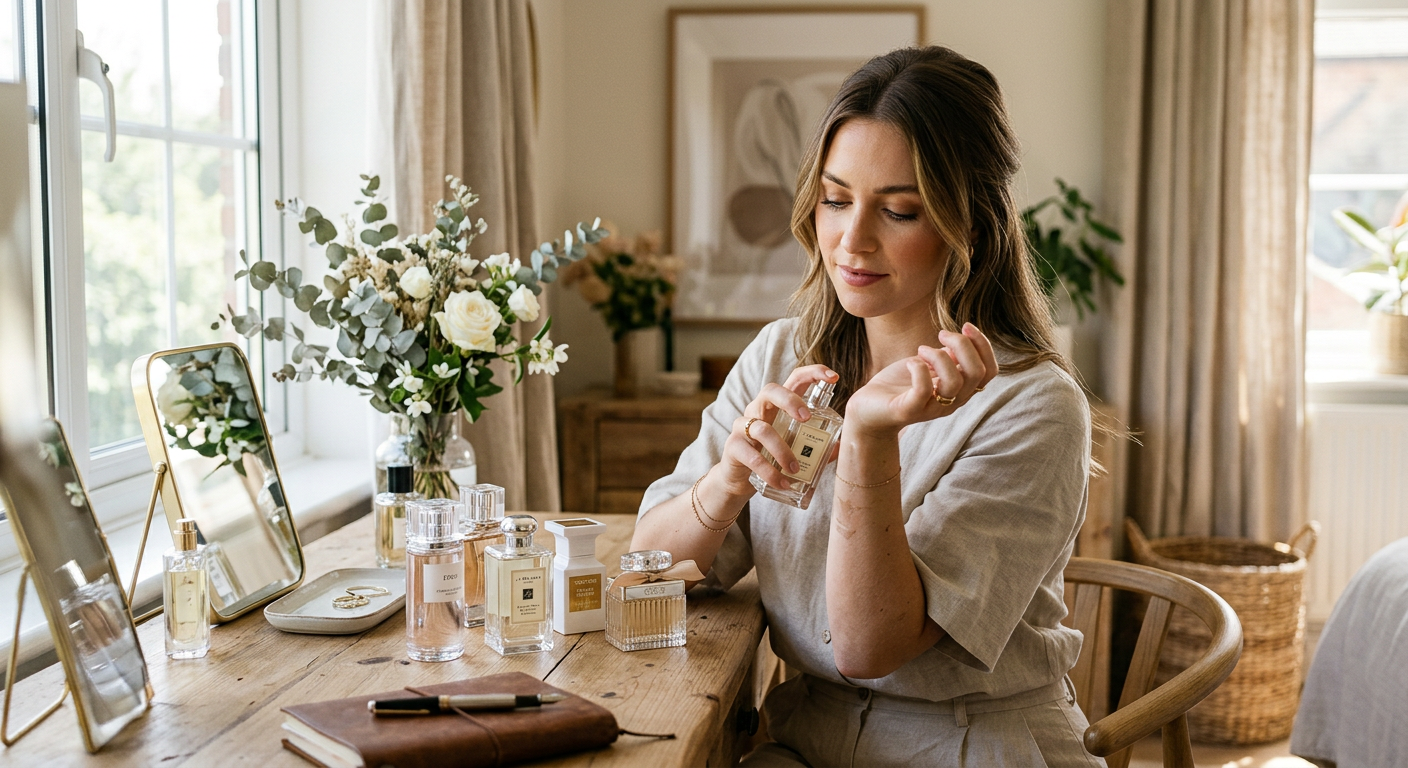
Layering, or scent stacking, means combining multiple fragrances to create something more personal than any single bottle can manage. Instead of asking one scent to perform the same way every day, layering lets you adjust to mood and season.
According to the SALUS scent stacking guide, the aim is to “blend multiple fragrance notes into a living composition” that develops differently on every wearer. Start with a base layer, usually a musk or vanilla, then build brighter notes on top.
Simple Layering Rules
- Apply the heaviest, longest-lasting scent first as your anchor.
- Layer lighter, fresher scents over that base.
- Keep it to two or three fragrances so the blend doesn’t turn muddy.
- Test on skin, not paper. Body chemistry changes how scents interact.
The technique stretches your collection further. A single fresh citrus and a single warm vanilla can yield several distinct combinations depending on the season and how you balance them.
DIY Signature Scents with Essential Oils

If you want full control, blending your own scents with essential oils is a budget-friendly route to something truly personal. Plenty of enthusiasts build seasonal diffuser blends and room sprays alongside their wearable fragrances, extending the experience into their living space.
Melissa from The Inspired Room describes making seasonal room sprays and diffuser blends as “one of the ways I slow down to savor the season.” Spring and summer blends tend to feature citrus and herbal oils, while fall and winter call for cinnamon, clove, and cedarwood.
For wearable DIY perfume, a starter kit makes experimentation easy. Beauty expert Alison Blackman of Advice Sisters lays out the process plainly: “All you have to do is sniff the essential oils, fill some droppers and dispense as many drops as you wish into the mini-bottle.” A 30-50-20 ratio of base, heart, and top notes is a solid starting point. Adjust from there to taste.
Conclusion
A seasonal scent collection gives you the right fragrance for any temperature, mood, or occasion. Start with the three fragrance notes and four scent families, then stock your wardrobe with fresh and floral scents for warm months and woody, amber compositions for the cold. Layering and DIY blending take that collection and make it your own.
The best collections grow over time, shaped by trial and error rather than a single shopping trip. Figure out which scent family you already love, then pick one seasonal gap to fill this month. Sample widely, test on skin, and let the wardrobe evolve with you.
Frequently Asked Questions
Q: How many fragrances do I need for a complete seasonal collection?
A starter collection of four fragrances, one per season, covers the basics. Most enthusiasts build toward 8 to 12 scents for variety. Prioritize quality and seasonal fit over sheer quantity.
Q: Can I wear the same perfume year-round?
You can, but heat and cold change how a fragrance performs, so a single scent rarely shines in every season. Lighter, fresh scents suit warm weather, while richer, woody-amber scents work better in the cold.
Q: What does scent stacking mean?
Scent stacking, also called layering, is combining two or three fragrances into a unique, personal blend. Apply the heaviest scent first as a base, then layer lighter notes on top.
Q: How should I store my fragrance collection?
Keep fragrances in a cool, dark place away from direct sunlight, heat, and humidity, all of which break down scent molecules. A drawer or closet shelf beats a bright bathroom counter.
Q: Are essential oil blends as long-lasting as commercial perfumes?
Essential oil blends usually project more softly and fade faster because they lack the synthetic fixatives that extend wear. Adding a carrier oil and base notes like vanilla or cedarwood helps with longevity.
Q: How do I find which scent family suits me?
Sample fragrances across all four families (fresh, floral, woody, and oriental) and notice which ones you reach for again and again. Your habits reveal your core scent family and point the way for future purchases.