

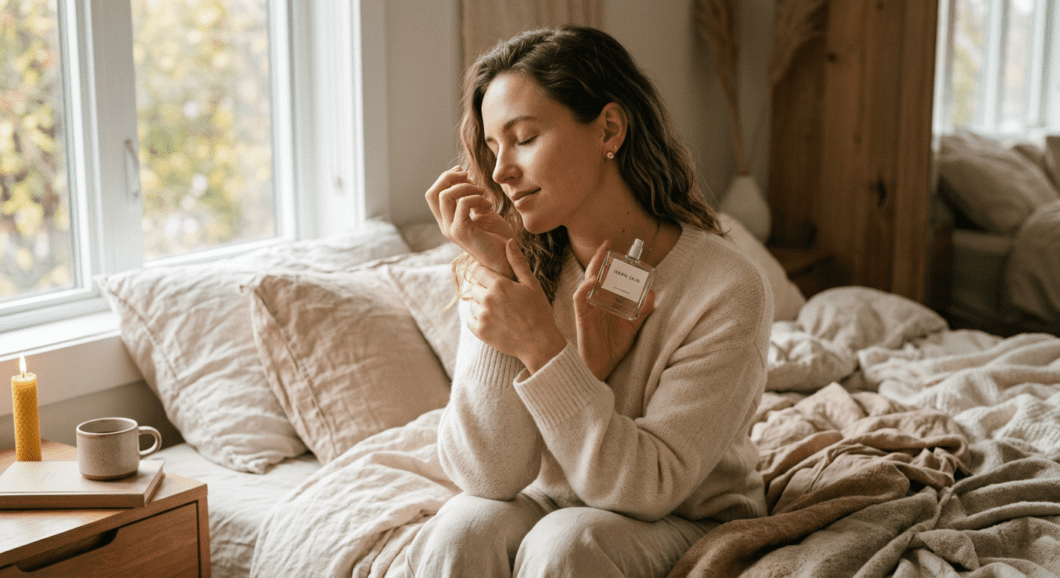
What if your perfume felt less like a statement and more like a second skin? That’s the promise behind warm skin scents — fragrances built on amber, musk, vanilla, and sandalwood that sit close to the body, radiate quiet intimacy, and work just as well in July as they do in January. This isn’t a seasonal novelty. According to Sentier Fragrance, skin-first scents are the defining fragrance movement of 2026, driven by a cultural shift toward intimacy over projection.
If you’ve been reaching for the same heavy winter perfume and abandoning it the moment spring arrives, this trend offers a more versatile approach to scent.
What Exactly Is a Warm Skin Scent?

A warm skin scent is a fragrance designed to blend with your natural body chemistry rather than announce itself across a room. These are low-projection, high-intimacy perfumes — the kind someone notices only when they lean in close. The effect is intentional: you smell like a warmer, more elevated version of yourself.
The notes that define this category are soft and enveloping: amber, musk, vanilla, sandalwood, cashmere wood, and skin-mimicking molecules like Iso E Super or Ambroxan. These ingredients interact with your skin’s warmth to create something that feels personal rather than generic.
This is distinct from simply wearing a light fragrance. A skin scent can have real depth and complexity — it just stays close rather than projects outward. As Sentier Fragrance puts it, “In a louder world, scent is choosing to stay close.”
Why This Trend Is Dominating 2026

The rise of warm skin scents reflects a broader shift toward comfort, self-care, and emotional resonance in fragrance choices. Allure’s spring 2026 fragrance trend report notes that consumers are increasingly drawn to scents that “evoke sunlit skin, warmth, and a sense of place” — fragrances that feel transportive rather than performative.
There’s a practical dimension too. Heavy sillage fragrances — those that project strongly — can feel overwhelming in offices, on public transit, or in close social settings. A skin scent sidesteps that friction entirely.
Refinery29’s winter 2025 trend report adds another layer: gourmand fragrances are evolving toward more complex, skin-close compositions. The era of loud, single-note vanilla is giving way to nuanced blends that work across contexts and seasons.
The Core Notes That Define Cozy Warmth
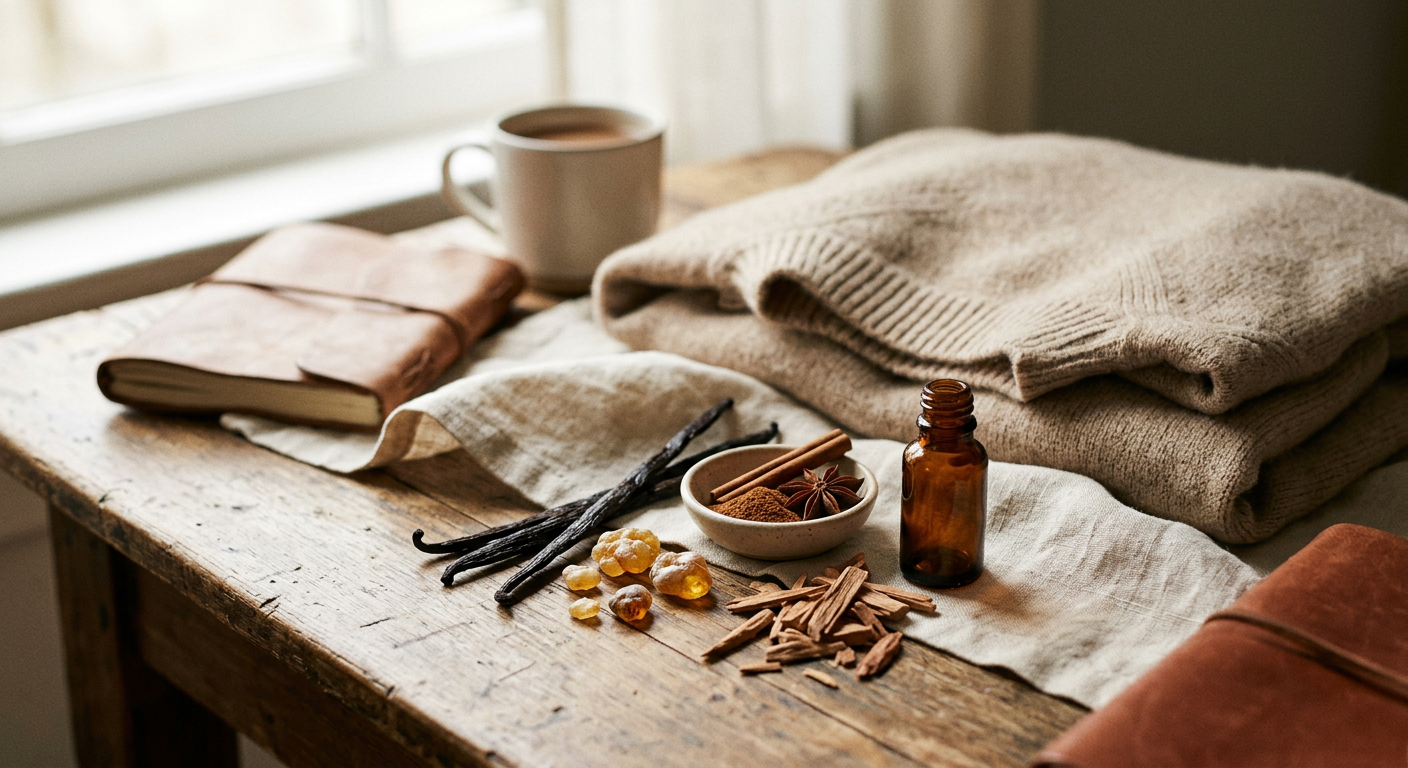
Knowing which ingredients create that warm-skin effect helps you shop smarter and layer more effectively.
Amber and Musks
Amber is the backbone of most cozy skin scents. It provides a resinous, slightly sweet warmth that reads as skin-like without veering into body-odor territory. White musks and clean musks amplify this — they’re formulated to mimic the scent of clean, warm skin.
Vanilla and Gourmand Accords
Vanilla remains one of the most universally comforting fragrance notes. Harper’s Bazaar highlights the Loewe Roasted Vanilla Eau de Parfum as a standout example — vanilla depth without tipping into cloying sweetness. Marshmallow and tonka bean accords work similarly.
Sandalwood and Creamy Woods
Sandalwood adds a creamy, almost milky warmth that bridges the gap between woody and skin-like. Allure specifically calls out sandalwood alongside vanilla and pistachio as the defining notes of 2026’s creamy scent profiles.
Powder and Cashmere
Powdery notes — iris, heliotrope, orris — create a soft, fabric-like quality that Elle compares to “an oversize cashmere blanket.” These notes work especially well on skin that runs warm naturally.
Standout Warm Skin Scents Worth Knowing
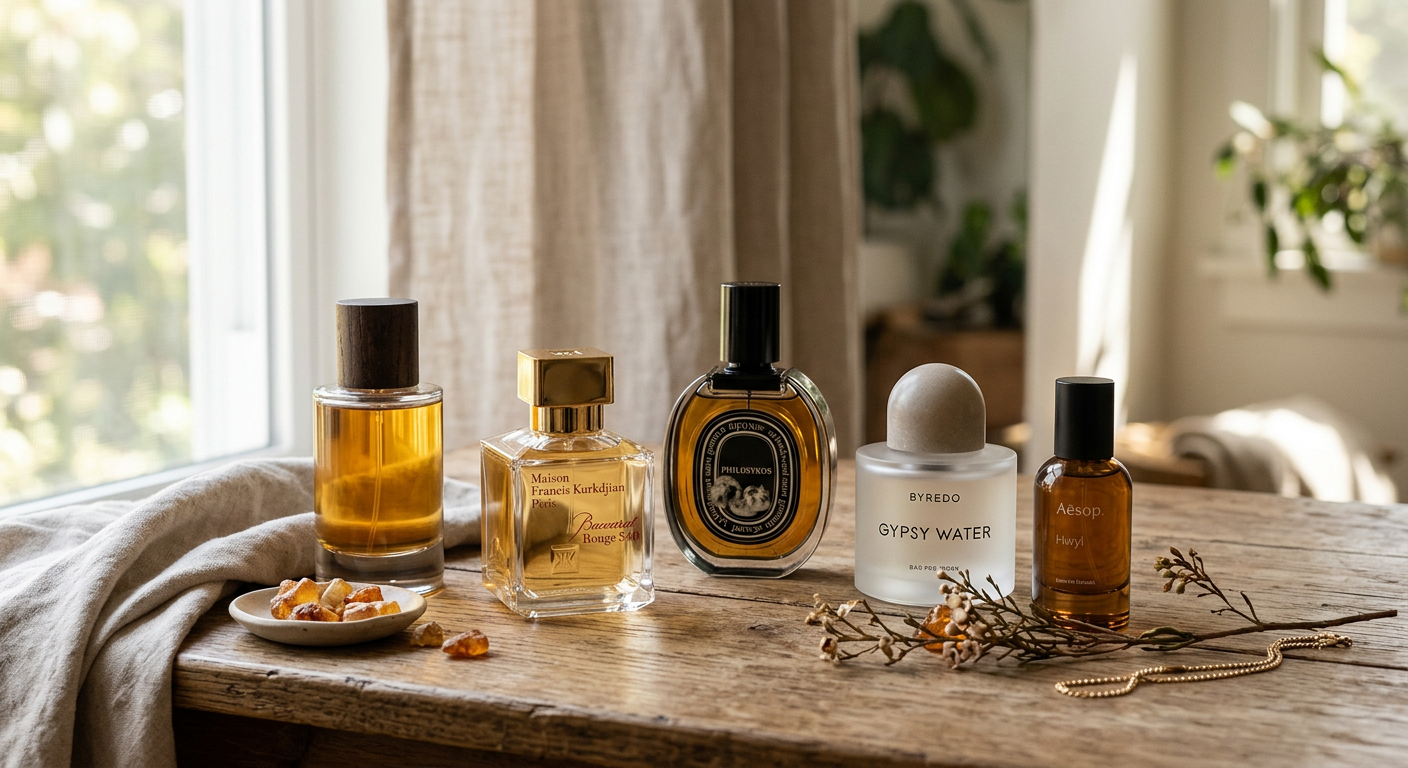
The following fragrances represent the range of the warm skin scent category — from accessible to investment-level.
Harper’s Bazaar notes that Maison Margiela’s By the Fireplace has a loyal following precisely because its smoky wood notes feel intimate rather than overpowering. Glamour highlights Chanel Jersey and Byredo Blanche as textbook examples of the skin-scent aesthetic — soft, milky, close to the body.
How to Wear Warm Skin Scents Year-Round
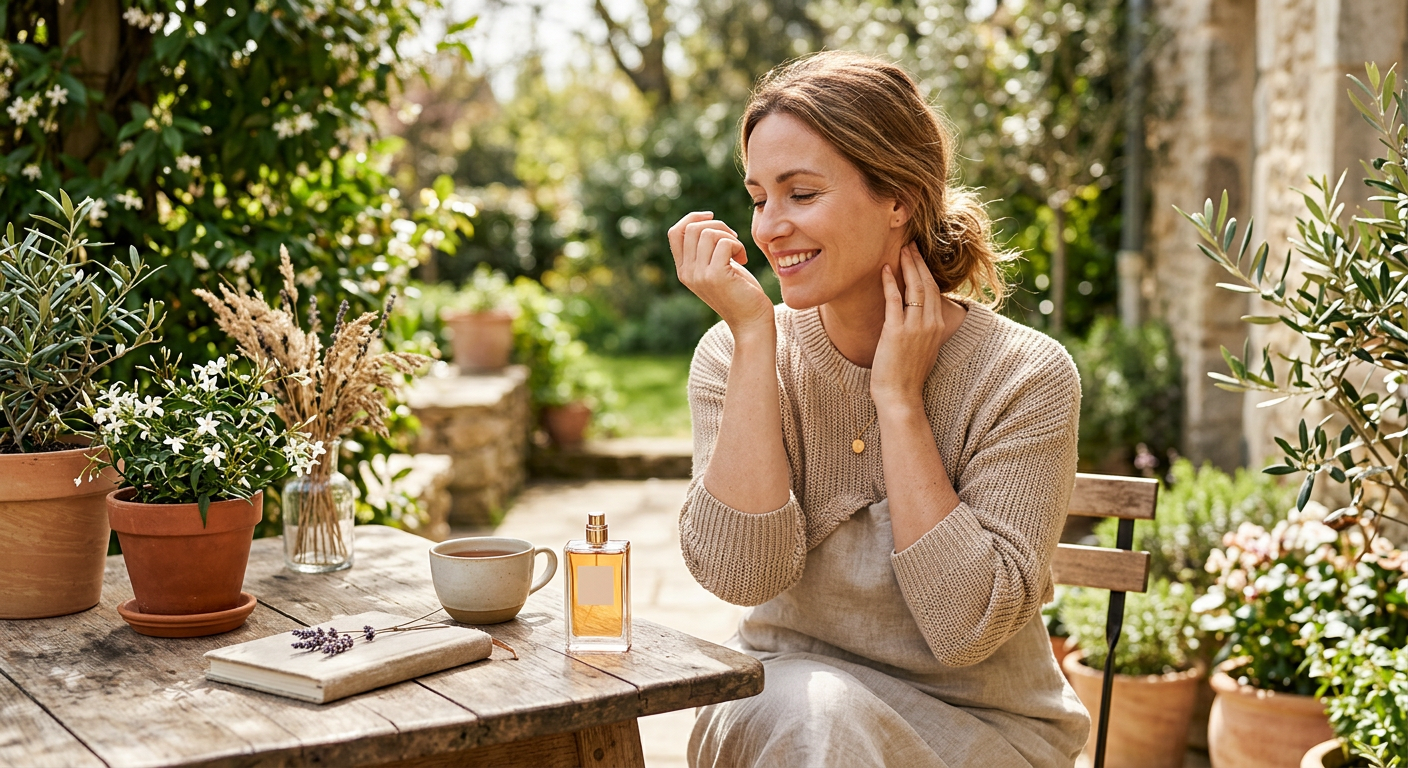
The most common mistake with cozy fragrances is treating them as strictly cold-weather options. Their low-projection profile makes them well-suited for warm months too — summer skin heat amplifies these notes rather than distorting them.
Layering for Seasonal Versatility
Scento’s seasonal fragrance guide recommends using “transition scents” that balance fresh and warm notes when moving between seasons. In practice, this means applying a warm skin scent base — an unscented body oil or fragrance lotion in a matching or complementary note — under your perfume to extend longevity and deepen the skin-like quality.
Refinery29 echoes this approach, noting that body powders and scented lotions create a “scented base layer” that makes any perfume worn on top feel more intimate and skin-close.
Application Tips for Maximum Effect
Apply warm skin scents to pulse points where body heat is highest: inner wrists, the base of the throat, behind the knees, the inside of the elbow. The Fragrance Secrets also recommends moisturizing before application — hydrated skin holds scent significantly longer than dry skin.
In summer, avoid spraying citrus-based formulas on sun-exposed skin due to photosensitivity risk. Warm musky and amber-based scents carry no such restriction.
Building a Year-Round Warm Scent Wardrobe
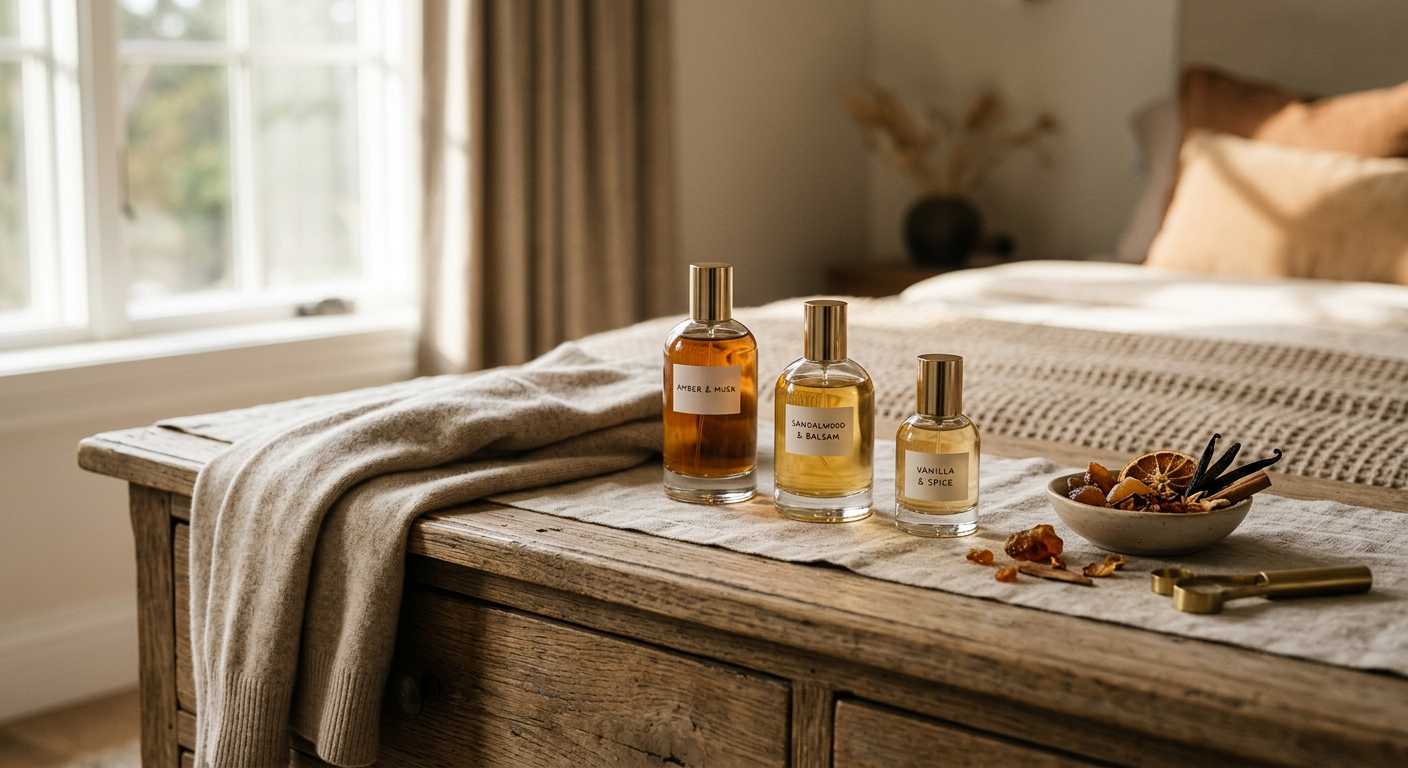
Two or three well-chosen warm skin scents — varying in intensity and top-note character — cover most occasions and temperatures without requiring a full seasonal rotation.
A practical starting framework:
- Everyday skin scent: A soft musk or sandalwood-forward fragrance with minimal projection (Byredo Blanche, Chanel Jersey)
- Cooler weather depth: A richer amber or vanilla-gourmand formula for autumn and winter evenings (Maison Margiela By the Fireplace, Loewe Roasted Vanilla)
- Warm weather version: A lighter, skin-close option with solar or creamy notes that won’t feel heavy in heat (Byredo Gypsy Water, or a sheer musk)
Embark Perfumes notes that Eau de Parfum concentrations perform best for warm skin scents in cold weather, offering depth and longevity without heavy application. Eau de Toilette versions of similar compositions work well in warmer months when you want the character without the weight.
Conclusion
The warm skin scent trend is a recalibration of what fragrance is for. Rather than broadcasting a signature to a room, these intimate compositions work with your body chemistry to create something that feels specific to you. The notes are accessible — amber, musk, vanilla, sandalwood — the application principles are straightforward, and the versatility across seasons is real.
Start by identifying one warm skin scent that resonates with you, whether that’s the fireplace-smoke depth of Maison Margiela’s Replica or the clean-skin softness of Byredo Blanche. Layer it over a moisturized base, apply to pulse points, and wear it in any season.
Use the comparison table above as a starting point, and consider requesting decants before committing to full bottles — a standard recommendation from Scento for any new fragrance investment.
Frequently Asked Questions
Q: What makes a fragrance a “skin scent”?
A skin scent is a fragrance formulated to stay close to the body rather than project outward. It typically features musk, amber, sandalwood, or vanilla notes that interact with your natural body chemistry, creating a scent that smells personal and intimate rather than loud or diffusive.
Q: Can you wear warm, cozy fragrances in summer?
Yes. Warm skin scents with low projection work well in summer because body heat amplifies their notes naturally. Choose lighter concentrations (Eau de Toilette) or sheer musk-forward formulas, and apply to pulse points rather than clothing to keep the effect subtle and comfortable.
Q: How do you make a skin scent last longer?
Apply fragrance to moisturized skin — hydrated skin holds scent significantly longer than dry skin. Layering with an unscented or matching-note body lotion before spraying your perfume also extends longevity and deepens the skin-close effect.
Q: What is the difference between a skin scent and a gourmand fragrance?
Gourmand fragrances are built around edible, dessert-like notes — vanilla, caramel, chocolate — and can skew heavy or sweet. Skin scents prioritize body-like warmth and intimacy over sweetness. They may contain vanilla, but the overall impression is warm skin rather than bakery. Some fragrances overlap both categories.
Q: Are warm skin scents appropriate for the workplace?
Yes — their low projection makes them particularly well-suited for office environments. They’re unlikely to overwhelm colleagues in close quarters while still providing a polished, intentional scent presence. Soft musks and sandalwood-forward options are especially safe choices.
Q: What concentration works best for warm skin scents?
Eau de Parfum (EDP) concentrations generally perform best in cooler months, offering depth and longevity without requiring heavy application. In warmer weather, an Eau de Toilette (EDT) version of a similar composition provides the same character with a lighter touch.