

You buy the serum, promise yourself you’ll use it every night, and three weeks later it’s gathering dust behind the toothpaste. The problem is rarely the product or your motivation. It’s that you’re asking your brain to remember a brand-new task through sheer willpower, and willpower runs dry fast. Habit stacking fixes this by tying your beauty routine to habits you already do without thinking, so consistency becomes automatic instead of a daily act of discipline.
The method has quietly become one of the more reliable ways to build a skincare and self-care routine that survives a chaotic week. What follows is how it works, how to apply it, and how long before it stops feeling like work.
What Habit Stacking Actually Means
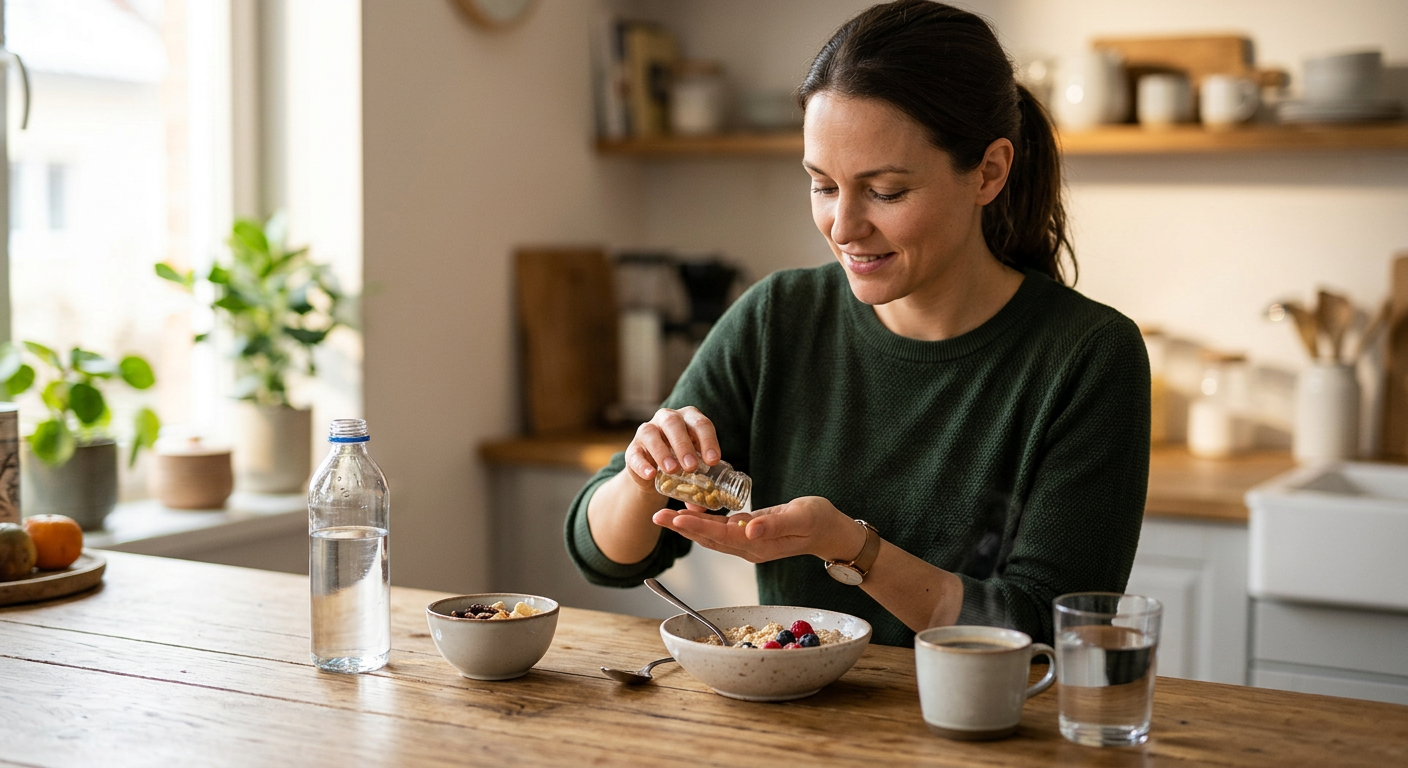
Habit stacking is a behavior-change strategy that pairs a new habit with an existing one you already perform daily. Rather than memorizing a whole new routine, you anchor each step to something already baked into your day. The formula: “After I [existing habit], I will [new habit].”
Author James Clear popularized the idea in his 2018 book Atomic Habits, building on scientist BJ Fogg’s Tiny Habits program, according to Epionce. Piggyback a small new habit onto a familiar one, the thinking goes, and it’s far more likely to stick and become second nature.
Your brain is built for this. Psychologist Lauren Alexander, PhD, told Cleveland Clinic that a new habit needs motivation, repetition, and consistency until it turns automatic and the brain forms new synaptic connections. The existing habit does the remembering for you, taking the mental load off the new step.
Why Habit Stacking Beats Willpower for Beauty Routines
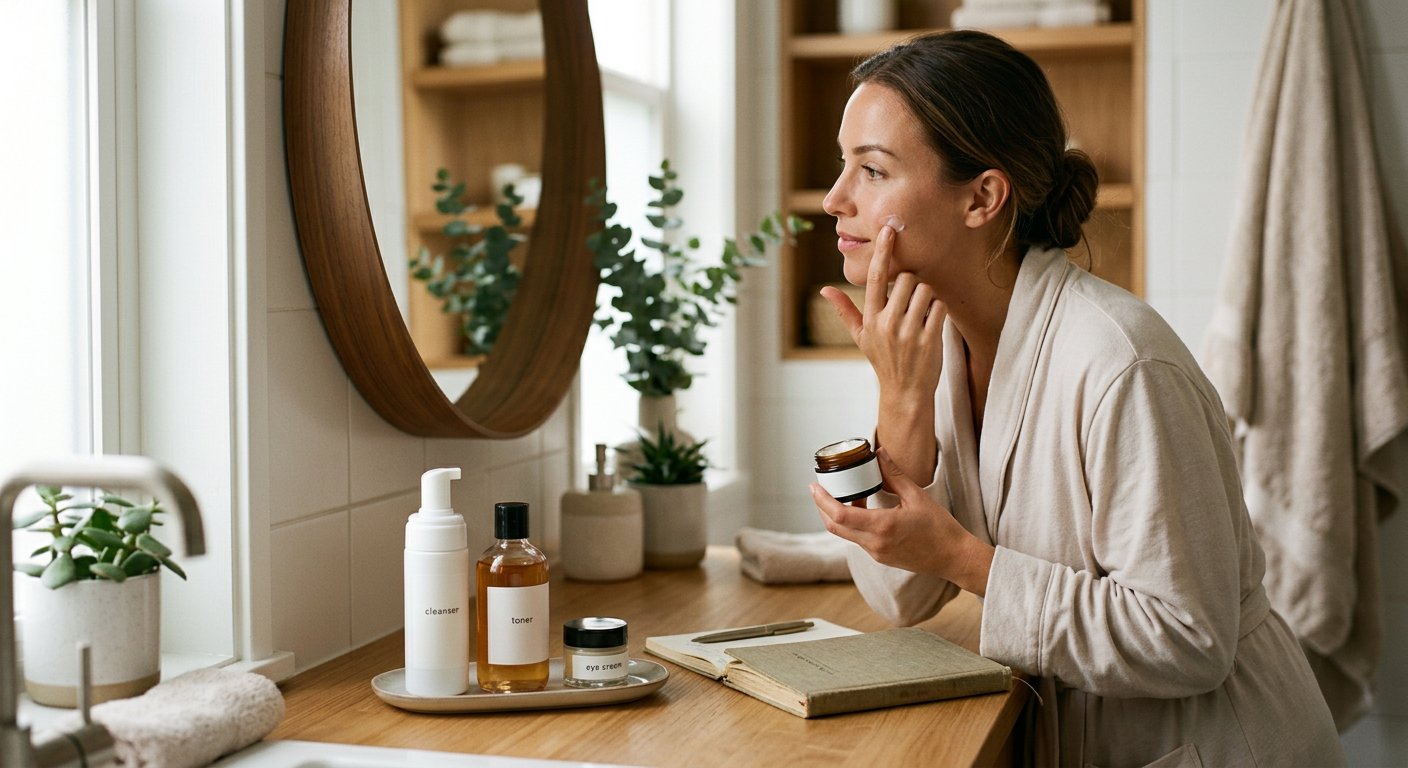
The biggest myth in skincare is that more products mean better results. Consistency matters far more than complexity, as KPTown notes. A simple routine you finish every day beats an elaborate one you abandon by week three.
Habit stacking works because it cuts friction. Any habit that demands extra time, extra equipment, or a fresh decision every day will lose to ordinary chaos, no matter how motivated you were when you bought the products. Attach your beauty steps to something you already do, and there’s no separate decision left to make.
The research backs the mechanism. A trend called wellness stacking combines small self-care habits into one intentional routine, and Healthline reports that pairing new habits with existing cues improves follow-through and supports long-term habit formation. One caveat: it works best when you keep it realistic and flexible. Pile on too much at once and you’ll just overwhelm yourself.
How to Build Your Beauty Routine With Habit Stacking
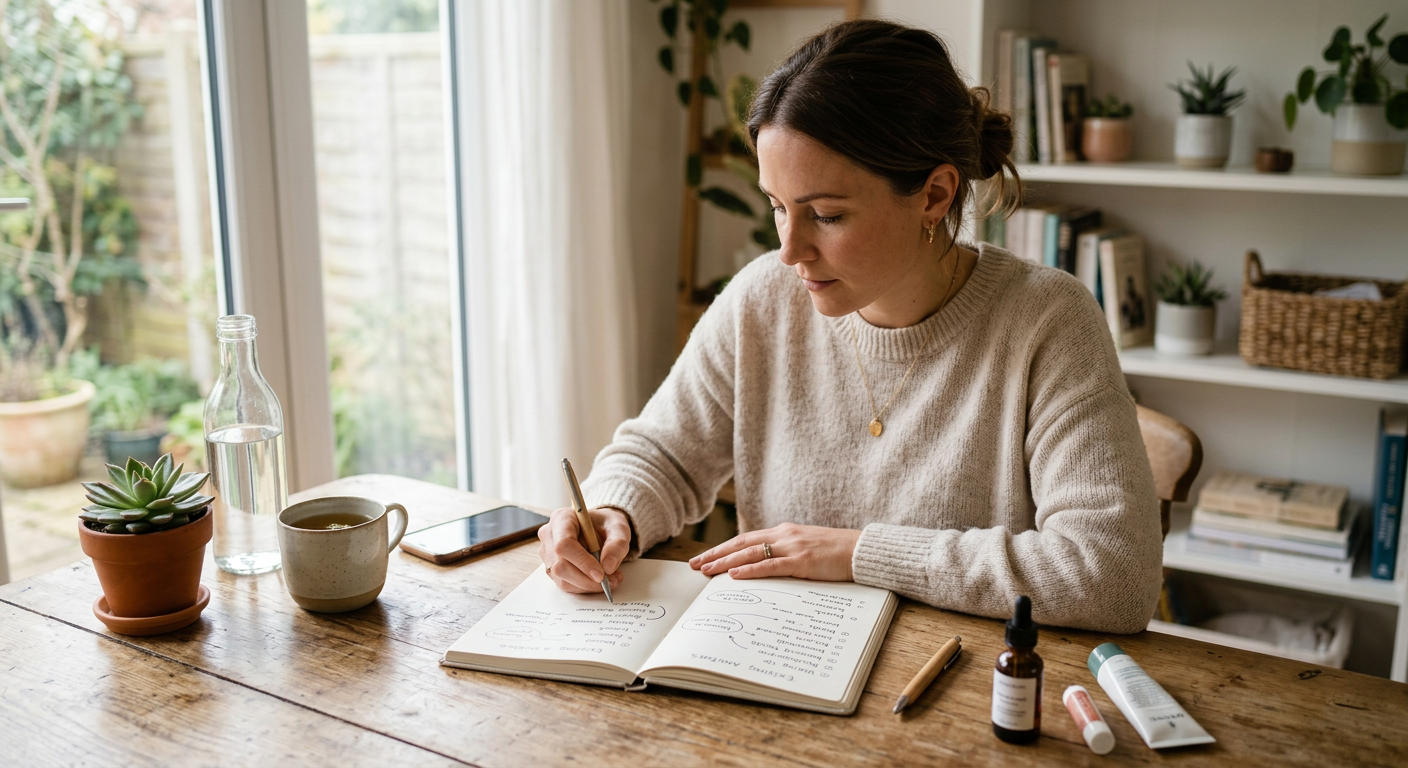
Start by mapping your existing anchors. List the things you do every single day, rain or shine, without thinking: brushing your teeth, making coffee, showering, getting into bed. Those are your stacking points.
Choose Complementary, Simple Anchors
The two habits should fit together naturally. Peloton’s experts recommend starting with things that are very simple and complementary, then getting specific about where the new habit lands. You can slot the new step right before, during, or immediately after the existing one.
Some practical stacks to try:
| Existing Habit (Anchor) | Stacked Beauty or Self-Care Step |
|---|---|
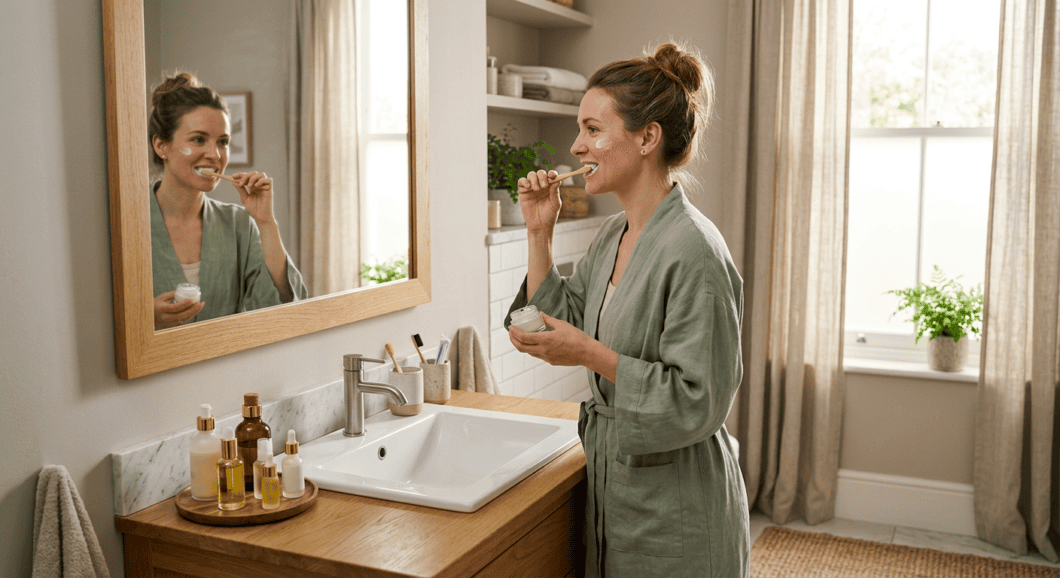
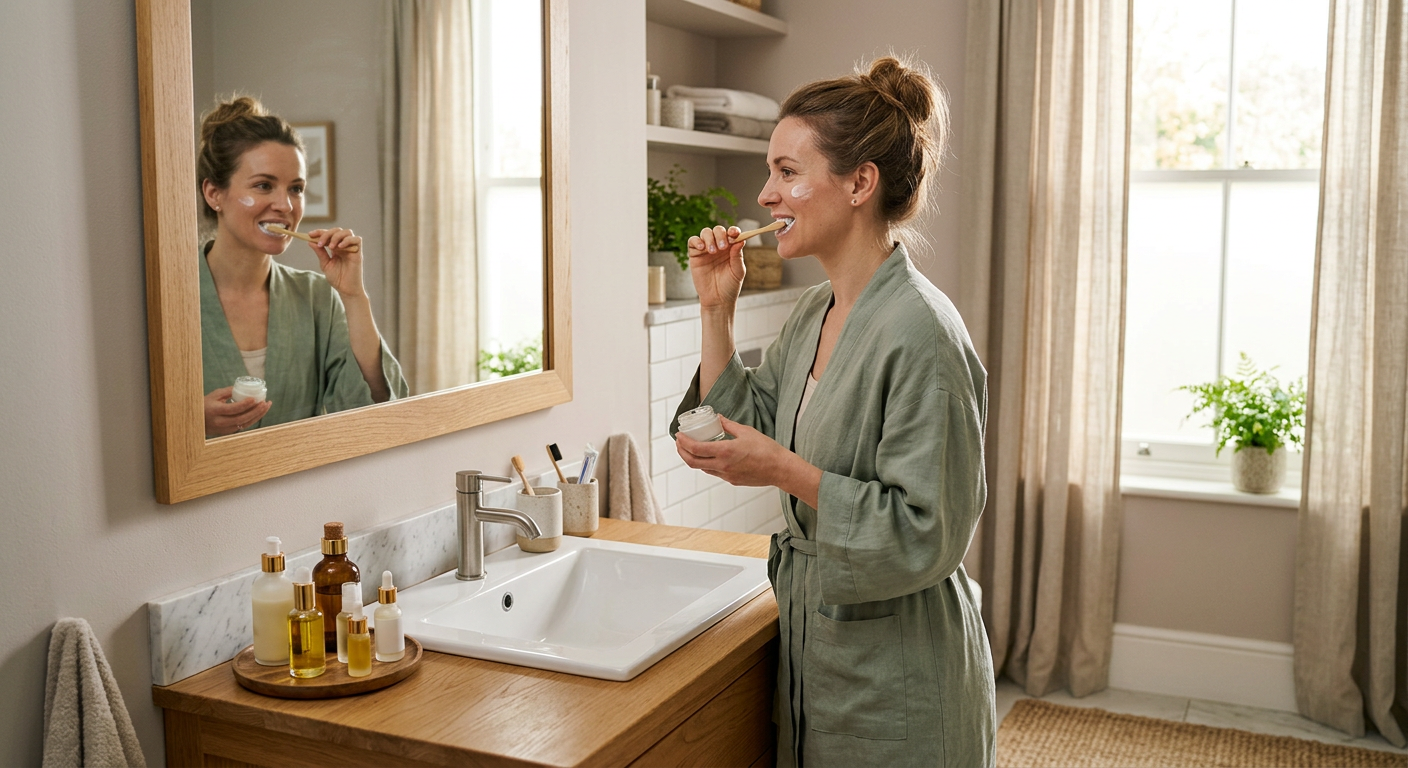
| After I brush my teeth in the morning | I apply vitamin C serum and SPF |
| After I moisturize | I apply broad-spectrum SPF before makeup |
| While my coffee brews | I do my morning skincare |
| While checking emails | I wear an eye mask |
| After I wash my face at night | I apply moisturizer, then do gentle stretching |
| Before I get into bed | I apply my night treatment |
The Makeup x SPF stack from Epionce is a good example. If your goal is daily sunscreen, apply a tinted broad-spectrum SPF after you moisturize and before you start your makeup.
Start With Just One Step
Don’t roll out a 10-step routine overnight. Begin with a single step, like cleansing at night or moisturizing every morning. Once that feels automatic, build from there.
If you can only manage consistency once a day, make it the evening, since skin repair and regeneration happen overnight. As your evening routine locks in, stack another step on top of it, such as Cleveland Clinic’s suggestion to add gentle stretching between toning and moisturizing.
Keep It Simple: Less Is More
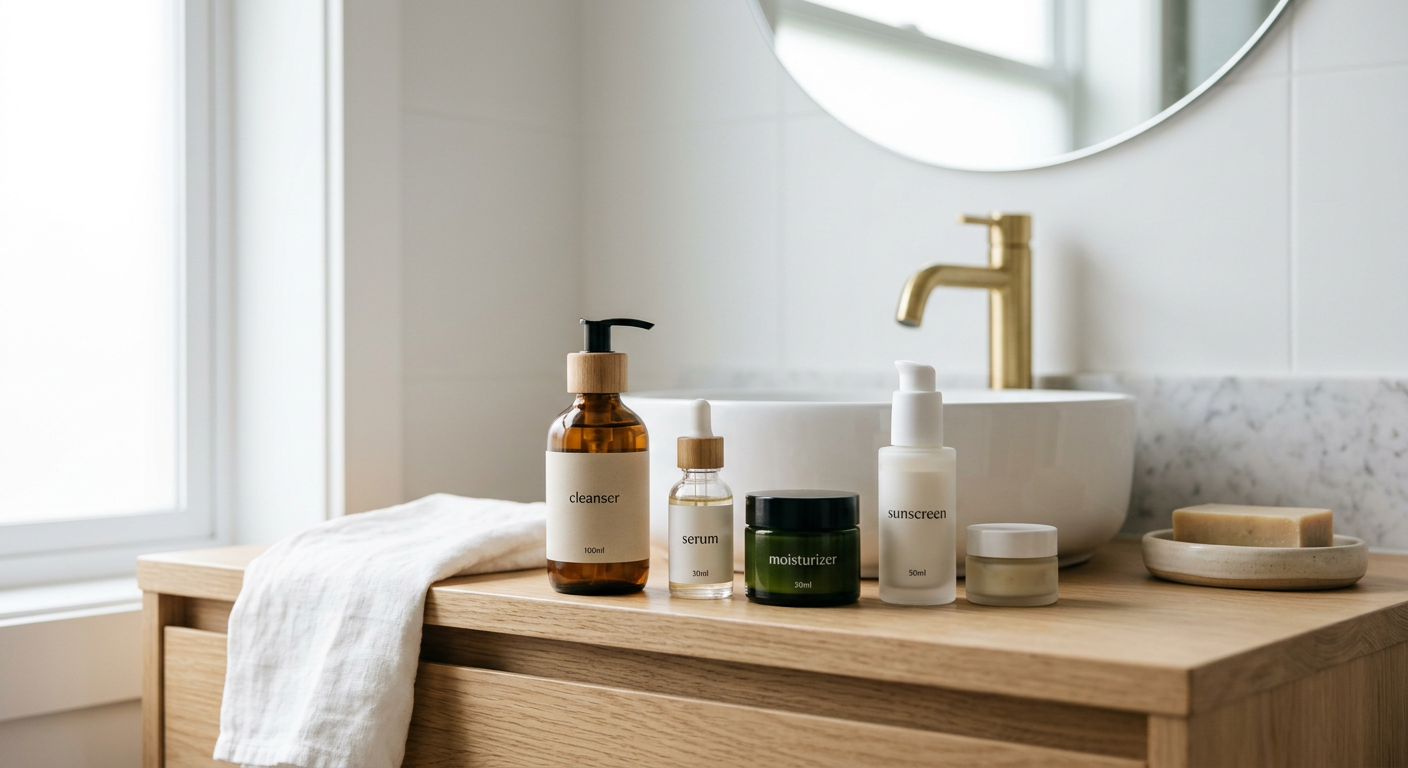
Too many choices derail consistency. A small, curated set of products makes routines easier to follow and less taxing. Fewer products mean fewer decisions and fewer excuses to skip a night.
Layer in advanced steps gradually. For an evening routine, use an exfoliating serum only two to three times a week rather than daily, and start at the lowest strength before working up as your skin builds tolerance. That mirrors Glowbar’s expert guidance to begin at level 1 and progress as your skin adjusts.
The best beauty routine is the one you can maintain. Focus on small habits, cut the friction, and hang your skincare on what you already do, and you’ll build a routine that fits into real life instead of fighting it.
How Long Until It Becomes Automatic

Ignore the popular claim that habits take 28 days to form. Behavioral scientist Katy Milkman told the Boston Globe that no universal law governs how long a habit takes; it depends on the complexity of the action and how often you repeat it.
The most cited study on the subject tracked 96 people forming a new daily health habit and found the median time to automaticity was 66 days, with a range from 18 to 254 days depending on the person and the behavior, as reported by Lunher. A 2024 systematic review of 20 studies and 2,601 participants landed in the same range: health habits generally take two to five months to consolidate, not weeks.
That review turned up one useful detail. Morning anchoring is a strong predictor of habit strength. A ritual tied to a fixed morning cue locks in more reliably than one floating loose somewhere in your day. So if you want faster results, stack your beauty step onto a rock-solid morning anchor like brushing your teeth or making coffee.
What to Do When You Slip
Missing a day is normal. The rule to remember: never miss twice. Skip tonight, and just return to your routine tomorrow instead of writing off one lapse as failure.
If a stack won’t hold on its own, add a reward. Cleveland Clinic recommends the Premack principle, which builds positive reinforcement through small payoffs, like letting yourself watch an extra episode once you’ve finished your evening routine.
Putting It All Together
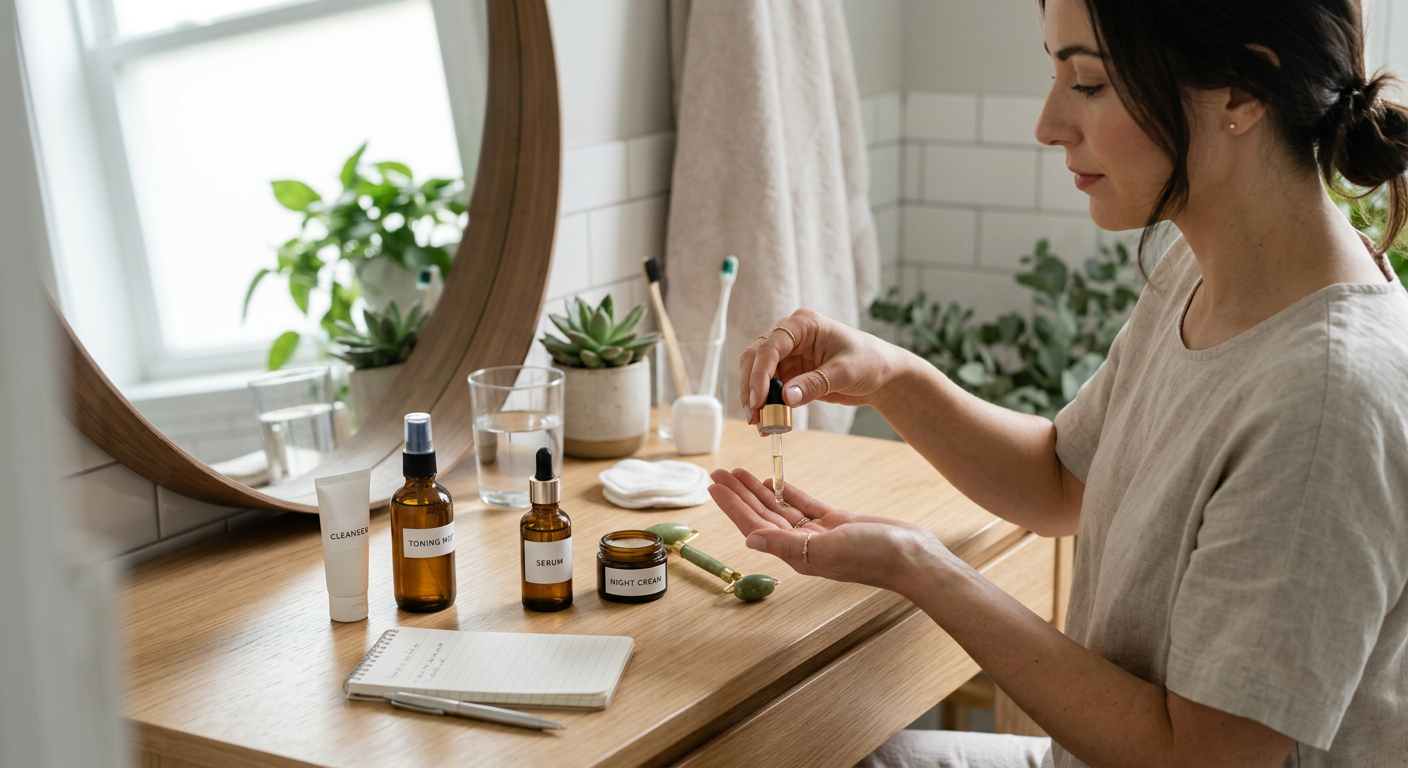
Habit stacking turns your beauty routine from something you have to remember into something that happens on its own. The formula is straightforward: find a habit you already do daily, attach one small beauty step to it, keep it simple, and repeat until it runs itself.
Start today with a single stack. Pick one anchor you never skip, attach one beauty step to it, and give it a few weeks before you judge the results. Once that step feels effortless, add the next. Small, consistent choices build the routine that busy days can’t break.
Frequently Asked Questions
What is habit stacking for self-care?
Habit stacking for self-care means pairing a small new wellness or beauty habit with an existing daily one, using the format “After I [existing habit], I will [new habit].” The existing habit works as an automatic cue, so you lean on routine instead of willpower.
How do I start habit stacking my skincare routine?
List the habits you already do automatically each day, such as brushing your teeth or making coffee, then attach one skincare step to one of them. Start with a single step and only add more once it feels effortless.
How long does it take for a stacked beauty habit to stick?
There’s no universal timeline, but the most cited study found a median of 66 days to reach automaticity, with a range of 18 to 254 days. Habits tied to fixed morning cues tend to form faster.
What are the best self-care tips for busy schedules?
The most effective self-care tips for busy schedules are simple habits that fit into things you already do, like doing skincare while your coffee brews or stretching while you watch a show. Stacking them onto existing habits is what makes them sustainable.
Does a longer beauty routine work better?
No. Consistency matters far more than the number of steps or products. A simple routine you complete daily beats a complex one you abandon, and a small, curated product lineup is easier to maintain.
What should I do if I skip my routine?
Follow the “never miss twice” rule and return to your routine the next day instead of treating one lapse as failure. If consistency is a struggle, add a small reward to reinforce the habit.