

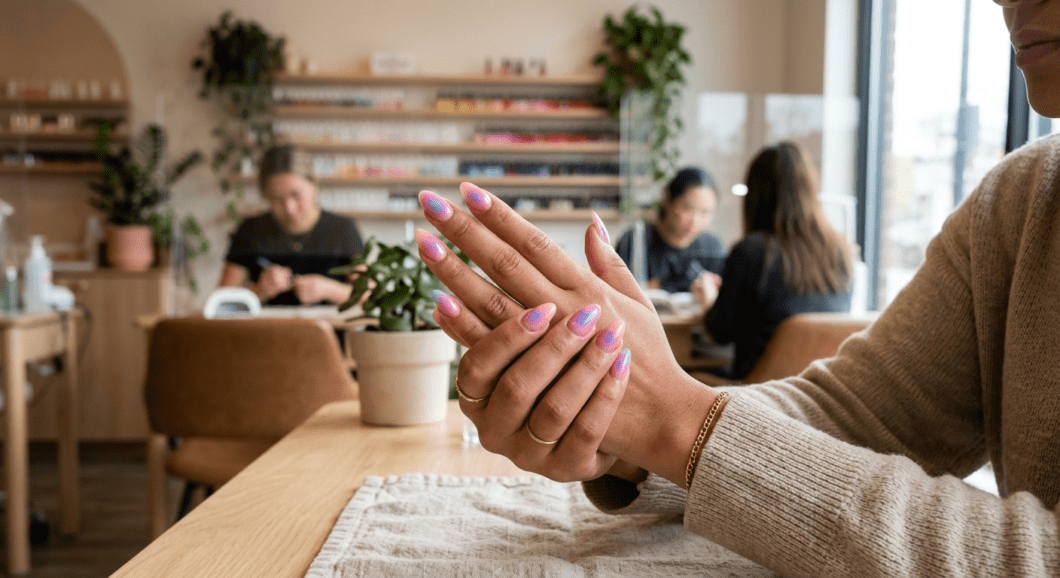
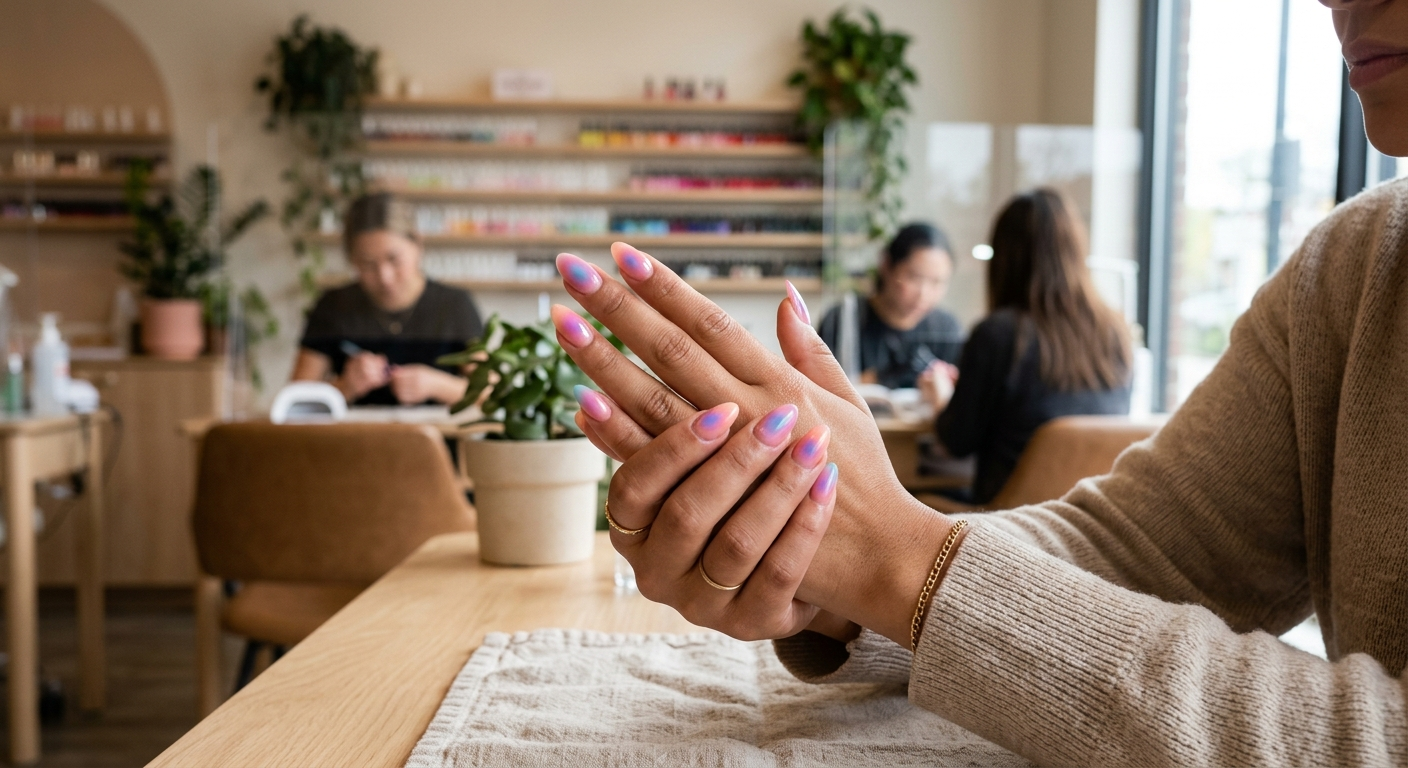
Walk into almost any nail salon right now and show your technician a reference photo — there’s a decent chance she’ll recognize it before you say a word. Aura nails have reached that level of saturation. Since breaking through in 2023, the gradient technique has moved from niche TikTok trend to mainstream request, picked up along the way by Dua Lipa (who wore a black-and-blue set to her TIME100 Gala performance) and Sydney Sweeney. If you’ve been wondering what separates aura nails from every other gradient technique, how they’re done, and whether the results justify the price, this guide covers it.
What Are Aura Nails, Exactly?
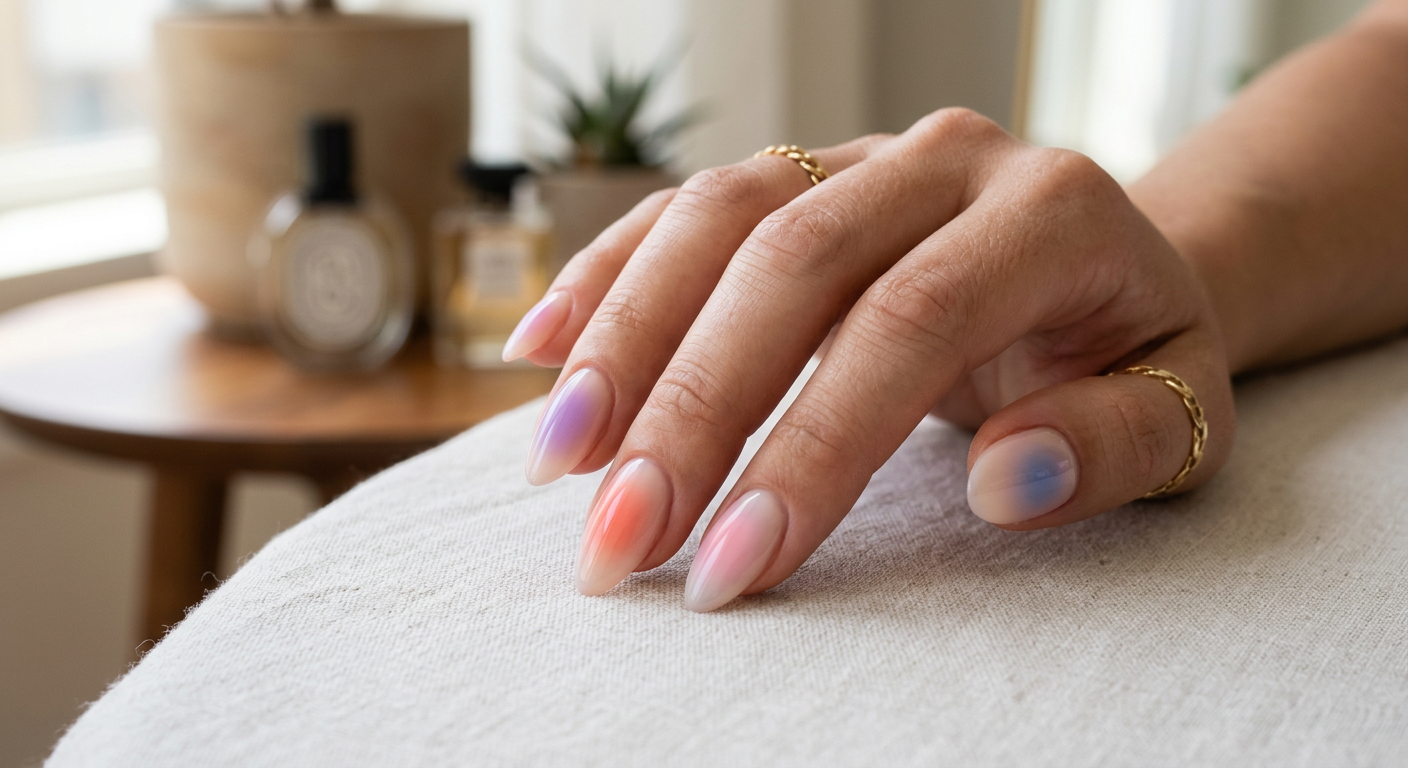
Aura nails create soft, diffused color gradients that radiate outward from a central point on the nail. That’s the key difference from traditional ombre, which moves color in one direction — tip to base or base to tip. The aura effect looks like a glow emanating from inside the nail rather than a stripe across it.
The name borrows from the concept of energy fields surrounding living things, and visually the reference makes sense. The finished nail resembles the soft luminosity of aurora lights or the blurred radiance around a backlit object — intentionally dreamy, slightly otherworldly. That quality is exactly why the look photographs well and has held attention on Instagram and TikTok for multiple years rather than burning out after one season.
According to Jenny’s Salon, the technique involves colors that “blend and radiate outward from the center or edges, creating a unique glowing effect that appears almost magical.” That’s not marketing copy — it’s a reasonably accurate description of why this particular trend has legs.
How the Aura Nail Technique Actually Works
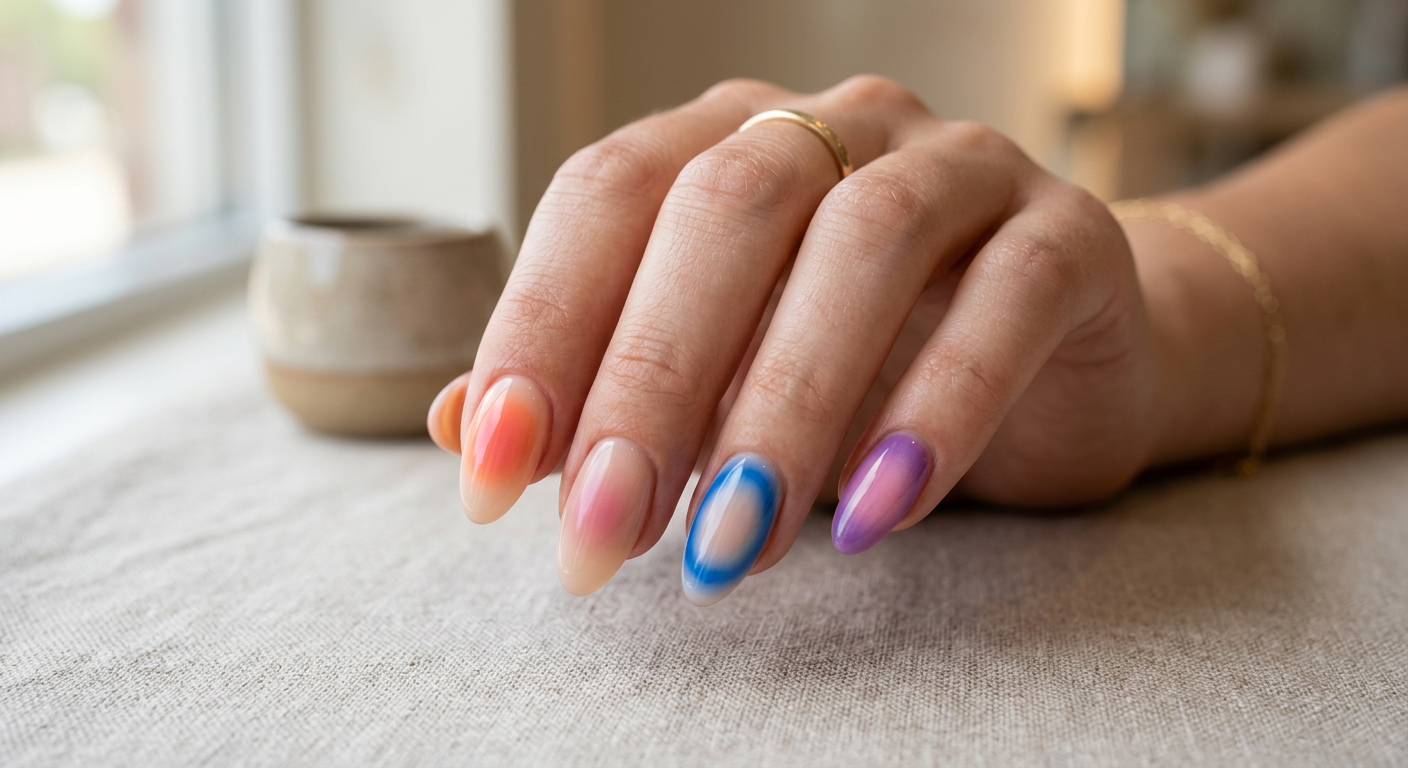
Several application methods produce the look, each with a slightly different finish. Knowing the differences helps you ask for what you actually want — or choose the right approach if you’re attempting it yourself.
The Sponge Method
The most accessible DIY approach: dab polish onto a makeup sponge and stipple it onto the nail in a circular or radial motion, layering colors from center outward and blending as you go. IPSY notes this works particularly well with gel polish and is the most forgiving starting point for anyone new to nail art.
The Airbrush Method
Most professional salons use an airbrush gun for the most seamless gradients. The tool gives technicians precise control over where pigment lands and how softly it diffuses — which is why salon results typically look cleaner than first or second DIY attempts.
The Eyeshadow Method
This one surprises people: press loose or pressed eyeshadow pigment onto a tacky gel base coat before curing. Celebrity nail artist Michelle Humphrey, cited by ELLE, endorses this approach specifically because it achieves the diffused look using traditional lacquer without specialized equipment.
Popular Aura Nail Colors and Combinations
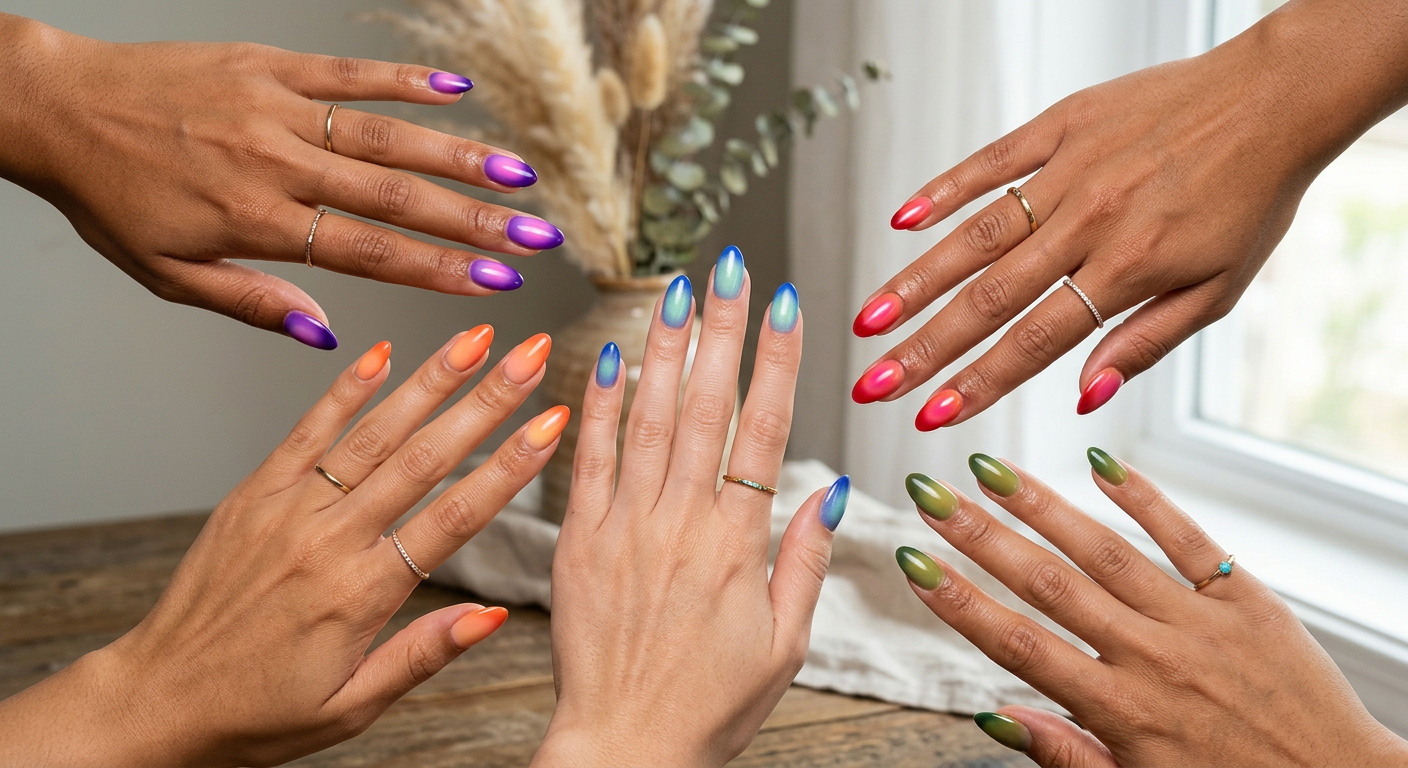
The technique adapts to almost any palette, which is a significant part of its appeal. Below is a breakdown of the most requested combinations and the contexts they suit.
As Green Wedding Shoes notes, the range runs from “barely-there bridal blush to full-send neon gradients.” There’s no canonical aura nail — the palette is entirely a personal call.
Who Can Wear Aura Nails
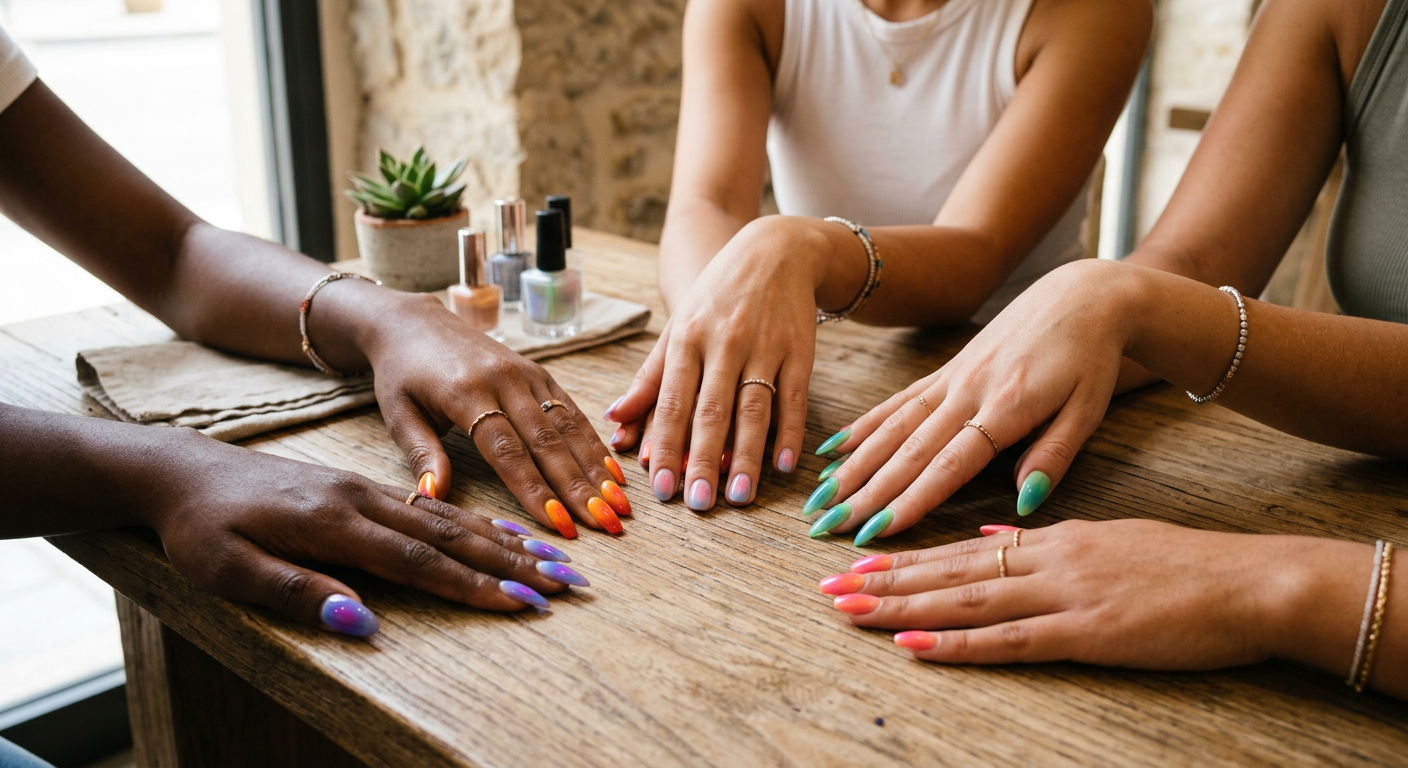
Anyone. Aura nails aren’t restricted by nail shape, length, or skin tone. According to ELLE, the design “is suitable for any nail shape or length, so it doesn’t matter if you’re a fan of long extensions or like your manicures short and practical.”
That accessibility explains a lot of the trend’s staying power. Short square nails in a soft pastel aura look just as considered as long almond-shaped nails with a bold jewel-tone gradient. The technique scales to whatever level of drama you want.
Skin tone matters more for color selection than for whether the look works at all. Warmer complexions tend to complement peach, coral, and gold-based auras; cooler tones often pair well with blue, lavender, and silver. The diffused edges are forgiving in a way that solid block color isn’t, so most combinations read well across a wide range of complexions.
Aura Nails in 2026: Where the Trend Is Heading
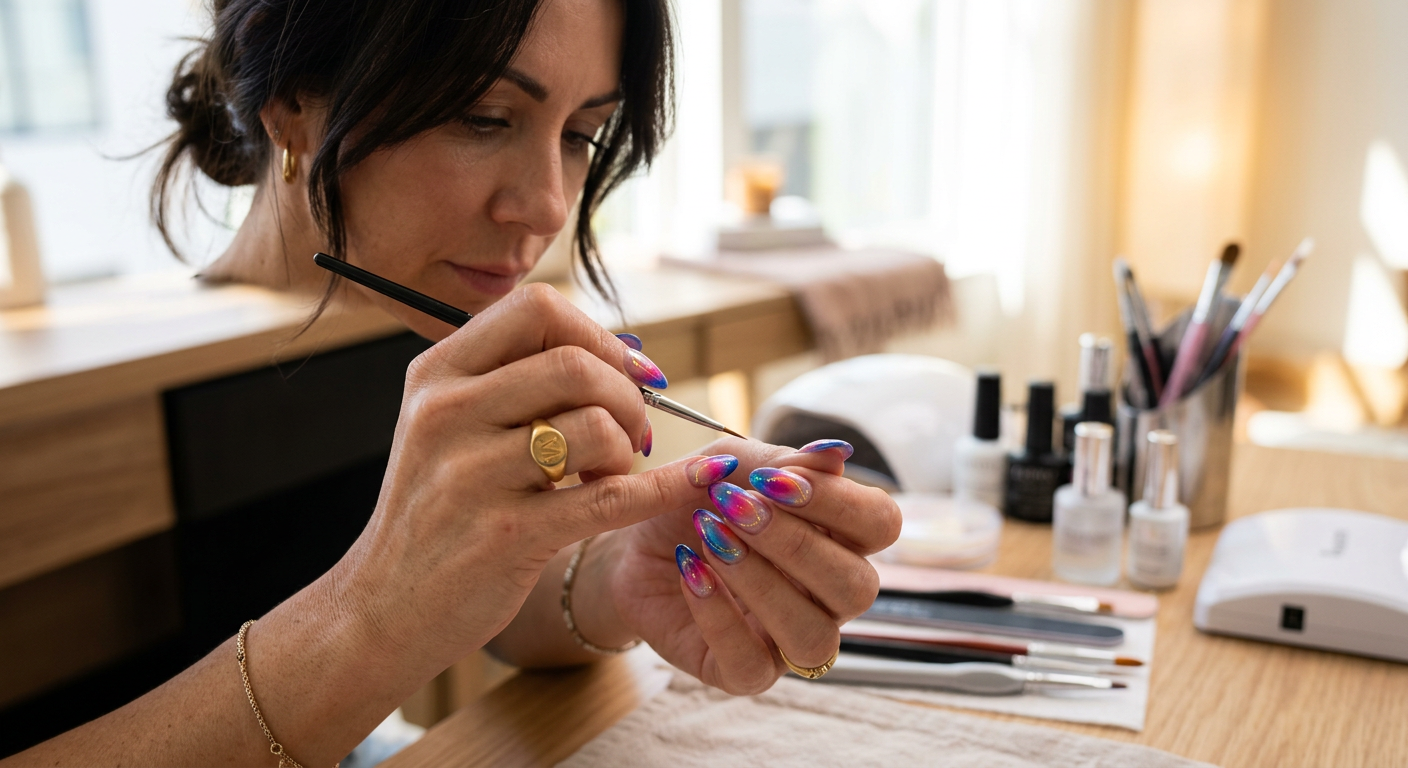
The look has continued to develop rather than plateau. Celebrity manicurist Michelle Humphrey, speaking to AOL, describes the shift directly: “It’s not just one color in the middle of the nail; now the aura nail has leveled up so that it’s several colors on a nail.”
Crystal Burst and Opal Finishes
The 2026 version of the trend layers crystalline shimmer and opal-effect topcoats over traditional aura gradients. The added dimension creates a light-refracting quality that photographs particularly well — which, for a trend that lives partly on social media, matters.
Celestial and Mermaid-Coded Palettes
Teal, peach, and shimmery blue combinations have become a dominant direction this season. These palettes layer iridescent pigments over gradient bases for a shifting, near-holographic effect that moves differently in different lighting.
Botanical Overlays
Some nail artists are placing delicate floral or botanical details on accent nails over an aura gradient base. The soft, diffused background gives hand-painted details room to read clearly without competing visually — the gradient does the atmospheric work and the botanicals do the detail work.
DIY Aura Nails at Home: What You Need
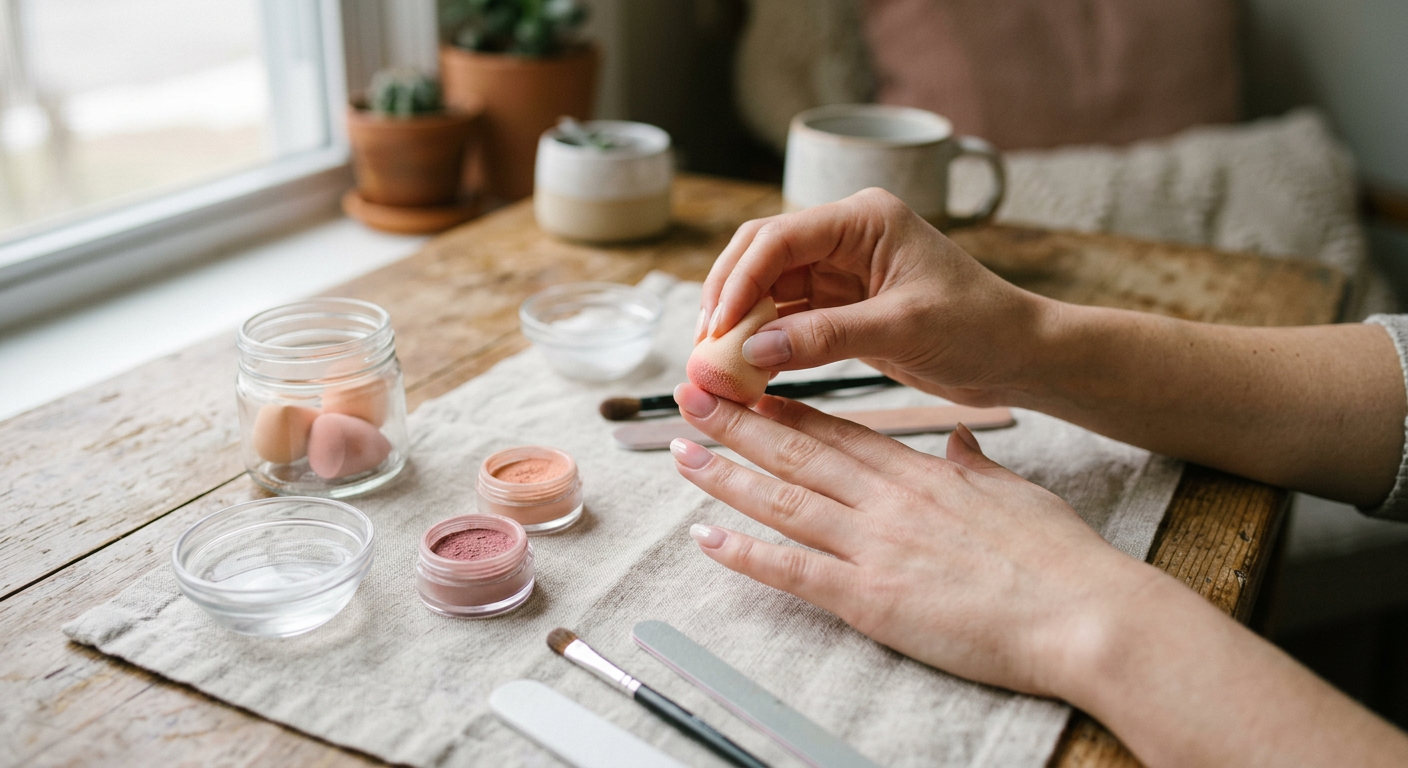
The barrier to entry is lower than most people expect. The main requirements are patience and thin layers.
Essential supplies: – Gel or regular nail polish in two to three coordinating shades – A makeup sponge (cut into small pieces for precision) – A matte or glossy top coat – Gel base coat if using the eyeshadow method – UV/LED lamp if working with gel polish – Nail polish remover and a cleanup brush for edges
Optional upgrades: – Loose eyeshadow pigments for a more diffused finish – Chrome or iridescent powder for a shimmer overlay – A thin nail art brush for detail work on accent nails
IPSY recommends starting with the sponge method for beginners. Build color in thin layers rather than heavy coats — thick application muddies the gradient and makes blending harder. Thin layers give you more control and a cleaner result.
Salon vs. DIY: Which Option Is Right for You
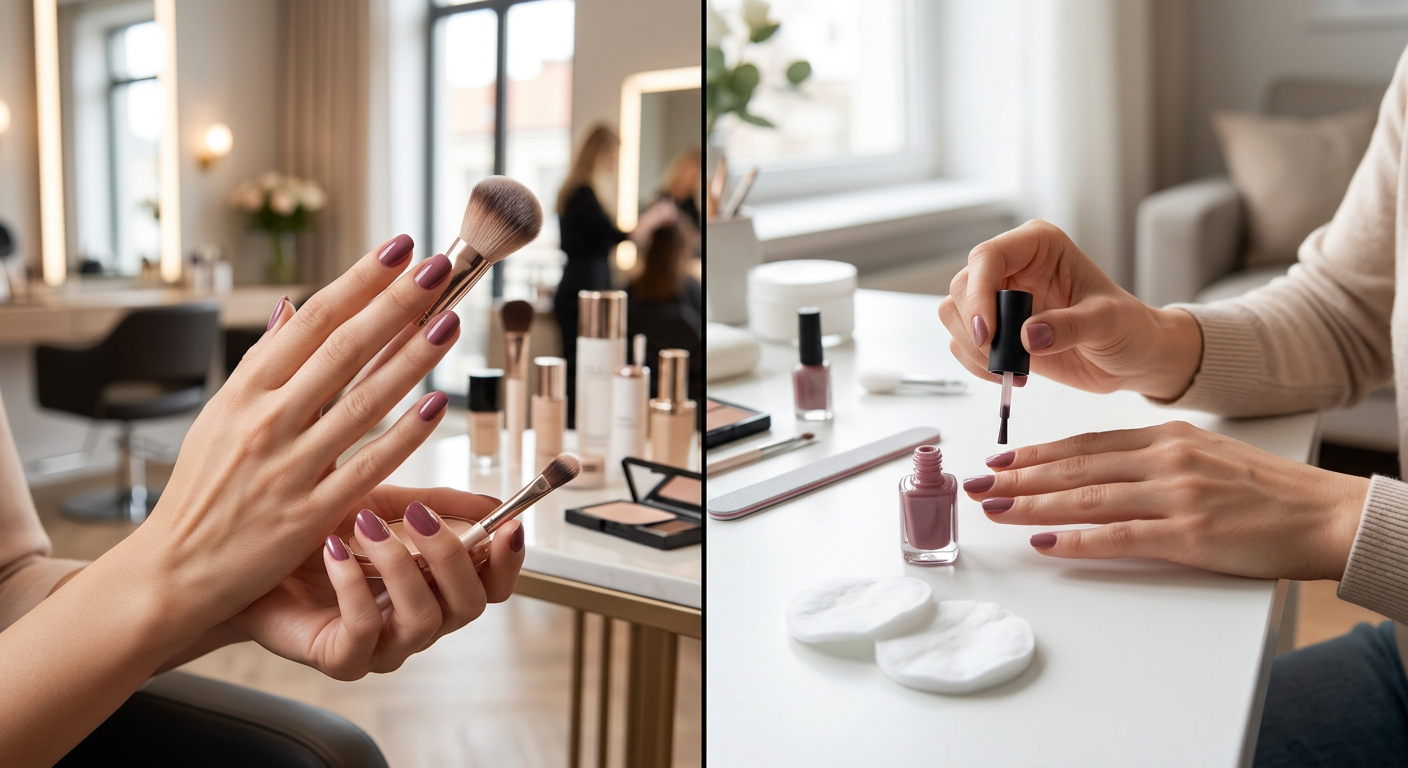
Both routes produce good results; they differ in cost, time, and finish quality.
A professional appointment — especially with an airbrush — will typically yield the most seamless gradients. Expect to pay a premium over a standard manicure, since aura nails take more time and skill. Gel applications usually last two to three weeks with proper care, and the precision is difficult to match at home without significant practice.
DIY costs less upfront and improves quickly with repetition. Most people find their second or third attempt looks noticeably better than their first. If you plan to wear this style regularly, the sponge or eyeshadow technique is worth learning — the learning curve is real but short.
Conclusion
Aura nails have earned their staying power. The technique is accessible, the palette options are genuinely broad, and the look translates well across nail shapes, lengths, and skin tones. Whether you want a soft pink-and-white set for daily wear or a multi-color celestial gradient for an event, the finished result looks deliberate rather than accidental.
The trend is also still moving. Crystal finishes, botanical overlays, and multi-color gradients are pushing it forward in 2026 rather than running it into the ground.
Pull two or three color references you like, decide between a salon appointment and a DIY session, and try the look. The reason everyone keeps asking for it becomes obvious once you see the finished result on your own hands.
Frequently Asked Questions
Q: How long do aura nails last?
When applied as a gel manicure by a professional, aura nails typically last two to three weeks with proper care. At-home applications using regular polish will last approximately five to seven days before chipping begins.
Q: Are aura nails difficult to do at home?
The sponge method is beginner-friendly and doesn’t require specialized tools. Most people achieve acceptable results on their first try and noticeably better results by their second or third attempt.
Q: What nail shapes work best for aura nails?
Aura nails work on any nail shape, including square, oval, almond, coffin, and stiletto. The gradient effect adapts to the nail’s surface area regardless of shape or length.
Q: Can you get aura nails on short nails?
Yes. The aura technique works just as effectively on short nails as on long ones. Softer, more muted color combinations tend to complement shorter nails particularly well.
Q: What is the difference between aura nails and ombre nails?
Ombre nails transition color in a single direction — typically from base to tip. Aura nails radiate color outward from a central point, creating a halo or glow effect rather than a directional gradient.
Q: Which celebrities have worn aura nails?
Dua Lipa wore a black-and-blue aura set to her TIME100 Gala performance, and Megan Fox has been photographed with a celestial pink variation. Sydney Sweeney has also been associated with the trend, helping push it into mainstream visibility.