

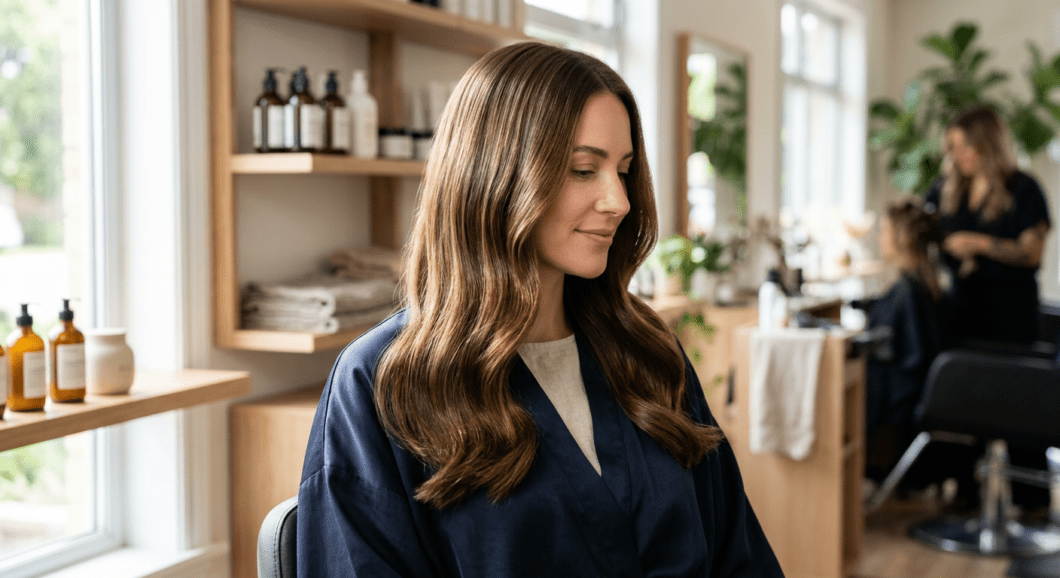
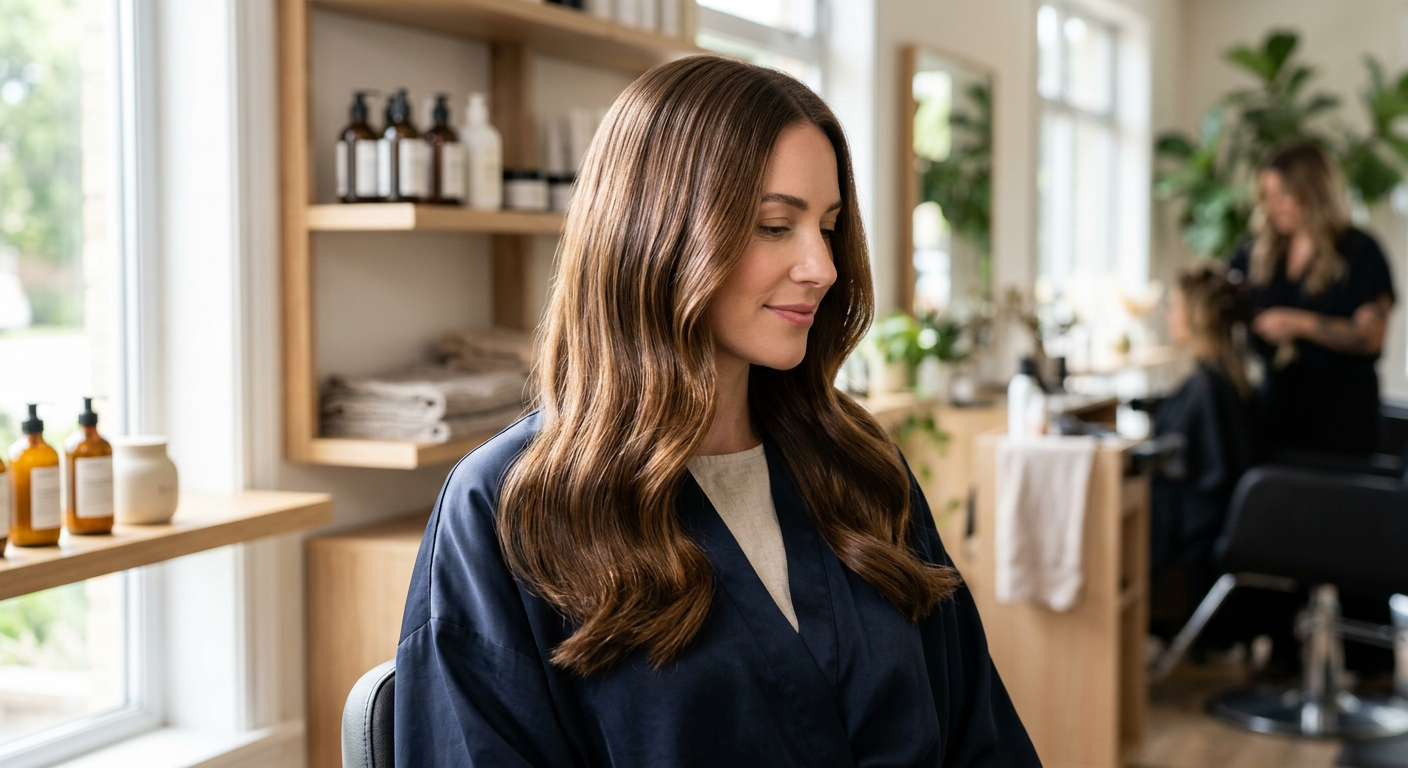
Your hair is clean, freshly styled, and by every reasonable measure healthy — but something is still missing. That particular quality where light seems to move across each strand, where hair looks poured rather than placed. A new shampoo won’t fix it. Neither will a better blow-dryer. What will fix it is a liquid hair gloss treatment, which has become one of the most-searched salon services in 2026 for exactly this reason.
What Is a Liquid Hair Gloss Treatment?
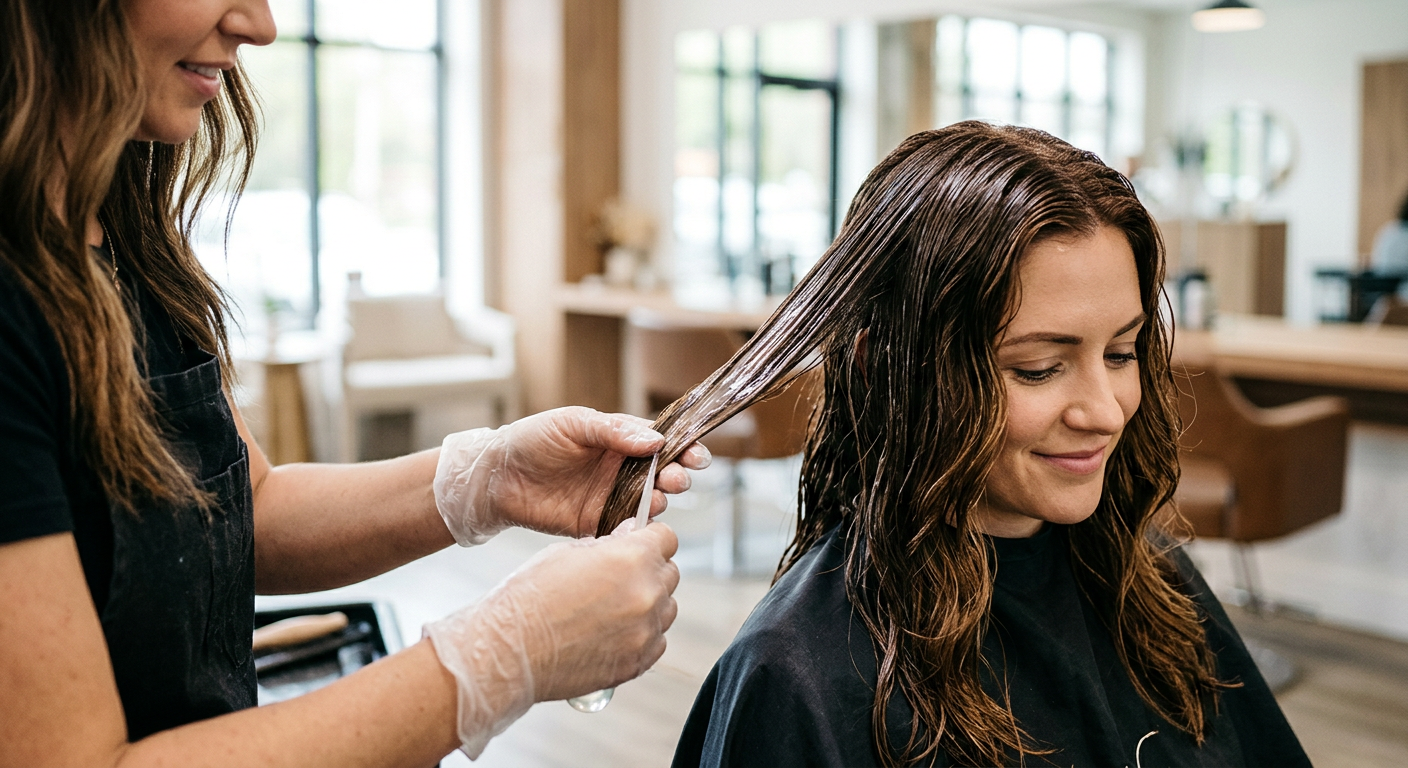
A liquid hair gloss is a semi-permanent or demi-permanent treatment that coats the hair’s outer layer — the cuticle — to smooth it flat and reflect light more evenly. Unlike permanent color, which lifts and penetrates the hair shaft, a gloss works at the surface. It deposits shine, tone, and conditioning agents without causing structural damage to the strand.
The closest analogy is a clear topcoat on a manicure: it seals the surface and adds luster without changing what’s underneath. As Online Hair Depot describes it, a gloss is a “triple-threat: it boosts your colour, protects the strand, and serves up that jaw-dropping glossy finish.” Most formulas are ammonia-free and acidic, which means they close the cuticle rather than force it open.
The result is what stylists are now calling “glass hair” — a mirror-like finish that has displaced the textured, voluminous styles of previous decades. According to Vogue Scandinavia, by 2026 that mirror finish has firmly replaced feathered 1970s volume as the dominant hair aesthetic.
How Hair Gloss Actually Works
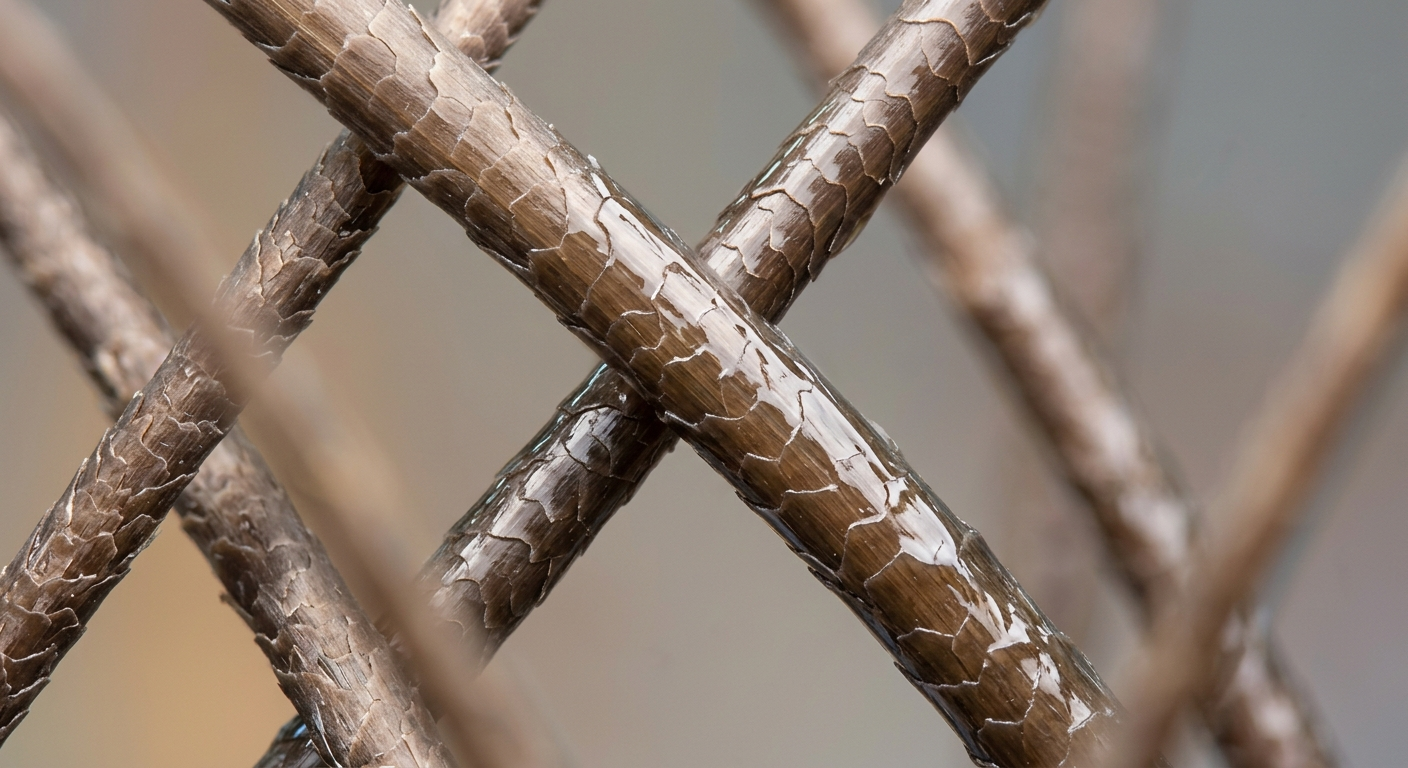
Each hair strand is surrounded by overlapping cuticle cells arranged like roof tiles. When those tiles lie flat, light bounces off the surface uniformly — that’s shine. When they’re raised or damaged, light scatters instead, and hair reads as dull or frizzy.
A liquid gloss uses an acidic formula to press those tiles down and seal them. It also coats the strand with a thin, reflective layer that fills in minor surface irregularities. The effect shows up immediately after rinsing.
Clear Gloss vs. Tinted Gloss
The right type of gloss depends on what you’re trying to accomplish.
A clear gloss adds shine and tames frizz without depositing any color, which makes it a good fit for natural, virgin hair. A tinted gloss can deepen brunettes, tone blondes, or add warmth to reds while delivering the same reflective finish. As Boho Chic Beauty notes, “even natural, virgin hair can get a beautiful boost of shine and vitality from a clear gloss.”
The Glass Hair Trend Driving Demand

Glass hair isn’t a social media cycle that will reverse in six months. It reflects a genuine shift in what people want from their hair — condition and sheen over volume and texture. Hairstylist Mauro Pera, who has documented the trend on Instagram, puts it plainly: “It’s not just about straightening; it’s a true infusion of hydration and shine that transforms the hair fiber into the Glass Hair effect. Clean lines, zero frizz, just pure reflection.” (Source)
The aesthetic references stylists cite are instructive: vintage Cher, Kim Kardashian — hair that looks liquid rather than styled. The appeal is practical as much as visual. A gloss treatment produces a salon-quality result without the commitment or damage of permanent color, and it fits into a regular maintenance schedule without disrupting it.
Salon Gloss vs. At-Home Gloss Treatments
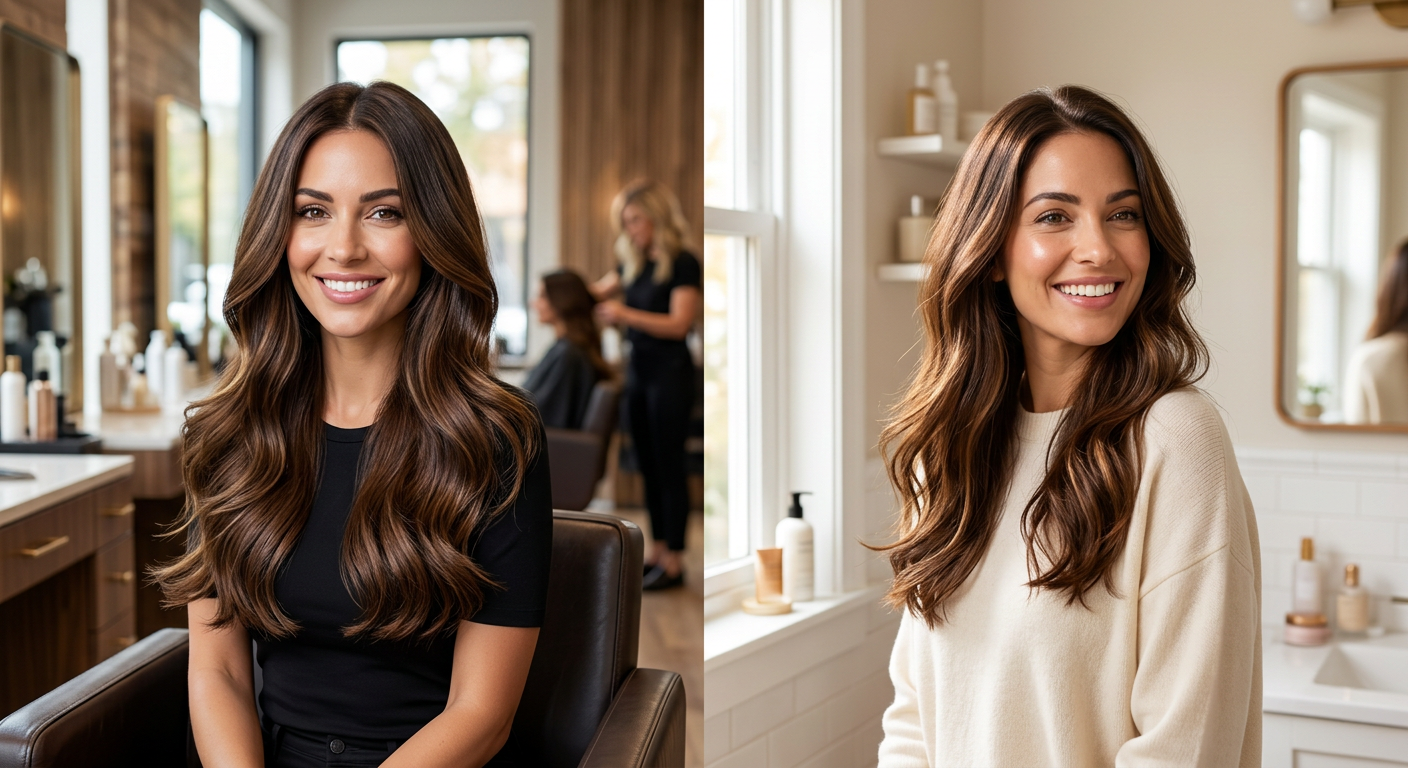
Both options deliver real results. The differences are in intensity, customization, and how long the effect holds.
Salon Gloss Treatments
A professional gloss — sometimes called a “shine bomb” or glossing service — uses a higher-concentration formula that a stylist customizes to your hair’s specific tone and condition. Kenneth’s salon describes two primary approaches: gloss without blonding, which refines tone and adds shine without altering your base color, and gloss with blonding, which provides tonality control after lightening services.
Salon treatments typically hold for four to six weeks. They’re the better choice for color-treated hair or anyone dealing with significant brassiness or damage, where precision and evenness matter most.
At-Home Gloss Treatments
At-home glosses have improved considerably. Products like Xmondo’s Super Gloss Intensive Glossing Treatment and others reviewed by InStyle deliver visible shine in 15 to 20 minutes. They work on the same principle as salon formulas but at lower intensity, which makes them safe for regular home use.
The tradeoff is customization. At-home products offer limited shade options and can’t replicate a stylist-applied formula. For maintenance between salon visits, they’re effective.
How to Choose the Right Gloss for Your Hair
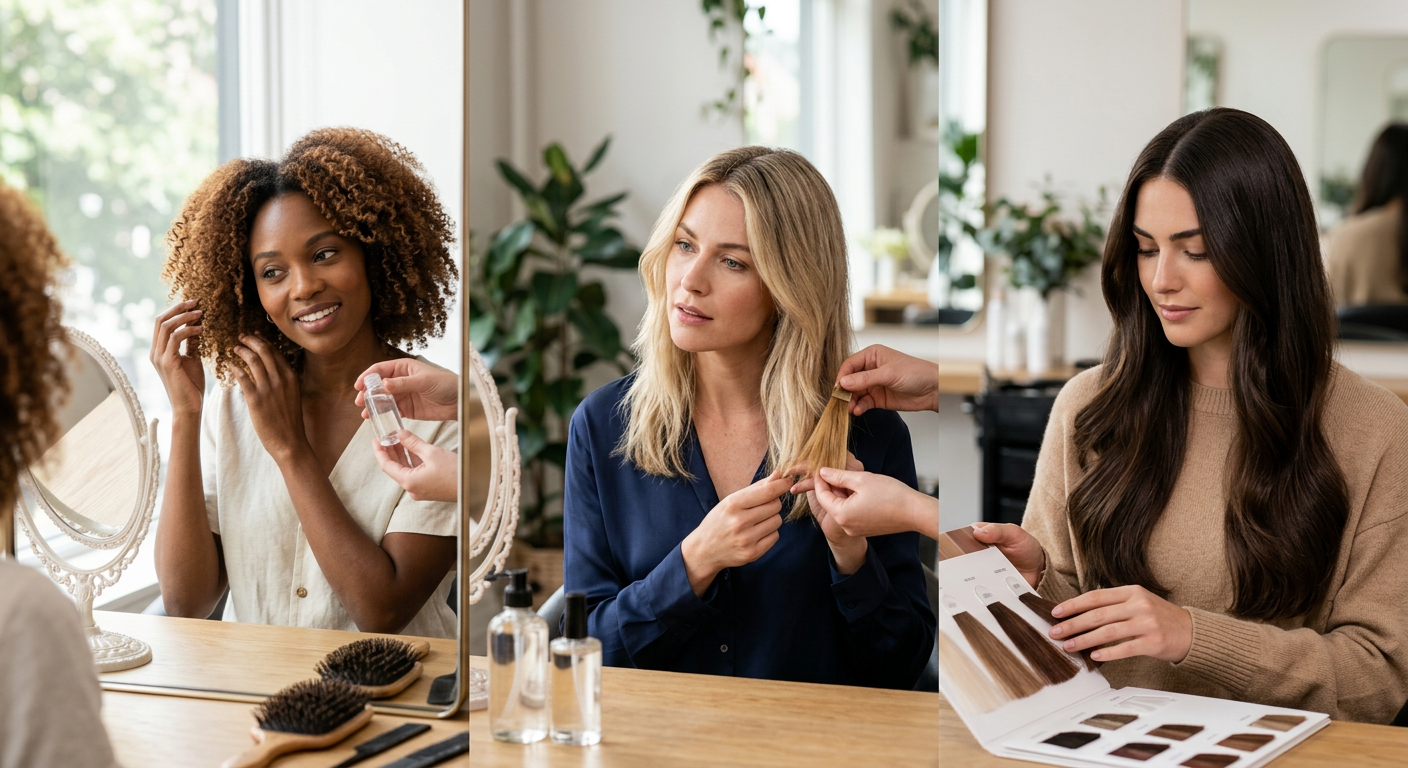
Three factors determine which gloss is right for you: your current hair color, your hair’s condition, and what you’re trying to achieve.
- Natural or virgin hair: A clear gloss is the strongest choice. Maximum shine, no color change.
- Color-treated hair: A tinted gloss matched to your existing shade refreshes tone and extends the life of your color.
- Highlighted or bleached hair: A toning gloss neutralizes brassiness and restores the reflective quality that lightened hair tends to lose.
- Damaged or porous hair: Look for formulas that include conditioning agents — keratin, argan oil, amino acids. These fill in surface gaps while sealing the cuticle.
One thing worth knowing, via Wispy Fringe Salon: gloss is ammonia-free and does not lift color. It cannot make your hair lighter. If that’s the goal, a gloss isn’t the right tool. If the goal is to enhance, refresh, and add shine to what you already have, it’s one of the most effective options on the market.
How Long Does Hair Gloss Last — and How to Extend It
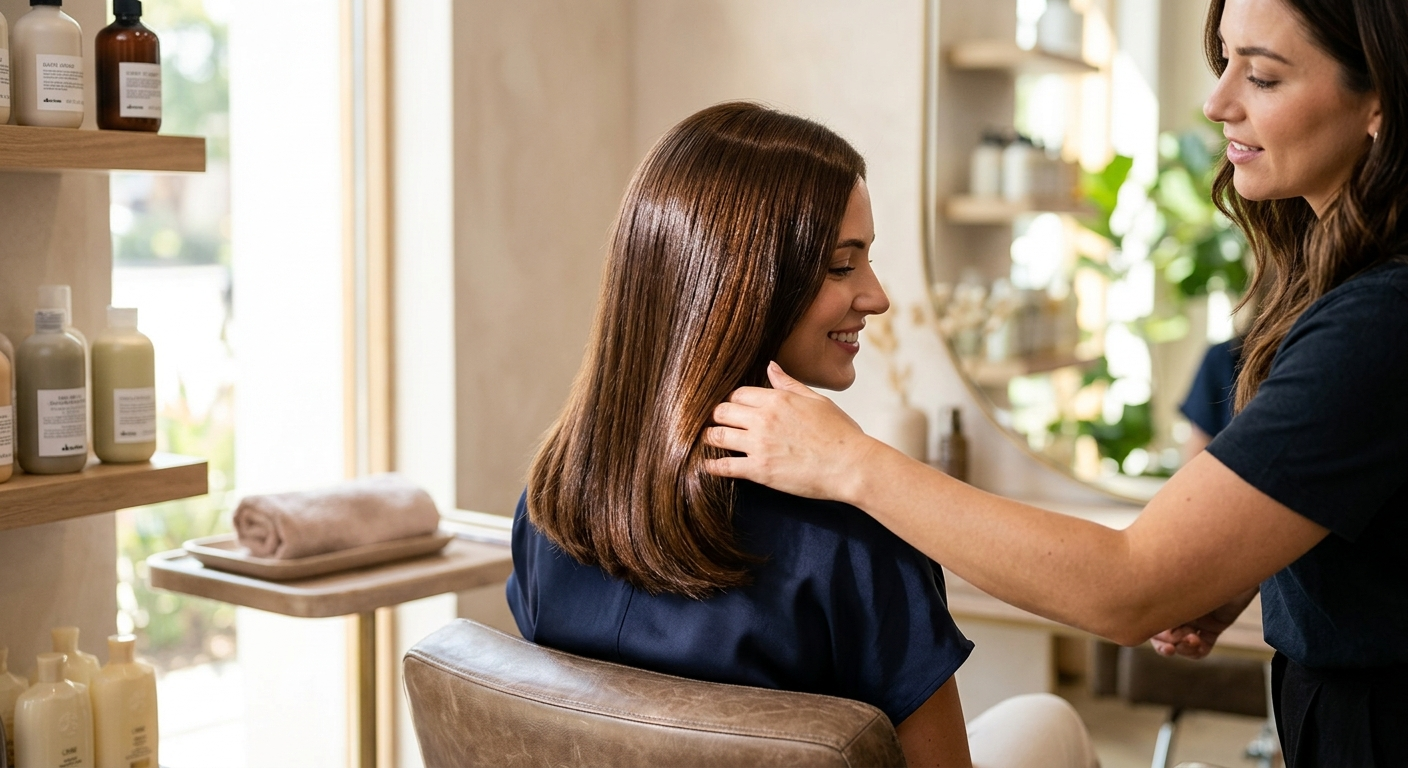
A hair gloss is semi-permanent, fading gradually with each wash. Salon treatments typically hold for four to six weeks. At-home treatments may last two to four weeks depending on wash frequency and product quality.
Several things accelerate fading: washing frequently, using sulfate-containing shampoos, and rinsing with hot water all strip the coating faster. To get more mileage from a treatment:
- Rinse with cool or lukewarm water
- Use a sulfate-free shampoo formulated for color-treated hair
- Apply a weekly conditioning mask or gloss-maintaining treatment
- Use a heat protectant when styling with hot tools
Many stylists recommend scheduling a gloss appointment between color services — it maintains both tone and shine without adding unnecessary chemical exposure. Every four to six weeks keeps the finish consistent.
Conclusion: Is a Hair Gloss Treatment Right for You?
Liquid hair gloss treatments produce one of the most noticeable improvements in hair appearance for the least amount of chemical commitment. They smooth the cuticle, reflect light evenly, tame frizz, and can refresh color — without the damage that comes with permanent dye or lightening services.
Clear gloss works on any hair type and adds pure shine. Tinted gloss enhances and refreshes color. Salon treatments offer the most precision and longevity. At-home options are a practical way to maintain results between appointments. Sulfate-free products and cool water extend the finish significantly.
If your hair looks healthy but lacks that high-polish, light-catching quality you’re after, a liquid hair gloss treatment is the most direct route. Talk to your stylist about which formula suits your hair, or try a reputable at-home option to see what a single treatment does.
Frequently Asked Questions
Q: Does hair gloss work on all hair types and textures?
Yes. Hair gloss works on straight, wavy, curly, and coily hair. The cuticle-smoothing effect benefits every texture, though the visual result differs — curly hair typically shows more defined, separated curls rather than a flat mirror finish.
Q: Can hair gloss damage your hair?
No. Gloss treatments are ammonia-free and don’t lift the hair shaft, so the risk of damage is minimal. They’re widely regarded as one of the safest professional hair treatments available.
Q: How is a hair gloss different from a hair glaze?
The terms are often used interchangeably, but technically a gloss penetrates slightly deeper into the cuticle, while a glaze sits more on the surface. Both add shine and smooth frizz, but a gloss typically lasts longer.
Q: Can I use a hair gloss if I have highlights or bleached hair?
Yes, and it’s often a good idea. A toning gloss is particularly useful for highlighted or bleached hair because it neutralizes brassiness and restores the reflective finish that lightened hair tends to lose.
Q: How soon after a hair gloss treatment can I wash my hair?
Most stylists recommend waiting 24 to 48 hours after a salon gloss before washing. This gives the formula time to fully set and bond to the cuticle, which maximizes both longevity and shine.
Q: Is an at-home hair gloss as effective as a salon treatment?
At-home glosses deliver real, visible results — particularly for shine and frizz control — but they’re less potent than salon formulas. They work best as a maintenance tool between professional appointments rather than a full replacement.