



The best hair year you’ll have might not involve a $500 tool or a 45-minute blowout. It might involve putting the heat down. Air-drying has moved well past the lazy-morning fallback — in 2026, it’s become a deliberate choice, backed by a growing number of stylists and editors who’ve started questioning how much heat hair actually needs.
Why Air-Drying Is Having a Serious Moment in 2026
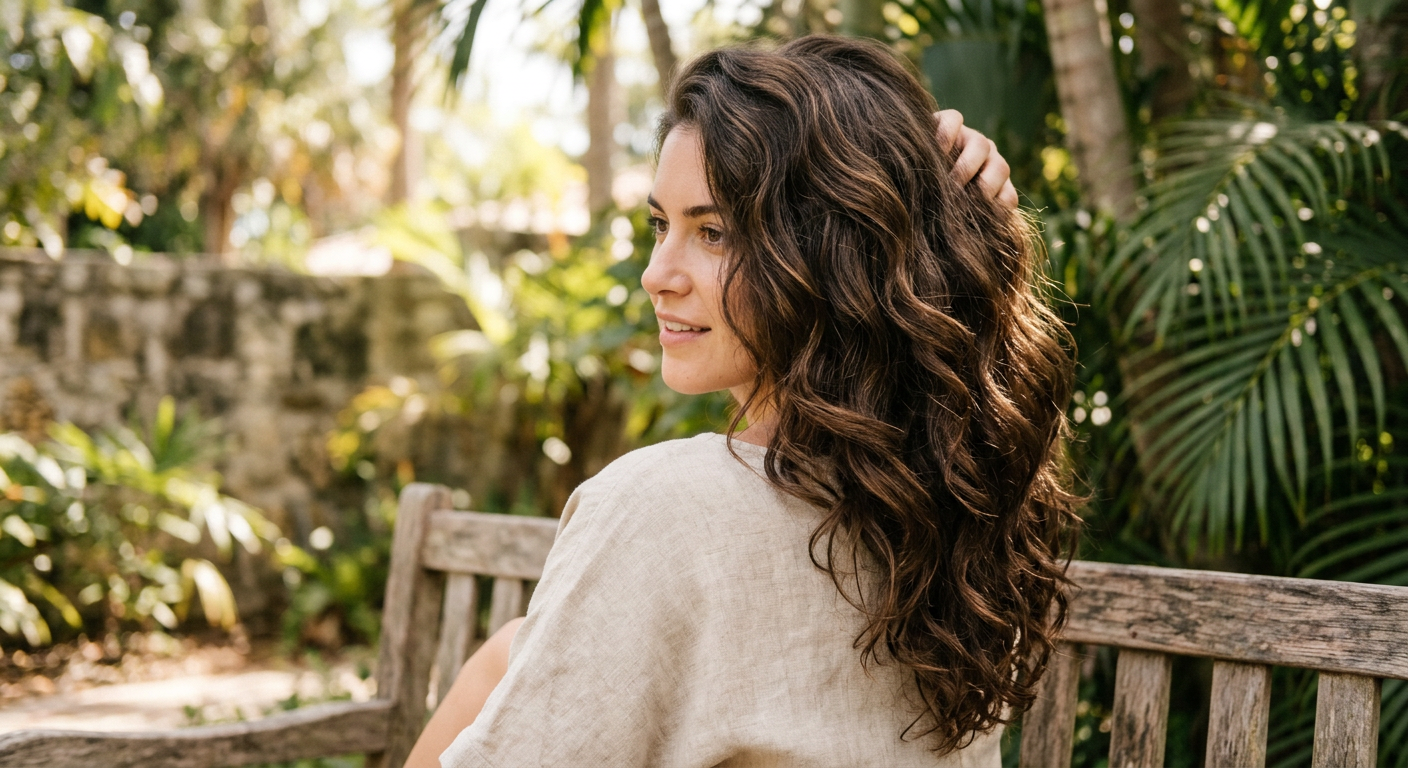
The shift is real and accelerating. According to Fort Lauderdale Hair, limiting heat styling and opting for air-dry looks is one of the defining hair trends of summer 2026. A viral YouTube video titled The Hair Change Everyone Is Making in 2026 calls it “the biggest shift I’ve ever seen in how women care for their hair.”
Aesthetics aren’t the only driver. Repeated heat styling — even with a protectant — causes cumulative damage to the cuticle layer over time: dryness, breakage, loss of elasticity. Consistent heat breaks let hair restore moisture balance and rebuild structural integrity.
The cultural piece matters too. Social media has normalized natural texture in a way that felt aspirational just a few years ago, and the result is a generation of people actively learning to work with their hair rather than against it.
The Foundation: What You Do in the Shower Matters Most
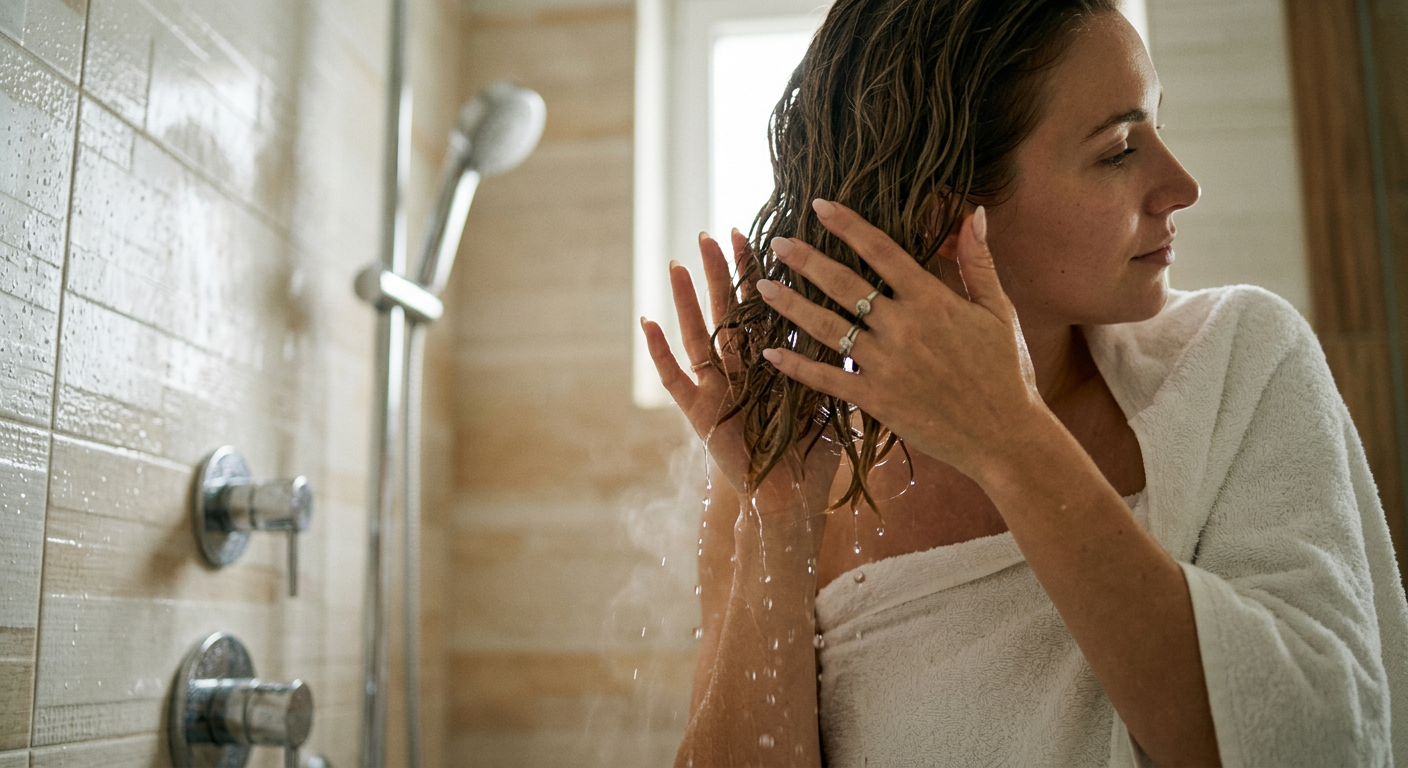
A polished air-dry doesn’t start when you step out of the shower — it starts before you reach for the shampoo. According to Percy & Reed, choosing a shampoo and conditioner matched to your specific hair type creates the foundation your air-dry routine is built on. Dry hair needs a moisturizing formula to supply what heat tools would otherwise strip away.
How you handle wet hair determines your outcome just as much. Rough towel-drying creates friction that raises the cuticle and amplifies frizz. Use a microfiber towel or a soft cotton t-shirt to press — not rub — excess water from your hair.
Ingredients to Look for in a No-Heat Product Lineup
- Humectants (glycerin, hyaluronic acid): draw moisture into the hair shaft
- Emollients (shea butter, argan oil): seal the cuticle and add smoothness
- Proteins (hydrolyzed keratin, silk amino acids): strengthen and reduce breakage
- Film-formers (flaxseed gel, PVP): define and hold without stiffness
Products That Do the Heavy Lifting Without Heat
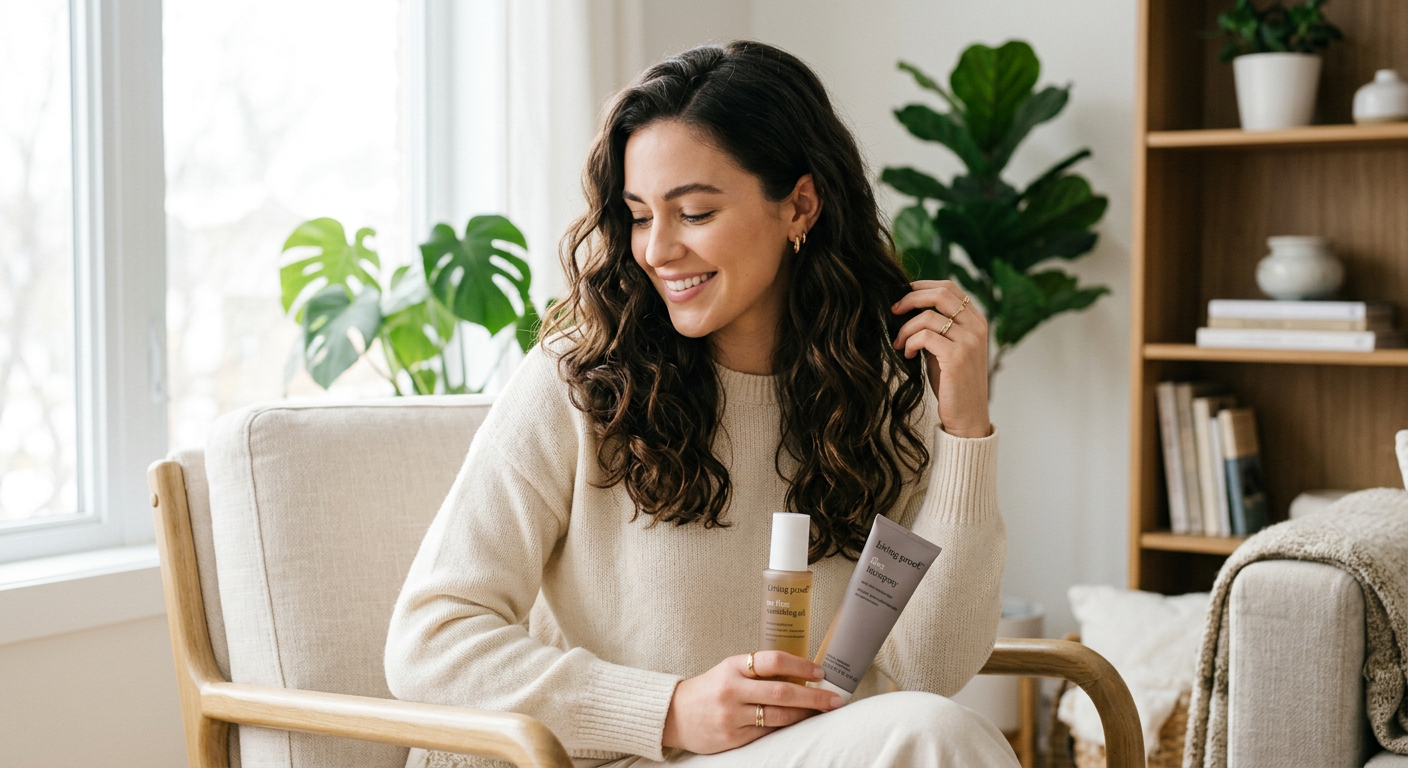
The right products are what separate a polished air-dry from a frizzy, undefined mess. Living Proof recommends applying a leave-in conditioner first, then layering a styling product — gel, curl cream, or curl custard — to define and hold your natural texture. Even distribution from root to tip, on soaking-wet hair, is what makes it work.
For straight and wavy hair, a lightweight smoothing serum or anti-frizz cream applied mid-shaft to ends provides control without weighing the hair down. For curly and coily textures, a more substantial hold product — gel or custard — preserves curl definition as the hair dries.
One product category gaining significant traction in 2026 is the air-dry styler: a hybrid between a leave-in and a light-hold cream, specifically formulated to enhance natural movement, reduce frizz, and eliminate the crunchy finish that standard gel can leave behind.
Techniques That Create Shape and Polish
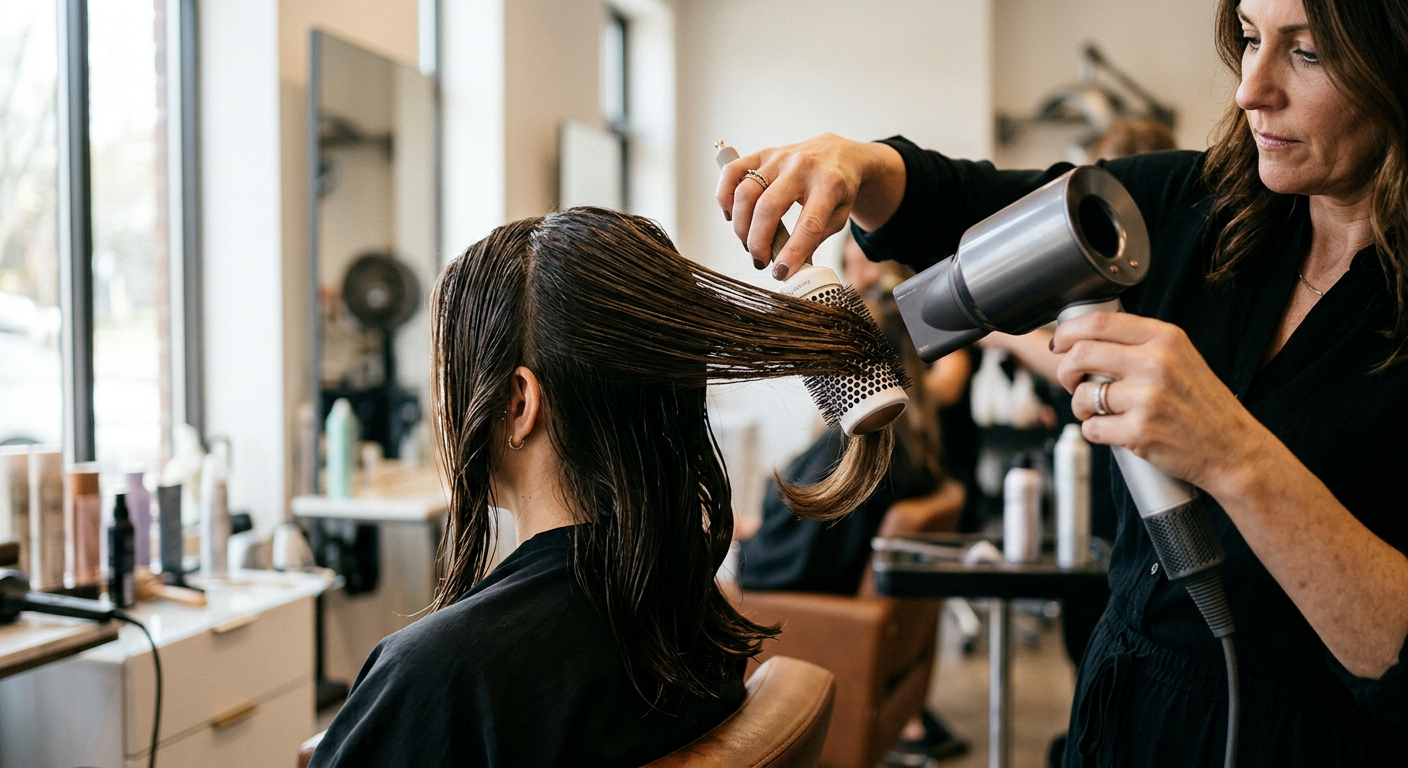
Product alone won’t give you a polished result. The technique you use while your hair dries determines the final shape, volume, and smoothness.
Plopping
Plopping means wrapping freshly washed, product-applied hair in a microfiber towel or t-shirt for 20–30 minutes. The technique encourages curl formation, reduces frizz, and cuts down overall drying time. It works best on curly and wavy textures.
Tension Drying
For straighter hair types, tension drying — gently pulling sections taut with your fingers as they dry — encourages the hair to dry smooth and flat without heat. It requires patience, but the results rival a basic blowout.
Overnight Styling
Braiding or twisting damp hair before bed and releasing it in the morning creates defined waves or curls with zero heat exposure. This works across most hair types and is one of the most time-efficient no-heat methods available.
When to Consider Low-Heat Tools Instead of Full Air-Drying
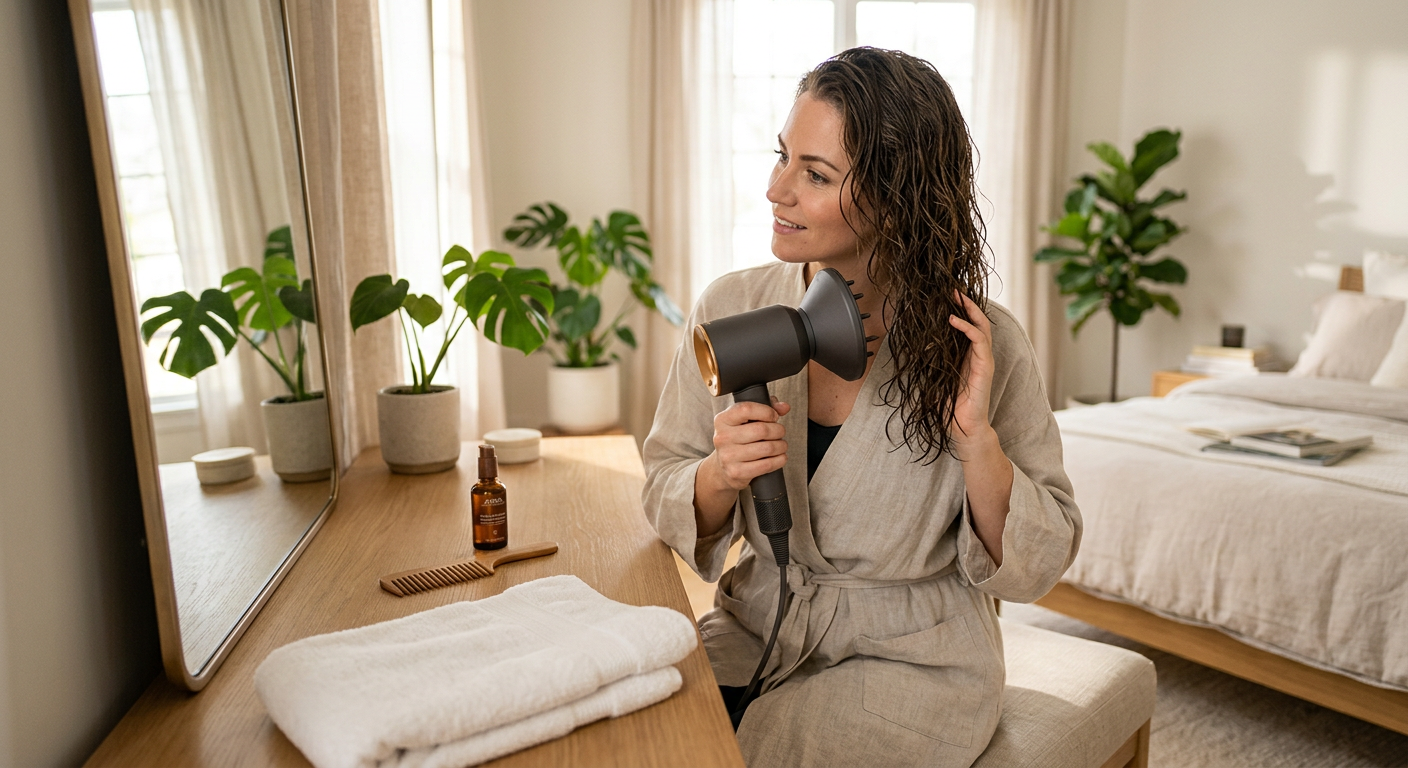
Air-drying doesn’t have to be all-or-nothing. For people who need a more polished result quickly, low-heat tools offer a middle ground worth considering.
The midi blowout trend of 2026 — smooth movement and shine rather than a fully blown-out look — uses minimal heat at a lower temperature setting to finish hair that has already been 70–80% air-dried. This approach dramatically reduces total heat exposure while still delivering a refined result.
Blow-dry brushes with ionic technology are another option. According to Yahoo Shopping’s 2026 roundup, the best models use airflow-based systems that dry and style without extreme heat, cutting styling time in half while reducing damage compared to a traditional blow-dryer on high heat.
Comparing Air-Dry Approaches: A Quick Reference
Hair Type Matters: Matching Your Method to Your Texture

A technique that works brilliantly for fine, straight hair can leave thick, coily hair undefined and frizzy. Hair type isn’t a footnote — it’s the single most important variable in a no-heat routine.
Fine and straight hair does best with lightweight products and tension drying. Heavy creams or gels weigh this hair type down and create a greasy finish. The goal is smoothness and natural fall.
Wavy hair (typically 2A–2C) responds well to scrunching techniques and medium-hold products. Encouraging the wave pattern while the hair dries — rather than brushing it out — is the difference between beachy and frizzy.
Curly and coily textures (3A–4C) generally need the most product and the most intentional technique. Plopping, the “praying hands” smoothing method, and finger-coiling individual sections are all established approaches that help define curl patterns without heat. Percy & Reed puts it plainly: the foundation of any successful no-heat routine is embracing your natural texture, not fighting it.
Building a Sustainable No-Heat Routine in 2026
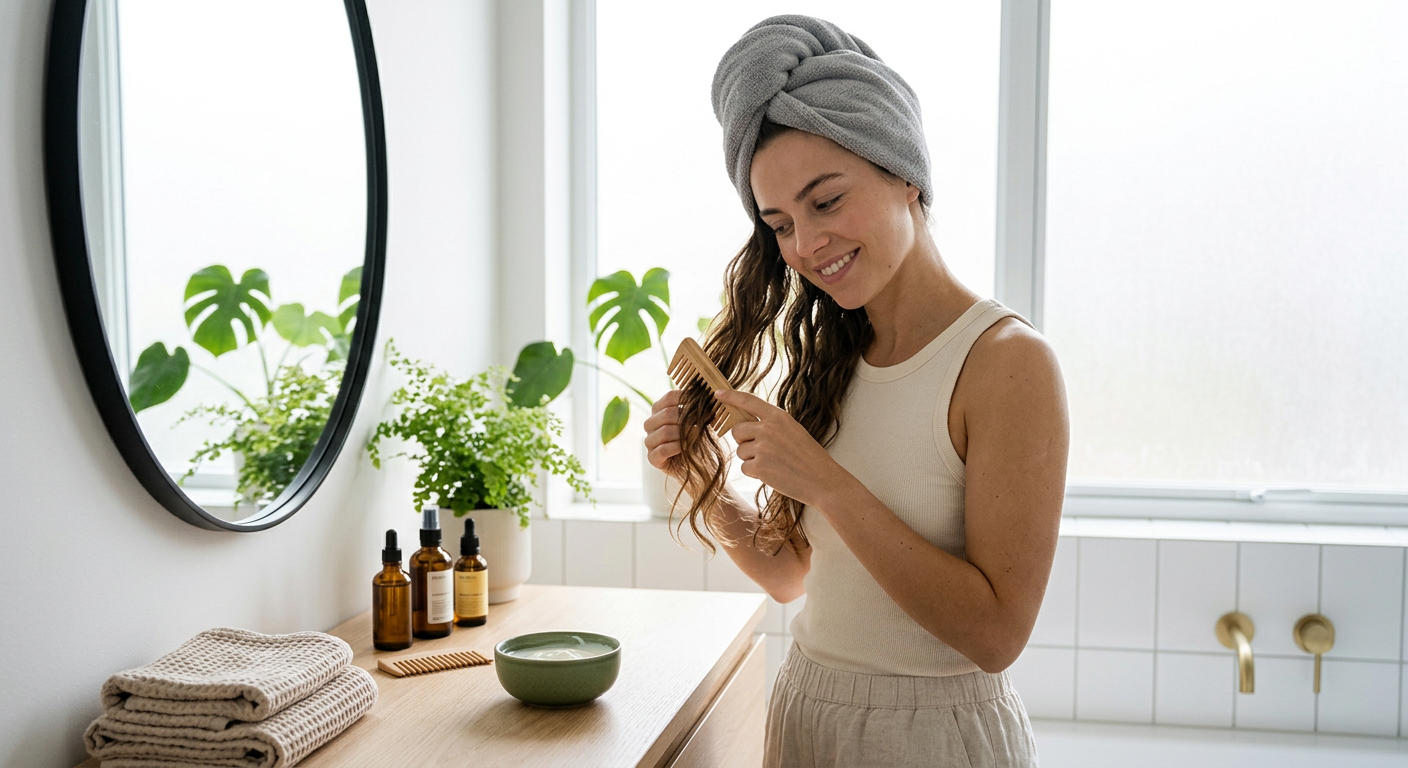
Consistency is what turns air-drying from an occasional experiment into a reliable method. Start with two or three heat-free wash days per week and track how your hair responds over four to six weeks. Most people notice improved moisture retention, reduced breakage, and more defined natural texture within a month.
Keep the routine simple at first. One leave-in conditioner, one styling product, one technique. Adding too many variables makes it harder to identify what’s working.
Adjust seasonally. Humidity, temperature, and UV exposure all affect how your hair dries and holds a style. A product that performs well in winter may need to be swapped for a lighter formula in summer.
Conclusion
Air-drying in 2026 isn’t about accepting less — it’s about getting more with less damage. The right in-shower prep, targeted no-heat products, and intentional technique produce results that are polished, healthy, and sustainable for your hair long-term.
Start with the right shampoo and conditioner for your hair type, apply products to soaking-wet hair, choose a drying technique matched to your texture, and use low-heat tools only as a finishing step when needed. Your hair’s natural texture, given the right support, is already your strongest styling asset.
One heat-free wash day this week is enough to start. Document what you see. The difference after 30 days will be visible.
Frequently Asked Questions
Q: Does air-drying actually damage your hair less than blow-drying?
Research shows that high-heat blow-drying damages the surface of the hair cuticle, while prolonged air-drying can cause the cortex to swell from extended water exposure. The current consensus among hair scientists is that a combination — partial air-drying followed by low-heat finishing — minimizes damage most effectively.
Q: How do I prevent frizz when air-drying?
Apply your styling products to soaking-wet hair, not damp hair, and avoid touching or scrunching your hair as it dries. Frizz most often comes from disrupting the cuticle while it’s still setting, so hands-off drying after product application makes a significant difference.
Q: Can I air-dry fine hair without it looking flat?
Yes, but technique matters. Flip your head upside down while applying a lightweight volumizing mousse or foam, then clip the roots with hair clips while the hair dries to build lift at the crown. Heavy creams or oils will weigh fine hair down, so avoid them.
Q: How long does air-drying actually take for thick hair?
Thick or coily hair can take three to five hours to fully air-dry, depending on density and length. Plopping for 30 minutes first reduces that time significantly. If full air-drying isn’t practical, drying to 70–80% and finishing with a low-heat tool is a reasonable compromise.
Q: What is the best product to use for air-drying wavy hair?
A medium-hold curl cream or a lightweight gel works well for most wavy textures. Apply it using the scrunching method — pressing sections of hair upward toward the scalp — to encourage wave formation. Avoid brushing wavy hair once the product is in, as this breaks up the wave pattern.
Q: Is it bad to go to sleep with wet hair after air-drying?
Going to bed with fully wet hair can cause friction damage and may promote scalp issues in some people. If you air-dry overnight, use a silk or satin pillowcase to minimize friction, and make sure your hair is at least 80–90% dry before lying down.