

If your makeup lives in a bag shoved into a bathroom cabinet, and your morning starts with a two-minute hunt for a liner that lost its cap sometime last month, the problem isn’t your collection size. Small-space beauty storage comes up constantly, and it almost always comes down to systems rather than square footage. A cramped bathroom or a single dresser drawer can hold everything you own, neatly, if you set it up right.
This guide walks through storage strategies for products, tools, and skincare in tight quarters. Each one is built around three things: accessibility, visibility, and durability, so the setup holds up past the first week.
Start With a Full Declutter
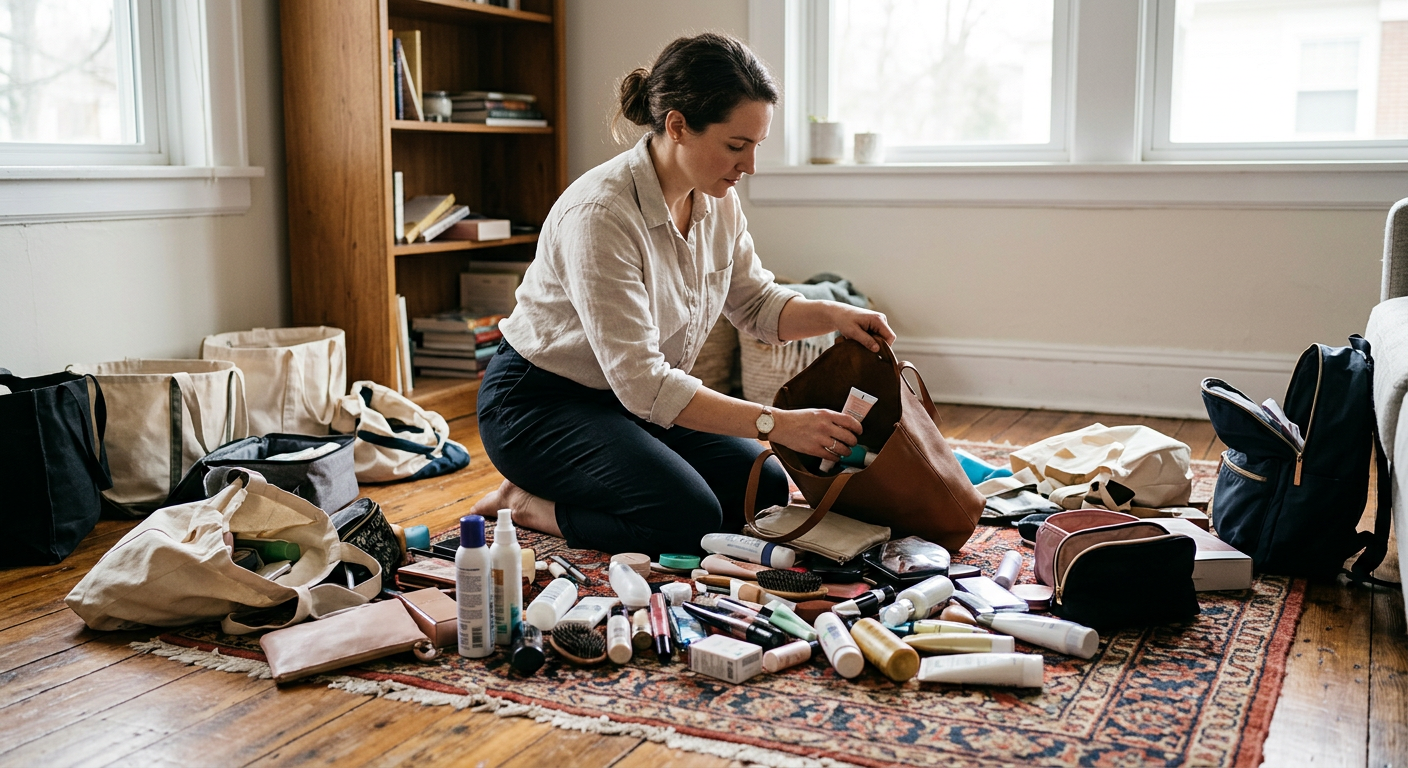
Don’t buy a single organizer until you’ve emptied everything out. Pull every product from every bag, drawer, and shelf, and spread it flat on a clear surface. It’s tedious. It’s also the most important step in the whole process.
Sort as you go. Foundations, concealers, and primers in one pile. Bronzers, blushes, and highlighters in another. Skincare kept separate from color cosmetics. Grouping this way flushes out the duplicates you forgot about and shows you exactly how much room each category needs.
Toss What You Cannot Use
Makeup expires, and old products can grow bacteria. Mascara lasts about three months, liquid foundation runs six months to a year, and powders hold up to two years, per the American Academy of Dermatology. Sniff for off smells, check for changes in texture or color, and toss anything past its window.
Decluttering works best as a recurring habit, not a one-time purge. Go through your collection every few months and it never has the chance to pile back up. A smaller, curated stash is far easier to store than a sprawling one.
Use Vertical Space and Walls
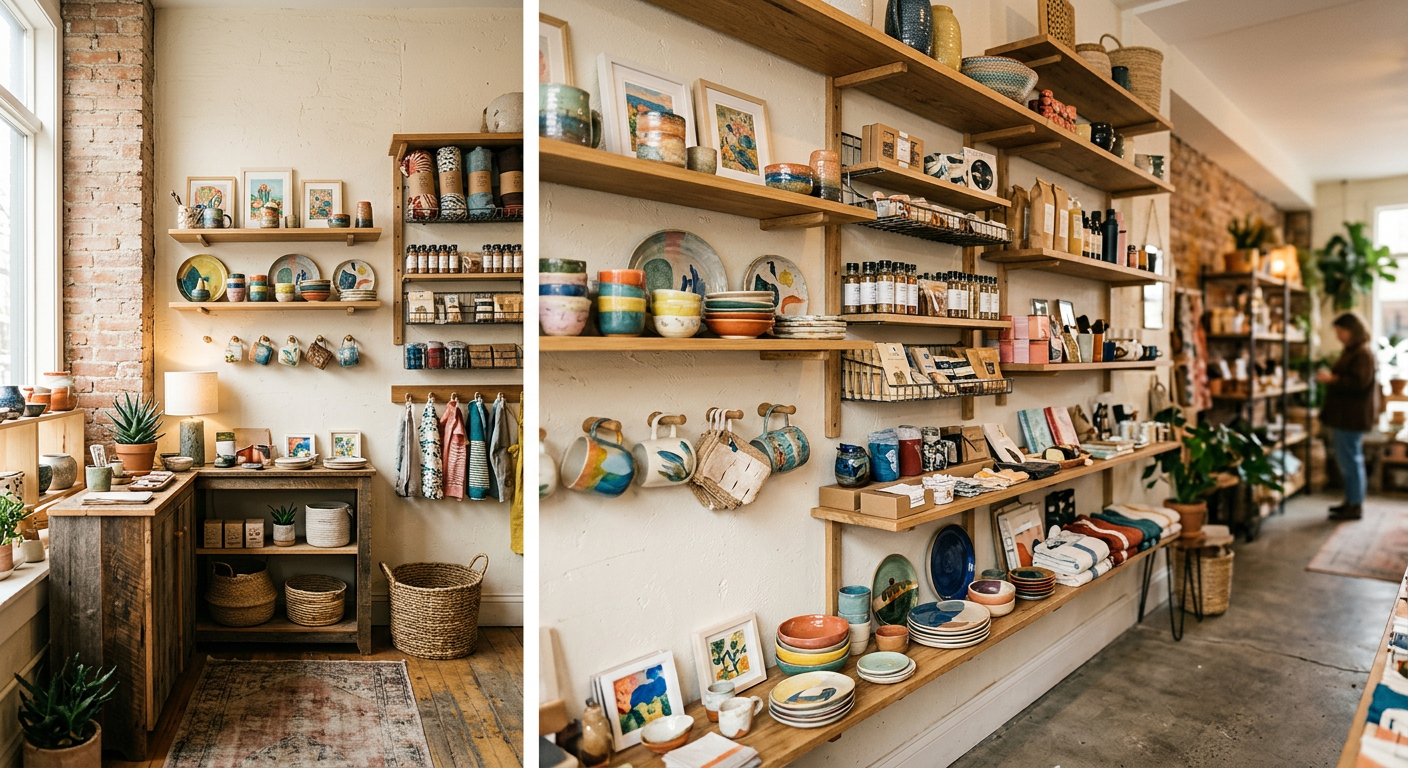
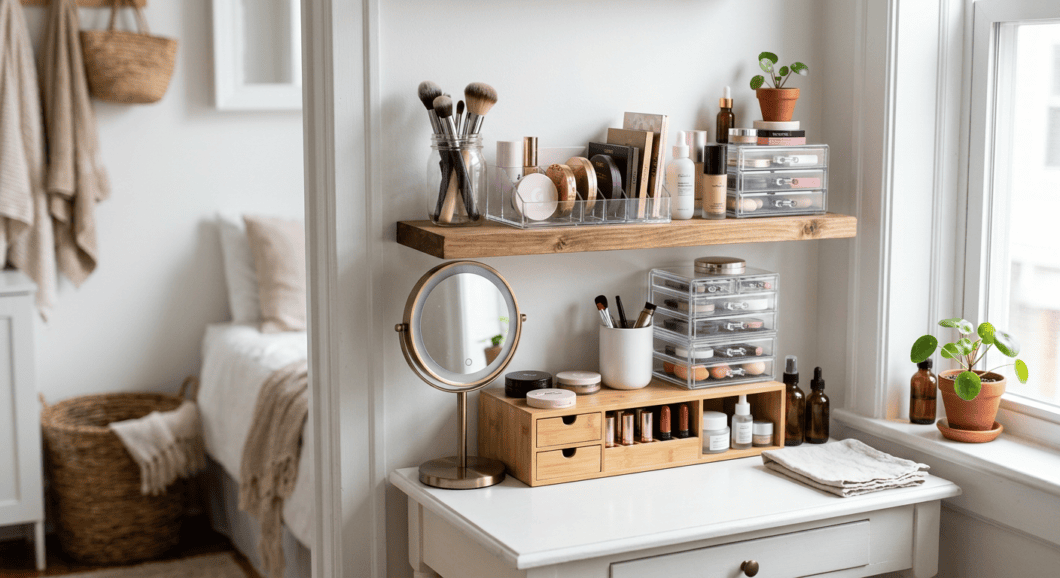
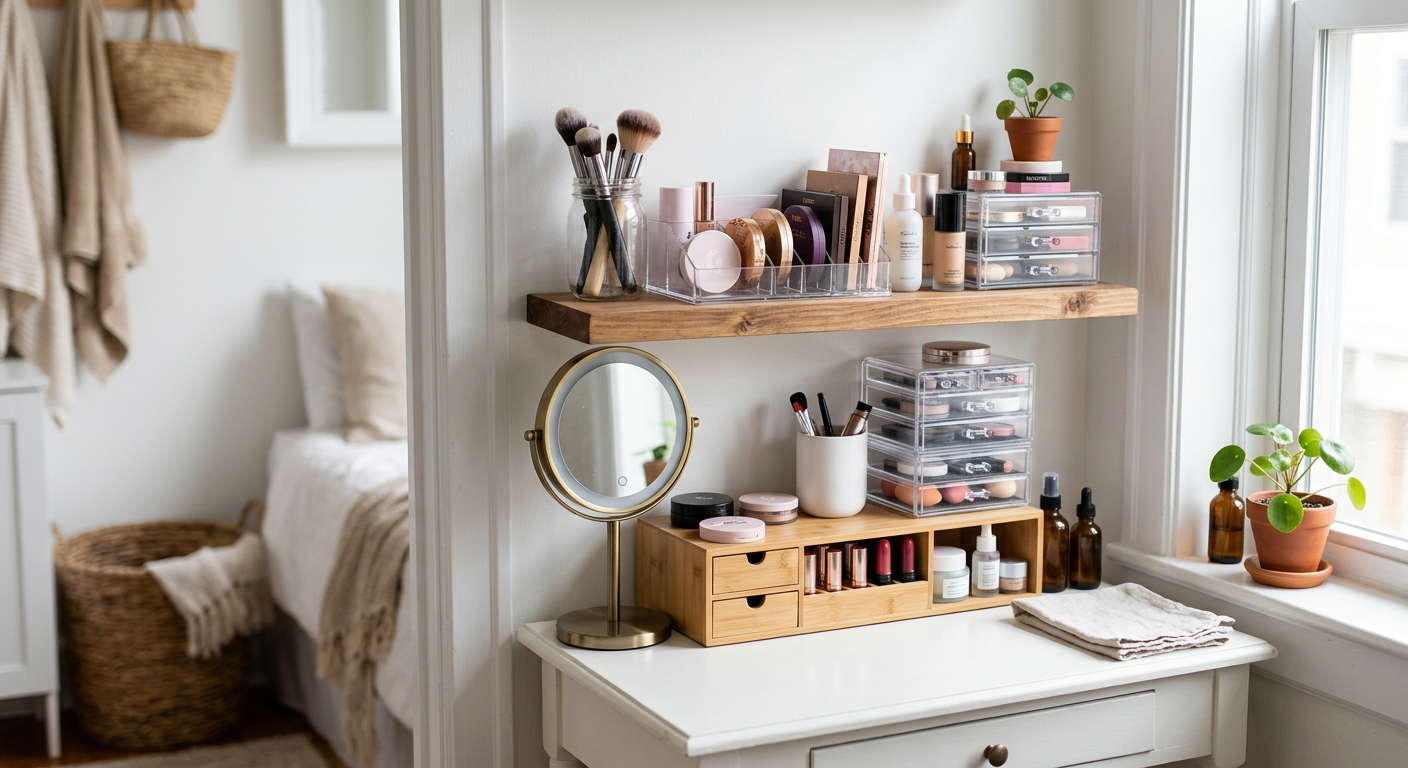
Floor and counter space runs out fast in a small room, but the walls usually sit empty. Move products and tools up onto the wall and you free the counter while keeping everything in sight. Cube shelving, floating shelves, and wall-mounted racks all do the job.
Magnetic boards are especially good for metal-backed compacts and palettes. Mount a board on the wall or the inside of a cabinet door, stick small magnets to your products, and your most-used items turn into a display that takes up no surface area at all. Pegboards do something similar, with hooks for brushes and cups.
The rule is easy to remember: any empty vertical surface can hold beauty products. Over-the-door organizers, tension rods strung with hanging cups, and stick-on shelves all push storage upward with no permanent installation, which matters if you rent.
Master Drawer Organization
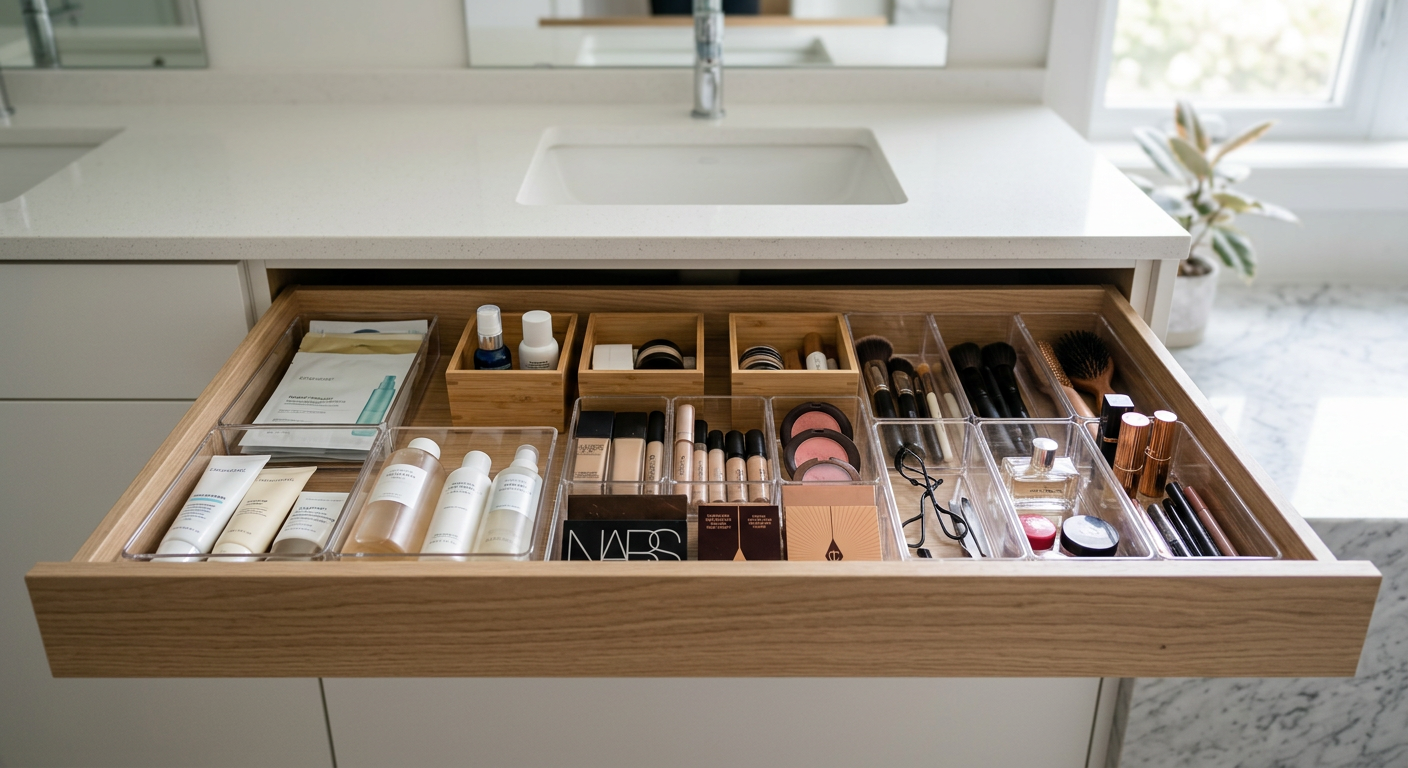
Drawers do the heavy lifting in small-space beauty storage because they keep products hidden and dust-free. The catch is dividing them so nothing slides into one jumbled pile. Silverware and kitchen organizers handle this well and cost a fraction of what specialty beauty products charge.
TJ Maxx, Marshalls, and The Container Store all stock affordable dividers. Look for adjustable or interlocking trays so you can shape the compartments around your categories. Where you can, stand items on their sides or upright so you spot everything at a glance.
Layer Deep Drawers
A deep drawer wastes its height if you only use the bottom. Add a second tier with stackable trays or acrylic risers and one drawer effectively doubles. Daily-use items ride on top, backups and seasonal products go underneath.
Line the drawers with washable liners or shelf paper to catch loose powder and protect the wood. Wipe the organizers down when you do your regular declutter so product residue doesn’t build up. A divided drawer is quicker to work from than any open display, spills and all.
Choose the Right Organizers for Your Space
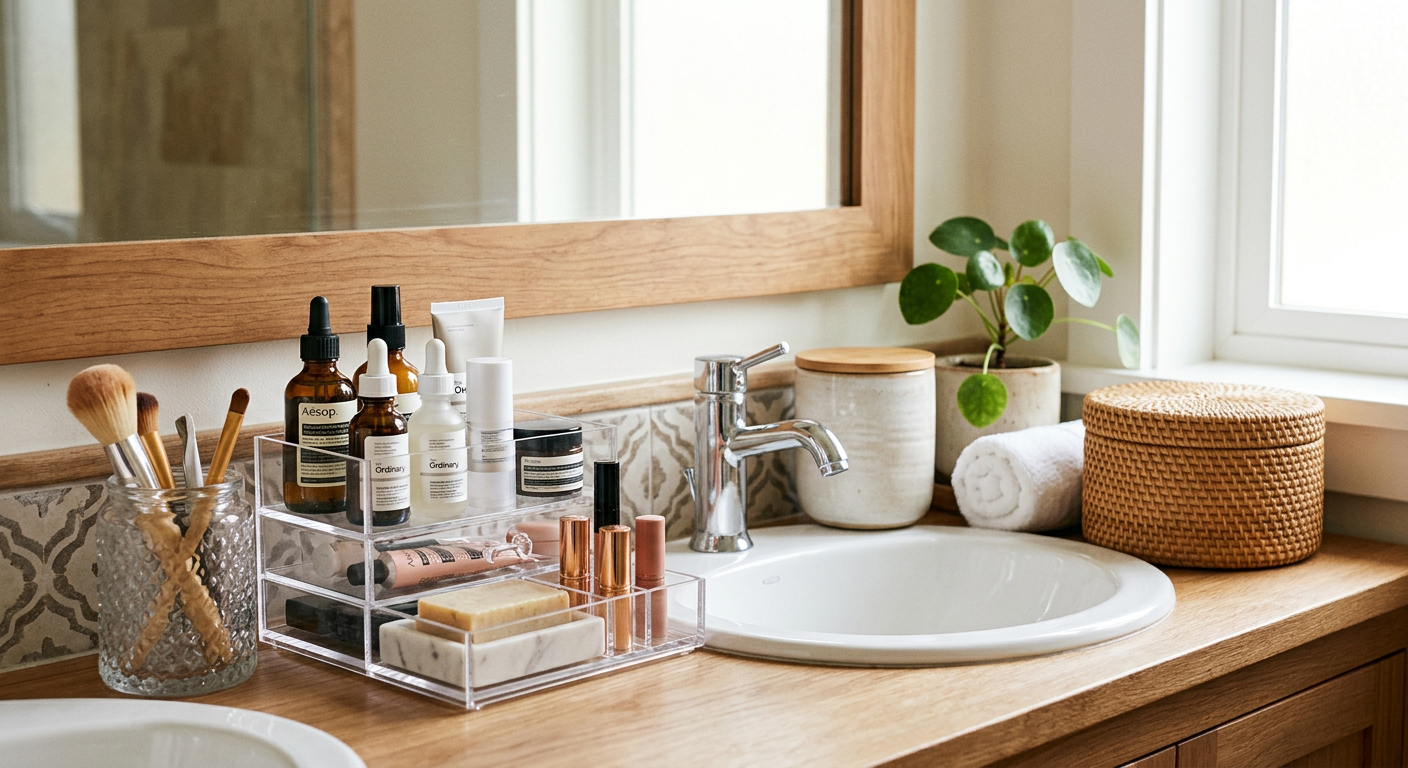
No single organizer fits every space. The right pick depends on whether you want your products hidden or on display, and how much you’re willing to spend. Here’s how the popular options stack up.
| Organizer Type | Best For | Price Range | Visibility |
|---|---|---|---|
| Acrylic drawer organizers | Countertops, dressers | $15–$40 | High (clear) |
| Silverware/kitchen dividers | Inside drawers | $5–$20 | Medium |
| Stackable acrylic trays | Deep drawers | $20–$50 | High |
| Magnetic board | Walls, cabinet doors | $15–$35 | High |
| Cube shelving unit | Floors, corners | $30–$80 | Medium |
| Over-the-door organizer | Doors, closets | $10–$30 | Medium |
Prioritize Clear Containers
Clear acrylic lets you see what’s inside without opening or shifting anything, which saves time and keeps products from expiring forgotten at the back. It also keeps the whole setup looking tidy even when it’s packed full.
If clear plastic reads as too busy on open shelving, tuck the acrylic organizers inside drawers instead. You keep the visibility and lose the visual clutter. Aim for a system that works day to day, not one that only photographs well.
Store by Frequency of Use
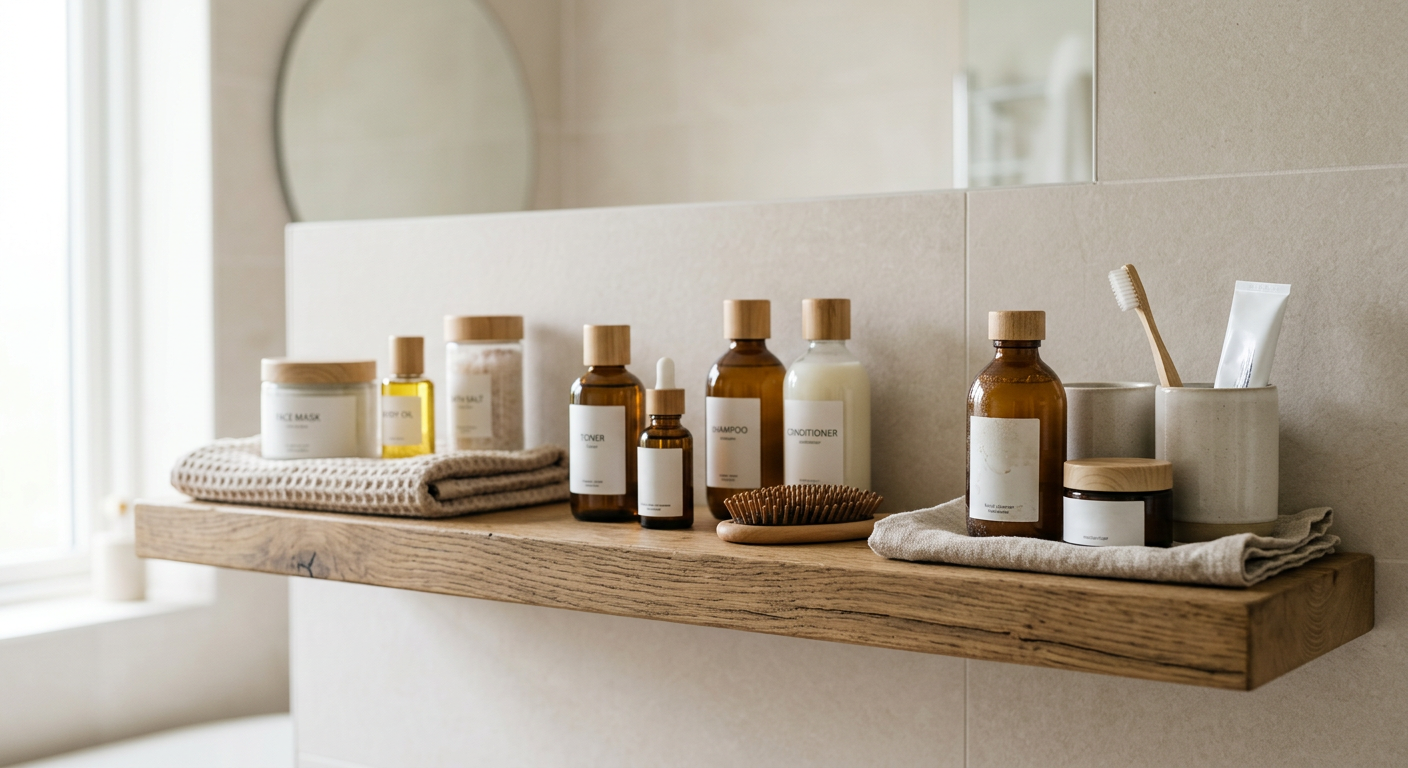
Arrange your products by how often you reach for them, not just by type. Daily essentials—your everyday foundation, the mascara you actually use, your go-to lip color—belong in the easiest spot to grab, whether that’s the top drawer or the front of a tray.
Push occasional pieces like special-occasion palettes and backups to the higher shelves, deeper drawers, or a separate box. This zoning cuts down the daily rummaging that makes a small space feel like chaos.
Tools follow the same logic. Keep brushes upright in a cup or jar within arm’s reach, and stow cleaning supplies and spare sponges somewhere else. Splitting active tools from backups keeps your working surface clear.
Maintain Your System Over Time

An organized space lasts only as long as the habits behind it. Start small, one drawer or one shelf at a time, and build systems you’ll actually keep up with. A flawless setup you can’t maintain is worse than a plain one you can.
Run a quick reset weekly: put products back in their zones, wipe up spills, note what’s running low. Book a deeper declutter every three to four months to catch the expired stuff and take stock of the collection again.
New purchases get the one-in-one-out treatment. If a product has no home in your system, either make room for it or leave it at the store. That single rule is what keeps a small space from refilling itself.
Conclusion
Organizing beauty products in a small space is a repeatable process: declutter first, use your vertical and drawer space well, choose clear organizers, arrange by how often you reach for things, and keep the system going with regular resets. You don’t need a dedicated beauty room. You need intentional systems and steady habits.
Pick one drawer this week. Empty it, group your products, add dividers, and see how much faster the routine feels afterward. Once that space works, move to the next, and the whole collection will be sorted before the month is out.
Frequently Asked Questions
Q: What is the cheapest way to organize makeup in a small space?
Kitchen and silverware drawer dividers are the most budget-friendly option, often $5 to $20 at stores like TJ Maxx or Marshalls. They keep products separated and visible without the markup on specialty beauty organizers.
Q: How often should I declutter my beauty products?
Do a deep declutter every three to four months to clear expired products and reassess what you own. A quick weekly reset to put items back in their zones keeps clutter from rebuilding between the deeper cleans.
Q: Should I store makeup in the bathroom?
Bathrooms are convenient, but the heat and humidity shorten product shelf life. If it’s your only option, keep makeup in a closed drawer or cabinet rather than out in the open near the shower.
Q: How do I organize makeup without a lot of counter space?
Move products off the counter with vertical storage: wall-mounted shelves, magnetic boards, or over-the-door organizers. Drawer organizers also keep everything contained and out of sight while protecting your limited surface area.
Q: What is the best way to store makeup brushes?
Keep frequently used brushes upright in a cup or jar within arm’s reach so the bristles stay ventilated and hold their shape. Store spare or specialty brushes separately to cut clutter in your main workspace.
Q: How do I keep a small beauty space organized long-term?
Use a one-in-one-out rule so new purchases replace old ones instead of adding to the pile. Pair that with a quick weekly reset and a quarterly declutter to keep the system running indefinitely.