



Most people own more skincare than they use. If your bathroom shelf holds a row of half-empty serums and you still can’t remember which one goes on first, the products usually aren’t the problem. The system is.
A well-organized routine is the difference between guessing and getting results. Apply products in the right order, store them so they don’t degrade, and cut the steps that duplicate each other, and every formula gets a fair shot at doing its job. This guide covers how to build that routine using principles dermatologists recommend.
Why Organization Beats Owning More Products
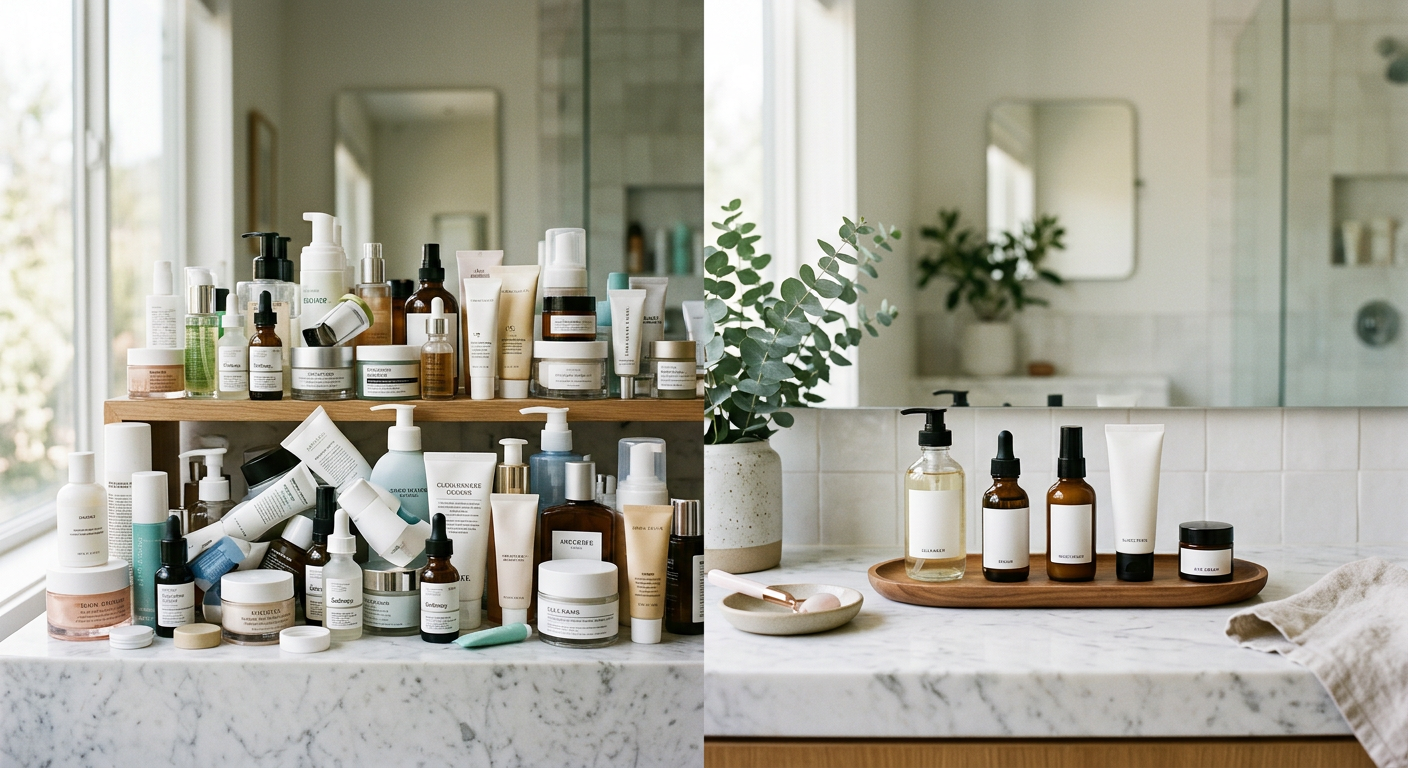
The skincare industry keeps growing, and most bathroom shelves keep filling up to match. But dermatologists increasingly make the case that fewer, better-chosen products outperform a crowded lineup. As AboutSkin Dermatology puts it, smart skincare comes down to “efficiency, consistency and thoughtful product selection based on science and skin biology.”
Minimalist skincare means using fewer products while still covering everything your skin needs: cleansing, hydration, barrier support, and protection, without overlap. When products overlap, you waste money, and stacking duplicate active ingredients can irritate your skin.
Organization also improves consistency, and consistency matters more than any single product. A three-step routine you follow every morning will beat a ten-step ritual you abandon by the second week. Structure is what makes the habit stick.
The Correct Order to Apply Skincare Products
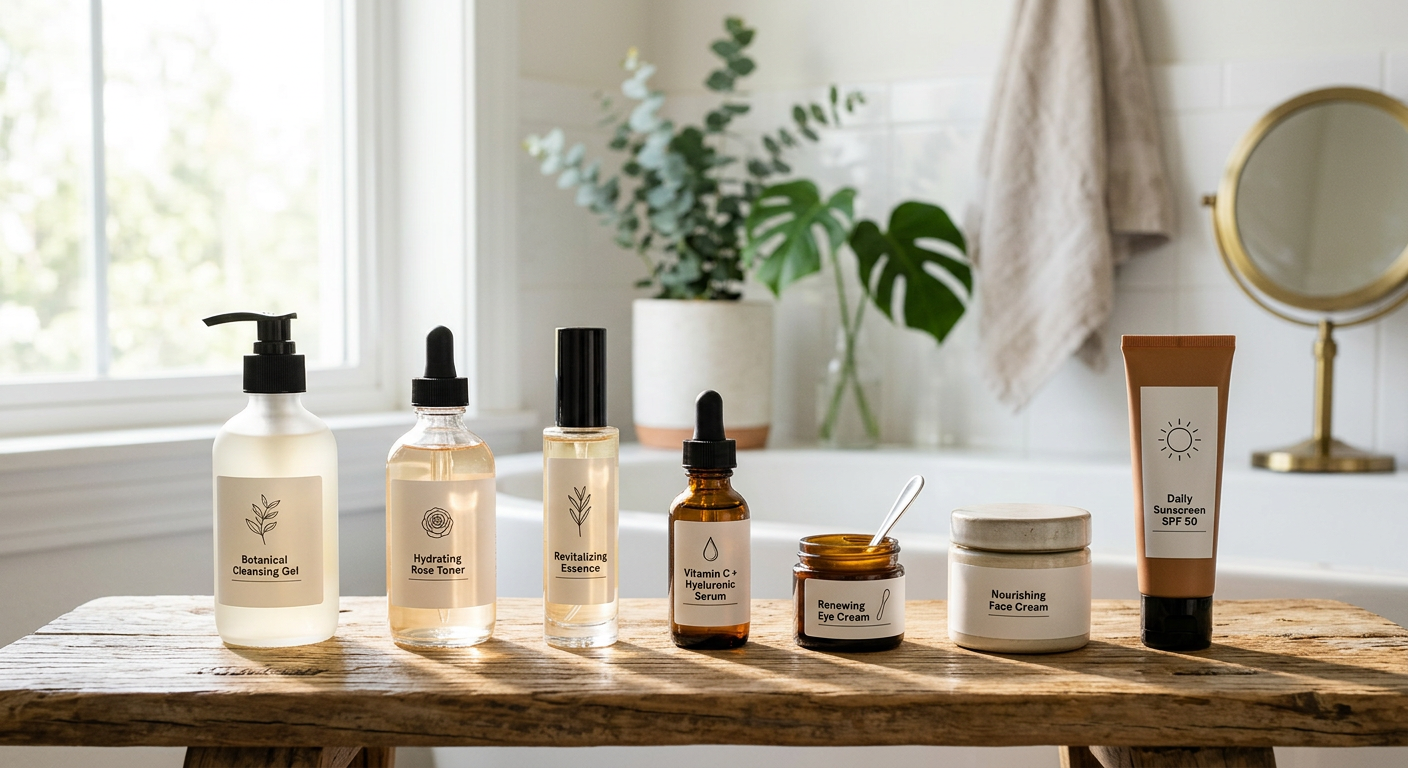
Order is the foundation of the whole thing. The standard dermatology rule is to layer from thinnest to thickest texture, so the lighter formulas absorb first and the heavier ones seal them in. Put a thick moisturizer on before a watery serum and you’ve just blocked the serum from getting anywhere.
The dermatologist-recommended sequence below is drawn from guidance compiled by Cosmopolitan’s expert panel:
| Step | Morning | Evening |
|---|---|---|
| 1 | Cleanser | Cleanser (double cleanse if wearing makeup or SPF) |
| 2 | Toner | Toner |
| 3 | Antioxidant serum (e.g., vitamin C) | Treatment serum or retinol |
| 4 | Eye cream | Eye cream |
| 5 | Moisturizer | Moisturizer |
| 6 | Sunscreen (SPF 30+) | Facial oil (optional, last step) |
The Four Core Steps Everyone Needs
If that table feels like a lot, strip it down. The INKEY List defines a solid routine in four steps: cleanse, hydrate, treat, and moisturise, plus SPF in the morning.
Get those five touchpoints right before you add anything else. Most disappointing results trace back to skipping sunscreen or applying actives in the wrong order, not to missing some niche product.
Separate Your Morning and Evening Routines
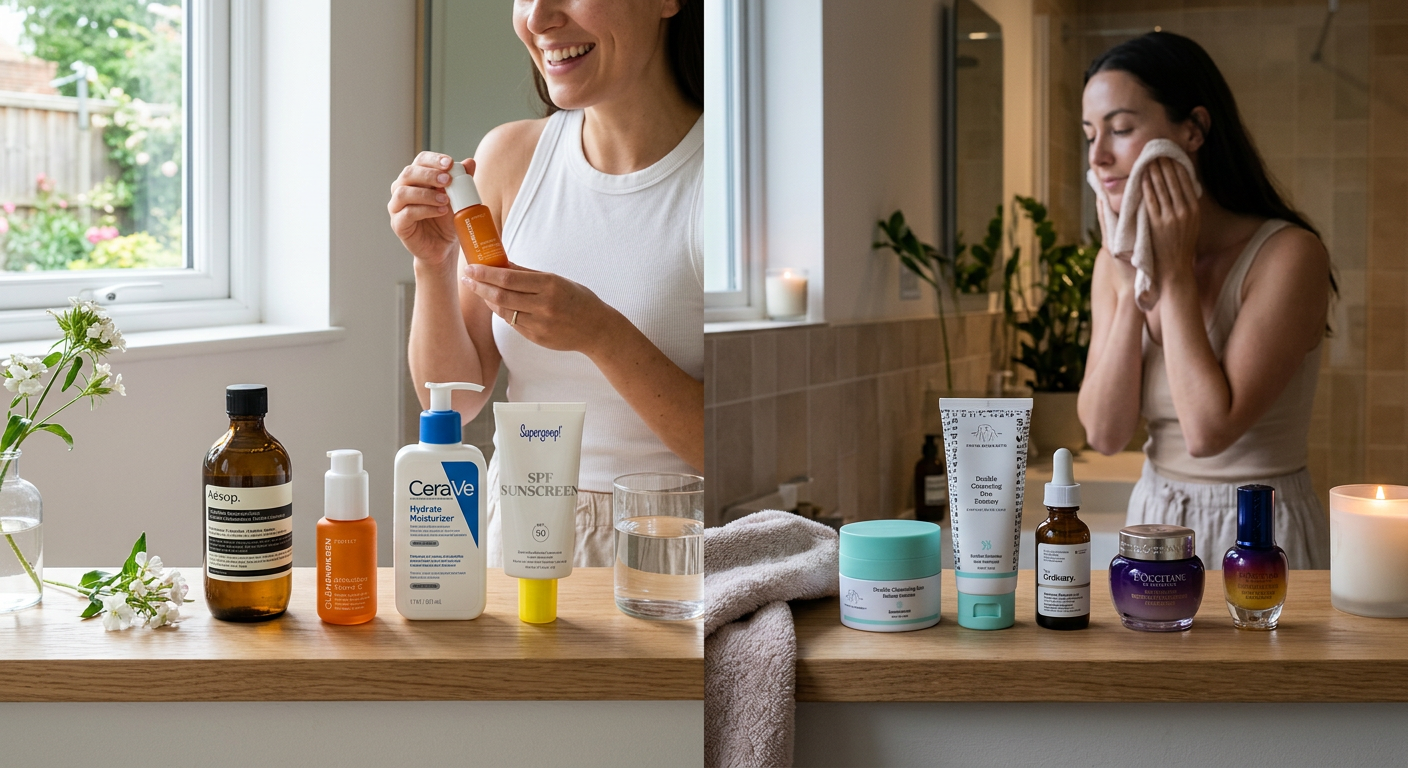
Skin needs different things at different times of day. Mornings are about protection: antioxidants and sunscreen defend against UV and pollution. Evenings are about repair, when retinoids, exfoliating acids, and richer moisturizers do their work while you sleep.
Swap them and you create problems. Vitamin C belongs in the morning because it boosts your SPF protection. Retinol belongs at night because sunlight degrades it and makes skin more sensitive. Keeping the two routines distinct saves product and prevents irritation.
A physical split reinforces the habit. Naked & Thriving recommends grouping morning products in one section of your shelf and night products in another, so you’re never standing there at 7 a.m. trying to remember what goes where.
How to Layer Active Ingredients Without Irritation
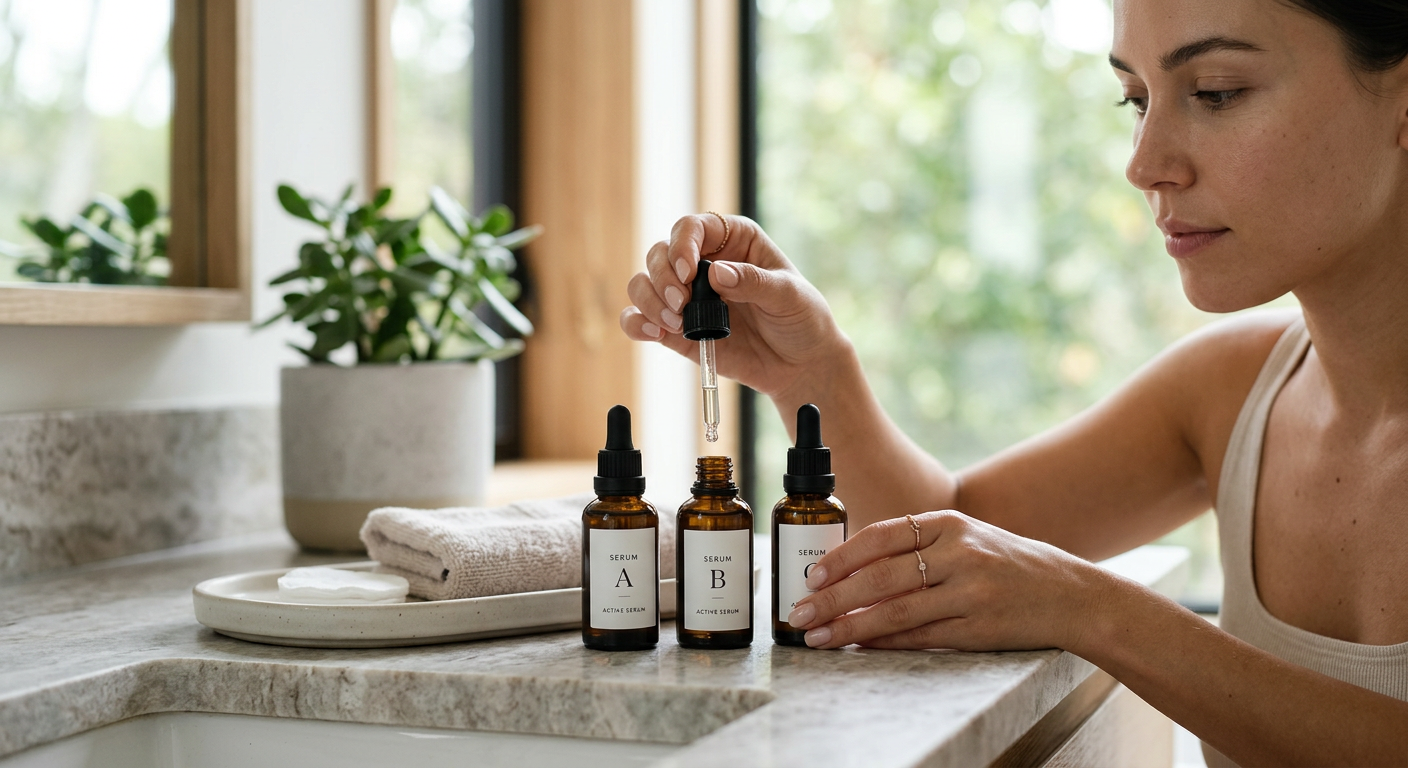
Active ingredients are where the results come from, but they can clash. Layer too many at once and you overwhelm your skin barrier, which shows up as redness, peeling, or breakouts. The better move is to space potent actives out rather than piling them into one session.
Actives That Don’t Mix Well
- Retinol + AHA/BHA exfoliants: Both speed up cell turnover. Together, they can strip the barrier. Alternate them on different nights.
- Vitamin C + retinol: Vitamin C in the morning, retinol at night.
- Niacinamide + vitamin C: Usually fine in modern formulas, but if your skin runs sensitive, separate them between routines.
Actives That Work Well Together
- Hyaluronic acid + almost anything: It hydrates without conflict.
- Niacinamide + most moisturizers: A moisturizer with niacinamide built in handles oil regulation in one step, the kind of multi-functional product AboutSkin Dermatology points to.
- Retinol + peptides: Peptides support the barrier while retinol does the heavy lifting.
Introduce a new active slowly. Apply retinol every other night for the first few weeks, and give each layer about 60 seconds to absorb before the next one goes on.
Choose Multi-Functional Products to Cut Clutter

The quickest way to streamline a routine is to choose products that pull double duty. One well-formulated product can replace two or three single-purpose ones, which saves you both steps and money.
Look for combinations that hit several needs at once. AboutSkin Dermatology suggests a moisturizer with niacinamide for oil regulation, or a sunscreen that also delivers antioxidants. Overlaps like these can shrink a morning routine down to a few products without giving up benefits.
There’s a second advantage. A multi-functional product has already been balanced by a formulator for ingredient compatibility, so it lowers the risk of clashing actives. Fewer products mean fewer chances to make a layering mistake.
Smart Storage That Protects Your Products

Where you keep your products affects how well they work and how long they last. Heat, light, and humidity all degrade active ingredients, which is why a steamy bathroom is one of the worst places to store serums. Retinol and vitamin C are especially vulnerable to light and air.
Practical Storage Tips
- Use a clear organizer or drawer dividers so you can see everything at a glance, a method recommended by L’Oréal Paris.
- Group by routine, not by brand. Keep morning cleanser, toner, moisturizer, and SPF together, and store night products separately, as Desert Essence advises.
- Keep light-sensitive actives in a cool, dark cabinet away from windows.
- Check expiration dates quarterly and toss anything past its prime.
A visible, well-grouped setup does more than look tidy. It removes friction, and friction is the main reason people skip steps. When your products are laid out in the order you use them, following the routine stops requiring any thought at all.
Key Takeaways and Your Next Step

A smart routine isn’t about owning the most products. It comes down to applying the right ones in the right order, keeping morning and evening steps separate, layering actives with some care, and storing everything so it stays effective and easy to reach.
Start small. Audit your current shelf, pull the duplicates, and sort what’s left into a morning group and a night group using the order in this guide. Add one multi-functional product to cut a redundant step, and stick to the four core steps every day.
Pick one change to make today: separate your shelves, or move your vitamin C to mornings where it belongs. Consistency beats complexity when it comes to visible results.
Frequently Asked Questions
Q: What order should I apply my skincare products?
Apply products from thinnest to thickest texture: cleanser, toner, serum, eye cream, moisturizer, and sunscreen last in the morning. At night, swap sunscreen for a treatment like retinol earlier in the routine and finish with moisturizer or facial oil.
Q: Can I use vitamin C and retinol together?
It’s best to separate them. Use vitamin C in the morning to support sun protection, and apply retinol at night, since sunlight degrades it and increases skin sensitivity.
Q: How many skincare products do I actually need?
Four core steps cover most needs: cleanse, hydrate, treat, and moisturise, plus SPF in the morning. Multi-functional products can reduce this further without sacrificing results.
Q: Why does the order of skincare products matter?
Order determines whether each product can absorb properly. Applying thicker products first blocks lighter serums from penetrating, which wastes their active ingredients.
Q: Where should I store my skincare products?
Store light-sensitive actives like retinol and vitamin C in a cool, dark cabinet away from heat and humidity. A bathroom shelf exposed to steam can degrade these ingredients faster.
Q: How long should I wait between skincare layers?
Wait about 60 seconds between products with active ingredients so each one absorbs before you apply the next. This matters most after applying toners or treatment serums.