

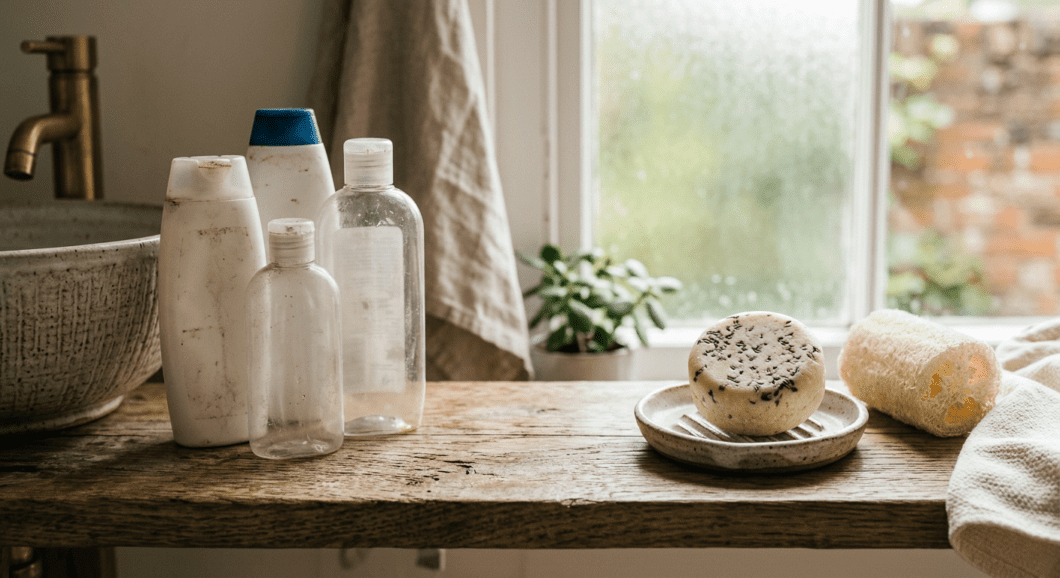
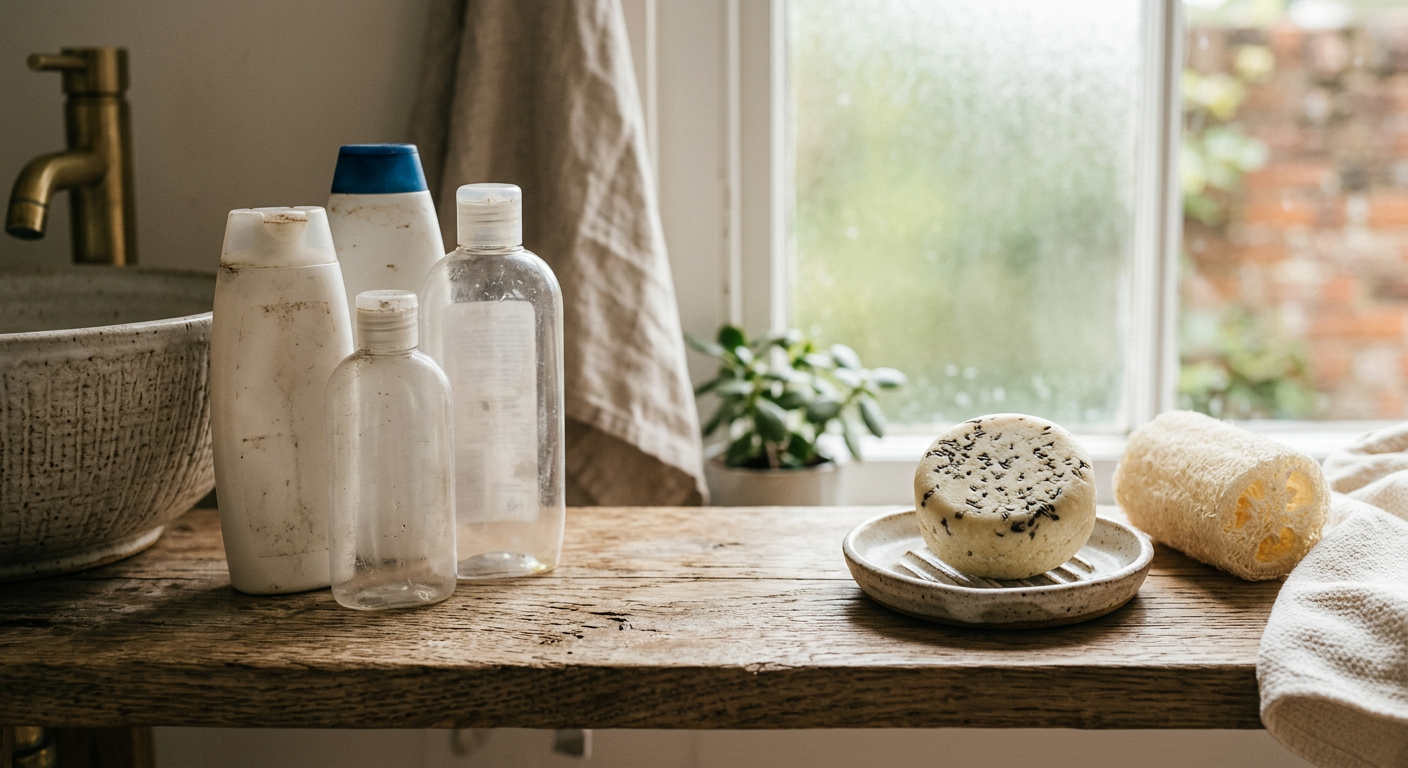
A single shampoo bar can replace up to three plastic bottles. That figure, reported by Zero Waste Store, explains a lot about why solid beauty bars have moved from health-food-store curiosity to a fixture on ordinary bathroom shelves. They do the same job as the liquid bottles that have ruled the category for decades, but with less waste, less weight, and a lower cost over time. Anyone who has sent a half-empty bottle skidding across the shower floor already understands part of the appeal.
What Makes a Beauty Bar “Concentrated”
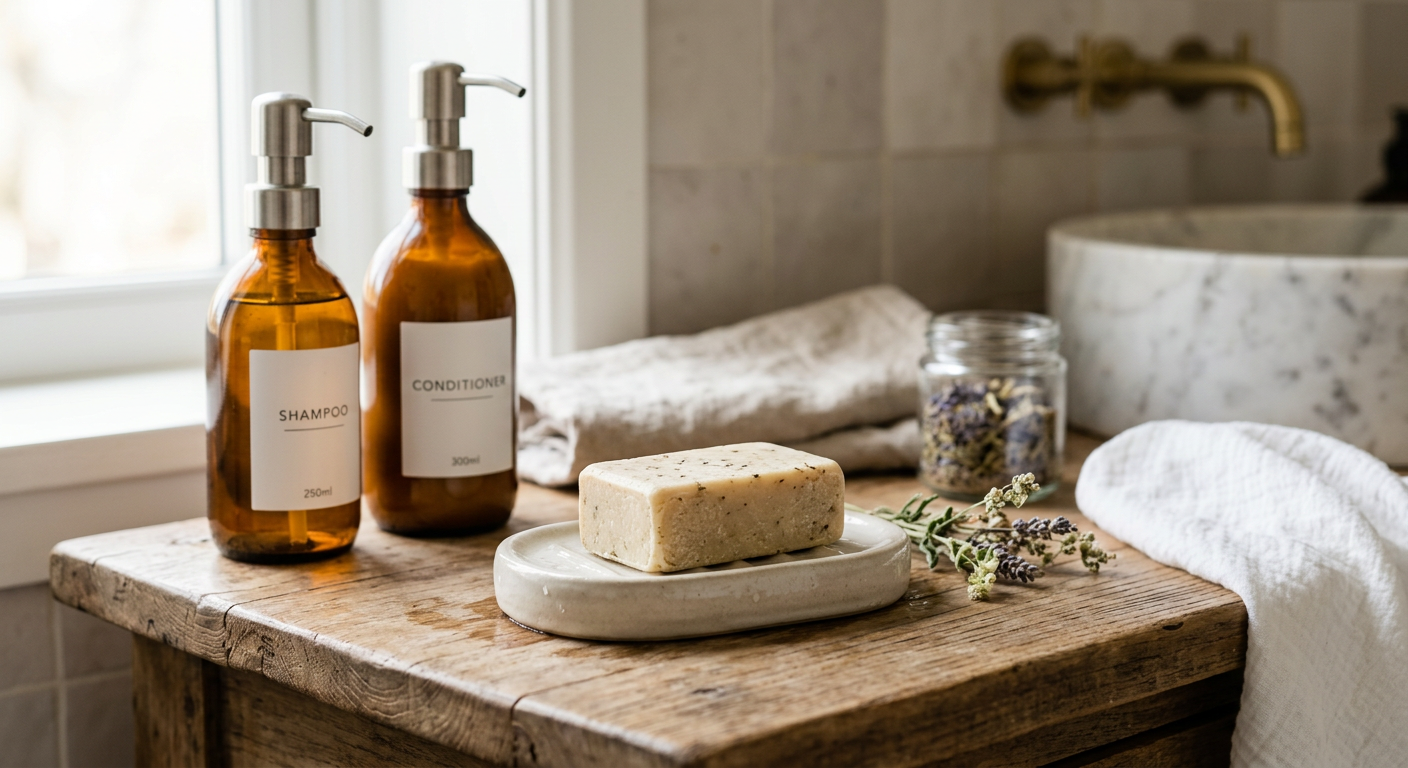
A concentrated beauty bar is the solid form of something you’d normally buy as a liquid: shampoo, conditioner, body wash, or facial cleanser, with the water taken out. Most liquid formulas run 70 to 80 percent water, so a large share of what you pay to ship and store is filler. Bars leave the water behind and keep the working ingredients in a small, solid puck.
That’s the design. With no water in the formula, as Me and T Soap puts it, there’s “nothing to spill, leak, or evaporate.” You add the water yourself at the moment of use, which keeps the product stable and cuts down on the heavy preservative systems liquids depend on.
Why Removing Water Matters
Water is expensive to ship and carbon-intensive to move. A pallet of liquid bottles weighs far more than the same number of bars, which drives up transport emissions and fuel costs. Drop the water and brands can also skip the bulky bottles, pumps, and caps that liquids need just to stay sealed.
The Environmental Case Is Hard to Ignore
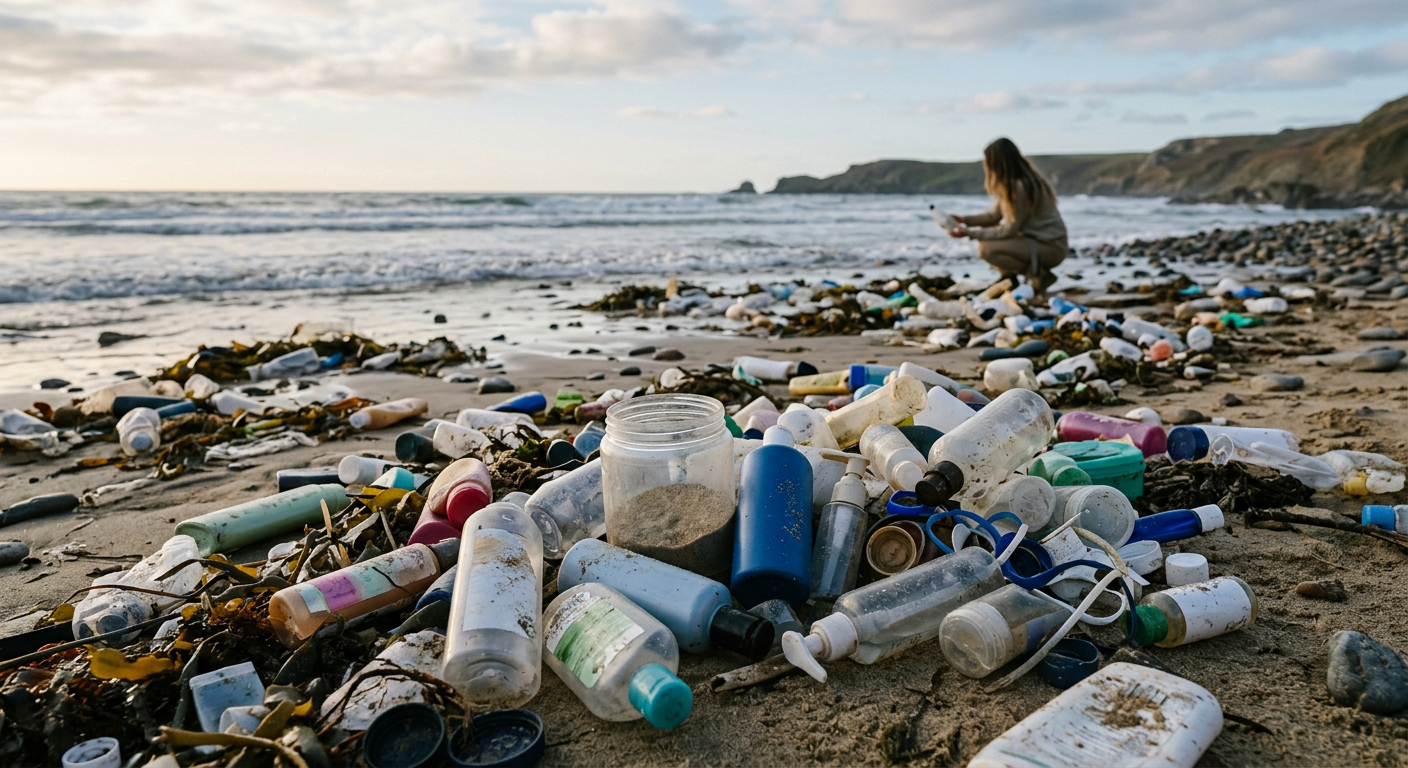
Plastic packaging is the beauty industry’s most visible sustainability problem. Traditional bottles tend to combine several materials, with the bottle, the pump, and the cap each made differently, and that mix complicates recycling. Plenty wind up in landfills or oceans no matter what the buyer intended.
Bars route around most of that. They usually arrive in compostable paper or cardboard, or with no packaging at all. Because one bar stands in for two or three bottles, the plastic you avoid adds up with every purchase.
Industry pressure is moving the same direction. BeautyMatter reports that extended producer responsibility programs and tighter packaging rules are pushing brands toward recyclable and reusable formats. That trend makes packaging-free bars more appealing to manufacturers, not only to shoppers.
Bars vs. Bottles: A Direct Comparison
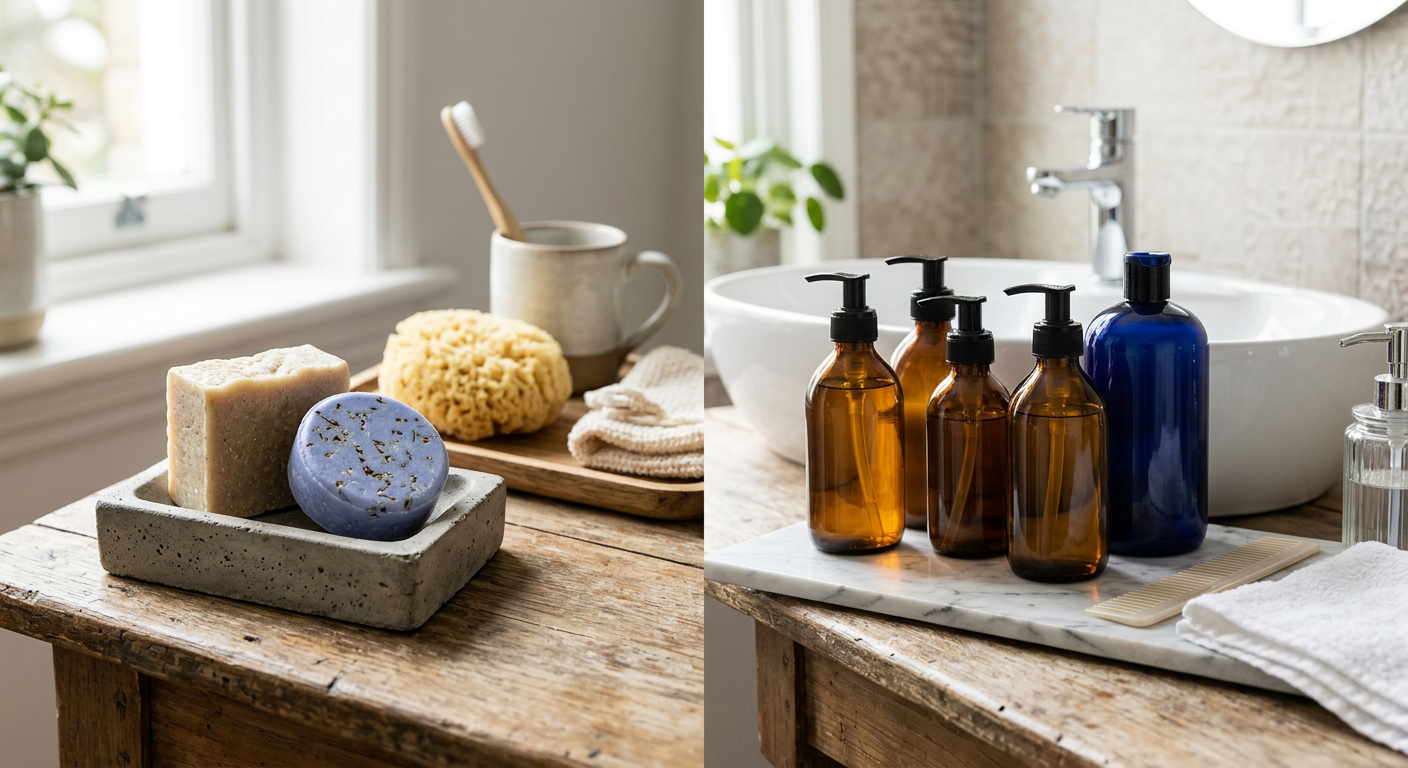
Put the two formats next to each other and the practical case for bars gets concrete.
| Factor | Concentrated Bar | Traditional Bottle |
|---|---|---|
| Water content | Near zero | 70–80% |
| Lifespan | Replaces 2–3 bottles | Single use cycle |
| Packaging | Paper, cardboard, or none | Plastic bottle, cap, pump |
| Travel-friendly | TSA-friendly, no liquid limits | Subject to liquid restrictions |
| Shipping weight | Light | Heavy |
| Spill risk | None | Common |
The lifespan claim holds up across sources. National Geographic reports that a shampoo bar lasts, on average, as long as two to three bottles, a multiplier that hits both your budget and your trash.
They Save You Money Over Time
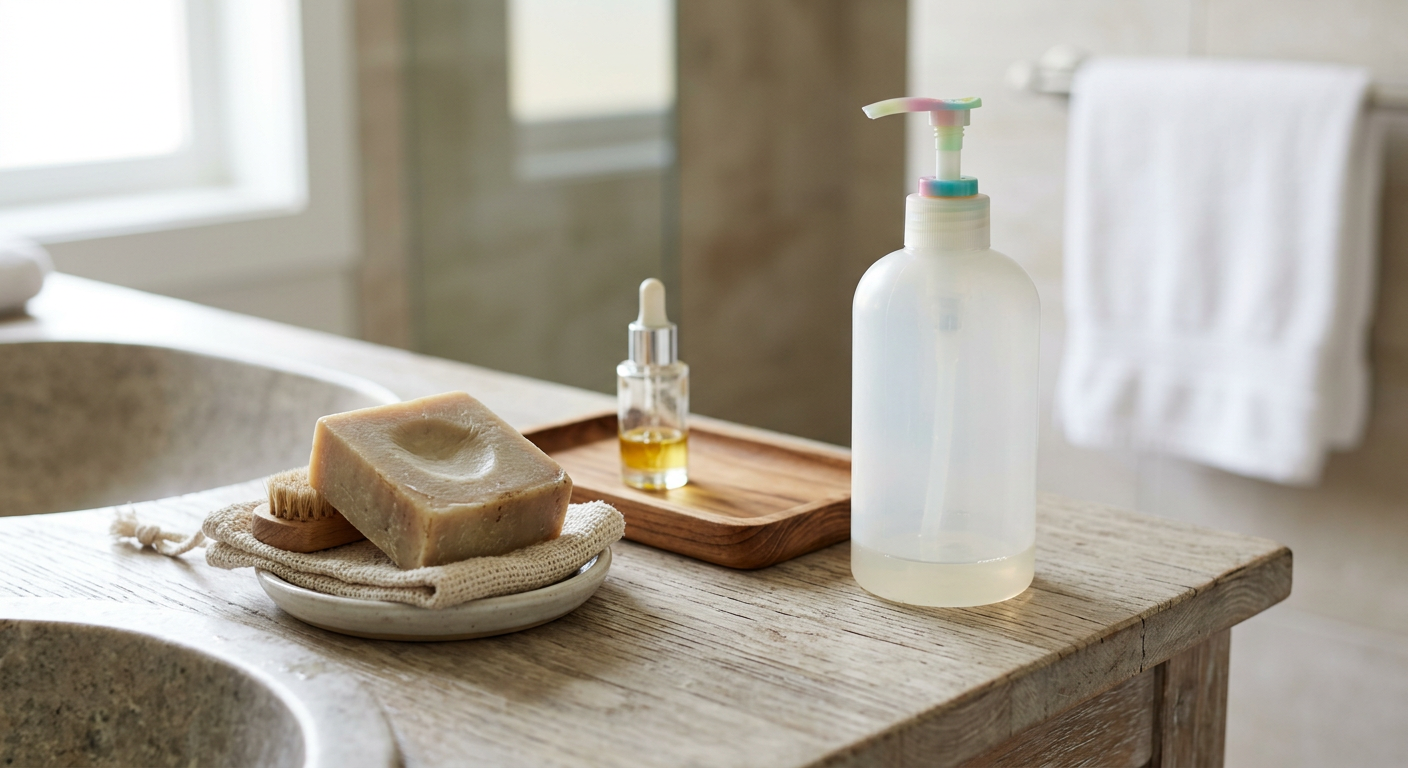
A quality beauty bar can cost more on the shelf than a discount bottle. The math shifts once you account for the concentration. If one bar lasts as long as three bottles, the per-wash cost usually slides below what you’d pay for the liquid version.
There are quieter savings too. Bars take up less room, so you store and travel with fewer things. As Amish Country Soap Co. notes, a single bar “can replace multiple bottles, freeing up valuable shower real estate while simplifying your routine.”
Frequent travelers come out ahead on convenience. Solid bars aren’t subject to airport liquid limits, so the travel-size bottles and the leaking miniatures that wreck a packed bag become a non-issue.
Cleaner Formulas, Better for Hair and Skin
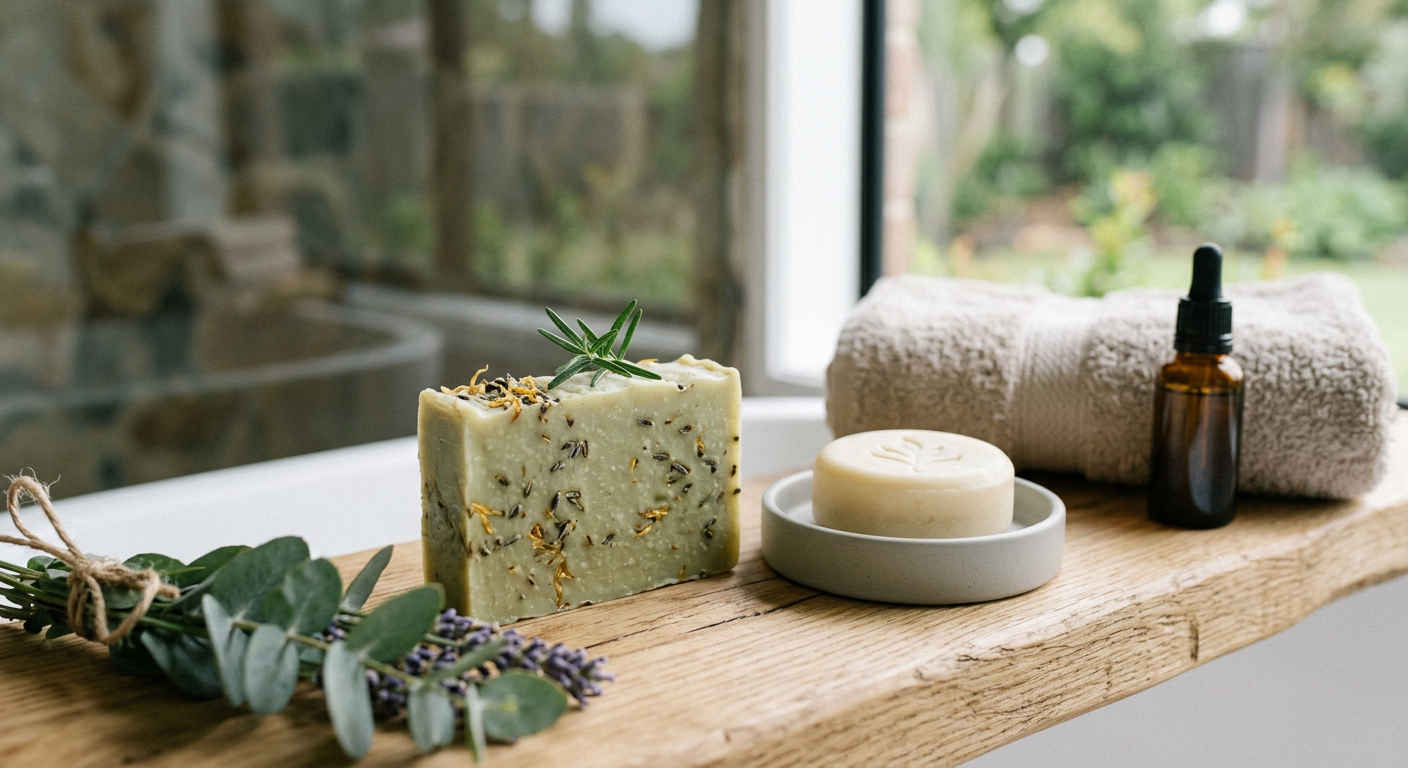
Concentration isn’t the only upgrade. Many bars are built around shorter ingredient lists. Brands selling them often advertise formulas without sulfates or parabens, two ingredients a portion of shoppers go out of their way to avoid.
Bars need fewer preservatives than water-based liquids, so the ingredient list tends to stay lean. That suits the clean-beauty crowd that reads labels and cares about what’s in the bottle, or in this case, what isn’t. The product performs while matching how a lot of people now prefer to shop.
What to Look For in a Quality Bar
Bars vary in quality. These criteria help you sort them:
- pH-balanced formula for shampoo bars, which heads off the waxy buildup that gave early versions a bad name
- Sulfate-free and paraben-free ingredient lists if you have a sensitive scalp or skin
- Plastic-free packaging so you actually capture the environmental benefit
- Hair-type specificity: look for bars formulated for color-treated, curly, oily, or dry hair
How to Make the Switch Successfully
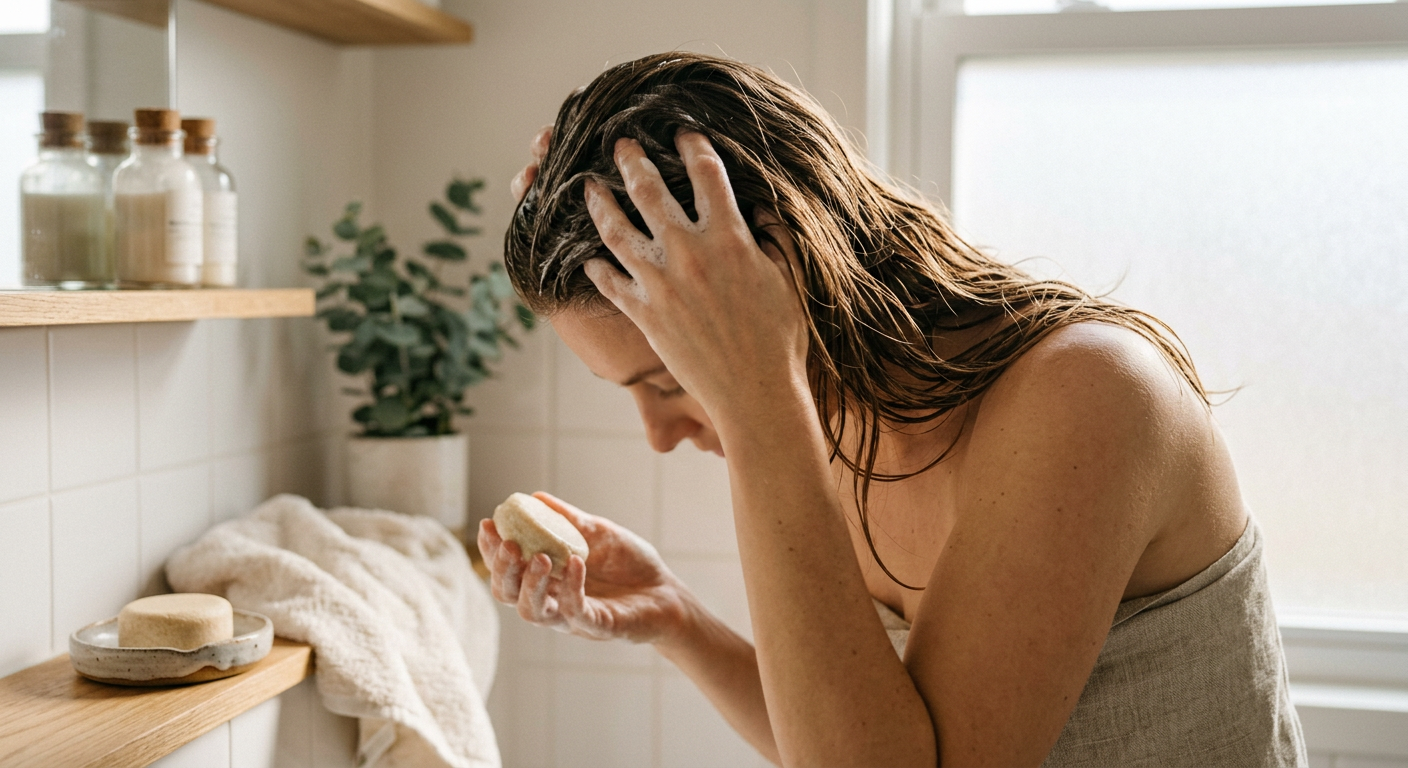
The switch comes with a short adjustment period, particularly for shampoo bars. Your scalp may take a week or two to rebalance after years of sulfate-heavy liquids. That’s normal, and it passes.
To use a bar, soak your hair, then either rub the bar straight onto your scalp or work it into a lather in your hands first. Massage it in, rinse, and follow with a conditioner bar if you use one. Between washes, park the bar on a draining soap dish so it dries out fully and lasts longer.
If you’re skeptical, start with one product instead of redoing your whole routine. A single shampoo bar lets you try the format without much commitment. Once you see how long it lasts and notice the gap where your bottles used to crowd the ledge, the rest of the switch usually takes care of itself.
The Takeaway
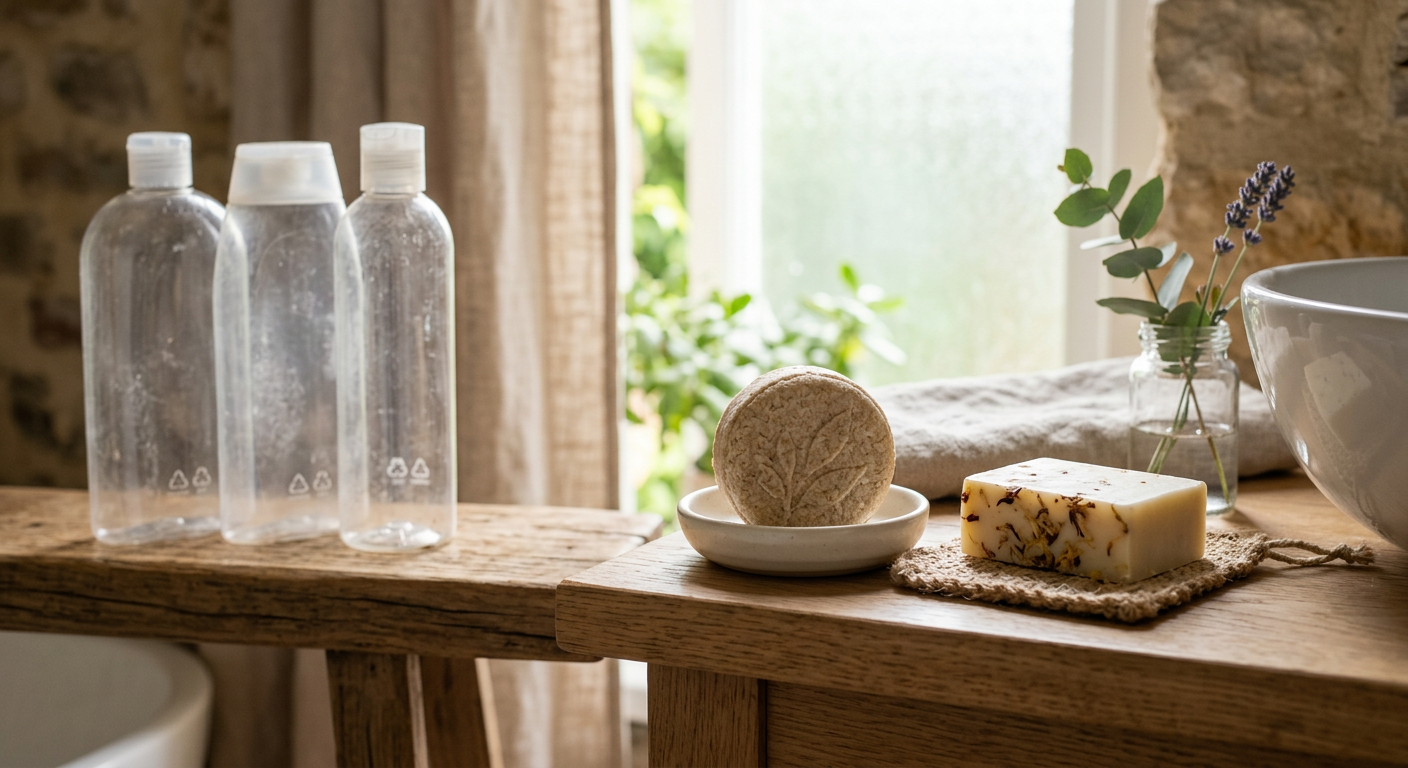
Concentrated beauty bars are replacing traditional bottles because they win where it counts: less plastic waste, longer lifespan, lower per-use cost, and shorter ingredient lists. One bar replacing two or three bottles is a documented advantage, backed by multiple sources and reinforced by packaging rules tightening across the industry.
The format has stopped being a compromise. Today’s bars hold their own against the liquid versions while fixing the waste and convenience problems bottles never solved. Pick up a single shampoo or conditioner bar, give your routine two weeks to settle, and judge the difference for yourself.
Frequently Asked Questions
Q: How long does a concentrated beauty bar last?
One bar typically replaces two to three liquid bottles, according to National Geographic and a number of retailers. The exact lifespan depends on hair length, how often you wash, and how well you store the bar between washes.
Q: Are shampoo bars bad for your hair?
No. Quality, pH-balanced bars work well for most hair types, though you may hit a short adjustment period as your scalp rebalances after sulfate-based liquids. Choosing a bar made for your hair type keeps that transition smooth.
Q: Why are beauty bars more eco-friendly than bottles?
Bars cut out the 70 to 80 percent water content found in liquids, which lowers shipping weight and emissions. They also ship in paper, cardboard, or no packaging at all, eliminating the plastic bottles, caps, and pumps that are hard to recycle.
Q: Can I travel with concentrated beauty bars?
Yes, and they’re well suited to it. Solid bars aren’t subject to TSA liquid restrictions, so you skip the travel-size bottles and the risk of leaks in your luggage.
Q: Are beauty bars more expensive than bottles?
The upfront cost can be higher, but the per-use cost is often lower because one bar replaces multiple bottles. Once you factor in lifespan, bars frequently save money over time.
Q: How should I store a beauty bar to make it last?
Keep the bar on a well-draining soap dish, away from direct streams of water, so it dries fully between uses. A bar left sitting in standing water dissolves much faster.