

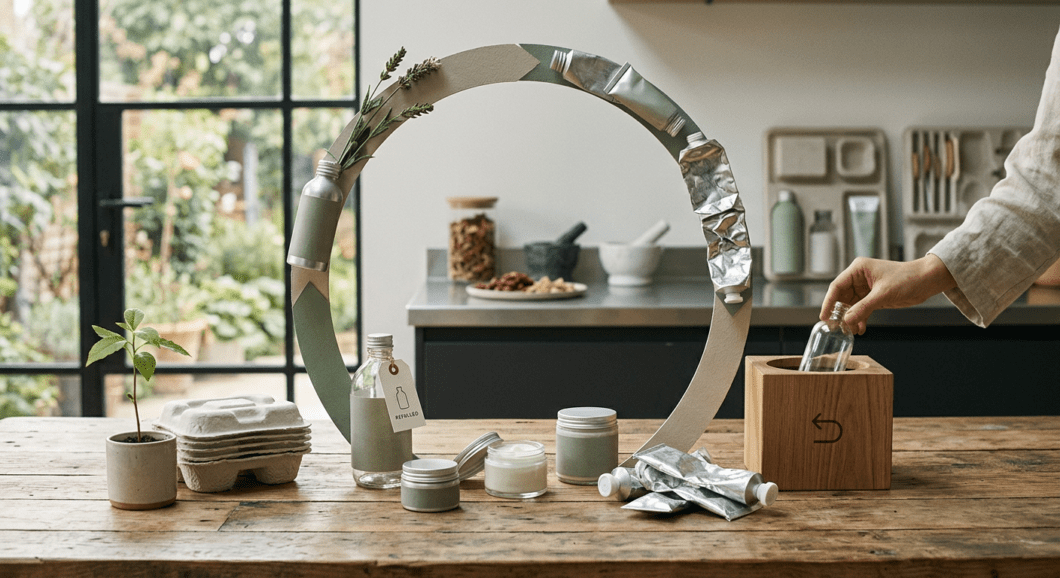
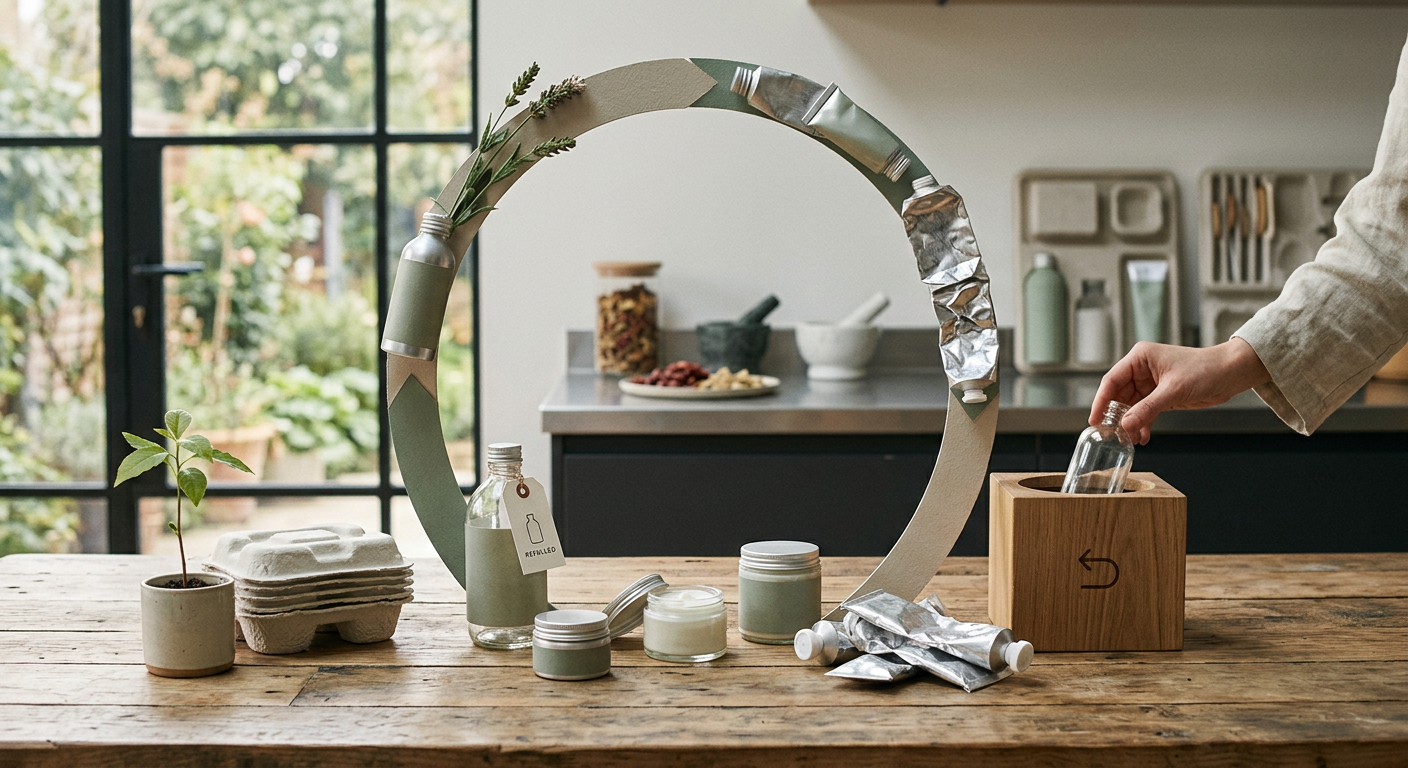
The beauty industry generates over 120 billion units of packaging annually—and the majority ends up in landfills. Not because consumers don’t care, but because most beauty packaging is structurally impossible to recycle. That’s the problem closed-loop beauty is designed to solve, and it’s moving from niche commitment to industry standard faster than most brands anticipated.
What Closed-Loop Beauty Actually Means
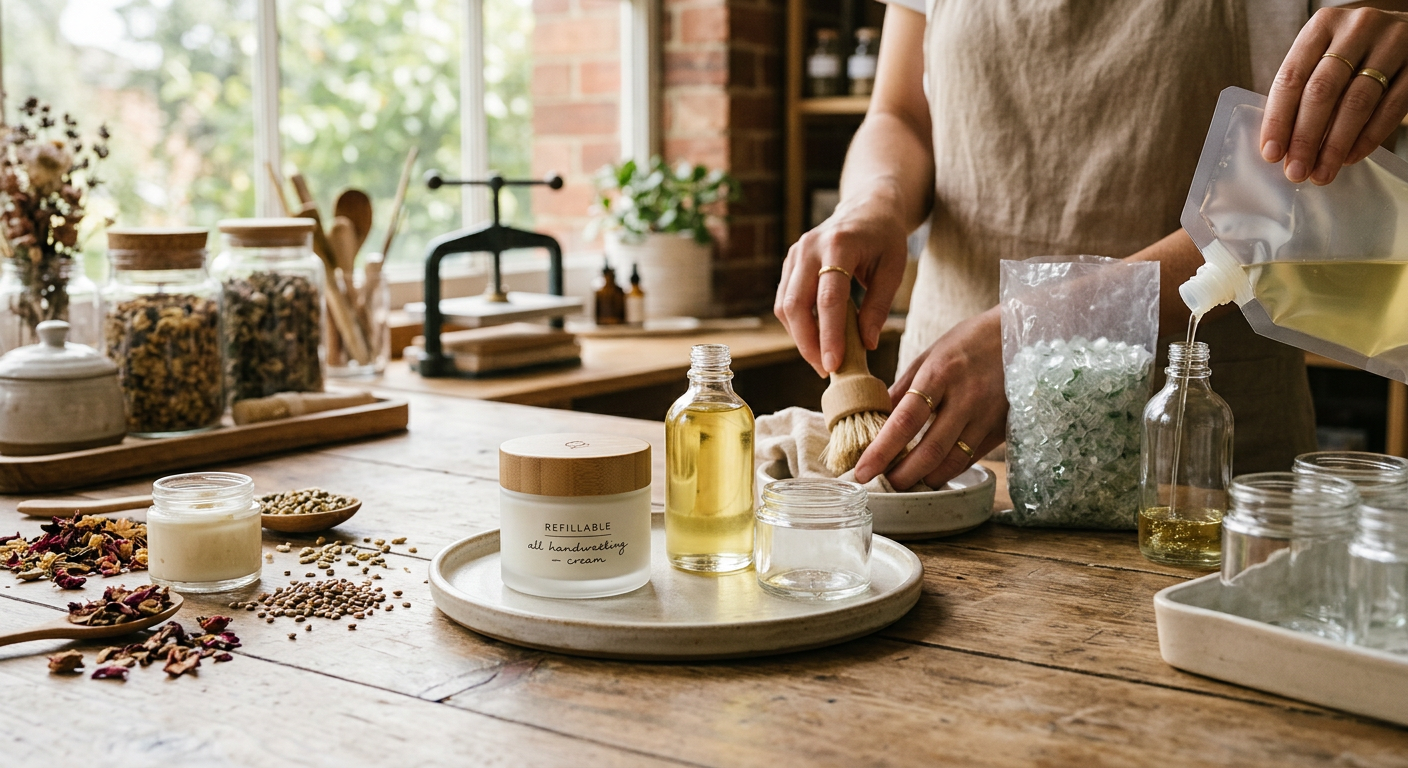
Closed-loop beauty refers to a circular system where a product’s materials are reused, recycled, or upcycled at end-of-life rather than discarded. As Sustainable Baddie defines it, the model minimizes waste and promotes sustainable production by keeping materials in continuous use.
The concept draws from closed-loop design philosophy, which treats every product’s end-of-use as the beginning of its next useful life—modeled after natural systems where every output becomes an input for another process. Nothing is waste by definition; it’s just a material waiting for its next application.
This stands in direct contrast to the linear model the beauty industry has operated on for decades: extract raw materials, manufacture packaging, sell the product, discard the container. Closed-loop beauty breaks that chain deliberately and by design.
Why Traditional Beauty Packaging Fails the Recycling System
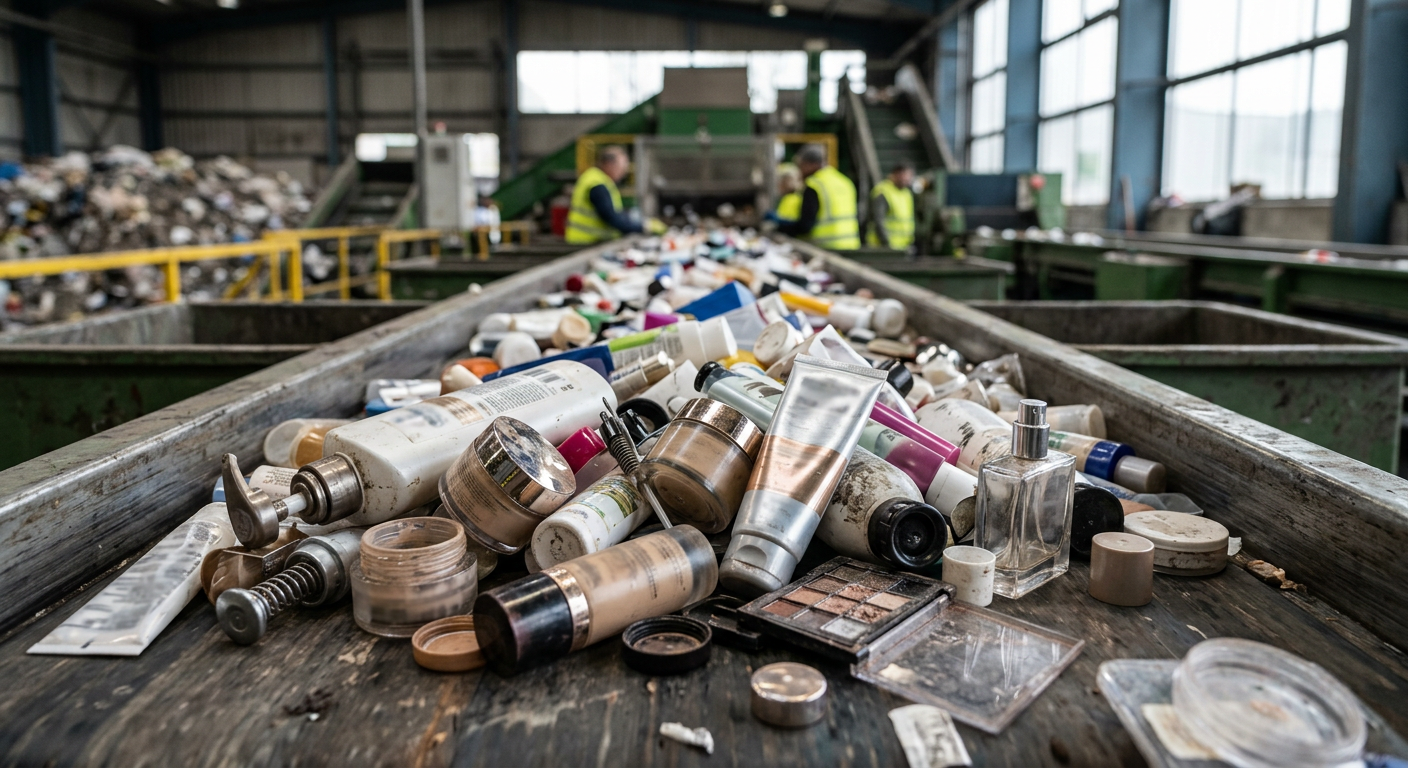
Beauty packaging is among the most difficult plastic to recycle in any category. The problem isn’t just volume—it’s material complexity. A single foundation bottle might combine glass, plastic, metal, and silicone in ways that make mechanical separation nearly impossible at standard recycling facilities.
Packaging that is too small, too contaminated with product residue, or made from mixed materials is likely to end up in landfill or incineration rather than recovery, according to Xilong Glass’s 2026 packaging analysis. The infrastructure wasn’t built to handle it, and there’s no near-term sign that municipal systems will catch up on their own.
This is why brand-level take-back programs have become essential. Waiting for curbside recycling to solve a problem it was never designed for is not a strategy.
The Core Strategies Behind Closed-Loop Product Design

Brands and designers approaching this problem use several distinct strategies, often in combination. Understanding the differences helps you evaluate which brands are making genuine progress versus surface-level claims.
Refillable and Reusable Systems
Refill systems keep the primary packaging in circulation indefinitely. The consumer purchases a durable outer vessel once, then buys refill pods or pouches at a lower cost and environmental footprint. This reduces both material use and manufacturing energy per product cycle.
Credo Beauty has built retail infrastructure around this—accepting empties from any brand at their locations and converting them into reward points, creating a tangible incentive loop rather than relying on goodwill alone.
Mono-Material Design
One of the most practical advances in sustainable packaging is the shift toward mono-material design—building packaging from a single material type that can be processed through standard recycling streams. A pump bottle made entirely from one grade of polypropylene, for example, is far more recyclable than a multi-component alternative.
This approach sacrifices some aesthetic flexibility but dramatically increases the likelihood that packaging actually gets recycled rather than sorted out of the stream.
Post-Consumer Recycled (PCR) Content
Using post-consumer recycled content closes the loop from the supply side. Instead of sourcing virgin materials, brands incorporate materials recovered from previous product cycles. Advanced glass formulations with high PCR content are increasingly viable for premium beauty products without compromising clarity or structural integrity.
Brand Take-Back Programs
Take-back programs create a direct recovery pathway that bypasses broken municipal infrastructure entirely. Brands collect empties, sort materials, and route them back into their own supply chains or certified recycling partners. This is closed-loop in the most literal sense.
Brands Leading With Closed-Loop Commitments
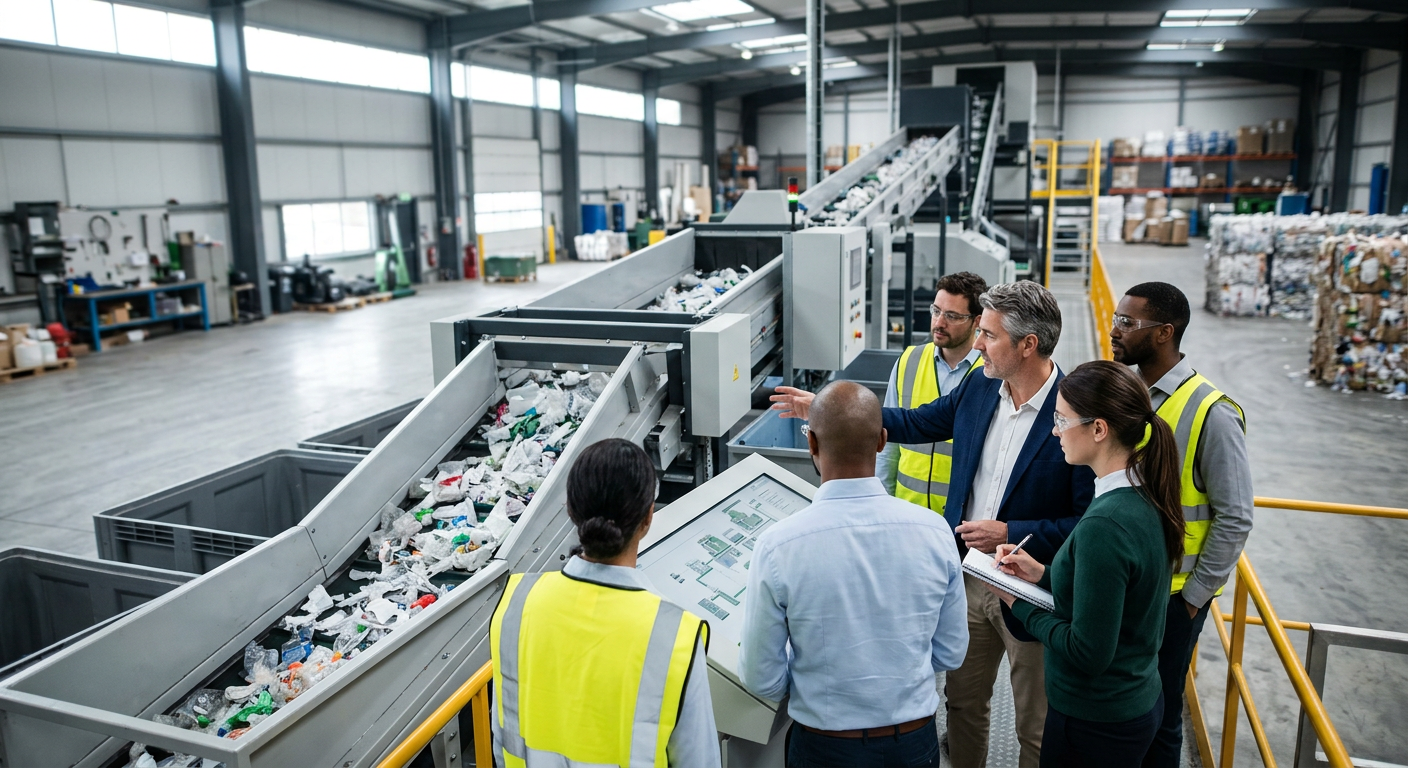
Several brands have moved beyond pledges into operational programs. The table below summarizes key examples and their specific approaches.
These programs vary in scale and accessibility, but they share a structural commitment: designing the end-of-life into the product from the start rather than treating it as an afterthought.
What separates genuine closed-loop programs from greenwashing is verifiable material recovery. A brand that collects empties but sends them to landfill has not closed any loop. Look for brands that publish third-party data on recovery and recycling rates.
How Formulation Changes Drive Packaging Reduction
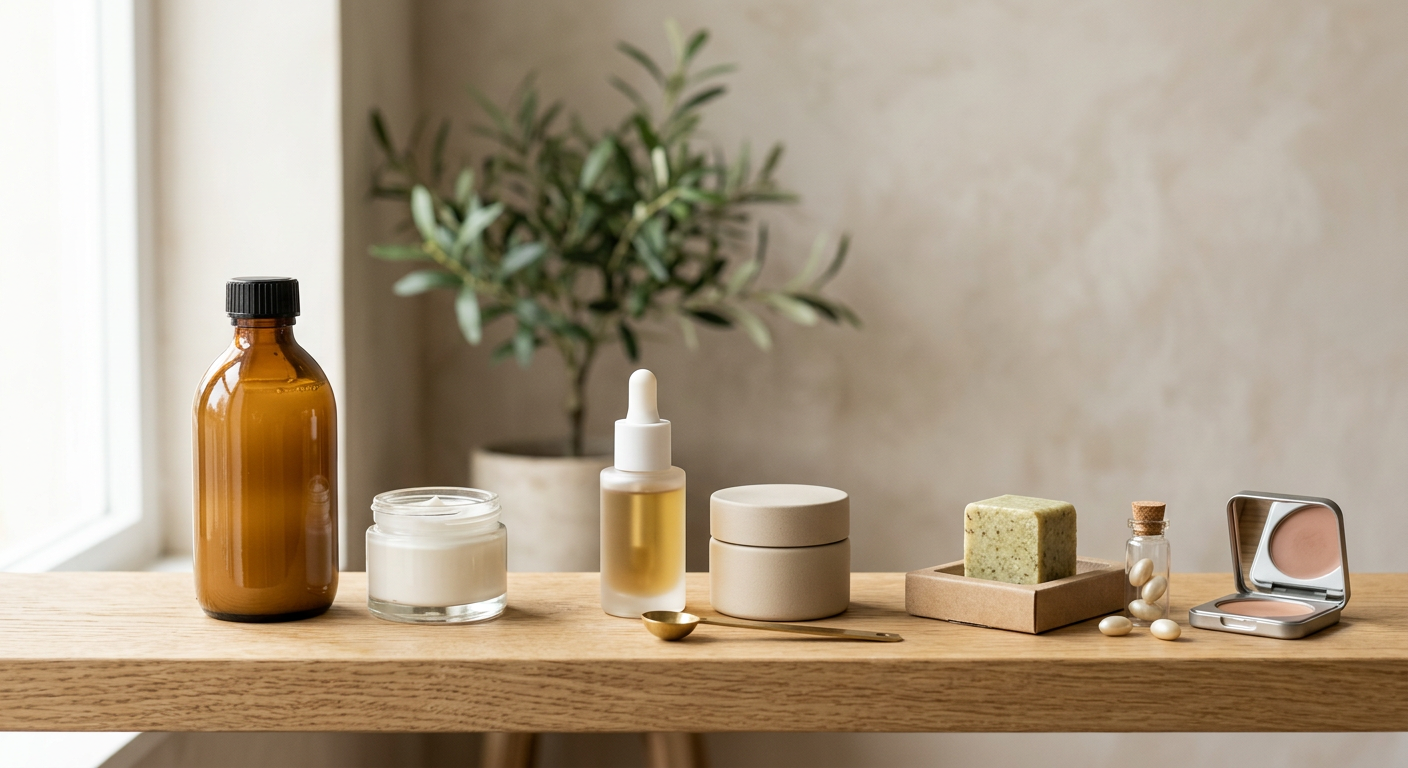
Closed-loop beauty isn’t only about what happens to packaging after use—it’s also about reducing how much packaging is needed in the first place. Waterless formulations are a significant lever here.
Waterless or anhydrous products—concentrated serums, solid shampoo bars, powdered cleansers—eliminate the preservatives required in water-based formulas and often require significantly less packaging per use. A solid shampoo bar can replace two to three bottles of liquid shampoo. Fewer units means fewer packaging units entering the waste stream.
Xilong Glass’s 2026 analysis identifies waterless formulations as a key driver of packaging reduction across the industry, noting that the trend reduces both material weight and logistics emissions simultaneously.
Biotech ingredients represent another formulation-level shift. Lab-grown actives and fermentation-derived compounds reduce dependence on agricultural raw materials with complex, often opaque supply chains—addressing the upstream side of the loop, not just the downstream.
The Role of Digital Technology in Closing the Loop
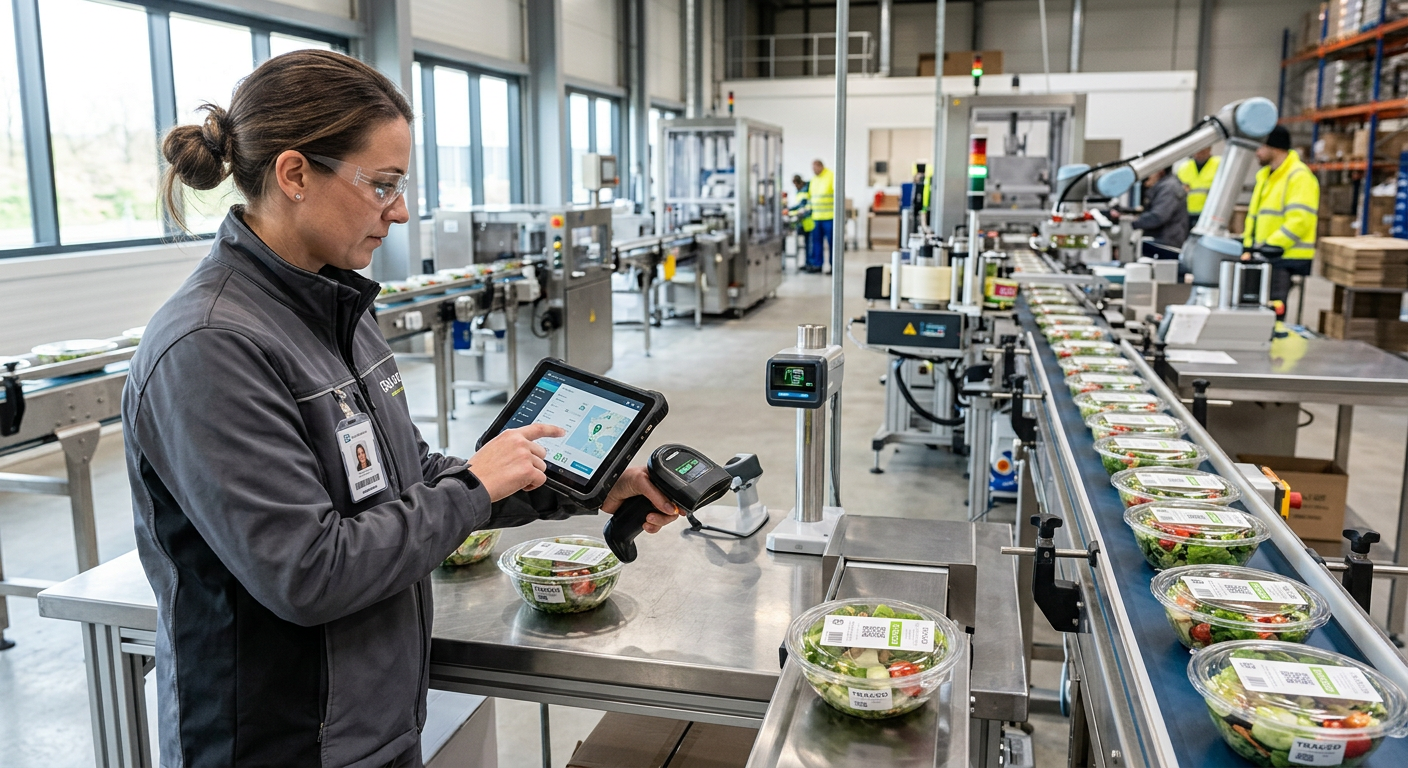
Smart packaging and digital traceability are emerging as infrastructure for the next generation of closed-loop systems. QR codes, RFID tags, and blockchain-based tracking allow brands to follow a product through its entire lifecycle—from raw material sourcing through consumer use to end-of-life recovery.
This matters for closed-loop design because sustainable product design requires a holistic view of all development steps, with supply chain alignment at every stage. Digital tools make that alignment measurable rather than aspirational.
For consumers, embedded digital markers can provide instructions on how to properly prepare packaging for return or recycling—addressing one of the most common failure points in existing programs. A product consumers don’t know how to return is a loop that never closes.
What Closed-Loop Beauty Means for Brands in 2026

The business case for closed-loop design has shifted. It is no longer purely an ethical position—it is increasingly a regulatory and commercial requirement. The EU’s packaging regulations and extended producer responsibility (EPR) frameworks are pushing brands to account for end-of-life costs in their product economics.
According to BeautyMatter’s 2026 packaging analysis, the industry is moving toward “a more disciplined, intentional approach, where differentiation is concentrated where it actually drives conversion, and complexity is stripped away where it no longer serves brands or the environment.” Closed-loop thinking is central to that discipline.
Brands that build circular systems now are also building consumer loyalty. Research consistently shows that environmentally conscious purchasing behavior is growing, particularly among younger demographics who will constitute the majority of beauty consumers within a decade.
Conclusion: The Loop Is the Product
Closed-loop beauty reframes the product itself. The packaging is not a disposable vehicle for the formula—it is part of a system designed to perpetuate itself. Brands that understand this are redesigning from the inside out: formulations that reduce packaging needs, materials chosen for recoverability, and infrastructure built to bring those materials back.
The key takeaways:
- Beauty packaging fails standard recycling due to material complexity and size—brand-level programs are essential
- Mono-material design, PCR content, and refill systems are the most proven closed-loop strategies
- Waterless formulations reduce packaging volume upstream, not just waste downstream
- Digital traceability is becoming the connective tissue of accountable circular systems
- Regulatory pressure in 2026 is converting closed-loop design from a differentiator into a baseline expectation
If you’re evaluating beauty brands or building one, the question to ask is not “does this brand have a sustainability page?” It’s “can this brand show you where its packaging goes after you’re done with it?” That’s the standard closed-loop beauty sets—and it’s the right one.
Frequently Asked Questions
Q: What is closed-loop beauty in simple terms?
Closed-loop beauty is a system where packaging and materials are recovered and reused after a product is finished, rather than thrown away. It treats the end of a product’s life as the start of its next cycle, keeping materials in circulation rather than sending them to landfill.
Q: How is closed-loop beauty different from recycling?
Standard recycling depends on municipal infrastructure that often cannot process beauty packaging due to size or material complexity. Closed-loop beauty creates dedicated recovery pathways—through brand take-back programs, refill systems, or mono-material design—that don’t rely on curbside recycling to function.
Q: Which beauty brands have the most credible closed-loop programs?
Pact Collective, Credo Beauty, Kjaer Weis, and Lush are among the most operationally credible. Each has built physical infrastructure—retail drop-off points, mail-back systems, or reusable packaging formats—rather than relying solely on pledges or third-party offsets.
Q: Does closed-loop beauty cost more for consumers?
Refillable systems often have a higher upfront cost for the primary vessel but lower ongoing costs for refills. Over a product’s lifetime, the total cost is frequently comparable to or lower than single-use alternatives, particularly in premium categories where durable packaging justifies the initial investment.
Q: What role do regulations play in driving closed-loop beauty?
Extended producer responsibility (EPR) regulations—particularly in the EU—require brands to take financial responsibility for their packaging at end-of-life. These frameworks are accelerating closed-loop adoption by making the cost of linear design visible in a brand’s operating economics rather than externalizing it to municipalities and the environment.
Q: Can small beauty brands implement closed-loop systems?
Yes, through coalitions like Pact Collective, which provide shared recycling infrastructure that individual small brands could not build alone. Partnering with an established take-back network is a practical entry point for brands without the scale to operate independent recovery programs.