


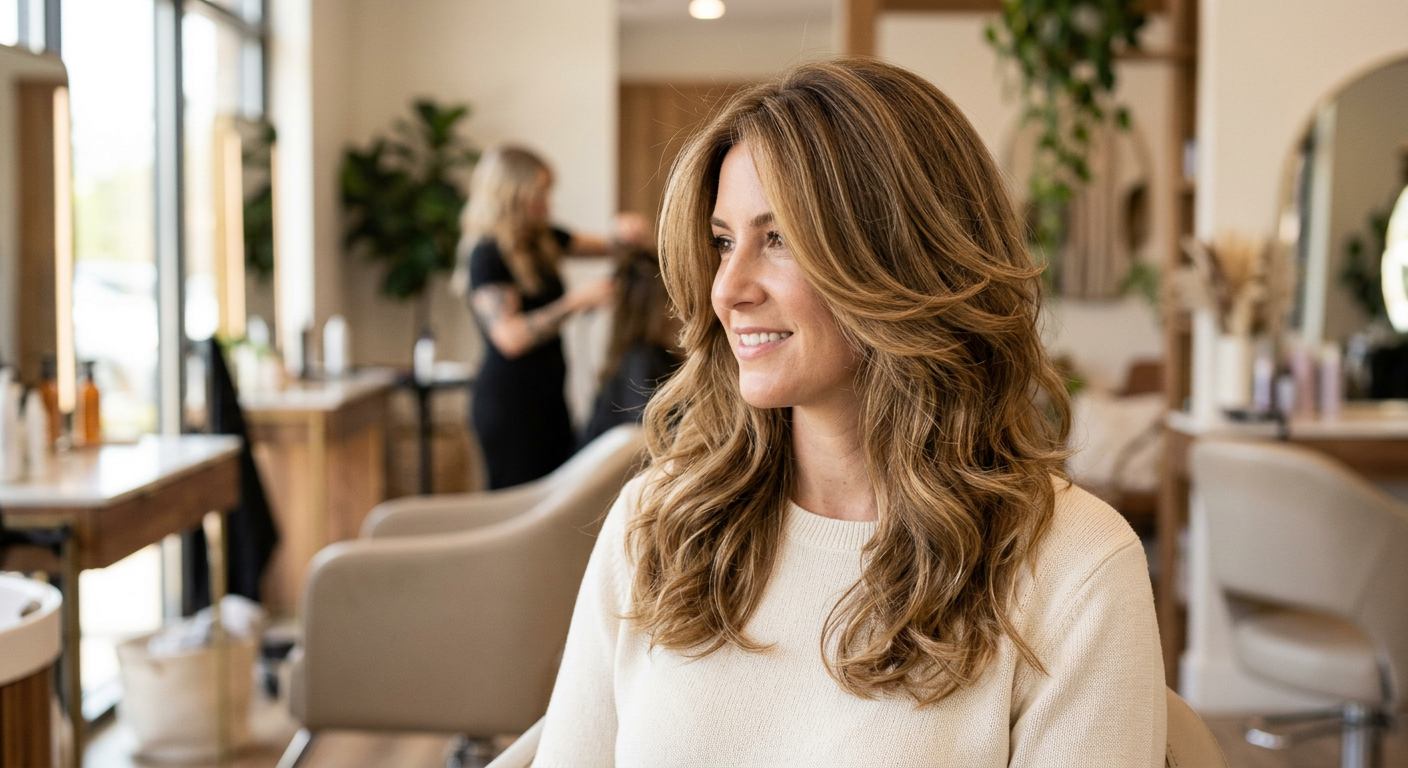
Flat hair that goes limp by noon has a new fix, and stylists are calling it the halo cut. Rather than clipping in extensions or teasing your roots into submission, halo layers build volume around the crown of your head, exactly where fine hair tends to collapse. You keep your length and lose the dead weight that drags everything down. If your hair is fine, thin, or just tired-looking, this is the 2026 trend worth taking to your next appointment.
What Are Halo Layers?

Halo layers, also called the halo cut, are shorter, rounded layers cut around the crown of the head. Traditional face-framing layers concentrate on the front sections. The halo cut puts its shortest layers in a ring around the top of the head instead, creating a halo effect that lifts the whole silhouette.
The technique builds structure from the crown outward. Stylist Sooyoun Lee, widely credited with naming the cut, says the layers have to cascade gradually so they blend into the longer lengths below. That gradual blend is what separates a halo cut from older, choppier layered styles.
You get volume without giving up length. The long hair stays; the body and shape arrive up top. That combination is why the cut took off on TikTok and Instagram in late 2025.
How Halo Layers Create Volume Without the Weight
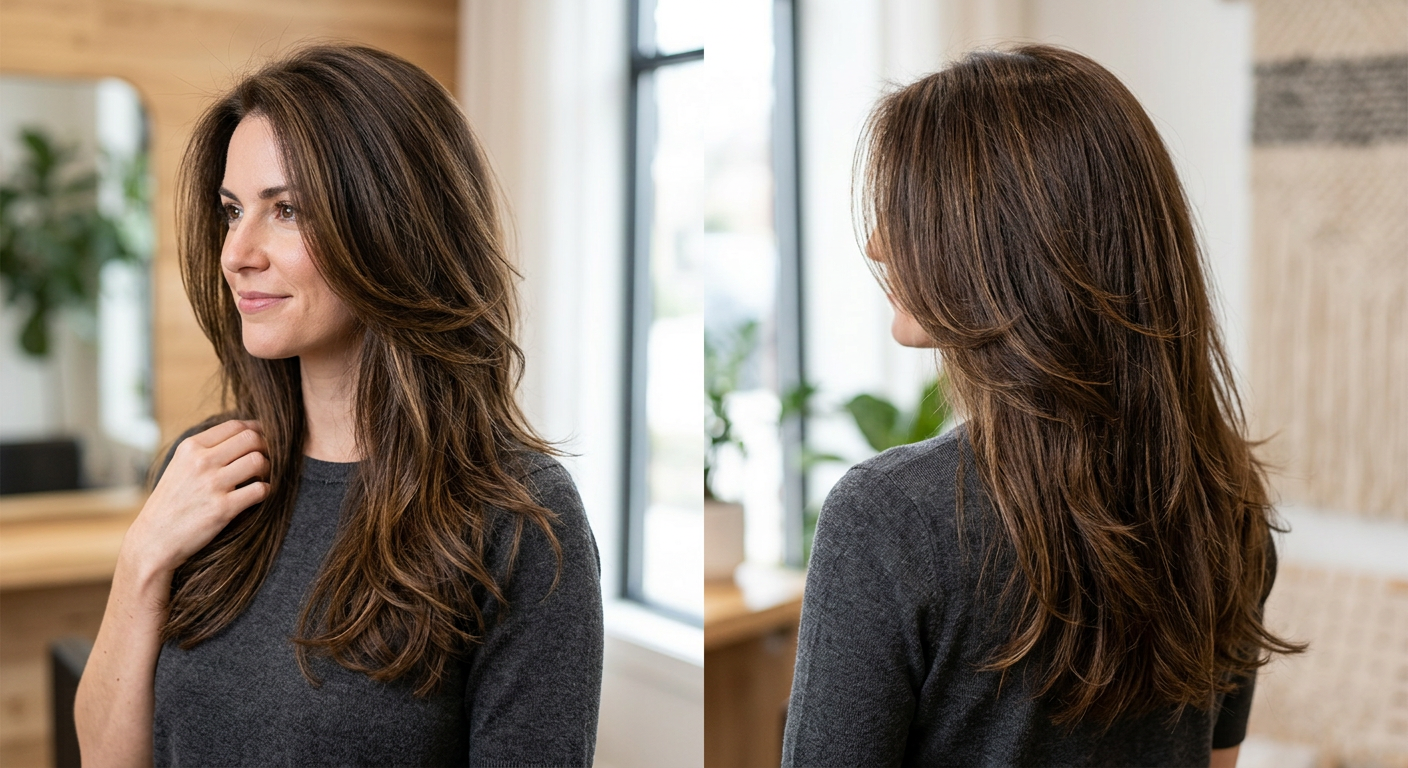
Weight pulls hair down. Long, one-length hair piles most of its mass at the ends, and that mass drags the whole style flat. Remove some weight near the crown and the hair lifts and expands instead of sagging. That’s the whole mechanism.
Byrdie puts it plainly: “layers will take weight away from the ends,” which is the principle behind every volume-boosting cut. Halo layers focus that lift at the crown rather than scattering it across the head.
Why Placement Matters
Where the layers sit changes the result. Southern Living recommends that fine hair gets layers “midway down the hair to the ends” so you “don’t lose too much volume.” Halo layers follow the same logic with crown-specific shaping added, which gives the top of your head a built-in boost that holds through the day.
That targeted placement also makes the cut forgiving. The lift lands where flat hair shows most, and the lengths that give your style movement stay full.
Who Should Consider the Halo Cut?

Most hair types can carry halo layers, but a few benefit more than others. Fine and thin hair sees the biggest change, since the cut manufactures volume the hair can’t grow on its own. Medium-density hair picks up shape and bounce. Even thick hair gains something, because the layers strip out bulk and add controlled movement.
Length plays a role too. The cut works best on medium to long hair, where there’s enough room below the crown for the layers to cascade and blend. Very short cuts leave too little space for the gradual halo effect to develop.
Halo layers may be a strong fit if you:
- Have fine or thin hair that falls flat by midday
- Want volume without committing to a shorter cut
- Like your length but feel your style lacks shape
- Prefer low-maintenance volume over daily teasing
- Want crown lift that traditional face-framing layers miss
If your hair is fragile or over-processed, talk to your stylist before you commit. Layering removes length unevenly, so damaged ends may need a trim before the cut can hold its shape.
Halo Layers vs. Traditional Layers
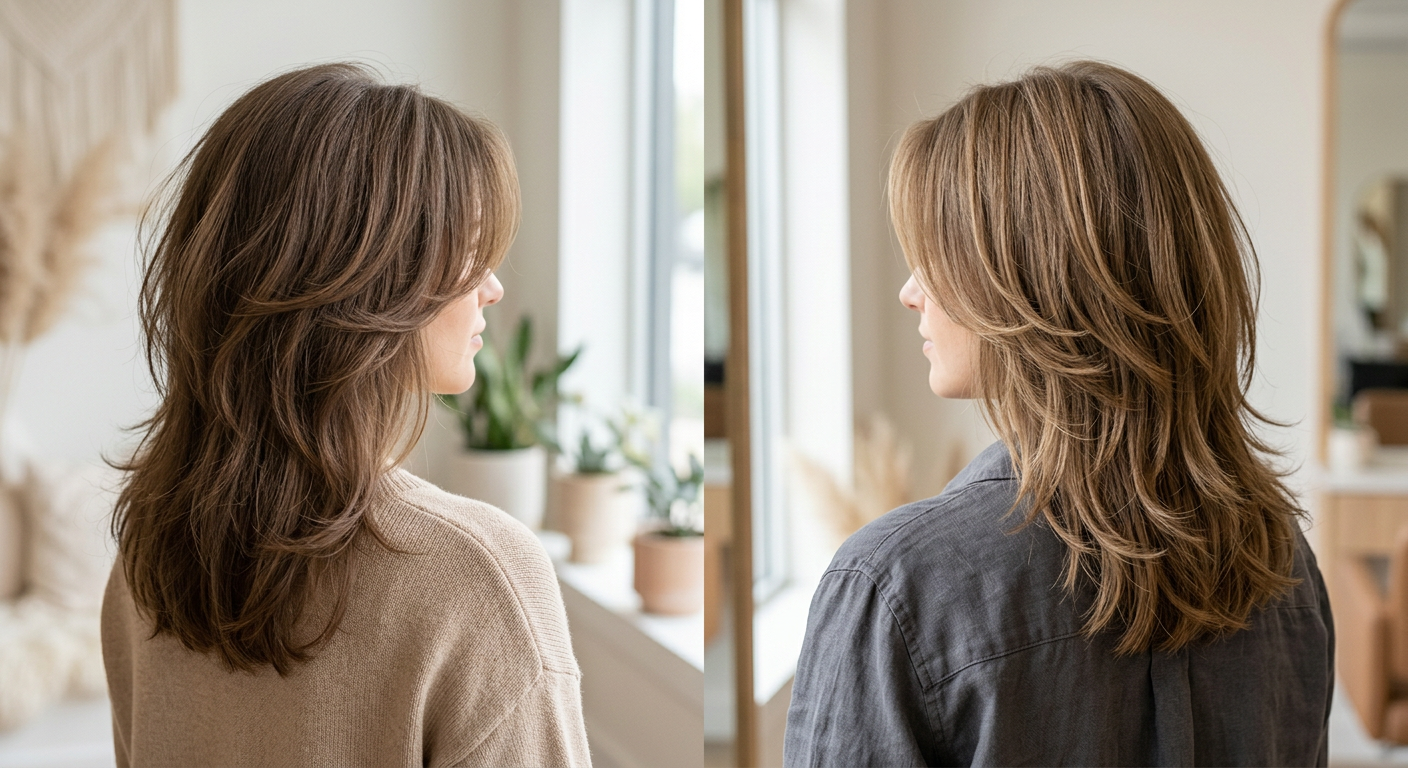
The two cuts share DNA but solve different problems. Traditional layers spread shorter pieces throughout the head and emphasize the face-framing front. Halo layers cluster the shortest pieces in a ring around the crown to maximize lift where flat hair shows.
| Feature | Traditional Layers | Halo Layers |
|---|---|---|
| Layer placement | Throughout the head, front-focused | Rounded ring around the crown |
| Primary benefit | Movement and texture | Crown volume and lift |
| Best for | Most hair types | Fine, thin, or flat hair |
| Length impact | Can shorten overall look | Preserves length |
| Volume location | General | Concentrated at the top |
The short version: traditional layers if you want overall texture, halo layers if your main complaint is flat, lifeless crown volume.
How to Ask Your Stylist for Halo Layers

The right vocabulary at the salon saves you from a haircut you didn’t ask for. The term is new enough that not every stylist will recognize it, so describe the technique rather than leaning on the name.
Be specific about three things: layer length, placement, and blend. One creator who popularized the cut summed up the brief as medium-length round layers to add shape and volume, with soft, blended ends.
What to Say at the Salon
- “I want shorter, rounded layers around my crown to add volume on top.”
- “Keep my length, but build lift at the top of my head.”
- “Make the layers cascade and blend softly into my lengths, not choppy.”
- “Think halo effect around the crown, not just face-framing in the front.”
Bring reference photos. A clear image of the halo cut shows the rounded crown shape faster than any description, and it gives your stylist a target to work against your face shape and hair density.
Styling and Maintaining Your Halo Cut

The cut does most of the work, but styling locks in the volume. Start at the roots: a root-lifting product or volume mousse on damp hair at the crown sets the foundation for lasting lift.
Drying technique matters more than product. Dry the crown sections by lifting the hair up and away from the scalp and aiming the airflow at the roots. A round brush or blowout brush adds the tension that helps halo layers stand up and hold their shape.
Keeping the Shape Fresh
Trim every eight to twelve weeks. The volume rides on precise layer placement, so as the cut grows out, the crown layers blend back into your length and the lift fades. Regular trims keep the halo effect crisp.
Match your products to your hair type. Fine hair does well with lightweight volume formulas that won’t weigh the crown down; coarser hair does better with hydrating products that smooth without flattening. Keep heavy oils and creams away from the roots, since they cancel out the lift the cut creates.
Conclusion
Halo layers give flat-haired people what they’ve wanted for years: real volume without losing length and without daily teasing. The shorter, rounded layers around the crown lift hair where it tends to fall flat, then blend into the lengths you want to keep. Fine, thin, and medium hair benefit most, and the cut has earned its spot among 2026’s most-discussed trends.
If limp roots and dead volume frustrate you, book a consultation and bring a reference photo of the halo cut. Describe the crown layers, ask for a soft blend, and pair the cut with a root-lifting routine to hold the volume between salon visits.
Frequently Asked Questions
Q: What is the difference between a halo cut and a regular layered haircut?
A regular layered cut spreads shorter pieces throughout the head and focuses on face-framing at the front. A halo cut places its shortest layers in a rounded ring around the crown, concentrating volume and lift at the top while preserving overall length.
Q: Do halo layers work on thin or fine hair?
Yes. Fine and thin hair often sees the biggest improvement, because the cut manufactures crown volume the hair can’t produce naturally. Pair it with lightweight volume products for the best results.
Q: How often should I trim a halo cut?
Every eight to twelve weeks. The volume depends on precise crown layer placement, so regular trims keep the halo effect lifted as the layers grow out.
Q: Will halo layers make my hair shorter?
No, and that’s the appeal. Halo layers add lift at the crown while preserving your overall length, so you keep long hair and gain volume at the same time.
Q: What products work best for styling halo layers?
Use a root lifter or volume mousse at the crown on damp hair, then blow-dry while lifting the hair away from the scalp. Choose lightweight formulas for fine hair and avoid heavy oils near the roots that would flatten the lift.
Q: My stylist hasn’t heard of halo layers. What should I do?
Describe the technique instead of relying on the name. Ask for shorter, rounded layers around your crown that cascade and blend softly into your length, and bring a reference photo to show the halo effect you want.