

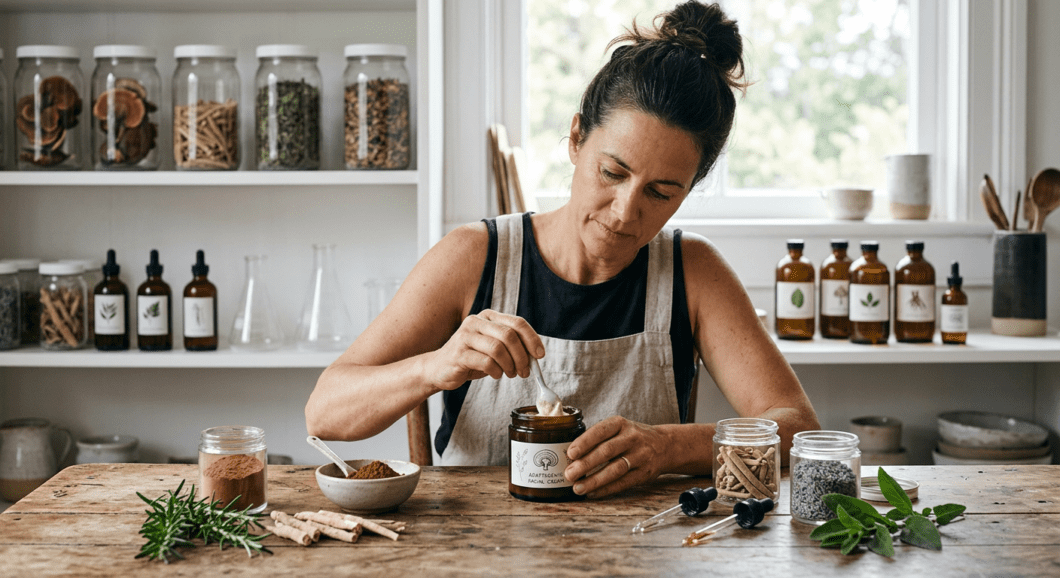
Chronic stress shows up on your skin in predictable ways: inflammation, a compromised barrier, fine lines arriving earlier than they should. A category of plant-derived ingredients with roots in Ayurvedic medicine and Traditional Chinese Medicine is now being reformulated for topical use — and the science behind them is catching up to the tradition. Adaptogens like ashwagandha, reishi mushroom, and rhodiola are appearing across organic beauty lines, and the market data suggests this is a structural shift rather than a cycle trend.
What Adaptogens Actually Are

Adaptogens are natural substances — primarily herbs, roots, and fungi — that help living systems regulate their response to stress. The term emerged from mid-20th century pharmacological research, though the ingredients themselves trace back thousands of years to Ayurvedic medicine and Traditional Chinese Medicine.
To qualify as a true adaptogen, an ingredient must meet three criteria: non-toxic at normal doses, capable of producing a nonspecific stress response, and able to normalize physiological function regardless of the direction of the stressor. That last point matters. Adaptogens don’t simply suppress or stimulate — they work to bring systems back toward equilibrium. An ingredient that only calms inflammation doesn’t meet the standard.
As Perricone MD’s Director of Education, Rosalba Martone, explains, they’re called adaptogens “because of this ability to ‘adapt’ to stress and help regulate its visible effects on the skin.” Applied topically, these compounds interact with skin cells in ways that parallel their systemic effects — reducing inflammatory signaling, supporting barrier repair, and limiting oxidative damage from environmental exposure.
The Market Behind the Movement

The adaptogens category has moved well beyond niche wellness circles. The global adaptogens market was valued at approximately USD 11.92 billion in 2025, and is projected to grow from USD 12.79 billion in 2026 to USD 22.46 billion by 2034, at a compound annual growth rate of 7.3%, according to Fortune Business Insights.
Cosmetics and personal care represent one of the fastest-growing application segments within that market. Consumers increasingly want products that do more than moisturize — they want formulations that actively respond to environmental and biological stress. Organic beauty brands are well-positioned to meet that demand, since adaptogens are naturally derived and align with clean-label sourcing standards.
The broader U.S. beauty market is also showing resilience. Circana’s Q1 2026 report points to steady growth driven by value-conscious consumers and rising demand for treatment-focused products — the segment where adaptogenic skincare competes most directly.
How Stress Damages the Skin — and How Adaptogens Help
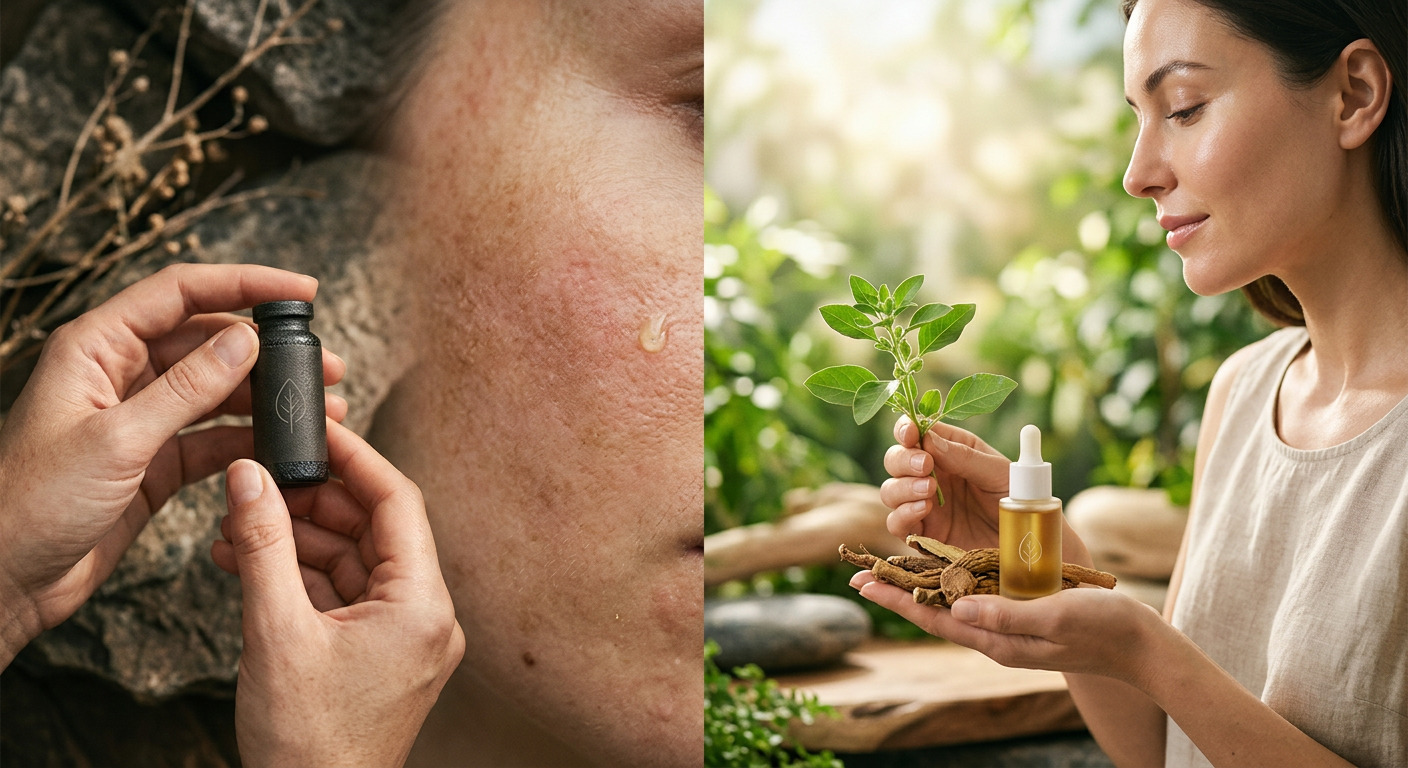
Stress affects the skin through multiple pathways. Cortisol spikes trigger sebum overproduction, impair barrier function, and drive inflammatory responses that show up as redness, breakouts, and accelerated fine lines. Environmental stressors — UV exposure, pollution, temperature extremes — compound the damage at the cellular level, generating free radicals that degrade collagen and disrupt lipid structure.
Adaptogens address this at the source rather than at the surface. Sommet Beauty notes that adaptogenic actives like ashwagandha and reishi are being used to address visible signs of stress including redness, breakouts, and dullness — not by masking them, but by working to restore the skin’s natural equilibrium.
Key Mechanisms in Adaptogenic Skincare
- Cortisol regulation: Ashwagandha contains withanolides that help moderate cortisol-driven inflammation at the skin surface.
- Antioxidant activity: Reishi mushroom delivers beta-glucans and triterpenes that neutralize free radicals from UV and pollution exposure.
- Barrier support: Rhodiola rosea helps strengthen the skin’s lipid barrier, reducing transepidermal water loss.
- Anti-inflammatory signaling: Ginseng’s ginsenosides inhibit inflammatory cytokines, reducing chronic redness and irritation.
The Most Widely Used Adaptogenic Ingredients in Beauty

Not all adaptogens perform equally in topical formulations. Organic beauty brands are gravitating toward a core set of ingredients with both traditional use histories and growing clinical support.
Top Adaptogens in Organic Skincare Formulations
Ashwagandha is projected to lead the adaptogen type segment with a 26.0% market share, according to Future Market Insights, reflecting its dominance across both supplement and cosmetic applications.
Why Organic Beauty Brands Are Embracing Adaptogens

Organic beauty brands have a structural advantage here: these ingredients are plant-derived, often sustainably sourced, and compatible with clean-formulation standards. They sit comfortably alongside other botanicals without requiring synthetic stabilizers or carriers.
Beyond ingredient compatibility, adaptogens align with a shift in how consumers think about skincare. Shoppers are increasingly treating their routines as an extension of their wellness practice — they want products that address root causes, not just surface symptoms. Raw Beauty Lab describes adaptogens as “powerful, plant-based compounds that help your body adapt to stress, whether it’s physical, chemical, or biological” — language that resonates with the wellness-oriented organic beauty consumer in a way that conventional ingredient marketing rarely does.
Formulation technology is also improving the case for topical adaptogens. Advances in extraction and bioavailability enhancement mean that active compounds from reishi or rhodiola penetrate the skin’s outer layers more effectively than earlier formulations allowed. The gap between oral and topical efficacy is narrowing.
How to Evaluate Adaptogenic Beauty Products
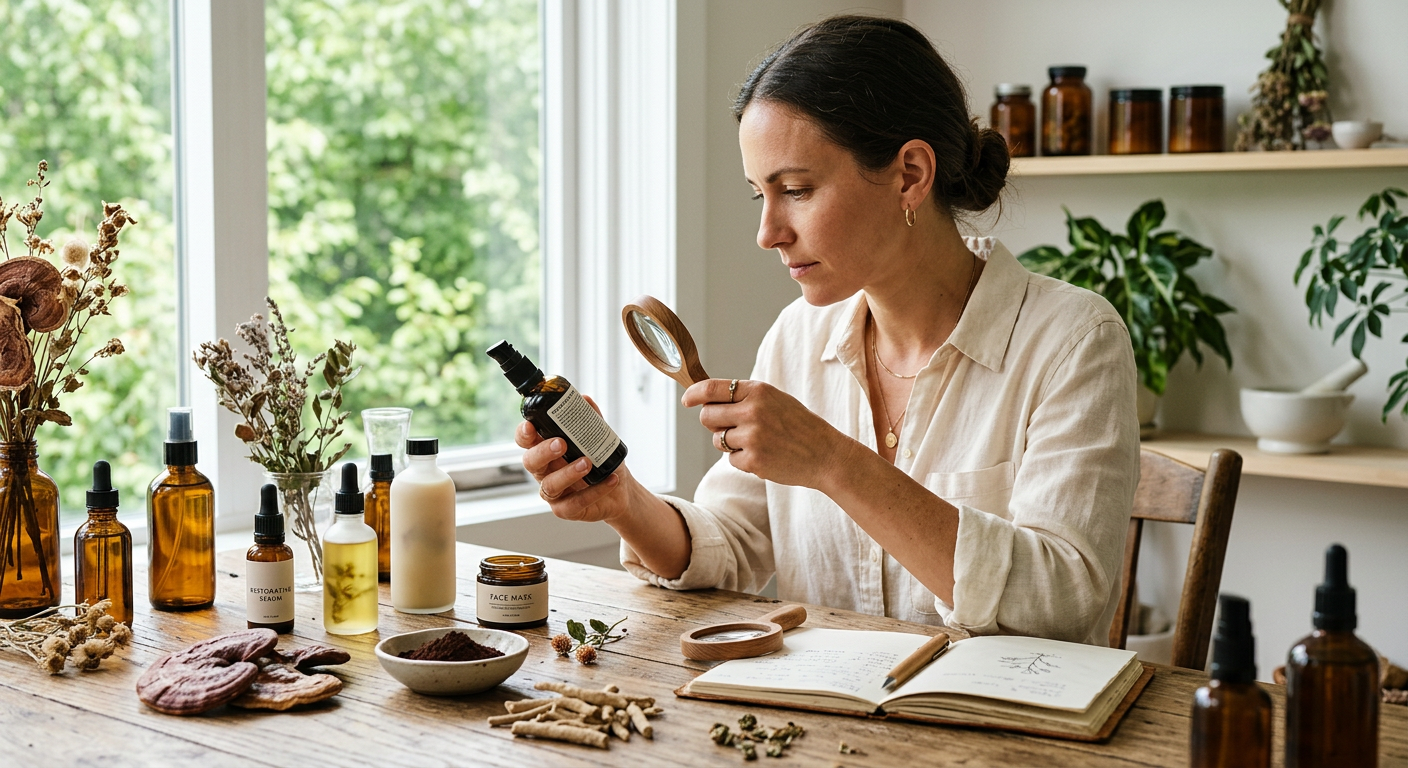
With adaptogens appearing across a growing number of product lines, the challenge is distinguishing formulations with meaningful concentrations from those using the term as a label. A few criteria help separate the two.
What to Look for on the Label
- Ingredient placement: Active adaptogens should appear within the first half of the INCI ingredient list, indicating a meaningful concentration.
- Extraction quality: Look for standardized extracts (e.g., “ashwagandha root extract, standardized to 5% withanolides”) rather than generic powder inclusions.
- Complementary actives: Adaptogens work best when paired with supporting ingredients — hyaluronic acid for hydration, niacinamide for barrier repair, or vitamin C for antioxidant synergy.
- Certification: Organic certification (USDA, COSMOS, or ECOCERT) confirms that the adaptogenic and other ingredients meet sourcing and purity standards.
According to Natural Organic Skincare, adaptogens integrate most effectively into hydration, calming, and resilience-focused formulas — which means matching the adaptogen to the product’s core function matters as much as the ingredient itself.
Conclusion
Adaptogenic ingredients represent a structural shift in how organic beauty brands approach skin health, not a trend with a predictable peak. The market data is clear: a multi-billion dollar global industry is expanding, consumers are demanding treatment-focused formulations, and plant-based adaptogens sit at the intersection of clean beauty, wellness culture, and emerging cosmetic science.
For consumers, the opportunity is to move beyond surface-level skincare and invest in formulations that address the biological roots of skin stress. For brands, the priority is transparency — standardized extracts, honest concentrations, and certifiable sourcing.
Identify your primary skin concern — stress-related redness, barrier damage, or premature aging — and match it to the adaptogen best suited to address it. The ingredients have the science behind them. Whether the formulation uses them at a concentration that matters is the question worth asking.
Frequently Asked Questions
Q: Are adaptogenic skincare products safe for sensitive skin?
Most adaptogens are well-tolerated, but individual reactions vary. Ashwagandha and reishi are generally considered gentle, while turmeric can cause sensitivity in some skin types. Patch testing any new adaptogenic product before full application is advisable.
Q: How long does it take to see results from adaptogenic skincare?
Results typically appear after consistent use over four to eight weeks. Adaptogens work by supporting the skin’s regulatory systems over time rather than delivering immediate surface-level changes, so consistency matters more than with some conventional actives.
Q: Can adaptogens replace other active skincare ingredients?
Adaptogens work best as part of a layered routine rather than as standalone replacements. They complement actives like retinol, vitamin C, and peptides by reducing stress-induced inflammation that can otherwise undermine those ingredients’ effectiveness.
Q: What is the difference between taking adaptogens as supplements versus applying them topically?
Oral adaptogens work systemically, affecting cortisol levels and stress response throughout the body. Topical adaptogens act locally at the skin level, targeting inflammation, oxidative stress, and barrier function directly. Both approaches have merit and can be used together.
Q: Are all adaptogenic beauty products certified organic?
No. A product can contain adaptogenic ingredients without meeting organic certification standards. Look specifically for USDA Organic, COSMOS Organic, or ECOCERT certification to confirm that the adaptogenic and other ingredients meet verified sourcing and formulation criteria.
Q: Which adaptogen is best for anti-aging skincare?
Ginseng is among the most researched adaptogens for anti-aging applications, with ginsenosides shown to support collagen synthesis and improve microcirculation. Rhodiola rosea also shows strong evidence for reducing oxidative stress that drives premature skin aging.