

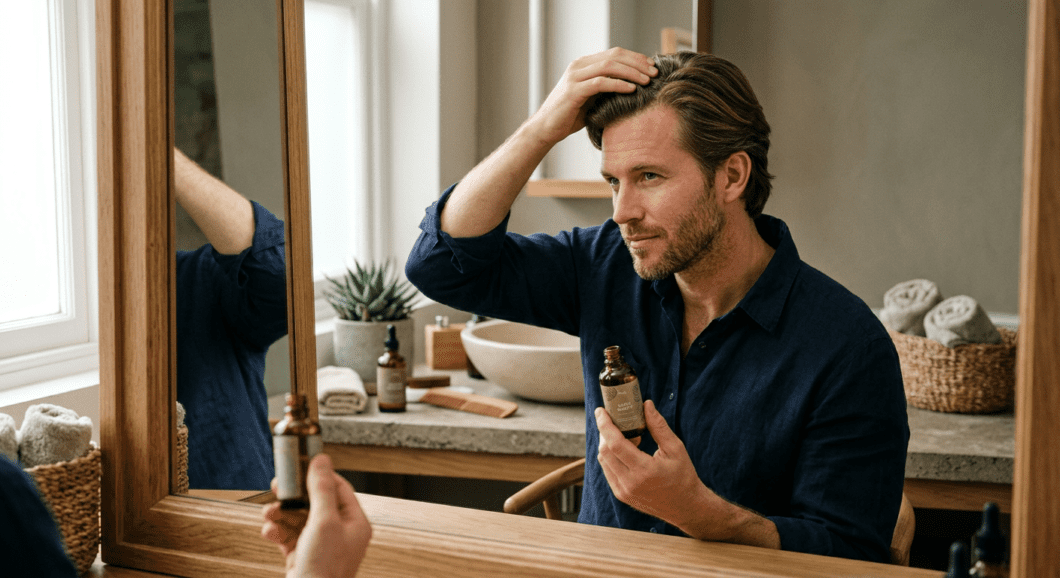
Most men spend more time choosing a shampoo than thinking about their scalp — yet the scalp is where every strand of hair actually begins. That disconnect is starting to close. Scalp serums, once filed under “women’s beauty products,” are moving into mainstream men’s grooming at a pace that market data confirms is no accident. The global hair serum market was valued at $1.44 billion in 2025 and is projected to reach $2.69 billion by 2034, growing at a CAGR of 7.18%, according to Fortune Business Insights. Men are a significant driver of that growth — and the reasons are worth understanding.
Why Men Are Finally Paying Attention to Scalp Health
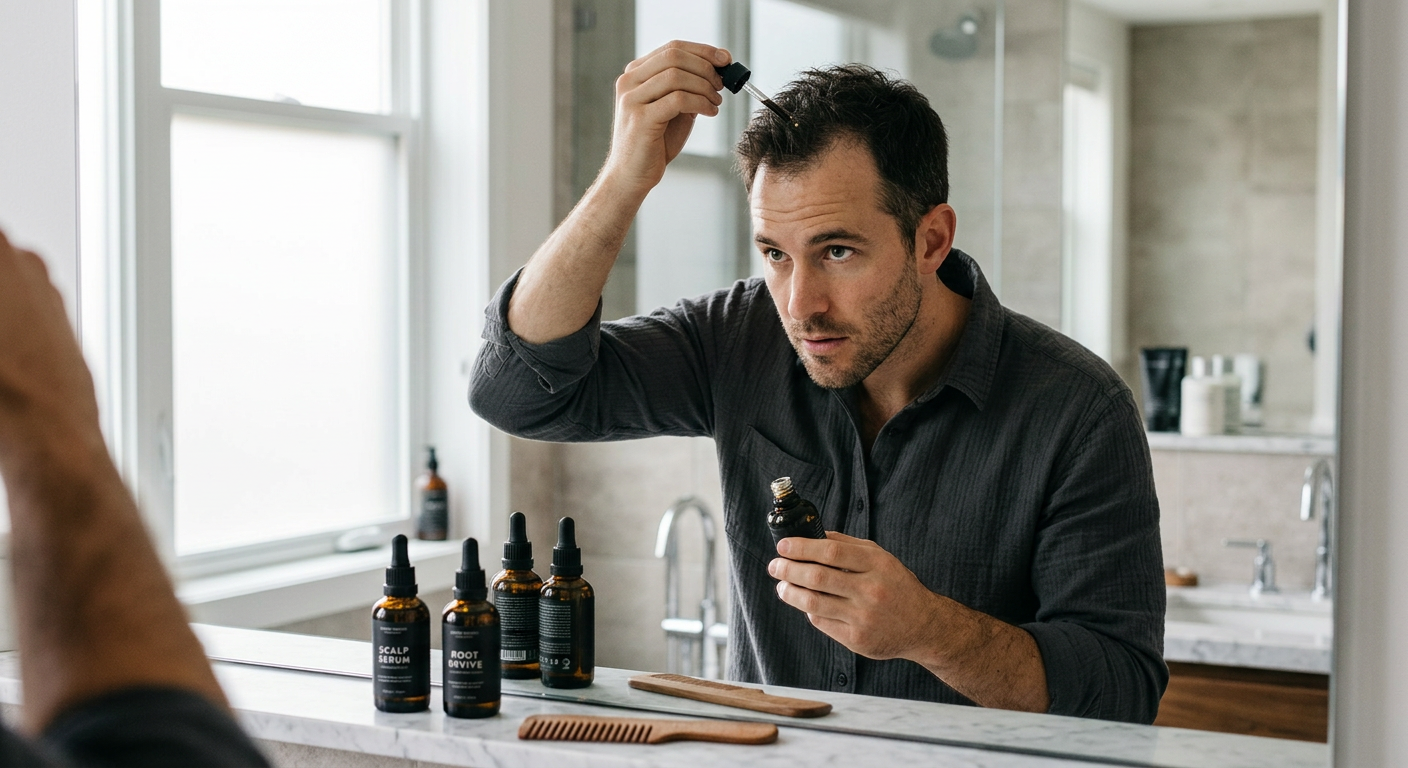
The shift isn’t just marketing. Men’s hair concerns — thinning at the crown, receding hairlines, flaky scalp, excess oil — are real and widespread. Androgenetic alopecia (male-pattern hair loss) is the most prevalent form of hair loss in men, often beginning with a receding hairline or crown thinning, according to Cosmoderma. Standard shampoo and conditioner routines do little to address root causes at the follicle level.
Scalp serums work differently. These specially formulated products break down buildup and deliver active ingredients directly to the scalp, improving blood circulation, feeding nutrients to hair follicles, and supporting healthier growth over time. The analogy to face serums is accurate: targeted, concentrated, and designed for results rather than surface maintenance.
The broader cultural context matters too. Men’s grooming has expanded well beyond deodorant and bar soap. Social media, male-focused influencers, and premium brand positioning have normalized multi-step hair care routines for men, according to Coherent Market Insights. Scalp serums are the logical next step in that evolution.
The “Skinification” of Hair Care Explained

“Skinification” describes applying the same scientific rigor to scalp and hair that consumers have long applied to facial skincare — active ingredients, barrier support, and targeted treatments rather than generic cleanse-and-condition routines.
The U.S. haircare market is projected to grow from $13.5 billion in 2024 to $15.2 billion by 2026, with premium, scalp-focused products leading that expansion, according to the US Haircare Market Report 2026. Premium products are outpacing mass-market offerings because consumers — men included — are increasingly willing to pay for formulations with documented mechanisms rather than marketing claims.
This matters for scalp serums specifically because their formulations mirror the logic of skincare. Active ingredients like peptides, niacinamide, and salicylic acid appear in both face serums and scalp serums for the same reason: they work at a cellular level rather than coating the surface. The scalp is skin, and it responds to the same ingredients.
Key Ingredients to Look for in a Men’s Scalp Serum

Not all scalp serums are created equal. Many products use similar base ingredients but differentiate on branding alone, as Coherent Market Insights notes. Knowing what actually works helps cut through the noise.
Ingredients That Target Hair Thinning
- Minoxidil (2% or 5%): The most clinically validated ingredient for male hair loss. Increases blood flow to follicles and extends the hair growth phase.
- Peptides (e.g., Capixyl, Redensyl): Stimulate follicle activity and help anchor hair at the root. Redensyl in particular targets hair follicle stem cells.
- Caffeine: Shown in studies to penetrate the hair follicle and counteract the effects of DHT (dihydrotestosterone), a key driver of male-pattern hair loss.
Ingredients That Improve Scalp Condition
- Salicylic acid: A beta-hydroxy acid that exfoliates dead skin cells and unclogs follicles, reducing flakiness and buildup.
- Niacinamide (Vitamin B3): Regulates sebum production, reduces inflammation, and strengthens the scalp barrier.
- Zinc pyrithione: Targets dandruff-causing fungi (Malassezia) and reduces scalp irritation.
Ingredients for Nourishment and Circulation
- Biotin (Vitamin B7): Supports keratin production — the structural protein that makes up hair strands.
- Hyaluronic acid: Draws moisture into the scalp, preventing dryness and flaking.
- Rosemary extract: Emerging research suggests it may rival 2% minoxidil in stimulating hair growth, with fewer side effects.
Scalp Serum vs. Hair Oil: Understanding the Difference
Men new to scalp care often confuse scalp serums with hair oils. They serve distinct purposes, and using the wrong one for your concern can mean wasted money and missed results.
If your concern is hair loss, scalp buildup, or flaking, a serum is the right tool. If your hair is dry, frizzy, or prone to breakage, an oil addresses those issues better. Many men use both — serum at the scalp, oil on the lengths — as part of a complete routine.
How to Build a Scalp Serum Routine That Actually Works
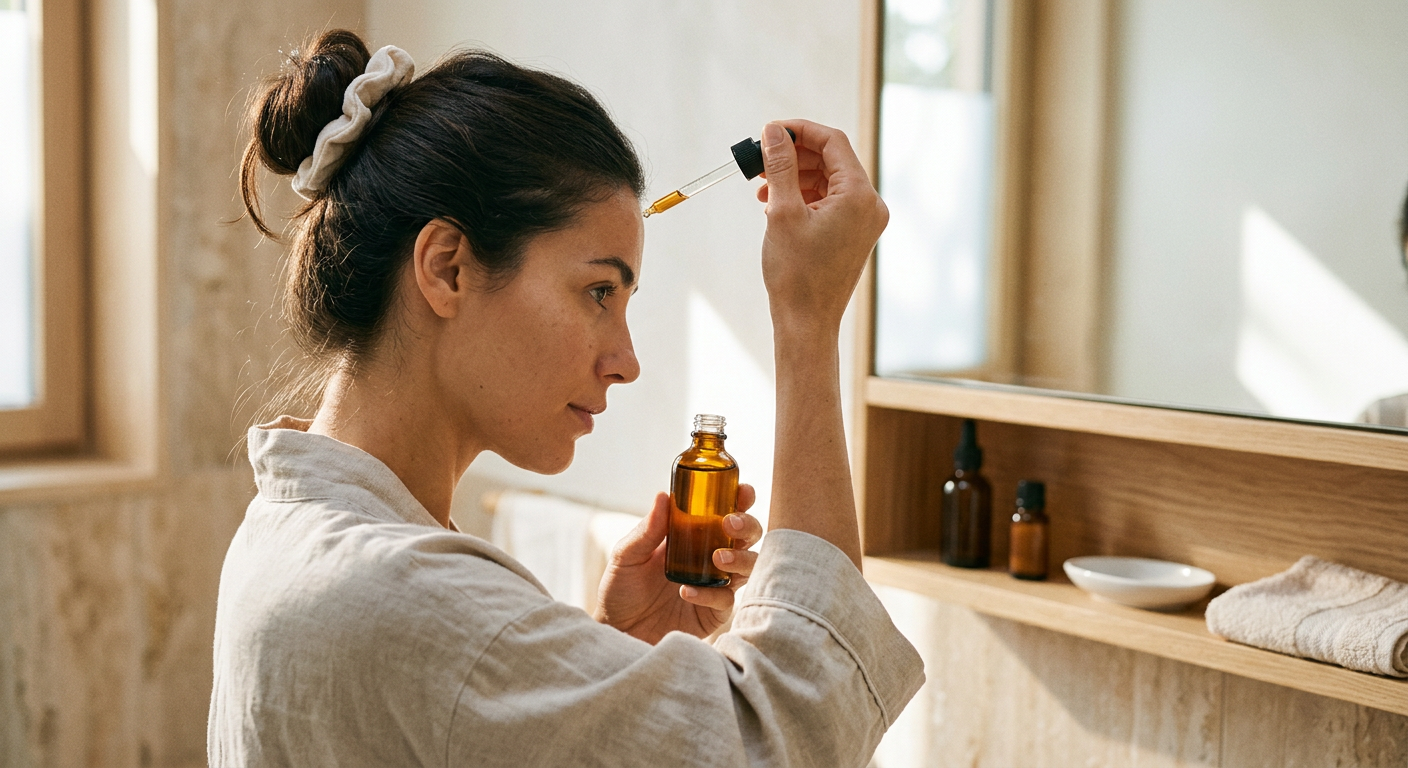
Consistency matters more than any single product. A scalp serum used sporadically delivers inconsistent results. The following approach fits into a standard morning or post-shower routine without adding significant time.
Step-by-Step Application Guide
- Cleanse first. Wash your hair with a sulfate-free shampoo to remove buildup and open the follicles. Applying serum to a dirty scalp reduces absorption.
- Towel dry to damp. Your scalp should be damp, not dripping. Excess water dilutes the active ingredients.
- Section and apply. Use the dropper or nozzle to apply the serum directly to the scalp in sections — not the hair strands. Focus on areas of concern (crown, hairline).
- Massage for 1-2 minutes. Gentle circular massage improves blood circulation and helps the serum penetrate. According to Living Proof, this step actively improves blood flow to the follicles.
- Do not rinse. Scalp serums are leave-in treatments. Rinsing removes the active ingredients before they can work.
- Style as normal. Apply any styling products after the serum has absorbed — roughly 2-3 minutes.
For most scalp serums, daily use — or at minimum five days per week — is recommended. Results from growth-focused serums typically become visible after 8-12 weeks of consistent use.
What the Market Tells Us About Where Men’s Hair Care Is Heading

The data points in one direction. The U.S. hair serum market is driven by strong demand for premium, science-backed, and multifunctional hair care products, with consumers increasingly preferring formulations that address damage repair, scalp nourishment, and styling protection in a single product, according to Fortune Business Insights.
Major players are responding. Unilever has made strategic acquisitions including Nutrafol (hair supplements) and K18 (biotech haircare), positioning itself at the intersection of traditional and emerging categories, per the US Haircare Market Report 2026. These are not niche bets — they are category-defining moves that signal where investment is going.
The 2026 haircare and skincare trend landscape also points toward simplification and efficacy over novelty, according to UpCircle Beauty. Men, in particular, are gravitating toward products that do more with fewer steps. A single serum that addresses thinning, buildup, and scalp balance replaces three separate products — a straightforward argument for any man who wants results without a ten-item shelf.
Conclusion
Scalp serums are a functional tool for addressing the concerns that shampoo alone cannot fix — not a luxury add-on. The market is growing fast, the science behind active ingredients is solid, and the routines required are minimal.
Look for proven active ingredients (minoxidil, peptides, caffeine, niacinamide), understand the difference between scalp serums and hair oils, apply consistently to a clean damp scalp, and give the product at least 8-12 weeks to show results.
For men dealing with thinning hair, scalp buildup, or persistent dandruff, a targeted scalp serum is the most direct solution available outside a dermatologist’s office. Start with your primary concern, choose a serum formulated to address it, and build the habit. The scalp responds to consistent treatment the same way skin does — gradually, then noticeably.
Frequently Asked Questions
Q: Do scalp serums actually work for men?
Yes, when formulated with clinically validated ingredients like minoxidil, peptides, or caffeine. Results depend on the specific concern being addressed and consistency of use — most growth-focused serums require 8-12 weeks of daily application before visible improvement occurs.
Q: Can men use scalp serums every day?
Most scalp serums are designed for daily use, and daily application produces the most consistent results. Check the product label, as serums containing strong exfoliants like salicylic acid may recommend every-other-day use to avoid scalp irritation.
Q: Is a scalp serum the same as a hair serum?
No. A scalp serum targets the scalp and hair follicles with active ingredients designed to treat conditions like thinning, buildup, or dandruff. A hair serum is applied to the hair strands to improve shine, reduce frizz, and protect against damage. They address different concerns and are applied differently.
Q: How long does it take to see results from a scalp serum?
For scalp condition improvements (reduced flaking, less oiliness), results can appear within 2-4 weeks. For hair growth or density improvements, expect 8-12 weeks of consistent use before meaningful changes become visible.
Q: Should men use a scalp serum before or after shampoo?
After. Shampoo first to remove buildup and open the follicles, then apply the serum to a clean, damp scalp. Applying serum before shampooing means washing out the active ingredients before they can absorb.
Q: Are scalp serums worth the cost compared to regular conditioners?
For men with specific concerns — hair thinning, dandruff, oily scalp — yes. Conditioners coat the hair shaft and are not designed to penetrate the scalp or deliver active ingredients to follicles. Scalp serums are purpose-built for scalp-level treatment, which conditioners cannot replicate.