



Gift sets, festive bundles, stacks of beauty boxes—the holidays run on packaging, and a lot of it goes straight in the bin. Household waste climbs by about 43% during the winter holidays, much of it wrapping paper, tissue, and product boxes, according to CleanHub. The choices you make before checkout, and how you dispose of each empty jar afterward, decide how much of that waste is yours. A few deliberate decisions can lighten your bin without dulling the sparkle.
Beauty is a packaging-heavy category by nature. The industry produces 120 billion units of packaging each year, according to the Environmental Protection Agency as cited by the British Beauty Council. This guide covers how to shop, wrap, and recycle smarter this season.
Why Holiday Beauty Packaging Is a Growing Problem
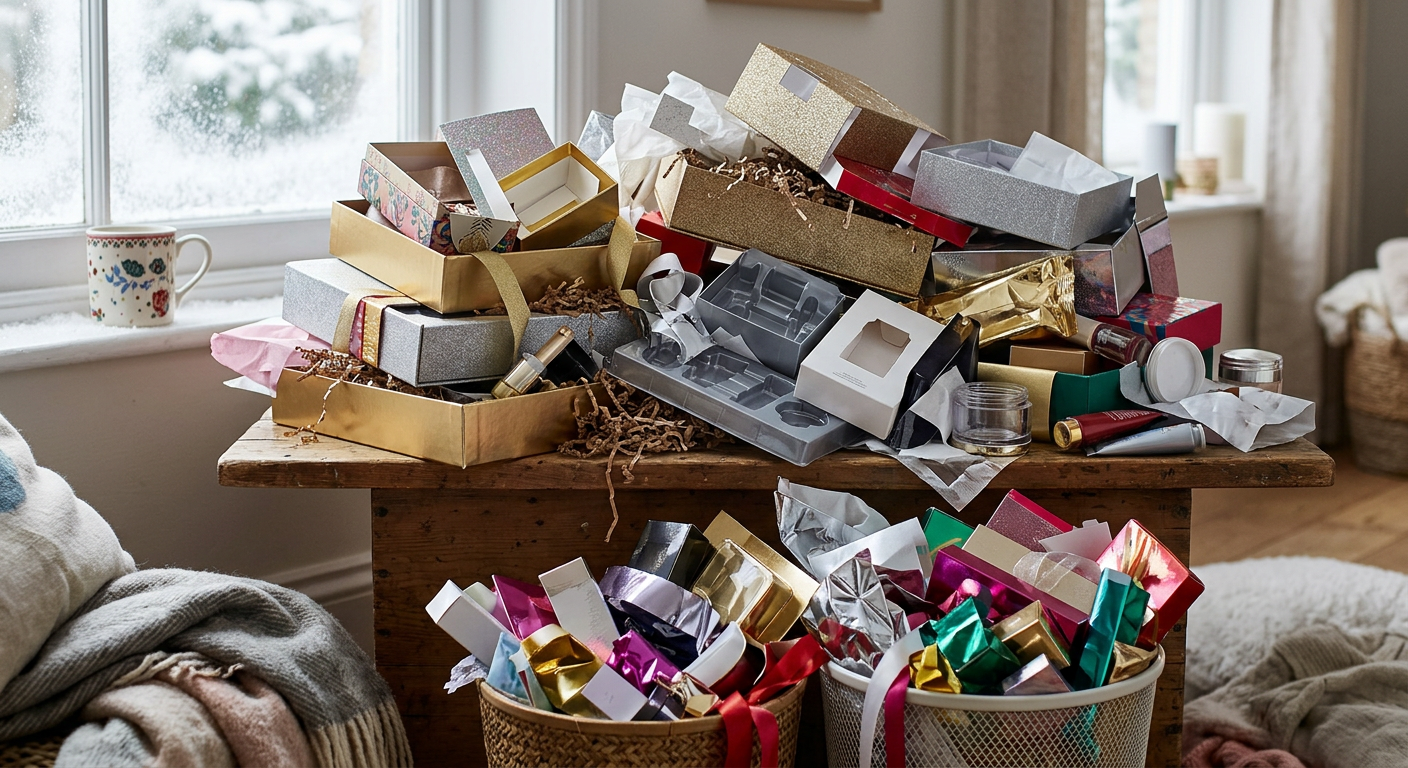
Winter gifting stacks three packaging problems on top of each other: over-packaging for looks, single-use materials built for a short life, and low recyclability from mixed materials and coatings, as Packaging Connections explains. Beauty gift sets are frequent offenders, wrapping small products in decorative boxes, plastic trays, and cellophane.
The numbers back this up. In the UK, 104,946 tonnes of plastic packaging is thrown away and not recycled at Christmas, according to CleanHub. Once that material reaches landfill, it generates methane, a greenhouse gas more than 25 times more damaging to the climate than carbon dioxide, per the EPA as cited by NEEF.
Consumer behavior shapes packaging demand, material choices, and waste recovery rates. Your decisions carry real weight, particularly during the season when beauty purchases spike.
Shop Smarter: Choose Minimal and Functional Packaging
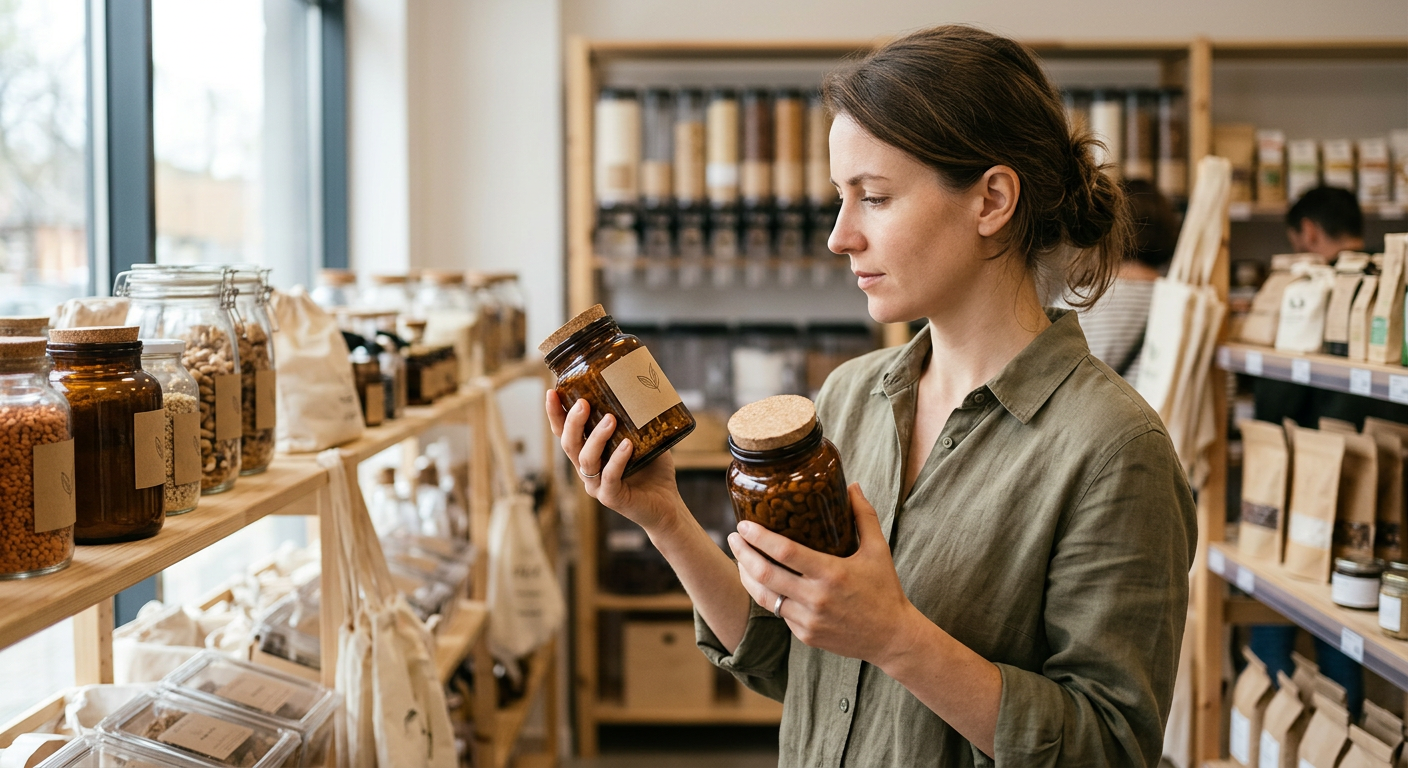
The most useful decision happens before you pay. Look for products with right-sized packaging, mono-material structures like paper or single-polymer plastics, and packaging that does something useful afterward, such as resealing or being reused, Packaging Connections recommends.
Knowing what to skip matters just as much: decorative outer boxes with no reuse value, plastic-paper laminated gift wraps, and excess void fill padding out tiny products. Minimal packaging is no longer a compromise. Plenty of premium brands now treat restraint as part of their design language.
What to Look For vs. What to Skip
| Choose | Avoid |
|---|---|
| Right-sized, mono-material packaging | Oversized decorative boxes |
| Refillable and reusable formats | Single-use plastic trays |
| Recyclable cardboard and paper | Plastic-paper laminated wraps |
| Resealable, functional designs | Excess void fill for small items |
| Plastic-free gift sets | Mixed-material coatings |
Larger brands prove this works at scale. YSL Beauty’s Indulge in Gold collection is its second 100% plastic-free holiday campaign, using reduced-size boxes made from 100% cardboard sourced from sustainably managed forests, with a removable vacuum form designed for reuse, per YSL Beauty.
Prioritize Refills and Reusable Tools Over Single-Use Gifts
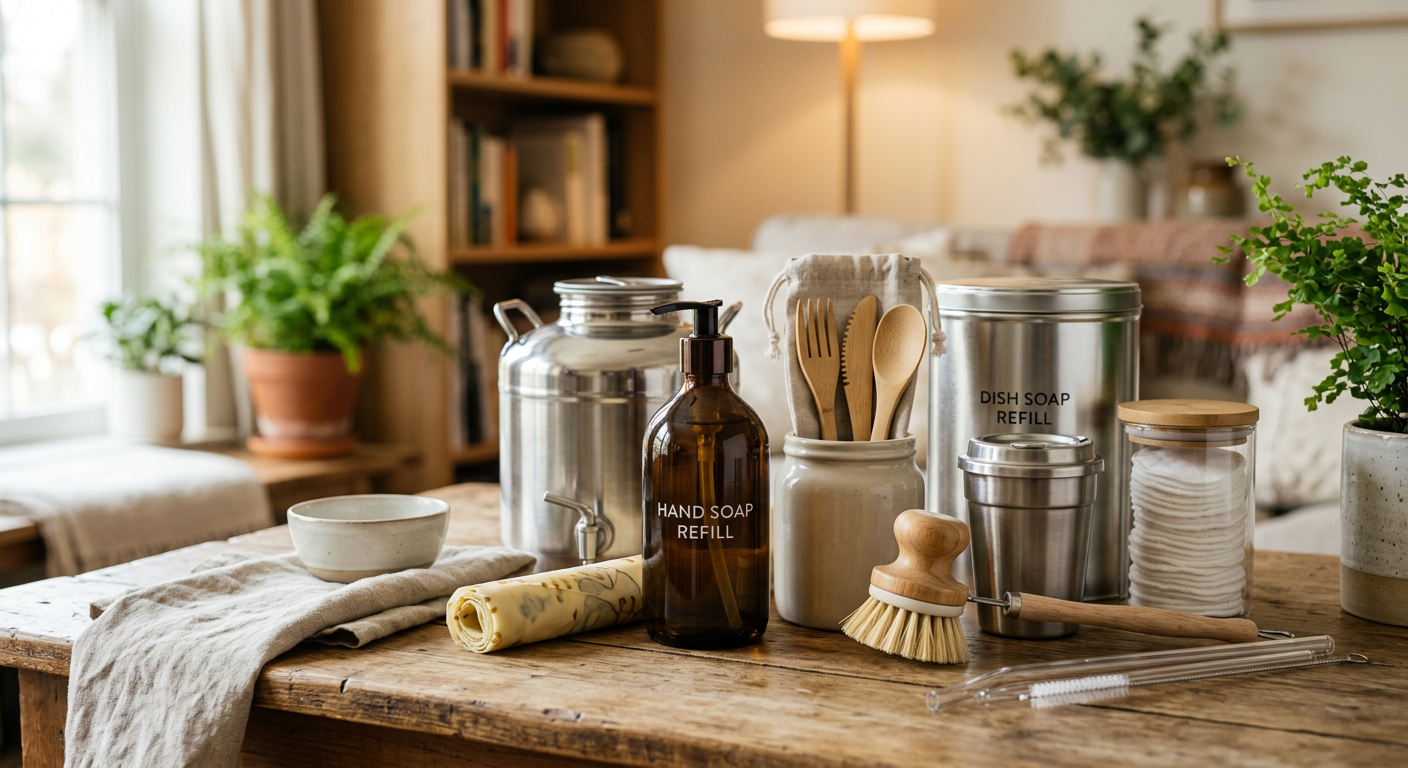
A gift that lasts past January does more than any amount of recyclable wrapping. Refill systems and durable tools keep products in rotation long after the paper comes off. FFS Beauty builds its festive line around this idea, with metal razors that stay in your routine for years, silicone eye patches that replace hundreds of single-use masks, and refillable shave cream pouches that cut plastic waste, according to FFS Beauty.
Refill-first design is becoming an industry standard. The British Beauty Council’s reuse toolkit promotes a “buy anywhere, return anywhere” model, letting shoppers refill the brands they want wherever they are, as outlined in its reuse toolkit.
Gift Ideas That Minimize Waste
- Refillable razors, serums, and shave creams
- Solid formats like shampoo bars and whipped butters that cut packaging
- Reusable tools such as silicone applicators and eye patches
- An experience, like a spa treatment or facial, that needs no packaging at all
Experiences deserve a closer look. A gift that requires no packaging, like a treatment or class, eliminates waste entirely while still feeling generous, NEEF suggests.
Rethink Gift Wrapping Entirely
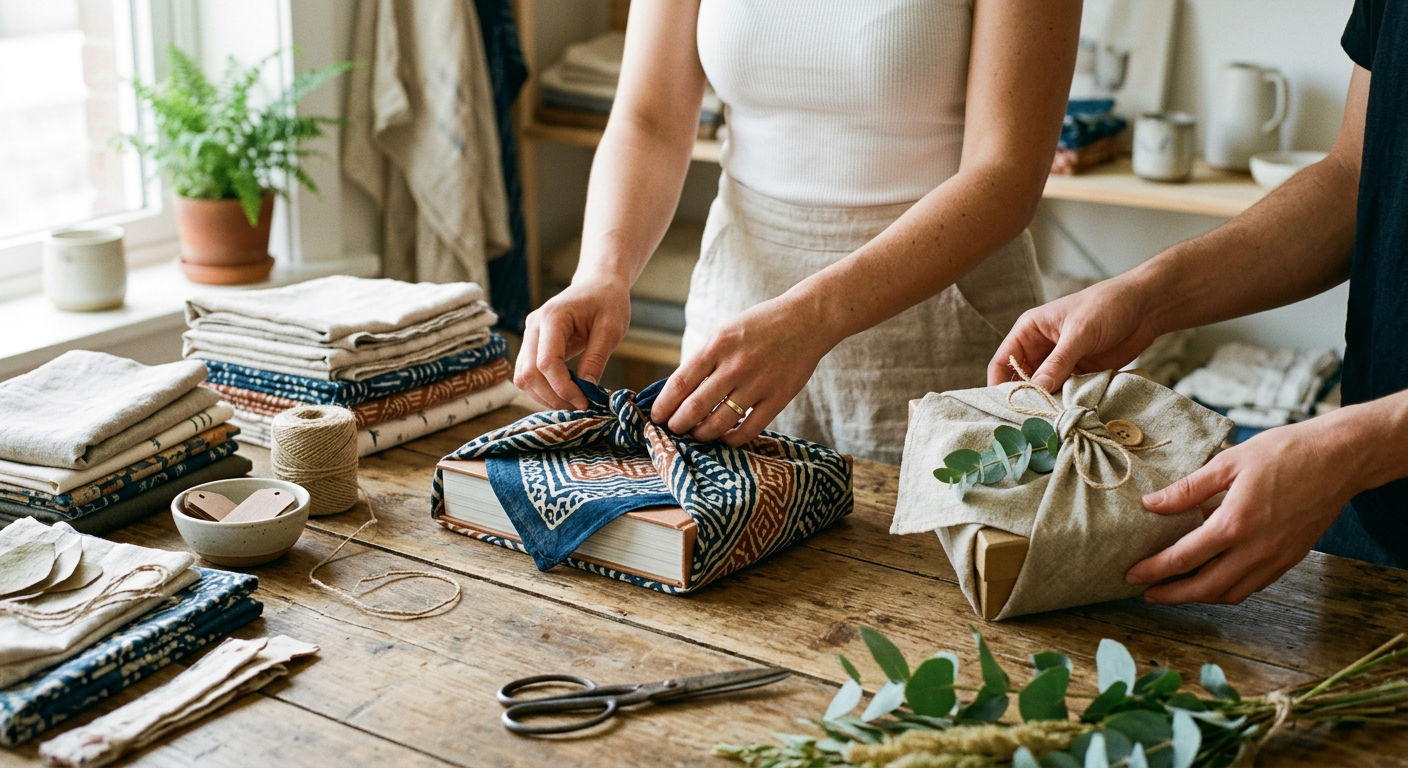
Traditional gift wrap is one of the least recycled packaging formats in the world, Packaging Connections notes. Foil, glitter, and plastic-coated papers often can’t be recycled at all, so they head straight to landfill after a single use.
The alternatives are simple and often cheaper. Reusable fabric wraps, kraft paper with natural twine, or old newspapers and magazines all do the job and add a personal touch. The NYSDEC also recommends wrapping gifts in reusable bags that recipients can use again long after the holidays.
Bringing your own reusable tote when shopping cuts waste before you even get home. Across a full season of gift-giving, these small swaps add up fast.
Recycle Right: Close the Loop on Empty Products
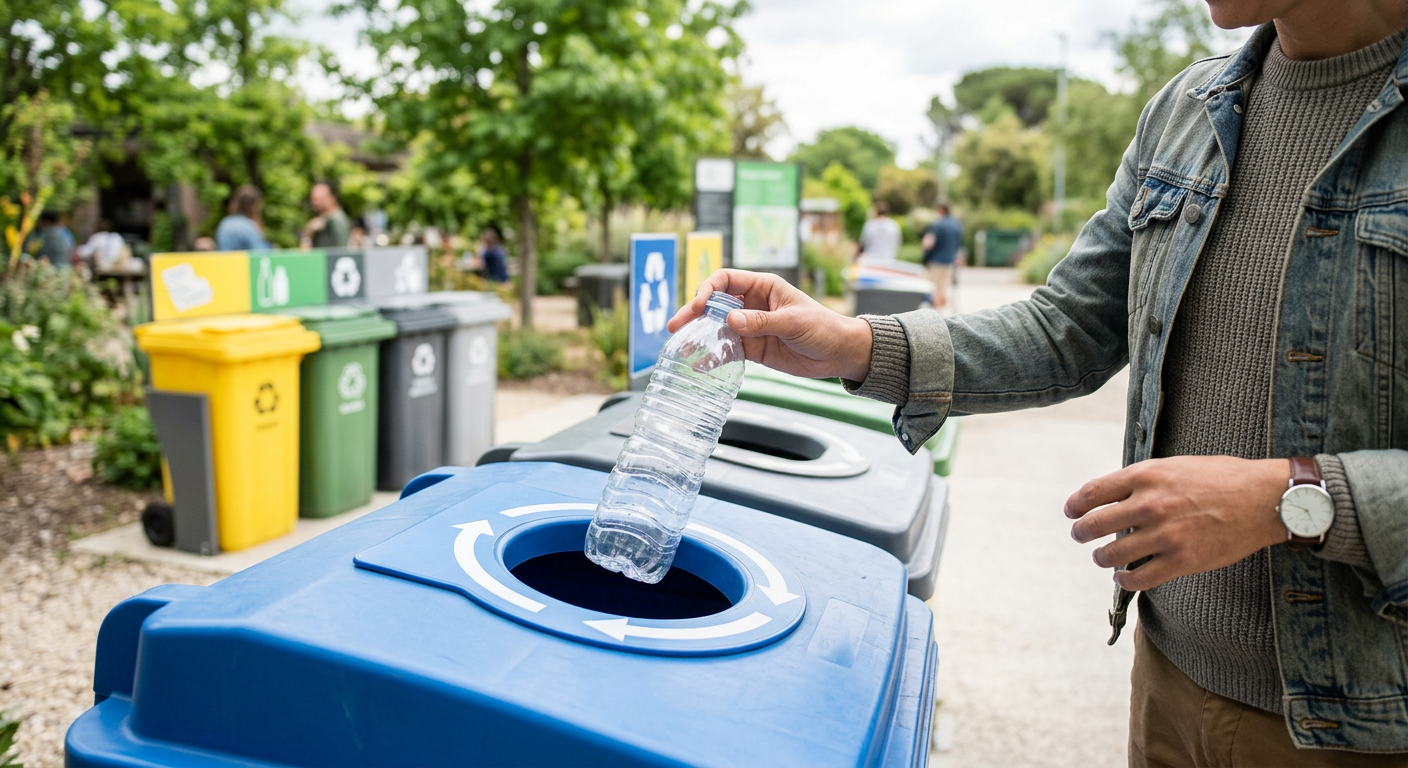
Sustainability doesn’t stop at the product; disposal matters just as much. An education gap holds many shoppers back. A British Beauty Council and UNiDAYS survey found 26% of students don’t know most beauty packaging is even recyclable, and 71% say they’d recycle more effectively with clearer disposal instructions, as cited by the British Beauty Council.
Get to know the recycling symbols on your beauty products so each item lands in the right bin. One step trips a lot of people up: items need to be cleaned thoroughly before recycling, or they get diverted to landfill or incineration anyway, CleanHub warns.
A Quick Recycling Checklist
- Check the recycling symbol on each package.
- Rinse jars, bottles, and tubes until clean.
- Separate mixed materials—pumps, caps, and laminated layers—where required.
- Flatten and recycle cardboard outer boxes.
- Save reusable tins and boxes for storage or future gifting.
The cardboard counts too. During a season of online orders, consolidating shipments and choosing later delivery dates reduces how much packaging arrives at your door, UMN Sustainability advises.
Reduce Shipping Waste From Online Beauty Orders
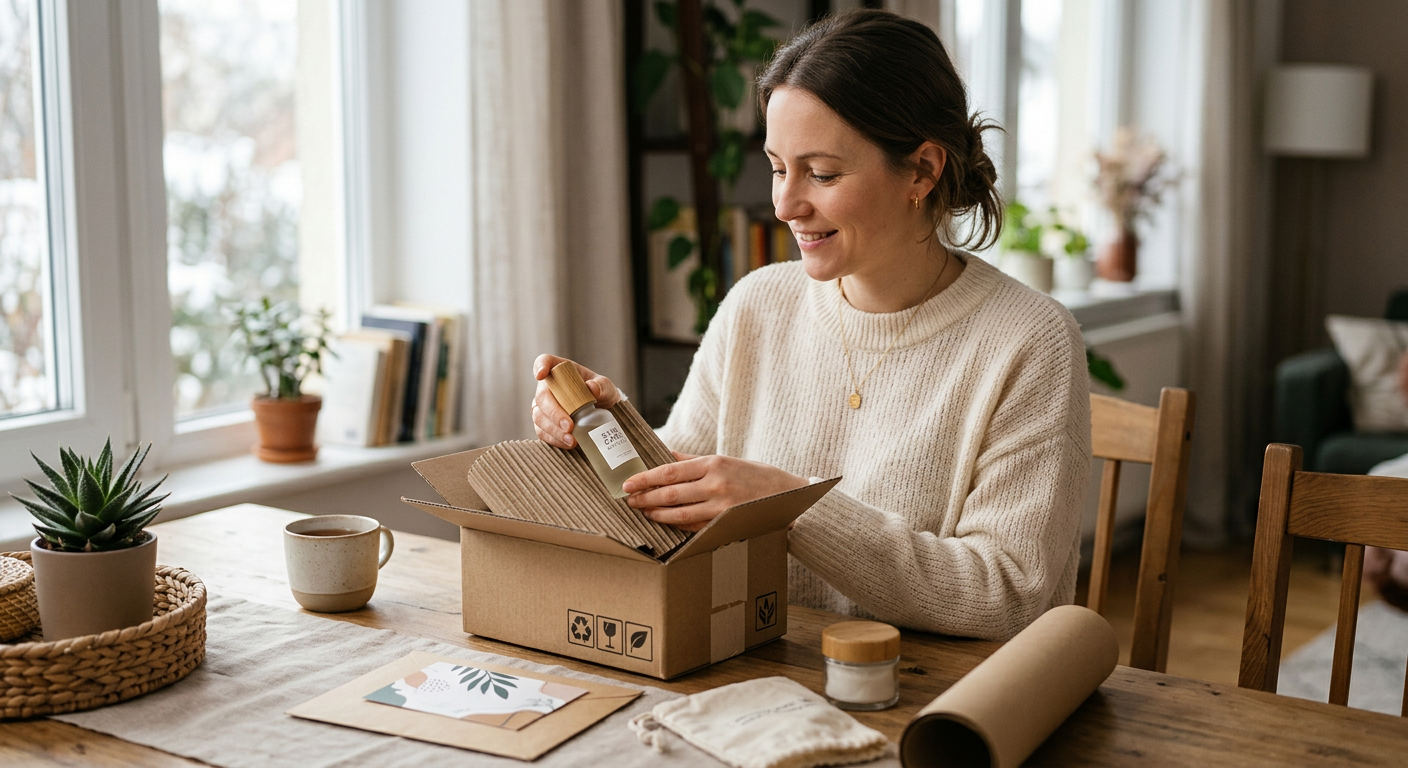
E-commerce drives a large share of holiday packaging waste, and beauty sells heavily online. Shoppers spent $11.8 billion on Black Friday in 2025, a 9.1% increase from 2024, according to NEEF. More orders mean more boxes, more void fill, and more carbon-heavy delivery runs.
Returns make it worse. Americans returned $685 billion in products in 2024, with just over half from online sales, and return shipping accounts for roughly 15 million metric tons of carbon dioxide each year in the US alone, per NEEF.
A few habits shrink this footprint. Buy with intention to avoid returns, have items packaged together in a single shipment, and choose later shipping dates so orders consolidate, as recommended by UMN Sustainability. Shopping secondhand or locally, where it’s practical, trims shipping emissions further, Santa Rosa’s zero-waste guide notes.
Conclusion: Small Swaps, Lasting Impact
Winter beauty sustainability isn’t about perfection. It’s about making deliberate choices that add up. Shop for minimal, functional packaging; prioritize refills and reusable tools; rethink your gift wrap; and recycle each empty correctly. With holiday waste climbing roughly 43% and the beauty industry producing 120 billion units of packaging a year, the choices you make this season carry weight.
Pick one or two changes to commit to this season—switch to refillable gifts, wrap in fabric, or finally learn your local recycling rules. Start there, and a lighter bin becomes the new tradition.
Frequently Asked Questions
How much more waste do people produce during the holidays?
People generate about 43% more waste during the winter holidays, largely from wrapping paper, gift bags, tissue, food, and product packaging, according to CleanHub. Beauty gift sets contribute significantly because they often use mixed, decorative materials.
Is beauty packaging actually recyclable?
Most beauty packaging is recyclable, though a British Beauty Council survey found 26% of shoppers don’t realize this. Always check the recycling symbol and rinse items thoroughly, since dirty packaging is usually sent to landfill or incinerated instead.
What is the most sustainable beauty gift to give?
Refillable products, reusable tools like metal razors or silicone patches, and solid formats such as shampoo bars all minimize waste. An experience, like a spa treatment, is the lowest-waste option because it needs no packaging at all.
How can I reduce waste from online beauty orders?
Have all items packaged together, choose later shipping dates to consolidate deliveries, and buy with intention to avoid returns. Returns shipping alone generates about 15 million metric tons of CO2 annually in the US, per NEEF.
What are good alternatives to traditional gift wrap?
Reusable fabric wraps, kraft paper with natural twine, old newspapers, and reusable gift bags are all effective. Traditional foil and glitter wrap is one of the least recycled formats globally, so avoiding it keeps material out of landfill.
Do refillable beauty products really reduce packaging waste?
Yes. Refill systems let you reuse the same container repeatedly, cutting plastic waste substantially, and industry initiatives now promote “buy anywhere, return anywhere” refill models to make them more accessible.