

The global cosmetics industry gets through more than 125 billion liters of water a year, according to Worldmetrics. That number covers the whole chain, from irrigating the crops that become your ingredients to the water sloshing around inside the bottle on your shelf. Most liquid products run 60 to 85 percent water, so a big chunk of what you’re paying for and lugging home is just H2O. Changing that doesn’t require gutting your whole routine. A handful of deliberate swaps will cut your water footprint without costing you results.
Why Water Matters in Your Beauty Routine

Water is baked into beauty products in places shoppers rarely think about: the farms that grow the ingredients, the factory floor, the formula itself, and the daily rinsing that cleansers and masks demand. The industry’s annual use lands somewhere between 120 and 125 billion liters, per Lebubè and Worldmetrics.
Your own routine feeds that total two ways: the water inside your products and the water you run to apply or rinse them off. Both levers are yours to pull. Rinse-based skincare and haircare rank among the thirstiest steps in a daily routine, according to THG Labs.
The payoff reaches past the bathroom. Products with less water are lighter and more concentrated, which cuts the carbon cost of shipping and distribution, as Forbes points out. The swap that saves water usually trims packaging and emissions along with it.
Start With What You Already Own
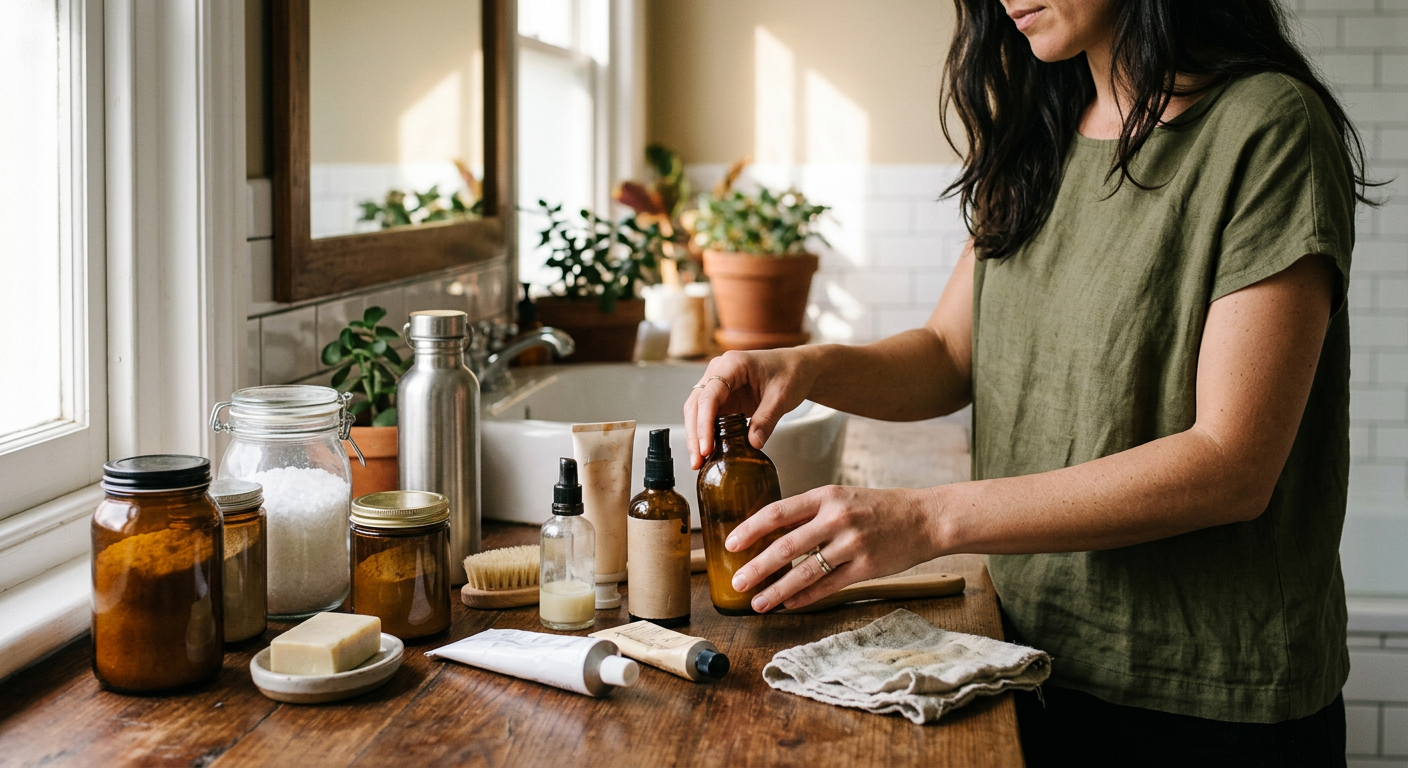
The most sustainable product is the one already sitting in your cabinet. Before you buy anything, finish what you have. That cuts against the usual instinct, which is to bin everything plastic and restock from scratch.
“There’s often this impetus… that in order to ‘do it right,’ you have to rid your life of all the old, bad, plastic-cloaked stuff and go out and buy all new eco-friendly stuff,” one expert told Vogue. “That’s simply not true; in fact, it’s worse.”
Using up what you’ve got prevents waste and pushes your next purchase further out. When something finally runs dry, that’s your opening to swap in a more water-conscious or lower-impact replacement. A sustainable routine gets built one substitution at a time, not in a single cart.
Switch to Waterless and Anhydrous Products
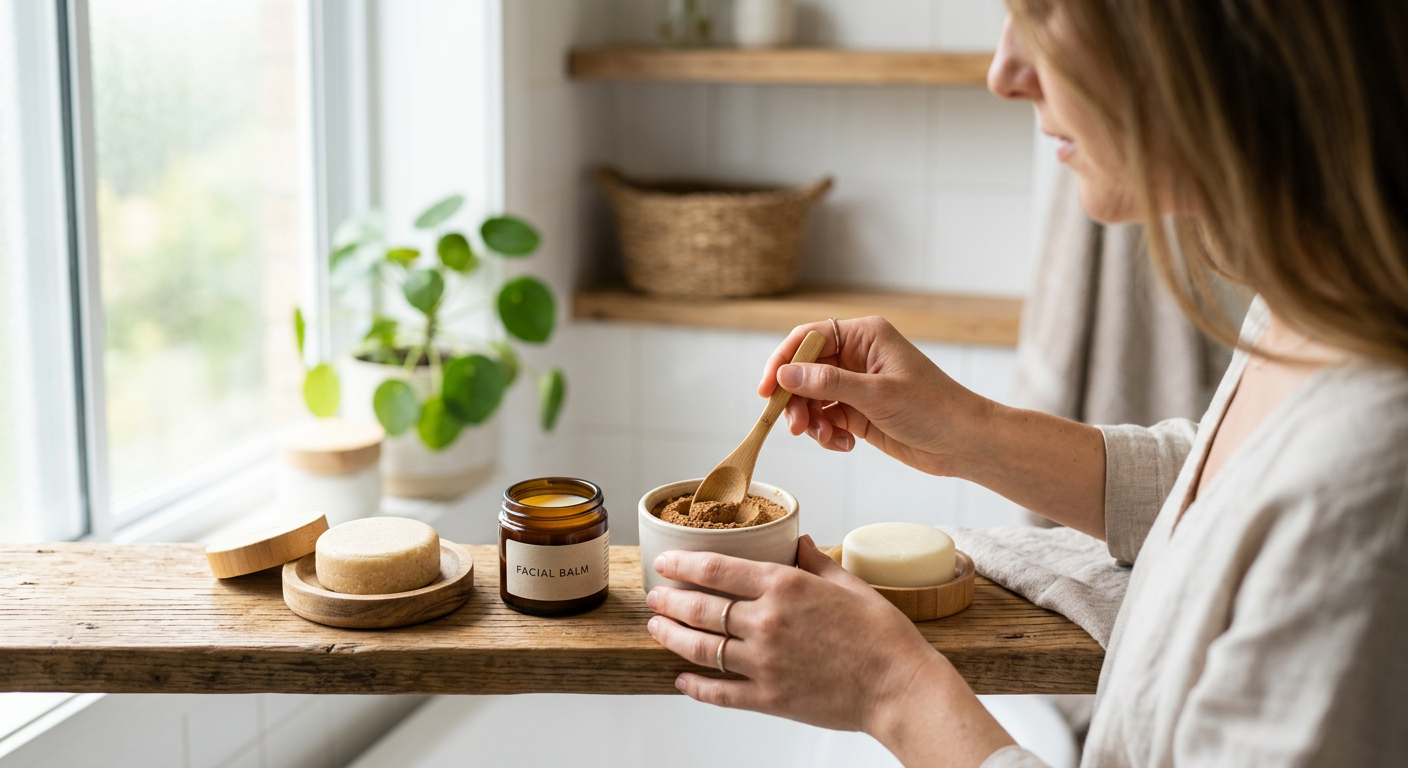
Waterless beauty, also called anhydrous beauty, is the biggest single water-saving move available to a shopper. An anhydrous product contains no water, or less than five percent, with the water swapped out for concentrated actives, botanical oils, or plant extracts, as Good On You explains.
The numbers back it up. Bars and powders use roughly 90 percent less water than their liquid equivalents, according to Worldmetrics.
Common Waterless Formats to Try
- Shampoo and conditioner bars — solid versions that skip both the water and the plastic bottle
- Cleansing powders and balm cleansers — activate with a splash of water in your hands
- Solid serums and sticks — concentrated actives in travel-friendly formats
- Dry sheet masks and powder masks — per Lebubè
- Tooth tabs and bar soaps — favorites cited by sustainability experts in Vogue
A Caveat on Efficacy
Waterless doesn’t suit everything. Some actives, including vitamin C, niacinamide, and certain antioxidants, need water to dissolve and absorb into skin properly, Good On You reports. Keep water-based formulas where they do their best work, and aim your waterless swaps at cleansers, shampoos, and soaps.
Rethink How Much Water You Use at the Tap
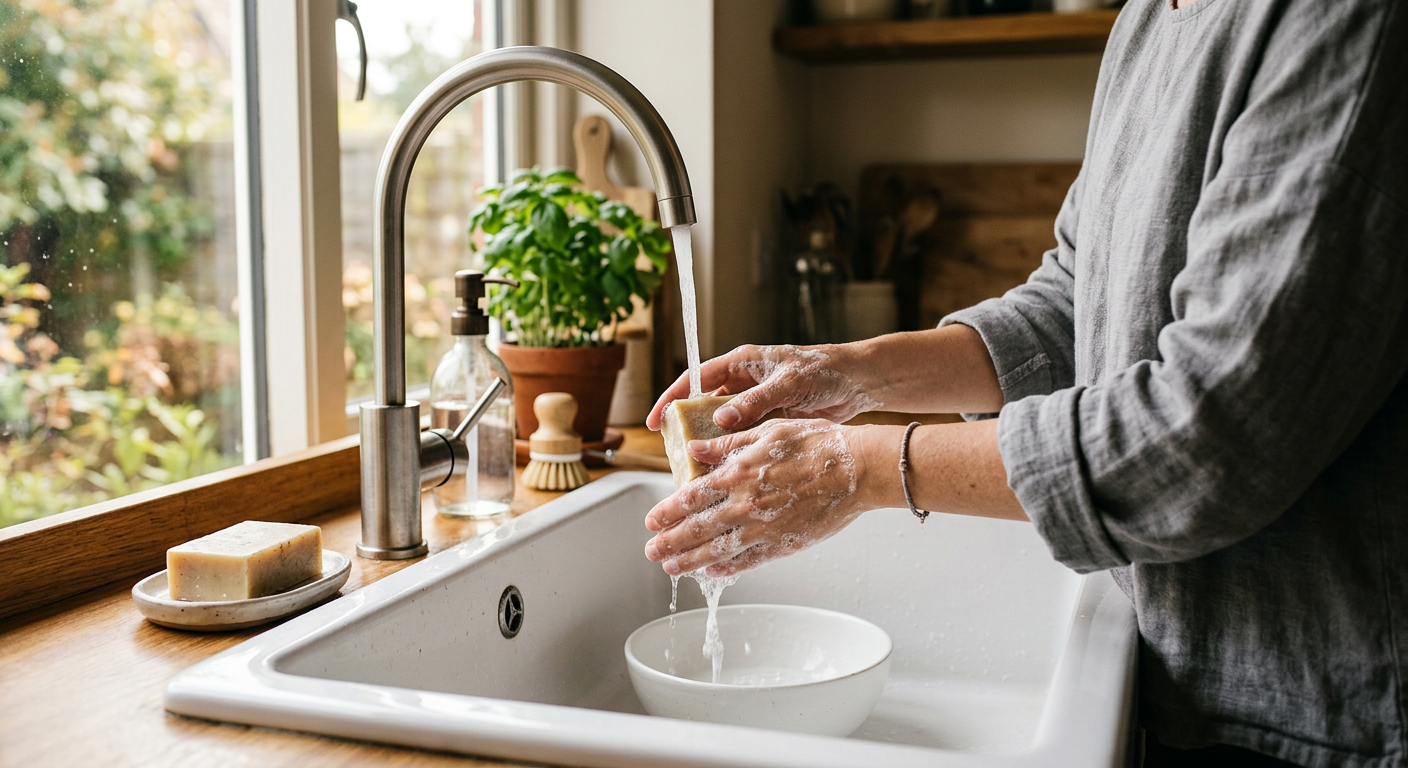
Your product choices matter, and so does what you do at the sink. The water you run while cleansing, rinsing, and showering piles up fast over a year.
Trimming your shower is one of the highest-impact habits going. Cutting a single minute from your daily shower saves around 3,400 liters a year, per a figure cited by Lebubè. The Center for Biological Diversity recommends shorter showers, fixing leaky fixtures, and picking low-flow options as core water-wise practices.
Rinse-free products pull their weight here as well. Dry shampoos, leave-in conditioners, micellar formulas, and biodegradable wipes let you skip the water-heavy rinsing steps without giving up results, THG Labs notes. Turning off the tap while you cleanse and rinsing efficiently are small habits that add up over time.
Choose Reusables and Smarter Packaging
Single-use items burn through resources across their whole lifecycle, and beauty produces them by the mountain. Some 152.1 billion units of beauty and personal care packaging sold globally in 2018, most of it never to be recycled, Vogue reports.
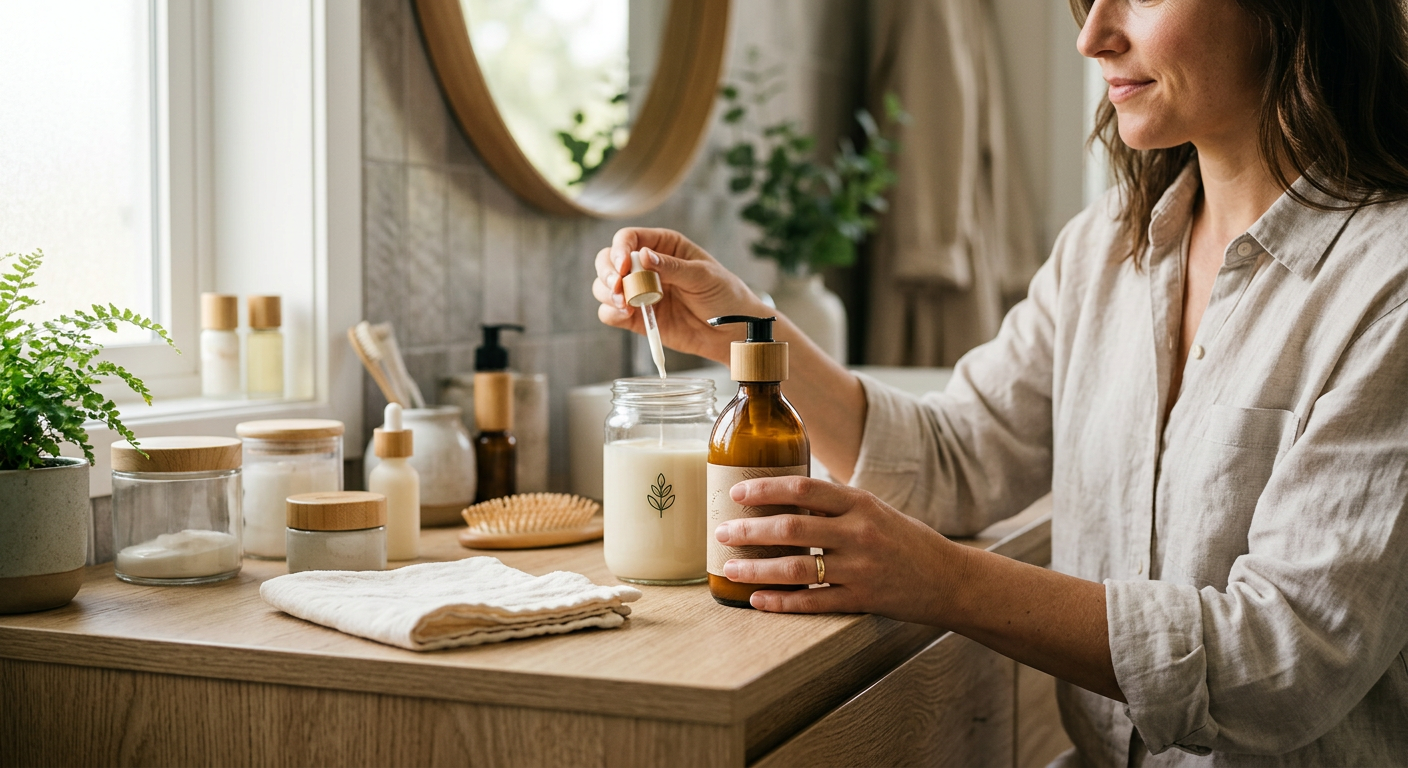
Trading disposables for reusables stops the waste at the source. Washable cotton pads, muslin cloths, and flannels take over for single-use rounds, while a stainless steel razor or a menstrual cup lasts for years. Who What Wear names these among the easiest sustainable habits to pick up.
Packaging-free and refillable options stretch the savings further. Shampoo bars and solid cleansers often come with no packaging at all, and refill systems let you hang onto one bottle while buying replacements that use far less material, per Who What Wear. Cutting plastic matters on a bigger scale: at least 14 million tons of it ends up in the ocean every year, making up 80 percent of marine debris, according to the Center for Biological Diversity.
Water-Smart Swaps at a Glance
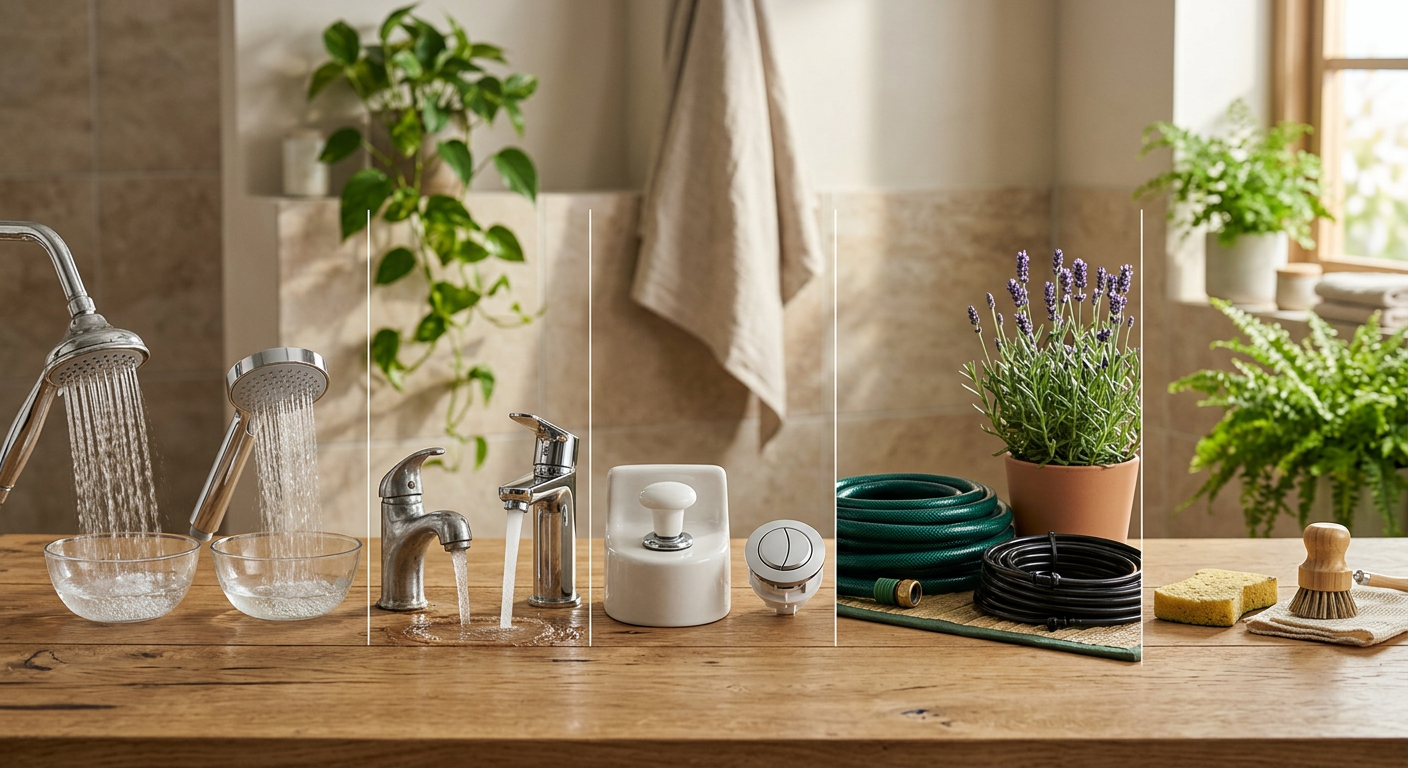
Use this comparison to prioritize the changes that pay off most.
| Swap | What It Replaces | Primary Benefit |
|---|---|---|
| Shampoo bar | Bottled liquid shampoo | ~90% less water vs. liquid formulas |
| Cleansing powder or balm | Water-based gel cleanser | Minimal water in formula, lighter to ship |
| Dry/powder mask | Water-based sheet mask | Lower water footprint |
| Washable cotton pads | Single-use cotton rounds | Eliminates recurring disposable waste |
| Refill pouch | New full-size bottle | Substantially less packaging |
| One-minute-shorter shower | Longer shower | ~3,400 liters saved per year |
Start at the top with the waterless swaps, then layer in reusables and habit changes as products run out.
Conclusion: Build a Routine That Respects Water
A water-smart routine comes down to three moves: finish what you own, pick waterless and reusable options when you restock, and cut back on the water you run at the tap. Each step shrinks a footprint that spans ingredient farming, manufacturing, and daily use, measured in the tens of billions of liters across the industry.
Skip the perfect all-at-once overhaul. Pick one swap this week, a shampoo bar, a shorter shower, or a set of washable pads, and go from there. The choices stack up, and a more sustainable routine is closer than it looks.
Frequently Asked Questions
What does “waterless beauty” actually mean?
A waterless or anhydrous product contains no water, or less than five percent, with the water replaced by concentrated actives, botanical waters, or plant oils. It comes as bars, powders, sticks, and balms, and uses roughly 90 percent less water than a liquid formula.
Are waterless products as effective as regular ones?
Usually, though not always. Some actives like vitamin C, niacinamide, and certain antioxidants need water to dissolve and absorb properly, so water-based formulas stay the better choice for those. Point your waterless swaps at cleansers, shampoos, and soaps, where they perform well.
What is the single easiest water-smart swap?
Switching to a shampoo or soap bar is one of the simplest high-impact changes, since it cuts both the water in the formula and the plastic packaging. Knocking a minute off your shower is another, saving around 3,400 liters a year.
Should I throw out my current products to go sustainable?
No. Experts say to use up what you already own first, because tossing usable products just creates more waste. Replace things with lower-impact alternatives as they run out.
How much water does the beauty industry use?
The global cosmetics industry uses an estimated 120 to 125 billion liters of water a year. Most of that ties back to ingredient farming, manufacturing, and the water inside liquid products, which often run 60 to 85 percent water.
Do reusables really make a difference?
Yes. Beauty generates enormous single-use waste; more than 152 billion packaging units sold globally in 2018 alone. Washable cotton pads, stainless steel razors, and refillable bottles cut that recurring waste significantly over time.