

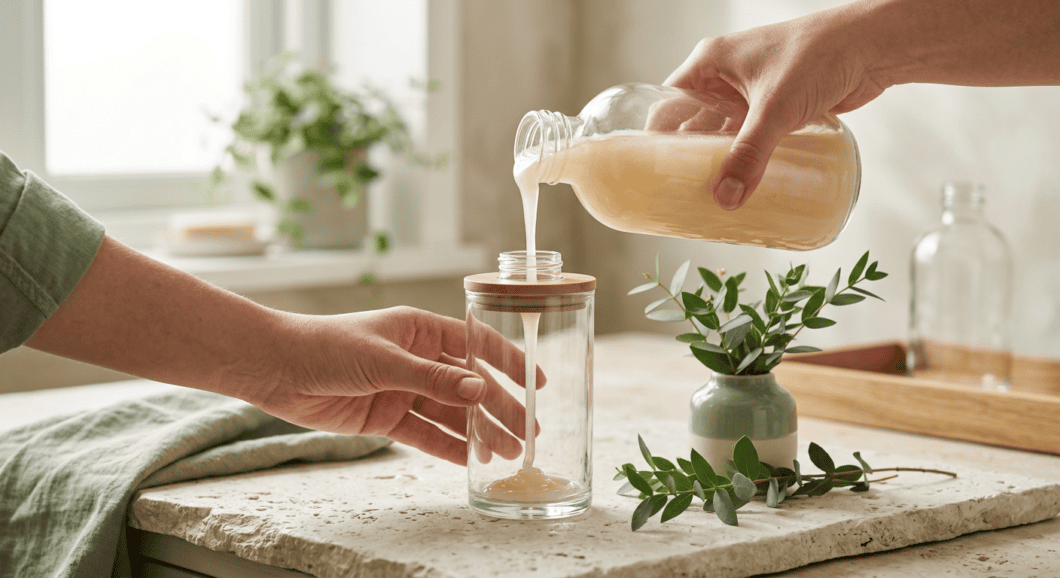
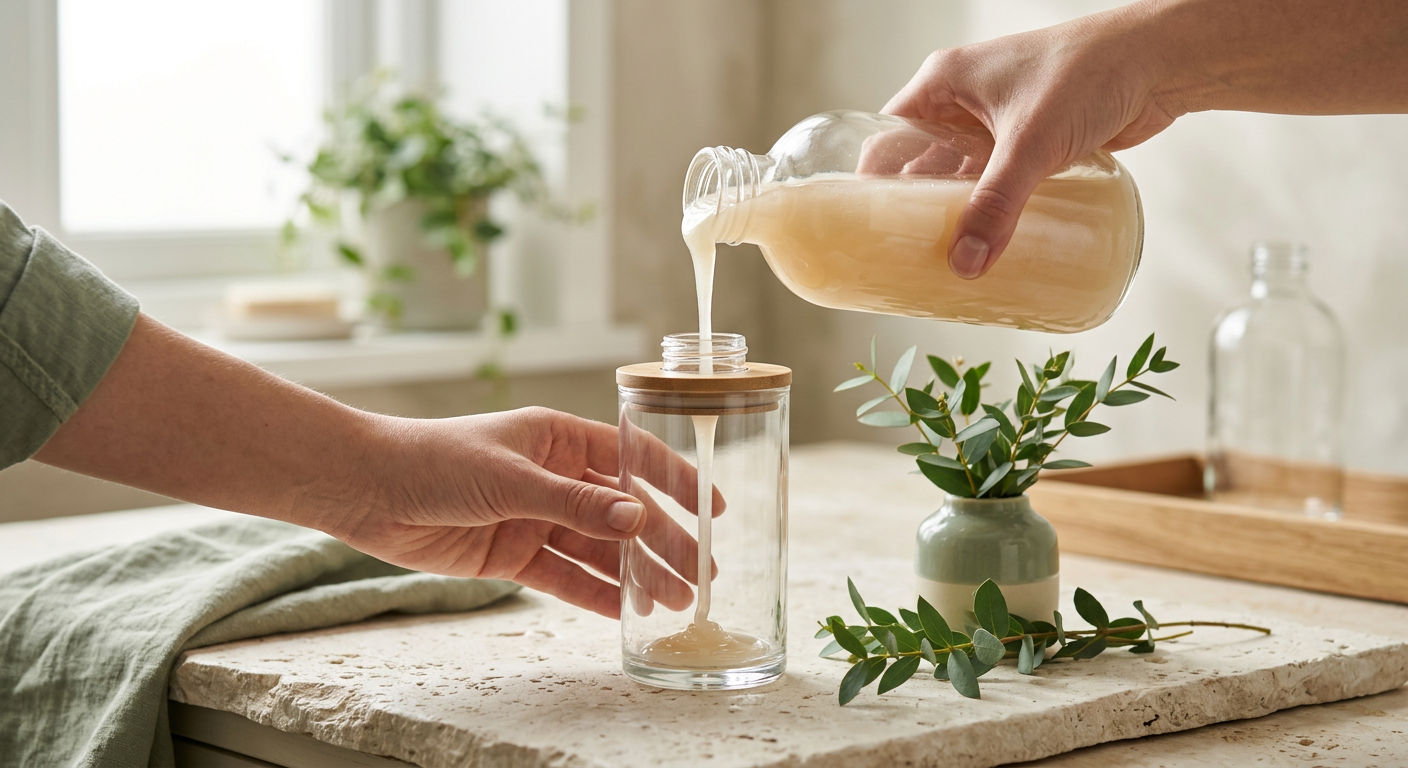
Refillable body care is moving from niche experiment to mainstream expectation, and it’s changing how brands and consumers approach low-waste beauty. In the United States, refill penetration for liquid body wash already sits at an estimated 12–18% of unit sales in 2026, up from roughly 6–8% a few years earlier, according to IndexBox. Body care is driving that shift for reasons that are structural, not trendy.
Why Refillable Body Care Is Gaining Ground
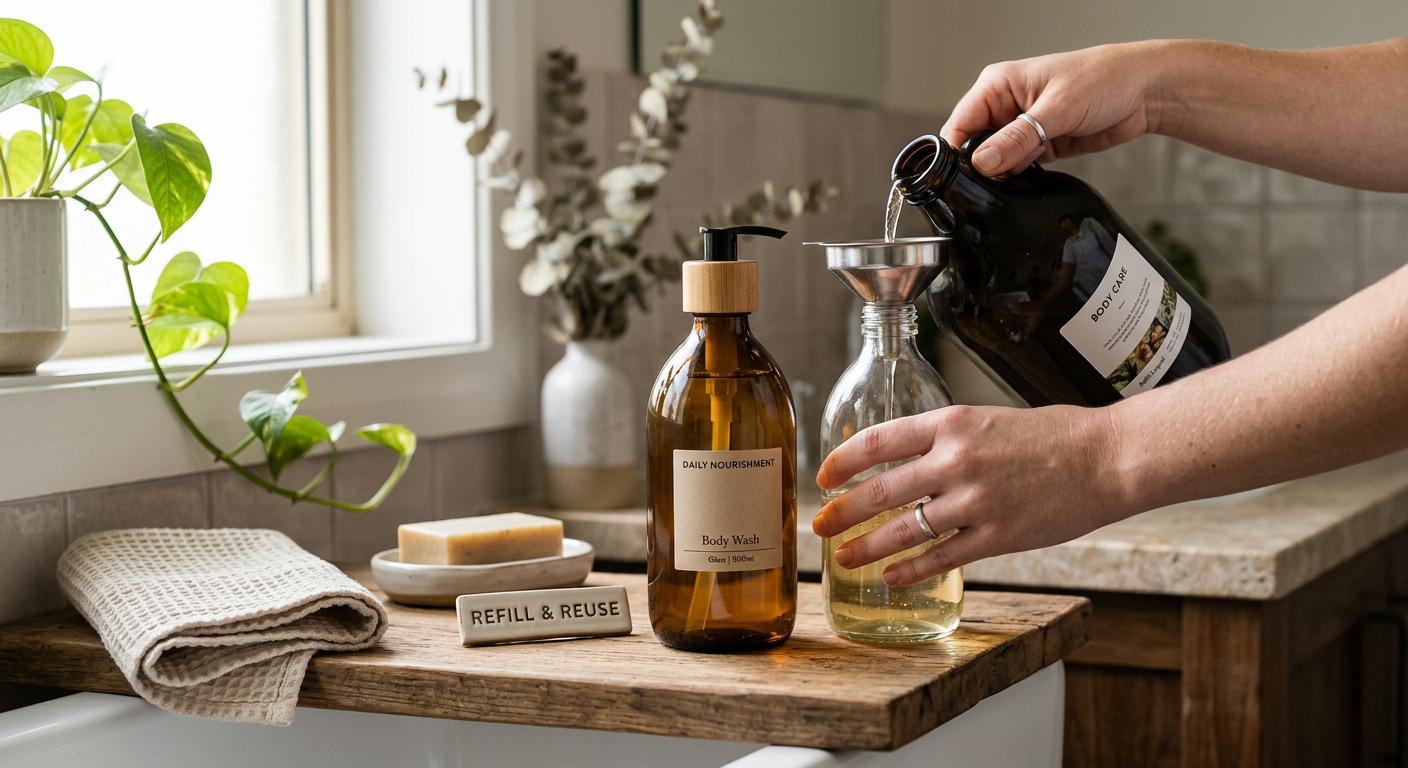
Refillable cosmetics are products built around reusable packaging. Instead of buying a new bottle every time a product runs out, you buy a refill and top up the vessel you already own. That one change cuts plastic waste, reduces the carbon cost of shipping heavy new containers, and usually saves money over time.
Body care fits this model better than most categories. Body wash, lotion, and hand soap get used often, come in high volumes, and get replaced on a predictable schedule. Frequent repurchase combined with stable formulation is the exact pairing that makes refills practical and cost-effective.
The numbers back this up. A survey of 2,251 women found that 59% had bought at least one refillable beauty product in the past 12 months, Beauty Packaging reports. Refills have crossed from curiosity into habit.
The Market Numbers Behind the Movement

The financial case is large. Future Market Insights data cited by Ethos put the global market for refillable beauty packaging at more than $45 billion in 2024. That scale explains why both heritage brands and new entrants are putting money into refill systems.
In body care specifically, growth is accelerating. IndexBox projects that the US body wash refill format could reach 30–40% of total category unit volume by 2035, up from the estimated 12–18% in 2026, with annual volume growth in the high single digits to low teens. That’s the trajectory of a format moving from early adopters to a standard replenishment channel.
Adoption looks different by region. France’s anti-waste law, adopted by the Senate in January 2020, pushed companies there to rethink packaging, and refillable perfume bottle sales in France rose 56% on a rolling annual basis through October 2022, Technature notes. Europe moved early. US players are catching up now with more durable, better-designed systems.
Which Beauty Categories Suit Refills Best
Refillable packaging doesn’t work equally well across every product type. The best-served categories, according to experts cited by Beauty Packaging, share three traits: high repeat usage, stable formulation, and high perceived value.
| Category | Repeat Usage | Refill Suitability |
|---|---|---|
| Body care | High | Excellent |
| Haircare | High | Excellent |
| Skincare | High | Excellent |
| Fragrance | Medium | Strong (premium appeal) |
| Color cosmetics | Medium | Good (compact inserts) |
Body care meets all three conditions. You replenish it constantly, the formulas stay stable, and the packaging is simple enough to refill without creating hygiene problems.
What Makes a Refill System Actually Work
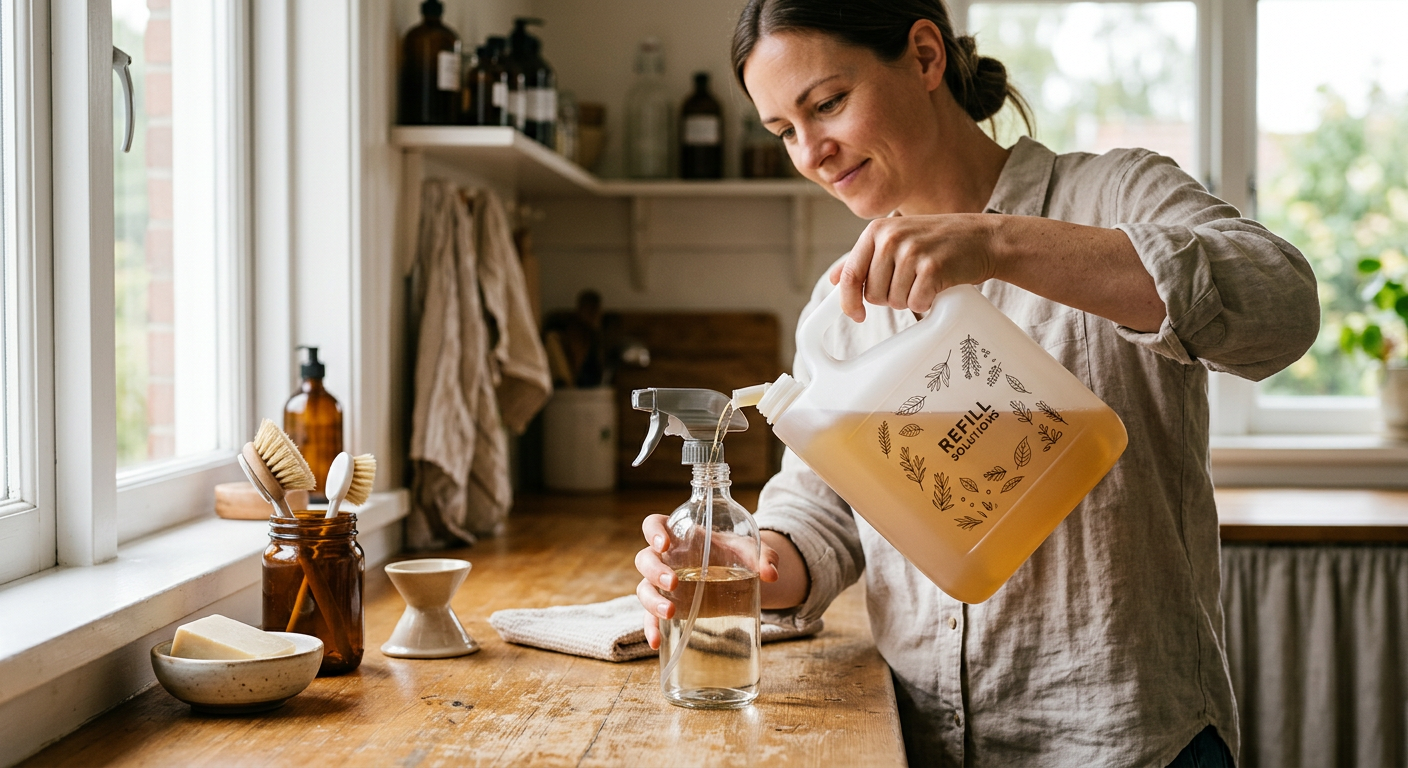
A refill system works only when refilling is easier, cheaper, and operationally simpler than buying new. Logic Pac’s refillable playbook states it directly: the model fails when the primary package gets heavier and more complex without strong repeat adoption. The guidance is to start with customer behavior and unit economics, then design the container, refill, and recovery path as a single connected system.
Convenience decides everything. The refill process has to be quick, and the primary container has to be durable and travel-ready. Get those details right and refills can feel more premium than single-use formats, not less.
Price matters as much as design. Izzy, for example, reaches everyday buyers with an under-$20 refillable mascara that works on both budget and convenience, as Beauty Packaging highlights. Low entry prices help normalize refill behavior across the market.
The Two Main Refill Formats
Consumers gravitate toward two approaches, and knowing them helps when you’re picking products for your routine:
- Pour-in refills: You pour a refill pouch or bottle into a reusable container. Beauty Packaging found that 44% of surveyed women preferred this format, which is common for lotions and body washes.
- Insert refills: You drop a replacement cartridge or pod into the original packaging. About 38% preferred this method, which is typical for compacts and some solid formats.
Body care relies mostly on pour-in refills, which pair naturally with pump bottles and larger reusable vessels.
The Barriers Still Slowing Adoption
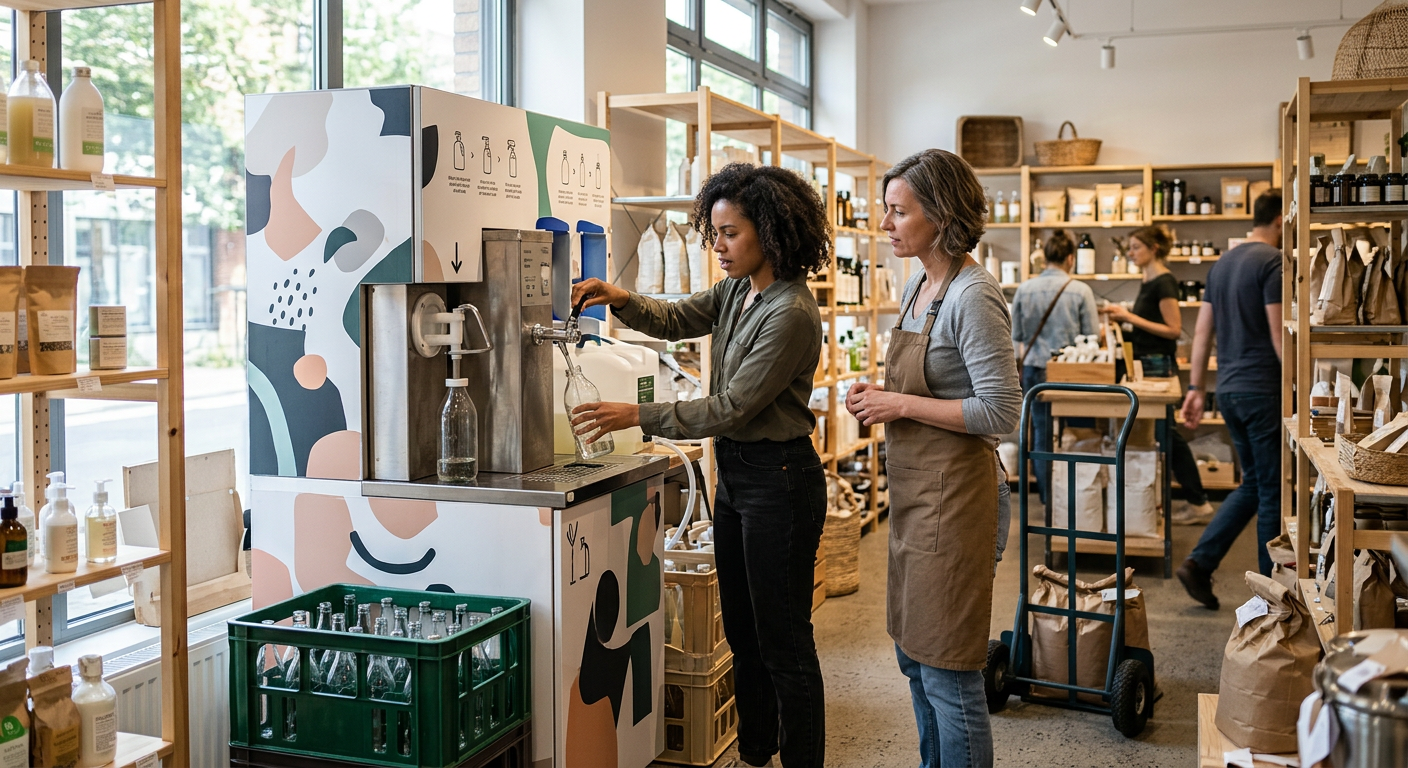
Progress is real, but it isn’t frictionless. Refillable formats saw only 7% growth in launches in the US between 2022 and 2024, Mintel reports, a figure that reflects the logistics and higher costs of eco-friendly design. Fragrance was the outlier, with an 80% jump in sustainable launches over the same period.
The gap between intention and action is a persistent problem. In Germany, 77% of consumers say they know how to recycle beauty packaging, yet Mintel found that while almost 50% bought a refill pack in 2024, only 40% bought a refillable product. Awareness runs ahead of follow-through.
Recyclability also falls short in practice. Pumps, caps, tiny formats, and multi-material packs still end up in the trash. The Sustainable Beauty Coalition acknowledges that logistical friction and hygiene concerns keep refillable models from being perfect and make them hard to implement across every product line. Shifting from take-make-waste to a circular model takes time and collaboration between manufacturers, retailers, and recyclers.
How to Start Switching to Refillable Body Care
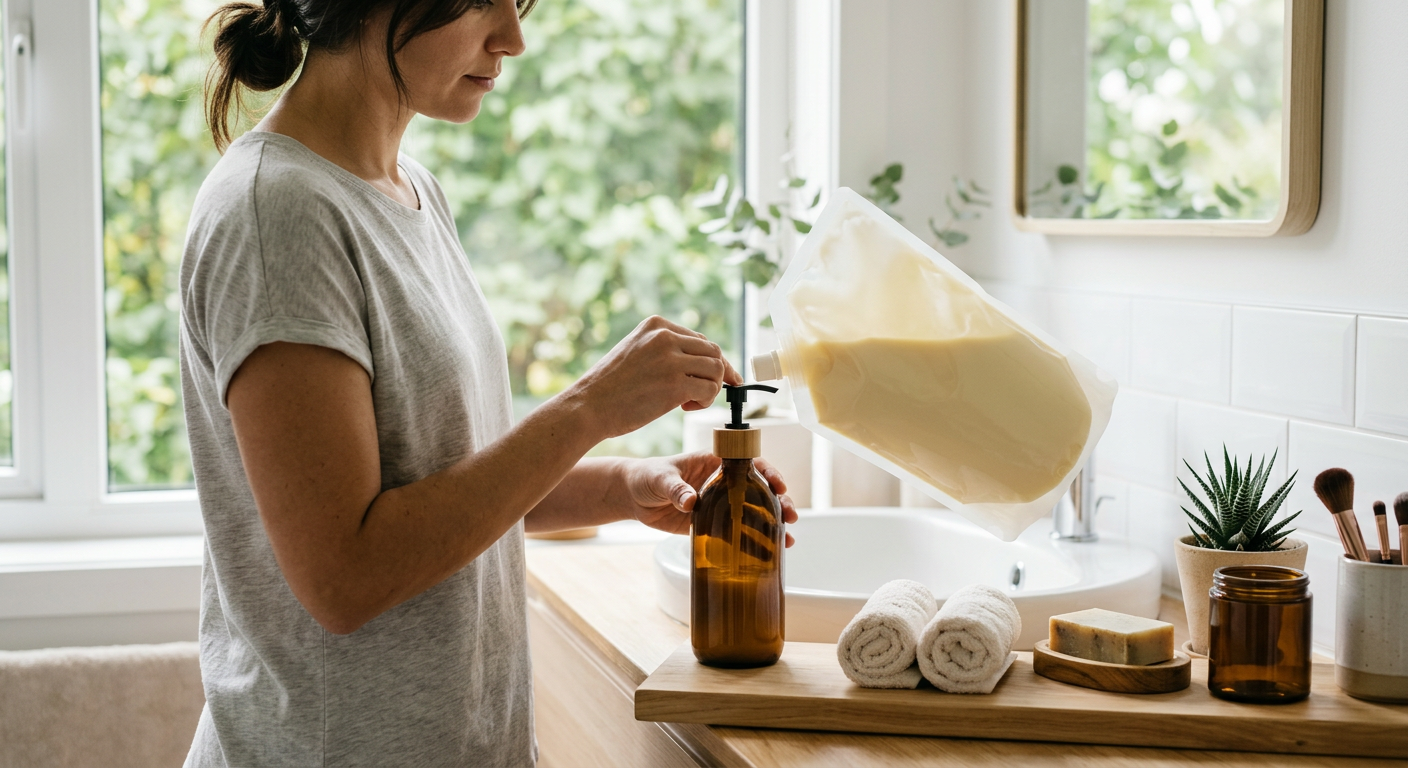
There’s no need to overhaul your routine overnight. Body care is one of the easiest categories to transition because the products are high-volume and frequently repurchased. Begin with the items you replace most often.
Choosing formats that reduce frustration from the start makes a difference. Basic Cosmetics recommends easy-to-adopt zero-waste products like solid soap, solid shampoo, and solid deodorant as starting points alongside refillable liquids.
A simple approach to make the switch stick:
- Start with one product. Choose your body wash or lotion—whatever you reorder most.
- Keep the primary container. Buy a durable, reusable vessel you’ll use for years.
- Buy refill pouches in bulk. Larger refills cut cost per use and reduce packaging further.
- Check brand recovery programs. Some brands collect hard-to-recycle components. Pact Collective, for example, has gathered over 20,000 pounds of difficult-to-recycle beauty packaging.
- Build the habit. Treat refilling like any other replenishment task.
The Takeaway
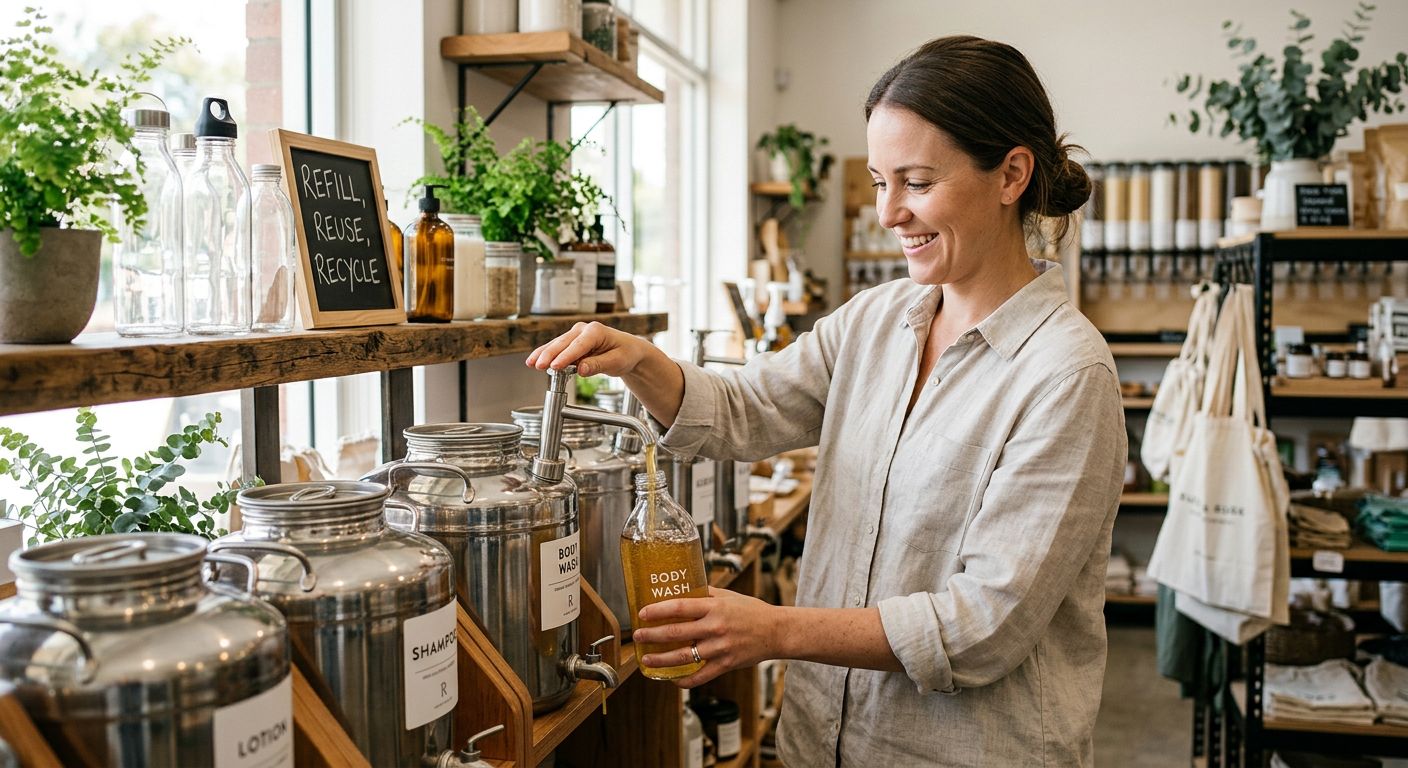
Refillable body care brings together consumer demand, measurable savings, and real environmental benefit. High repeat usage and stable formulations make it the natural starting point for low-waste beauty, and the data supports that case—from a $45 billion global refillable packaging market to projections that refill could claim 30–40% of US body wash volume by 2035. Barriers around convenience, cost, and recyclability remain, but the direction is clear.
Pick one body care product you already buy on repeat, switch it to a refillable format, and let the habit grow from there.
Frequently Asked Questions
What is refillable body care?
Refillable body care refers to products like body wash, lotion, and hand soap designed with reusable containers you top up with refills rather than replacing entirely. This reduces plastic waste and often lowers your cost per use over time.
Is refillable body care cheaper than buying new?
Often, yes. Refill pouches typically cost less than a full new product because you aren’t paying for a new primary container each time, and buying refills in bulk increases the savings further.
Are refillable body care products hygienic?
When designed correctly, refillable systems maintain hygiene through sealed refills and proper container design. The Sustainable Beauty Coalition notes hygiene remains a consideration, so follow brand instructions for cleaning and refilling your container.
Why is body care better suited to refills than other categories?
Body care has high repeat usage, stable formulations, and high volume—the exact traits experts identify as ideal for refill systems. These factors make refilling both practical and economically viable.
How big is the refillable beauty market?
Refillable packaging for beauty products was worth more than $45 billion globally in 2024, according to Future Market Insights. The segment is growing quickly across both mass and prestige beauty.
What is the easiest way to start using refillable body care?
Begin with one product you already repurchase often, such as body wash or lotion. Keep a durable reusable container, buy refill pouches in bulk, and build the refilling habit into your regular routine.