

For a decade, the beauty industry sold one equation: more products, better skin. That math no longer holds. Skin minimalism 2.0 has taken hold, and it’s convincing millions of people that a handful of well-chosen products beats a 22-step ritual. According to IML Research, NIQ data shows 75% of consumers now buy three or fewer skincare products. That’s not a fad. It’s a structural change in how people approach their skin.
What Skin Minimalism 2.0 Actually Means

Skin minimalism—sometimes called “skinimalism”—is a skincare approach built around essential products only, without sacrificing results. The term stitches together “skin” and “minimalism.” In practice, it means fewer products, gentler routines, and realistic goals, according to Glamveda.
Version 2.0 is a real upgrade. Early skinimalism was about doing less. Skinimalism 2.0 is about choosing better. It isn’t cutting steps for the sake of a tidy shelf. It’s editing routines down to what actually works, guided by ingredient knowledge and skin barrier health, as Beauty Scene explains.
Every product has to earn its spot. Anything that doesn’t gets cut. Fashion Weekly puts it neatly: this isn’t about doing the bare minimum, it’s about making every step count.
Why the 10-Step Routine Lost Its Grip
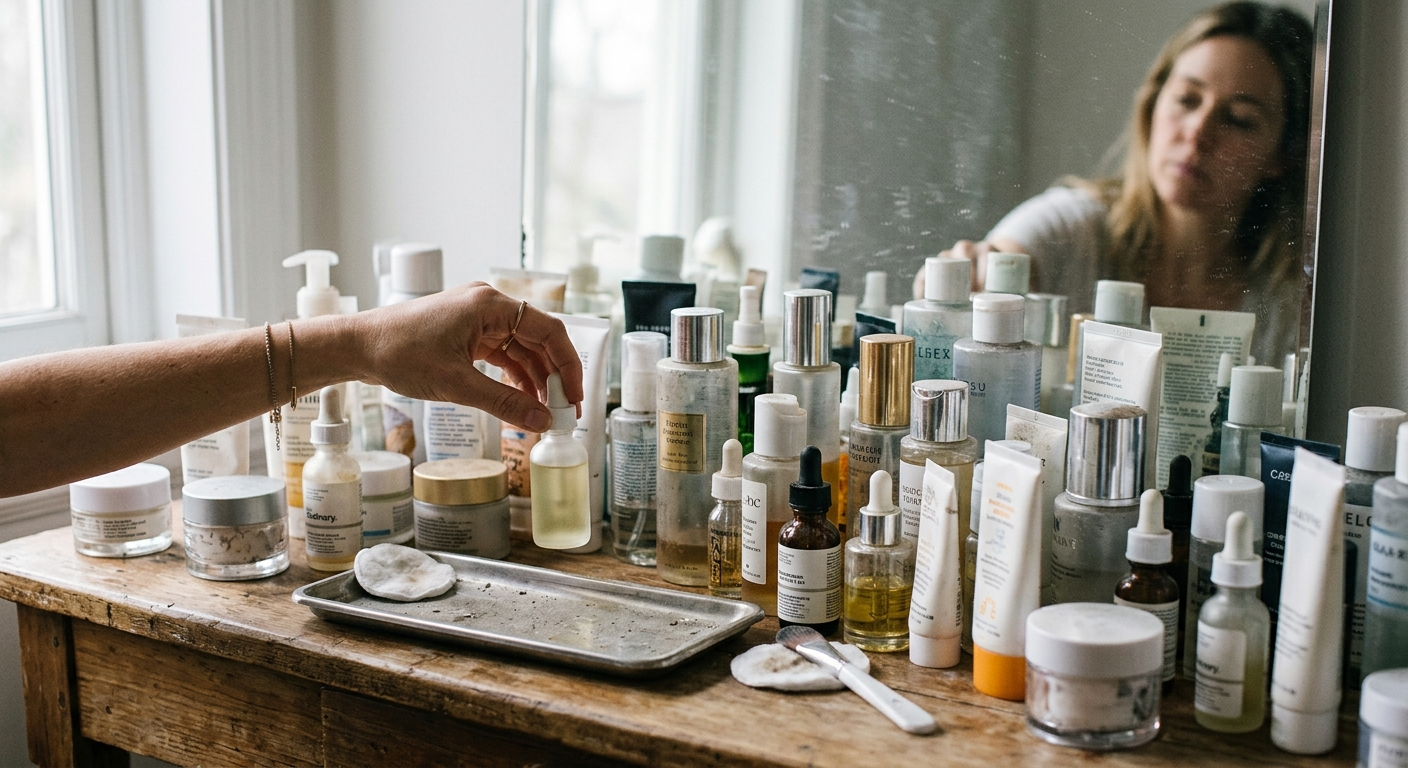
The multi-step craze peaked with the 10-step Korean skincare routine that ruled feeds for years. The assumption baked into it: more products, more results, automatically. That assumption fell apart.
Two kinds of exhaustion drove the collapse, cultural and physical. A Statista survey cited by Basic Cosmetics found that average time spent on morning beauty routines dropped from 22 minutes in 2020 to 14 minutes in 2025. People want outcomes, not liturgy.
Social pressure fed the cycle too. Influencers, many of them working with gifted products, built a culture where minimal routines felt inadequate, CEO Today Magazine notes. Scroll past someone’s shelf of twelve serums and a single moisturizer starts to feel like a failing. That pressure is finally easing.
The Science: Why Less Really Is More
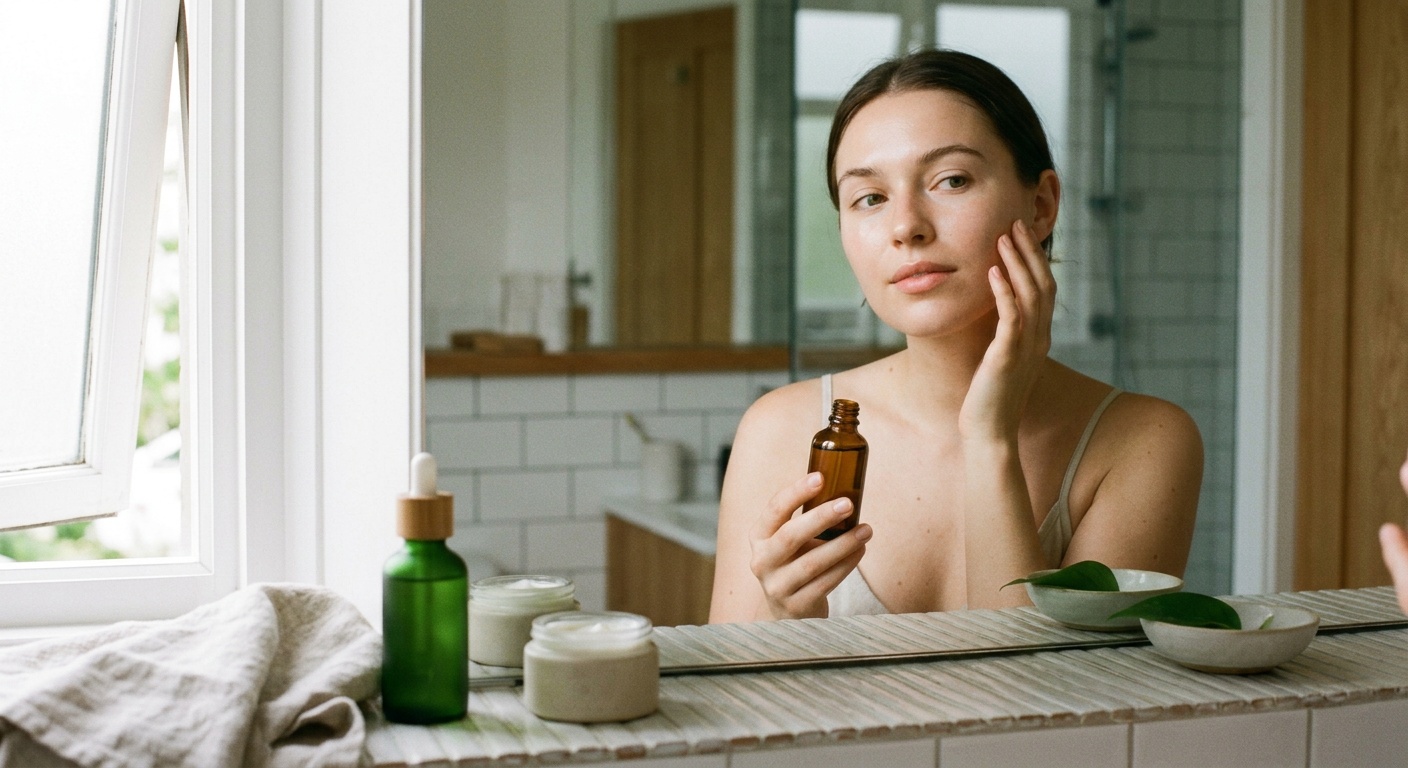
The shift has dermatological backing. Studies and dermatology reviews link excessive skincare use to irritation, redness, acne, and even dermatitis, per IML Research. Skin fatigues under too much layering, clashing actives, and over-exfoliation.
Barrier protection sits at the center of Skinimalism 2.0. Years of overusing exfoliating acids, reaching for harsh cleansers, and switching products every few weeks have left a lot of people with sensitivity and dehydration to show for it.
Barrier-Repairing Ingredients to Prioritize
The updated routine reverses that damage by favoring ingredients that support the skin’s natural defenses, according to Beauty Scene:
- Ceramides — reinforce the skin barrier
- Glycerin — draws and holds moisture
- Squalane — lightweight, non-stripping hydration
- Cholesterol — a natural component of healthy skin
- Panthenol — soothes and calms irritation
These cut down on the corrective treatments you’d otherwise need later. As one dermatologist told Vogue, scaling back on irritating or drying products helps skin balance its natural oils, which improves hydration and softens texture.
The Core Routine: Building Your Focused Regimen
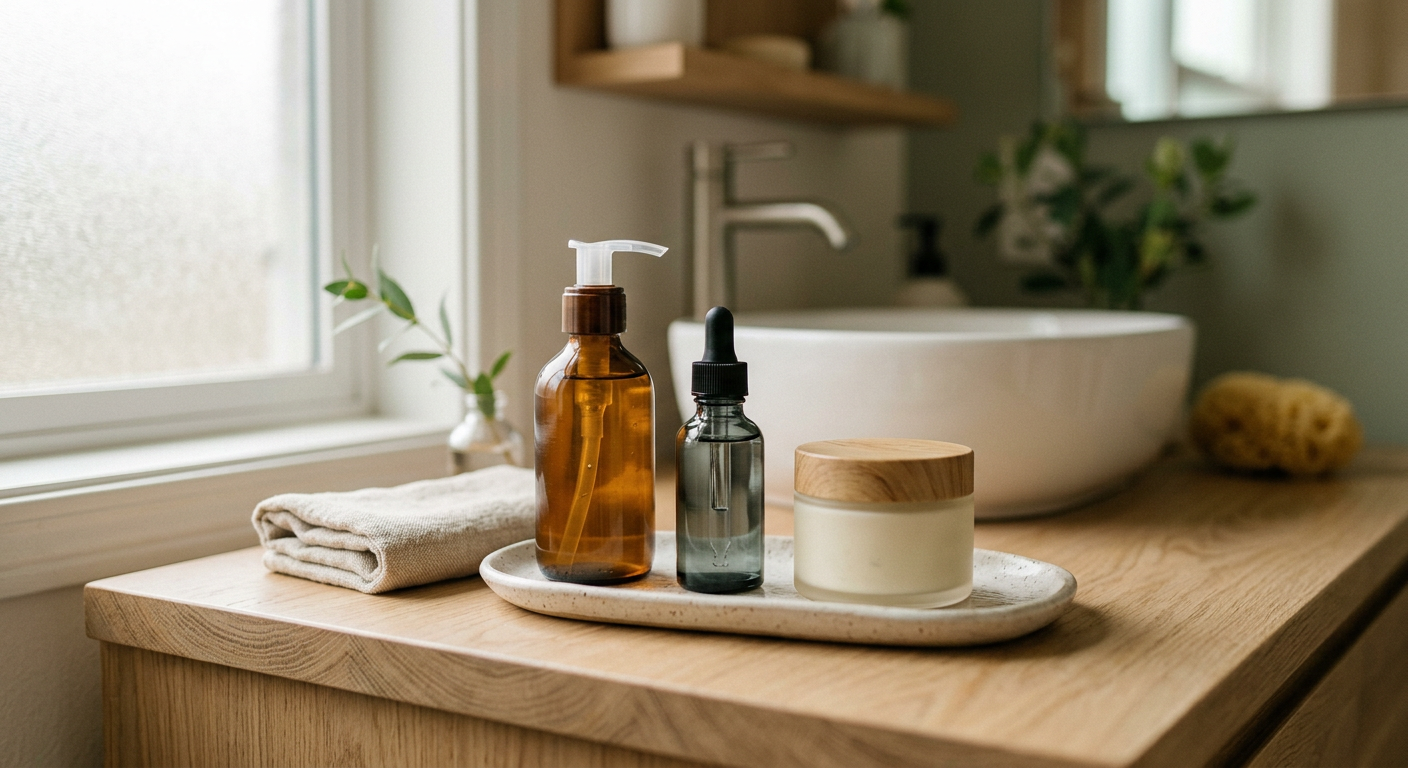
Most Skinimalism 2.0 routines land on three or four steps. The foundation holds across skin types: gentle cleansing, moisturizing, and daily sun protection.
Double board-certified surgeon Dr. Angela Sturm told Vogue that a workable routine needs at least three things: a gentle cleanser, a moisturizer (lightweight for oily skin, thicker for dry skin), and sunscreen, ideally mineral, with zinc oxide or titanium dioxide and SPF 30 or higher. Her logic is practical: the simpler the routine, the more likely you’ll keep up with it.
The Minimalist Framework at a Glance
| Step | Product | Purpose | When |
|---|---|---|---|
| 1 | Gentle cleanser | Removes oil, dirt, pollution without stripping | Morning + night |
| 2 | Hydrating moisturizer | Supports barrier, locks in moisture | Morning + night |
| 3 | Broad-spectrum sunscreen (SPF 30+) | Protects against UV damage | Every morning |
| 4 (optional) | One targeted treatment | Addresses a specific concern | As tolerated |
The optional fourth step is where you personalize. Vitamin C for radiance, retinol for texture, as outlined by Bona. Mild exfoliation, used sparingly, can slot in here too. The operative word is one, not a rotation of competing actives fighting each other on your face.
Smarter Formulas Are Doing the Heavy Lifting
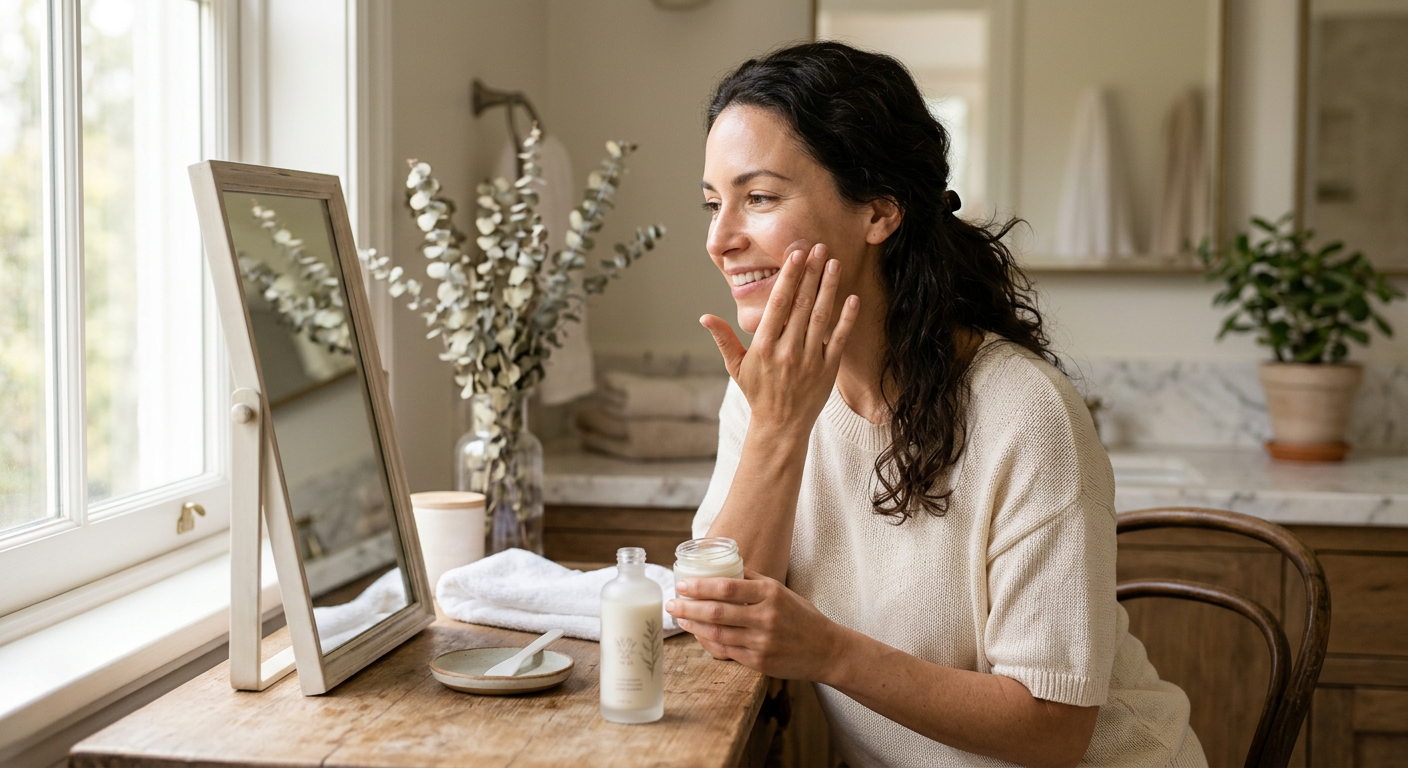
Skinimalism 2.0 works partly because formulation caught up. Multi-tasking hybrids have quietly become the backbone of modern beauty, according to Runway Magazine: tinted moisturizers with niacinamide, serum foundations with peptides, blurring balms carrying ceramides.
That consolidation lets you shrink a routine without losing results. Dermatologists point out that a well-formulated cleanser, a targeted serum or two, a rich moisturizer, and diligent sun protection produce more visible improvement than cycling through dozens of actives.
The market has followed the demand. IML Research projects the skinimalism market to grow at a CAGR of 9.8% from 2025 to 2034, per IML Research. Brands now have to justify why a product exists at all. Efficacy stopped being a selling point and became the price of admission.
Who Should Try Skinimalism—And How to Start
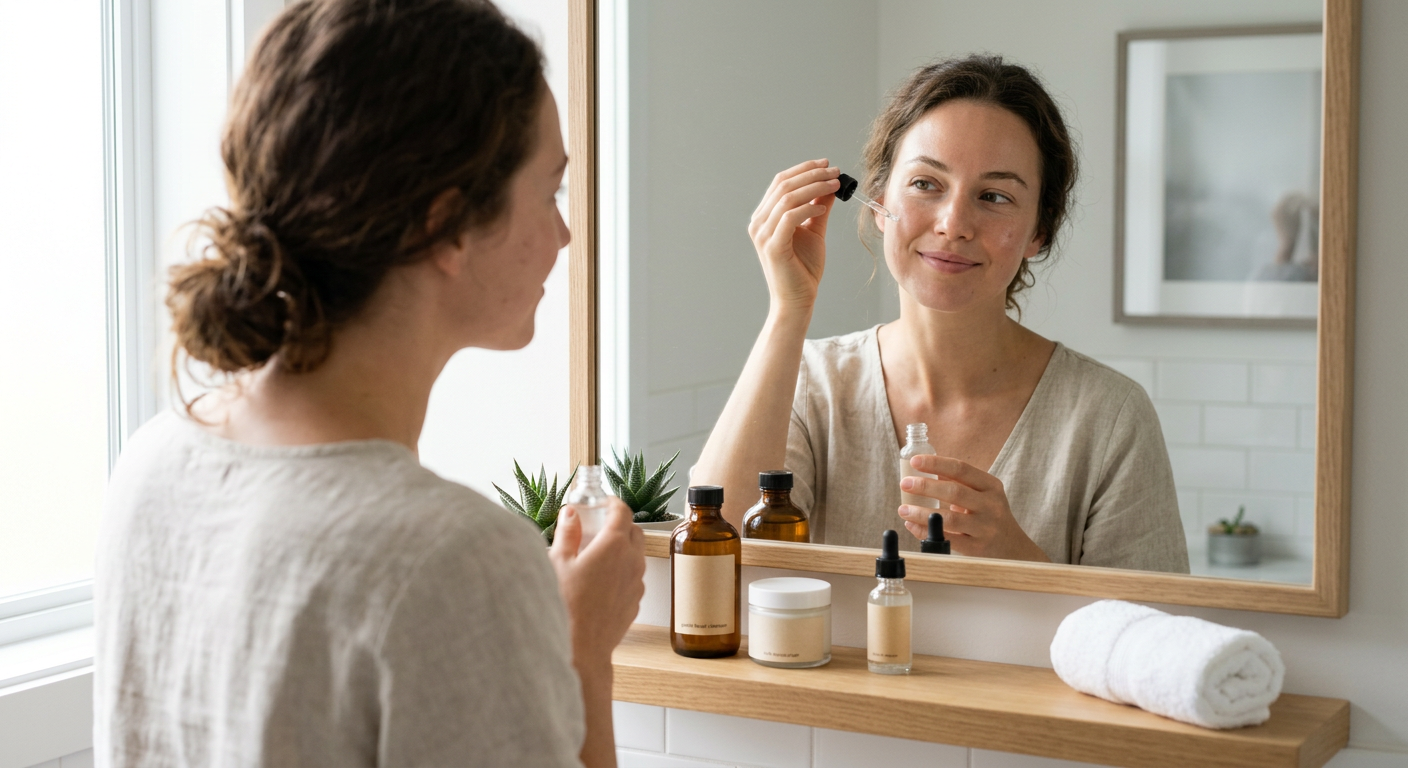
The appeal reaches wide. An Olay survey cited by BrandDeepDive found 81% of women aged 35 and up prefer a simplified routine, with 59% citing time savings as the main draw. Half of U.S. men also consider juggling multiple skincare products a hassle, a large audience most brands still ignore.
A minimalist routine is a focused, intentional one, and it cuts through an oversaturated market. For many patients, simplifying means better results and fewer flare-ups, dermatologists told Everyday Health.
Two Caveats Worth Noting
- Darker skin tones are more prone to post-inflammatory hyperpigmentation, so introduce active ingredients like retinoids, AHAs, and BHAs slowly, ideally with professional guidance, per Everyday Health.
- Adjust seasonally. Watch how your skin responds and adapt as the weather turns, as Glamveda recommends.
The first move is an audit. Pull everything off the shelf, keep the products that support your barrier, and set aside the ones working against each other.
Key Takeaways and Your Next Step
Skin minimalism 2.0 isn’t neglect. It’s intention. Dermatologists, market data, and everyday users all point the same direction: a gentle, focused routine built on barrier health beats a crowded shelf of competing actives.
The essentials come down to four things: a gentle cleanser, a hydrating moisturizer, daily SPF, and at most one targeted treatment. Pick formulas with proven, barrier-supporting ingredients, then favor consistency over constant stimulation.
Tonight, go through your current products. Keep the ones with a clear job to do, and give your skin room to rebuild its own resilience. Your morning schedule benefits too.
Frequently Asked Questions
Q: How many products do I actually need for skin minimalism?
Most routines settle into three or four steps: a gentle cleanser, a moisturizer, sunscreen, and optionally one targeted treatment. NIQ data shows 75% of consumers now buy three or fewer skincare products, which tracks with how few you actually need.
Q: What is the difference between skinimalism and skinimalism 2.0?
Early skinimalism focused on using fewer products, full stop. Skinimalism 2.0 focuses on choosing better ones, guided by ingredient knowledge and skin barrier health, so every product has a clear, proven role.
Q: Which ingredients should a minimalist routine prioritize?
Prioritize barrier-supporting ingredients like ceramides, glycerin, squalane, cholesterol, and panthenol. These strengthen the skin’s natural defenses and reduce the need for corrective treatments later.
Q: Can I still use retinol or vitamin C on a minimalist routine?
Yes. These work well as your single optional targeted treatment. Introduce actives slowly, especially if you have darker skin, and ideally under professional guidance to avoid irritation and hyperpigmentation.
Q: Is skin minimalism suitable for all skin types?
It works for most people, including oily, dry, and sensitive skin, because simplifying often reduces flare-ups and sensitivities. Adjust your moisturizer weight and any targeted treatments to your specific skin type and the season.
Q: Will a simpler routine really improve my skin?
For many people, yes. Cutting back on irritating or drying products lets skin rebalance its natural oils, which improves hydration and texture. Sticking with a simple routine over time is what delivers healthier skin.