

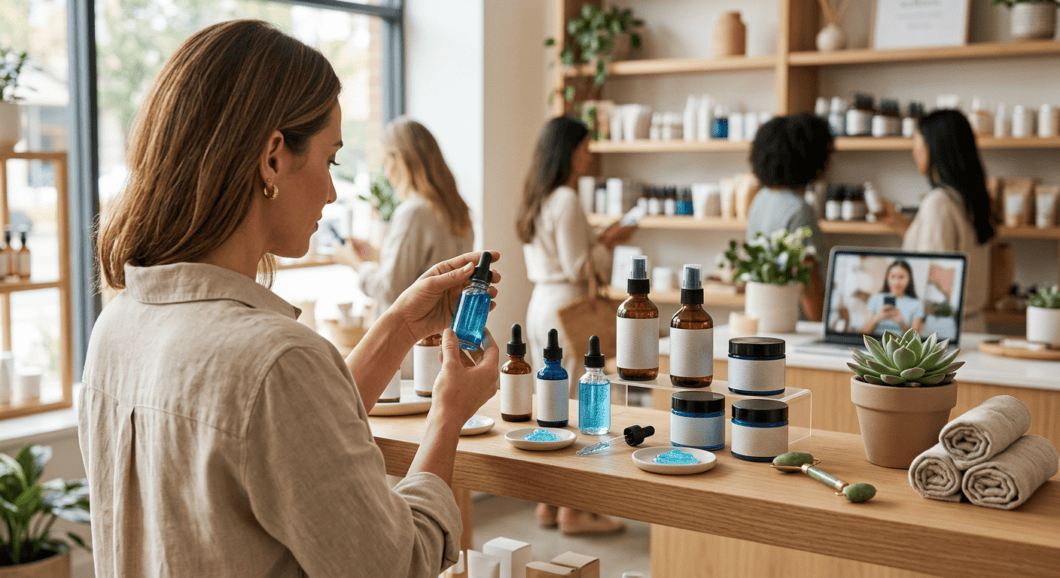
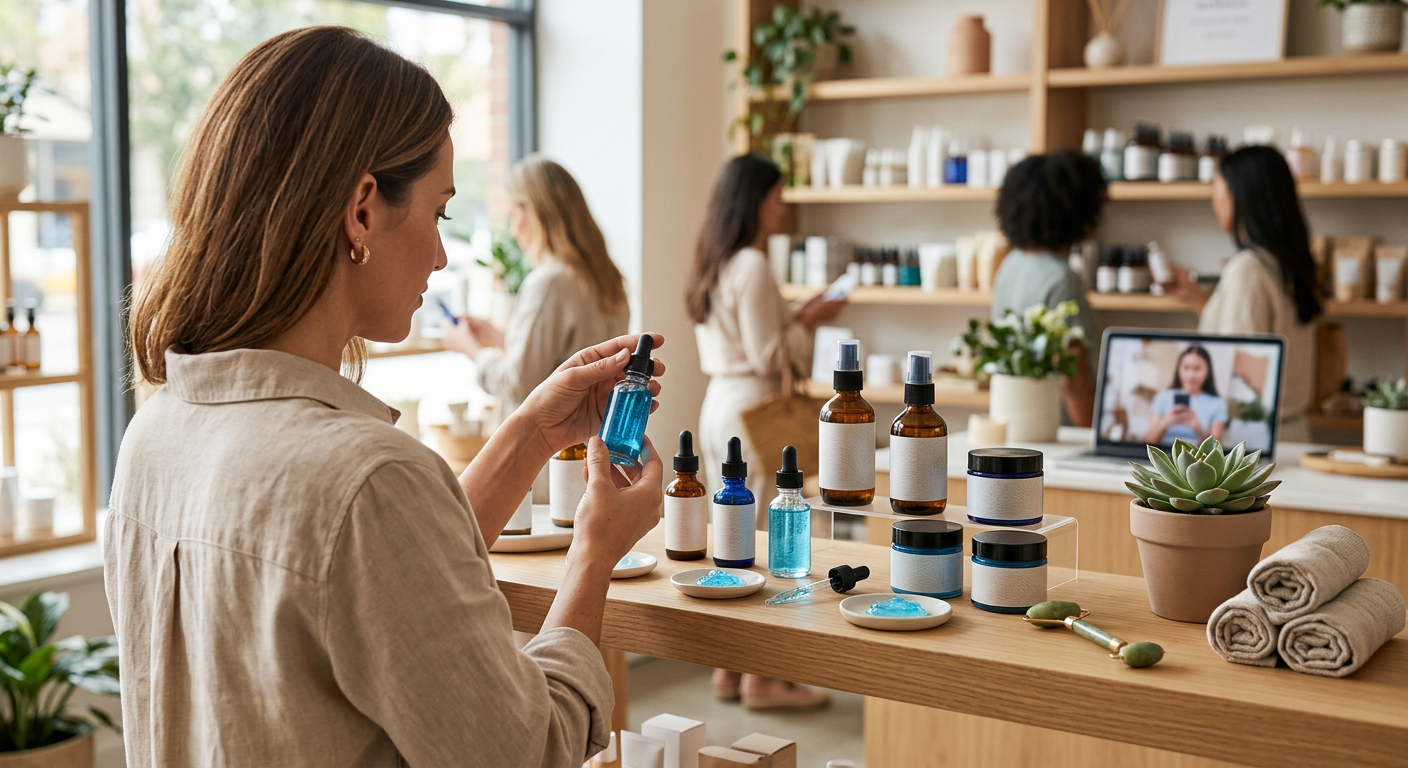
Copper peptides keep showing up. They’re on wellness TikTok, at the beauty counter, in the dermatologist’s Instagram feed. This blue-tinted molecule went from biohacker forums to mainstream skincare in about a season, and the momentum hasn’t slowed. The star is a tripeptide called GHK-Cu, marketed for firmness, repair, and glow, sometimes with the phrase “face lift in a bottle” attached.
Marketing and evidence don’t always agree, though, so the two are worth separating: why are copper peptides everywhere, and does the research back up the attention? What follows is what the data shows.
What Are Copper Peptides?
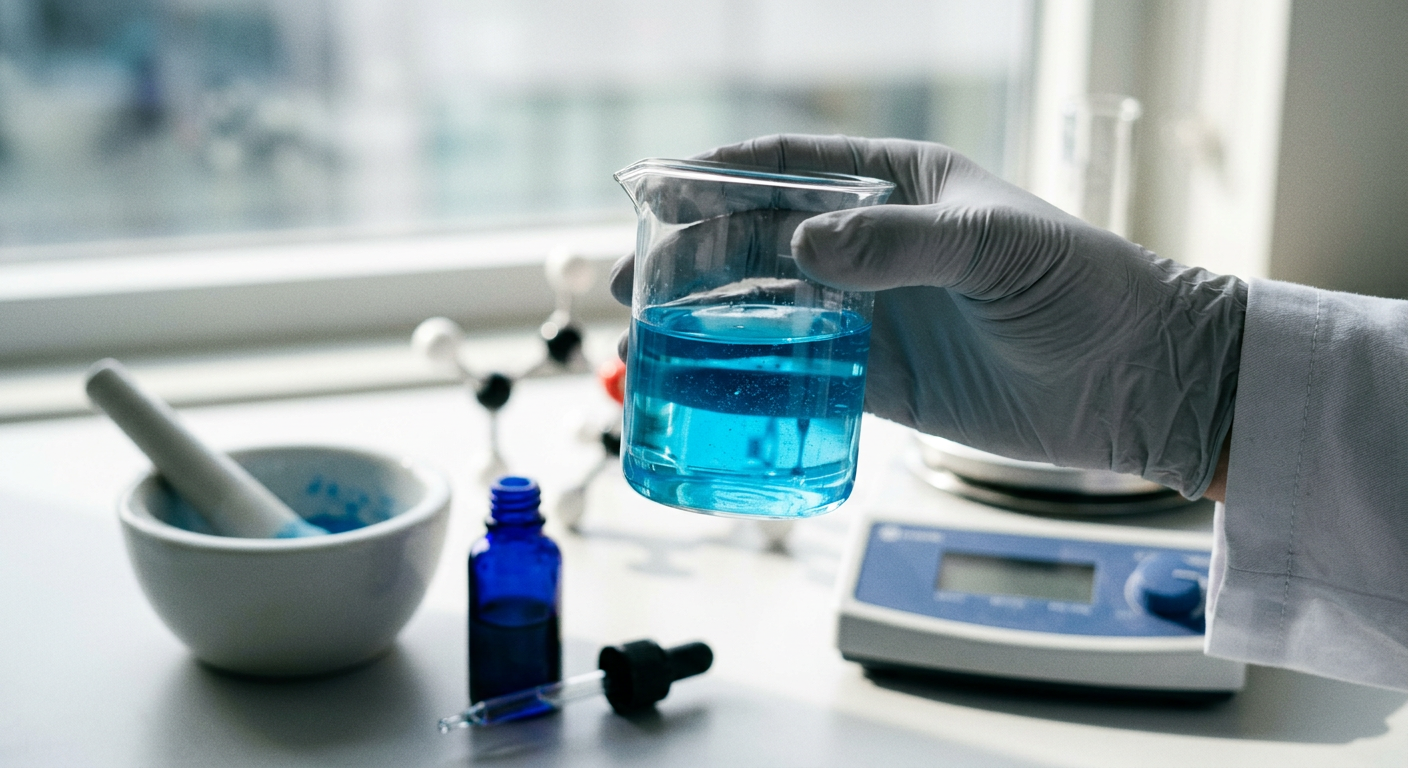
Copper peptides are small chains of amino acids bound to a copper ion. The most studied version is GHK-Cu (glycyl-L-histidyl-L-lysine coupled with copper), a naturally occurring human tripeptide that acts as a cellular signaling molecule.
GHK-Cu occurs naturally in human plasma, saliva, and urine. Research summarized by Koi Research Labs shows that plasma levels of GHK drop with age, from around 200 ng/ml at 20 to roughly 80 ng/ml by 60. That decline tracks with slower wound healing and reduced skin repair, which is part of why researchers started paying attention to supplementing it.
On an ingredient list, GHK-Cu appears as Copper Tripeptide-1. The signature blue color comes from the copper ion, and brands lean on that color as a selling point. Color tells you nothing about concentration or formulation quality, but it photographs well.
Why Copper Peptides Are Trending Now
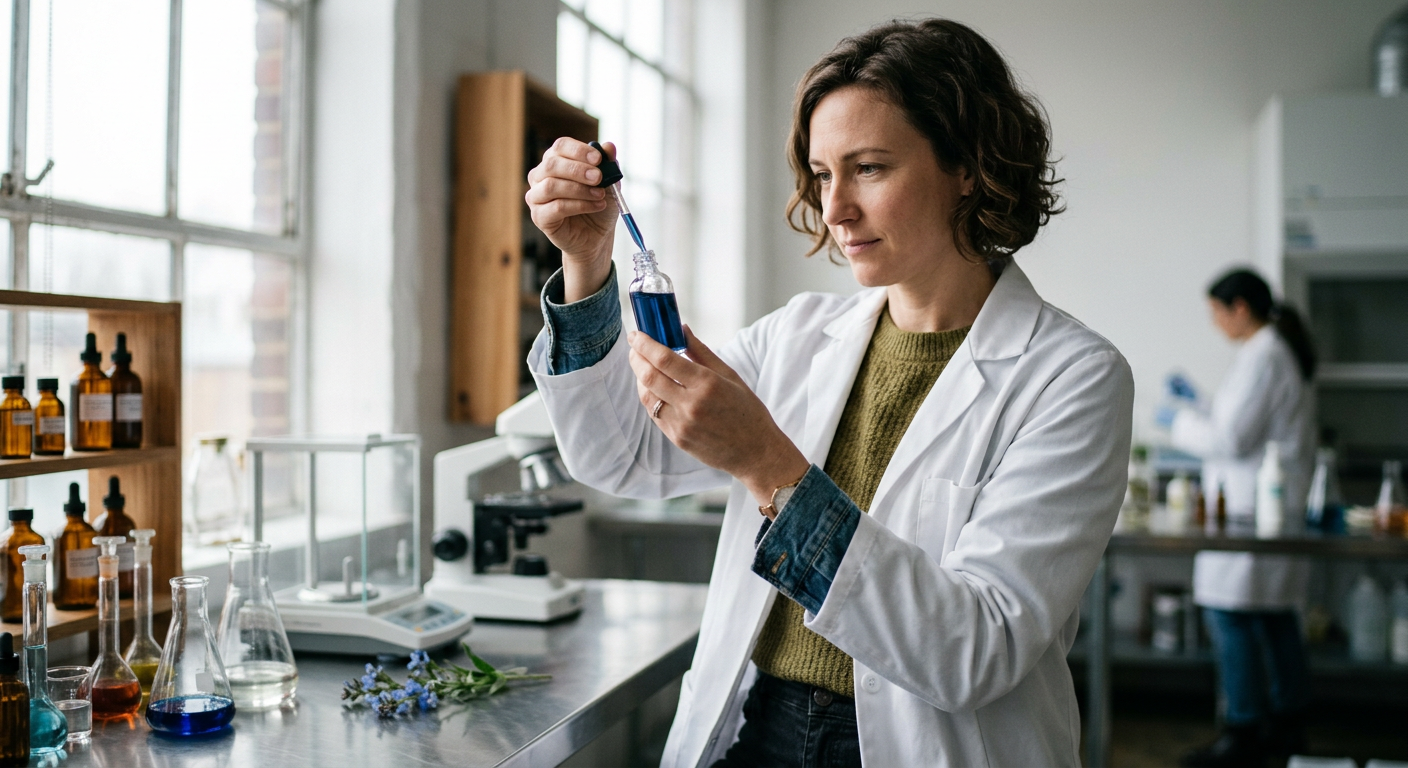
The rise wasn’t an accident. Several forces converged to push copper peptides into the spotlight in 2026.
Peptides Became the New “Actives”
Consumers have moved past retinol and acids into a newer tier of science-coded ingredients. As Inside Industry notes, copper peptides tick the boxes the mainstream wants: advanced-sounding, repair-focused, and generally less irritating than stronger actives.
That last point does a lot of work. Plenty of people are burned out from over-exfoliation and retinoid sensitivity, and they want something that supports the skin without the sting.
The Biohacker-to-Beauty Pipeline
Copper peptides straddle two worlds. They turn up in gentle over-the-counter serums and in conversations about injectables and compounding clinics. That dual identity hands them a credibility halo. When an ingredient appears in both a $30 serum and a clinical research setting, it feels more legitimate to the average shopper, even though the two use cases have little in common.
A Booming Peptide Market
The broader peptide category is expanding fast. The FDA-approved peptide market, led by GLP-1 drugs, is now worth tens of billions of dollars, according to Koi Research Labs. That momentum lifts interest in every peptide, cosmetic ones like GHK-Cu included.
What the Science Actually Says

Copper peptides aren’t fairy dust, and they aren’t magic. The measured position, shared by most dermatologists and researchers, is that these are interesting molecules with real data behind a handful of specific benefits.
The evidence is strongest here:
- Wound healing: GHK-Cu has documented activity in tissue repair and wound closure.
- Collagen and elastin support: Copper peptides stimulate collagen and elastin production, which supports firmness and smooths the look of fine lines over time, per NIOD.
- Antioxidant defense: They contribute to the skin’s antioxidant systems.
- Gene modulation: GHK-Cu influences the expression of a large number of genes tied to repair and regeneration.
The catch, as The Conversation points out, is that results depend heavily on formulation. Poorly formulated copper peptide products are, in one dermatology writer’s blunt phrase, “just blue water pretending to be science.” pH, delivery system, and concentration decide whether the molecule reaches the skin in an active form.
Copper Peptides vs. Other Popular Actives
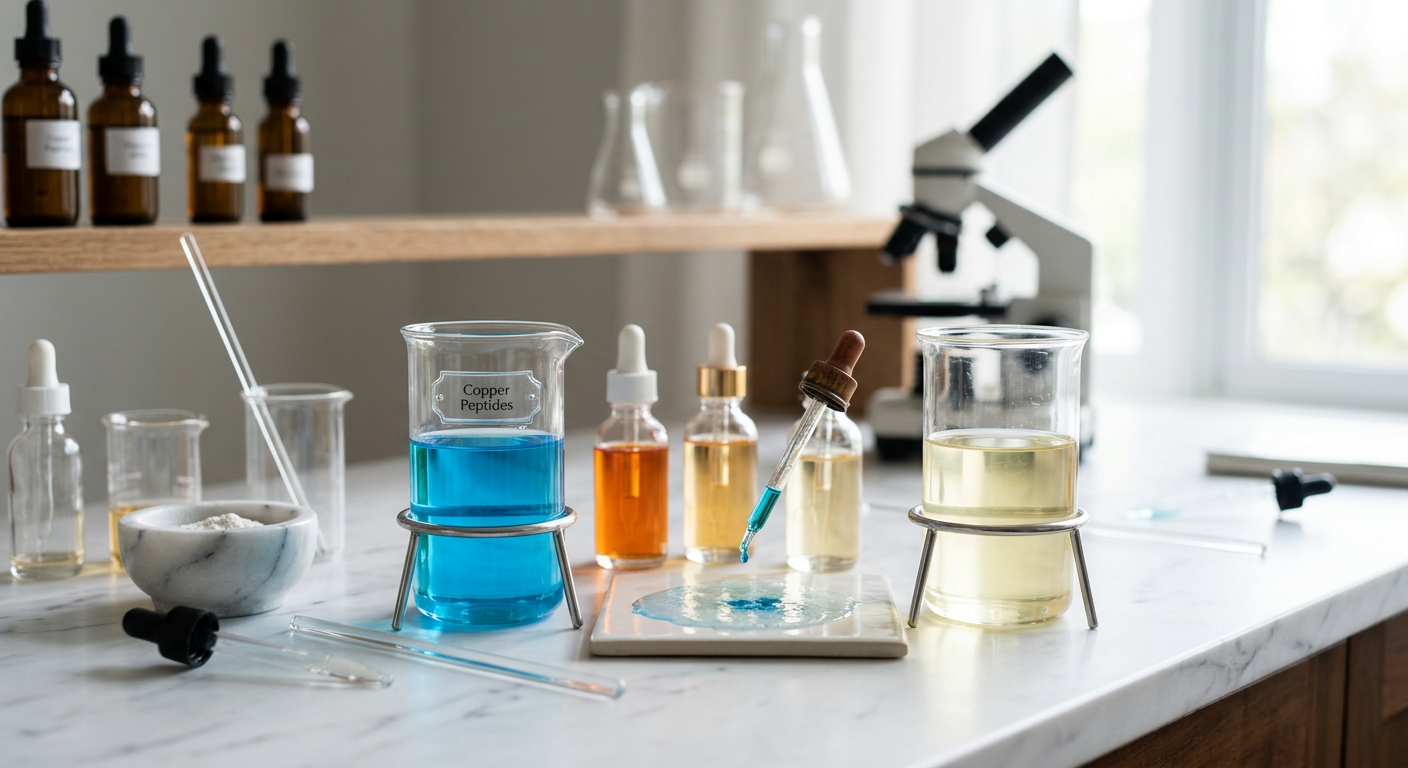
Part of what confuses people is that copper peptides don’t always cooperate with other ingredients. This comparison should help you sequence a routine.
| Ingredient | Primary Benefit | Use With Copper Peptides? | Best Timing |
|---|---|---|---|
| Copper Peptides (GHK-Cu) | Repair, collagen, firmness | — | Night |
| Vitamin C (L-ascorbic acid) | Brightening, antioxidant | Avoid together | Morning |
| Retinol / Vitamin A | Cell turnover, anti-aging | Avoid together | Alternate nights |
| Niacinamide | Barrier support, tone | Generally compatible | Any |
| Hyaluronic Acid | Hydration | Compatible | Any |
Why Vitamin C and Copper Peptides Clash
Vitamin C in its pure L-ascorbic acid form works best at a low pH, while copper peptides prefer a neutral one. As Glimmer Goddess explains, mixing them can destabilize the peptides, and the copper ion can react with the vitamin C, reducing the effectiveness of both.
The fix is timing. Vitamin C in the morning, copper peptides at night. You get the benefits of each without the conflict.
How to Use Copper Peptides Effectively
A few practical rules will keep you from wasting money on products that don’t do much.
Choose the Right Product Format
Copper peptides show up in serums, face creams, eye creams, and even lip balm, according to Copper H2O. Serums usually deliver the highest active concentration, which makes them the best starting point. Look for products that specify their GHK-Cu concentration instead of relying on blue color as proof of potency.
Introduce Slowly and Separate Actives
Apply copper peptides at night, and keep them away from vitamin C and retinoids in the same routine. This protects the molecule’s stability and lowers the risk of irritation.
Watch for Sensitivity
Copper peptides can cause mild irritation or allergic reactions in a small number of people. The Conversation advises stopping immediately if symptoms appear. Used well, they’re a solid choice for anyone who is retinoid-sensitive, dealing with lingering redness, or rebuilding texture after breakouts.
The Bottom Line on Copper Peptides
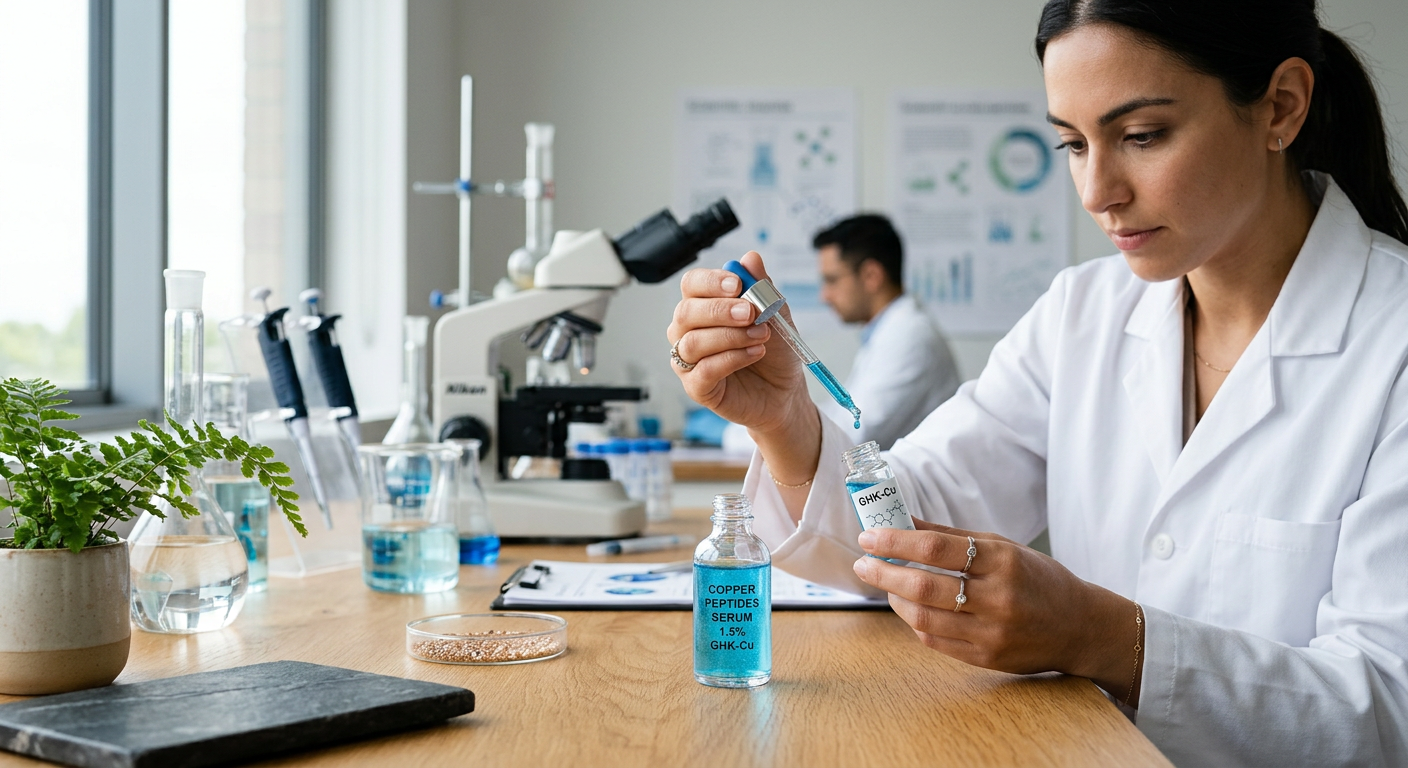
Copper peptides are everywhere in 2026 because they land at the intersection of real science, a booming peptide market, and a consumer shift toward gentler, repair-focused actives. GHK-Cu has legitimate data behind wound healing, collagen support, and antioxidant defense, and its natural decline with age gives the supplementation story a logic that’s easy to follow.
To summarize: copper peptides work best in well-formulated products, at neutral pH, applied at night, and kept apart from vitamin C and retinoids. No miracle, but a worthwhile option, especially for sensitive skin that can’t tolerate stronger actives.
If you want to try them, start with a single well-formulated serum, patch test first, and give it a few months. Our copper peptide layering guide walks through how to build a routine that lets each active do its job.
Frequently Asked Questions
Q: What are copper peptides used for?
Copper peptides, especially GHK-Cu, support wound healing, collagen and elastin production, and antioxidant defense. In skincare, they help improve firmness and reduce the appearance of fine lines over time.
Q: Can I use copper peptides with vitamin C?
Not at the same time. Vitamin C works at a low pH and can destabilize copper peptides, which prefer a neutral pH. Use vitamin C in the morning and copper peptides at night.
Q: Are copper peptides safe for skin?
For most people, yes. A small number of users experience mild irritation or allergic reactions, so patch test first and stop use if symptoms appear.
Q: How long do copper peptides take to work?
Collagen and elastin changes develop gradually, so plan to use copper peptides consistently for several months before you see improvements in firmness and texture.
Q: What is GHK-Cu?
GHK-Cu is glycyl-L-histidyl-L-lysine bound to a copper ion, a naturally occurring human tripeptide that acts as a cellular signaling molecule. It is listed in cosmetics as Copper Tripeptide-1.
Q: Why do copper peptides look blue?
The blue color comes from the copper ion. Brands often use it as a selling point, but color alone doesn’t indicate concentration or formulation quality.