



By late November, a lot of us are running on fumes. The month lands in an awkward gap: the holidays are bearing down, the daylight keeps shrinking, and December’s logistics are already stacking up in the back of your mind. A Talker Research survey of 2,000 Americans found that most respondents feel overdue for a reset (Talker Research). November offers a short stretch of relative calm to rest and recharge before the end-of-year scramble.
What follows is a set of practical, low-cost ways to look after your body and mind before the holiday rush arrives.
Why November Is the Right Time to Reset

November sits in a natural pause between autumn’s momentum and winter’s slowdown. The days shorten, the pace eases, and the body often starts asking for more rest. Spending this month on the basics gives you a buffer for December’s demands (Ordinary and Happy).
Self-care isn’t indulgence. The term is shorthand for the activities that support your physical and mental health, reduce stress, and keep your energy up (GoodRx). The aim isn’t a flawless routine. It’s a few habits you’ll actually stick to.
No single checklist works for everyone. As licensed counselor P. Jeremy Dew told Healthline, it helps to “think about the needs currently going unmet and the self-care that is uniquely fit to meet those needs” (Healthline). Start with whatever feels most depleted and build from there.
Protect Your Physical Health First
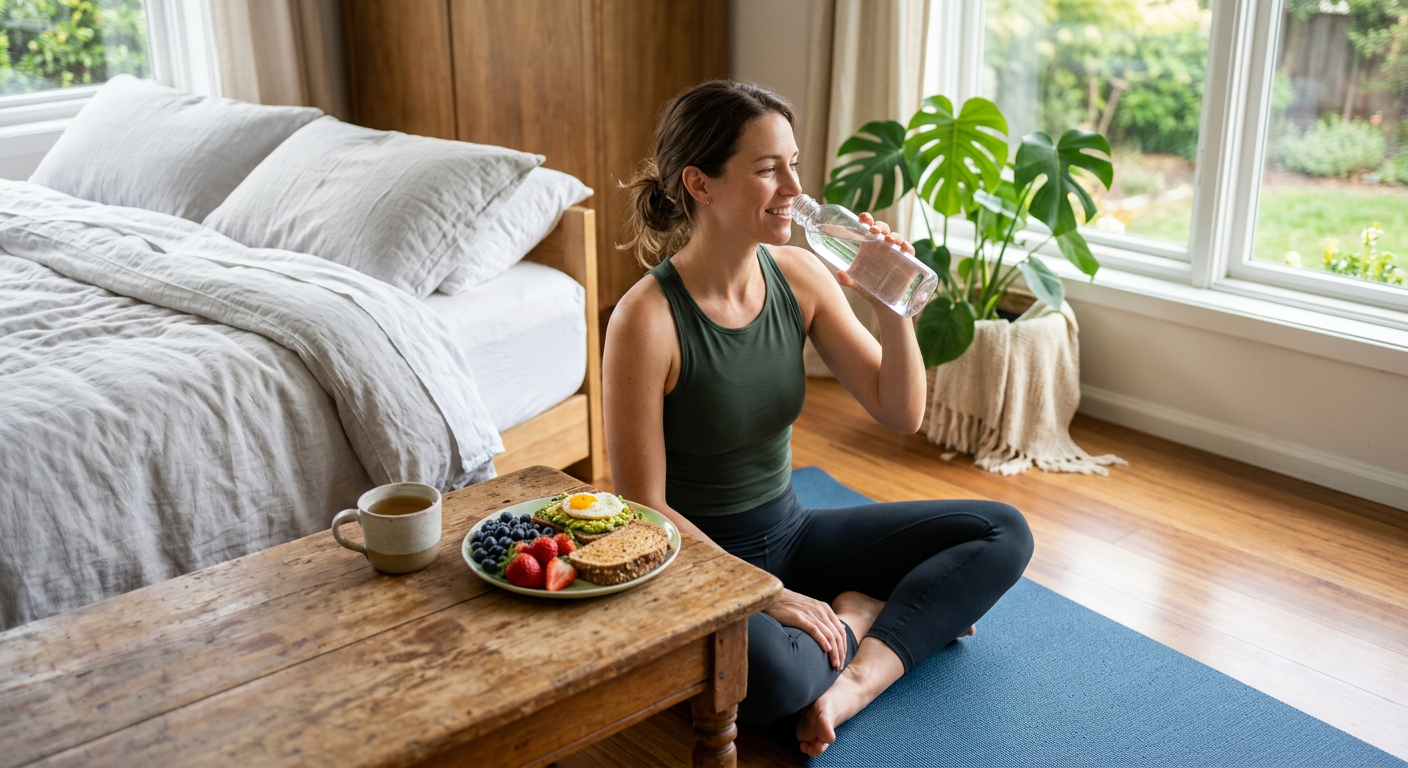
Physical self-care comes down to the fundamentals: sleep, movement, nutrition, and hydration. All four get harder to maintain once the weather turns cold and the calendar fills up, which is the argument for shoring them up now.
Prioritize Sleep
Most adults need somewhere between 7 and 9 hours a night (Healthline). Good sleep supports immune function and mental clarity, and you’ll be drawing on both in December. If winding down is the problem, try a relaxation exercise or put the phone away at least 30 minutes before bed (Mental Health First Aid).
Keeping consistent wake and sleep times, weekends included, is one of the more effective habits. Alvarado Therapy notes that it can improve nervous system regulation and sleep quality (Alvarado Therapy).
Keep Moving and Stay Fueled
Physical activity guidelines suggest at least 150 minutes of moderate-intensity activity per week (Healthline). Yoga, walking, or stretching improves circulation and lowers stress, and none of it requires a gym membership (The Divine Magazine).
Food matters too. Build meals around fruits, vegetables, and whole grains, and work in fatty fish, leafy greens, and nuts (Mental Health First Aid). Cold weather tends to blunt the sense of thirst, so keep hydration on your radar with herbal teas or warm water with lemon (The Divine Magazine).
Care for Your Mind and Emotions

Mental and emotional self-care help you process the year you’ve had and get ready for the one coming. November’s slower rhythm suits reflection and intention-setting.
Gratitude journaling is a good place to start. Writing down three things you’re grateful for, or three reasons you’re proud of yourself, takes a few minutes and shifts where your attention lands (Ordinary and Happy). Mindfulness and deep breathing offer similar payoffs with even less setup.
When stress spikes, grounding techniques help. The 5-4-3-2-1 sensory method has you name five things you see, four you can touch, three you hear, two you smell, and one you taste (Alvarado Therapy). It’s a quick way to pull yourself back to the present when anxiety takes over.
Your November Self-Care Checklist

This quick-reference table collects small actions you can match to your mood and your schedule. Pick a few that appeal to you and ignore the rest.
| Category | Try This | Time Needed |
|---|---|---|
| Physical | Aim for 7–9 hours of sleep | Nightly |
| Physical | Walk, jog, or stretch | 15–30 min |
| Physical | Drink herbal tea or warm lemon water | 5 min |
| Mental | Journal 3 things you’re grateful for | 10 min |
| Mental | Try 5-4-3-2-1 grounding | 2 min |
| Emotional | Call or meet a friend | 20+ min |
| Cozy | Light a candle, take a bubble bath | 30 min |
| Reset | Tidy your space for 15 minutes | 15 min |
Most of these cost little or nothing and work fine from home (Ordinary and Happy). Think of the list as a toolbox. Different days call for different tools (GoodRx).
Create Cozy Rituals and Protect Your Energy

November rewards slowing down, and cozy rituals tell your brain it’s time to rest. A quiet morning habit does a lot of the work: make tea or coffee, open the curtains, light a candle before the day gets loud (Our Little House in the Country).
Protecting your energy also means guarding your time. Saying no to one thing now keeps you from feeling drained or resentful later, and it frees you up to actually enjoy whatever you do commit to (Exhale Psychology). Treat downtime like an appointment you can’t move, and put it on the calendar.
A no-screen break or short digital detox can reset your nervous system as well (GoodRx). Thirty minutes away from notifications is enough to catch your breath.
Connect With People Who Lift You Up

Self-care isn’t always a solo activity. Friendships affect everything from immune strength to heart disease risk, and strong social ties are linked to longer life (BBC). November is a good window to reconnect before December scatters everyone’s schedules.
Small gestures do the job. Call someone you love, meet a friend for brunch, hug a person who matters to you (GoodRx). Celebrating other people’s good news by asking questions and showing real enthusiasm lifts your own mood and strengthens the relationship at the same time (BBC).
If the overwhelm persists no matter what you try, reach out for professional support. In the United States, you can call SAMHSA’s National Helpline at 1-800-662-4357, or call 988 for immediate assistance (GoodRx).
A Practical Reset Before December
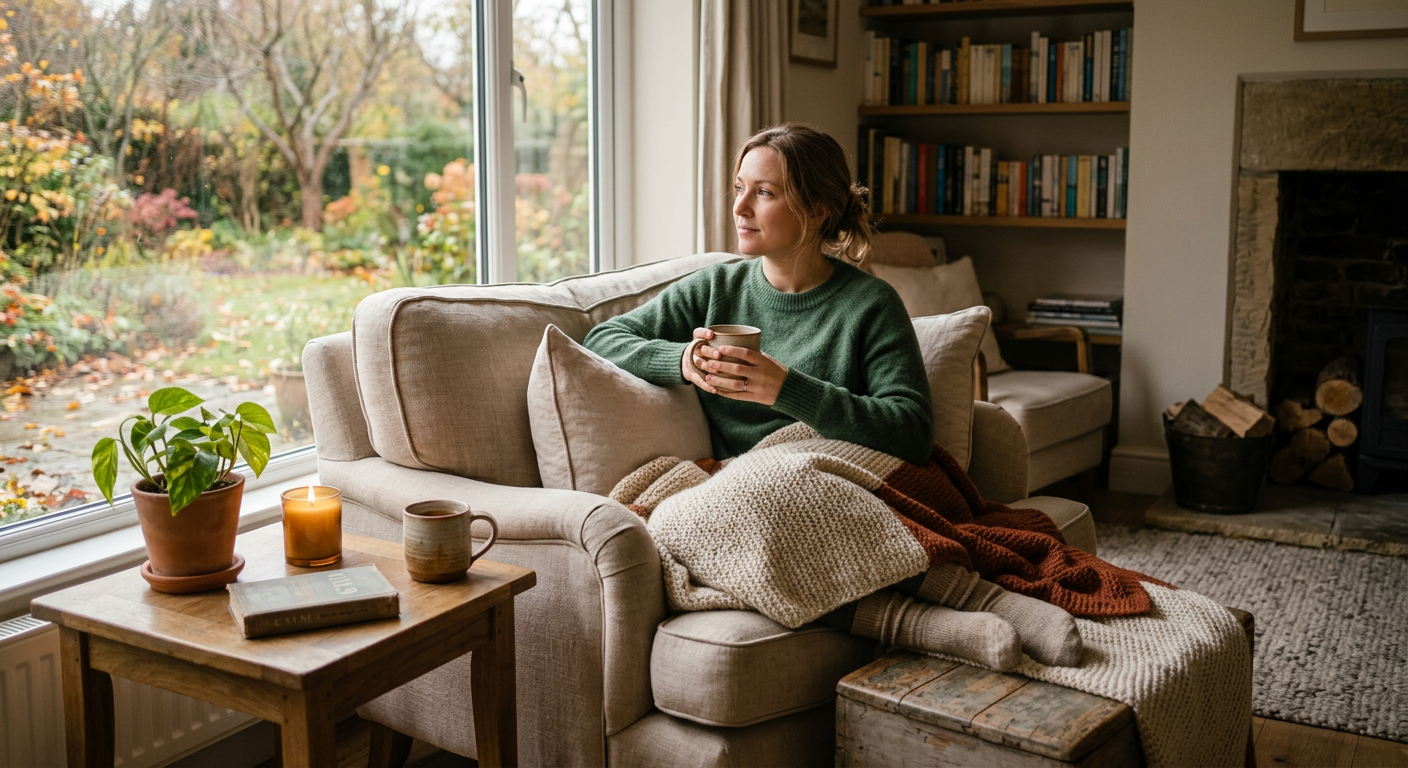
November is a rare chance to catch up on rest before the busiest stretch of the year. Cover the fundamentals first: 7 to 9 hours of sleep, regular movement, decent nutrition, and water. Then layer in gratitude journaling, grounding exercises, cozy rituals, and time with the people who matter.
Nobody expects you to do everything on the checklist. Pick a few habits that hit your most pressing needs and defend the time to follow through. Choose three items from the table above and schedule them this week. December will feel a lot more manageable for it.
Frequently Asked Questions
Why is self-care especially important in November?
November bridges autumn and winter, with shorter days and the approaching holiday rush that can drain your energy. Prioritizing rest and reflection now helps you enter December feeling steady rather than depleted.
What are some easy self-care practices I can start with?
Begin with the basics: aim for 7 to 9 hours of sleep, drink herbal tea or warm lemon water, and walk or stretch for 15 to 30 minutes. Pair these with a short gratitude journaling session to support both body and mind.
How can I stay motivated to follow a self-care routine?
Treat self-care like an appointment on your calendar and protect that time. Choose a small number of habits that address your real needs rather than overloading yourself, which makes consistency far easier.
Are there specific foods that support wellness in November?
Build meals around fruits, vegetables, and whole grains, and include fatty fish, leafy greens, and nuts for added nutrients. Cooking at home also doubles as a relaxing ritual during colder months.
How can I manage screen time during the fall?
Try a no-screen break or digital detox, even if it is only 30 minutes. Stepping away from your phone at least 30 minutes before bed also improves sleep quality and helps you wind down.
What if I feel overwhelmed despite practicing self-care?
Self-care supports well-being but does not replace professional help. If you feel persistently overwhelmed, contact SAMHSA’s National Helpline at 1-800-662-4357, or call 988 for immediate support.