

Your favorite summer floral can turn thin and fleeting the moment temperatures drop. That isn’t your imagination. Cold air changes how fragrance behaves on skin, and layering is the fix: pair a spicy scent with a floral one and you build warmth, depth, and staying power that neither delivers alone. The result reads as airy and seductive at once, a composition that unfolds slowly across a long winter day.
This guide covers why cold weather rewards layering, which spicy and floral notes work together, and how to apply them for a balanced signature scent.
Why Cold Weather Changes How Fragrance Performs
Fragrance is chemistry, and temperature is one of its biggest variables. According to Forbes, cooler air slows the evaporation of scent molecules, so compositions unfold more gradually and linger closer to the body. Richer notes get more room to work, and the overall effect reads deeper and more intimate.
That slowdown costs delicate florals. Top notes burn off faster in winter air, which is why Floral Street recommends applying scent to moisturized skin and pulse points, and even misting a scarf for extra mileage.
Spice earns its place at this point. Clove, cardamom, saffron, and pepper are heavier and slower to evaporate, so they anchor lighter florals and keep them present long after they’d otherwise vanish. The pairing solves a seasonal problem rather than mixing two scents for novelty.
Why Spicy and Floral Make a Winning Winter Pair
Good layering combinations enhance each other without competing, and spice-plus-floral works because the two profiles do different structural jobs.
Clive Christian advises against pairing florals with other florals, recommending instead that you combine florals with contrasting families like oriental and spicy notes. The brand describes spice-spiked florals as “rich and exotic.” The contrast creates tension; the shared warmth keeps it cohesive.
The industry is heading the same direction. The Winter and early Spring 2026 fragrance landscape leans on contrast, with glowing ambers, saffron, and resinous woods bringing a molten sensuality up against refined florals. Layering lets you build that same contrast from bottles you already own.
The role each scent plays
- The floral provides lift, brightness, and personality. Rose, jasmine, peony, and poppy read as the “face” of the blend.
- The spice provides grounding, warmth, and longevity. Cardamom, clove, saffron, and pepper give the composition depth and a smoldering edge.
As Electimuss puts it, let one fragrance provide lift while the other grounds the composition with depth, and designate one as the base and the other as the accent.
Best Spicy and Floral Pairings for Winter
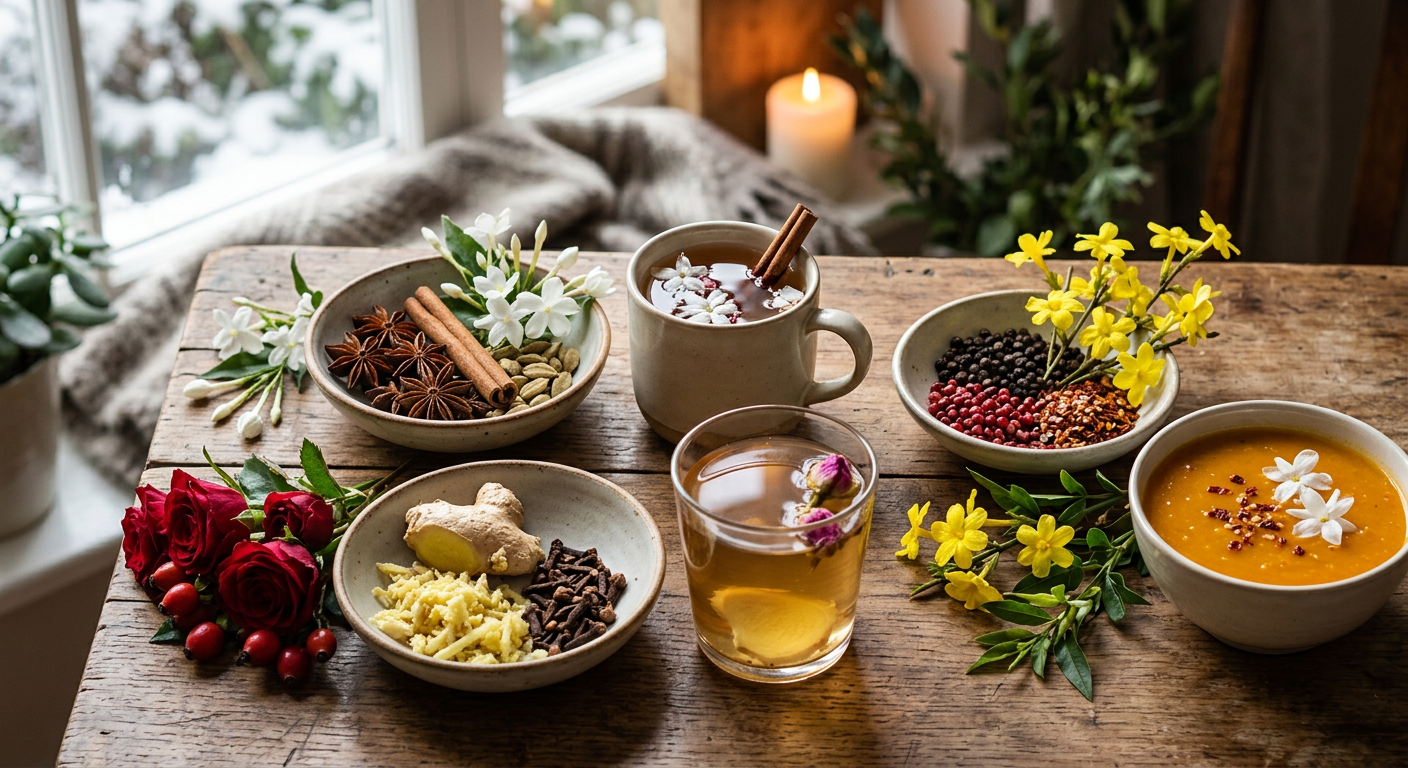
The quickest way to start is with pairings that practitioners already recommend. Use the table below as a cheat sheet of go-to combinations.
| Floral Note / Scent | Spicy Partner | Why It Works |
|---|---|---|
| Rose | Saffron or oud | Classic floral-woody depth; sensual and long-lasting |
| Jasmine or peony | Vanilla + spice | Sweetness rounds delicate petals for cozy warmth |
| White florals | Fig, mint, and spice | Cool-meets-warm contrast that feels airy and seductive |
| Scarlet poppy | Tonka and barley | Crimson drama grounded by cereal-warm richness |
| Soft flowery scents | Warm, earthy aromas | Earthy warmth gives carefree florals winter gravitas |
Woman & Home suggests that floral fans pair soft flowery scents with warm and earthy aromas, pointing to Jo Malone’s Scarlet Poppy, which underscores oversized petals with tonka and barley warmth.
For something more complex, the Forbes experts highlight a pairing where lush white florals meet fig crème, mint, and spice for a cool-yet-warm contrast. The principle scales: a bright floral up top, a spicy or resinous base below.
How to Layer Spicy and Floral Scents Correctly
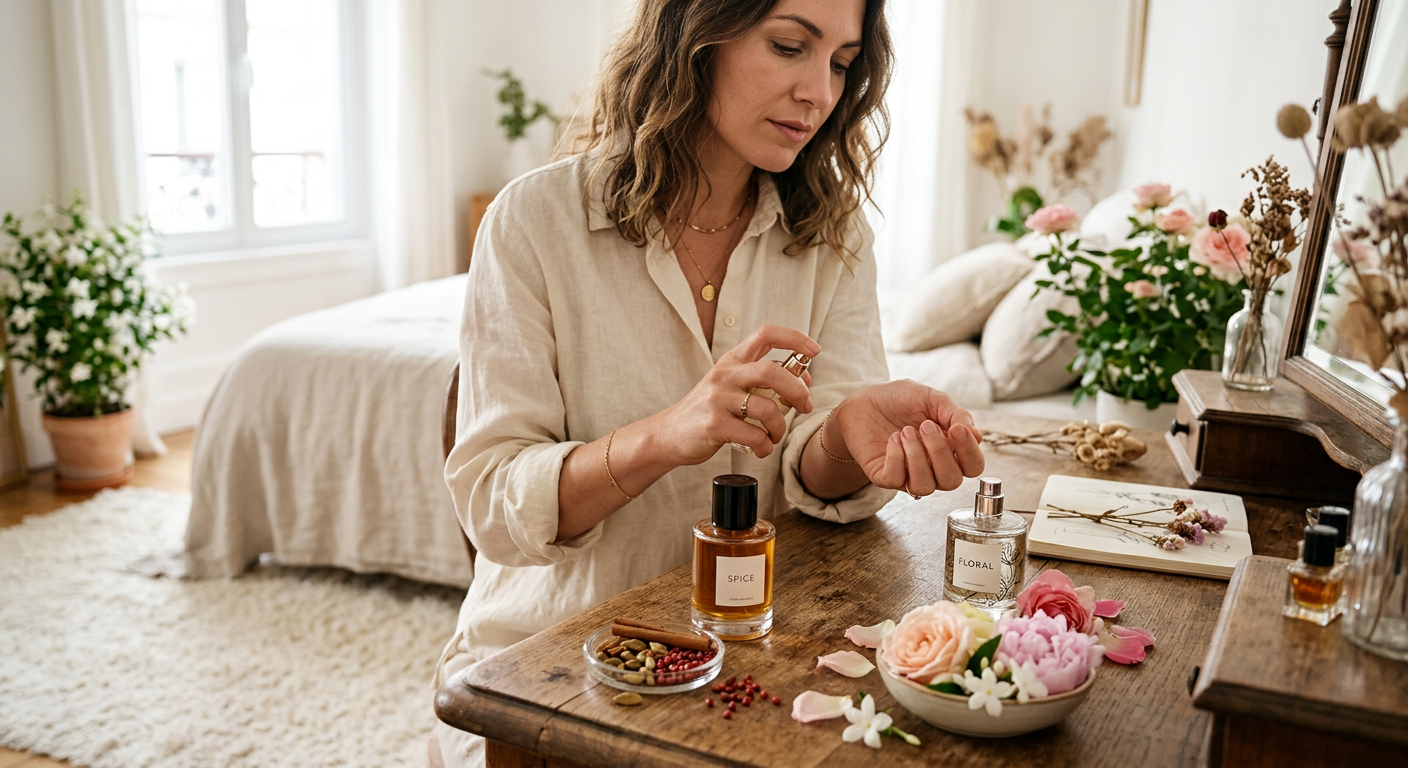
Layering is intuitive, not technical. As Yvan Jacqueline tells Marie Claire, the easiest approach is to decide what you want to add, whether warmth, freshness, or contrast, and go from there.
A few principles keep your blend balanced rather than muddy.
Match the intensity
Memo Paris warns against overpowering a delicate fragrance with an intensely spicy one, so choose fragrances of similar strength. Clive Christian makes the same point, advising you to pair perfumes of similar concentration so one doesn’t overwhelm the other.
Build from base to accent
Apply the heavier, longer-lasting fragrance first, then add the brighter floral on top. Floral Street recommends starting with a lighter mist, then building with a deeper eau de parfum in a complementary family. Jacqueline adds a refinement: apply one fragrance to your pulse points for longer-lasting intensity, then spray the other more broadly to create diffusion.
Use scented skincare as a base
One of the most underrated moves, according to Jacqueline, is applying fragrance over a scented body cream. The added hydration helps the scent sit better on the skin and diffuse more naturally, which matters most in dry winter conditions.
Give it time to settle
Don’t judge a blend in the first thirty seconds. Ulta recommends waiting 20 to 30 minutes to see how two scents settle together, and Memo Paris suggests checking in at 10, 30, and 60 minutes.
Common Mistakes to Avoid

Even a promising pairing can go wrong with poor execution. Watch for these pitfalls before you commit to a combination for the day.
- Over-layering. Memo Paris advises sticking to two scents to start, so you can learn how they interact before adding a third.
- Pairing like with like. Two heavy spices or two loud florals compete rather than complement. Contrast is the point.
- Ignoring the indoor shift. Scentapedia notes that a pairing that feels restrained outside can turn noticeable in a heated room, so don’t over-apply because you struggled to smell it in cold air.
- Skipping a shared thread. A single common note, such as vanilla, rose, or saffron, creates continuity between layers and keeps the blend from feeling like two separate perfumes fighting.
Building Your Winter Signature Scent
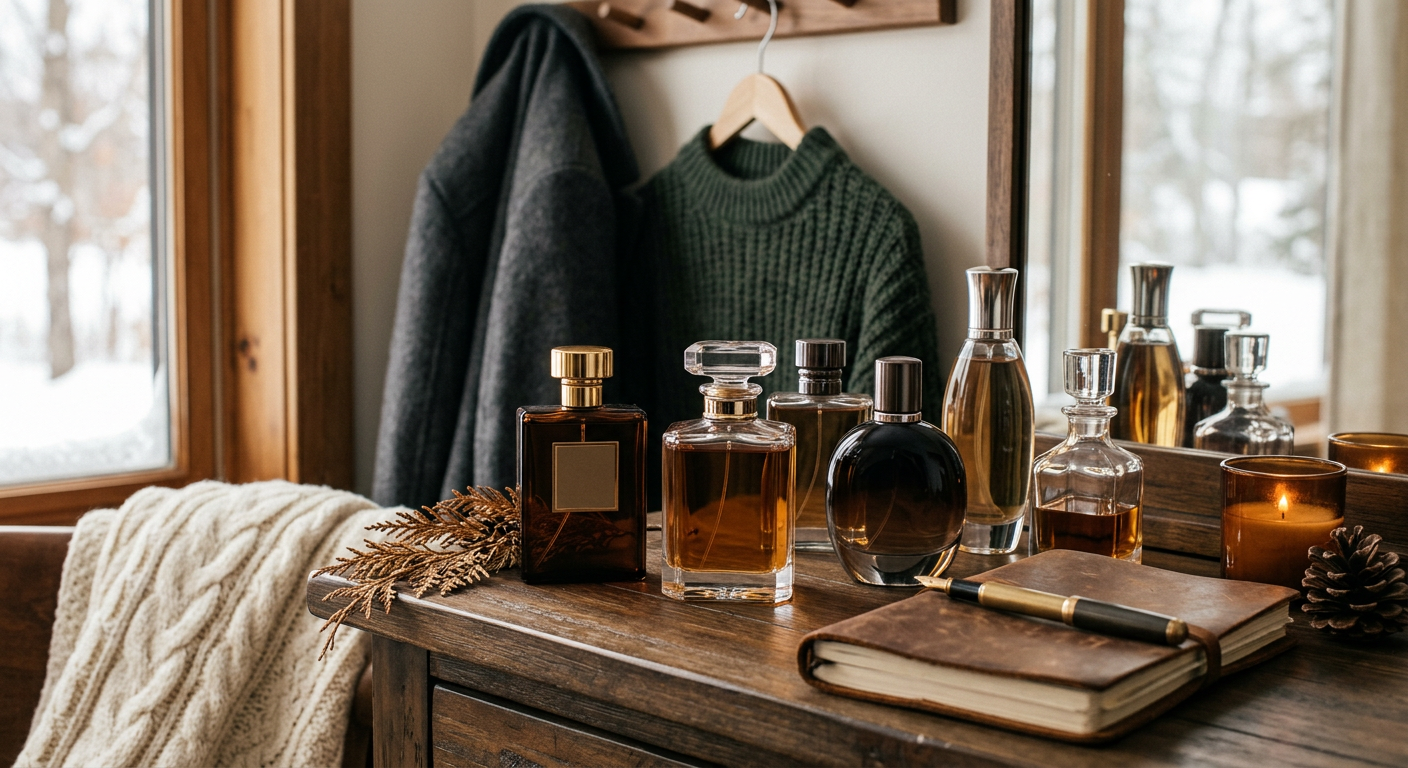
Treat your fragrance wardrobe the way you treat your clothing. You don’t wear the same outfit every day, and the same logic applies to scent. Layering turns a few bottles into dozens of possible expressions.
Start with a neutral base so you can experiment safely. Memo Paris notes that a light musky or amber scent makes a great canvas to layer upon, which makes it an ideal foundation for testing bolder florals and spices on top.
From there, treat every pairing as a small experiment. Wear each fragrance alone first so you know its character, then combine them and reassess at the one-hour mark. Over time you’ll learn which spicy base makes your favorite rose bloom, and which clove-heavy accord turns a summer jasmine into something that belongs by candlelight.
Conclusion
Winter rewards depth, and fragrance layering gives you a direct way to create it. Cold air slows evaporation and mutes delicate florals, but a well-chosen spice anchors those notes and extends their life. The formula is straightforward: let the floral provide lift and personality, let the spice provide grounding and warmth, match their intensities, and give the blend time to settle.
Start with one proven pairing from the table above, layer it over a scented body cream, and assess it after an hour indoors. Then dig into your own fragrance wardrobe. The goal isn’t a rulebook but a signature that’s entirely yours.
Frequently Asked Questions
What floral and spicy notes layer best in winter?
Rose pairs beautifully with saffron or oud, while jasmine and peony shine when grounded by vanilla and spice. White florals combined with fig, mint, and warm spice create an airy yet seductive winter contrast.
Should I apply the spicy or floral scent first?
Apply the heavier, longer-lasting fragrance first as your base, then layer the brighter floral on top. A good technique is spraying one scent on pulse points for intensity and misting the other more broadly for diffusion.
How many fragrances should I layer at once?
Stick to two scents when you’re starting out, as Memo Paris recommends. That lets you understand how the two interact before adding a third layer and risking a muddy, overpowering result.
How long should I wait to judge a layered fragrance?
Give it at least 20 to 30 minutes before deciding, since scents need time to settle together. Reassess again after 60 minutes and in a heated indoor space, where the blend often reads more strongly than it does outdoors.
Can I layer fragrance with body lotion or cream?
Yes, and it’s one of the most underrated techniques. Applying fragrance over a scented body cream adds hydration that helps scent sit better on the skin and diffuse more naturally, which is especially useful in dry winter air.
Do citrus or fresh notes still work in winter?
They can, when paired with warmth. Bergamot or mandarin layered with vanilla, woods, or spice brings year-round brightness without feeling out of season in colder months.