


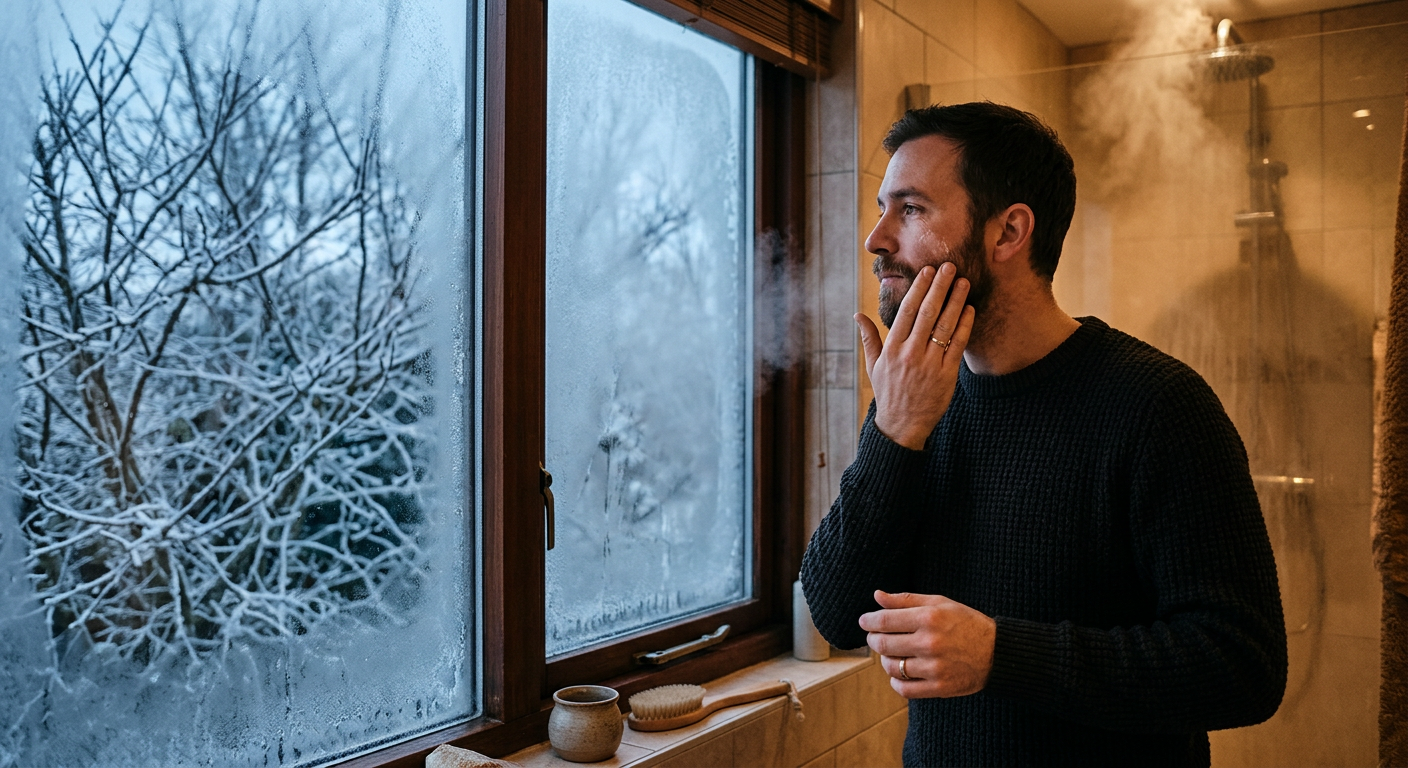
Around January, your skin starts to turn on you. Cold air outside, dry heat inside, and the combination pulls moisture out of your face faster than it can replace it. The barrier weakens, flaking starts, and your skin looks dull. The routine that worked fine in July stops working when the temperature drops. Fixing it doesn’t take a cabinet full of products or a dermatologist on retainer. A few swaps and some consistency will keep your skin comfortable and hydrated until spring.
More men are bothering to do this at all. Strive Skin’s 2026 market data puts facial skincare use among men at 52%, rising to 68% for Gen Z. Whether you’re starting from scratch or patching up a routine that’s falling apart, this is what matters.
Why Winter Wrecks Your Skin

Cold weather comes at your skin from several directions. Lower temperatures slow down oil production, so your skin runs drier and tightens and flakes more easily. Wind strips moisture and weakens the barrier, which brings on irritation and redness.
Indoor heating compounds it. Low humidity from both the winter air and forced-air systems pulls water straight out of your skin. As dermatologist S. Max Vale, MD, puts it in UW Medicine’s winter skincare guide, “Colder and drier air contributes to increased transepidermal water loss, which is the process of water evaporating through the outer layer of the skin.” The result is less hydration, a weaker barrier, and skin that’s quicker to react to irritants and eczema.
Where You’ll Feel It First
The dryness isn’t uniform. Cheeks and foreheads get dry, flaky patches. Beards and stubble dry out and start to itch. Skin gets more sensitive after shaving, and the thin skin around the eyes dehydrates. Hands and lips crack first because they’re the most exposed. Add a day of skiing and you can stack sunburn and windburn on top.
Start with a Gentler Cleanser

Cleansing still matters in winter, but a harsh face wash works against you. Clarifying or “deep-cleansing” formulas strip the natural oils your skin needs most this time of year. The goal is to clear daily buildup without wrecking the barrier that’s protecting you.
Switch to a gentle, fragrance-free cleanser and wash with lukewarm water instead of hot. Hot water feels good on a cold morning, but it pulls out natural oils and leaves your face raw. Wash morning and night, working the cleanser in for a few seconds before you rinse.
Men’s skin produces more sebum than women’s, according to Ulta Beauty’s men’s routine guide, so cleansing still does real work against clogged pores. Just pick a formula that doesn’t leave your face tight.
Upgrade to a Richer Moisturizer

Moisturizing is the one thing you can’t skip in winter. The light lotion you grab in summer can’t keep pace with cold-weather water loss. You want something thicker and more occlusive.
New York dermatologist Doris Day, MD, told Valet. to look for creams that contain oil, which traps moisture better than water-based lotions. Her tip: check that oil shows up in the first five ingredients, so you know it’s a real part of the formula. UW Medicine offers an even simpler test. If the moisturizer pumps out of a bottle, it’s probably too thin for winter. The thick stuff in a jar usually delivers more.
Look for These Ingredients
Dermatologists keep coming back to the same short list of barrier-supporting ingredients:
- Ceramides strengthen the skin barrier and hold hydration in against wind and cold.
- Hyaluronic acid pulls water into the skin.
- Niacinamide firms up the barrier, smooths rough texture, and evens out tone. Men’s Health notes that a 10% niacinamide formula gets to work right away on skin stressed by cold air and indoor heat.
- Vitamin B5 soothes and helps skin hang onto moisture.
- Squalane mimics your skin’s own oils for lightweight, non-greasy moisture.
As dermatologists told Shortlist, “The simplest way to protect skin is to boost hydration and barrier support: use a gentle, fragrance-free cleanser, followed by a rich moisturiser containing ceramides or hyaluronic acid twice daily.” Put the moisturizer on right after washing, while your skin is still slightly damp, so you trap water before it evaporates.
Don’t Skip Sunscreen in Winter

Sunscreen isn’t a summer-only product. You need sun protection year-round, snow or no snow. Snow glare actually bumps up your UV exposure, and a day of winter sports leaves you in reflected sunlight for hours.
Pick a broad-spectrum SPF with an oil-free, non-comedogenic formula so it won’t clog pores or set off breakouts under your cold-weather gear. Water-resistant formulas hold up better against sweat and wet conditions on the slopes. Apply it every morning as the last step, after moisturizer.
Making SPF a daily habit now pays off down the line. Consistent protection covers both the immediate sensitivity and the long-term sun damage that keeps adding up.
Protect Your Hands, Lips, and Body

Your face isn’t the only thing winter goes after. Hands take the worst of it because they’re exposed all day and washed constantly. Skip the hand cream and you’ll have cracked, irritated knuckles by week’s end. Use one with squalane, niacinamide, and soothing extracts to keep the skin from splitting.
Keep a lip balm on you at all times. Lips have no oil glands, so they chap and crack before almost anything else. Reapply through the day, and always before you head outside.
With your body, get ahead of it. Hydrate before you feel the tightness or spot the scratchy patches. Apply body lotion right after you shower, while skin is still damp, for even coverage and better absorption. Dove Men+Care suggests trading harsh soap for a sulfate-free, glycerine-based body wash and keeping showers warm rather than hot, held to 5 to 10 minutes.
A Simple Winter Routine You Can Build Under $100

This doesn’t have to be complicated. A Men’s Health grooming editor priced out a complete winter face routine at about $71, comfortably under $100. Here’s how it breaks down.
| Step | Product | When | Why It Matters |
|---|---|---|---|
| 1 | Gentle cleanser | AM + PM | Removes buildup without stripping oils |
| 2 | Hydrating serum | AM + PM | Delivers niacinamide or hyaluronic acid |
| 3 | Rich moisturizer | AM + PM | Locks in hydration, repairs barrier |
| 4 | Eye cream | AM + PM | Protects delicate, dehydration-prone skin |
| 5 | Broad-spectrum SPF | AM | Guards against reflected winter UV |
| 6 | Hand cream | As needed | Prevents cracking and irritation |
Work lip balm and body lotion into your day alongside these. The order matters: cleanse first, then go thinnest to thickest, and finish with SPF in the morning.
Everyday Habits That Multiply Results
The products do most of the work, but a few daily habits protect what you’ve spent:
- Drink water through the day.
- Skip very hot showers, which strip natural oils.
- Run a humidifier to offset dry indoor heat.
- Cover exposed skin against cold wind outdoors.
- Exfoliate once a week to clear flaky buildup so your moisturizer can penetrate.
Key Takeaways and Your Next Step

Winter calls for a seasonal upgrade to your routine, the same way you swap summer shirts for wool. Move to a gentler cleanser, step up to a richer ceramide-based moisturizer, keep the SPF going, and protect your hands, lips, and body before the damage starts. The mechanism is straightforward: cold air and indoor heating drive water out of your skin, so your job is to put it back and seal it in.
The whole routine runs under $100 across six steps and a few daily habits. Start with the two that matter most this week, a hydrating cleanser and a thick, jar-based moisturizer. Grab them on your next store run, use them morning and night, and your skin will feel better before the first thaw.
Frequently Asked Questions
How often should I moisturize in winter?
Twice a day, morning and night, with a rich cream. Put it on right after you cleanse or shower while your skin is still damp, so you trap the water before it evaporates.
Do I really need sunscreen in winter?
Yes. Sun protection matters year-round, and snow glare actually increases your UV exposure. Apply a broad-spectrum SPF every morning as the last step in your routine, even when it’s cloudy or snowing.
Why does my skin get so dry in winter?
Cold air slows your skin’s oil production while wind strips moisture and weakens the barrier. Indoor heating drops the humidity further, which raises transepidermal water loss and leaves skin dehydrated and flaky.
What ingredients should I look for in a winter moisturizer?
Ceramides, hyaluronic acid, niacinamide, and squalane. Dermatologists suggest creams where oil shows up in the first five ingredients, since oil traps moisture better than water-based lotions.
Is hot water bad for my skin in winter?
Yes. Hot showers and hot water strip your skin’s natural oils and make the dryness worse. Use warm or lukewarm water and keep showers to 5 to 10 minutes.
How much does a good winter skincare routine cost?
Around $71 for a complete winter face routine, well under $100. A gentle cleanser, moisturizer, and SPF are the affordable foundation, with hand cream and eye cream as worthwhile additions.