

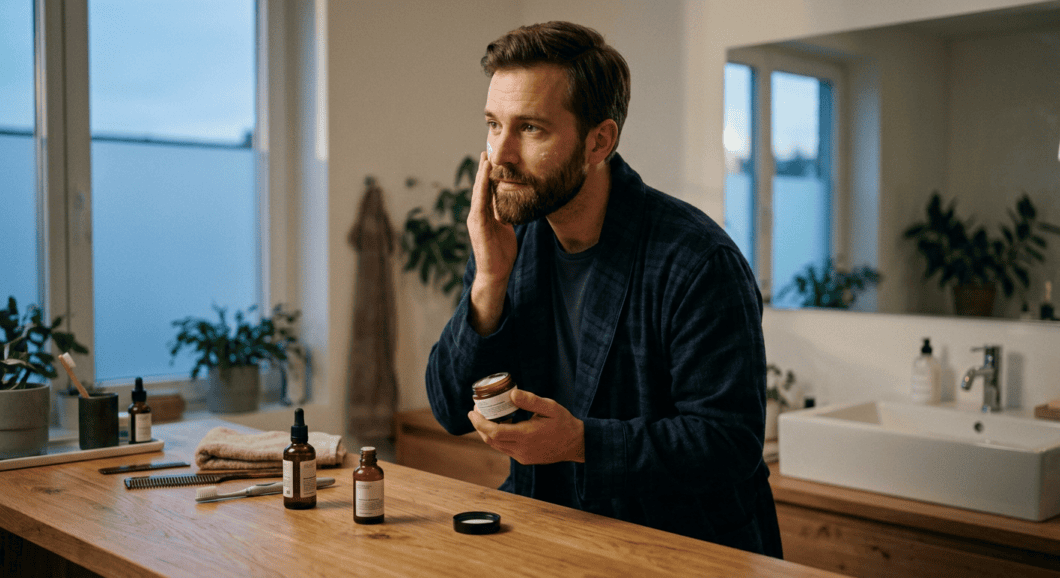
Skin does most of its repair work while you sleep. That makes the hours you spend in bed a good window for grooming: products get to absorb and work without sweat, sunlight, or pollution interfering. You don’t need a 12-step regimen to benefit either. A tight nightly routine can run under five minutes and still show up in the mirror.
The demand is there. The men’s skincare market is projected to reach roughly $37 billion, a 68% jump over just two years, according to Strive’s 2026 industry report. This guide covers the overnight routines worth your time, based on what barbers and skincare pros actually recommend.
Why Nighttime Grooming Beats Morning Routines
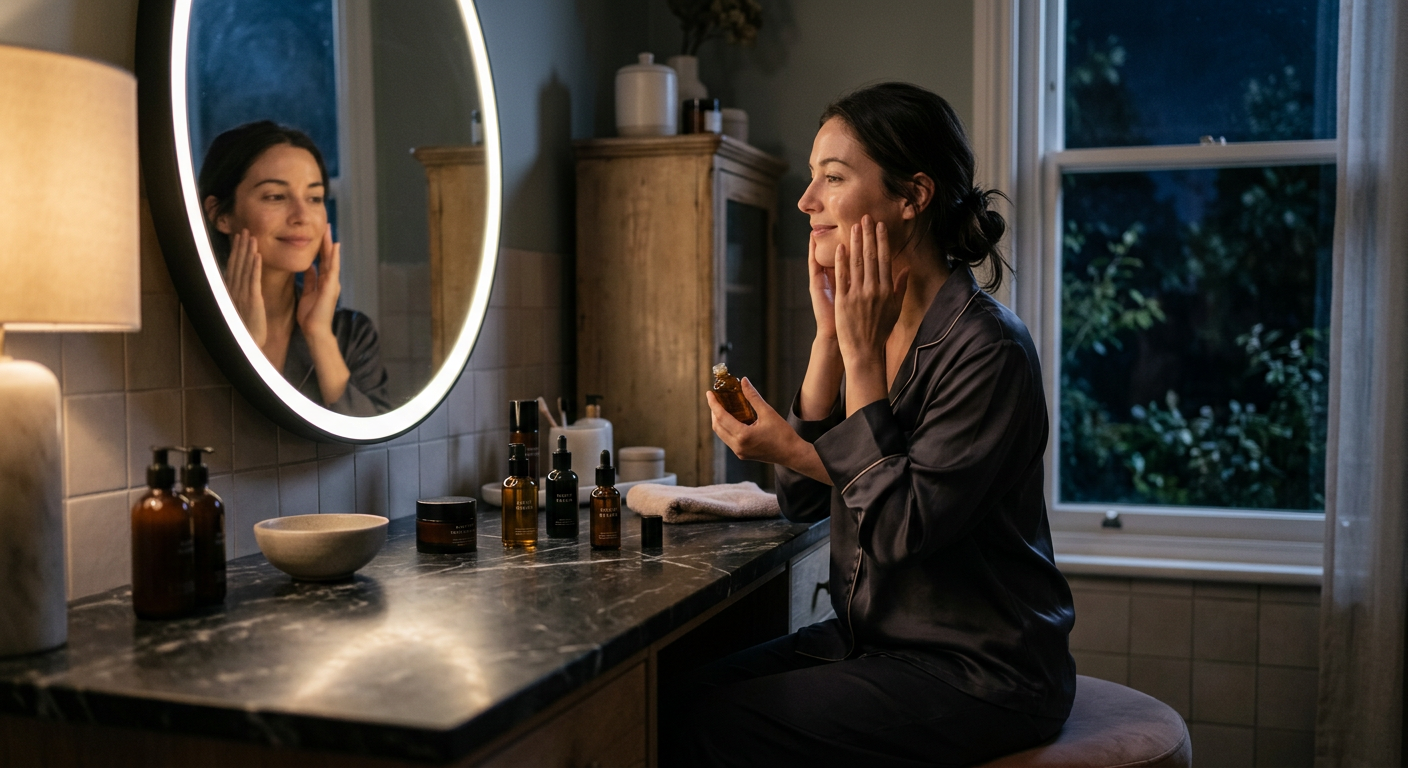
Cell turnover peaks while you sleep. With no SPF to worry about and no environmental exposure to fight, skin absorbs active ingredients more efficiently overnight. That makes evening the right time to apply treatments that would otherwise get wasted or broken down during the day.
A morning routine protects; a night routine repairs. Both matter, but the nighttime steps do more of the heavy lifting on long-term results like reduced fine lines, better texture, and clearer skin.
The evening routine is also faster than most men expect. Prime Barbershop puts a solid nightly routine of cleansing, applying beard oil, and moisturizing at under two minutes. Low barrier to entry, and the payoff builds night after night.
Building Your Overnight Skincare Foundation
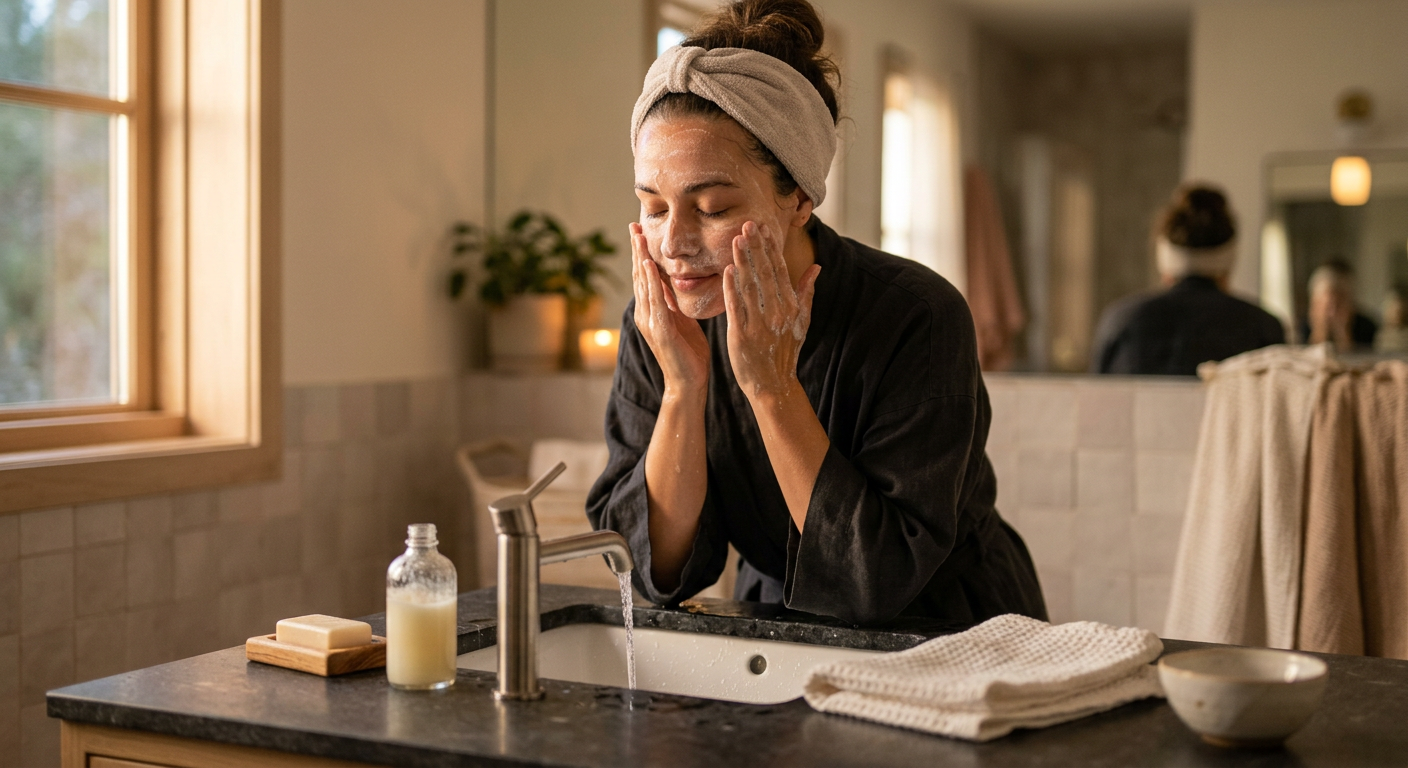
Everything starts with a clean base. Cleansing at night clears out the day’s oil, sweat, sunscreen, and airborne grime that clogs pores and dulls your complexion. Skip it and every product you layer on afterward is fighting a dirty surface.
The core baseline is three products: cleanser, treatment active, and moisturizer. Philly the Barber’s 2026 playbook recommends cleansing first, then a treatment active, then a night moisturizer to close.
The Case for Retinoids
Retinoids are the gold standard for reducing visible signs of aging, and they belong in your nighttime routine specifically. They break down in sunlight, so applying them before bed is the only way to get their full effect.
Introduce them slowly. Start with a low concentration and use them on alternate nights until your skin adjusts, which usually takes 30 to 60 days. Rush this and you’ll likely get redness, peeling, and irritation, the exact things that push most men to quit before they see any benefit.
Follow the Single-Active-Night Rule
Don’t layer a retinoid with a BHA or niacinamide until your skin has fully adjusted. Stacking multiple actives too soon overwhelms the skin barrier and undoes your progress.
Once your skin handles the retinoid comfortably, you can start cycling in a second active on separate nights. Patience protects the barrier and gives you better results down the line.
Overnight Beard and Hair Care
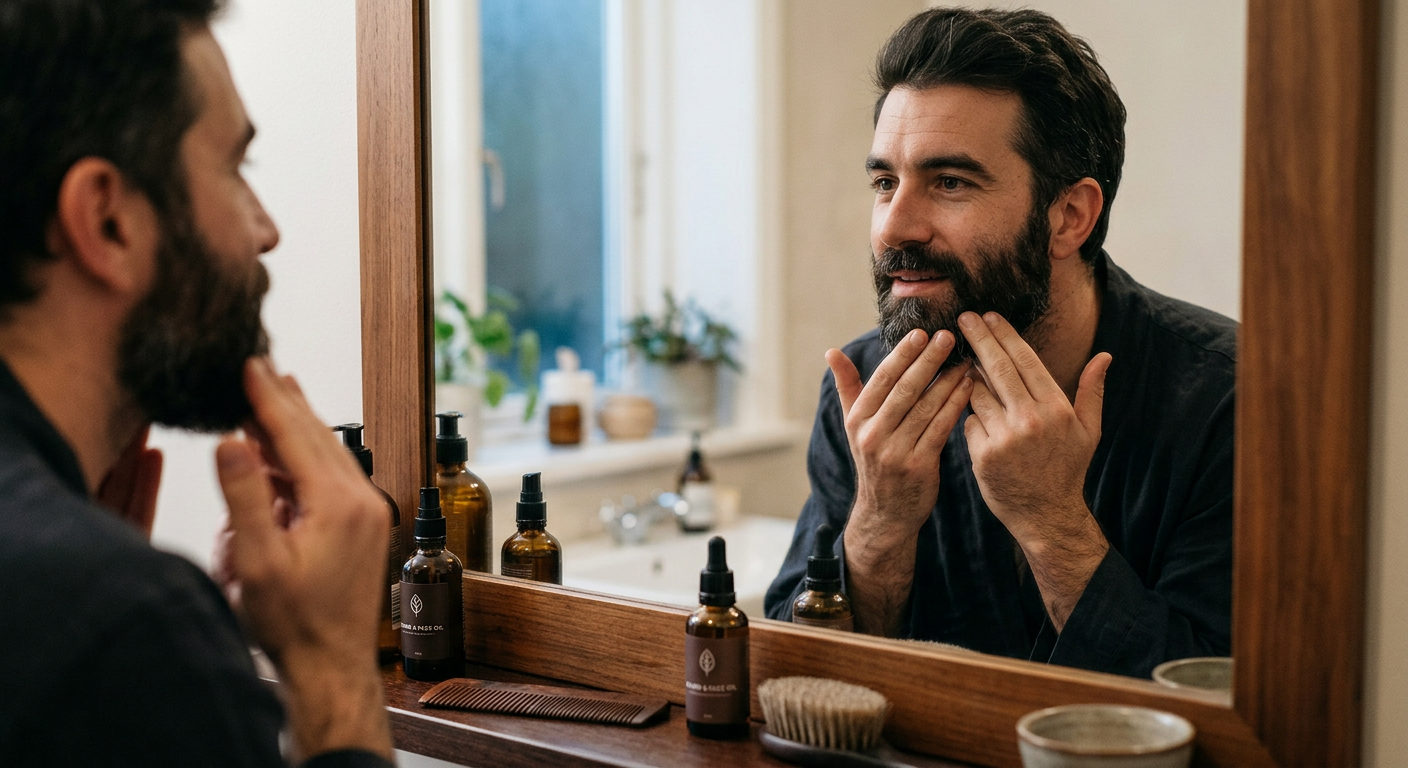
If you have a beard, take the skin underneath as seriously as the skin on your face. Nighttime is when beard oil does its best work, softening coarse hair and hydrating the skin below while you sleep undisturbed.
Apply a few drops after cleansing, working it down to the roots and into the skin. This 30-second step, described in Prime Barbershop’s routine breakdown, cuts itch and flaking and leaves the beard looking fuller by morning.
Your scalp benefits from overnight care too. A leave-in scalp treatment or lightweight oil applied at night gets hours to absorb without interfering with your daytime styling. Change your pillowcase regularly while you’re at it, and a silk or satin one reduces friction on hair and skin.
A Simple 5-Minute Overnight Routine
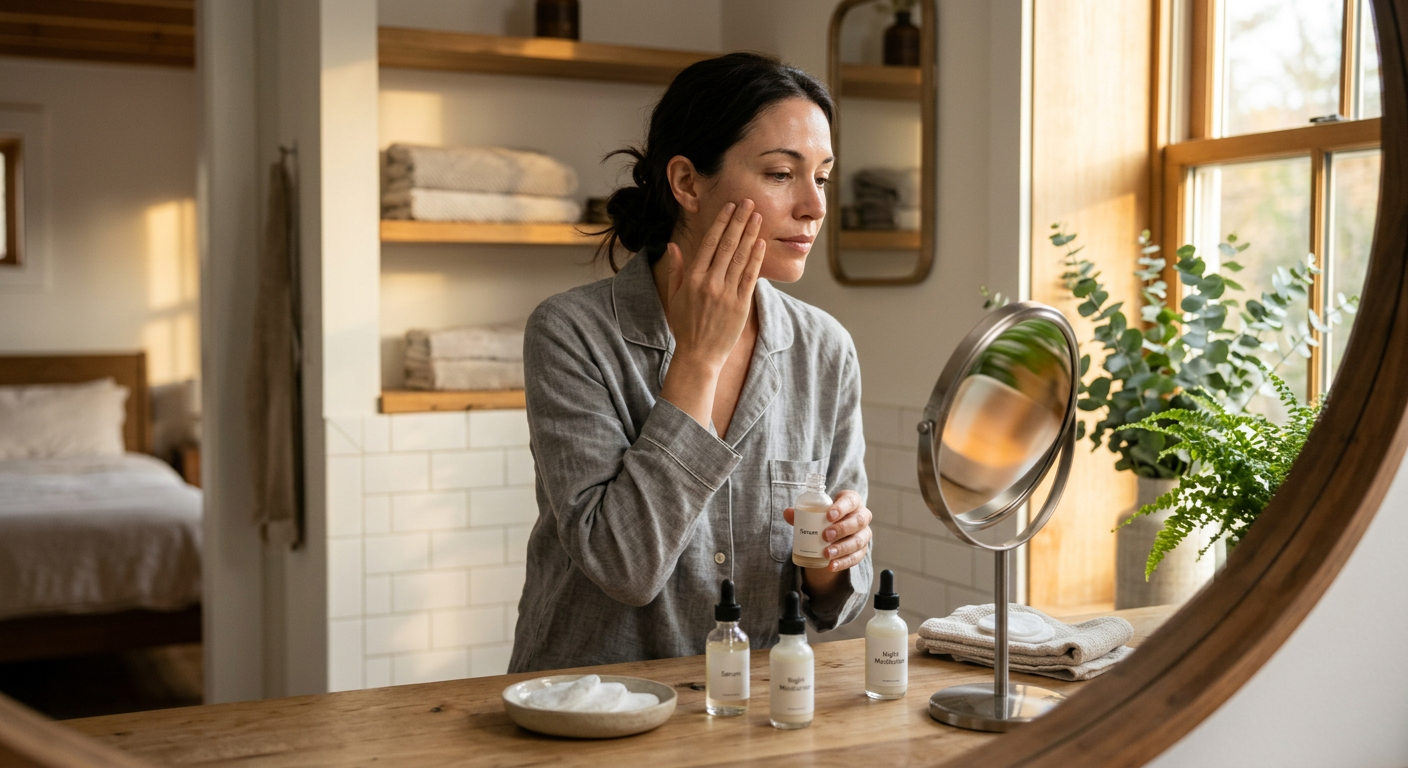
Nine steps aren’t necessary. This streamlined routine covers the essentials in roughly five minutes.
| Step | Action | Time | Purpose |
|---|---|---|---|
| 1 | Cleanse face with lukewarm water | 60 sec | Removes daily buildup |
| 2 | Apply treatment active (retinoid) | 30 sec | Repairs and renews skin |
| 3 | Apply beard oil (if bearded) | 30 sec | Softens hair, hydrates skin |
| 4 | Apply night moisturizer | 30 sec | Seals in hydration |
| 5 | Optional: eye cream or lip balm | 30 sec | Targets thin, delicate areas |
Consistency matters more than complexity. Stick with a routine like this for 30 days and you’ll notice a measurable difference in skin texture and overall appearance, a timeline multiple grooming experts cite as the point where results become visible.
Adjust for your skin type. Oily skin usually does better with a gel moisturizer, while dry or mature skin wants a richer cream. The framework holds either way.
Product Selection and Common Mistakes

Read your labels and pick ingredients that match your goals. The proven actives worth knowing: retinol for aging, salicylic acid (BHA) for acne-prone skin, niacinamide for redness and barrier support, and hyaluronic acid for hydration.
Avoid these frequent overnight grooming errors:
- Skipping cleansing and applying products over a dirty face
- Layering too many actives before your skin has adjusted
- Using retinoids on freshly shaved skin, which causes stinging and irritation
- Applying products to wet skin when they call for dry application
- Quitting too early, before the 30-to-60-day adjustment period ends
The industry loves to overcomplicate grooming with 12-step routines and dedicated tools for problems most men never had. The gap between where most men are and where they could be is a lot smaller than the marketing suggests. Get the fundamentals right and skip the rest.
How Grooming Habits Are Changing
Men’s attitudes toward grooming have shifted sharply. Roughly 78% of men now use three or more products, and adoption of facial cleansers and moisturizers keeps climbing, per Strive’s 2026 data.
Nighttime habits also carry weight beyond appearance. Talker Research reports that men are increasingly trading basic 2-in-1 products for more considered multi-step routines, with evening rituals playing a growing role in how they wind down before sleep.
The Modern Gentleman frames a considered night routine as a way to restore balance. Washing the day off supports skin recovery and signals to your body that it’s time to rest, which ties grooming to better sleep and lower stress.
Conclusion
An effective men’s overnight grooming routine comes down to a handful of consistent habits: cleanse to clear the day’s buildup, apply a treatment active like a retinoid, care for your beard and the skin under it, and finish with a night moisturizer. The whole thing runs under five minutes and pays you back with clearer skin, a healthier beard, and a better look over time.
Skip the 12-step marketing hype and focus on the fundamentals. Start with the five-step routine above tonight, commit to it for 30 days, and let your skin’s natural repair cycle handle the rest.
FAQ
Q: How long should a men’s overnight grooming routine take?
A basic but effective nightly routine takes under five minutes. Cleansing, applying a treatment, beard oil, and moisturizer each run 30 to 60 seconds, so consistency matters far more than complexity.
Q: Can I use retinol every night right away?
No. Start with a low concentration on alternate nights and let your skin adjust over 30 to 60 days before increasing frequency. Going too fast usually causes redness, peeling, and irritation.
Q: Should I apply beard oil at night or in the morning?
Both work, but nighttime lets the oil absorb for hours without interference, softening the hair and hydrating the skin beneath your beard. A few drops worked down to the roots after cleansing is enough.
Q: Do I really need a night moisturizer if I moisturize in the morning?
Yes. Morning moisturizer with SPF protects your skin, while night moisturizer repairs and locks in hydration during your skin’s peak repair cycle. They do different jobs and work best together.
Q: What is the single-active-night rule?
It means not layering multiple strong actives, like a retinoid with a BHA or niacinamide, until your skin has fully adjusted. This protects your skin barrier and prevents irritation while you build tolerance.
Q: When will I see results from a nighttime grooming routine?
Most men notice measurable improvements in skin texture and appearance after about 30 days of consistent use. Deeper changes, like reduced fine lines from retinoids, take several months.