

A decade ago, most men owned a single bar of soap and considered the matter closed. Now they’re buying retinol serums, medical-grade cleansers, and daily SPF without flinching at the price. Men’s skincare has crossed from niche to mainstream, and the numbers behind that shift are hard to ignore. Analysts put the global market on track toward $37 billion by 2035, a jump driven mostly by younger buyers who treat skincare as basic maintenance rather than vanity.
This is a real change in how men think about grooming, self-care, and where their money goes. Below is what’s fueling the growth, where the spending lands, and how to build a premium routine that does something.
Why Men’s Skincare Is Booming
Few categories in personal care have expanded as quickly as men’s grooming. Usage climbed 68% in the two years between 2022 and 2024, according to Strive Skin’s 2026 industry report. Growth like that is unusual in a mature category.
The main driver is cultural. “One of the primary drivers behind the men’s skincare boom is the shift in cultural attitudes towards masculinity and self-care,” business strategist Colleen Baren told BeautyMatter. Skincare is no longer coded as feminine, and the stigma that once kept men out of the aisle has faded fast.
Social media sped things up. TikTok and Instagram normalized male skincare through influencers, many of them men, who broke down routines and showed results. The conversation moved from whether men should use skincare to which serum to buy.
The Gender Gap That Signals Opportunity
Only 29% of men keep a regular skincare routine, against 62% of women. That’s a gap worth more than $20 billion, and it explains why brands and investors are pushing into the space so hard. Every percentage point of adoption is worth billions.
The Numbers Behind the Premium Shift

The premium and luxury tiers are where the more interesting growth is happening. North America leads the global market on the strength of a mature consumer base, high product awareness, and a strong appetite for premium options, per a 2025 market analysis.
The broader market is expanding steadily. The global men’s skincare products market is expected to hit $27.99 billion by 2031, up from $17.36 billion in 2024. Grand View Research projects a compound annual growth rate of 9.1% through 2030.
Key figures across sources and timelines:
| Metric | Figure | Source |
|---|---|---|
| Two-year usage growth (2022–2024) | 68% | Strive Skin |
| US men who use skincare | Rising, Gen Z leads at 68% | Strive Skin |
| Market value (2024) | $17.36 billion | ResearchAndMarkets |
| Projected value (2031) | $27.99 billion | ResearchAndMarkets |
| Projected opportunity (2035) | $37 billion | Strive Skin |
| CAGR (2022–2030) | 9.1% | Grand View Research |
Every research firm tells roughly the same story: sustained double-digit or near-double-digit growth, with premium segments gaining share fastest.
Who Is Driving Demand
Generation Z sits at the center of the premium skincare movement. Gen Z men are 62% more likely to use skincare than Gen X men, and their adoption rate has reached 68%. These are buyers who grew up watching skincare content and see a multi-step routine as ordinary.
Younger buyers also spend differently. They read ingredient lists, follow dermatologist recommendations, and lean toward products with clear, science-backed claims. That preference is why medical-grade and clinically formulated products are gaining ground over generic drugstore lines.
The Rise of Medical-Grade Products
Men are putting more money into medical-grade skincare, meaning formulations with higher active-ingredient concentrations that used to be limited to clinics. The shift points to a growing willingness to treat skincare as an investment rather than an impulse buy. As younger men reach their higher-earning years, the premium and luxury tiers should capture an even bigger share.
What Goes Into a Premium Routine

A premium routine doesn’t mean a dozen products. It means using well-formulated ones that address what your skin needs. GQ’s expert guide boils the foundation down to four steps: cleanse, hydrate, rejuvenate, and protect.
The essentials break down like this:
- Cleanser: Cuts through daily grime, oil, and product buildup.
- Moisturizer: Hydrates and supports the skin barrier.
- Daily SPF: The single most important product for preventing aging and damage.
- Exfoliator: Used occasionally to remove dead skin and improve texture.
- Retinol: A skin-renewing active that’s become a new baseline for anti-aging.
Usage data backs up the shift toward fuller routines. Facial cleansers are used by 58% of men, moisturizers by 54%, and 78% of skincare users now use three or more products, per Strive Skin’s report.
If You Only Do One Thing
British GQ’s advice for beginners is blunt: buy an SPF and wear it every day of the year. If that feels like too little, add a cleanser at night and a non-SPF moisturizer for the evening. Building a routine gradually works better than quitting an overwhelming one.
How to Choose Premium Products Worth the Price

Premium pricing should buy you a better formulation, not just a nicer box. Men’s skin is thicker, has larger pores, and produces more oil than women’s, which is why products built specifically for men often work better, as Forbes notes.
A few markers of quality:
- Named active ingredients at meaningful concentrations, such as retinol, niacinamide, or hyaluronic acid.
- Skin-type customization, where a brand tailors recommendations to oily, dry, sensitive, or combination skin.
- Transparent formulations with ingredient lists you can actually evaluate.
- Independent recognition, such as awards or third-party testing.
Oily-skin products lead the market at a 34% share in 2026, and moisturizers and creams are the top product type overall, according to Future Market Insights. Matching the product to your skin type matters more than chasing the highest price tag.
The Road Ahead for Men’s Grooming
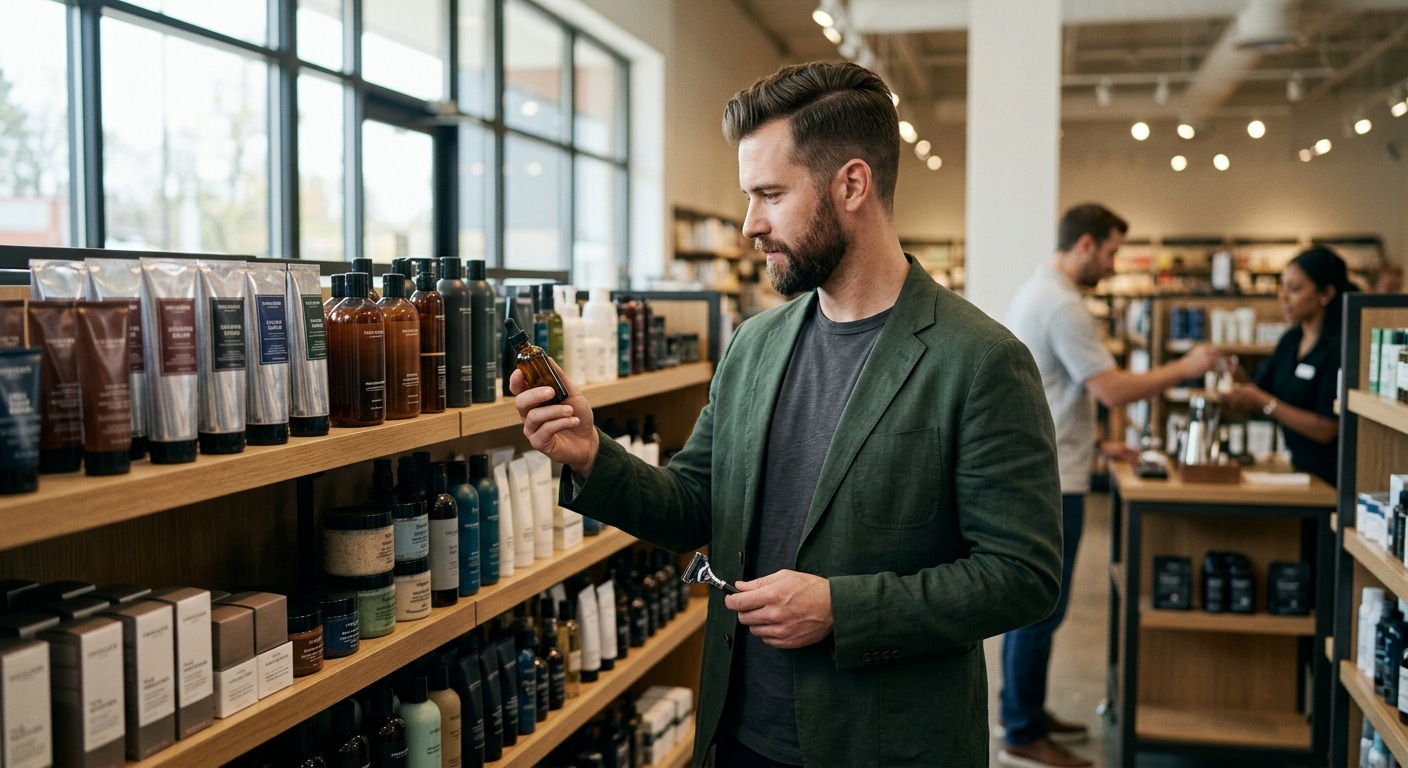
The direction is clear: more growth, more premiumization, wider acceptance. Mass retailers are giving men’s aisles more shelf space, luxury brands are entering the category, and online retail keeps driving volume.
As adoption climbs toward parity with women’s skincare, the market has room to more than double from where it sits now. The brands that win will be the ones selling effective, science-backed products built for men’s skin, not repackaged versions of generic formulas.
For buyers, the picture is good. The selection of quality products has never been wider, expert guidance has never been easier to find, and the old stigma has largely dissolved.
Conclusion
Men’s premium skincare has gone from a curiosity to a multibillion-dollar market growing at close to 10% a year. Cultural shifts, social media, and a science-minded Gen Z audience have reshaped how men approach grooming. The gap in adoption between men and women shows how much room is left to grow.
You don’t need a complicated regimen to start. Begin with a quality cleanser, a well-formulated moisturizer, and a daily SPF, then add a retinol once you’re comfortable. Pick products built for your skin type and backed by real ingredients.
Ready to build your routine? Take stock of what you own this week, find the gaps, and invest in one premium upgrade for your biggest skin concern.
FAQ
Q: How much should men spend on skincare each month?
Spending ranges widely, but a solid premium routine of a cleanser, moisturizer, and SPF fits a moderate monthly budget. Cover the daily SPF and a quality moisturizer first, then add higher-cost actives like retinol.
Q: Why is men’s skincare growing so fast?
The market grew 68% between 2022 and 2024 on the back of shifting cultural attitudes, social media, and strong Gen Z adoption. Less stigma has turned skincare into a normal part of men’s grooming rather than a niche interest.
Q: What is the difference between men’s and women’s skincare?
Men’s skin tends to be thicker and oilier with larger pores, so products built for men often address those traits directly. The core actives are similar, but formulations and textures are frequently adjusted for men’s skin.
Q: What is the most important skincare product for men?
Daily SPF, because it prevents sun damage and premature aging better than anything else in a routine. British GQ recommends wearing it every day of the year, even for total beginners.
Q: Is premium skincare worth the higher price?
It’s worth it when the price buys a better formulation, named active ingredients at effective concentrations, and skin-type customization. A high price alone guarantees nothing, so check the ingredient list and independent reviews.
Q: How big will the men’s skincare market get?
Projections put the market at $27.99 billion by 2031 and a $37 billion opportunity by 2035. North America leads for now, driven by strong demand for premium products.