

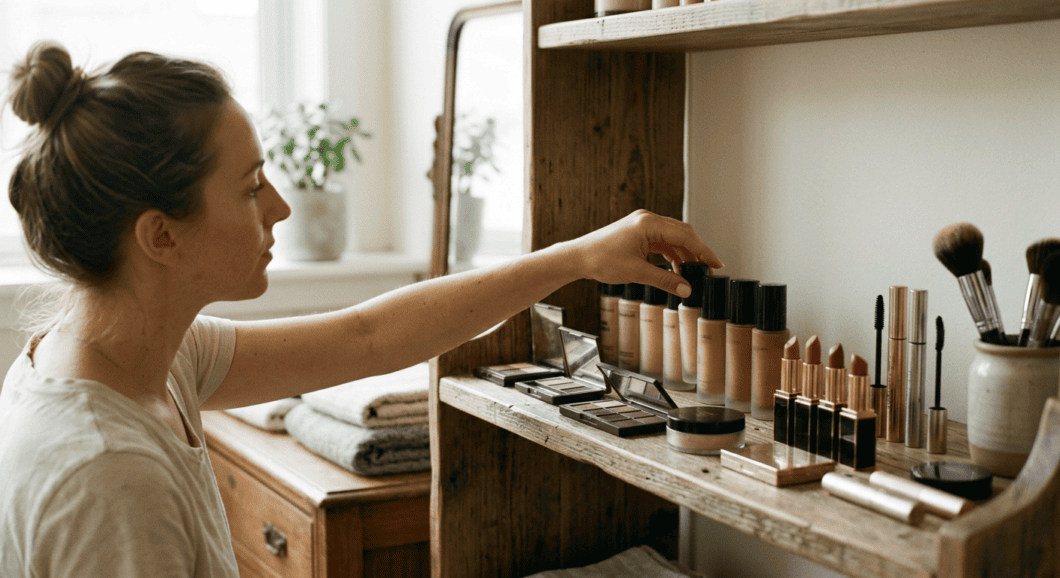
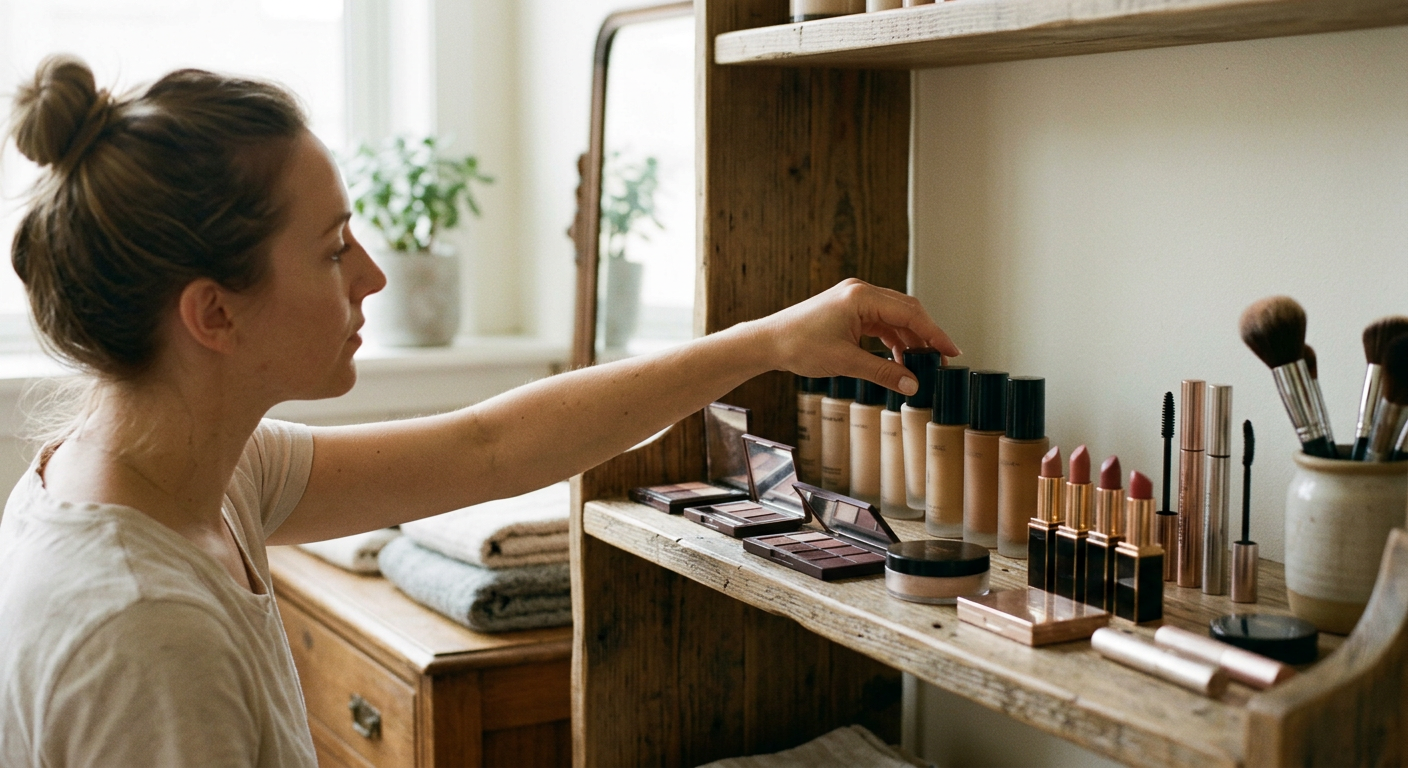
You own 14 foundations and reach for the same one every morning. That gap between what people buy and what they actually use is behind a quiet shift in beauty culture, and it has nothing to do with buying more. A growing number of beauty enthusiasts are trading overflowing drawers for a curated makeup wardrobe: a small, deliberate collection where every product earns its place. This isn’t deprivation. It’s about getting a better result on your actual face.
The idea borrows from fashion. A capsule wardrobe strips clothing down to versatile essentials, and a makeup wardrobe does the same thing with cosmetics, treating them as a working system rather than a stockpile. The payoff goes past a tidy vanity.
What Is a Makeup Wardrobe, Exactly?
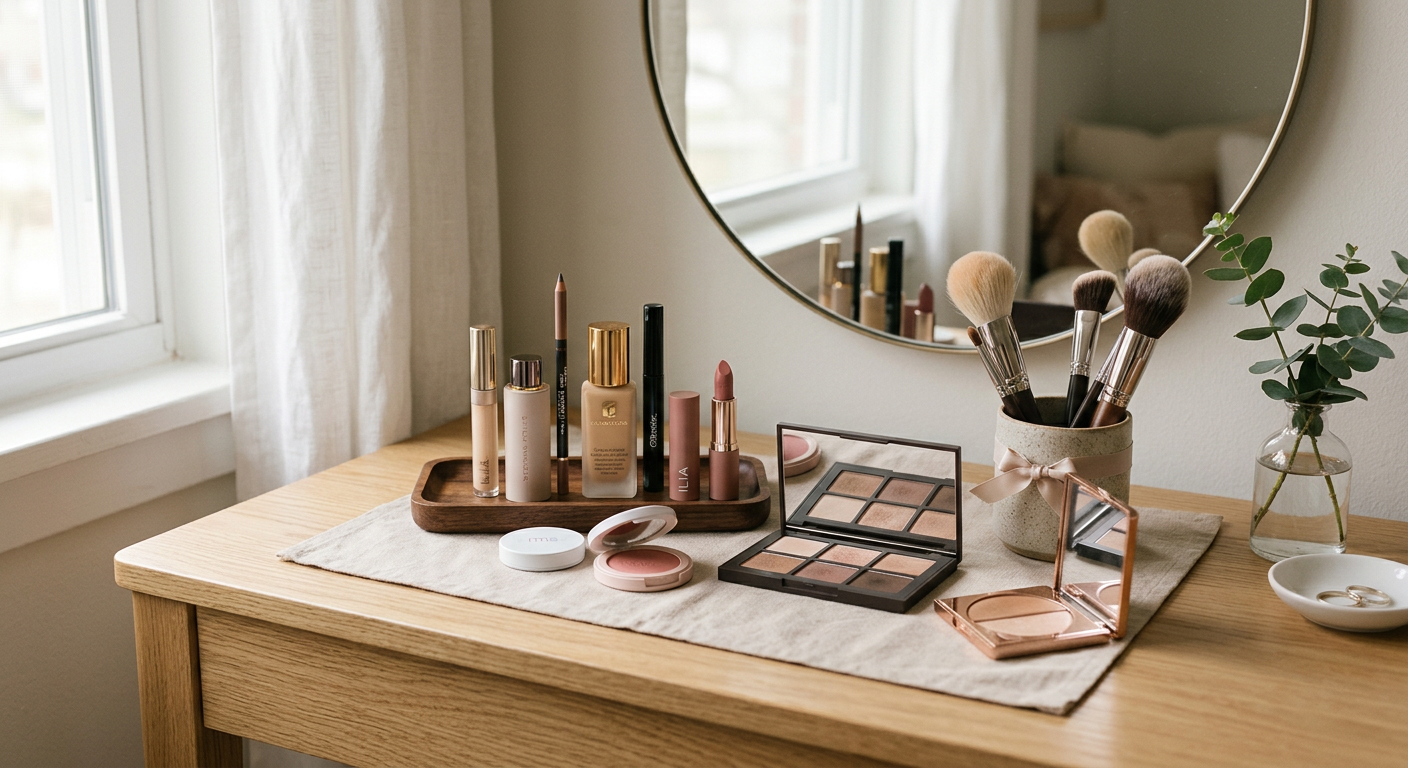
A makeup wardrobe is a curated collection of cosmetics chosen for how they work together, not for how many shades you can accumulate. Think of it as your rotation: the products you actually use, in formulas and finishes that agree with each other.
The concept parallels the “fragrance wardrobe” trend that beauty publications have tracked closely. As Vogue Business notes, consumers are increasingly curating fragrance wardrobes “that align with their identities and lifestyles.” The same logic now applies to color cosmetics and skincare.
The operative word is curated. A makeup wardrobe isn’t small because small is virtuous. It’s small because editing produces a cleaner, more cohesive look, and because most people wear a fraction of what they own anyway.
Why Smaller Collections Actually Look Better
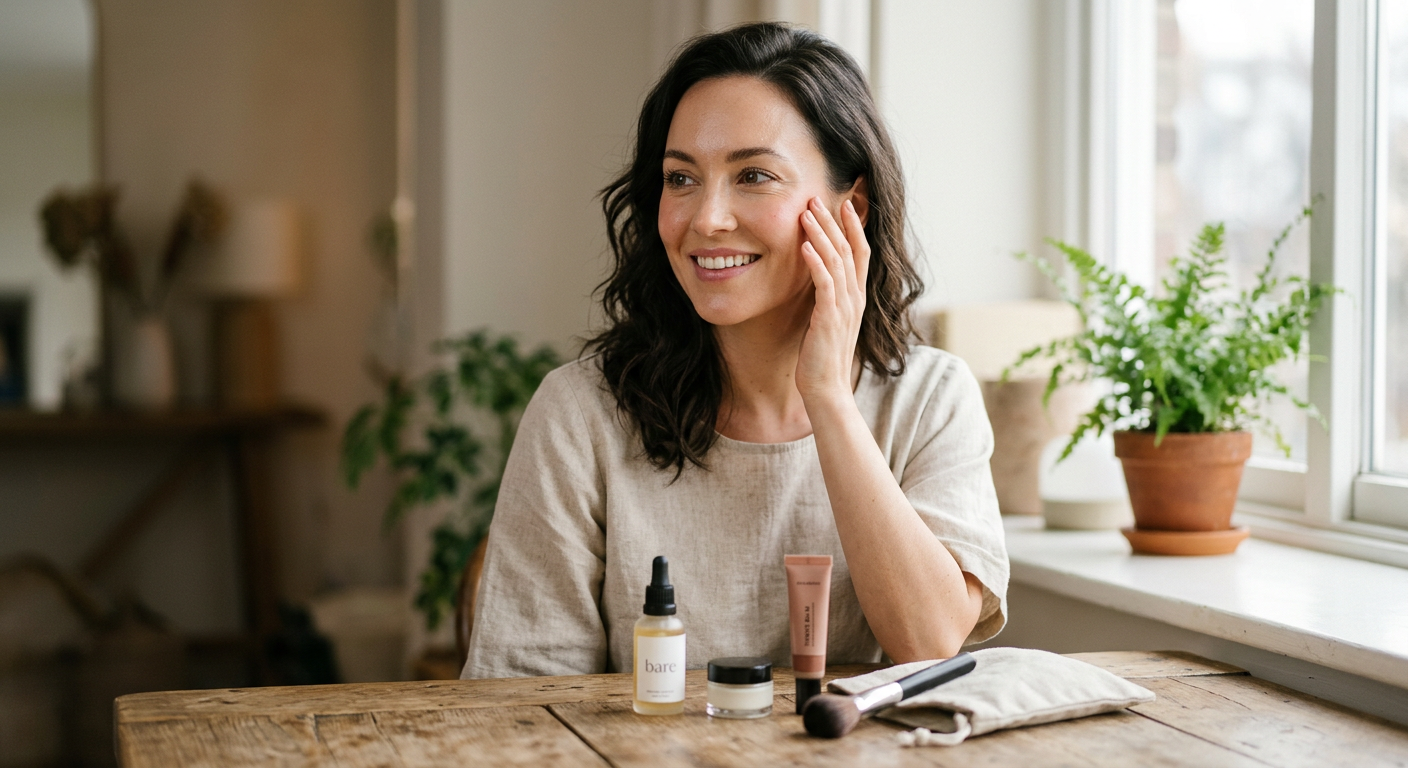
Fewer products often produce a better face. This runs counter to how most people shop, but it has nothing to do with willpower or minimalist morality. It comes down to optics.
Makeup Is Material, Not Just Color
Every product you layer adds a surface, and each surface reflects light differently. As one beauty writer observed in The Best Beauty Wardrobe Isn’t the Smallest. It’s the Most Edited., you can usually tell when “too many products have been asked to solve the same face.”
The foundation catches light one way. The blush sits on top as a different texture. The highlighter adds a third surface. When four or five finishes disagree, the eye senses something is off even when it can’t name the problem.
Cohesion Over Quantity
A tightly edited routine keeps finishes consistent, so light behaves as one thing across your skin. That’s why a three-product face can look more polished than a ten-product one. The goal isn’t the smallest possible kit. It’s the most edited version, where every item cooperates with the next.
The Economics Behind the Edit
Money is driving this shift as much as aesthetics. Rising inflation and economic uncertainty have pushed consumers toward a “try-before-you-buy” mindset, according to BeautyMatter, citing The Future Laboratory’s Future Forecast 2026 report.
That mindset explains the boom in miniature formats. Brands are launching mini versions of full-size products: small, low-risk, and easy to test before committing. These minis “resonate with consumers for reasons that go beyond travel and convenience,” the report notes. They let you sample how a formula fits your wardrobe without a full-price gamble.
Curated online beauty retail is thriving on the same logic. Forbes reports the beauty box market reached £275 million, a figure that shows how much value consumers now place on curation over accumulation.
Big Collection vs. Curated Wardrobe: A Quick Comparison
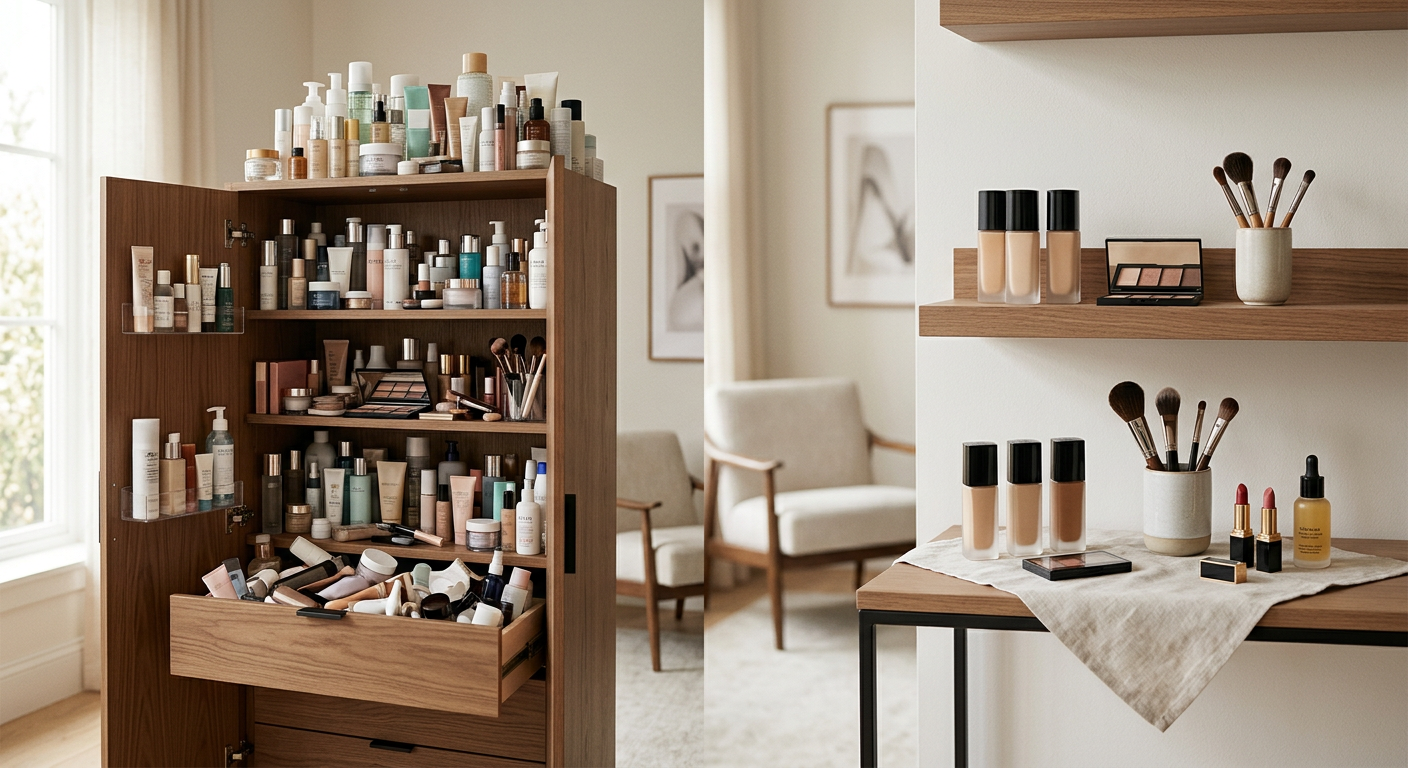
Before you overhaul your vanity, it helps to see the trade-offs side by side.
| Factor | Large Collection | Curated Makeup Wardrobe |
|---|---|---|
| Products owned | 50+ items, many duplicates | 10–20 versatile essentials |
| Daily decision time | High—too many options | Low—clear go-to rotation |
| Finished before expiry | Rarely | Usually |
| Cost over time | Higher, driven by launches | Lower, focused on repurchases |
| Finish cohesion | Inconsistent | Consistent |
| Storage needs | Multiple organizers | One tray or small drawer |
None of this makes big collections wrong. If you swatch and collect for pleasure, that’s a legitimate hobby. But for an efficient daily routine that looks better on your face, the right column wins.
How to Build Your Own Makeup Wardrobe
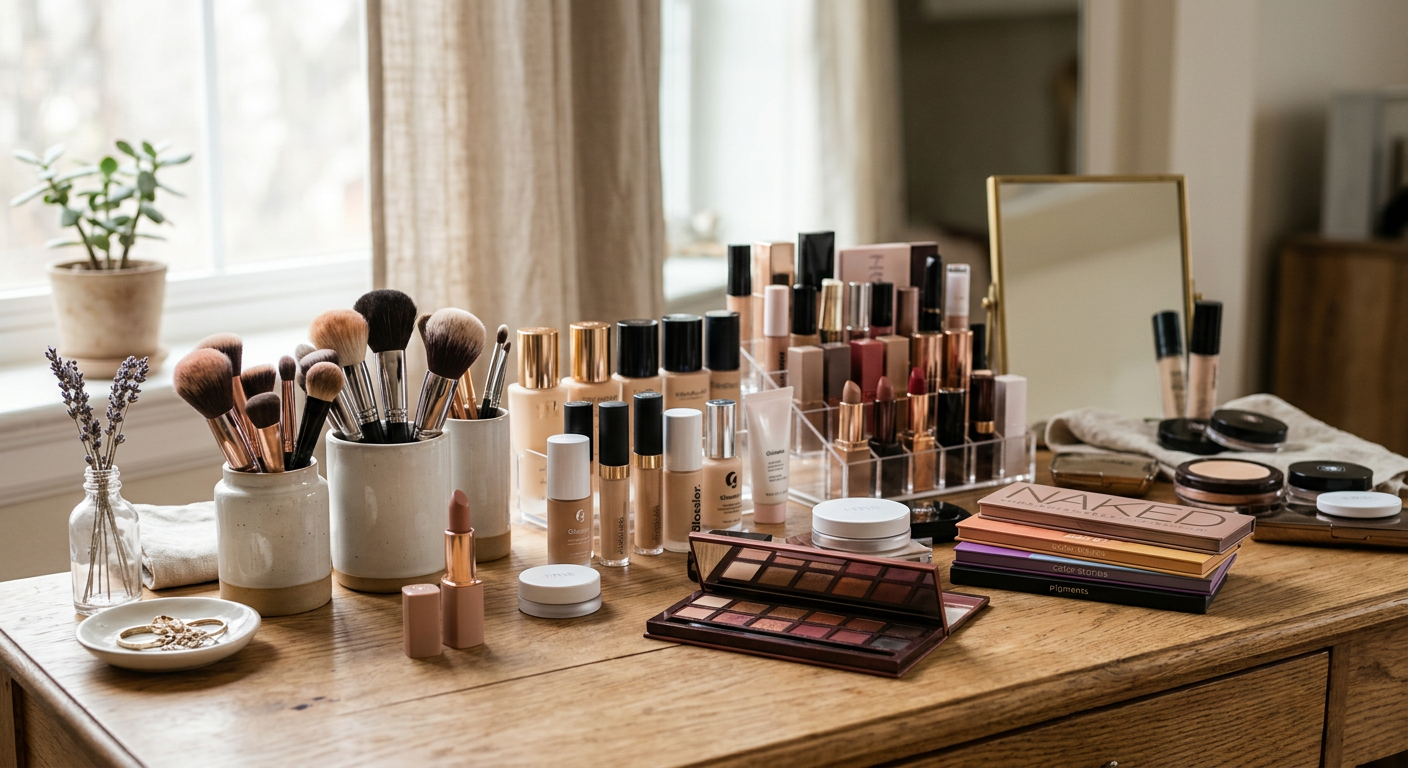
Curating a wardrobe is less about throwing things away and more about identifying what actually works. This process helps you edit with intention.
Step 1: Audit What You Reach For
Track the products you use for two weeks. You’ll quickly spot the four or five items that carry your routine, and the dozens that don’t. Reddit’s r/MakeupAddiction community frequently pushes back on collection culture, with users pointing out that YouTube-driven “collections” overemphasize buying entire product lines you’ll never finish.
Step 2: Define Your Base Formulas
Pick one foundation, one complexion tool, and finishes that share a texture family: matte with matte, dewy with dewy. This keeps light consistent across your face and eliminates the “too many surfaces” problem.
Step 3: Choose Multitaskers
Prioritize products that do more than one job. A cream blush that works on lips. A brow product that doubles as a soft liner. Versatility is what keeps a wardrobe small without leaving gaps.
Step 4: Store to Match Your Space
Organize around what you use daily. Beauty organizers recommend using vertical space, stacking and arranging products upward, to free counter space and keep your rotation visible. When you can see your essentials, you actually use them.
Step 5: Test Before You Add
Use minis to trial a formula before buying full-size. This protects your wardrobe from impulse purchases that break its cohesion and your budget.
What This Means for 2026 Beauty Trends
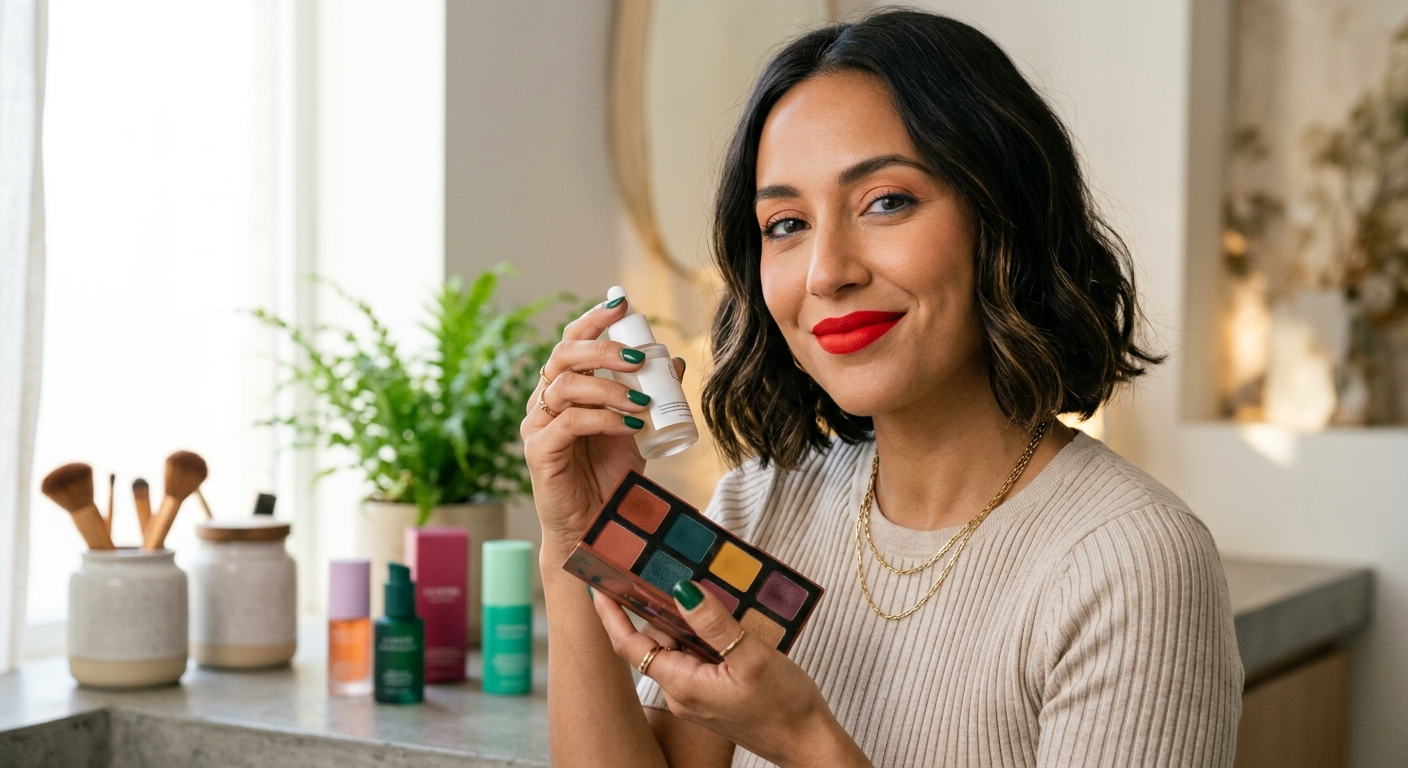
The edited-wardrobe movement doesn’t mean color is disappearing. If anything, it’s the opposite. After years of “clean girl” saturation, BeautyMatter predicts 2026 is the year color cosmetics rebound.
The winners will be brands that emphasize a “unique point of view, realism, and creative freedom—rather than algorithmic uniformity.” A curated wardrobe can be expressive and bold. Editing isn’t the same as minimizing.
The most sophisticated brands now sell the edit itself as the product. They offer fewer, better-considered items and treat curation as a feature. That points to where the market is heading: away from endless launches and toward collections you can actually finish and enjoy.
Conclusion: Edit for a Better Face and a Lighter Load
A makeup wardrobe isn’t about owning less for its own sake. It’s about owning what works: products whose finishes cooperate, that you finish before they expire, and that make daily application faster and better looking. The economics reinforce the aesthetics, with minis, curated boxes, and a try-before-you-buy mindset all pointing the same direction.
Start small. Audit your rotation, identify your true essentials, and let cohesion guide every new addition. Your face, your wallet, and your vanity will show the difference.
Ready to edit? Pull every product you own, use only what you reached for this week, and build your wardrobe from there.
Frequently Asked Questions
Q: How many products should a makeup wardrobe have?
Most curated wardrobes contain 10 to 20 versatile items, though the exact number depends on your routine. The goal is a collection you can finish and that works cohesively, not a specific product count.
Q: Does a smaller makeup collection really look better?
Often, yes. Fewer products mean fewer competing textures and finishes, so light reflects consistently across your skin. A cohesive three-product face frequently looks more polished than a mismatched ten-product one.
Q: Are mini makeup products worth buying?
Minis are ideal for testing a formula before committing to full size, which protects both your budget and your wardrobe’s cohesion. According to The Future Laboratory, their popularity stems from a broader try-before-you-buy mindset driven by economic uncertainty.
Q: How do I declutter my makeup without wasting money?
Audit what you actually use over two weeks, then keep the essentials and set aside the rest. Use minis to test replacements before buying full-size, so future purchases are deliberate rather than impulsive.
Q: Is the makeup wardrobe trend the same as minimalism?
Not exactly. Minimalism prioritizes owning less, while a makeup wardrobe prioritizes owning what works together. A curated wardrobe can still be colorful and expressive. It’s about editing, not restriction.
Q: What’s the best way to store a small makeup collection?
Use vertical storage to stack products upward and keep your daily essentials visible. When you can see your rotation, you use it consistently and avoid buying duplicates.