



Two makeup finishes are pulling in opposite directions right now. Glass skin is the plump, reflective, almost-wet glow that ran the show for the last several years. Cloud skin is the pushback: a soft, matte-adjacent radiance that suits oily skin and holds up under flash. So which one comes out ahead in 2026? A lot of it depends on your skin type, how you live, and where the trend cycle is actually going.
Both looks start from the same place, which is hydrated, well-prepped skin. What changes is the finish you build on top. Below is a breakdown of each trend, a side-by-side comparison, and guidance on which one earns a spot in your routine this year.
What Is Glass Skin?

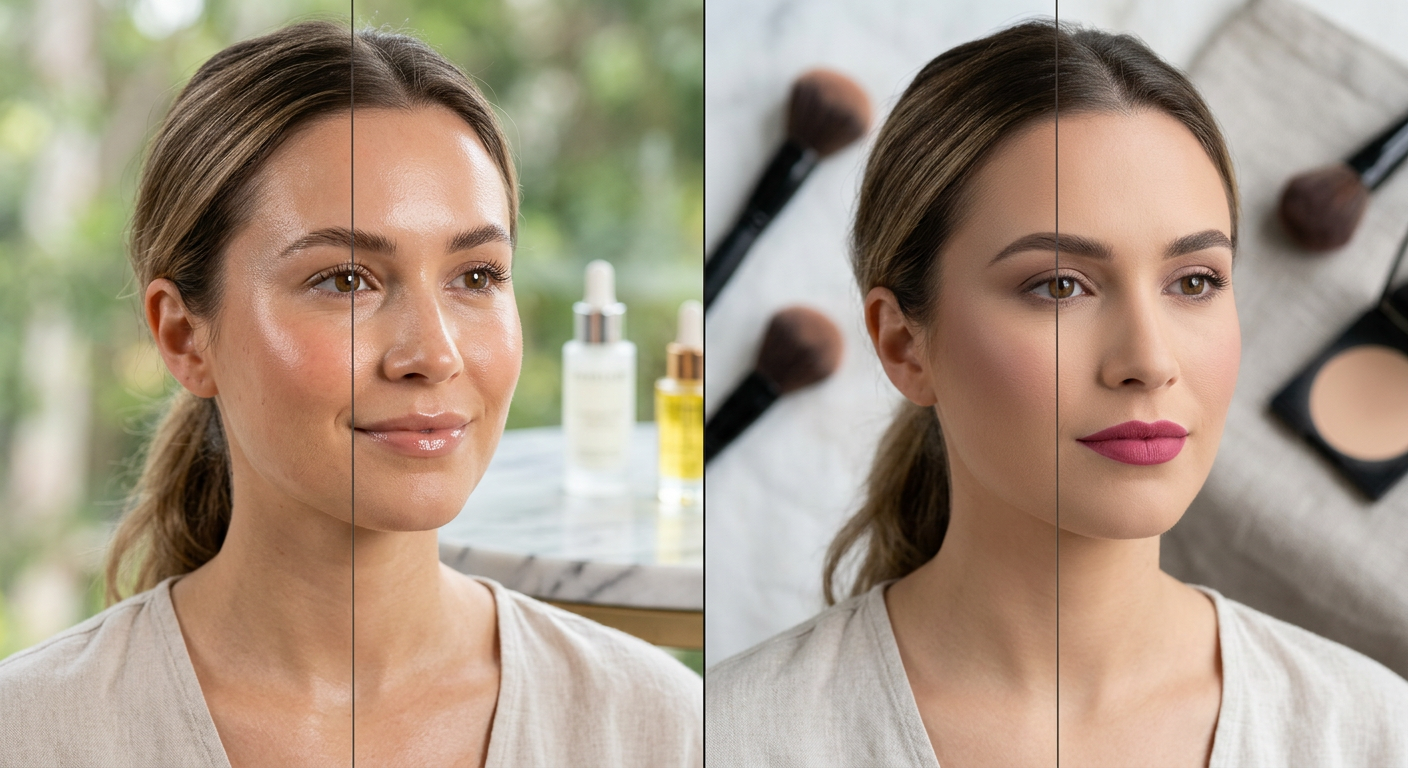
Glass skin is a plump, luminous, poreless complexion with a nearly-wet, reflective finish. The term comes from Korean beauty, where the aim is skin so smooth it looks like a pane of glass. According to haruharu wonder, it starts with a serious skincare routine built on deep hydration, exfoliation, and layered essences.
The makeup side is about shine, not coverage. Reach for lightweight dewy foundations, liquid highlighters, and glossy balms to bounce light across the high points of the face. Done right, the radiance looks like it comes from inside the skin instead of sitting on top of it.
The Catch With Glass Skin
Glass skin favors normal to dry skin. On oily or combination skin, that reflective finish can slide into greasy within a couple of hours. It also fights you under direct flash, where the extra shine either washes out the face or throws every bit of texture into relief.
What Is Cloud Skin?

Cloud skin is 2026’s reply to years of high-shine looks. Makeup artist Dominic Skinner is credited with popularizing it, and it delivers a soft, diffused radiance with none of the wetness. Live Tinted describes it as matte reimagined with a subtle warm glow, like sunlight coming through clouds.
Celebrity makeup artist Emily Gray told Who What Wear that cloud skin is really just a new name for a soft, matte complexion. It keeps the lighter foundation approach of a dewy look but trades the shine for a blurred, bouncy softness. Call it the matte cousin of the dewy finish.
Why Cloud Skin Is Trending Now
The appeal is practical. Cloud skin handles oily skin far better than glass skin, and it holds up under film and flash. As Ultimate Face puts it, the effect is “your skin but softer,” blurring imperfections without erasing the person underneath.
Cloud Skin vs. Glass Skin: Side-by-Side Comparison
Here is how the two finishes compare across the factors that matter when you’re choosing between them.
| Factor | Cloud Skin | Glass Skin |
|---|---|---|
| Finish | Soft matte with diffused glow | Wet, reflective, high shine |
| Best skin type | Oily, combination | Normal, dry |
| Coverage level | Light to medium | Sheer to light |
| Flash photography | Excellent | Can appear greasy |
| Longevity on oily skin | High | Low to moderate |
| Key products | Blurring foundation, mineral powder | Dewy foundation, liquid highlighter |
| Origin | Popularized by Dominic Skinner | Korean beauty (K-beauty) |
| Trend direction in 2026 | Rising | Softening into bloom skin |
Skin type is the tiebreaker. If your face is shiny by lunch, cloud skin will treat you better. If your skin runs dry and soaks up whatever you put on it, glass skin will look more natural and last longer.
How to Achieve Each Look
Both finishes start on the same footing: prep the skin properly. The split happens in how you build and set the base.
How to Get Cloud Skin
- Prep with light hydration. A moisturizer plus a blurring or soft-focus primer.
- Apply a lightweight, medium-coverage foundation. Blend and blur it into the skin instead of layering it on.
- Mattify strategically. Ultimate Face recommends setting only the areas that get oily. Too much powder flattens the whole thing.
The mattify-and-set step is where the cloud effect actually lives. Overdo it and you’re back in the flat, mask-like matte of 2016. Underdo it and it just reads as ordinary skin.
How to Get Glass Skin
- Build hydration in layers. An essence, a hydrating serum, and a dewy moisturizer.
- Apply a luminous foundation sparingly. Keep coverage sheer so your skin shows through.
- Add strategic shine. Liquid highlighter on the cheekbones, the bridge of the nose, and the cupid’s bow to maximize reflection.
Skip heavy powder completely. The glass-like finish depends on light bouncing off the surface, and powder kills that reflection.
The Verdict: Which Finish Will Win in 2026?
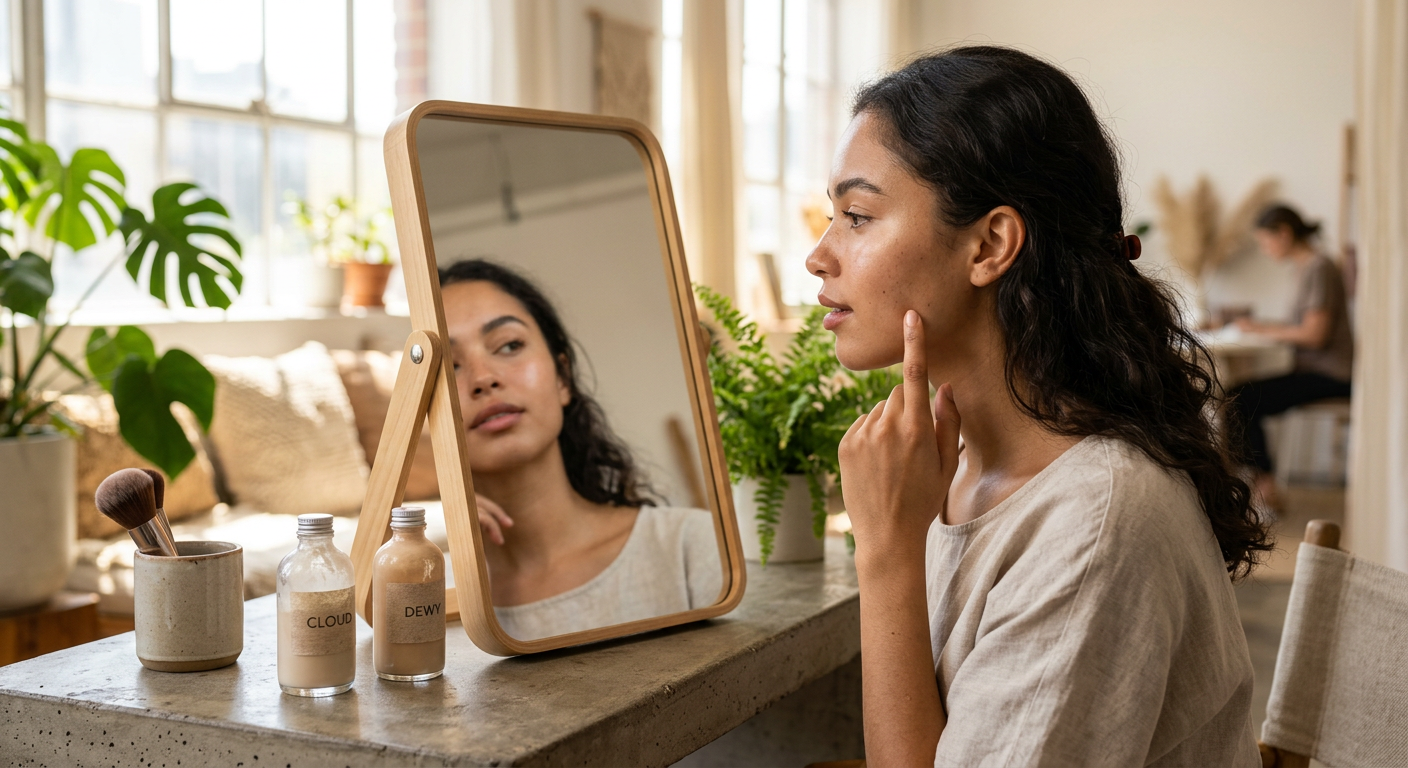
Cloud skin has the momentum. It went viral early in the year and works on a wider range of skin types, particularly the oily and combination skin that glass skin never handled well. Its performance under flash and film also gives it an edge in a beauty culture that lives on social media.
Glass skin isn’t going away, though. It’s changing shape. K-Beauty Real Gems reports that the high-shine, almost-wet surface has calmed into a more restrained, health-led finish now called bloom skin. That shift tells you the market is moving off maximum shine and toward the diffused radiance cloud skin already offers.
So the two are converging on the same point: luminous-not-glossy, lit-from-within skin. Cloud skin wins on versatility and timing, but if you want to future-proof your routine, learn a soft, blurred glow that stays matte in the T-zone and radiant on the high points. That’s the direction everything is heading.
Key Takeaways and Next Steps

Cloud skin and glass skin sit at two ends of the same radiance spectrum. Glass skin is wet, reflective shine best suited to dry skin. Cloud skin is soft, diffused radiance that flatters oily and combination skin and survives flash.
For 2026, cloud skin has the stronger trajectory, and glass skin is softening into the more wearable bloom skin. Both point the same way: healthy, luminous skin that still looks like skin.
Identify your skin type first, then pick the finish that works with it rather than against it. Run the three-step routine above for your match, and watch how each finish holds up through a full day before you commit.
Frequently Asked Questions
Q: Can I combine cloud skin and glass skin in one look?
Yes. Plenty of makeup artists in 2026 mattify the T-zone for a cloud-skin effect while adding glass-skin shine to the cheekbones and high points. That hybrid flatters combination skin and mirrors the industry’s move toward luminous-not-glossy finishes.
Q: Which finish is better for oily skin?
Cloud skin, no contest. Its soft matte finish controls shine and lasts longer, while glass skin tends to look greasy within a few hours on oily complexions.
Q: Do I need Korean skincare products to get glass skin?
No, but glass skin leans heavily on layered hydration, which is where K-beauty routines put their emphasis. Any essence, hydrating serum, and dewy moisturizer that plump and smooth the skin will get you there.
Q: Is cloud skin the same as a matte finish?
Not quite. Cloud skin is matte reimagined with a subtle warm glow, unlike the flat, mask-like matte foundations of around 2016. The target is soft and diffused, not dry or heavy.
Q: Why does cloud skin photograph better than glass skin?
Its diffused, non-reflective finish holds up under flash and film, where excess shine can wash out the face or exaggerate texture. Glass skin’s reflective surface can read as greasy under direct flash.
Q: What is bloom skin?
Bloom skin is the 2026 evolution of glass skin. K-Beauty Real Gems describes it as luminous rather than glossy, and lit from within rather than layered on top. It’s a softer, more health-led take on the original high-shine glass-skin trend.