

Could you trade your ten-step face routine for three products and come out looking better? A lot of beauty shoppers have already made that call. Skinimal makeup—a mash-up of “skin” and “minimal”—started as a niche aesthetic and has become the way most people handle everyday wear, prioritizing hydrated, healthy skin over heavy coverage. The shift says something about how beauty thinking has changed: less masking, more maintaining. The numbers back it up. Skincare now accounts for roughly 40% of total beauty market value, according to Qogita.
What Skinimal Makeup Actually Means

Skinimal makeup treats your complexion as the star rather than the canvas you paint over. Instead of full-coverage foundation and heavy contouring, you reach for lightweight, skin-enhancing products that even out tone while letting texture and natural radiance show through.
The approach overlaps with what the industry calls hybrid makeup—products that fold skincare benefits into cosmetic performance. Tinted serums with SPF, blush spiked with hyaluronic acid, lip treatments that hydrate while they add color. Ninth Avenue names this merging of skincare and cosmetics one of the defining beauty trends of 2026.
The finish you’re after is “your skin but better”—rested and healthy, not made-up. That’s why the trend works so well for daily wear, whether you’re at the office, on video calls, or running errands.
Why the Trend Is Surging in 2026
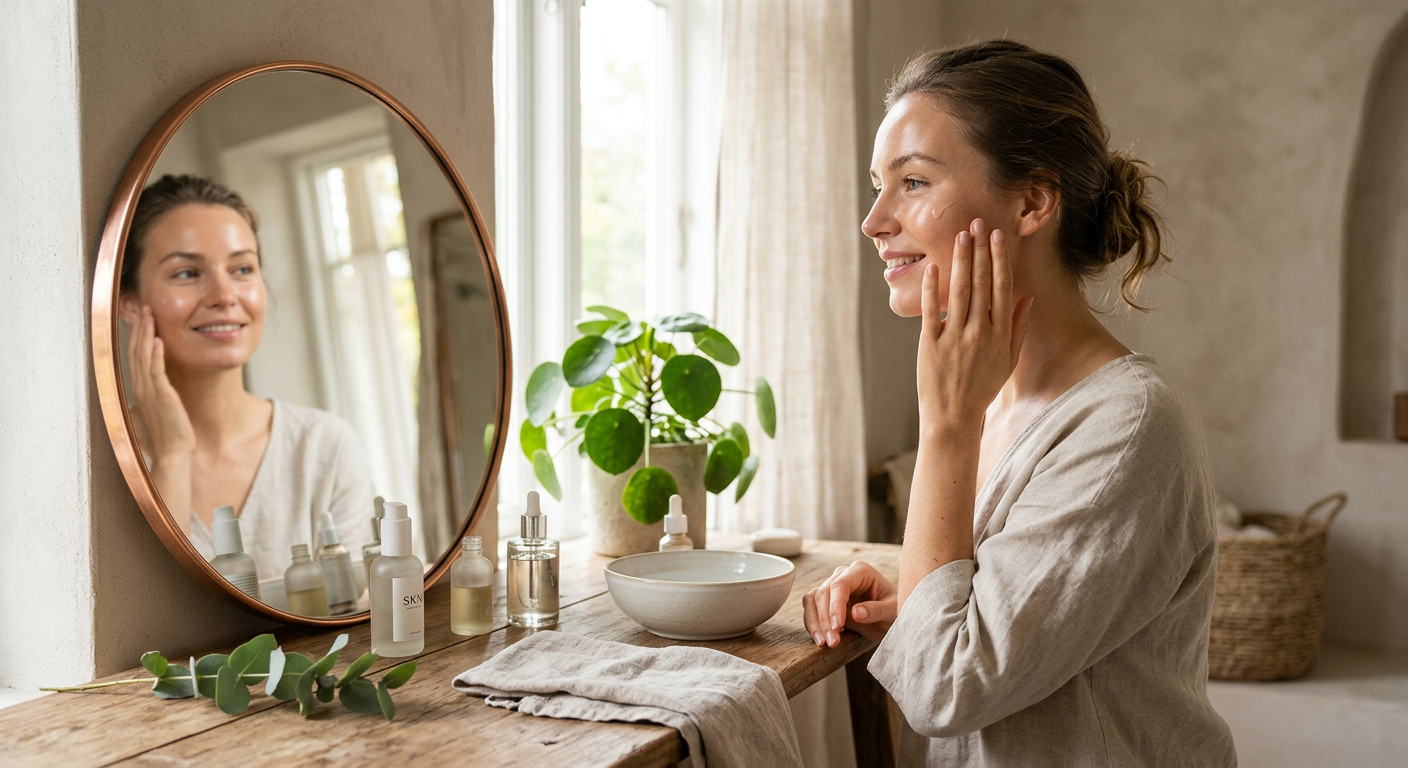
A few forces pushed skinimalism into the mainstream. The most obvious is the growth of K-beauty, whose skin-first philosophy is projected to reach a market size of $13.24 billion by the end of 2026, per Qogita. K-beauty made glowing skin the foundation of any look.
Consumer behavior also changed permanently after the move to remote work. Survey data from Market.us shows a meaningful share of people now spend more on skincare specifically because their face lands on camera or spends the day partially covered. Spend more on your base and you need less product on top.
The Time and Money Factor
Skinimal routines save time. A three-to-five product face takes minutes, not half an hour, which counts for a lot on a Tuesday morning when you’re already running late.
The financial case is just as strong. Hybrid products pull double duty, so you buy fewer items overall. Fewer layers also mean less product piling up on the skin, working with your complexion rather than against it.
Building a Skinimal Routine: The Core Products
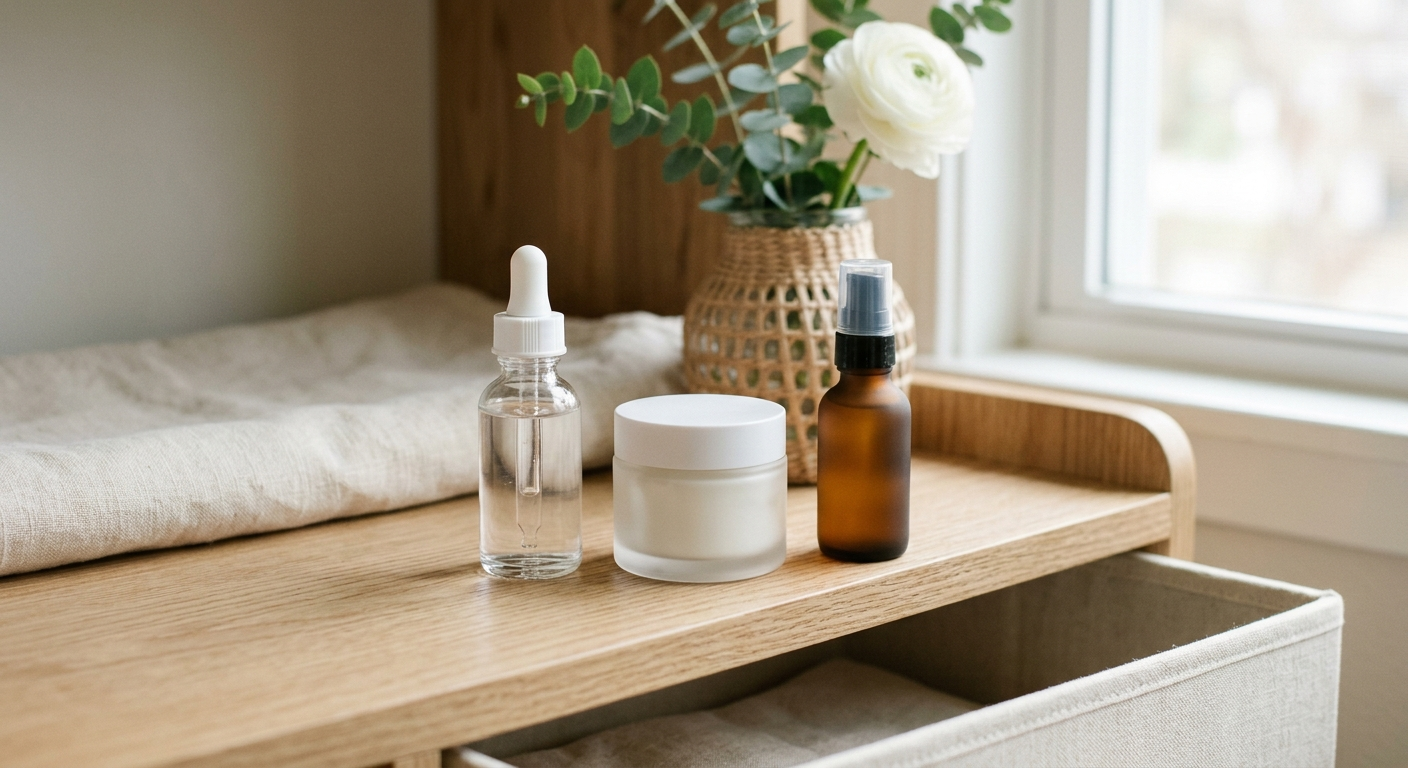
A drawer full of products isn’t the point. A working skinimal kit centers on three things: hydration, sheer coverage, and strategic glow. The sequence below follows the layering logic in minimal tutorials by creators like Elena Rachitskaya, who hydrates the skin before any coverage goes on so products “sit smoother and look more like skin.”
Skinimal vs. Traditional Makeup Routine
| Step | Traditional Full-Coverage | Skinimal Approach |
|---|---|---|
| Base prep | Primer + heavy foundation | Hydrating serum + tinted moisturizer or skin tint |
| Coverage | Full foundation + concealer all over | Concealer only where needed |
| Complexion | Powder + bronzer + contour | Cream blush + liquid highlighter |
| Eyes | Full shadow palette + winged liner | Smudged soft liner + one coat mascara |
| Finish | Setting powder + setting spray | Dewy setting spray or nothing |
| Products used | 10-14 | 4-6 |
| Time | 25-40 minutes | 5-10 minutes |
The Non-Negotiables
If you buy only a few things, start here:
- A hydrating base: A serum or lightweight moisturizer so coverage doesn’t grab onto dry patches.
- A skin tint or tinted moisturizer: Sheer, buildable coverage that evens tone without burying it.
- A cream product for color: Cream blush or a multi-use stick adds life and doubles as lip color.
- A subtle glow: A liquid highlighter or illuminating primer. Charlotte Tilbury says products like a flawless filter create “a gorgeous glow that looks low-maintenance and naturally radiant,” per its minimal makeup guide.
Application Techniques That Sell the “No-Makeup” Look
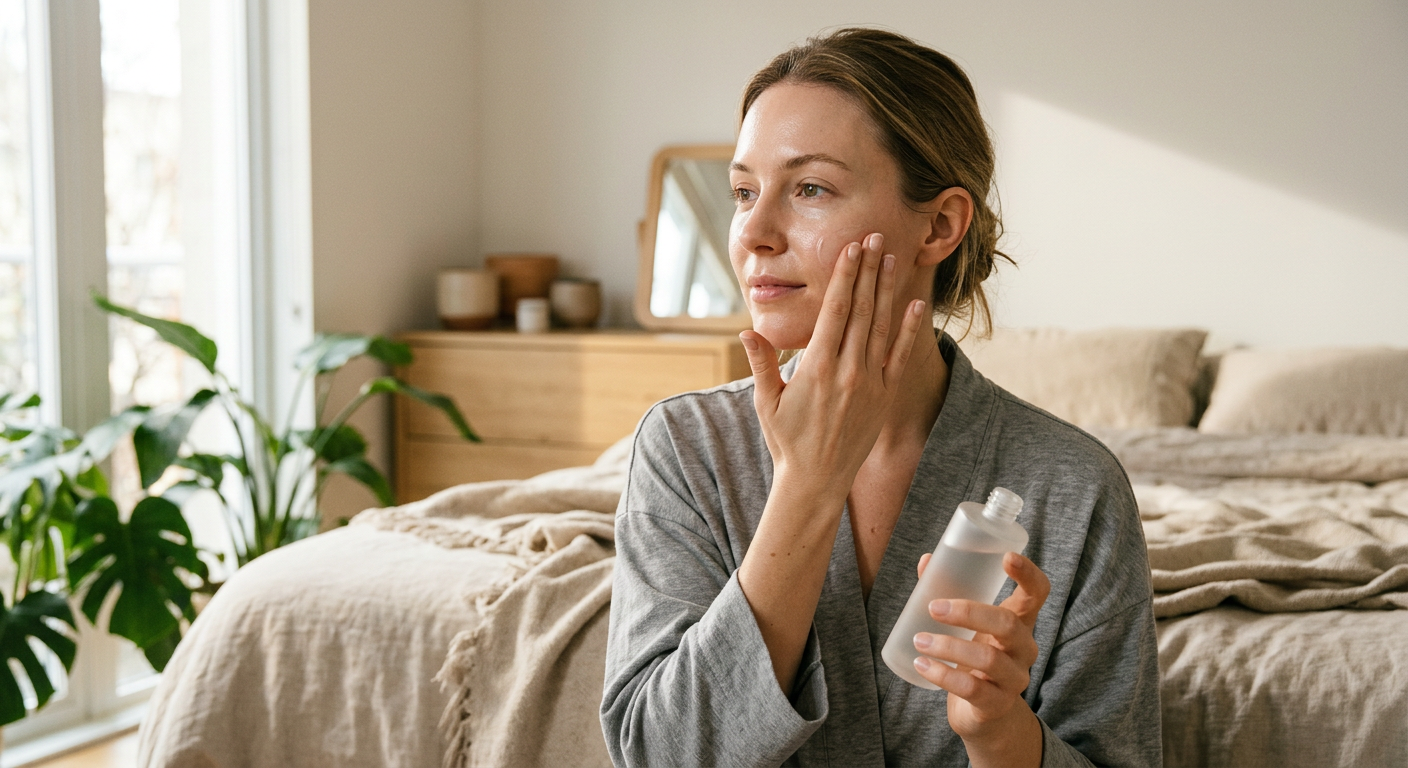
Products matter, but technique decides whether you look fresh or flat. Rule one: hydrate before you cover. Prepping the under-eye area with a small amount of product—”just enough to hydrate and not overload”—keeps concealer from creasing, as Rachitskaya shows in her minimal makeup tutorial.
Spot-conceal instead of blanket-covering. Put concealer only where you have redness or shadows, then blend outward so the coverage fades into bare skin. That’s what preserves the natural texture skinimal looks depend on.
Softening the Eyes
Eyes are where beginners overdo it. Skip the harsh black wing. In her beginner tutorial, Rachitskaya reaches for a deep brown liner, drawing small strokes close to the lash roots and then smudging along the lash line for “definition without looking heavy.”
Choose cream textures over powders wherever you can. Cream blush and liquid highlighter melt into skin and read as natural flush and light. Powders tend to sit on top and look applied.
The Sustainability and Skin-Health Angle
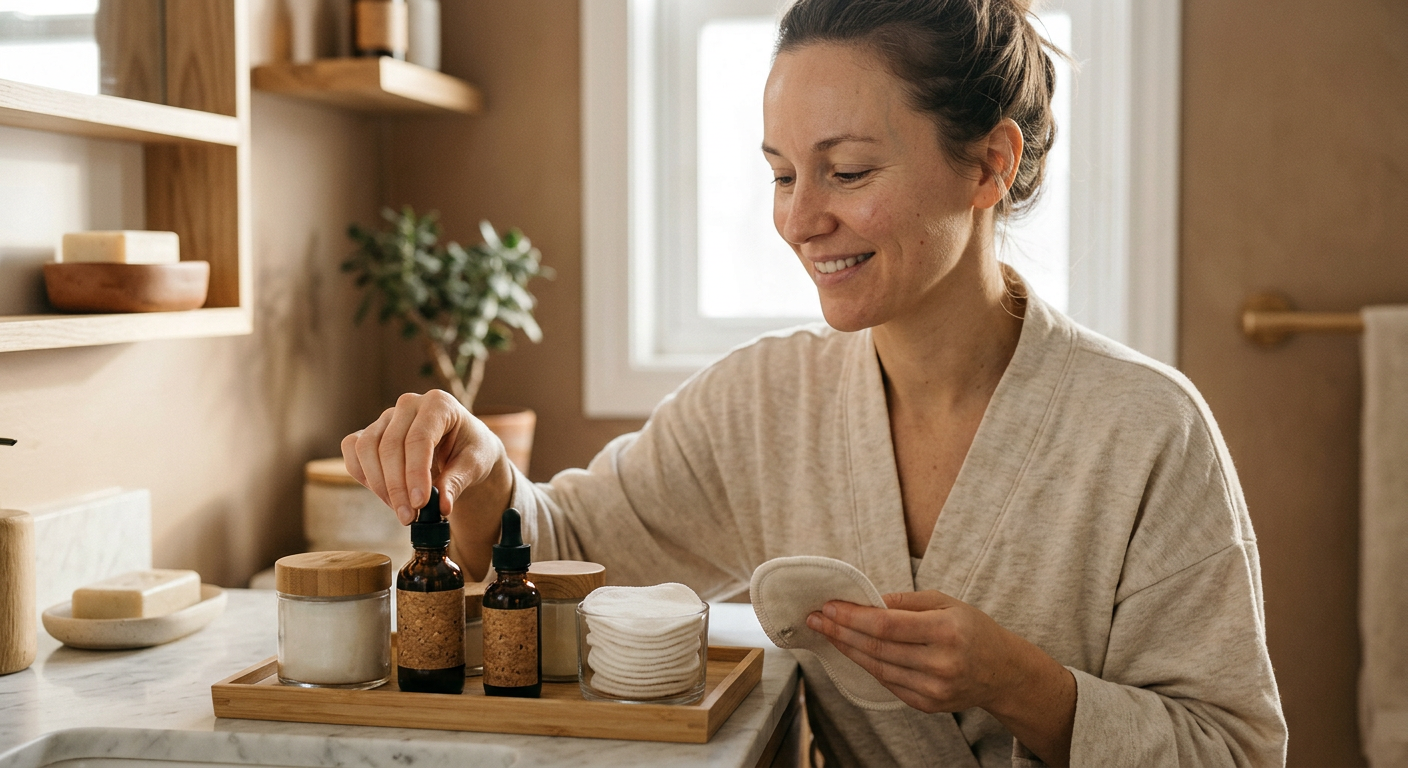
Skinimalism isn’t only about how you look. It lines up with what people increasingly want from beauty brands. Using fewer products means less packaging waste and lower overall consumption. That ties into what in-cosmetics describes as the maturation of “Blue Beauty”—a measurable move toward ocean-safe formulations and sustainable sourcing for 2026.
The skin-health payoff is real too. Heavy daily makeup can clog pores and demand aggressive removal that wears on the skin barrier. Lighter, skincare-infused formulas hydrate and protect through the day, according to Ninth Avenue.
The trend is inclusive by design. Because skinimal makeup focuses on healthy skin rather than one glam standard, it works across genders, which has widened its appeal well beyond traditional makeup users.
How to Transition Without Feeling Bare
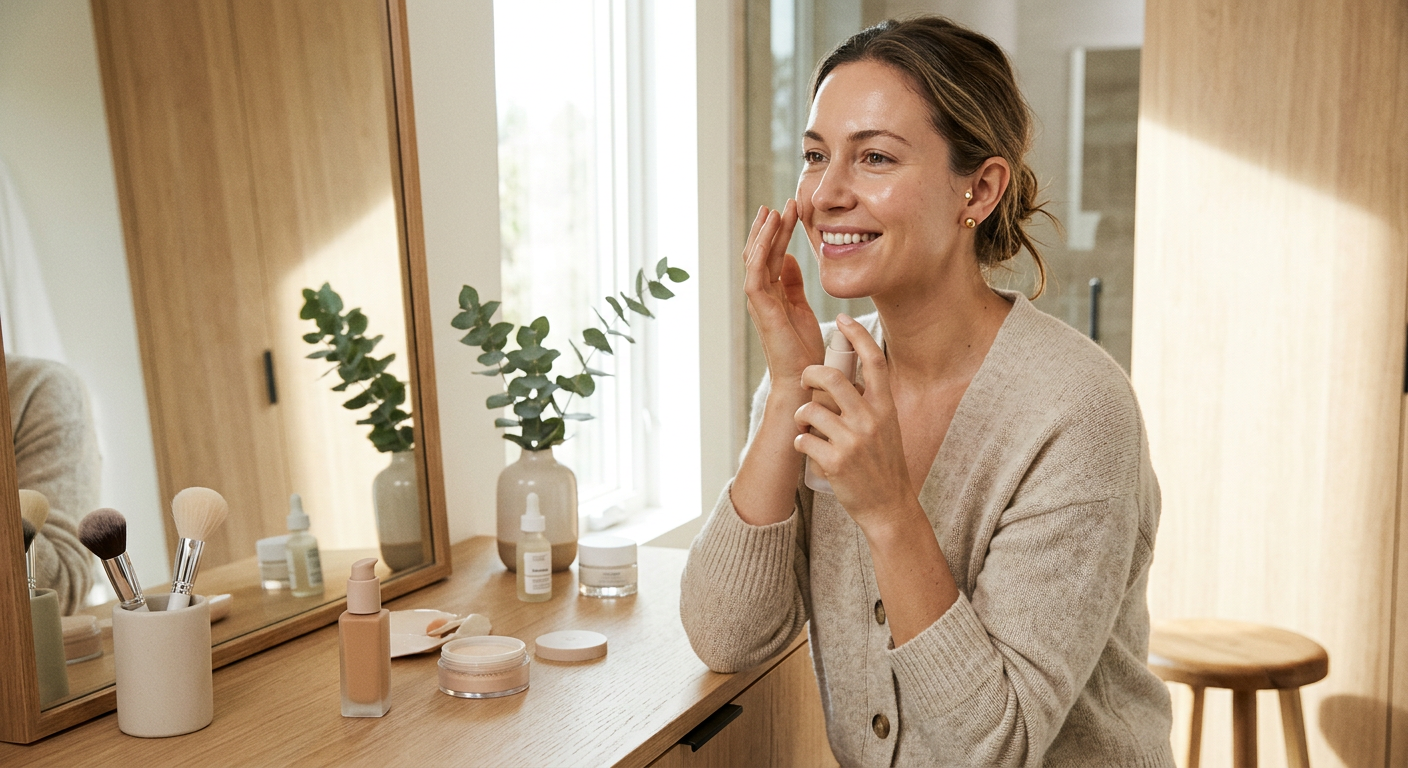
If you’re used to full coverage, going minimal overnight can feel exposing. Swap one product at a time. Trade the heavy foundation for a skin tint first, and keep the rest of your routine familiar until you settle in.
Put money into skincare before makeup. A skinimal look only holds up if the skin underneath is in good shape, so prioritize hydration, sunscreen, and consistent care. Then the makeup becomes enhancement instead of repair.
The last piece is discipline: resist the urge to add “just one more thing.” Knowing when to stop is the whole skill. If your skin looks like skin and your features look defined, you’re done.
Key Takeaways and Next Steps
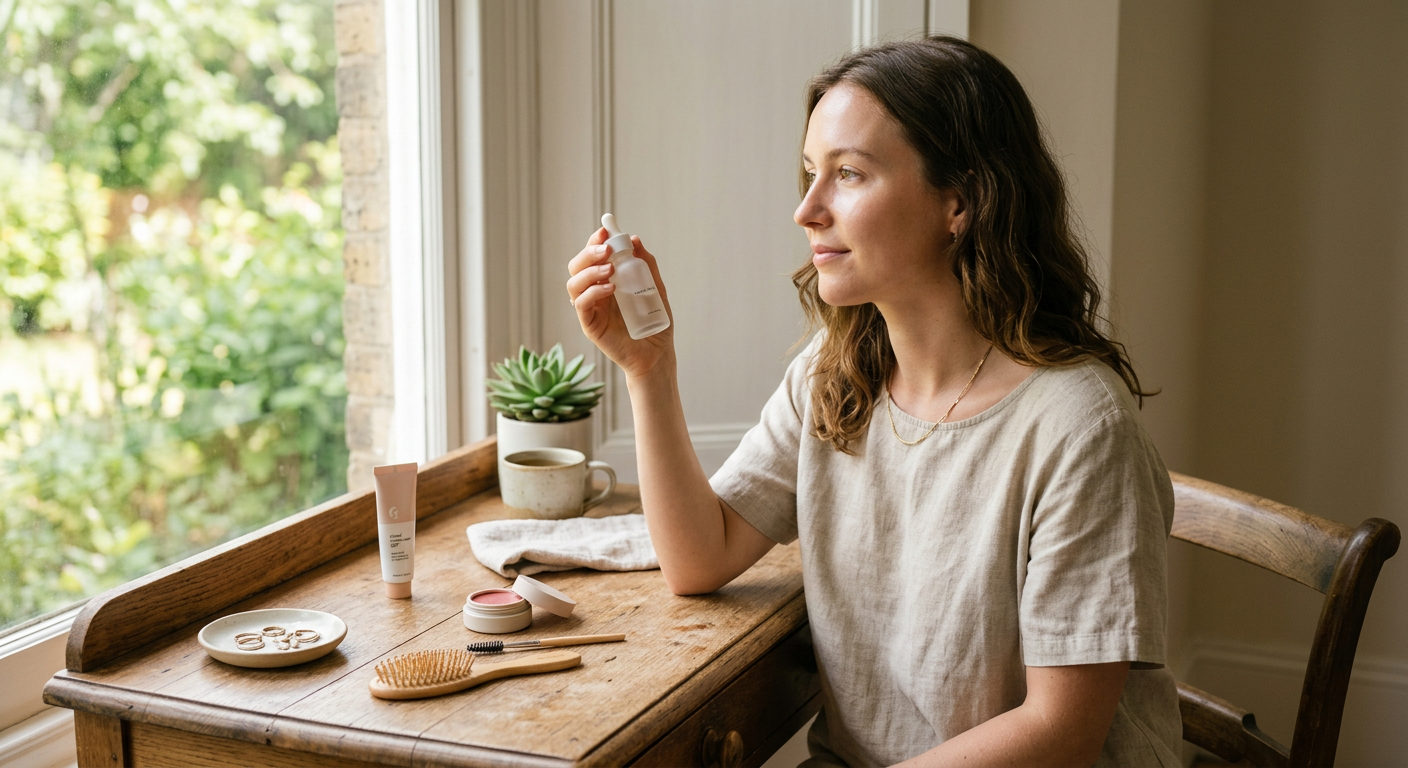
Skinimal makeup has become the everyday default because it saves time, supports skin health, and delivers a natural, camera-ready finish. The formula is simple: hydrate first, cover selectively, add glow where it counts, and lean on hybrid products that do more than one job. With skincare commanding 40% of the beauty market and K-beauty projected to hit $13.24 billion in 2026, this is a durable shift, not a passing fad.
Start small. Pick one hydrating base and one skin tint, get the spot-conceal technique down, and build from there. Go through your makeup bag this week and find one heavy product you can swap for a lighter, skincare-infused alternative.
Frequently Asked Questions
Q: What is skinimal makeup?
Skinimal makeup combines “skin” and “minimal” to describe a routine that uses a few lightweight, skincare-infused products to enhance your natural complexion rather than mask it. The goal is healthy, glowing skin with minimal coverage and effort.
Q: How many products do I need for a skinimal look?
Most skinimal routines use four to six products, compared with ten or more for full-coverage makeup. A typical kit includes a hydrating base, a skin tint, a cream blush, and a subtle highlighter.
Q: Is skinimal makeup good for oily or acne-prone skin?
Yes, when you pick the right formulas. Lighter, breathable products cause less pore congestion than heavy foundations, and many hybrid options include skin-supporting ingredients—though you should still look for non-comedogenic labels.
Q: Does skinimal makeup last all day?
It can, especially when you prep with hydration and set the areas that need it. Because you use less product, there’s less to break down, though you may want a quick touch-up for glow or blush after a long day.
Q: What is the difference between skinimalism and hybrid makeup?
Skinimalism is the overall philosophy of using minimal products for a natural look, while hybrid makeup refers to the specific products that blend skincare and cosmetic benefits. They work together, since hybrid products are what make a skinimal routine possible.
Q: Is skinimal makeup only for women?
No. Because the approach focuses on healthy, natural-looking skin rather than heavy glam, it appeals broadly across genders and is a common entry point for people new to makeup.