

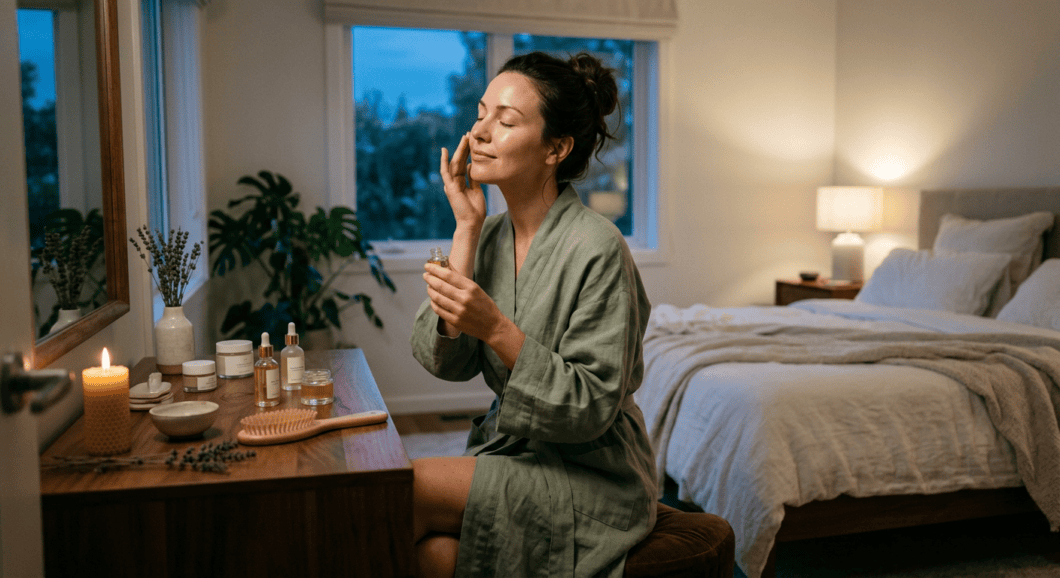

Your skin does its heaviest repair work while you sleep, and the hours leading up to bed largely determine how well that work gets done. An evening wind-down routine does more than help you fall asleep faster. It shapes your complexion, your stress levels, and the face that looks back at you in the morning. Give your body the signal to relax, and you set off a string of biological processes that pay off for your skin, your eyes, and your overall appearance.
Puffy eyes, dull skin, or a fresh breakout after a restless night? The cause often has less to do with your products than with how you spend the 30 to 120 minutes before bed. Building a calming evening routine costs nothing, takes little effort, and has solid science behind it.
Why Sleep Is the Foundation of Beauty

For your skin, sleep is a requirement, not a luxury. As you rest, your body increases blood flow to the skin, ramps up collagen production, and repairs damage from UV exposure and environmental stress. Skimp on quality sleep and you cut those processes short.
The Mindfulness App describes sleep as a gradual process rather than a switch you flip. A wind-down routine works with your body’s natural rhythm: it lowers cortisol and raises melatonin, the hormone that regulates sleep and also functions as an antioxidant for your skin.
The Cortisol Connection
Cortisol, your primary stress hormone, is a major enemy of clear skin. When it stays elevated, it breaks down collagen, increases oil production, and triggers inflammation that worsens acne, eczema, and rosacea. A consistent wind-down routine lowers evening cortisol levels, which gives your skin a calmer environment to repair itself overnight.
How a Wind-Down Routine Triggers Skin Repair
Research cited by The Mindfulness App points to a natural drop in core body temperature, roughly 1.8°F, as the signal that tells your body it’s time to wind down. That temperature shift coincides with the release of growth hormone, which drives cellular regeneration and skin renewal.
The deeper and more consistent your sleep, the longer your skin stays in this regenerative state. Disrupted sleep cuts the cycles short, which slows cell turnover and leaves you with a duller complexion and visible fatigue.
A regular routine also locks in a consistent sleep schedule. Calm notes that a predictable wind-down ritual reinforces your body’s internal clock, so your skin gets its repair window at the same time every night.
The Core Elements of a Beauty-Boosting Evening Routine
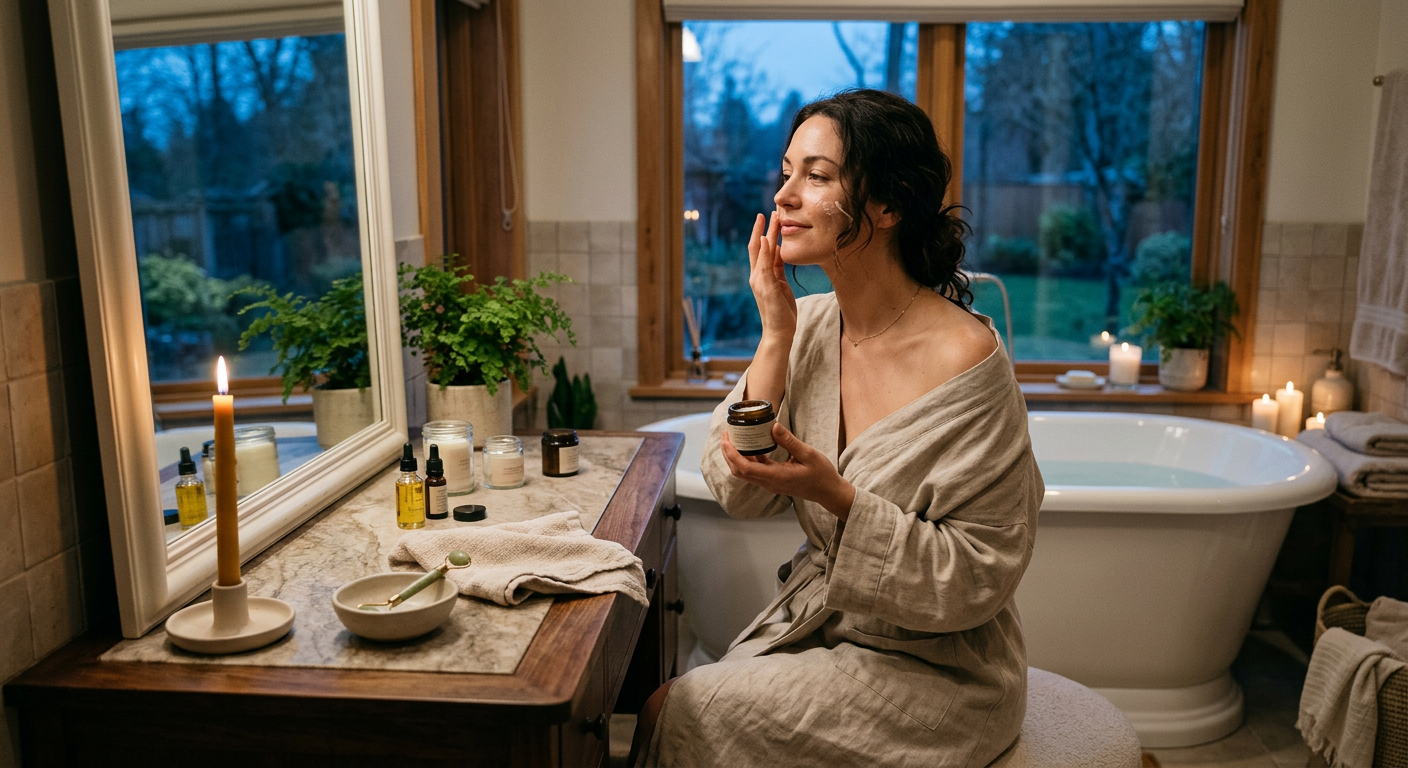
The most effective routines start 30 to 120 minutes before bed and pair calming activities with a few simple skincare steps. There’s no need for an elaborate process. Consistency matters more than complexity.
This table compares several high-impact wind-down practices:
| Practice | Time Needed | Primary Beauty Benefit |
|---|---|---|
| Dim lighting / candles | 0 min (ambient) | Boosts melatonin for better skin repair |
| Warm bath or shower | 15–20 min | Lowers body temperature, eases muscle tension |
| Gentle cleansing & moisturizing | 5 min | Removes buildup, supports overnight hydration |
| Deep breathing or meditation | 5–10 min | Lowers cortisol, reduces stress-related breakouts |
| Reading a physical book | 20+ min | Reduces screen exposure, eases mind into sleep |
| Journaling | 5–10 min | Clears mental stress that disrupts sleep |
Set the Scene First
Start by creating a soothing environment, as WOW Beauty recommends. Dim the lights or switch to candles to get rid of the harsh overhead lighting that suppresses melatonin. Scents like lavender and chamomile add another layer of calm and cue your brain that the day is winding down.
Build in Your Skincare Ritual
Use this window to cleanse away the day’s makeup, sunscreen, and pollution. Follow with a hydrating moisturizer or treatment serum. Overnight is when your skin is most receptive to active ingredients, so this is the time to apply them.
The Stress-Skin Link You Can’t Ignore

Stress shows up on your face. Beyond cortisol-driven breakouts, chronic stress speeds up aging, deepens fine lines, and contributes to a tired, drawn look. A wind-down routine helps you set down the day’s worries, which, as Calm explains, leaves you more relaxed and ready for sleep.
Slow, deep breathing calms the mind and the body together. Activate your parasympathetic nervous system, your “rest and digest” mode, on a regular basis, and you reduce the inflammatory load on your skin.
Journaling deserves a mention of its own. NPR recommends keeping a notebook nearby to write down whatever’s nagging at you and get it out of your head, citing advice from UC Berkeley clinical psychologist Allison Harvey (NPR). Offloading those worries before bed heads off the late-night rumination that keeps cortisol elevated.
Habits That Sabotage Your Beauty Sleep

Some practices support your skin; others quietly undermine it. The Mindfulness App flags late-night screens, heavy meals, caffeine, and alcohol as the usual culprits behind poor sleep quality.
A few common wind-down mistakes to watch for:
- Scrolling on your phone in bed — Blue light suppresses melatonin and delays repair cycles.
- Drinking alcohol before bed — It may make you drowsy, but it fragments deep sleep and leaves skin dehydrated and dull.
- Eating heavy or sugary meals late — Spikes blood sugar and inflammation, which can trigger breakouts.
- Sleeping in makeup — Traps oil and bacteria, clogging pores overnight.
- Skipping a consistent schedule — Irregular sleep times disrupt your skin’s repair rhythm.
Drop even one or two of these habits and your skin will usually look and feel better within a few weeks.
Building a Routine That Actually Sticks

Consistency wins. A 20-minute routine done every night beats an elaborate one you abandon after a week, a point The Mindfulness App makes as well. Choose activities you actually enjoy so the routine feels like a reward instead of a chore.
Start small. Pick two or three practices from the table above and commit to them for one week. Dim your lights, run through your skincare steps, and take five minutes for deep breathing. Once those feel automatic, add another element.
Consistent bedtime routines improve sleep quality, shorten the time it takes to fall asleep, and lower stress, according to EHM Tech. The payoff compounds: better sleep tonight means better skin tomorrow, and a routine you stick with delivers visible results over time.
Conclusion
The beauty case for an evening wind-down routine rests on one fact: your skin repairs itself best when your body is calm and well-rested. By lowering cortisol, raising melatonin, and protecting your sleep cycles, a consistent routine supports collagen production, cuts down on stress-related breakouts, and helps you wake up looking refreshed.
None of it requires expensive products or hours of free time. Dim the lights, cleanse your skin, breathe deeply, step away from screens, and do it again tomorrow night. Start tonight with two or three of the practices in this guide, and give your skin the recovery window it needs.
Frequently Asked Questions
Q: How long before bed should I start my wind-down routine?
Begin 30 to 120 minutes before bed to give your body time to shift from high-energy to relaxation mode. Even a focused 20-minute routine improves sleep quality when you do it consistently.
Q: Does sleep really affect how my skin looks?
Yes. During sleep your body increases blood flow to the skin, boosts collagen production, and repairs daily damage. Poor sleep raises cortisol and shortens these repair cycles, which leads to dullness, puffiness, and breakouts.
Q: What’s the single most important step for better beauty sleep?
Cutting screen time before bed is one of the highest-impact changes you can make. Blue light from phones and tablets suppresses melatonin, which delays both sleep onset and overnight skin repair.
Q: Can a wind-down routine help with stress-related breakouts?
It can. Calming practices like deep breathing and meditation lower cortisol, the stress hormone that increases oil production and inflammation. Less cortisol means a calmer environment for your skin to heal.
Q: Do I need expensive products for an effective evening routine?
No. The most powerful elements cost nothing: dim lighting, deep breathing, consistent sleep timing, and removing your makeup. A simple cleanser and moisturizer are enough to support overnight repair.
Q: How quickly will I see results in my skin?
Many people notice less puffiness and more brightness within one to two weeks of consistent quality sleep. Deeper benefits like reduced fine lines and fewer breakouts develop over several weeks of sticking with the routine.