

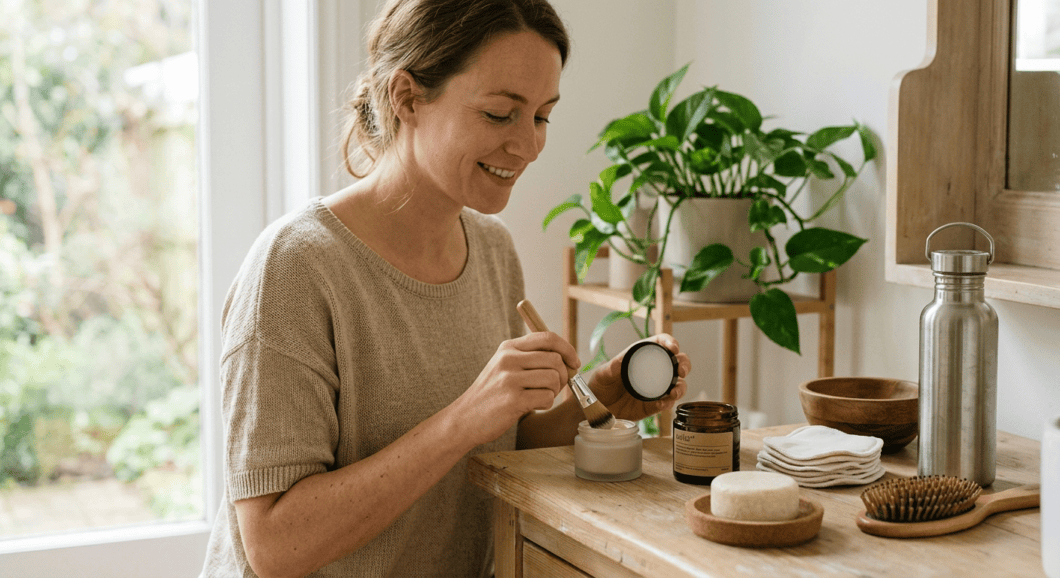
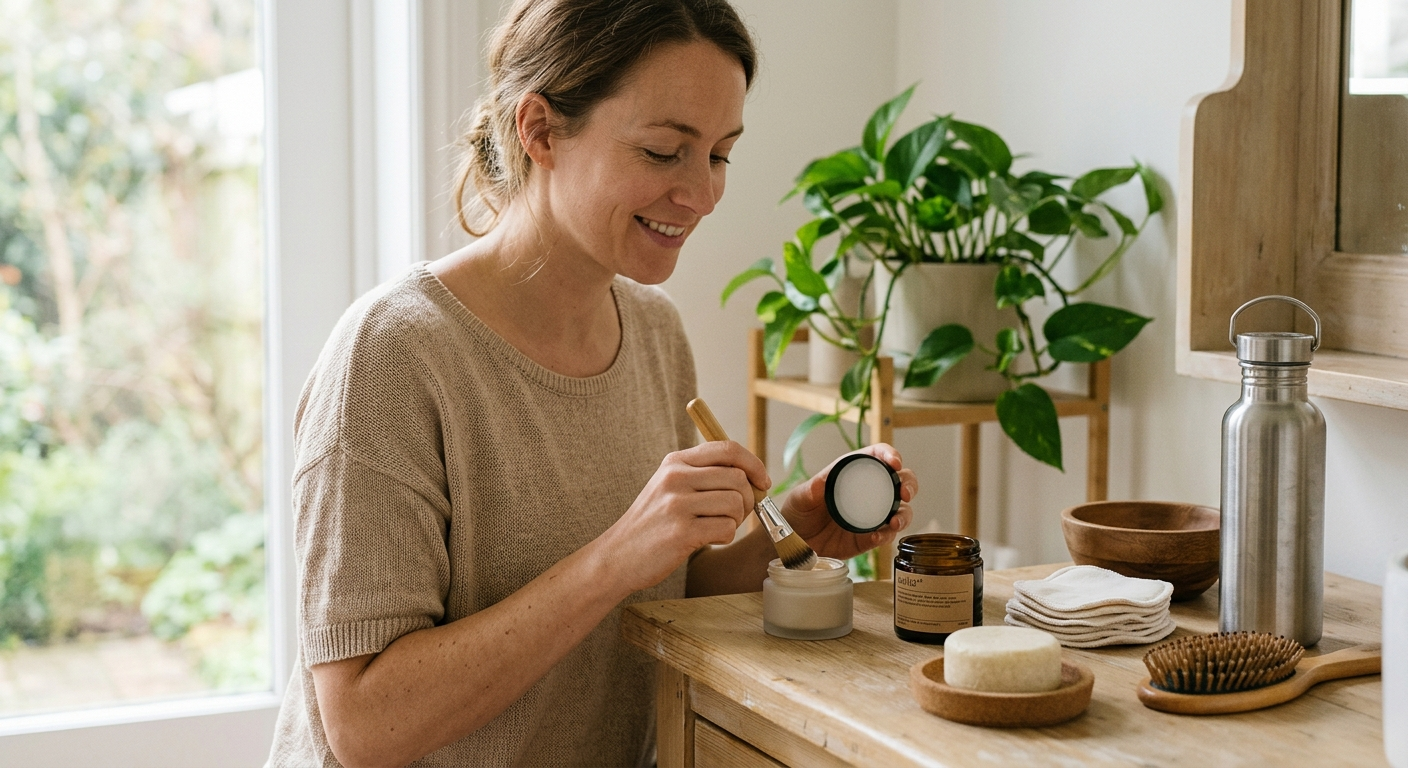
The beauty industry produces roughly 120 billion packaging units every year, and most of them never reach a recycling plant (ZeroWasteStore). That plastic sits in landfills and floats in oceans long after the mascara has dried up. Changing that doesn’t require gutting your entire vanity. Sustainable beauty habits are small, repeatable choices that cut waste, ease the strain on the planet, and usually save money along the way.
Buyers are already moving in this direction. The Roundup reports that 62% of people now “always or often” look for sustainable products, up from 27% in 2021. This guide covers the specific habits worth starting today.
Use What You Already Own Before Buying More
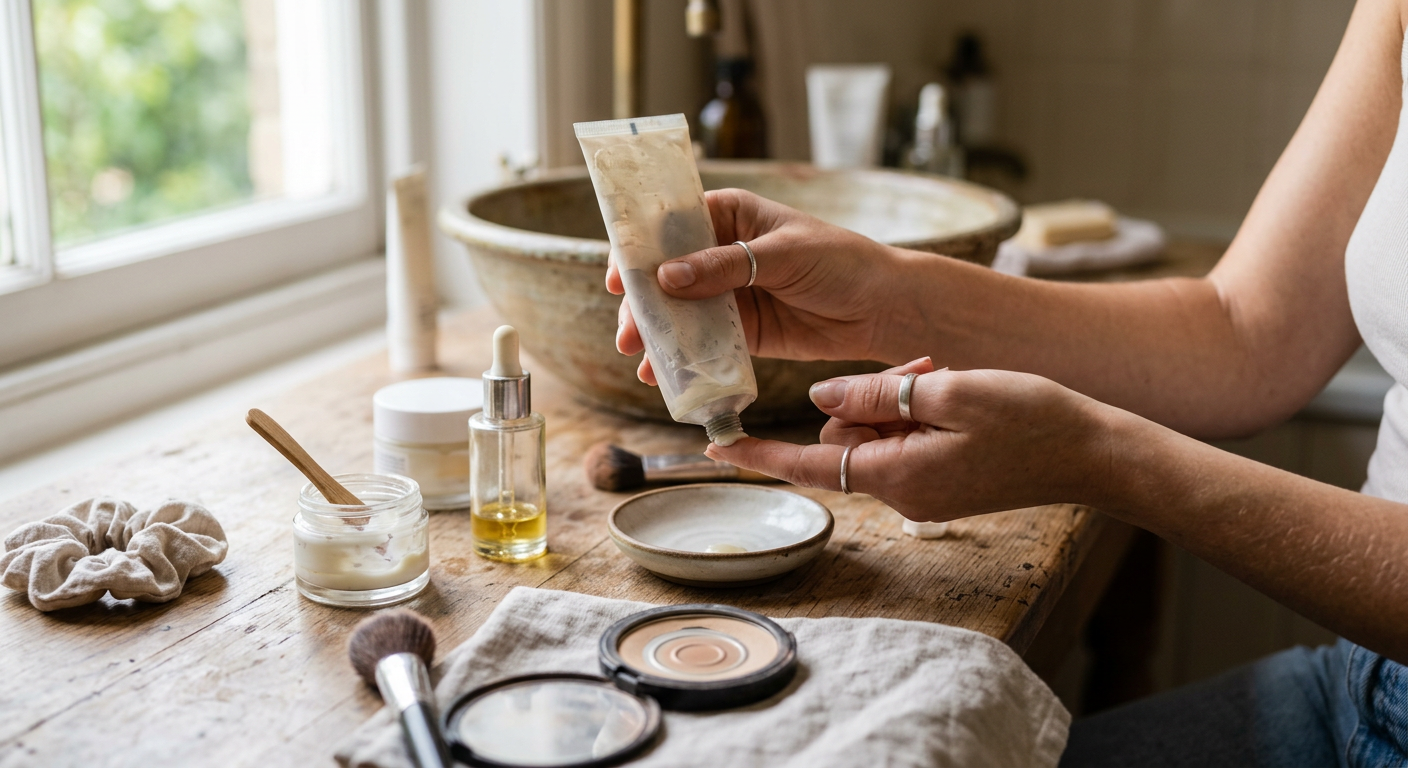
The most sustainable beauty habit costs nothing: finish what you have. Overconsumption is the root of most beauty waste, and the simplest fix is to buy less, less often.
Beauty educator Piper put it plainly in Vogue: “The single best thing anyone can do is to use what you have before you buy anything else, eco-friendly item or not.” Most people never “hit pan” on a product before replacing it. That half-used foundation and the three lip balms rattling around your bag are resources you’ve already paid for.
How to Shop Your Own Stash
Pull every product into one spot. You’ll almost certainly turn up duplicates and forgotten items worth rotating back in.
- Finish usable products before buying replacements.
- Set a “one in, one out” rule for new purchases.
- Store older products in front so they get used first.
- Decant travel sizes into reusable containers instead of buying minis.
Switch to Reusable and Refillable Alternatives
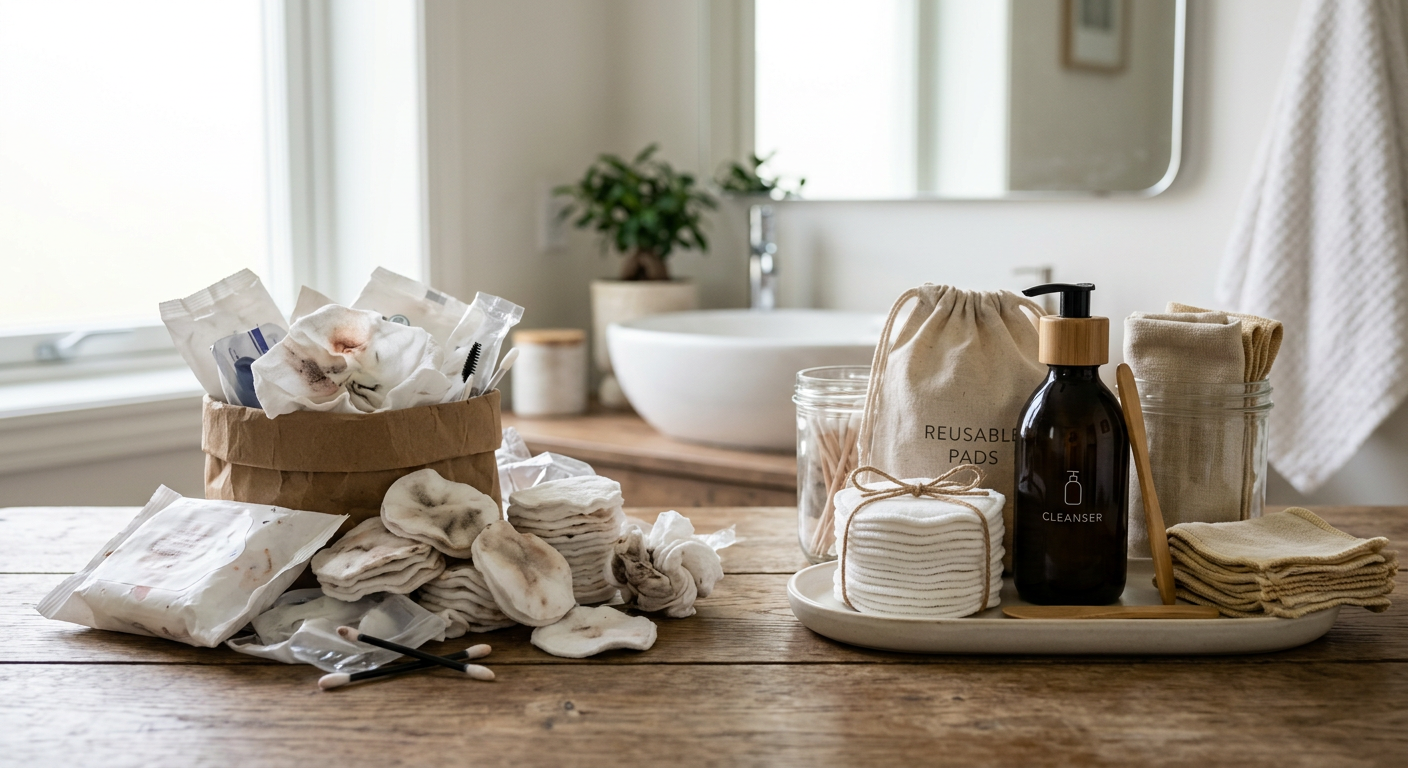
Single-use beauty items pile up quickly. Makeup wipes, cotton pads, and disposable applicators generate daily waste that reusable versions do away with entirely.
Switching to reusable alternatives ranks among the highest-impact changes available (100% PURE). Washable cotton rounds replace hundreds of disposable pads a year. A reusable makeup-removing cloth does the same job with nothing but water.
Refillable packaging is moving from niche to mainstream, too. Some formats, like certain stainless-steel makeup tubes, are built to be refilled thousands of times, which takes plastic out of the equation. Buy a refill instead of a whole new product and you skip the packaging manufacturing cycle completely.
Quick Reusable Swaps
| Single-Use Item | Reusable Swap | Approx. Waste Avoided/Year |
|---|---|---|
| Cotton pads | Washable cotton rounds | 500+ pads |
| Makeup wipes | Microfiber cloth + water | 365+ wipes |
| Plastic razor | Safety razor | 12+ disposables |
| Bottled shampoo | Shampoo bar | 2-3 plastic bottles |
| Single-use tube | Refillable tube | Multiple containers |
Simplify Your Routine

A leaner routine cuts the number of products you buy, the packaging you throw out, and the money you spend. Less really does add up here.
Simplifying means keeping only what you use and value. Multi-purpose products—a tinted moisturizer with SPF, or a balm that works on lips and cheeks—reduce both clutter and consumption. Fewer steps also mean less product going down the drain and into water systems.
This pairs naturally with using what you own. As you finish items, resist the urge to replace every one. Your skin and your budget both tend to improve with a shorter lineup.
Choose Products That Use Less Water
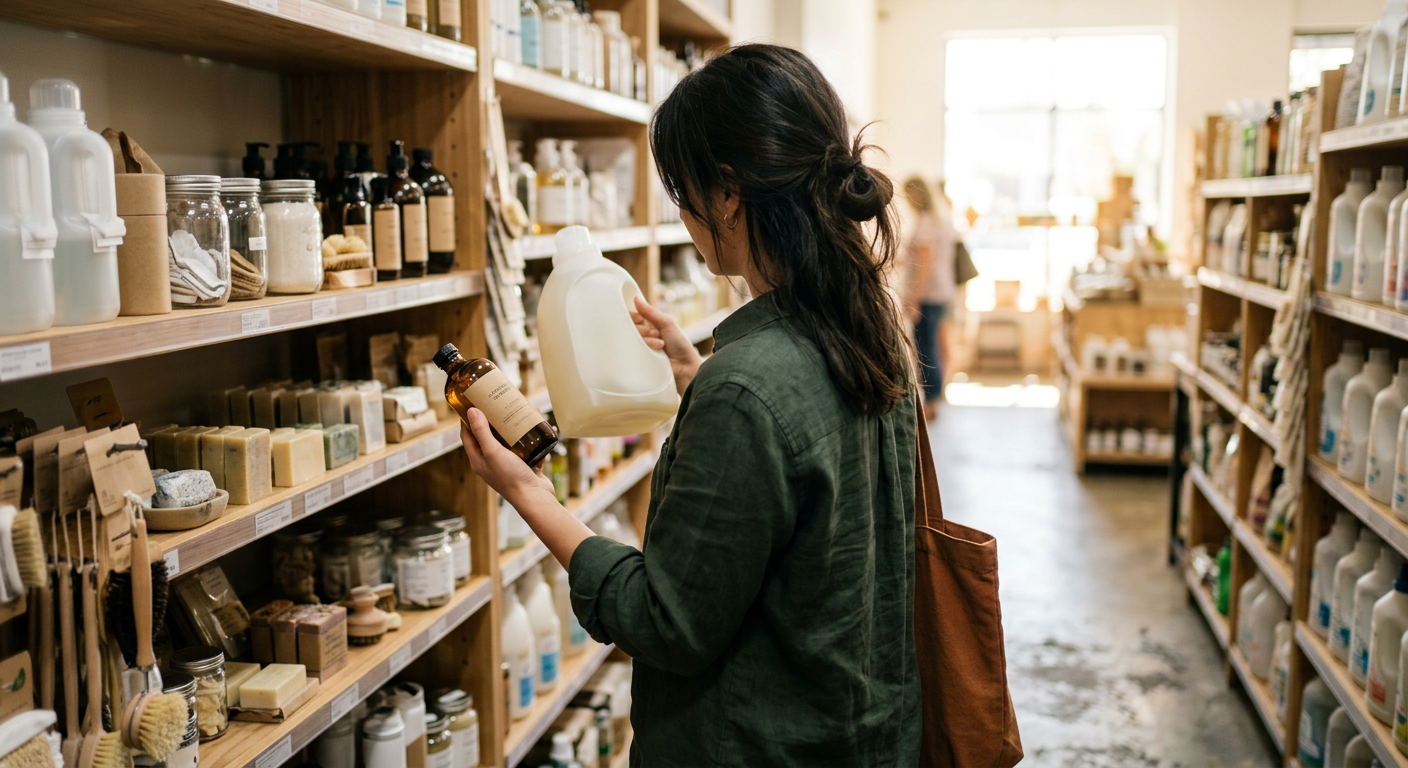
Water conservation gets overlooked in these conversations. Many liquid products are mostly water, which adds weight, requires more packaging, and burns more energy in shipping.
Waterless or “anhydrous” formats fix several problems at once. Bar shampoos and conditioners pack concentrated formulas into no plastic bottle, and they last longer per use (100% PURE). Concentrated cleansers, powder masks, and solid moisturizers work on the same principle.
Daily habits count as well. Turn off the tap while you apply a cleanser or mask and you’ll save gallons over a week without changing a single purchase.
Support Brands With Genuine Eco Credentials
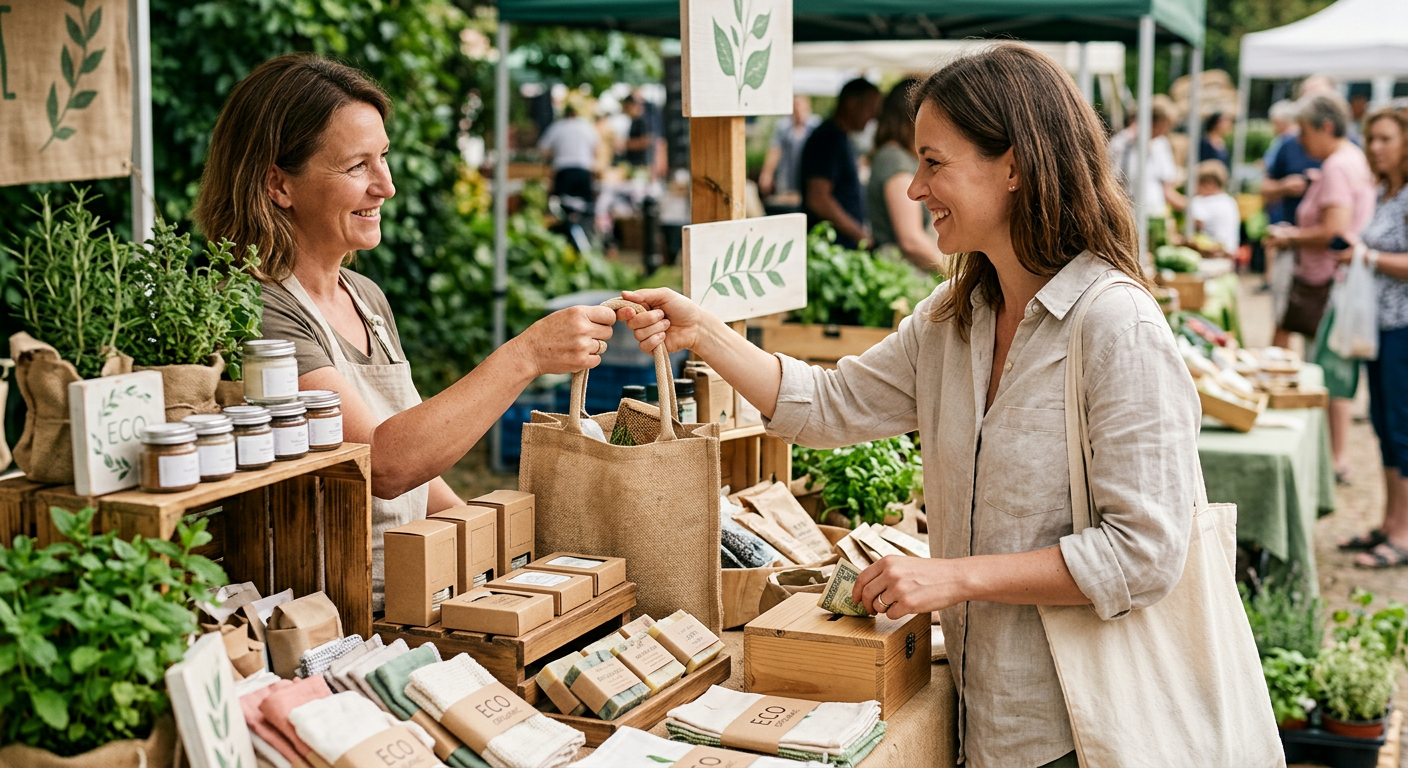
Where you spend your money sends a signal. Backing brands that do the hard work rewards them and pressures the rest of the industry to catch up.
The demand is there. Attest found that 56% of Gen Z would pay more for eco-conscious products, and 67% put sustainability near the top of their priorities. Brands are answering with cleaner ingredients, refill systems, and more transparent supply chains.
What to Look For in a Sustainable Brand
Plenty of “green” claims fall apart under scrutiny, so judge brands on concrete evidence rather than marketing copy.
- Manufacturing: Energy-efficient production using green energy or reduced water and electricity (CleanHub).
- Packaging: Recyclable, refillable, or plastic-free formats.
- Ingredients: Clean, naturally derived, and clearly listed. 63% of Gen Z actively seek natural ingredients.
- Certifications: Vegan, cruelty-free, and carbon-neutral facility claims backed by third parties.
- Diversity and values: 31% of consumers avoid brands lacking diversity, so values matter alongside formulas.
Recycle, Upcycle, and Dispose Responsibly
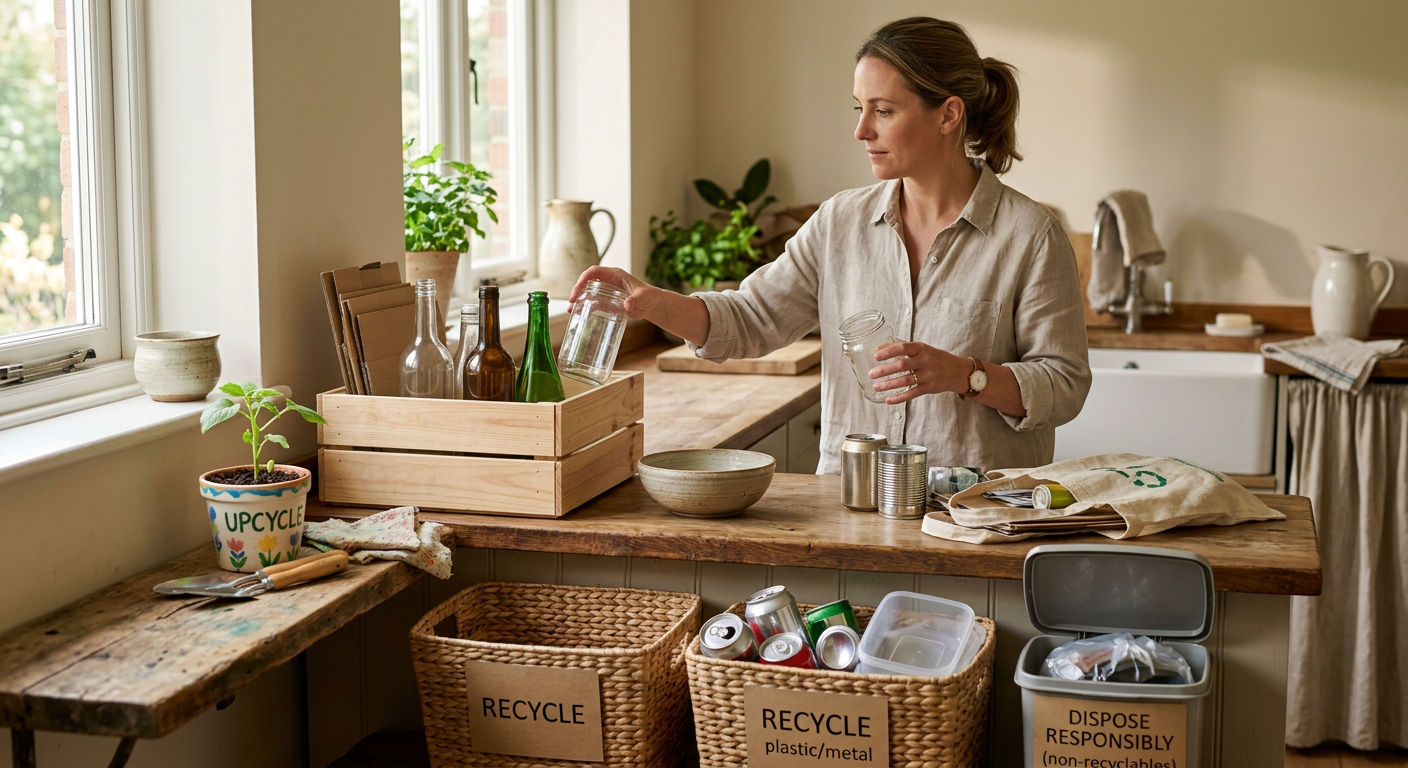
Even a careful routine generates some empties. How you handle them decides whether they get a second life or add to the landfill.
Check whether your containers are recyclable, and rinse them well before disposal (Spinster Sisters Co.). Many pumps and mixed-material lids can’t go in curbside bins, so separate those out. Some brands and retailers also run take-back programs for the packaging that’s hard to recycle at home.
Upcycling stretches the value further. Empty glass jars and bottles make solid storage for DIY products, travel decants, or small household odds and ends. A little effort keeps usable materials out of the waste stream.
Conclusion: Small Habits, Lasting Impact
Sustainable beauty isn’t about replacing everything you own with a new set of “green” products. It starts with using what you already have, switching to reusable and refillable alternatives, and trimming your routine. From there, choose waterless formats, back brands with real eco credentials, and dispose of empties responsibly.
Each habit is small on its own. Together they cut waste, conserve resources, and often lower your spending. Pick one change from this list—shopping your own stash is a strong place to start—and build from there. Your routine, your wallet, and the planet all come out ahead.
Frequently Asked Questions
Q: What is the easiest sustainable beauty habit to start with?
Use what you already own before buying anything new. It costs nothing, cuts waste immediately, and keeps you from buying duplicates you’d otherwise toss half-used.
Q: Are sustainable beauty products more expensive?
Some carry a higher upfront price, but many save money over time. Reusable cotton rounds, safety razors, and refillable products replace items you’d otherwise repurchase again and again, which lowers your long-term costs.
Q: How can I tell if a beauty brand is genuinely sustainable?
Look for concrete evidence: recyclable or refillable packaging, energy-efficient manufacturing, transparent ingredient lists, and third-party certifications like cruelty-free or carbon-neutral. Be skeptical of vague “green” claims that come without proof.
Q: What does “waterless beauty” mean?
Waterless or anhydrous products contain little or no added water—shampoo bars, powder cleansers, and solid moisturizers, for example. They use less packaging, ship more efficiently, and often last longer per use.
Q: Can I recycle all my empty beauty containers?
Not always. Many containers are recyclable once rinsed clean, but pumps, mixed-material lids, and certain plastics aren’t accepted curbside. Check your local guidelines and look for brand take-back programs for the hard-to-recycle items.
Q: Does simplifying my routine actually help the environment?
Yes. Fewer products mean less packaging waste, lower manufacturing demand, and less product washing into water systems. A leaner routine reduces consumption at the source, which is one of the most effective ways to shrink your beauty footprint.