



The most coveted complexion of 2026 looks less like a mirror and more like a morning sky. Cloud skin makeup — defined by a soft, matte, and subtly luminous finish — has moved from niche editorial territory into mainstream beauty, and the reasons are practical as much as aesthetic. If you’ve spent the last few years chasing the glass skin glow, the shift happening right now is worth understanding.
What Is Cloud Skin Makeup?

Cloud skin is a makeup finish that mimics the way light filters through a cloud: hazy, diffused, and ethereal rather than reflective and wet. According to Ultimate Face, the look “emphasizes natural beauty by seamlessly matching, blending, and blurring makeup into the complexion to create a subtly luminous, smooth, and ethereal version of the bare face.”
The key distinction is that cloud skin is not a flat or cakey matte. It sits in a precise middle ground — controlling shine without stripping skin of its natural dimension. Think of it as a soft-focus filter applied in real life, one that blurs imperfections without erasing the person underneath.
It doesn’t flatten the face or fake a dewy sheen. It creates what many describe as a “your skin but softer and smoother” effect — no filter required, as Ultimate Face notes in its viral breakdown of the trend.
Cloud Skin vs. Glass Skin: Understanding the Shift

Glass skin dominated beauty conversations for years, built on a foundation of extreme hydration and a high-shine, almost wet-looking finish. Cloud skin is a deliberate move away from that aesthetic — not a rejection of healthy skin, but a reframing of what healthy skin looks like.
Key Differences at a Glance
As Masala Thai puts it, cloud skin “focuses on blurred, healthy-looking skin that feels more natural and perfect for everyday looks.” Glass skin isn’t obsolete — it simply no longer holds a monopoly on what a polished complexion can look like.
The cultural context matters. After years of maximalist, highly filtered aesthetics, consumers are gravitating toward looks that feel achievable and authentic. Cloud skin delivers that without sacrificing sophistication.
Why Cloud Skin Is Dominating 2026 Beauty Trends

Several forces converged to push cloud skin to the top of the trend cycle in 2026. The most significant is a broad consumer shift toward naturalism — makeup that enhances rather than transforms.
Humidity and climate are practical factors. As Unique Bunny notes, the soft-matte finish is “the perfect middle ground for spring, offering a sophisticated look that feels weightless as the humidity begins to rise.” A high-shine finish breaks down quickly in warm weather; a cloud skin finish holds.
There’s also a sustainability angle. The Demis Clinic frames cloud skin as part of a broader redefinition of sustainable beauty — one that prioritizes skin health and longevity over heavy product layering. Fewer, better products applied with intention align with how modern consumers approach both their budgets and their skincare routines.
Social media accelerated the trend. The aesthetic photographs cleanly, translates across skin tones, and performs well in both natural and artificial light — a practical advantage that glass skin’s hyper-reflective finish doesn’t always share.
How to Achieve the Cloud Skin Look: A Step-by-Step Breakdown
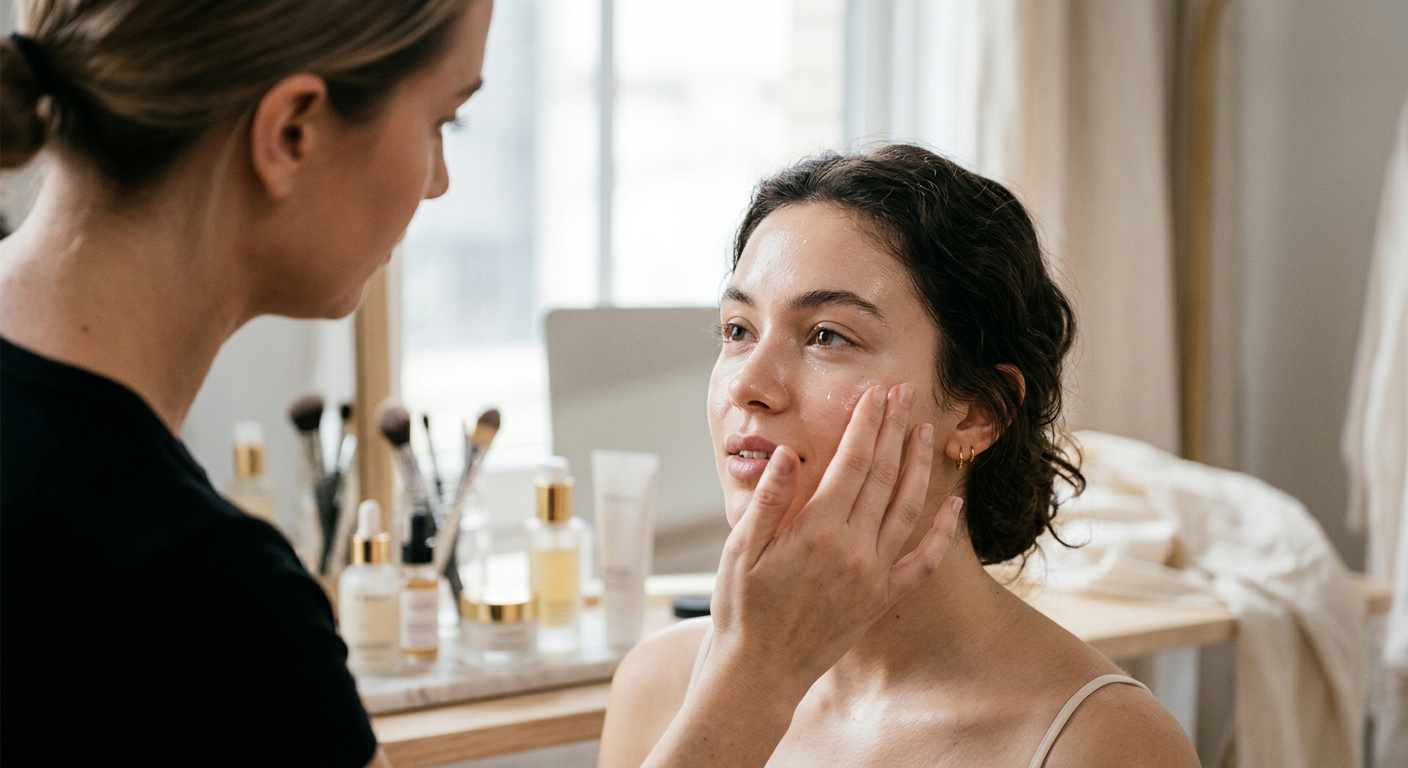
Getting cloud skin right requires understanding that the foundation is literal — it starts with your skin, not your products.
Start With a Hydrated Canvas
Cloud skin demands a clean, well-moisturized base. Ultimate Face is direct on this point: “the dewy, flawless finish of Cloud Skin is especially demanding of a clean, well-moisturized canvas.” Apply a lightweight moisturizer and allow it to absorb fully before any makeup application.
A hydrating primer locks in moisture while creating a smooth surface for the soft-matte products that follow. Skip silicone-heavy primers — they can create a barrier that prevents the blurred effect from reading naturally on skin.
Build Coverage Strategically
The goal is skin that looks perfected, not covered. Use a light-to-medium coverage foundation or skin tint as your base, then spot-conceal where needed rather than applying heavy coverage across the entire face. Blend thoroughly — cloud skin lives or dies by seamless blending.
Cream products work particularly well at this stage. They meld into skin more naturally than powder formulas and create the soft dimension that defines the look.
Set for a Hazy Glow
This step separates cloud skin from a standard matte finish. Rather than setting with a heavy translucent powder, use a finely milled, blurring powder applied with a light hand. The goal is to diffuse shine without creating a flat, powdery surface.
Unique Bunny recommends completing the look with blurred lip products — such as a mousse lip tint — to extend the hazy, cloud-like finish across the entire face rather than isolating it to the complexion alone.
The Best Products and Formulas for Cloud Skin

Not every product delivers the cloud skin effect. The finish requires specific formulas that balance coverage, blurring, and breathability simultaneously.
Products that work well for cloud skin:
- Skin tints and serum foundations — lightweight coverage that lets skin texture show through naturally
- Blurring primers — pore-minimizing formulas that create a diffused base without heaviness
- Finely milled setting powders — translucent or lightly pigmented powders that absorb shine without a chalky finish
- Cream blushes and bronzers — blend seamlessly into skin for a natural flush rather than a surface-sitting powder effect
- Mousse or velvet lip products — complete the soft-focus aesthetic without contrasting with the blurred complexion
Avoid heavy-coverage foundations, glitter-based highlighters, and wet-finish setting sprays. These pull the look toward glass skin territory and undermine the soft-matte effect.
Cloud Skin Across Different Skin Types and Tones
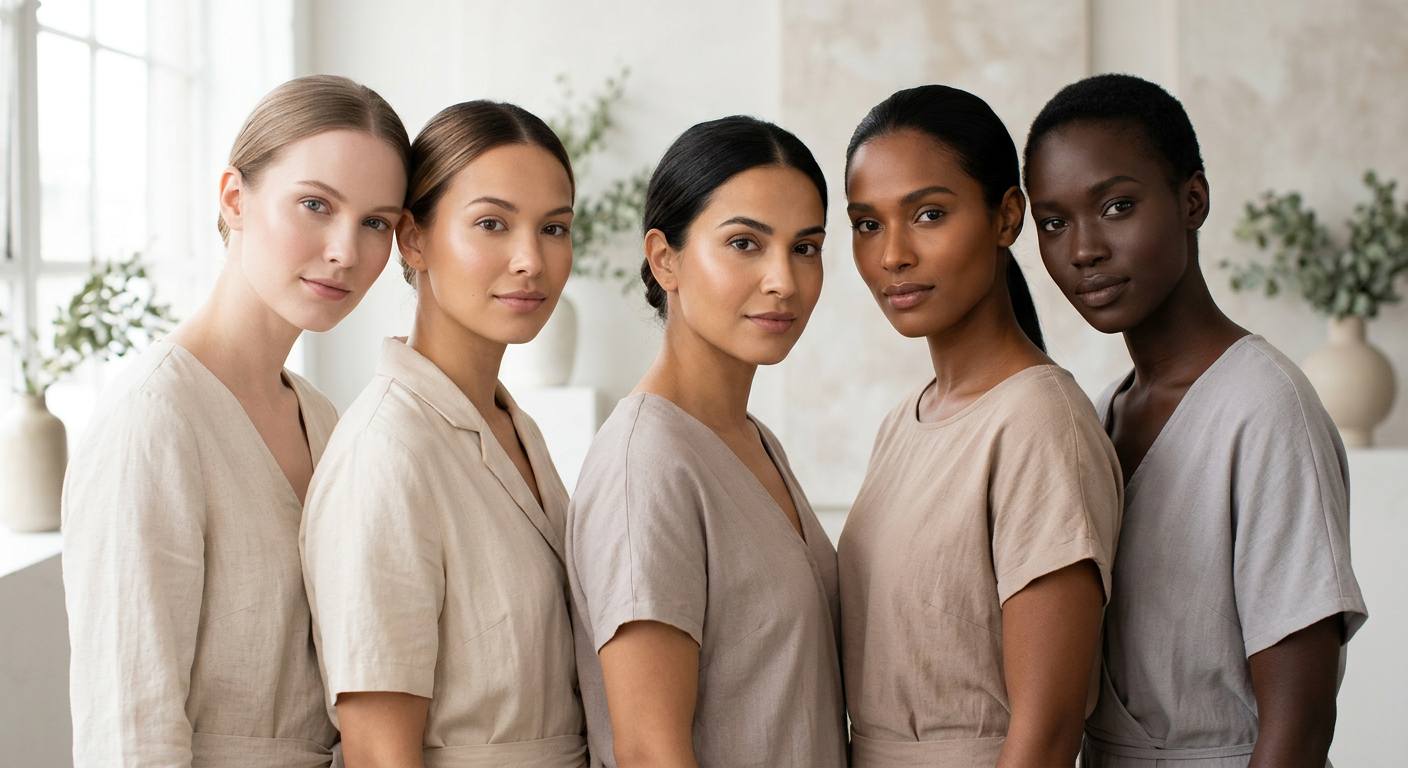
One of cloud skin’s genuine strengths is its versatility. The soft-matte finish flatters a wide range of skin tones because it reduces the harsh contrast that high-shine finishes can create — particularly on deeper complexions, where reflective products can read as ashy or uneven.
Adapting the Technique by Skin Type
- Oily skin: Use a mattifying primer and focus powder application on the T-zone. The rest of the face can remain relatively product-light to avoid a cakey finish.
- Dry skin: Layer cream products and use powder sparingly — only where shine control is genuinely needed. The natural texture of well-moisturized dry skin often achieves the cloud effect with minimal setting.
- Combination skin: Apply powder selectively to oily zones while leaving drier areas bare or cream-only. This creates natural variation that reads as authentic skin rather than uniform coverage.
The blurring principle works regardless of skin tone. Matching your base products precisely to your complexion — as Ultimate Face advises — is essential for the seamless blend that makes cloud skin read as “your skin, but better” rather than “makeup on skin.”
Cloud Skin and the Future of Complexion Makeup

Cloud skin reflects a broader realignment in how consumers think about makeup’s purpose. The trend sits within a larger movement toward skin-positive beauty — products and techniques that work with the face rather than over it.
The commercial implications are already visible. Brands that built their identity around high-coverage, full-glam formulas are expanding into lighter, skin-enhancing categories. Demand for blurring powders, skin tints, and breathable setting products has grown measurably alongside cloud skin’s rise.
Whether cloud skin holds through the rest of 2026 or evolves into something adjacent, the underlying principle — that makeup should enhance rather than mask — looks like a durable shift. The appetite for authenticity isn’t going away, and cloud skin is currently its most refined expression in complexion makeup.
Conclusion
Cloud skin makeup has earned its place as 2026’s defining complexion trend by solving a real problem: how to look polished without looking overdone. The finish sits between dewy and flat, creating a soft-matte, blurred effect that photographs well, wears comfortably, and works across skin types and tones.
The shift from glass skin to cloud skin isn’t about abandoning the pursuit of great skin — it’s about redefining what great skin looks like day-to-day. Hydrated, blurred, and naturally luminous beats wet and reflective for most people in most situations.
To try the look: start with your skincare routine, choose lightweight and cream-based makeup products, and set with a light hand. The goal is skin that looks like a better version of itself.
Frequently Asked Questions
Q: What is cloud skin makeup?
Cloud skin makeup is a complexion finish that appears soft, matte, and slightly hazy — similar to how light looks when filtered through a cloud. It blurs imperfections without heavy coverage, creating a “your skin but smoother” effect rather than a full-coverage or high-shine look.
Q: How is cloud skin different from glass skin?
Glass skin prioritizes a high-shine, dewy, reflective finish achieved through extreme hydration and luminous products. Cloud skin creates a diffused, soft-matte finish that controls shine while maintaining a natural, healthy-looking glow. Cloud skin is generally more wearable in warm or humid conditions.
Q: What products do I need for cloud skin?
The core products are a lightweight foundation or skin tint, a blurring primer, cream-based blush or bronzer, and a finely milled setting powder. Avoid heavy-coverage formulas and glitter-based highlighters, which work against the soft-matte finish that defines the look.
Q: Does cloud skin work on oily skin?
Yes. Use a mattifying primer and apply setting powder primarily on the T-zone. This controls shine in high-oil areas while keeping the rest of the face light and natural-looking — which is exactly the balance cloud skin requires.
Q: Is cloud skin suitable for all skin tones?
Cloud skin works across a wide range of skin tones. The blurring, soft-matte finish reduces the harsh contrast that high-shine products can create on deeper complexions. The key is matching your base products precisely to your skin tone so the look blends seamlessly rather than sitting on top of the skin.
Q: Is glass skin out of style in 2026?
Glass skin is not obsolete, but it is no longer the dominant complexion trend. As Masala Thai notes, “glass skin is not out, but it’s no longer the only beauty trend as people are moving more towards a balanced, ‘your skin, but better’ look.” Cloud skin currently reflects where mainstream beauty appetite sits in 2026.