

Throwing out a half-full bottle that still works is about the least green thing you can do, yet plenty of “sustainable” beauty advice pushes exactly that: replace everything at once, starting now. That’s backwards. A low-waste routine gets built gradually, swap by swap, at the moment you’d be buying a refill anyway. Done right, it stretches your products further and slowly cuts down the plastic clutter in your bathroom.
You won’t need a shelf of new purchases to begin. What you need is a sense of which swaps give you the most for the least effort. This guide covers the changes that add up, with an eye on getting more mileage out of the products already in your cabinet.
Start With What You Already Own

Tossing working products to feel like you’ve made a fresh start is the quickest way to give up on low-waste beauty. Use up what you have first. If your cleanser, deodorant, or body wash still does the job, run it to the end and swap when it’s time to replace it anyway.
Viva La Body frames zero-waste beauty as a question of what you do next, not a dramatic clean break. Total overhauls collapse because they cost a fortune in one go and force you to learn five routines in a week. One swap at a time works: it’s cheap, it’s manageable, and every change gets a proper trial.
This approach also stretches your products. Slow down, use every last drop, and you’ll buy less, spend less, and waste less without overhauling anything.
Target Your High-Frequency Products First
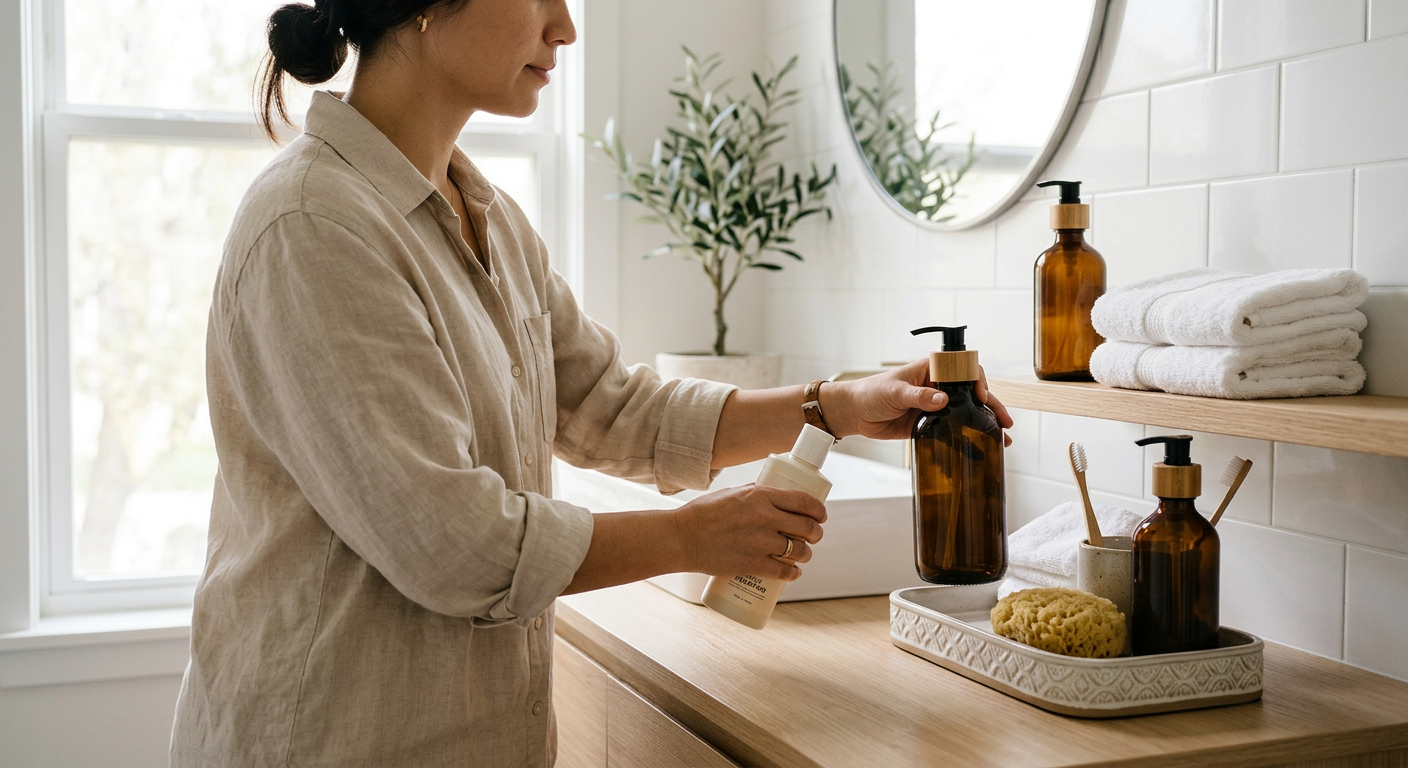
Some products get used sparingly and last months no matter how they’re packaged, so swapping them barely moves the needle. The ones worth targeting are the products you replace most often. Those do the most packaging damage over a year, purely through repetition.
Sugarbush UK suggests picking whichever of your cleanser, serum, or moisturiser you rebuy most often, replacing it with a low-waste alternative, and living with it before adding another. High-frequency items are where a swap pays off fastest.
How to Prioritise Your Swaps
This quick framework helps you decide where to begin:
| Priority | Product Type | Why It Matters |
|---|---|---|
| High | Body wash, shampoo, deodorant | Replaced frequently; heavy plastic packaging |
| High | Cotton pads, makeup wipes | Daily single-use waste |
| Medium | Cleanser, moisturiser | Regular use; refill options available |
| Low | Serums, treatments | Used sparingly; last for months |
Work from the top down. Whatever you run out of first is where a low-waste version gives you the biggest, quickest return.
Swap Single-Use for Reusable
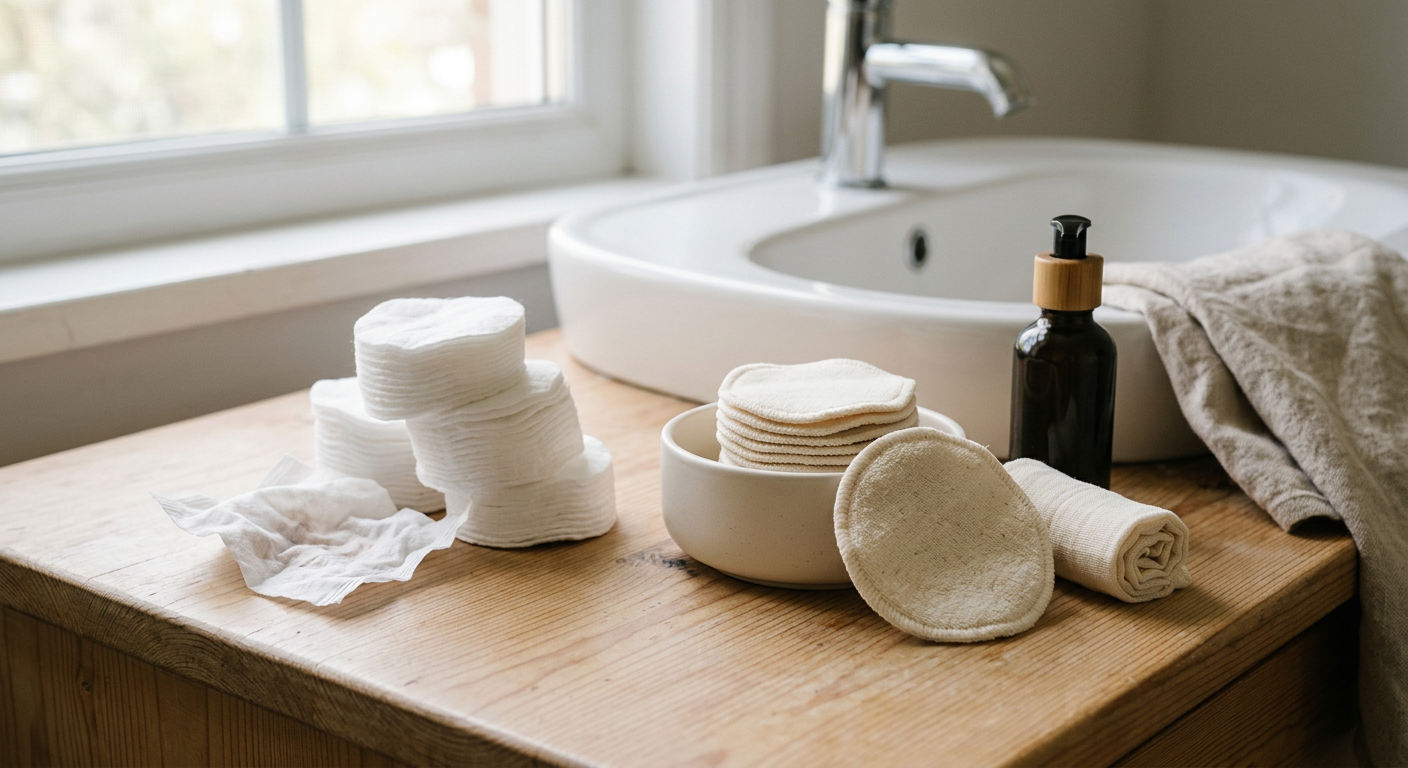
Single-use cotton pads and makeup wipes are convenient, but they generate daily waste and usually arrive wrapped in plastic. Reusable organic cotton rounds are one of the simplest swaps going, and it’s nearly a one-for-one exchange.
Lauren Singer told Into The Gloss that you use reusable cotton rounds the same way you’d use disposables, except you wash them with your laundry instead of binning them. Conscious Skincare points out that one set of washable organic cotton pads can replace hundreds of disposables over its life.
The reusable logic goes beyond cotton rounds. A stainless steel safety razor replaces a steady stream of disposable plastic ones. Small changes like these compound quietly over months and years.
Choose Solid Bars and Concentrated Formats
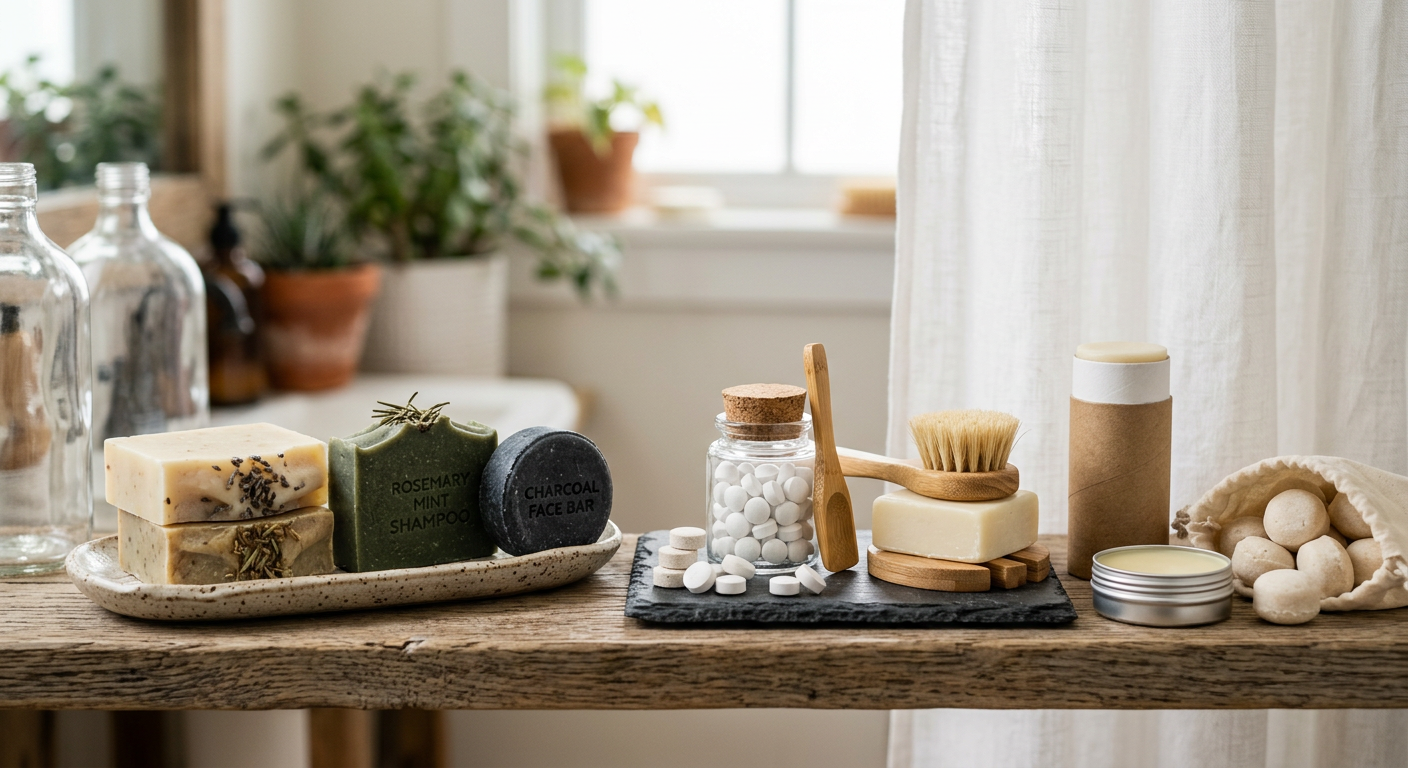
Solid formats rank among the most effective low-waste swaps because they cut out the water, shrink the packaging, and often outlast their liquid counterparts. When your body wash runs dry, a natural soap bar is a cheap, no-fuss replacement.
PinksCharming calls trading a bottle of shower gel for a bar of natural soap one of the easiest, most affordable ways to cut bathroom waste. The same reasoning applies across the room: shampoo bars, solid conditioners, and even toothpaste and mouthwash tablets replace bottled products with compact, long-lasting versions.
The market has caught up. mimro notes that toothpaste tubes and bottled mouthwash are major sources of bathroom plastic, and that plastic-free tablets are compact and simple to slot into an existing routine. The idea is to replace the high-impact items with durable, low-waste alternatives you’ll actually use every day.
A Simple Solid-Swap Sequence
No fixed order here, just whatever you run out of next. A common progression looks like this:
- Body wash → natural soap bar
- Shampoo and conditioner → solid bars
- Deodorant → plastic-free refillable or bar deodorant
- Toothpaste and mouthwash → tablets
- Perfume → solid perfume balm
Do More With Fewer Products
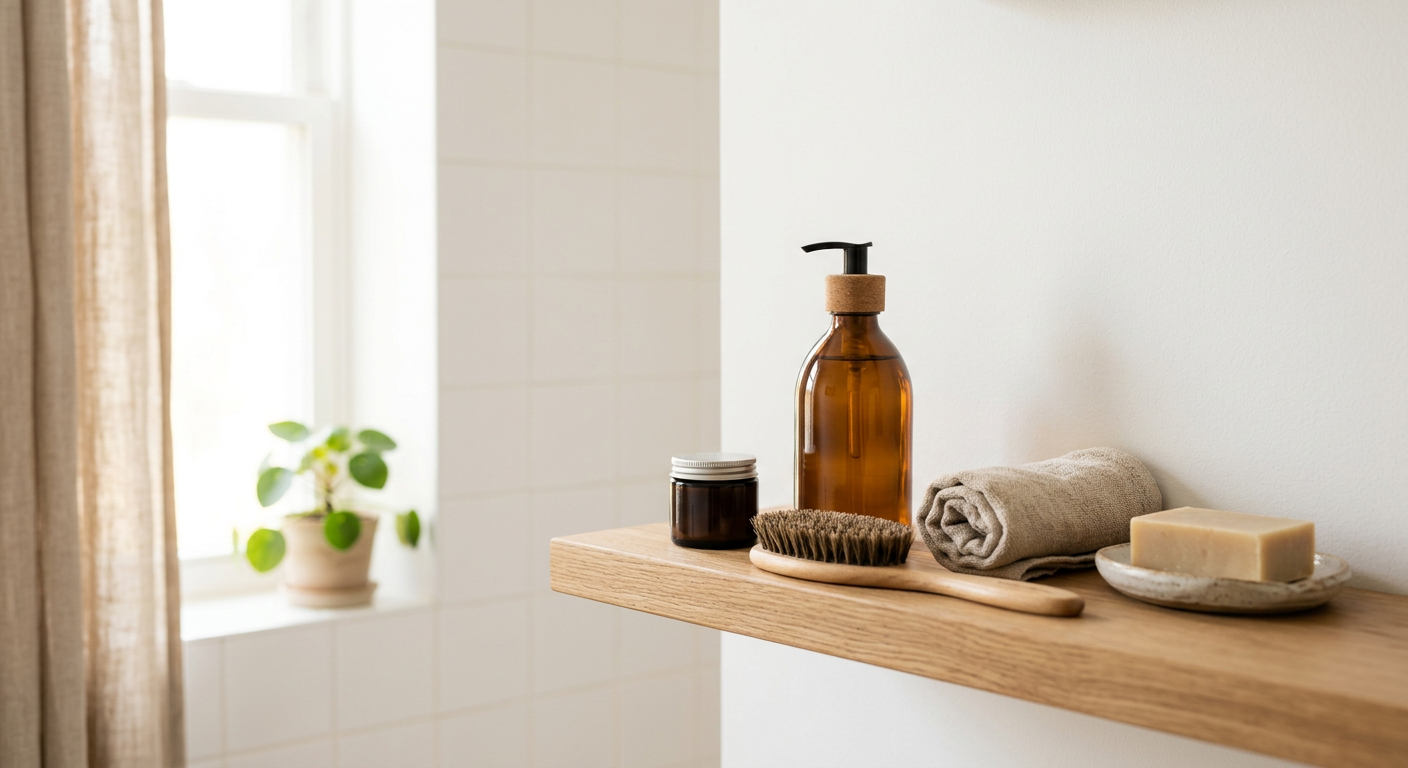
Minimalism is a low-waste strategy on its own. Fewer steps mean less packaging, less spending, less waste. A core routine of a gentle cleanser, a moisturiser, and sunscreen handles most needs without a crowded shelf.
Multi-use products push this further. My Green Directory recommends serums or balms that tackle several concerns at once, or makeup that works on both lips and cheeks. The Thompson Earth Systems Institute makes the same case: a lip stain that doubles as eyeshadow and blush turns three products into one.
Fewer, harder-working products go further by design. Each item earns its spot, gets fully used, and cuts the number of containers you churn through.
Refill, Recycle, and Choose Better Packaging
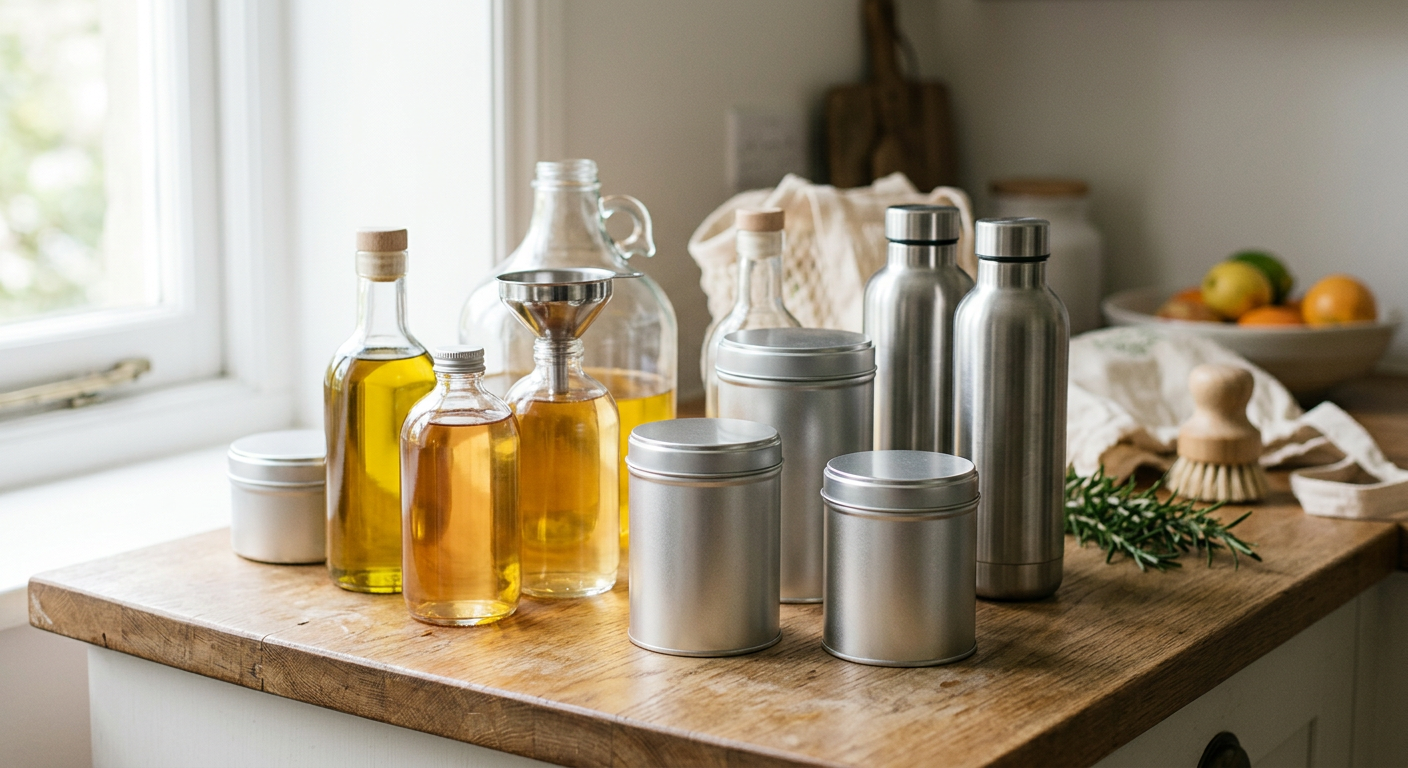
When you do rebuy, packaging matters. Glass, aluminium, and steel recycle and reuse better than single-use plastic, and refill formats cut waste before it starts. Conscious Skincare uses glass jars, glass bottles, aluminium bottles, and refill formats wherever practical to lean off single-use plastic.
Refill infrastructure is the direction the industry is moving. Fact.MR values the zero-waste beauty market at USD 2.8 billion in 2025, projecting USD 7.1 billion by 2036, with refillable products forecast to lead at a 34.5% share in 2026. GMI separately puts the broader zero-waste personal care market at USD 3.48 billion in 2025, projected to reach USD 7.86 billion by 2035 at an 8.2% CAGR.
That growth means more brands run refill programs and use recyclable containers than ever before. When in-store options are thin, look for retailers that use recyclable packaging and skip the excess bubble wrap, and recycle every empty properly.
Conclusion: Small Swaps, Big Difference
A low-waste beauty routine isn’t a plastic-free bathroom by Saturday. It’s finishing what you own, then swapping your high-frequency products one at a time for reusable, solid, or refillable versions that make each purchase go further.
Start with one change. Trade disposable cotton pads for reusable rounds, or switch your next empty body wash for a soap bar. Pick the product you burn through fastest, choose a lower-waste version, and build from there. Each swap saves money, cuts plastic, and shows you the routine can be simpler than the one you already have. Make your first swap this week and let the momentum carry the rest.
FAQ
Where should I start with a low-waste beauty routine?
Start with the products you replace most often, such as body wash, shampoo, or cotton pads. These high-frequency items cause the most packaging waste over a year, so swapping them delivers the biggest return with the least effort.
Do I need to throw out my current products to go low-waste?
No. The most wasteful move is binning a half-full product that still works. Finish what you have, then swap at the natural point of replacement to avoid unnecessary waste and expense.
Are reusable cotton rounds actually better than disposable ones?
Yes. Reusable organic cotton rounds are used exactly like disposable pads but are washed and reused, and a single set can replace hundreds of disposable pads over time. They cut daily waste and save money in the long run.
Do solid bars really last longer than liquid products?
Solid formats remove water and are often more concentrated, so they typically last longer than their liquid equivalents while using far less packaging. Soap, shampoo, and conditioner bars are among the most effective swaps.
How do multi-use products reduce waste?
Multi-use products replace several single-purpose items with one, cutting the number of containers you buy and dispose of. A lip stain used as blush and eyeshadow, for example, replaces three products with one.
Is refillable packaging worth it?
Refillable formats cut waste at the source and are the fastest-growing segment of the market, forecast to lead at a 34.5% share in 2026 according to Fact.MR. When refills are available, they reduce plastic without sacrificing the product experience.