



Cold air holds less moisture than warm air — that’s basic physics, and your skin pays for it. Every time you step outside in winter, the dry air pulls moisture from your skin’s surface. Then you come inside, and the central heating picks up where the cold left off, often dropping indoor humidity below 30%. The result is the familiar winter combination: tight, dull, flaky skin that no amount of summer-routine moisturizer seems to fix.
The fix isn’t more products. It’s different ones, applied differently, supported by a few environmental changes that cost almost nothing.
Why Cold Weather Damages Your Skin’s Natural Barrier

Skin maintains a protective lipid barrier — natural fats and proteins that retain moisture and keep irritants out. Cold weather compromises that barrier from two directions at once.
Outside, dry cold air draws moisture from the skin’s surface faster than the barrier can replenish it. Inside, central heating strips ambient humidity, often pushing it well below the 45–55% range that supports healthy skin function. People with naturally oily skin aren’t exempt — the barrier damage is structural, not sebum-dependent, which is why even oily skin types experience tightness and flaking through winter.
This matters for how you approach your routine. The goal isn’t just adding moisture — it’s actively defending and rebuilding a barrier that winter is continuously working to break down.
How to Rethink Your Cleansing Routine in Winter
Switch to a Gentler, Hydrating Cleanser
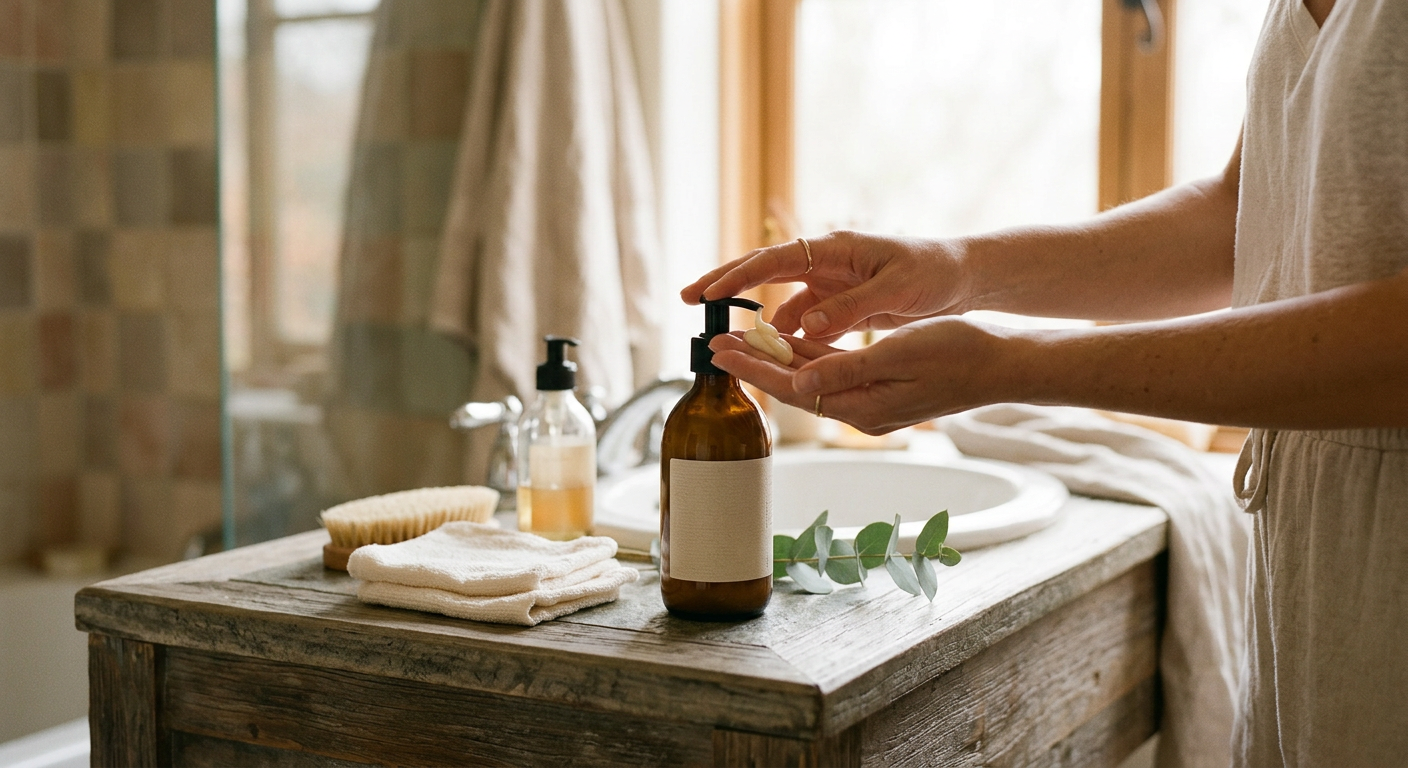
The cleanser that worked in July may be too aggressive for January. Foaming and gel formulas cut through excess oil efficiently — useful in humid summer months, counterproductive when your barrier is already depleted. A cream or oil-based cleanser removes dirt and makeup without stripping the lipids your skin needs to stay intact.
KORA Organics recommends adjusting your cleanser seasonally, noting that winter calls for formulas that support rather than deplete the skin’s moisture reserves.
Lower Your Water Temperature
Hot showers are one of the more effective ways to damage winter skin, though they don’t feel that way. Hot water breaks down the lipids in your moisture barrier, leaving skin vulnerable to dehydration and irritation. Dermatologists consistently recommend lukewarm water for both face washing and showering in winter. The change feels minor; the difference in skin comfort over several weeks is not.
Layering Hydration: The Right Order for Maximum Moisture

A single moisturizer applied once daily is a summer approach. In winter, effective hydration works in layers — each product building on the last to drive moisture deeper and seal it there.
Spa Noor Medspa identifies layered hydration as one of the most effective winter skincare strategies, recommending you start with a hyaluronic acid serum before applying your moisturizer. Hyaluronic acid draws water molecules into the skin; a heavier moisturizer applied over it seals that moisture in place.
A Practical Winter Hydration Layering Order
Facial oils are worth particular attention in winter. Applied as the final step in your evening routine, oils like rosehip, squalane, or marula form an occlusive layer that slows transepidermal water loss — the process by which moisture evaporates from skin overnight. KORA Organics recommends facial oil as one of the most impactful additions to a winter routine for exactly this reason.
Upgrading Your Moisturizer for Cold-Weather Conditions
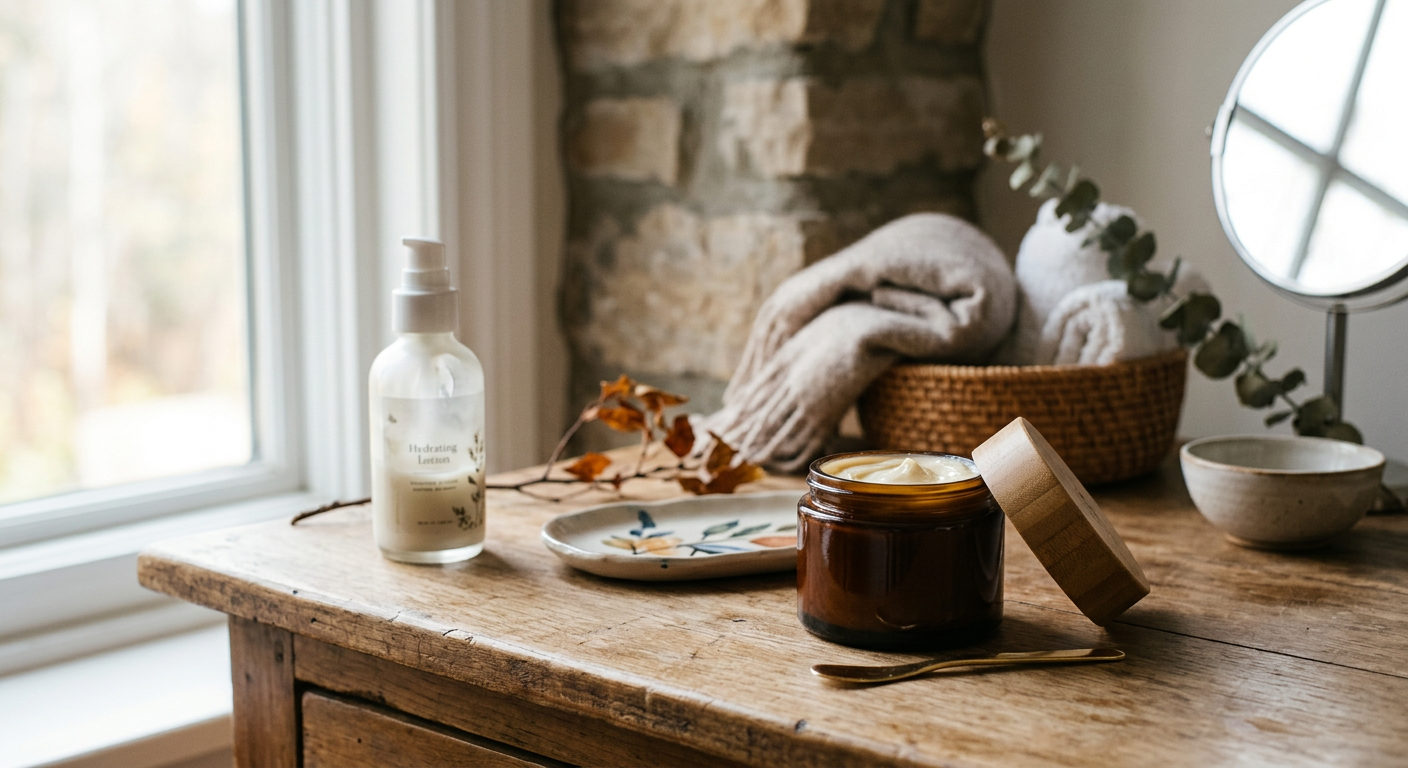
Lightweight lotions that perform well in humid months often lack the occlusive ingredients needed to protect skin against cold, dry air. Winter requires richer, more emollient formulas.
Summit Salon Academy recommends looking for products containing hyaluronic acid, shea butter, or ceramides — ingredients that both attract moisture and reinforce the skin’s natural barrier. Ceramides are structurally identical to the lipids found in healthy skin, which makes them particularly effective at repairing winter-related barrier damage rather than just masking it.
Serene Beauty points out a frequently missed detail: apply your moisturizer immediately after cleansing, while skin is still slightly damp. This traps residual moisture rather than letting it evaporate before the product absorbs.
Nutrition and Hydration: Building Glow From the Inside Out

Topical products address the surface. Your skin’s radiance also depends on what you eat and drink — and winter makes both easy to neglect.
People tend to drink less water in cold weather because thirst signals weaken when you’re not sweating. Skin registers that deficit as dullness, increased sensitivity, and slower cell turnover. Consistent water intake won’t produce an overnight transformation, but chronic mild dehydration degrades skin quality in ways that no serum compensates for.
Specific nutrients support barrier function and natural luminosity. Sensual Fruits Esthetics points to avocados, nuts, berries, and leafy greens as particularly useful in winter — foods dense in healthy fats, antioxidants, and vitamins that support skin from within.
Key Nutrients for Winter Skin Radiance
- Omega-3 fatty acids (walnuts, flaxseed, salmon): Support lipid barrier integrity and reduce inflammation
- Vitamin C (citrus, bell peppers, berries): Stimulates collagen production and brightens skin tone
- Vitamin E (almonds, sunflower seeds): Acts as an antioxidant and supports moisture retention
- Zinc (pumpkin seeds, legumes): Supports skin repair and regulates oil production
A diet that consistently delivers these nutrients creates a foundation that topical products alone cannot replicate.
Sunscreen and Environmental Protection in Winter

UV-A rays — the ones responsible for premature aging and pigmentation — penetrate clouds and glass at close to full strength year-round. Snow reflects up to 80% of UV radiation, according to the Skin Cancer Foundation, which means exposure in snowy environments can exceed summer levels. Skipping SPF because the sky is grey is a mistake with cumulative consequences.
Serene Beauty puts it plainly: drop sunscreen from your winter routine and you’re trading long-term skin health for a step that saves you thirty seconds. A broad-spectrum SPF 30 or higher applied every morning protects against UV damage and provides a physical barrier against wind and cold.
Physical protection matters too. Scarves, hats, and gloves shield exposed skin from windburn — barrier damage caused by cold air and friction that compounds the effects of UV exposure.
Environmental Adjustments That Support Winter Skin Health

Skincare products can only do so much if the room you sleep in is actively dehydrating your skin. A humidifier running in your bedroom at night restores ambient moisture to a skin-friendly range, slowing the rate at which your skin loses hydration while you sleep. A basic humidifier costs less than most serums, and the impact on skin comfort is often noticeable within days.
KORA Organics recommends this specifically as a complement to heavier moisturizers, noting that indoor heating drives much of the moisture loss people attribute to cold air.
Haven Beauty Collective notes that makeup performance in winter is directly tied to skin condition — a well-hydrated, barrier-supported complexion allows foundation and concealer to sit more evenly, reducing the cakey, patchy finish that dry skin produces. If your makeup has been looking worse lately, the problem is almost certainly the skin underneath it, not the makeup.
Conclusion: Your Winter Skin Action Plan
Radiant winter skin comes down to a consistent set of principles: protect your moisture barrier, layer hydration strategically, upgrade to richer formulas, maintain SPF year-round, and support your skin from the inside with food and water intake.
Two changes produce the most immediate results for the least effort: switching to a cream cleanser and adding a bedroom humidifier. Both address root causes rather than symptoms. Build from there as your skin responds.
Frequently Asked Questions
Q: How often should I exfoliate in winter?
Once or twice a week is enough. Exfoliating more frequently in cold weather disrupts the moisture barrier before it recovers, which worsens the dryness and sensitivity you’re trying to fix.
Q: Can I use the same moisturizer in winter that I use in summer?
For most skin types, no. Summer moisturizers are lighter and less occlusive — appropriate for humid conditions, insufficient for the increased moisture loss that cold, dry air causes. A richer formula with ceramides or shea butter handles winter conditions better.
Q: Does drinking more water actually improve skin hydration?
It works as a foundation rather than a quick fix. Consistent water intake supports skin cell function and helps maintain the skin’s natural moisture balance. The effect is cumulative — chronic dehydration shows up clearly over weeks as dullness and tightness, while the improvement from correcting it happens on the same slow timeline.
Q: Is facial oil suitable for oily or acne-prone skin in winter?
Many facial oils are non-comedogenic and can benefit oily skin types in winter by reducing the skin’s drive to overproduce sebum. Squalane and rosehip oil are commonly recommended for acne-prone skin. Patch testing before full application is worth doing regardless of skin type.
Q: Why does my skin look dull in winter even when I moisturize regularly?
Moisturizing addresses dehydration but not the other two main contributors to winter dullness: reduced cell turnover and a compromised barrier. Adding a gentle chemical exfoliant once or twice a week, increasing water intake, and incorporating antioxidant-rich foods into your diet addresses the full picture.
Q: Does sunscreen still matter on overcast winter days?
UV-A rays penetrate cloud cover at close to full strength regardless of temperature or visible sunlight. A broad-spectrum SPF 30 every morning remains necessary for preventing premature aging year-round.