

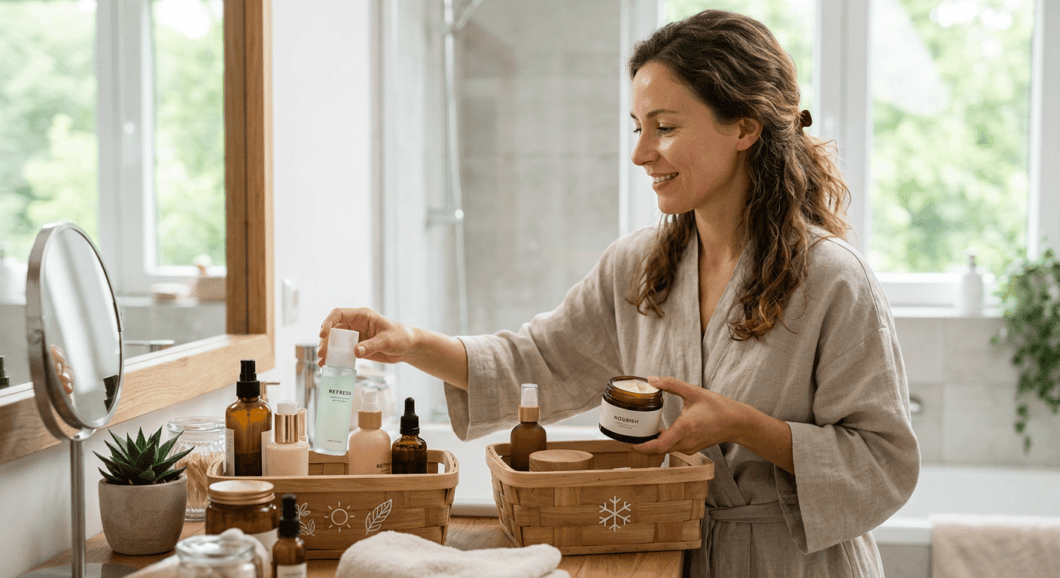
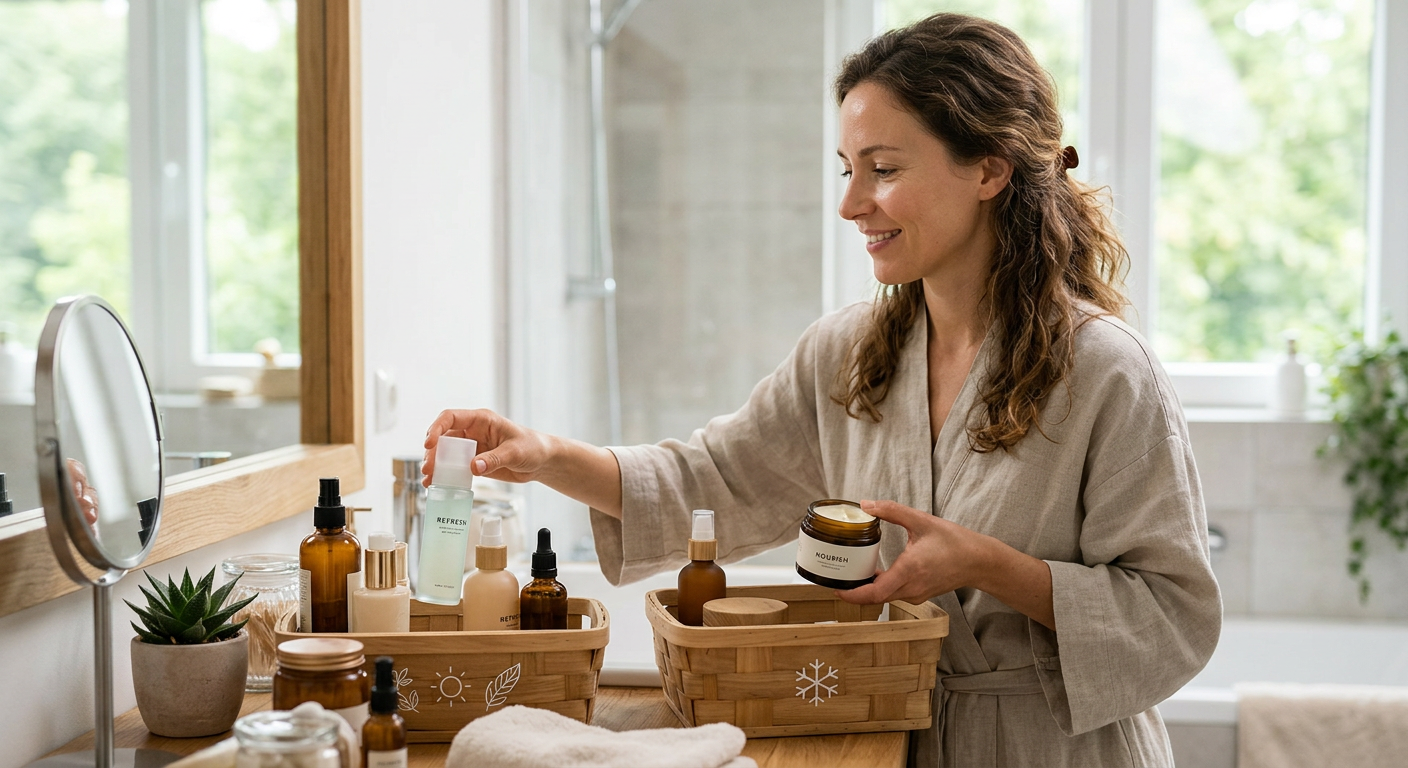
Your skin produces more oil in July than it does in January, and your hair pulls in moisture differently in dry winter air. Most of us rework the wardrobe every few months but keep the exact same beauty products all year. That mismatch explains a lot: the rich winter cream that turns greasy by April, the lightweight summer foundation that goes patchy the moment temperatures drop.
Swapping products by season isn’t about chasing trends or spending more. It’s about matching your routine to what your skin, hair, and makeup need as the weather changes. The swaps below are the ones that make a visible difference, grounded in dermatology, the advice of beauty editors, and basic physiology.
Why Your Beauty Routine Should Change With the Seasons

Environmental shifts directly affect how skin and hair behave. When temperatures rise, oil production increases, you sweat more, and thick winter creams start to feel heavy and clog pores. When the air dries out in fall and winter, skin loses moisture faster and needs richer, more occlusive products.
This isn’t marketing. “Dryness and flakiness come with the change of seasons,” says Sandra Oulmas of Medical Aesthetics in Tysons. She also warns that over-moisturizing in cooler months can trap dead skin cells on the surface, which stops hydration from reaching deeper layers (Northern Virginia Magazine).
The point is simple. A product that served you well in one season can work against you in another. Adjusting a handful of key items, not your entire shelf, is where you’ll see the payoff.
Spring Skincare Swaps for a Fresh Start
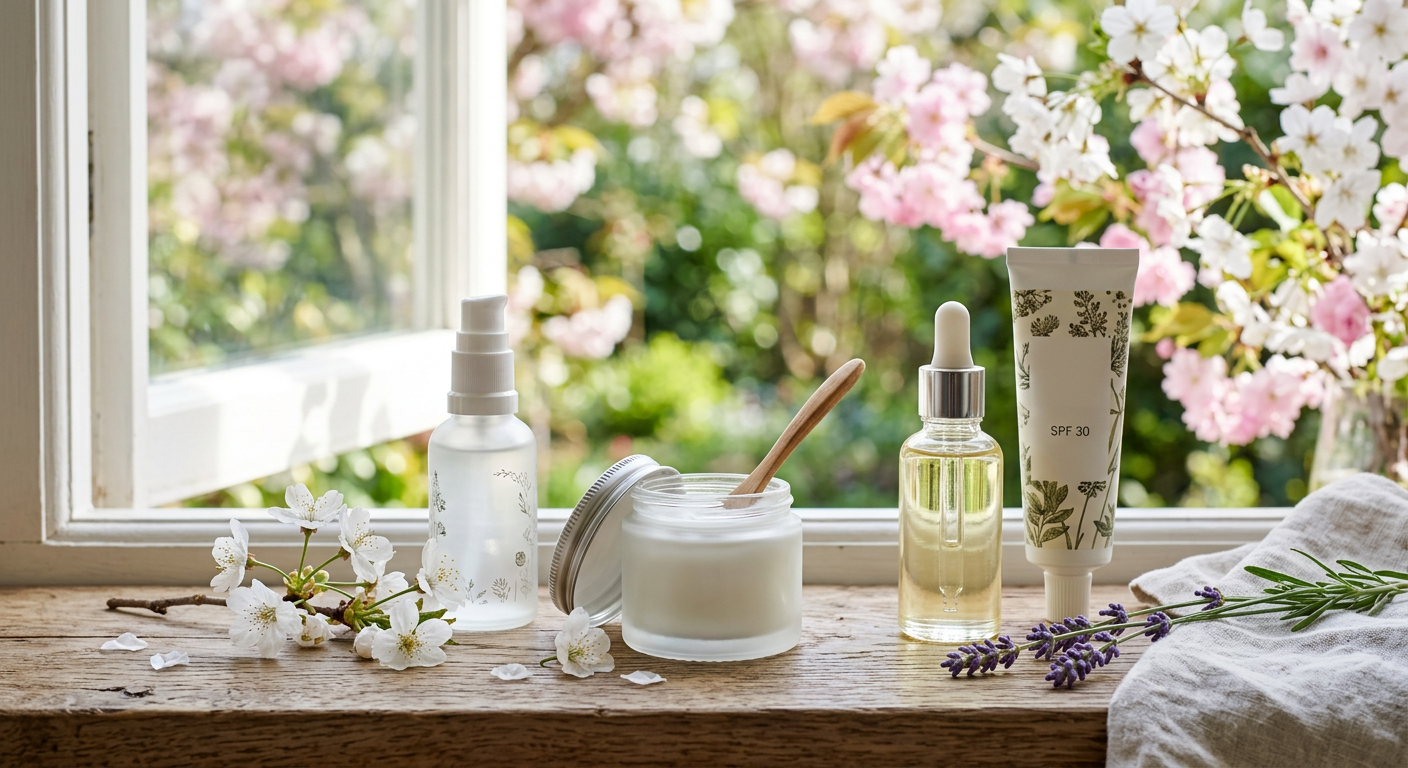
Spring is a transition season. Your skin is shaking off winter dryness while oil production slowly ramps back up. This is the time to lighten your routine and put exfoliation front and center.
Trade Heavy Creams for Lightweight Hydration
Swap the thick winter moisturizer for a lighter gel or lotion. Your skin still needs hydration, but the occlusive barrier creams that shielded you from winter wind become too much once humidity climbs.
Add Chemical Exfoliation
Spring is a good window to bring in alpha hydroxy acids (AHAs), chemical exfoliants that dissolve the bonds holding dead skin cells together. A 2020 clinical study found that 70% glycolic acid peels produced a 92% improvement in keratosis pilaris papules (Truly Beauty). Used correctly, AHAs smooth texture and brighten skin without irritating the barrier.
Start slowly, two to three times a week, and always pair acid use with daily SPF. Exfoliation increases sun sensitivity, so this part isn’t optional.
Summer Makeup Swaps That Survive the Heat

Summer makeup has one job above all others: staying put. When temperatures climb, your products need to protect against UV, feel weightless, and hold up against sweat.
Beauty editor Alyssa Brascia is exacting about her summer swaps. “Not only should my products protect my skin from the sun, but I also expect them to feel weightless on my skin,” she writes, adding that resisting sweat is non-negotiable (Who What Wear).
The Key Summer Swaps
- Foundation → Tinted SPF or skin tint. Lighter coverage prevents cakey, sweat-melted makeup and adds sun protection.
- Powder blush → Cream or liquid blush. Creams meld into skin and last longer in humidity.
- Regular mascara → Waterproof formula. Essential for heat, pool days, and sweat.
- Matte lipstick → Tinted lip oil or balm. Comfortable and hydrating in dry, hot conditions.
- Setting powder → Setting spray. Locks makeup in without adding heavy layers.
Minimalism wins here. Fewer, multitasking products hold up better when you’re sweating and moving between plans.
Fall Beauty Reset: From Light to Rich
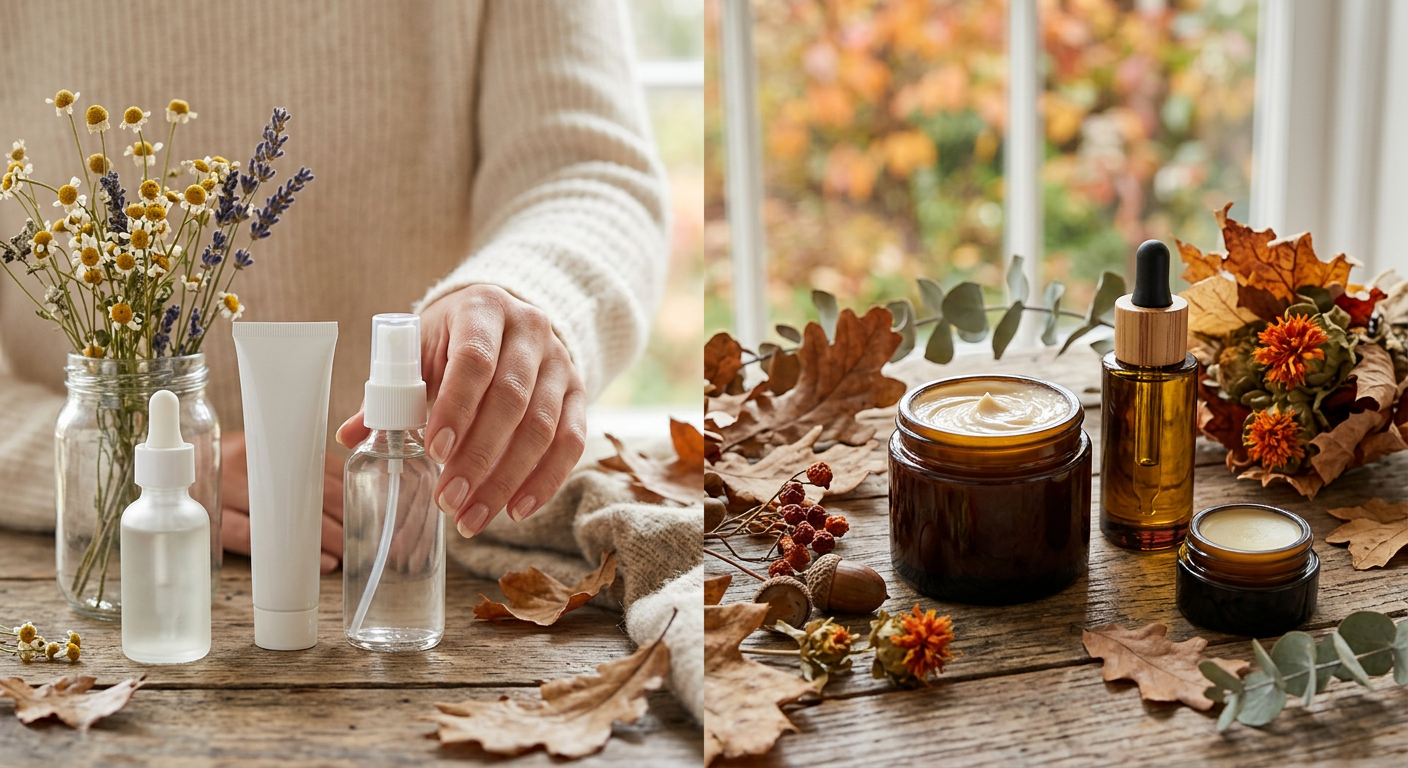
Fall is a real reset point. As oil production dips and the air dries, your summer minimalism gives way to nourishment and repair.
The shift makes sense the moment you feel it. One beauty routine described it as swapping “showers for baths, light moisturizers for rich creams” and bringing comfort back into the mix (Into The Gloss). Skin welcomes the added moisture after months of heat and sun exposure.
Prioritize Barrier Repair
Bring back richer creams, facial oils, and hydrating serums with ingredients like hyaluronic acid and ceramides. Don’t drop exfoliation entirely, though. Gentle, consistent exfoliation keeps dead skin from blocking those richer products from absorbing.
Fall is also a smart time to book certain aesthetic treatments and address summer sun damage, since reduced UV exposure supports recovery (The AEDITION).
Winter Swaps That Protect Against Dryness

Winter is the harshest season for skin and hair. Cold air outside and dry heat indoors strip moisture fast, so the goal shifts to locking hydration in.
Skincare: Layer and Occlude
Move to your richest moisturizer, and consider adding a facial oil or occlusive balm as a final step to seal everything in. Cut back on harsh actives if you notice irritation, and swap foaming cleansers for cream or oil-based formulas that don’t strip natural oils.
Hair: Restore Moisture
Winter hair needs extra care. Stylists recommend hydrating conditioners and leave-in sprays for added moisture, plus a lighter hand so you preserve your hair’s natural oils.
“When using product, less is always more,” says hairstylist Martin, who suggests shampooing only the roots and conditioning from the mid-shaft to the ends (Northern Virginia Magazine). Concentrating product where hair is oldest and most fragile prevents greasiness at the roots and dryness at the ends.
Season-by-Season Swap Guide
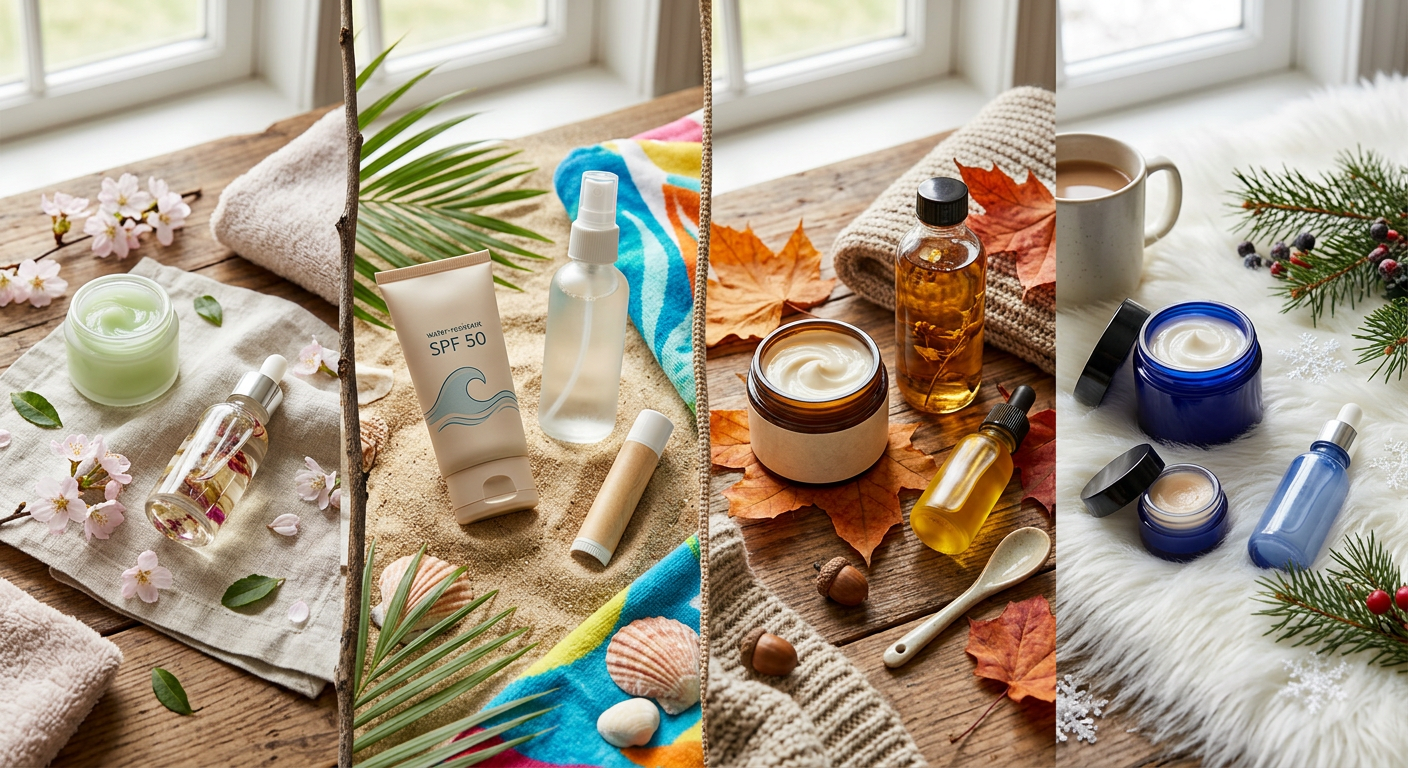
Use this quick-reference table to update your routine as conditions change.
| Season | Skincare Swap | Makeup Swap | Hair Swap |
|---|---|---|---|
| Spring | Rich cream → lightweight gel; add AHAs | Heavy base → fresh, glowy finish | Reduce heavy oils; refresh with clarifying |
| Summer | Add gel hydration; daily SPF | Foundation → tinted SPF; cream blush; waterproof mascara | Leave-in UV protection; minimal product |
| Fall | Light lotion → rich cream; keep gentle exfoliation | Dewy base returns; deeper lip shades | Deep conditioning; repair summer damage |
| Winter | Richest cream + facial oil; cream cleanser | Hydrating formulas; setting spray over powder | Hydrating conditioner; leave-in spray |
Making Swaps That Actually Deliver Results

The mistake most people make is overhauling everything at once. Swap two or three high-impact products per season instead of replacing your whole routine. Your moisturizer, cleanser, and makeup base drive the biggest results, because they’re the products that change the most with the weather.
Watch how your skin responds instead of following a rigid calendar. Someone in a humid climate will lighten up sooner than someone in a dry, cold region. Let feel guide your timing as much as the date does.
Don’t toss products that work for you seasonally, either. Store your winter creams and summer skin tints and rotate them back when conditions call for it. You’ll save money, cut waste, and keep your routine dialed in all year.
Conclusion
Seasonal beauty swaps work because they respond to real physiological changes: shifting oil production, humidity, and moisture loss. The most effective approach is targeted. Lighten up in spring and summer, add richness in fall and winter, and focus on the few products that matter most.
Start with one swap this season. Look at whether your moisturizer, foundation, or conditioner still matches what your skin needs right now, and adjust from there. Small, deliberate changes add up to a noticeable difference, without a full routine overhaul or a bigger budget.
Frequently Asked Questions
Q: How often should I change my skincare routine for the seasons?
Adjust at each major seasonal transition, typically two to four times a year. Let your skin’s behavior guide you, since climate and skin type affect timing more than the calendar date.
Q: What’s the single most important seasonal beauty swap?
Your moisturizer. Switching between lightweight formulas in warm months and richer creams in cold months addresses the biggest change your skin goes through with the weather.
Q: Do I really need to change my makeup for summer?
Yes, if you want it to last. Swapping heavy foundation for tinted SPF and powder products for creams helps makeup resist sweat and humidity while adding sun protection.
Q: Should I stop exfoliating in winter?
No. Reduce the frequency if you notice irritation, but gentle exfoliation prevents the dead skin buildup that blocks your richer winter moisturizers from absorbing properly.
Q: Can I keep using the same products year-round?
You can, but they won’t perform equally in every season. Products designed for one climate, like heavy creams or matte lipsticks, feel wrong once conditions change. That’s why targeted swaps improve results.
Q: Are expensive products necessary for seasonal swaps?
No. Effective swaps come down to formula type, gel versus cream or tinted SPF versus full foundation, not price. Affordable products in the right texture for the season work just as well.