

Skin behaves differently in March than it does in July, yet most people run the same products all year. That mismatch explains a lot: the winter moisturizer that turns greasy by spring, the summer routine that leaves you flaky come October. Getting the seasonal handoff right is what separates constant catch-up from skin that holds steady through the temperature swings. There’s no need to toss everything and start over. A handful of changes, made at a reasonable pace, does the job.
Why Your Skin Changes With the Seasons

The skin barrier reacts to whatever surrounds it. Temperature, humidity, and sun exposure all move with the calendar, and skin recalibrates to match. Corona Clinic points to these three variables as the main drivers behind shifting hydration levels, oil production, and sensitivity across the year.
Cold winter air is dry and pulls moisture out of the skin, which is why heavier creams earn their keep from November through February. Summer air does the reverse: it ramps up oil output and makes rich formulas feel heavy and pore-clogging. Spring and autumn are the awkward middle ground, where conditions change from one day to the next.
Bonjout Beauty makes a point worth sitting with: the hardest stretches for skin usually aren’t peak summer or deep winter but those unpredictable transition weeks when the weather can’t make up its mind. Skin gets confused by the mixed signals, and reactive habits tend to backfire.
Transition Gradually, Not Overnight
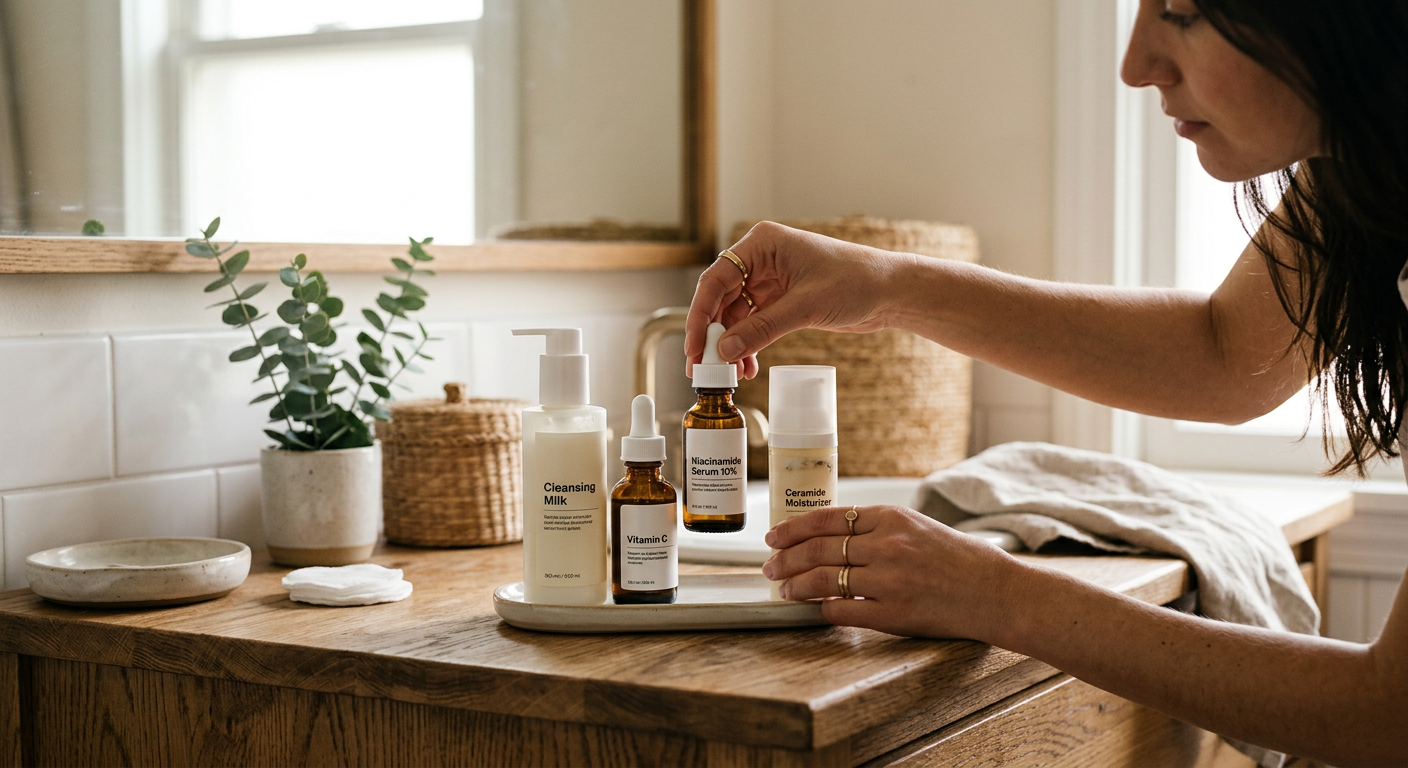
The biggest mistake is swapping the whole routine in one go. Abrupt changes shock the barrier and can trigger breakouts, irritation, or dryness. Phase products in over one to two weeks instead.
Bonjout Beauty compares it to opening windows in a stuffy room. Fling them all open at once and the cold rush hits hard; crack them gradually and the room just gets comfortable. The same principle applies to moisturizers, actives, and treatments.
How to Phase In a New Product
- Days 1–4: Use the new product every other day, alternating with your current one.
- Days 5–10: Move to daily use if your skin shows no irritation.
- Days 11–14: Complete the switch and watch for breakouts or dryness.
Going slow lets you catch a reaction before it snowballs. If your skin flares up, Dermalogica advises against overcorrecting. Drop back to the previous step rather than piling on more new products.
Winter to Spring: Lighten and Refresh

Spring is about shedding winter’s weight. As temperatures and humidity climb, skin needs less occlusion and a bit of gentle renewal. Start with the moisturizer.
If a rich cream carried you through winter, work in a lightweight lotion every other day, then make the full switch on the timeline Bonjout Beauty suggests. Skin feels less congested without losing hydration.
Add Gentle Exfoliation
Winter leaves behind a layer of dead skin cells. Tru-Skin Dermatology suggests a gentle exfoliator one to two times a week to clear that away and brighten things up. Don’t overdo it. Over-exfoliating damages the barrier at the exact moment it’s trying to adapt.
Reassess Your SPF
Spring means more time outside and stronger UV. If sunscreen slipped during winter, this is where daily broad-spectrum SPF stops being optional. Decades of dermatological research put it at the top of any anti-aging routine.
Spring to Summer: Build Your Fortress

Summer calls for protection and light hydration. Heat and humidity crank up oil production, so heavy creams should give way to gel-based or lightweight hydrating moisturizers. Tru-Skin notes that this switch helps head off clogged pores when the air is thick.
Reapply sunscreen every two hours in the sun, and bump up the SPF for long outdoor stretches. An antioxidant serum like vitamin C pairs well with SPF, adding a layer of defense against free radical damage from all that extra sun.
On the makeup side, Vogue recommends lighter formulas as the mercury rises. Trade full-coverage foundation for a tinted moisturizer or skin tint that lets skin breathe.
Summer to Autumn: Repair and Rebuild

Autumn is recovery season. Sun, chlorine, and heat leave summer skin in need of repair. Bring richer moisturizers back gradually as the air dries out, and layer in reparative ingredients: hyaluronic acid, ceramides, niacinamide.
This is also the best window to start or increase retinol. With UV intensity dropping, skin handles actives more easily, and the work you do now pays off in healthier skin come winter. As with any transition, ease it in to avoid irritation.
Seasonal Product Swap Guide

A quick reference for matching your routine to the season:
| Category | Winter | Spring | Summer | Autumn |
|---|---|---|---|---|
| Moisturizer | Rich cream | Lightweight lotion | Gel or lightweight | Medium-to-rich cream |
| Cleanser | Cream/oil | Gentle gel | Foaming gel | Cream/gel |
| SPF | Daily, SPF 30+ | Daily, SPF 30+ | SPF 50, reapply | Daily, SPF 30+ |
| Actives | Minimal, buffer | Gentle exfoliation | Antioxidants | Retinol, repair |
| Makeup | Cream, hydrating | Cream blush, tints | Lightweight tints | Cream, buildable |
Looking ahead to 2026, Euphoria reports cream and liquid textures leading spring makeup, with cream blush in apricot, warm coral, and terracotta melting into skin instead of sitting on the surface.
Listen to Your Skin First
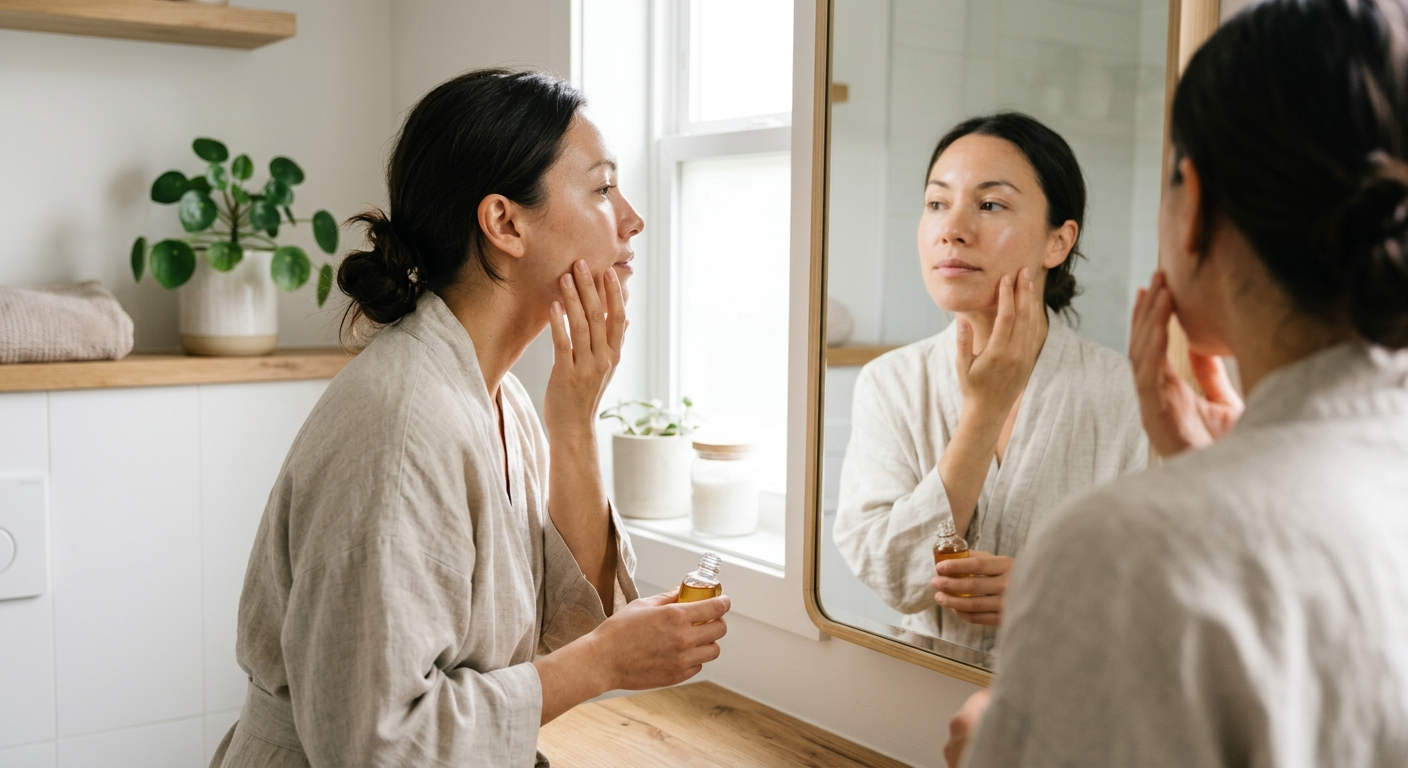
No calendar rule beats what you can see in the mirror. Dermalogica’s central advice comes down to paying attention: notice how your skin looks, factor in the conditions around you, and adjust. Two people in the same city can need completely different routines depending on skin type, indoor heating, and how they spend their days.
Tight skin wants hydration. Greasy skin wants lighter formulas. Treat the seasonal guidelines as a framework rather than a rulebook, and let what you actually observe steer the changes.
Key Takeaways and Next Steps
Getting the seasonal transition right guards against dryness, breakouts, sensitivity, and premature aging. The playbook holds whatever the season: change things gradually, match moisturizer weight to the humidity, protect with daily SPF, and read your skin’s signals.
Pick one change this week. Match your moisturizer to current conditions, phase it in over about ten days, and build from there. The patience pays off in skin that stays balanced and healthy year-round.
Frequently Asked Questions
Q: How long does it take skin to adjust to a new seasonal routine?
Most skin adapts within one to two weeks when you phase products in gradually. Start with every other day, then move to daily use once you’re sure there’s no irritation.
Q: Do I really need to change my skincare every season?
Yes. Temperature, humidity, and sun exposure shift through the year and directly affect the skin barrier. You don’t have to replace everything, but adjusting moisturizer weight, actives, and SPF keeps skin balanced.
Q: Should I wear sunscreen in winter and autumn?
Yes. UV rays damage skin year-round, even on cloudy or cold days, so daily broad-spectrum SPF 30 or higher stays essential in every season.
Q: When is the best time to start using retinol?
Autumn works best because the lower UV intensity lets skin tolerate actives more comfortably. Start slow, one or two nights a week, to keep irritation in check.
Q: What moisturizer should I use in summer?
Go with a lightweight, gel-based, or hydrating formula to keep pores clear in humid heat. Save the rich creams for the drier, colder months.
Q: What if my skin reacts badly during a seasonal transition?
Stop adding new products and go back to your previous step instead of overcorrecting. Let the barrier recover with gentle, hydrating basics before you resume any changes.