



Skin feeling tight? Foundation looking cakier than it did in August? That summer glow turning dull and flaky around the edges? Those are the usual cues that it’s time for an October beauty reset. The lightweight products that carried you through humid summer days can start working against you once the air dries out and the indoor heating comes on.
None of this means overhauling your entire bathroom shelf. A handful of strategic swaps will keep your skin hydrated, your makeup fresh, and your routine in step with the season. The changes below make the biggest difference.
Why Your Summer Routine Stops Working in Fall
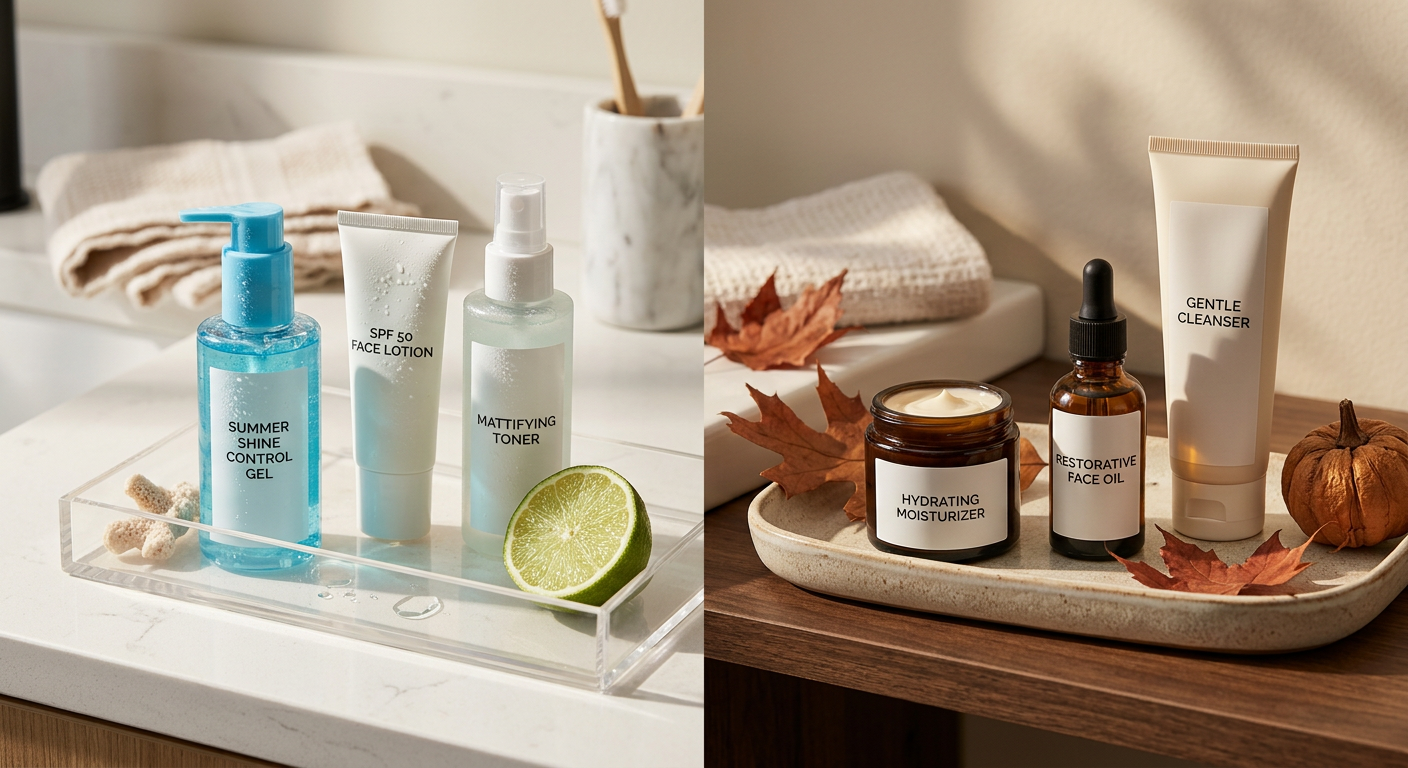
Summer skincare leans heavy on lightweight, oil-controlling products built for heat and humidity. “Summer routines lean heavy on lightweight, oil controlling products,” licensed esthetician Jennifer Adell told E! News. Once the air gets drier and the radiators come on, those same products can turn against your skin.
The science is straightforward. “Much like plants in a greenhouse, skin thrives in humidity,” dermatologist Alicia Zalka, MD, associate clinical professor of dermatology at Yale, explained to goop. “But once the air turns dry, moisture and oils escape more easily through the pores, leaving skin dehydrated and less resilient.”
That moisture loss is why skin feels tight, rough, or flaky by mid-October. The fix isn’t to pile on ten new products. It’s to adjust texture, frequency, and a few key ingredients.
Swap Oil-Control Cleansers for Gentle, Hydrating Formulas
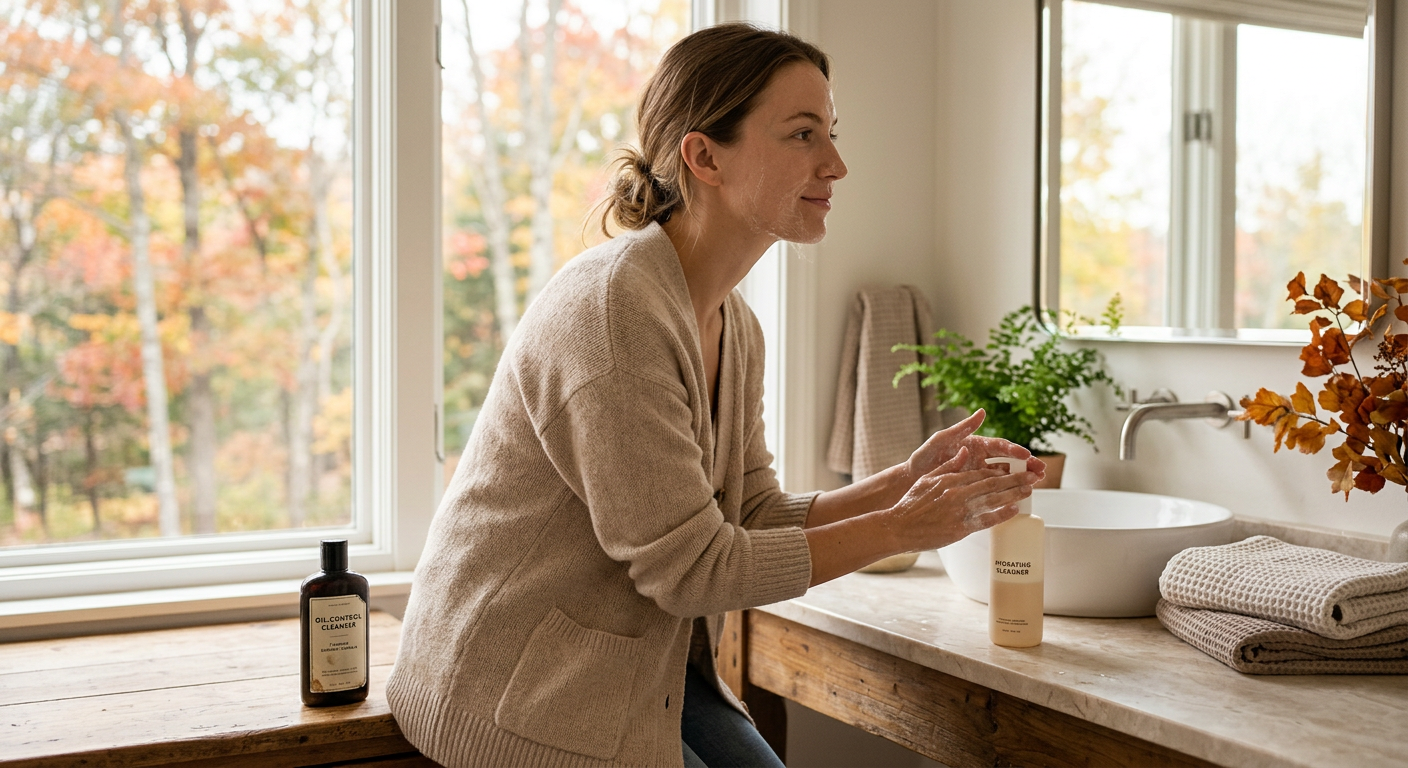
The cleanser that worked perfectly during sweaty July may be too much by cool, breezy October. Foaming and oil-stripping washes remove the natural oils your skin now struggles to replace, leaving it dehydrated before you even reach for moisturizer.
Trade your summer cleanser for a gentle, hydrating formula. E! named the Vanicream Gentle Facial Cleanser a top fall hydrating face wash for its no-strip approach. Look for cream, milk, or jelly textures that leave skin clean but comfortable rather than squeaky.
If you live somewhere that shifts from humid to dry weather, start with a less stripping cleanser before changing anything else, as Go With Beauty recommends for the transition. Watch how your skin responds for a week or two, then make your next adjustment.
Trade Lightweight Moisturizers for Barrier-Supporting Creams
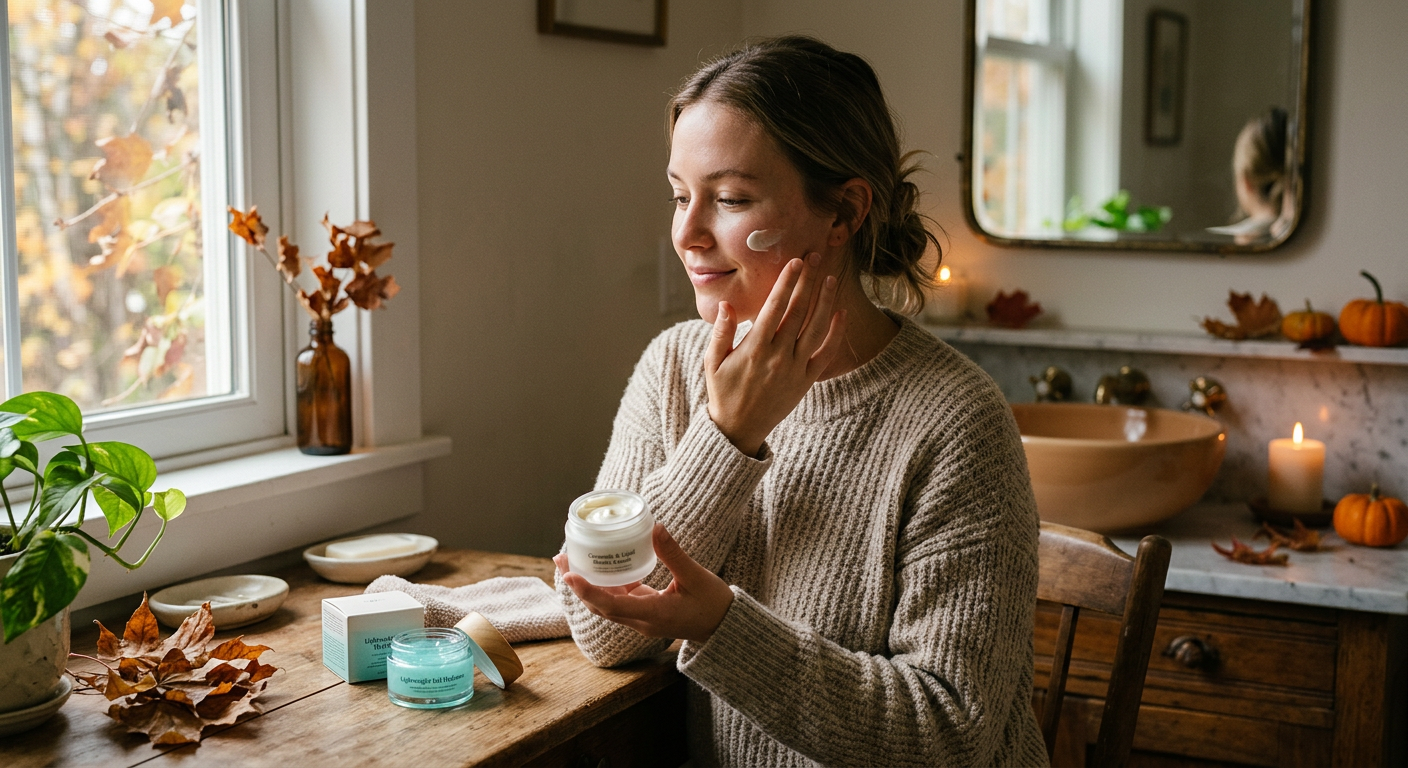
Your summer gel moisturizer isn’t built for fall’s dry air. As temperatures and humidity drop, skin needs a richer cream that supports its barrier and locks in moisture.
Adell recommends swapping in ceramide- and hyaluronic-acid-rich moisturizers to combat dehydration and flaking. Ingredients matter here. Shea butter, sunflower oil, and jojoba oil deliver deep hydration to relieve tight, rough skin, while niacinamide (vitamin B3) strengthens the skin barrier and brightens dull skin.
What to Look For on the Label
Use this quick reference to match ingredients to the problems they solve:
| Ingredient | What It Does |
|---|---|
| Ceramides | Reinforce the skin barrier and prevent moisture loss |
| Hyaluronic acid | Draws water into the skin for plumping hydration |
| Niacinamide (B3) | Strengthens the barrier and brightens dull skin |
| Shea butter / jojoba oil | Deep, cushioning hydration for flaky patches |
| Urea | Softens rough patches and keratosis pilaris |
Urea is worth calling out. It’s a dry-skin staple that softens rough patches, and searches for urea cream rose 49% year over year, according to Rising Trends—a sign shoppers are prioritizing barrier repair this season.
Scale Back Strong Exfoliants and Adjust Your Actives
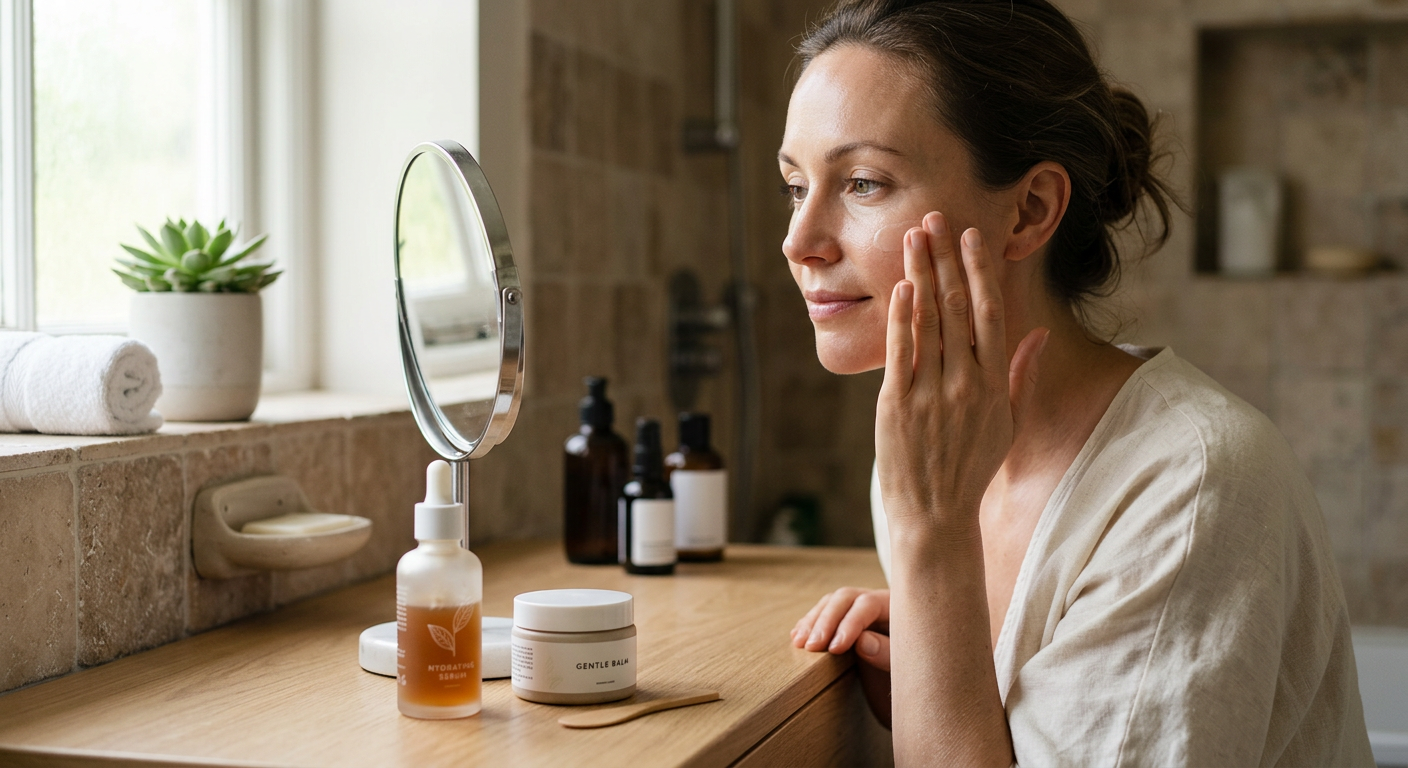
Aggressive summer exfoliation can backfire once skin gets drier. Over-exfoliating a compromised barrier leads to redness, irritation, and more flaking, which is exactly what you don’t want in October.
Scale back frequency rather than quitting exfoliation entirely. If your skin runs sensitive, switch to a gentle AHA like mandelic acid, the mildest of the alpha hydroxy acids. It won’t penetrate as deeply as glycolic or lactic acid, but it still smooths skin. Cosmopolitan notes that mandelic acid suits skin that can’t tolerate stronger acids, and searches for it climbed 83% year over year per Rising Trends.
Reintroduce Retinoids Slowly
Fall is the right time to bring retinoids back in, since less sun exposure reduces the risk of irritation. Retinoids increase cell turnover to produce brighter, fresher skin, while AHAs chemically slough away dead cells. Different mechanisms, but both earn a place in your routine.
Treat retinol as a slow burn. Start with one night a week, then increase gradually as your skin builds tolerance. Rushing it is the fastest way to trigger the dryness you’re trying to prevent.
Don’t Drop SPF Just Because Summer Is Over
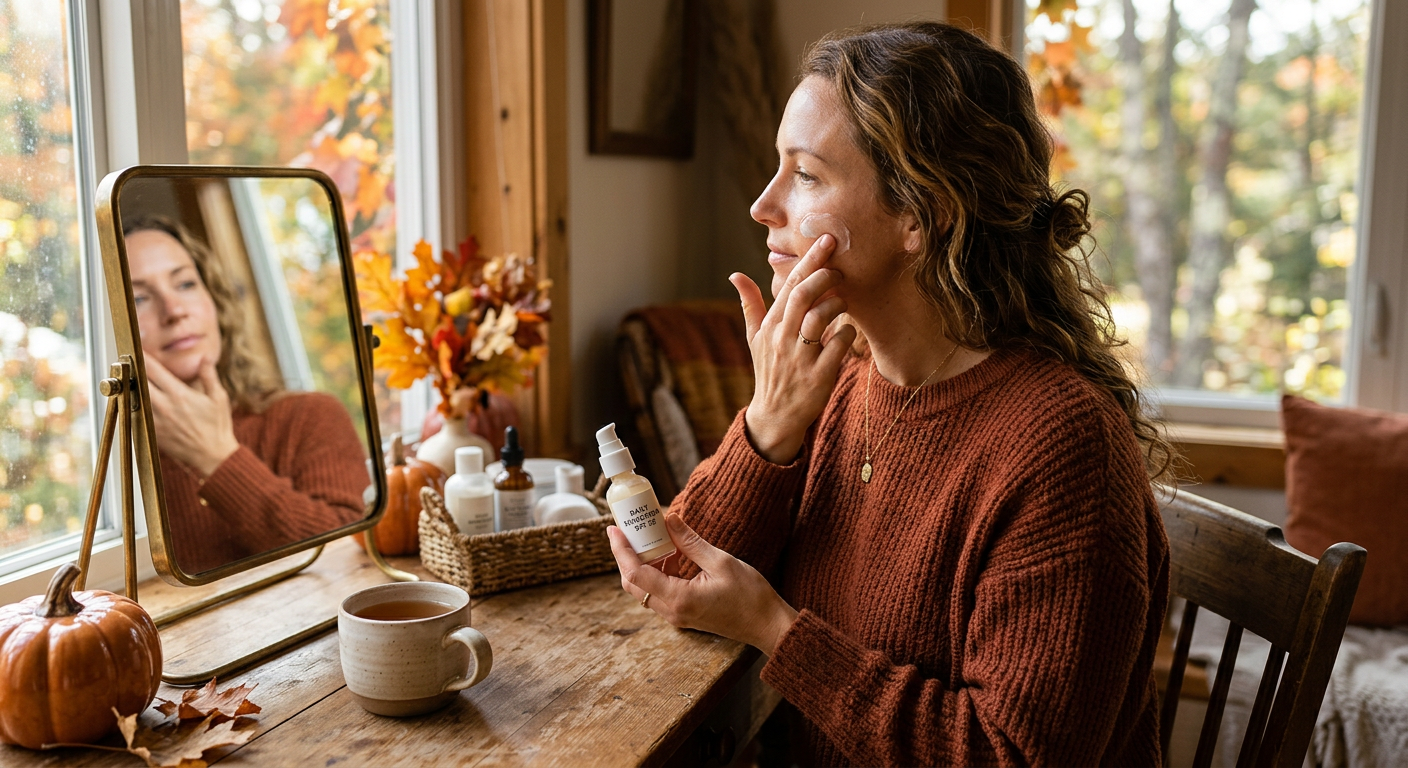
Putting away your sunscreen in October is the one mistake dermatologists and estheticians warn against most. “Don’t drop SPF just because it’s cooler,” Adell told E!. “UV damage accumulates year-round; it’s just less top-of-mind in fall.”
Cooler weather makes sun protection easy to forget, but the UVA rays that drive premature aging reach your skin regardless of temperature. Keep a broad-spectrum sunscreen in your morning lineup every day.
If your summer SPF felt heavy or chalky, this is a good time to find a more comfortable formula. A lightweight, non-sticky broad-spectrum sunscreen layers well over the richer moisturizers you’re now using.
Shift Your Makeup from Dewy Summer to Warm Fall
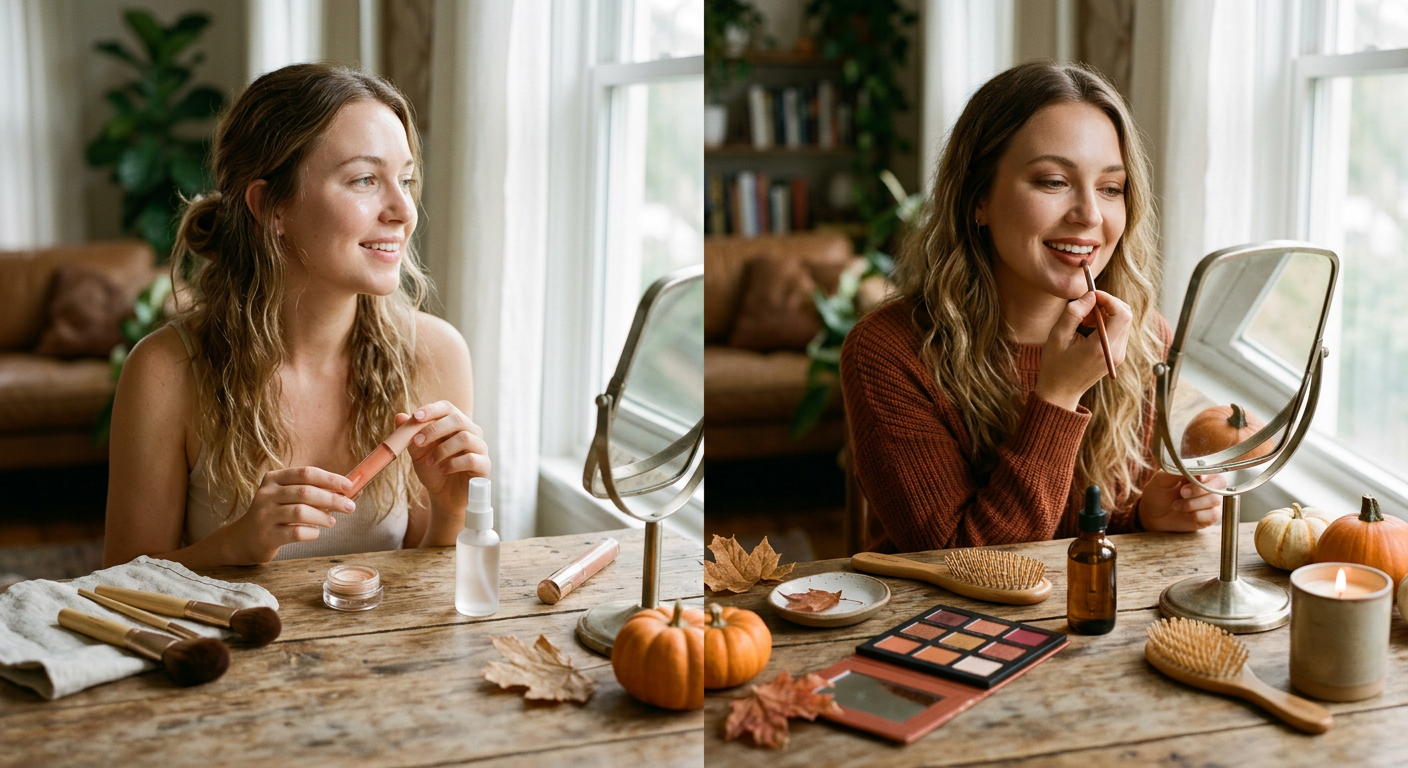
Skincare isn’t the only thing that needs a seasonal update. A few makeup swaps make your look feel like fall without a full restock.
The quickest changes to make before the leaves turn:
- Bronzer over highlighter: Choose a matte or satin bronzer with terracotta undertones instead of a high-shine highlight, per Ulta Beauty.
- Deeper lips: Layer a deep berry or burgundy liner over your go-to nude. Burgundy is one of the defining shades of fall 2026.
- Warmer blush: Move from peachy coral to warm rose, mauve, or brick.
- Add a setting powder: Fall skin leans more matte and long-wearing than summer’s dewy finish.
A richer base helps, too. Coveteur suggests reaching for a fuller-coverage BB cream and cream blush to keep skin looking lively even without a summer tan. Cream formulas also blend more easily into drier fall skin than powders.
Don’t Forget Nails, Hair, and Body
Months of gel manicures, salt water, and heat styling take their toll by fall. For nails, the team at luxury salon So.Shell told Who What Wear to focus on hydration: use cuticle oil daily and a nourishing hand cream, ideally one containing urea, to keep skin soft and prevent dryness.
Apply the same logic everywhere. Add a body oil to your post-shower routine, use a hair mask weekly, and swap short showers for longer warm baths as the weather cools. Small restorative rituals add up to a routine that actually feels like the season.
Your Fall Reset, Simplified
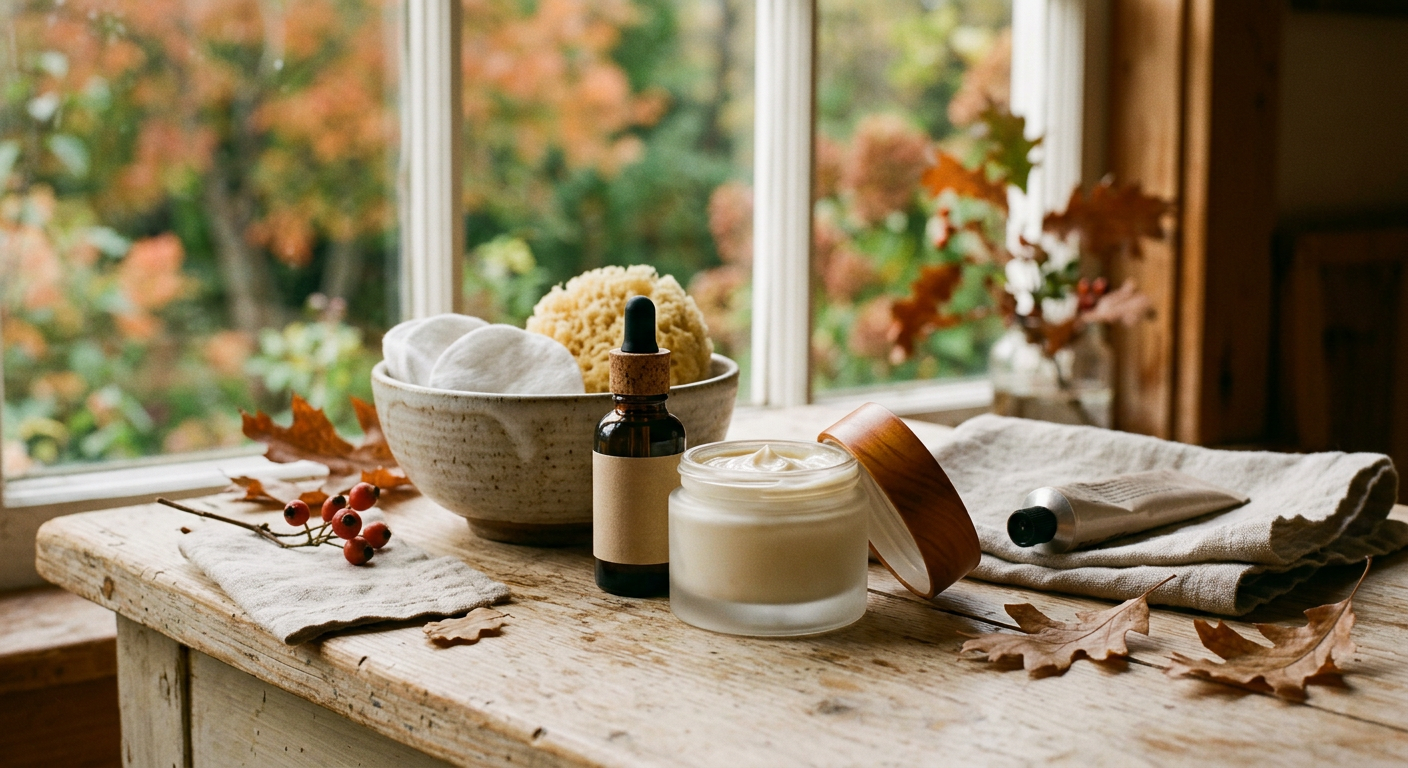
A successful October beauty reset comes down to adjusting texture and frequency, not replacing everything you own. Swap your oil-control cleanser for a gentle one, trade lightweight gels for barrier-supporting creams, scale back strong exfoliants, reintroduce retinoids slowly, and keep SPF in your daily lineup year-round.
On the makeup side, lean into warm bronzer, berry lips, and cream formulas, and give your nails, hair, and body the extra hydration they earned over summer. Make one change at a time and watch how your skin responds for a week or two before moving on.
Start with the single swap your skin needs most this week, then build from there.
Frequently Asked Questions
When should I switch to my fall skincare routine?
Make the switch as soon as the air turns drier and your skin starts to feel tight or flaky—usually when indoor heating begins and humidity drops. Change one product at a time and watch your skin for one to two weeks before the next swap.
Do I really need to wear SPF in fall and winter?
Yes. UV damage accumulates year-round, and the UVA rays that cause premature aging reach your skin regardless of temperature. Keep a broad-spectrum sunscreen in your morning routine every day.
Should I stop exfoliating when my skin gets drier?
No, but scale back the frequency and strength. Switch to a gentler acid like mandelic acid if your skin is sensitive, and avoid over-exfoliating a compromised barrier, which leads to more irritation and flaking.
What ingredients should a fall moisturizer have?
Look for ceramides and hyaluronic acid to strengthen the barrier and lock in moisture, plus niacinamide to brighten dull skin. Shea butter, jojoba oil, and urea add extra hydration for rough or flaky patches.
What makeup colors are trending for fall 2026?
Burgundy and deep berry lips, warm terracotta bronzer, and rose, mauve, or brick blush define the season. The overall look leans more matte and long-wearing than summer’s dewy finish.
Can I keep my summer products or do I need all new ones?
You can keep most of them. A fall reset is about strategic swaps—a gentler cleanser, a richer moisturizer, and adjusted actives—rather than replacing everything on your shelf.