

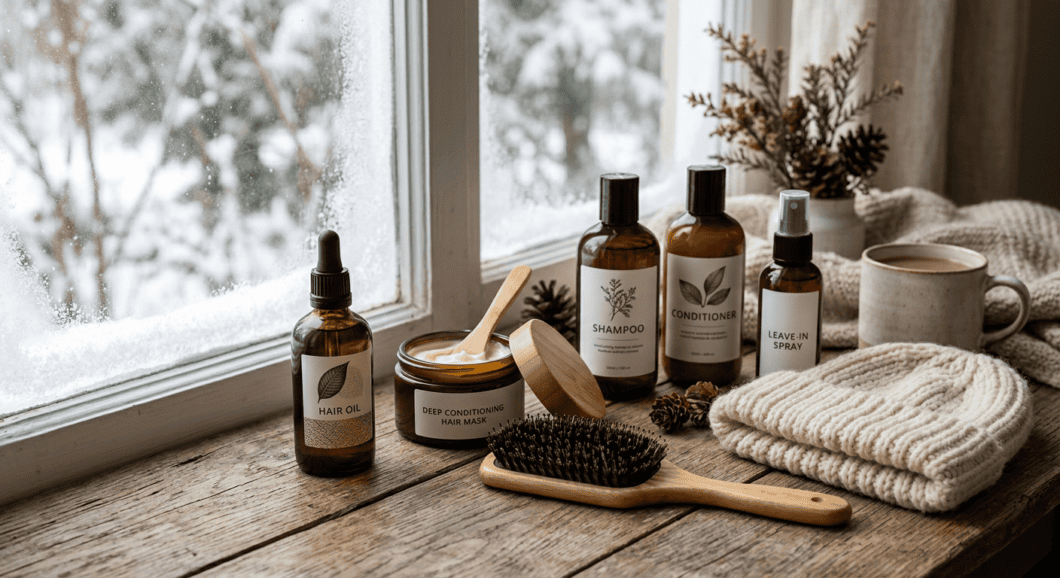
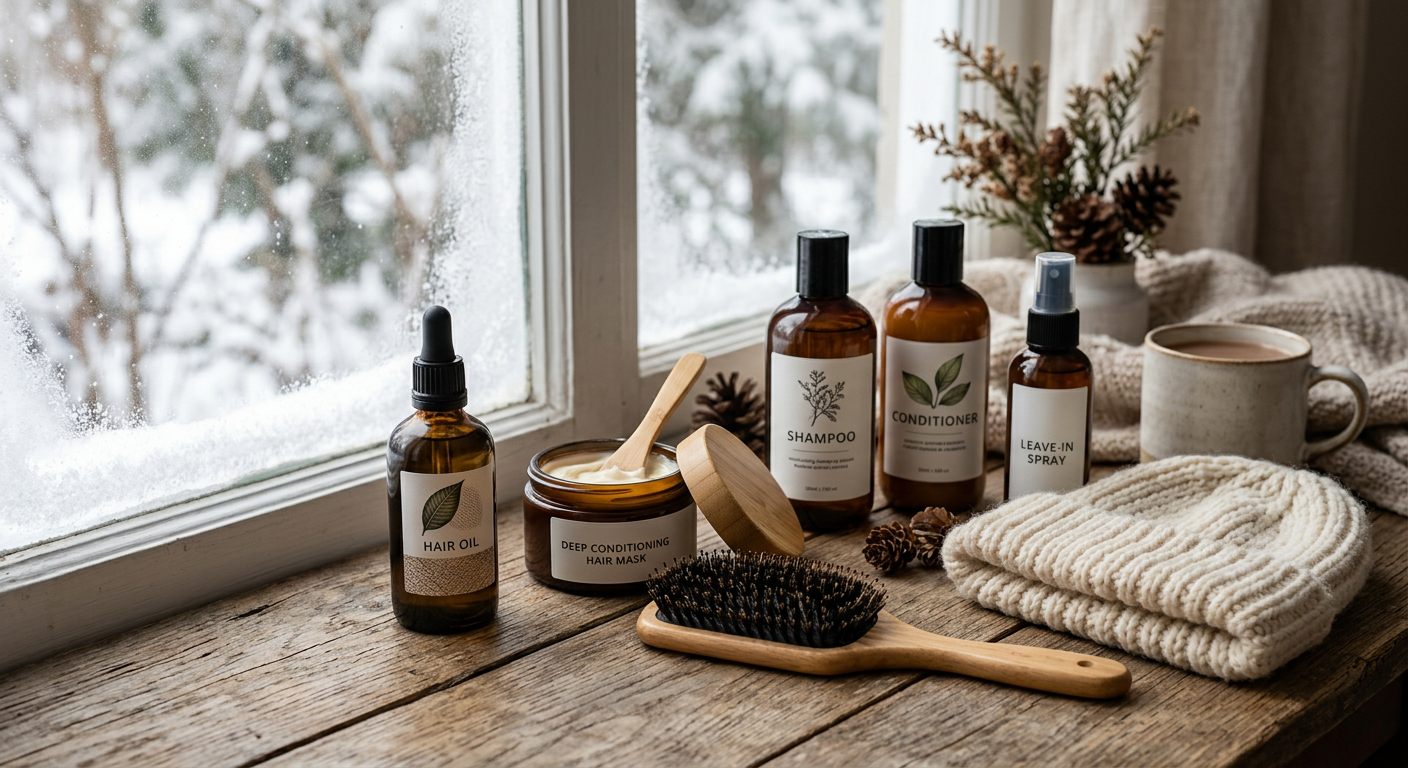
The shine you had all summer tends to vanish the same week the temperature drops. Freezing wind, indoor heaters, and dry air all pull moisture out of your strands, and once that starts, cold-weather hair care stops being optional. Winter delivers static, brittleness, and breakage in a combination that styling alone can’t paper over.
Protecting your hair through the cold months doesn’t require a 12-step routine. It takes the right products, a few strategic swaps, and some consistency. What follows is a practical, science-backed guide to keeping your hair hydrated, strong, and manageable through the season.
Why Cold Weather Damages Your Hair
Winter attacks your hair from two directions. Outdoors, cold air holds less moisture, so it pulls water from the hair shaft and scalp. Indoors, forced-air heating creates a second dry environment, and your strands never get a chance to recover.
That double exposure raises the cuticle, the outer protective layer of each hair. When the cuticle lifts, moisture escapes faster and hair turns rough, dull, and prone to snapping.
Static and Frizz Explained
Static builds up when dry air lets electrical charges collect on your hair. With no humidity to neutralize them, the strands repel each other and you get that halo of flyaways. Frizz works the same way: parched cuticles pull in whatever moisture is available unevenly, which causes swelling and roughness.
The mechanics matter because they point to the fix. Almost every winter hair problem traces back to one root cause: moisture loss. Fix the hydration and the symptoms tend to follow.
Build a Moisture-First Winter Routine

Your summer routine probably prioritized volume and oil control. Winter asks for the opposite. Now the job is sealing in moisture and reinforcing the cuticle so your hair can handle a harsher environment.
Start by cutting back on how often you shampoo. Washing daily strips the sebum your scalp produces to protect your strands. Two to three washes a week covers most hair types, and dry shampoo bridges the gap. It ranks as the fifth most-used product among consumers, with 40% reaching for it regularly (Let’s Highlight).
Swap Your Cleanser and Conditioner
Trade clarifying or volumizing shampoos for hydrating, sulfate-free formulas. Sulfates clean well but strip too aggressively for winter. Follow every wash with a rich conditioner, concentrating on the mid-lengths and ends where damage tends to concentrate.
Leave-in conditioner earns a place in the rotation too. It’s used by 63% of consumers and adds a protective, moisturizing layer that lasts between washes (Let’s Highlight). Apply it to damp hair before styling for the best results.
The Essential Winter Hair Care Products
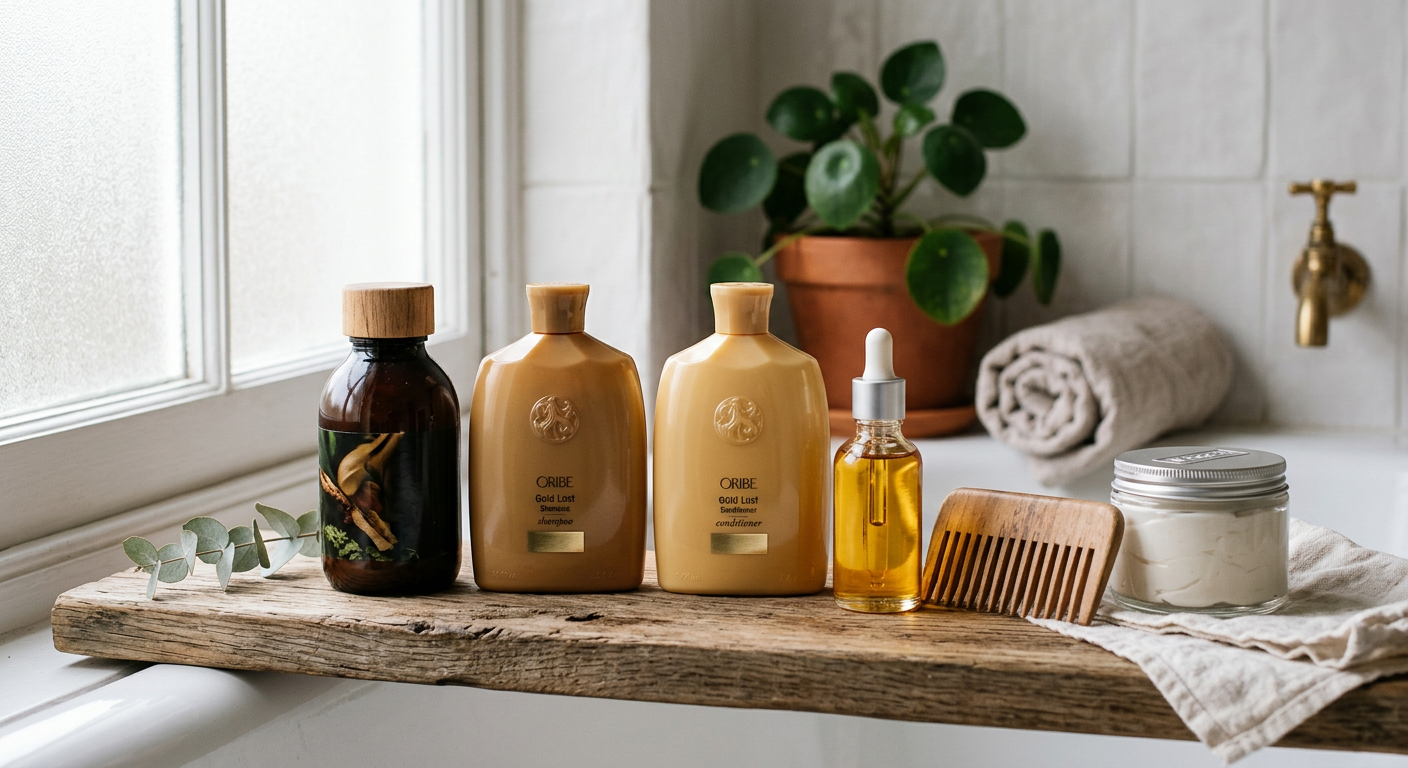
You don’t need dozens of products, but a few targeted additions make a measurable difference. Deep conditioning treatments and oils address the moisture loss that defines winter damage.
A weekly hair mask restores softness and strength. Beauty educators recommend a deep-conditioning mask such as Moroccanoil Intense Hydrating Mask or Olaplex No. 8 once a week for visible results (Brillare Beauty Institute).
Cold-Weather Product Checklist
| Product | What It Does | How Often to Use |
|---|---|---|
| Sulfate-free shampoo | Cleans without stripping moisture | 2-3 times per week |
| Rich conditioner | Seals the cuticle, adds hydration | Every wash |
| Leave-in conditioner | Protects between washes | Every wash or as needed |
| Deep conditioning mask | Restores strength and softness | Once per week |
| Hair oil or serum | Locks in moisture, tames frizz | 2-3 times per week |
| Anti-static/detangling tool | Reduces breakage and flyaways | Daily |
Hair oil, used by 39% of consumers, seals the cuticle and fights frizz when you apply it sparingly to the ends (Let’s Highlight). A little goes a long way. Too much weighs the hair down.
Protect Your Hair From the Elements

Products do their best work alongside physical protection. Covering your hair shields it from the wind and cold that speed up moisture loss.
Wear a hat or hood outside, but pay attention to the material. Wool and rough fabrics create friction and static, so line hats with silk or satin, or tuck a silk scarf underneath. That one swap cuts down on breakage and flyaways.
Rethink Your Heat Styling
Winter isn’t the season for daily blow-drying and flat-ironing. Heat piles onto the dryness your environment already creates and weakens strands that are fragile to begin with. Always use a heat protectant, and turn your tool temperature down whenever you can.
Better still, air-dry when your schedule allows. If you have to wash at night, don’t sleep with wet hair. Wet strands are the weakest and break most easily against a pillow. Swapping cotton pillowcases for silk reduces that overnight friction.
Nourish Your Scalp, Not Just Your Strands
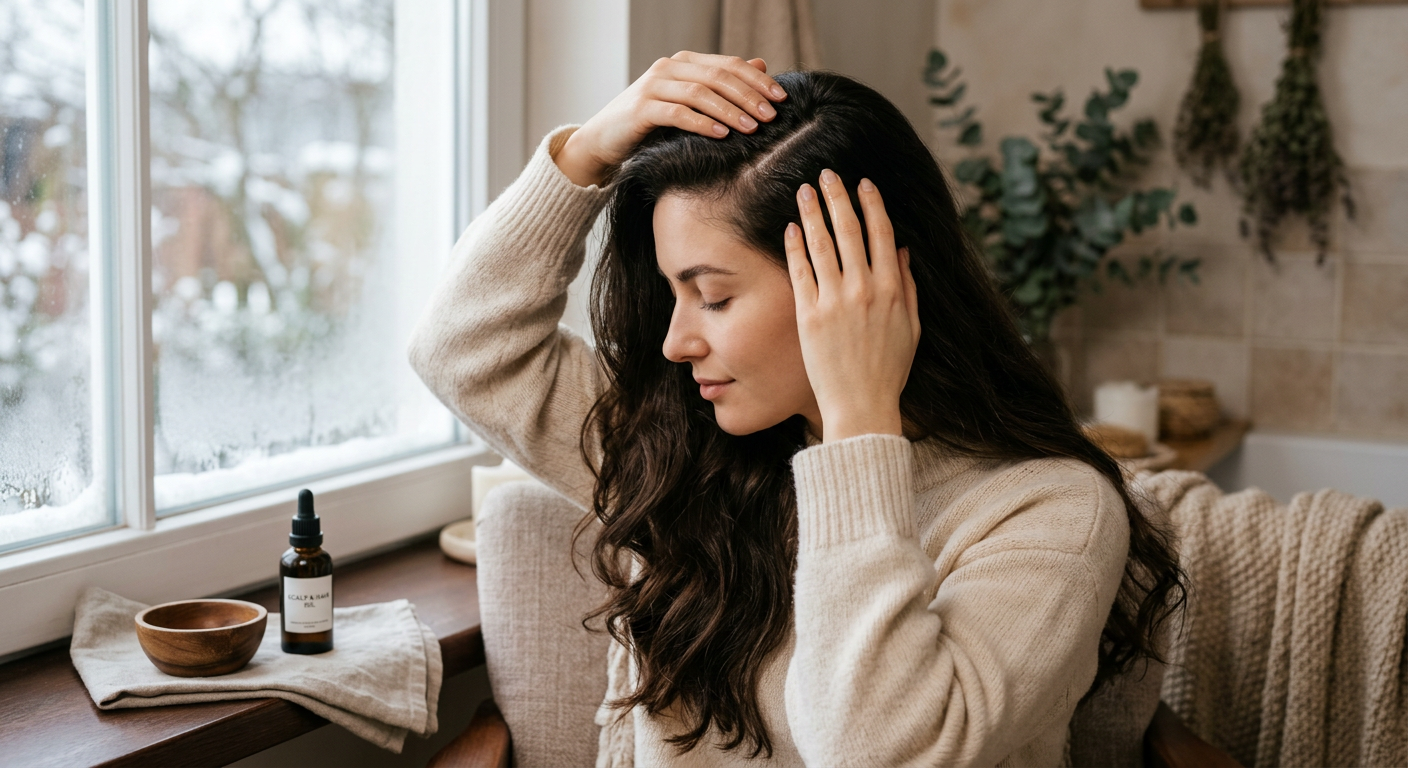
A healthy scalp produces the natural oils that protect your hair, so it deserves attention in winter. Dry indoor air and hot showers often leave the scalp flaky, itchy, and tight.
Turn down the water temperature. Hot water feels great in cold weather, but it strips protective oils from the scalp and strands both. Lukewarm water cleans just as well without the damage.
Add Hydration From the Inside Out
Scalp health responds to more than what you put on it. A humidifier in your bedroom counteracts the dry air from your heating system and helps both skin and scalp hold on to moisture. Drinking enough water and eating omega-3-rich foods supports the scalp’s natural barrier too.
If flaking sticks around, a gentle exfoliating scalp treatment once a week clears buildup without over-drying. Massage it in with your fingertips to boost circulation, which supports healthy growth.
What Consumers and the Market Are Telling Us

Demand for targeted, therapeutic hair products keeps climbing. The U.S. hair care market reached an estimated USD 20.98 billion in 2026 and is projected to hit USD 25.9 billion by 2031, growing at a 4.29% CAGR (Mordor Intelligence).
That growth points to a shift toward specialized, personalized formulas rather than just buying more product. Shoppers want solutions for specific concerns, and seasonal dryness is one of the big ones.
For your own routine, the lesson is simple: buy fewer, better products made for your hair type and current conditions. Matching your regimen to the season beats stockpiling generic bottles.
Conclusion: Your Winter Hair Game Plan
Cold-weather hair care comes down to one principle: replace the moisture your environment steals. Cut back on washing, switch to sulfate-free and hydrating formulas, add a weekly mask, and seal everything with a lightweight oil. Protect your strands with silk-lined hats and less heat styling, and don’t ignore your scalp.
These are small changes, but they add up. Within a few weeks you should see less static, fewer breaks, and softer hair.
Start with one swap this week, either your shampoo or a new leave-in conditioner, and build from there. The results will carry well past winter. For personalized guidance, a trusted stylist can assess your specific hair type and needs.
Frequently Asked Questions
Q: How often should I wash my hair in cold weather?
Most people should wash two to three times per week in winter to preserve their natural oils. Daily washing strips the sebum your scalp needs to protect strands from dry air. Use dry shampoo between washes to manage oil at the roots.
Q: Does cold weather actually cause hair breakage?
Yes. Cold, dry air pulls moisture from the hair shaft, raising the cuticle and leaving strands brittle and prone to snapping. Indoor heating makes it worse by drying the hair from the other direction.
Q: What is the best product for winter frizz and static?
A lightweight hair oil or serum on the ends works well, since it seals the cuticle and puts moisture back. Leave-in conditioner and silk-lined hats also cut down on static from friction and dry air.
Q: Should I stop using heat tools in winter?
You don’t need to stop completely, but reduce the frequency and always use a heat protectant. Heat styling compounds winter dryness, so lower your temperature settings and air-dry when you can.
Q: Will a humidifier really help my hair?
Yes. A humidifier puts moisture back into dry indoor air, which helps your scalp and hair hold on to hydration. Running one in your bedroom overnight is a simple way to counteract forced-air heating.
Q: Do I need a hair mask if I already use conditioner?
A weekly deep-conditioning mask does more intensive repair than daily conditioner, especially in winter. Masks penetrate deeper to restore strength and softness, which makes them worth adding for damaged or dry hair.