

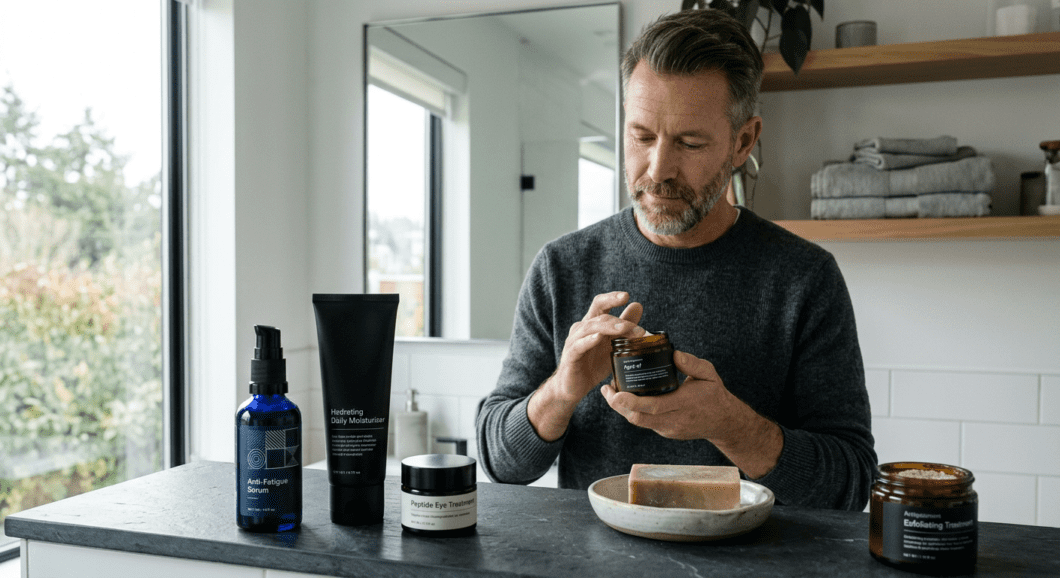
A bar of soap used to cover the entire male grooming routine. That era is over. The question driving men’s grooming in 2026 has shifted from “How do I look younger?” to “How do I keep my skin healthy for decades?” The industry calls this skin longevity, and it’s changing how men’s beauty brands formulate products, market them, and hold onto customers.
Skin longevity is about supporting skin function over time instead of chasing quick cosmetic wins. That outcome-driven, science-backed angle has pulled in a male audience that spent years avoiding multi-step routines. The men’s skincare market is on track to become a $37 billion industry by 2035, and longevity is the idea bringing new customers through the door.
What Skin Longevity Actually Means

Skin longevity is the practice of preserving skin’s health, resilience, and barrier function over the long term, rather than fighting visible aging cosmetically. Like the wider anti-aging category, it has no official definition, but the principle holds steady: aging well beats faking youth.
The framing is the whole point for men. “Anti-aging” carries a whiff of vanity, and that has kept a lot of men out of the category. “Longevity” repositions skincare as health maintenance, something closer to exercise or sleep than to grooming. That repositioning lowers the psychological cost of starting.
The science backs the move. Inflammation is now recognized as a root driver of skin aging, so longevity products emphasize barrier repair, hydration stability, and prevention over aggressive correction. The goal is stable, comfortable skin at every age.
Why Men’s Brands Are Leaning In Now
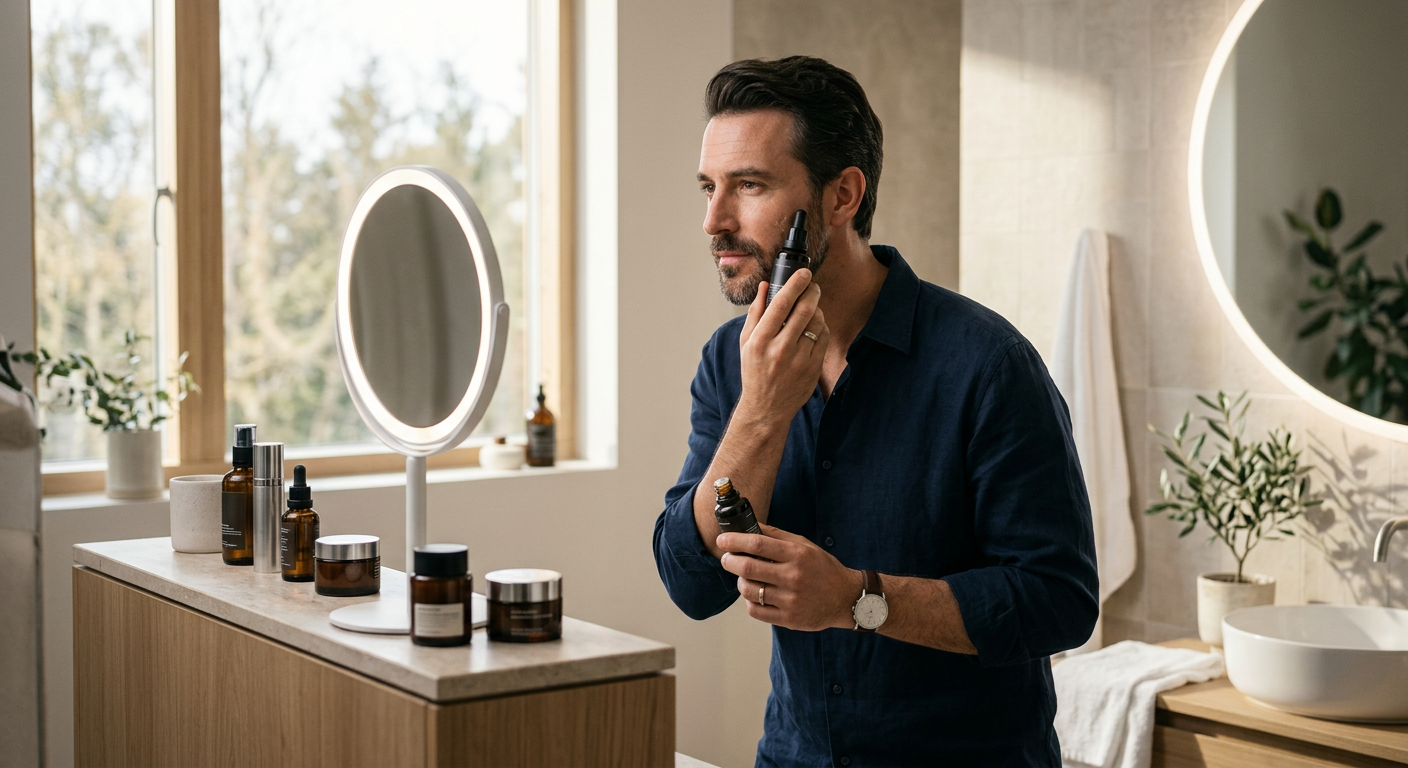
The timing isn’t an accident. Three forces are converging in 2026 to put skin longevity at the center of men’s grooming strategy.
A Massive, Underserved Market
Only 29% of men maintain a regular skincare routine, compared to 62% of women, according to Strive’s 2026 men’s skincare report. That gap is a $20 billion-plus opportunity. Longevity messaging hands brands a credible, non-vanity reason to convert the 71% of men still sitting on the sidelines.
Gen Z Is Driving Adoption
Gen Z men are 62% more likely to use skincare than Gen X men, and 68% of Gen Z men already do. This generation grew up treating skin health as part of overall wellness, which maps neatly onto the longevity narrative.
Luxury Set the Template
Premium brands proved the model first. Shiseido, Lancôme, Dior, and Vichy are all investing in longevity research, and Vichy launched a dedicated Longevity Clinic in early 2026. Men’s brands are now translating that science-led positioning for a male audience.
The Science-Led Formulation Shift

Longevity products take more than a fresh label. They need ingredients that support skin biology over time, which is changing how men’s brands build their formulas.
The focus has moved toward barrier-supporting and anti-inflammatory actives: ceramides for barrier repair, niacinamide for resilience, peptides for structural support, and antioxidants to counter oxidative stress. These ingredients prioritize long-term skin function over the immediate tingle that older men’s products leaned on.
Brand credibility increasingly comes down to what’s in the bottle. As the chemist-founded brand Strive noted after winning AskMen’s 2026 Best New Skincare Brand award, most men’s brands compete on packaging and scent rather than formulation. Longevity rewards the opposite approach.
The “Skinification” of Everything
A related trend, “skinification,” brings skincare-grade actives into adjacent categories like body care, hair care, and even makeup, per a Spate report cited by Forbes. For men, that means a beard oil or scalp serum is now expected to deliver the same functional ingredients as a face product.
Anti-Aging vs. Skin Longevity: A Direct Comparison
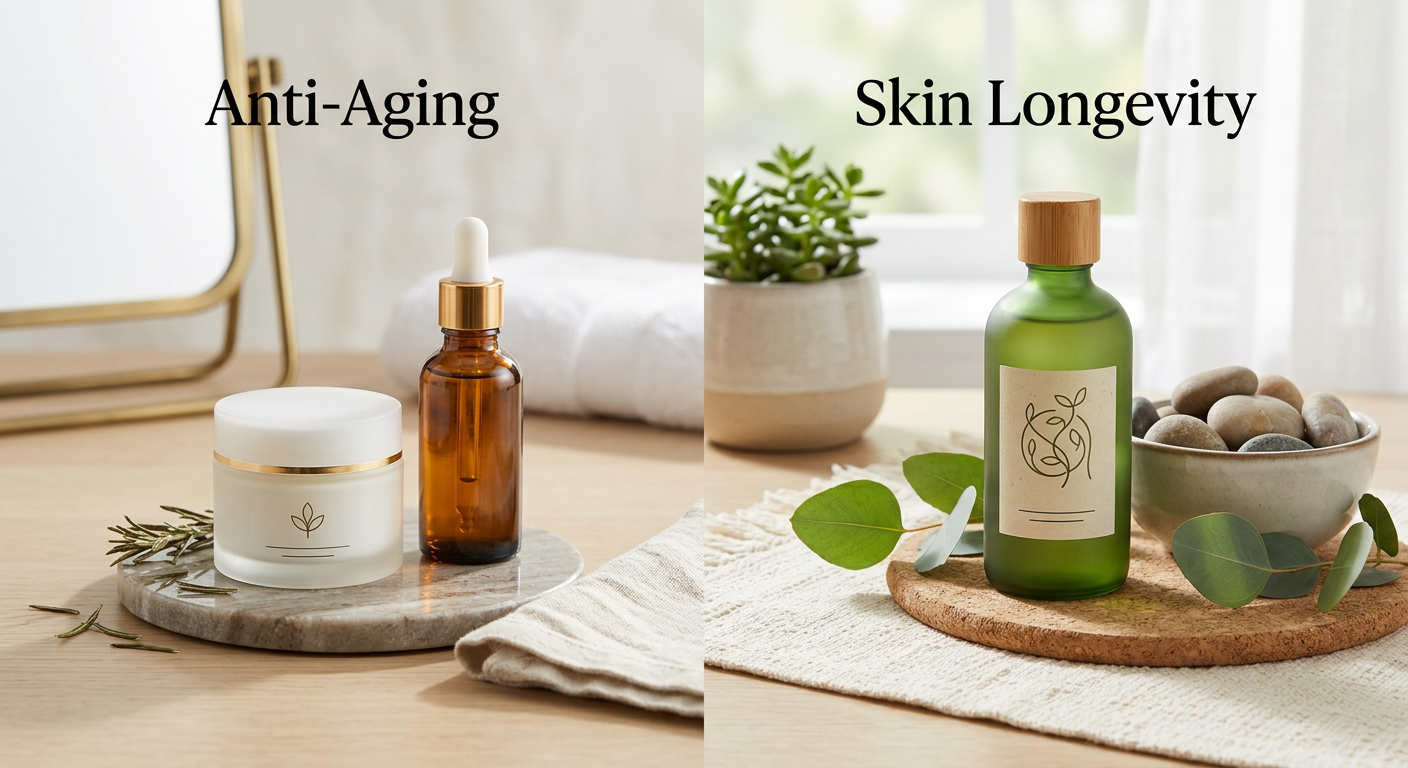
The line between traditional anti-aging and skin longevity goes beyond marketing. It changes product goals, ingredients, and timelines.
| Factor | Traditional Anti-Aging | Skin Longevity |
|---|---|---|
| Primary goal | Reduce visible wrinkles and lines | Preserve skin health and function |
| Timeframe | Short-term, cosmetic results | Long-term, preventative |
| Emotional framing | Fighting age (vanity) | Aging well (wellness) |
| Key focus | Correction | Prevention and maintenance |
| Core ingredients | Heavy actives, fast results | Barrier support, anti-inflammatories |
| Appeal to men | Limited | Strong and growing |
The longevity column is where men’s brands now compete. It fits how men tend to think about self-care: performance and maintenance rather than appearance management.
How Men Can Build a Skin Longevity Routine
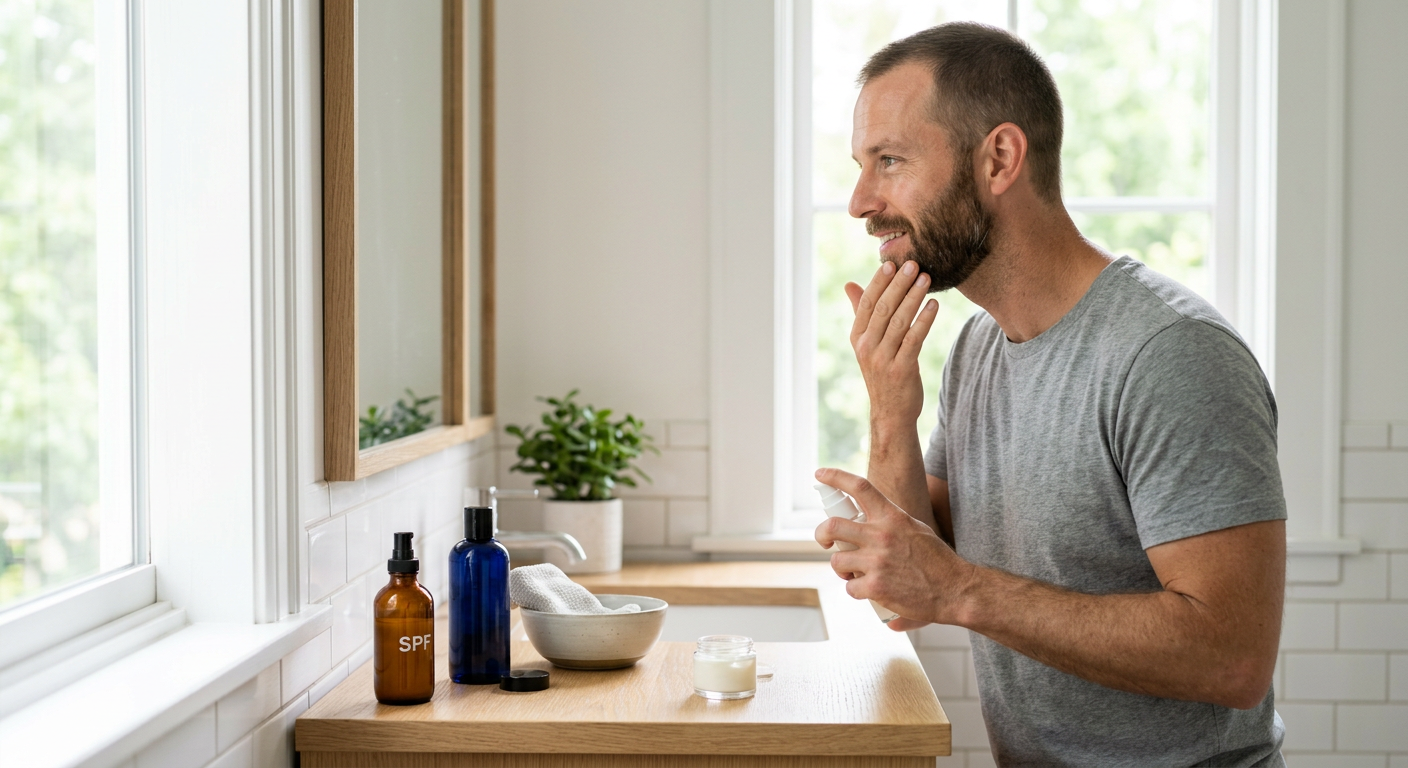
A 10-step regimen isn’t the goal. The principle is consistency and prevention, not complexity. The aim is to support skin’s natural rhythm without overloading it.
The Core Four
A practical, evidence-aligned routine rests on four pillars:
- Cleanse with a gentle, non-stripping formula to protect the barrier.
- Moisturize with a stabilizing serum or cream containing ceramides or niacinamide.
- Protect with daily SPF, the single most effective preventative step against skin aging.
- Support your lifestyle, because skin longevity links directly to sleep, stress, and nutrition.
Start Where You Are
If you use nothing right now, begin with a cleanser and SPF. If you already use two products, add a barrier-supporting moisturizer. The longevity mindset favors sustainable habits over aggressive overhauls, which men tend to abandon within a month anyway.
What This Means for the Industry’s Future

Skin longevity is bigger than a 2026 trend. It’s becoming a permanent marker of how the beauty industry, men’s brands included, defines quality. The shift puts skincare inside a broader wellness ecosystem alongside supplements, nutrition, and lifestyle.
The competitive bar is rising. Marketing claims now need scientific backing, and consumers — younger men especially — scrutinize ingredient lists. Brands that lead with formulation and education will outpace the ones leaning on packaging and scent.
For the consumer, the practical takeaway is simple. Choose products designed to support skin function over time, build a routine you can sustain, and treat skin health as part of overall wellness rather than a cosmetic afterthought.
Conclusion
Men’s beauty brands are focusing on skin longevity in 2026 because the strategy solves several problems at once. It reframes skincare as wellness rather than vanity, it taps a $37 billion market with plenty of room to grow, and it aligns with the science showing prevention beats correction. Gen Z adoption and luxury investment have sped up the move from short-term anti-aging to long-term skin health.
Start with the core four, prioritize SPF and barrier support, and choose brands that compete on what’s actually in the bottle. Audit your current routine this week and add one longevity-focused step.
FAQ
Q: What is skin longevity in skincare?
Skin longevity is the practice of preserving skin’s health, resilience, and barrier function over the long term, rather than fighting visible aging cosmetically. It emphasizes prevention and maintenance over short-term correction.
Q: How is skin longevity different from anti-aging?
Anti-aging targets visible signs like wrinkles for short-term cosmetic results, while skin longevity supports overall skin function and health over decades. Longevity is preventative; traditional anti-aging is corrective.
Q: Why are men’s beauty brands focusing on longevity in 2026?
Only 29% of men maintain a regular routine, leaving a $20 billion-plus market opportunity. Longevity reframes skincare as wellness rather than vanity, which lowers the barrier to entry for men.
Q: What ingredients support skin longevity?
Barrier-supporting and anti-inflammatory ingredients like ceramides, niacinamide, peptides, and antioxidants are central to longevity formulas. Daily SPF is also one of the most effective preventative ingredients.
Q: Do men need a complicated skincare routine for longevity?
No. A core four routine of cleanse, moisturize, protect with SPF, and support through lifestyle is enough to start. Consistency matters more than complexity.
Q: Is skin longevity just a marketing trend?
It’s grounded in real science, particularly research linking inflammation to aging, and it’s being adopted across luxury and men’s brands alike. Most experts see it as a lasting shift rather than a passing trend.