

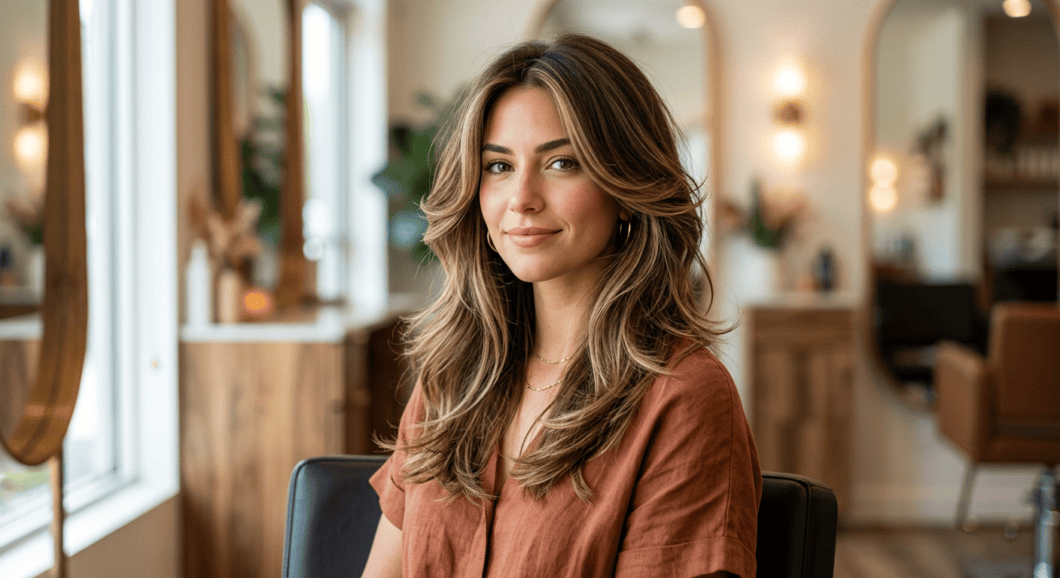
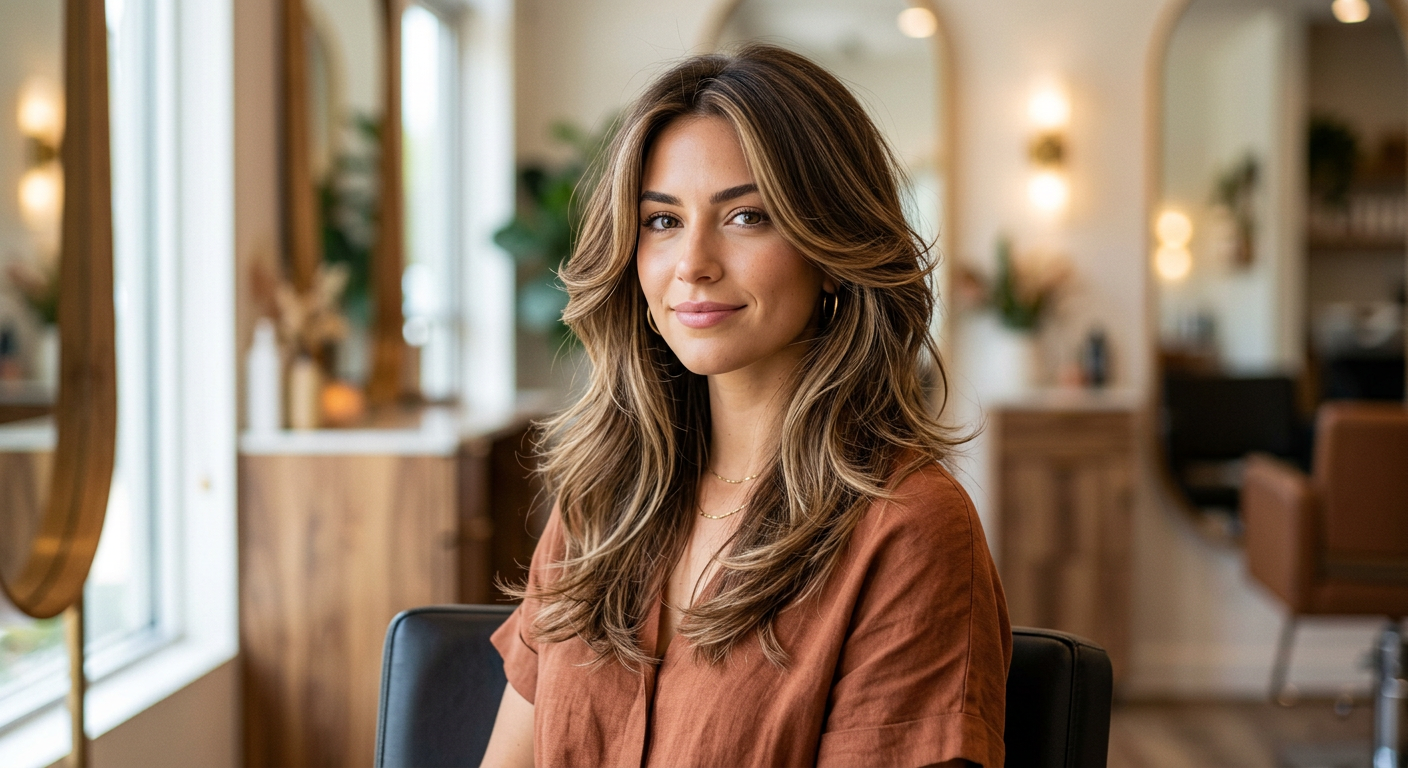
Ask a stylist which cut clients keep requesting this year and two words come up again and again: halo layers. The style has jumped from a TikTok search term to a standing appointment request, and the reason is practical. It adds movement and crown volume without the hard line of a blunt bob or the deliberate mess of a mullet. It looks expensive, grows out without an awkward phase, and flatters most face shapes.
The cut has largely replaced the butterfly haircut by keeping the parts people liked and softening the rest. Below, we’ll cover what halo layers are, who they suit, and how to describe the cut so your stylist gives you the right one.
What Are Halo Layers?
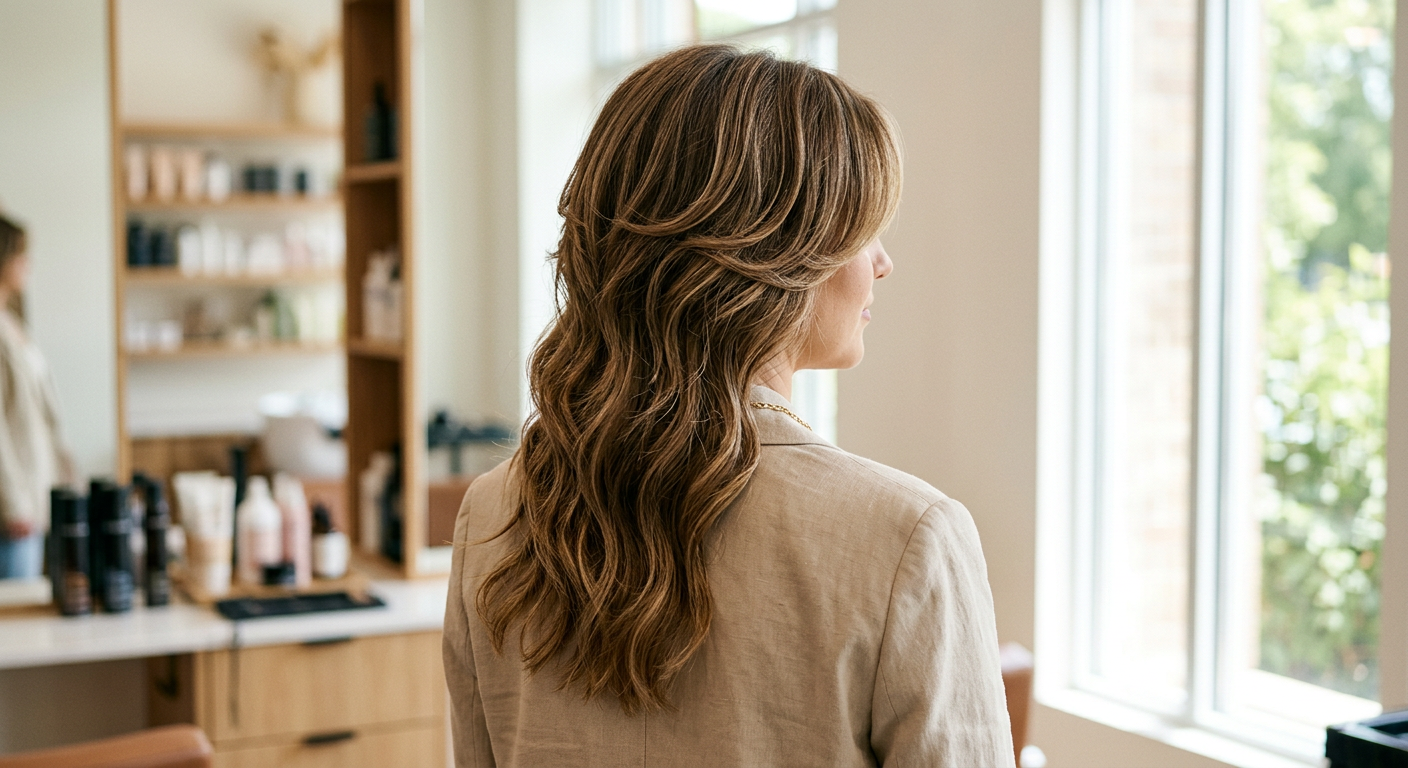
Halo layers are shorter, rounded layers that sit around the crown and wrap the whole way around the head, forming a soft ring shape that frames the face. Standard face-framing layers only touch the front sections. Halo layers work the crown all the way around, which lifts and adds dimension across the top instead of just at the front.
The cut grew out of the butterfly haircut, which went viral in 2022 and racked up more than 92,000 videos on TikTok. As Grazia Daily reports, halo layers borrow the heavy layering and winged movement of the butterfly cut and update it with more built-in volume.
How It Differs From a Shag or Butterfly Cut
This distinction matters at the consultation. A shag is choppy and blunt on purpose. The butterfly cut uses two contrasting layer lengths to create a winged effect around the face.
Halo layers are softer and more uniform than either. The layers wrap the crown instead of concentrating at the front, and that’s what makes the finish read as polished rather than edgy. According to Stylist, straight hair takes on a chic pageboy shape, while curls lean toward big, bodacious 1970s glam.
Why Halo Layers Are Trending in 2026

Two things explain the popularity: the cut is versatile, and it’s low maintenance. It grows out well, which means fewer salon visits and no pressure to keep a rigid shape intact. Stylists on Instagram describe it the same way over and over, as movement in all the right places with little styling required.
Social media did a lot of the work. Tutorials from creators like @iamsooyounlee have pulled in tens of thousands of likes, and salons now list the cut among their most common requests.
Color plays a part too. Paired with halo highlights, which place lighter pieces around the crown and face, the layers separate and expose the depth of the color. As CK Studio Salon notes, layered cuts show off halo highlights particularly well, because flat single-process color can’t reveal dimension the way layered movement does.
Who Can Get Halo Layers?

The cut suits nearly every hair type and texture, from poker-straight to curly, coily, and kinky. Popsugar confirms it works across textures, and the circular structure of the layers flatters curls especially well.
Length is flexible. You can cut halo layers into a shoulder-length bob or keep the hair long with layers that fall past the shoulders. That range is why the cut works for a wide span of ages and daily routines.
Best Face Shapes and Hair Types
| Feature | How Halo Layers Help |
|---|---|
| Round faces | Crown volume adds vertical length and structure |
| Fine hair | Rounded layers create the illusion of fullness |
| Curly/coily hair | The circular shape enhances natural spring and movement |
| Straight hair | Delivers a chic pageboy-like finish with soft edges |
| Growing-out cuts | Layers blend as they grow, avoiding awkward stages |
For very thin hair that needs maximum volume, halo layers are one of the more effective cuts to ask for. The crown layering lifts hair off the scalp and creates instant density.
What to Ask Your Stylist For

Be specific. Asking for “layers” could get you a shag, a butterfly, or plain face-framing. Use precise language and bring photos.
What to request:
- Rounded crown layers that encircle the whole head, not just the front sections
- A halo-shaped fringe or curtain bangs to frame the face softly
- Soft, blended ends rather than blunt or choppy cuts
- Enough weight left at the bottom so the layers cascade instead of sitting flat
- Wispy, tapered pieces around the face for a lived-in finish
Reference Photos Matter
Stylists work best from visuals. Save two or three images that show the crown volume and the way the layers wrap around the head. Point directly at the halo effect at the crown, because that detail is what separates this cut from a butterfly or shag.
If color is on the table, bring up halo highlights during the consultation. Planning the cut and the color placement together lets the layers expose the lighter pieces for the most dimension.
How to Style Halo Layers
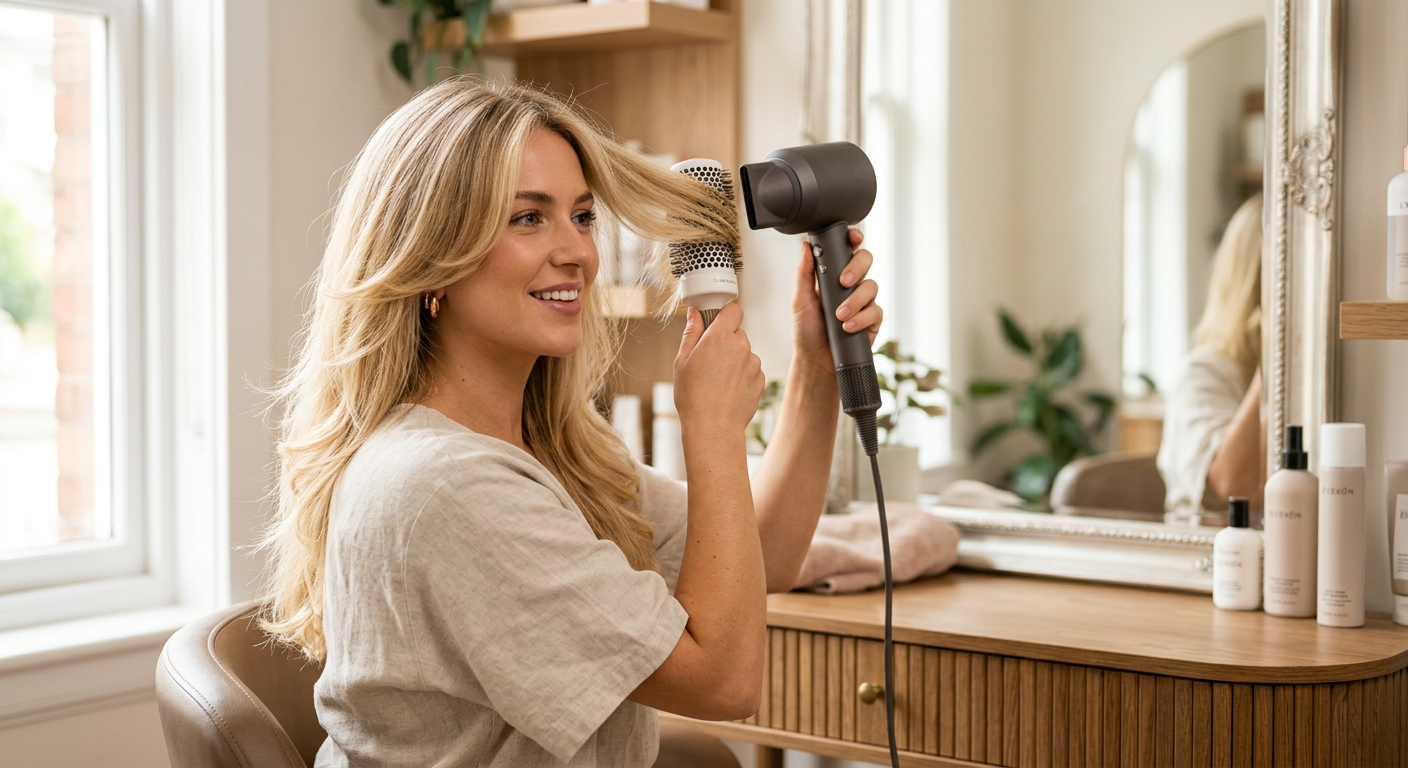
Styling takes very little effort. Most stylists recommend a round-brush blowout to curve the layers inward around the face. A rough-dry followed by light styling covers most days.
For more volume, work the crown. Lift the roots with a round brush or a few large hot rollers and let the halo shape handle the rest. The layers carry the look, so you’re not stuck at the mirror for an hour.
Styling by Hair Type
- Straight hair: Blow-dry with a round brush for a smooth, pageboy-inspired finish, or add a slight bend with a flat iron.
- Wavy hair: Scrunch in a light mousse and air-dry to bring out natural movement.
- Curly and coily hair: Apply curl cream to damp hair and diffuse to play up the circular halo shape and 1970s volume.
A texturizing spray on the crown adds grip and holds the volume through the day. Keep heavy oils away from the roots, since they weigh down the lift that defines the cut.
Maintenance and Longevity

Upkeep is minimal. The layers are cut to grow out well, so you can go roughly 10 to 12 weeks between trims without losing the shape. That makes it easy on both the budget and a full calendar.
To keep the layers sharp, ask for a light dusting of the ends at each visit rather than a full re-cut. If you add halo highlights, a tinted gloss every few weeks keeps the tone even and adds shine, according to the color specialists at CK Studio Salon.
The graceful grow-out and the simple upkeep are the main draw for anyone who wants a good cut without a demanding routine.
Conclusion
Halo layers earned their spot as the most-requested cut of 2026 by solving one problem: how to get volume, movement, and softness without constant upkeep. The cut suits every hair type and texture, flatters a wide range of face shapes, and grows out well between appointments. Paired with halo highlights, it delivers dimension that flat single-process color can’t match.
If you’re ready for a change, book a consultation and bring photos that show the crown volume and halo-shaped layers. Ask for rounded crown layers that wrap the head, and you’ll leave with the cut everyone’s requesting.
FAQ
Q: What is the difference between halo layers and a butterfly cut?
Halo layers use rounded crown layers that wrap the entire head, while the butterfly cut uses two contrasting layer lengths for a winged effect around the face. Halo layers are softer, more uniform, and look more polished.
Q: Do halo layers work on curly hair?
Yes. The circular structure of halo layers flatters curls, coils, and kinks especially well, bringing out natural spring and creating big, 1970s-inspired volume.
Q: How often do I need to trim halo layers?
Because the cut is built to grow out well, you can usually wait 10 to 12 weeks between trims. Ask for a light dusting of the ends rather than a full re-cut to hold the shape.
Q: Will halo layers add volume to fine hair?
Yes. The rounded crown layers lift hair off the scalp and create the illusion of fullness, which makes this one of the more effective cuts for fine or thin hair.
Q: Should I get halo highlights with halo layers?
For extra dimension, yes. Layered cuts show off color placement well, and halo highlights around the crown and face separate as the layers move, revealing the depth of the color.
Q: What should I bring to my salon appointment?
Bring two or three reference photos that clearly show crown volume and the halo-shaped layers wrapping around the head. Point out the crown detail specifically so your stylist doesn’t read the request as a butterfly cut or shag.