



You left the house with a flawless base. Three hours later, your foundation has pooled around your nose, flaked across your cheeks, and split along your jaw. This is a winter problem. When central heating runs all day, skin dries out and develops the kind of uneven texture foundation grabs onto, according to Grazia. A flake-free base depends less on one perfect product than on getting your skincare, makeup texture, and setting products to work together.
This guide covers each step, from prep to finish, so your foundation stays smooth in dry air.
Why Winter Makes Foundation Cling to Dry Patches

Cold outdoor air and dry indoor rooms work against your skin at once. Go With Beauty notes that cold weather, heated interiors, and long wear all leave the skin’s surface feeling tight, especially around the nose, mouth, and cheeks.
Apply foundation over loose flakes, or let it dry too fast, and it catches on those rough spots. Dehydration makes it worse. As Laura Mercier puts it, dry or dehydrated skin makes foundation “cling to it like a bad ex.”
Indoor heating is usually the bigger culprit, not the weather outside. Hot showers and a cranked thermostat strip moisture faster than cold air alone, which is why your base can look worse after a warm morning routine than it does at the end of a cold walk.
Start With a Smart Hydration Routine
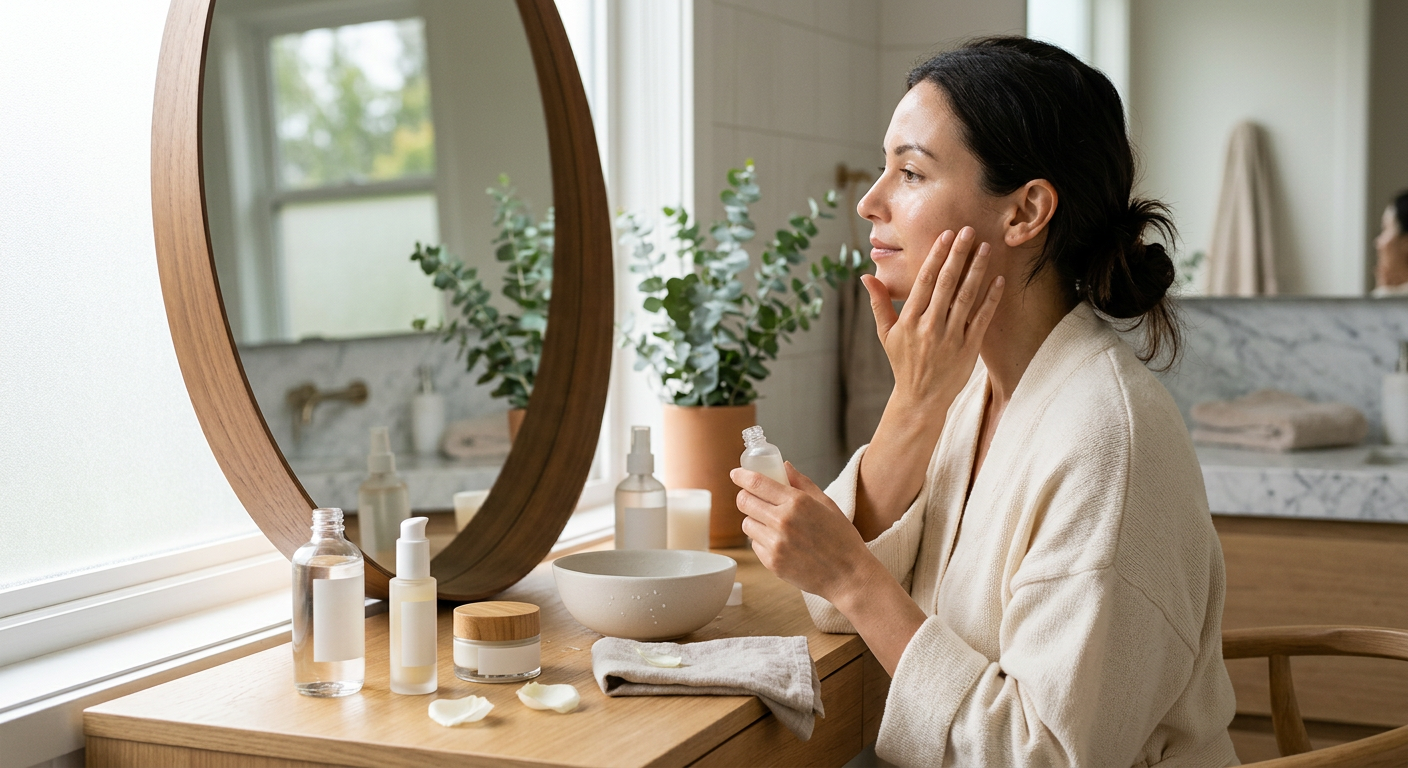
A flake-free base begins well before you open your foundation. The goal is layered hydration that fills in dry patches without leaving a slippery film.
Layer Your Serums and Moisturizer Correctly
Order matters. Girlactik recommends applying hyaluronic acid serums first to draw moisture into the skin, followed by peptide-based serums and humectants like glycerin and aloe. Water-binding ingredients go on before thick creams so they can penetrate.
Go With Beauty advises applying moisturizer while your face is still slightly damp, and looking for a blend of humectants such as glycerin or hyaluronic acid, emollients, and barrier-supporting ingredients like ceramides. A few drops of squalane will help very dry areas, but use it sparingly under makeup.
Give Each Layer Time to Absorb
Rushing trips up a lot of people. RMS Beauty recommends letting moisturizer absorb for 60 to 90 seconds before primer or foundation. Go With Beauty suggests five to ten minutes before sunscreen during the day.
Each layer should feel absorbed, not wet. Too much skincare leaves a slippery film; too little makes foundation cling to rough areas. Your lips need the same attention: Sheaffer Cosmetics suggests applying lip balm first so it softens while you prep the rest of your face.
Exfoliate Gently to Clear Dry Flakes First

You can’t hydrate your way over existing flakes. Dead skin has to go before makeup, but how you remove it matters in winter.
Skip granular scrubs. They aggravate skin that’s already inflamed. Grazia recommends breaking up texture with a light peel that sloughs away dead skin and brightens the complexion without irritation. Expert picks include the Dr. Dennis Gross Alpha Beta Universal Daily Peel ($126) and Kiehl’s Nightly Refining Micro-Peel Concentrate ($82).
Keep the frequency low. Sheaffer Cosmetics recommends exfoliating gently once or twice a week and not over-scrubbing. Go With Beauty adds that visible flakes should be treated before makeup rather than through aggressive exfoliation right before application.
Choose a Hydrating Foundation and Primer

Product texture is your next line of defense. A flexible, hydrating base moves with your face as you talk and smile; a fast-setting matte formula locks into dry spots.
Skip Powder, Prioritize Moisture
Powder is built to soak up excess shine, which works on oily zones but only highlights dry patches, Grazia explains. Use it with precision, or skip it entirely over dry areas. Go With Beauty recommends a flexible texture over a very dry, fast-setting base.
Prime for Dry Skin
The right primer improves everything on top of it. Girlactik recommends primers packed with hydrating ingredients like hyaluronic acid, glycerin, and squalane.
Quick product checklist for a flake-free base:
| Step | Product Type | Look For |
|---|---|---|
| 1 | Hydrating serum | Hyaluronic acid, niacinamide |
| 2 | Moisturizer | Ceramides, glycerin, squalane |
| 3 | Primer | Hyaluronic acid, glycerin, squalane |
| 4 | Foundation | Hydrating, flexible, non-powder finish |
| 5 | Finish | Setting spray over heavy powder |
Apply With the Right Technique and Tools
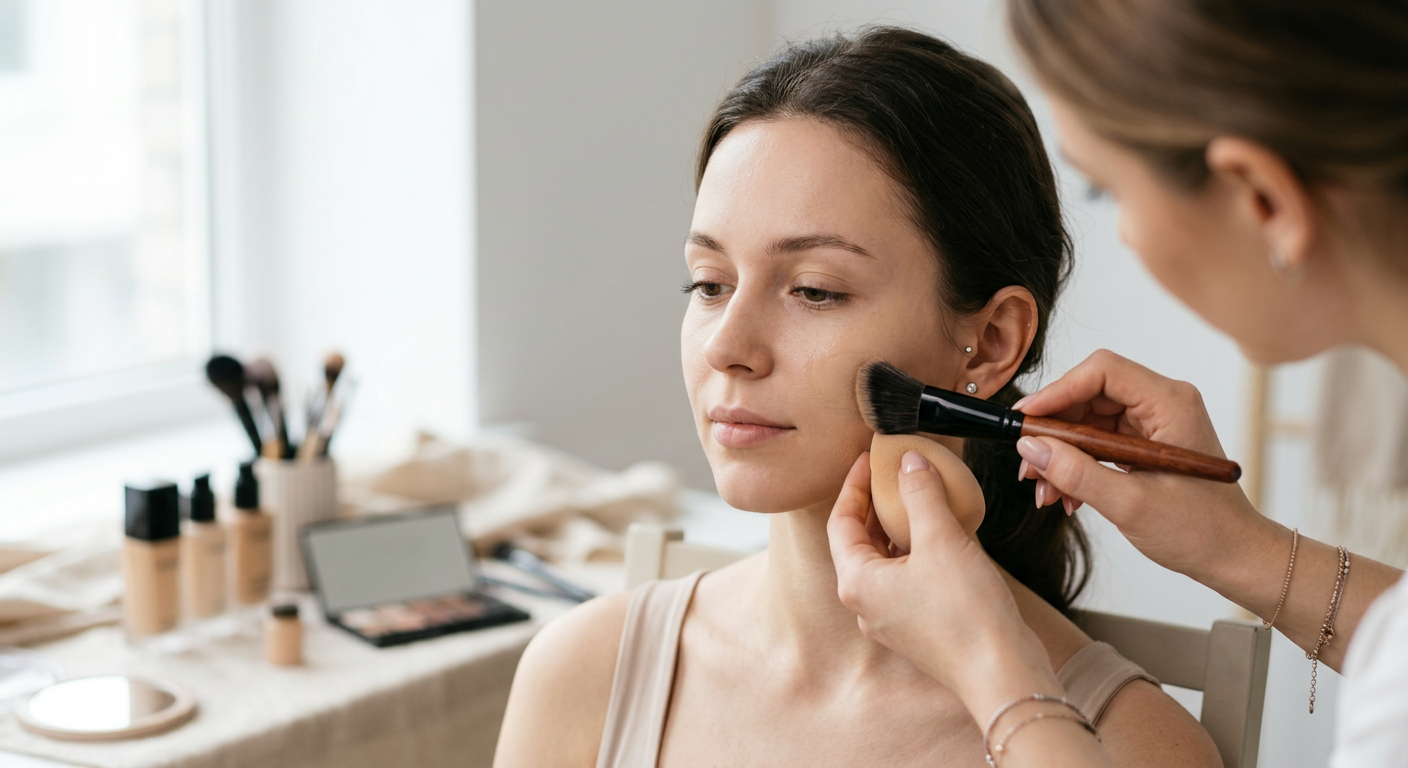
Even perfect products fail with the wrong application. Thick foundation is one of the top reasons bases separate, according to RMS Beauty.
Use Thin Layers and a Damp Sponge
One thin layer, blended quickly with a damp sponge or brush, adheres more evenly and resists separation far better than several thick coats. Go With Beauty recommends pressing and rolling product outward while leaving the driest zones with lighter coverage.
A damp sponge softens the finish and keeps product from caking on textured areas. The dampness thins the formula slightly and helps it meld into skin instead of sitting on top of flakes.
Build Coverage Only Where You Need It
Resist the urge to pile more foundation onto a patch that’s clinging, because adding product makes the clinging worse. Press a little hydration into the area instead, then blend the edges with your damp sponge.
Finish and Maintain Throughout the Day
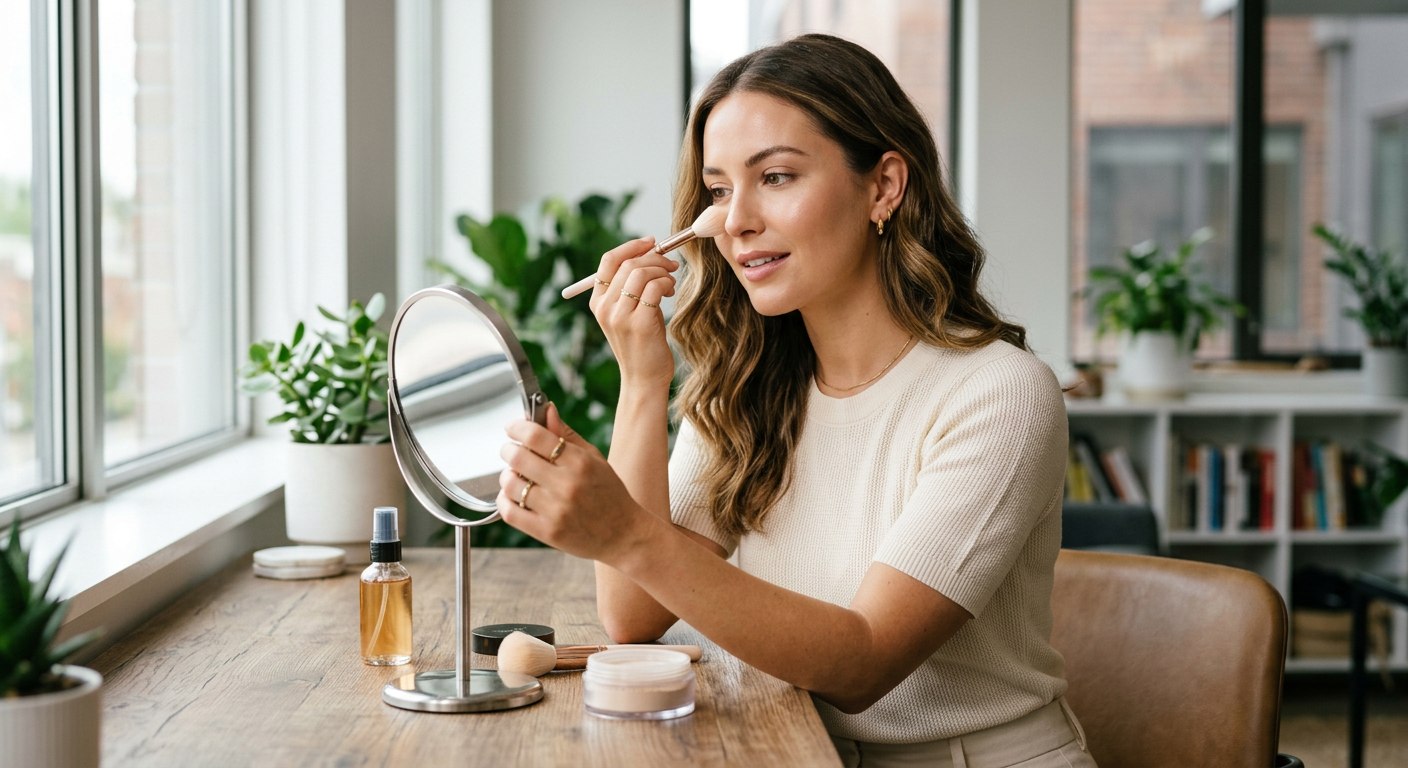
How you set and refresh your base decides whether it survives past lunch. A good finish keeps skin comfortable, even, and flexible as you move.
Reach for a setting spray over heavy powder to lock in your base without emphasizing dry texture, as Go With Beauty recommends. To cut shine in the T-zone, apply powder there only, with a precise touch.
For deeper overnight prep, Girlactik suggests working in rich overnight masks and hydrating sheet masks to build a smoother canvas for the next day. Diet plays a part too: water-rich foods, omega-3s, and vitamins E and C all support the skin barrier from the inside.
Conclusion
Preventing foundation from clinging to dry patches in winter comes down to a sequence: clear flakes with a gentle peel, layer hydration on slightly damp skin, let each layer absorb, choose a flexible hydrating formula over powder, and apply thin layers with a damp sponge. Finish with a setting spray rather than heavy powder.
The fix is rarely one magic product. It’s the order and amount of each layer, working together. Adjust your prep routine tonight, then refine your formula and application tools, and you should see a smoother, more comfortable base within a few days.
Frequently Asked Questions
Why does my foundation cling to dry patches more in winter?
Central heating and cold outdoor air both dry your skin, creating uneven texture for foundation to grab onto. Hot showers and heated rooms often strip moisture faster than the cold weather itself.
Should I exfoliate before applying foundation?
Yes, but gently and not right before makeup. Use a light peel once or twice a week rather than a granular scrub, which can irritate already-dry winter skin, as Grazia and Sheaffer Cosmetics recommend.
How long should I wait after moisturizing to apply foundation?
Let moisturizer absorb for 60 to 90 seconds before primer or foundation, according to RMS Beauty. The layer should feel absorbed rather than wet before you apply makeup.
Is powder or setting spray better for dry skin?
Setting spray is better for dry skin because powder soaks up moisture and highlights dry patches. If you need powder, apply it only to oily zones like the T-zone with precision.
What’s the best way to apply foundation over dry skin?
Apply a single thin layer with a damp makeup sponge, pressing and rolling product outward. Thin layers adhere more evenly and resist separation far better than multiple thick coats.
What ingredients should I look for in a winter foundation routine?
Prioritize humectants like hyaluronic acid and glycerin, emollients, and barrier-supporting ceramides. A few drops of squalane can help very dry areas when used sparingly under makeup.