



You spend 20 minutes perfecting your base, step outside, and by the time you reach the office, half your foundation has migrated onto your cashmere scarf. It’s one of winter’s most frustrating beauty problems, and more common than most people assume. According to Crave Magazine, searches for “how to stop makeup running” jumped 190% last winter, and “non-cakey foundation” climbed 170%. A few targeted changes to your routine solve nearly all of it.
A bundled-up face draws more attention, not less. As Houston Training Schools points out, when you’re buried in coats and scarves, people look at your face rather than your clothes. Worth getting it right, then.
Why Winter Wrecks Your Makeup

Cold air causes most winter makeup problems. It pulls moisture out of your skin, and the resulting flakes and cracks only look worse under foundation, as Houston Training Schools explains.
Friction is the second culprit. Every time your scarf shifts or you tug a hat down, fabric drags across your cheeks, chin, and forehead, lifting product and leaving it on your knits. Wool and cashmere are the worst offenders for picking up foundation and blush.
Your body contributes too. GB News reports that cold air dries out your eyes, which makes them produce more tears, and irritates your nose into making extra mucus. Watery eyes and a runny nose go straight after your eye makeup and the base around your nose.
Start With Hydration: Prep Is Everything
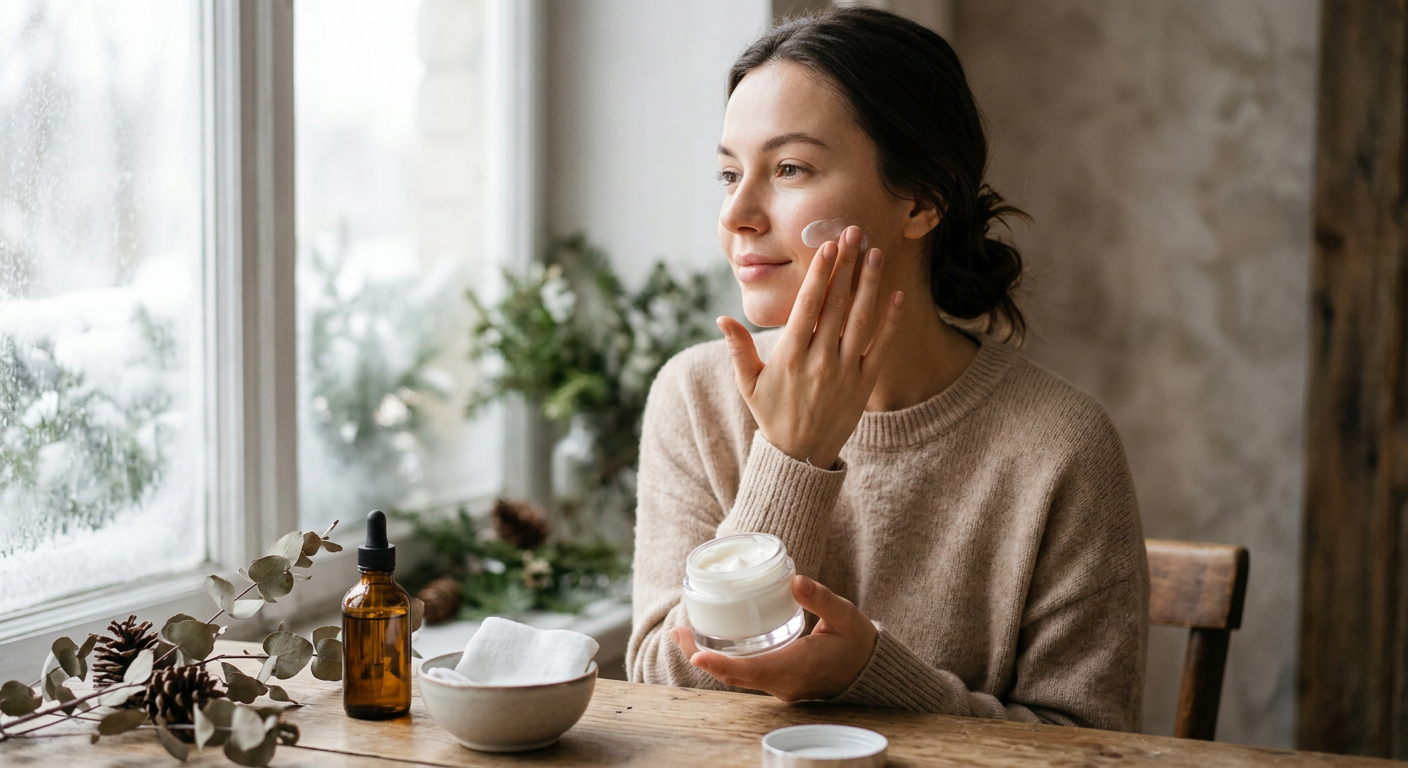
Winter makeup lives or dies on skin prep. Foundation won’t sit well on dry, flaky skin no matter how you apply it. The fix starts the night before, not when you pick up a brush.
Build a Moisture Base
Treat dry patches with a rich hydrating mask. HealthyWomen suggests a creamy hydrating mask once a week at night, left on for five to 15 minutes. Oh Feliz recommends the same window, then patting a tissue over the skin afterward to lift excess product.
On the day itself, moisturize generously right after cleansing, then let it fully absorb before you touch anything else. HealthyWomen is firm on this point: if the moisturizer hasn’t absorbed before foundation goes on, your base slides and separates.
Exfoliate Strategically
Dry flakes have to come off before makeup goes on. Rare Beauti recommends light exfoliation once every three to four days, enough to remove flakiness so makeup sits evenly. Skip the aggressive scrubs right before an outdoor day.
Choose the Right Base for Cold Weather

Heavy foundation is a liability in winter. It clings to dry patches, looks cakey, and transfers onto fabric the moment your scarf brushes your chin. Lighten and hydrate your base instead.
Swap the heavy foundation for a richer tinted moisturizer, or mix your full-coverage concealer with one for a natural, hydrated finish, according to Crave Magazine. Thin layers beat thick ones. Rare Beauti describes it as building coverage in micro-steps rather than globs.
For staying power, the same source points to film-forming ingredients. Check labels for polymers, silicone elastomers, or transfer-resist blends in your primers, foundations, and topcoats. They form a flexible layer that resists rubbing off on your scarf.
One old trick still earns its place: mix a drop or two of facial oil into your foundation to keep skin moisturized through the day, per Houston Training Schools.
Lock It Down: Setting Makeup That Survives Scarves
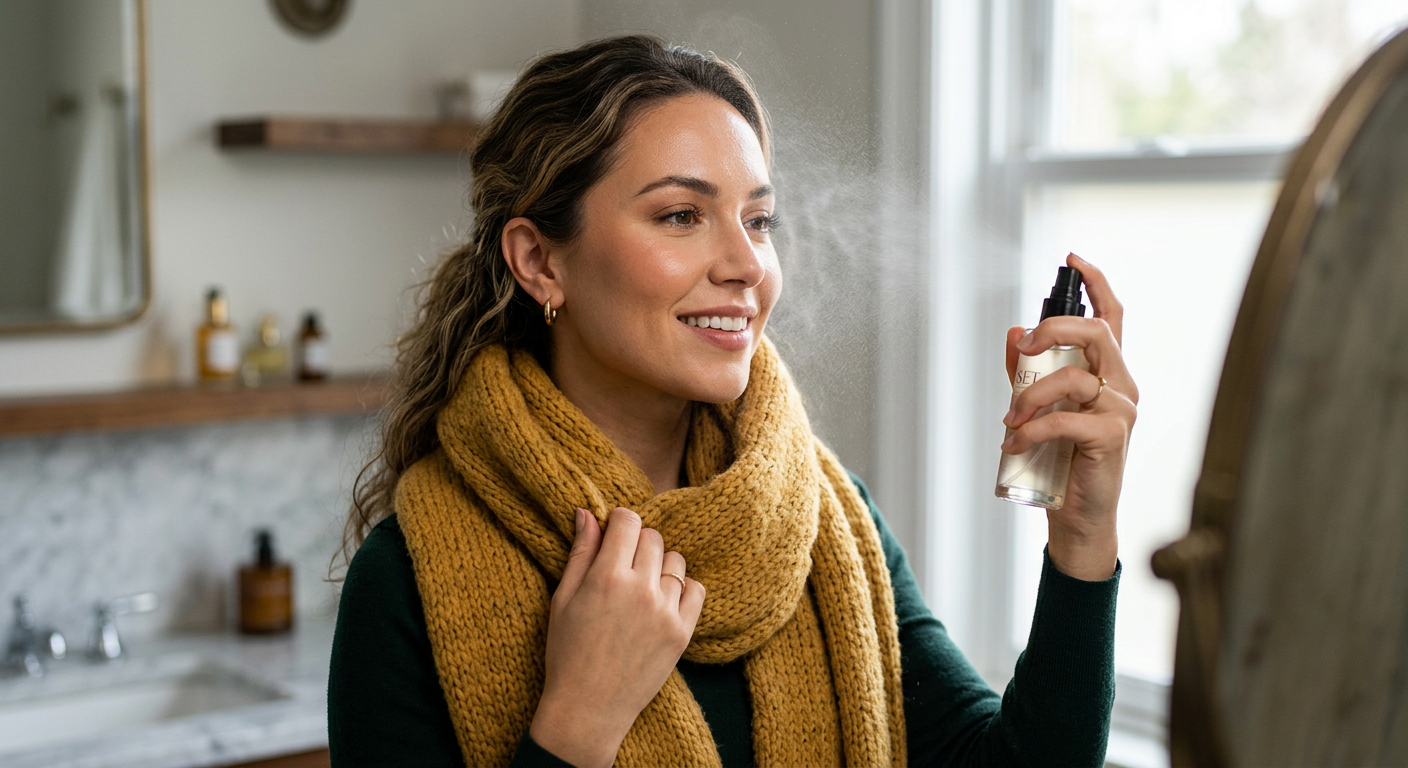
Setting your makeup is the single most effective way to stop transfer. The goal is to seal every layer before any fabric touches your face.
HealthyWomen recommends a layer of translucent pressed powder to help keep makeup on your face rather than on your scarf. A strong setting spray buys you extra insurance. Daily Waffle reports that makeup artist Kimi treats a strong setting spray as essential, followed by blotting with a tissue to seal every layer before the knits, coats, and scarves go on.
Set Selectively, Not Everywhere
There’s no need to powder your whole face into a flat matte. Rare Beauti recommends setting only the zones that meet fabric, like the chin and cheeks, and leaving glow where it shows.
The sources split here. Crave Magazine suggests skipping powder altogether in colder months and using concealer on areas of concern instead. You can reconcile the two easily: use minimal powder, and only where scarf contact actually happens.
The Order That Works
| Step | Product | Purpose |
|---|---|---|
| 1 | Hydrating mask (night before) | Eliminate flakes |
| 2 | Moisturizer | Lock in hydration |
| 3 | Primer | Smooth, grippy base |
| 4 | Tinted moisturizer or thinned foundation | Lightweight coverage |
| 5 | Concealer on problem areas | Targeted correction |
| 6 | Translucent powder (contact zones only) | Reduce transfer |
| 7 | Setting spray + tissue blot | Seal every layer |
Smudge-Proof Your Eyes and Lips

Watery eyes and chapped lips are winter’s two most visible makeup failures, and both are preventable.
Keep Eye Makeup From Running
Waterproof formulas are non-negotiable when cold wind makes your eyes tear. Oh Feliz recommends waterproof mascara and keeping eyeliner and eyeshadow on the upper lid only, which cuts the risk of smearing when your eyes water.
An eye primer adds grip. Upstyle advises squeezing a pinprick-sized amount onto the back of your hand, then transferring it to your lids with a clean finger and letting it dry.
Protect Your Lips
Chapped, peeling lips stand out, and lip color only makes them more obvious. Houston Training Schools stresses keeping lips moisturized, since peeling gets worse once you add color on top. Apply a nourishing balm well ahead of your lipstick, and gently buff away flakes first.
Guard Against Wind and Fabric Friction
Your last line of defense is physical. Wind does as much damage as cold, so a barrier matters.
Oh Feliz recommends a rich, extra-moisturizing cream or balm to put a barrier between your face and icy wind, then a hooded coat or a scarf-and-beanie combination for added cover.
How you put your layers on counts too. Daily Waffle suggests draping a layer of fabric over your face as you pull a jumper, turtleneck, or coat over your head, so the knit never drags across your freshly set makeup.
A few small habits cut friction through the day:
- Pull hats on from front to back rather than dragging them down over your face.
- Keep scarves looser around the chin and jaw, where transfer happens most.
- Carry blotting tissues to lift excess product before it transfers.
- Choose darker scarves if you wear full-coverage base, since foundation stains show less.
Conclusion
Keeping your makeup fresh under winter scarves and hats comes down to four moves: hydrate deeply before you start, choose lightweight transfer-resistant products, set every layer before fabric touches your face, and shield your skin from wind and friction. Each step tackles a specific winter threat, from flaking to smudging to foundation-stained cashmere.
Start with prep tonight and setting tomorrow. Apply a hydrating mask before bed, swap your heavy foundation for a thinned base, and finish with powder on the contact zones plus a setting-spray-and-blot seal. Pick one change to make this week and build the full routine from there.
FAQ
Why does my foundation keep transferring onto my scarf?
Friction from fabric lifts unsealed makeup off your skin. The fix is a thinner base plus proper setting: translucent powder on contact zones, a setting spray, then a tissue blot before you put your scarf on, as recommended by HealthyWomen and Daily Waffle.
Should I use powder or skip it in winter?
Use it selectively. Heavy all-over powder can emphasize dryness, so Crave Magazine suggests minimizing it, while Rare Beauti recommends setting only the zones that meet fabric. Powder your chin and cheeks, and leave the rest glowing.
What’s the best foundation type for cold weather?
A richer tinted moisturizer, or a full-coverage concealer mixed with one, gives hydrated coverage without clinging to dry patches, according to Crave Magazine. Look for film-forming ingredients like polymers and silicone elastomers for transfer resistance.
How do I stop my eye makeup from running when my eyes water?
Use waterproof mascara and keep eyeliner and eyeshadow on the upper lid only, which Oh Feliz notes minimizes smearing when cold wind makes your eyes tear. An eye primer adds extra grip.
How far in advance should I prep my skin?
Begin the night before with a hydrating mask for five to 15 minutes, as advised by HealthyWomen. On the day, moisturize after cleansing and let it fully absorb before applying makeup.
Does the way I put on my scarf and hat really matter?
Yes. Daily Waffle recommends draping fabric over your face when pulling garments over your head, and keeping hats and scarves from dragging across set makeup cuts transfer significantly.