



Your summer moisturizer stops working somewhere around the first hard frost. If your skin already feels tight, flaky, or dull, that’s not your imagination. Over the past month, there were 5.3 million Google searches worldwide for “dry skin,” which suggests a lot of people haven’t yet adjusted their routines to cooler weather, according to the Hobbs Independent. Resetting your winter routine early, before cold air and indoor heating pull the moisture out of your skin, is the better approach. This guide covers what to swap, what to add, and what to prioritize.
Why Your Skin Changes When Temperatures Drop

Cold air holds less moisture than warm air. Pair low outdoor humidity with dry, heated indoor air and your skin loses water faster than it can replace it. Clarins notes that these conditions contribute to moisture loss, increased sensitivity, and dry, sore skin.
The shift is predictable, and shopping habits track it closely. Searches for “fall skincare products” peaked twice in 2025, in August and again in December, per data analyzed by Accio. That double peak points to sustained demand for hydration and protection across the colder months, not a one-time scramble.
A routine built for summer won’t carry you through winter. You need richer textures, gentler actives, and more attention to your skin barrier. Adjust before the damage shows up, not after.
Start With a Hydrating, Gentle Cleanser

Cleansing sets the tone for everything that follows. A foaming formula that felt refreshing in July will leave winter skin tight and irritated. A winter routine starts with a gentle, hydrating face wash that adds moisture instead of stripping away natural oils, as the Macy’s winter skincare guide lays out.
Formula Botanica recommends washing with lukewarm water rather than hot. Hot water feels good on a cold morning, but it breaks down your skin’s protective barrier and speeds up moisture loss.
How to Cleanse in Winter
- Use lukewarm, not hot, water
- Choose a cream or lotion cleanser over a foaming one for dry or sensitive skin
- Cleanse once in the morning with a light formula to remove overnight buildup
- Pat your skin dry instead of rubbing it
Layer Serums and Rich Moisturizers
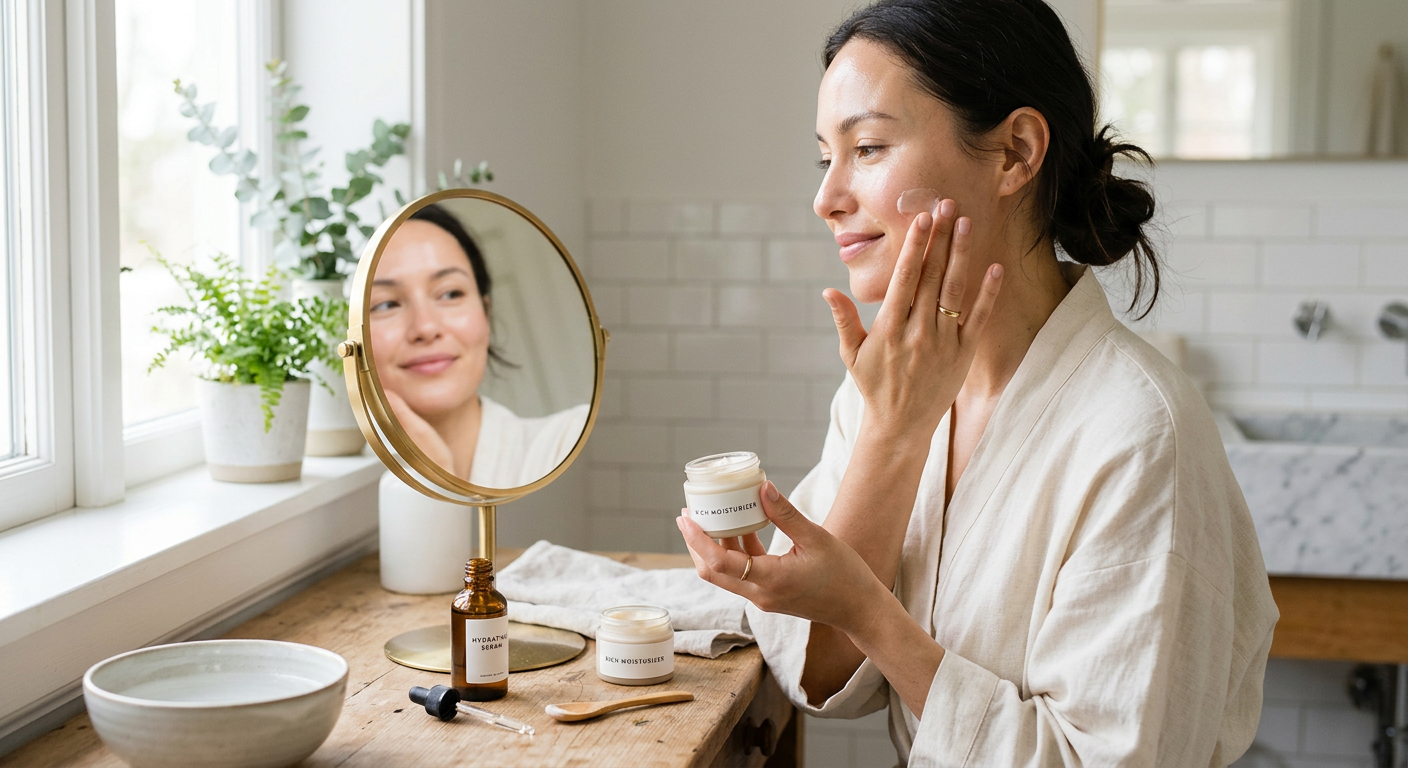
A clean, hydrated base lets richer formulas sink in properly. This is where hydrating serums earn their keep. A hyaluronic acid serum helps replenish moisture and plump the look of skin, and hyaluronic acid absorbs 1,000 times its weight in water, according to the American Academy of Dermatology (AAD).
On top of your serum, your moisturizer needs more weight. In colder months, skin needs more intense hydration as the air dries out and indoor heating pulls moisture away, the Macy’s guide explains. Switching to a heavier formula helps rebuild the barrier and lock moisture in.
Most skincare professionals recommend moisturizing twice a day year-round, but winter usually calls for more than other seasons, per SkinCeuticals. You can increase the weight of your daily moisturizer or add a moisture-attracting serum to offset the drier air.
Summer vs. Winter Routine Swaps
| Step | Summer Choice | Winter Swap |
|---|---|---|
| Cleanser | Foaming or gel wash | Cream or hydrating cleanser |
| Serum | Lightweight hydrator | Hyaluronic acid or serum-in-oil |
| Moisturizer | Light lotion | Rich cream or lipid-restoring balm |
| Exfoliation | 2–3x weekly | 1x weekly or less |
| Sunscreen | Lotion or spray | Moisturizing cream SPF 30+ |
Dial Back Harsh Actives

More exfoliation isn’t the fix for winter dryness. It’s often the cause. Over-exfoliating leads to dryness and irritation, a mistake to avoid as cooler weather rolls in, warns RMS Beauty.
Many dermatologists recommend scaling back anti-aging ingredients like glycolic acid, salicylic acid, and retinol in winter. “You can use them less often, or at a lower concentration,” dermatologist Dr. Barankin told the AAD.
If your prescription retinoid feels too drying, switch to an over-the-counter retinol for the season and go back to the stronger product in spring. Gentler alternatives work too. ISDIN points to bakuchiol, a plant-based ingredient, as a winter-friendly way to improve the look of fine lines and uneven tone without the irritation.
Protect Lips, Hands, and Body

Your face isn’t the only area that takes a hit. Cold, dry air plus indoor heating leaves lips dry and cracked, which is why FOREO recommends a consistent lip care routine with a balm that hydrates and protects.
Hands and body need the same attention. Rich creams keep skin supple in the spots that dry out fastest in winter, like the cheeks, elbows, and hands, according to the Macy’s guide. Spending reflects it: hand and body lotion sales grow 19.2% year over year, and CVS sells 167 whole-body skincare products every minute during peak winter months, reports CVS Media Exchange.
Winter Lip Care Checklist
- Apply a hydrating balm with occlusive ingredients like petrolatum or shea butter
- Reapply after eating, drinking, or going outdoors
- Avoid licking your lips, which worsens dryness
- Use a gentle lip exfoliant sparingly if flaking occurs
Do Not Skip Sunscreen

Winter sun still reaches your skin, and snow reflects UV rays back up at it. Wear sunscreen year-round on anything clothing doesn’t cover, including the face, neck, ears, and hands, the AAD advises.
The right winter formula does two jobs at once. Choose a more moisturizing sunscreen, a cream rather than a lotion or spray, or apply a moisturizer first and layer sunscreen on top. Look for broad-spectrum protection, water resistance, and an SPF of at least 30.
Most people skip this step. A rich moisturizer handles the dryness, but only sunscreen defends against the cumulative sun damage behind most visible aging.
Key Takeaways and Next Steps

Winter skin comes down to preparation and gentler choices. Swap your foaming cleanser for a hydrating one, layer a hyaluronic acid serum under a richer moisturizer, and scale back harsh actives to protect your barrier. Don’t forget your lips, hands, and body, and keep applying a moisturizing broad-spectrum SPF 30 every day.
Cleansers and moisturizers are already the two most-used skincare products, at 72% and 68% of consumers respectively, per Market.us. The habit is already there. What matters is adjusting those products before the cold sets in for good.
Take ten minutes this week to audit your routine. Pick one summer product to swap for a richer winter version, and build from there.
Frequently Asked Questions
When should I switch to a winter skincare routine?
Start transitioning as soon as temperatures and humidity begin dropping, usually in early fall. Search interest in fall skincare products climbs as early as August, so getting ahead of the first cold snap helps you avoid dryness and irritation.
How often should I moisturize in winter?
At least twice a day, morning and night. Winter usually needs more hydration than other seasons, so you may want a heavier formula or an added moisture-attracting serum to prevent tightness and flaking.
Can I still use retinol and exfoliating acids in winter?
Yes, but use them less often or at a lower concentration. Many dermatologists recommend scaling back glycolic acid, salicylic acid, and retinol during colder months, or switching to gentler over-the-counter alternatives until spring.
Do I really need sunscreen in winter?
Yes. UV rays reach your skin year-round and snow reflects them, so wear a broad-spectrum SPF 30 or higher on exposed areas like the face, neck, ears, and hands. A moisturizing cream formula adds hydration while it protects.
What is the best cleanser for cold weather?
A gentle, hydrating cream or lotion cleanser works best because it clears away impurities without stripping natural oils. Wash with lukewarm rather than hot water to protect your skin barrier from further moisture loss.
How do I treat dry, cracked lips in winter?
Use a nourishing lip balm with occlusive ingredients like petrolatum or shea butter, and reapply through the day. Don’t lick your lips, and exfoliate gently only if flaking appears.