



The bathroom shelf looks different than it did five years ago. A razor, a bar of soap, and a can of deodorant used to cover the whole male grooming routine. Now cleansers, serums, and SPF moisturizers sit alongside them. Men aren’t just buying skin care; they’re building routines around it. The numbers back that up: Pinterest’s 2025 trend report cites a 230% surge in searches for male facial treatments, according to Glossy.
This is a structural shift, not a passing fad. Grooming for men is moving from function to lifestyle, with skin care out front. What’s driving the change, and which everyday products are gaining ground? Both are worth a look.
Why Men’s Grooming Is Shifting Skin-First
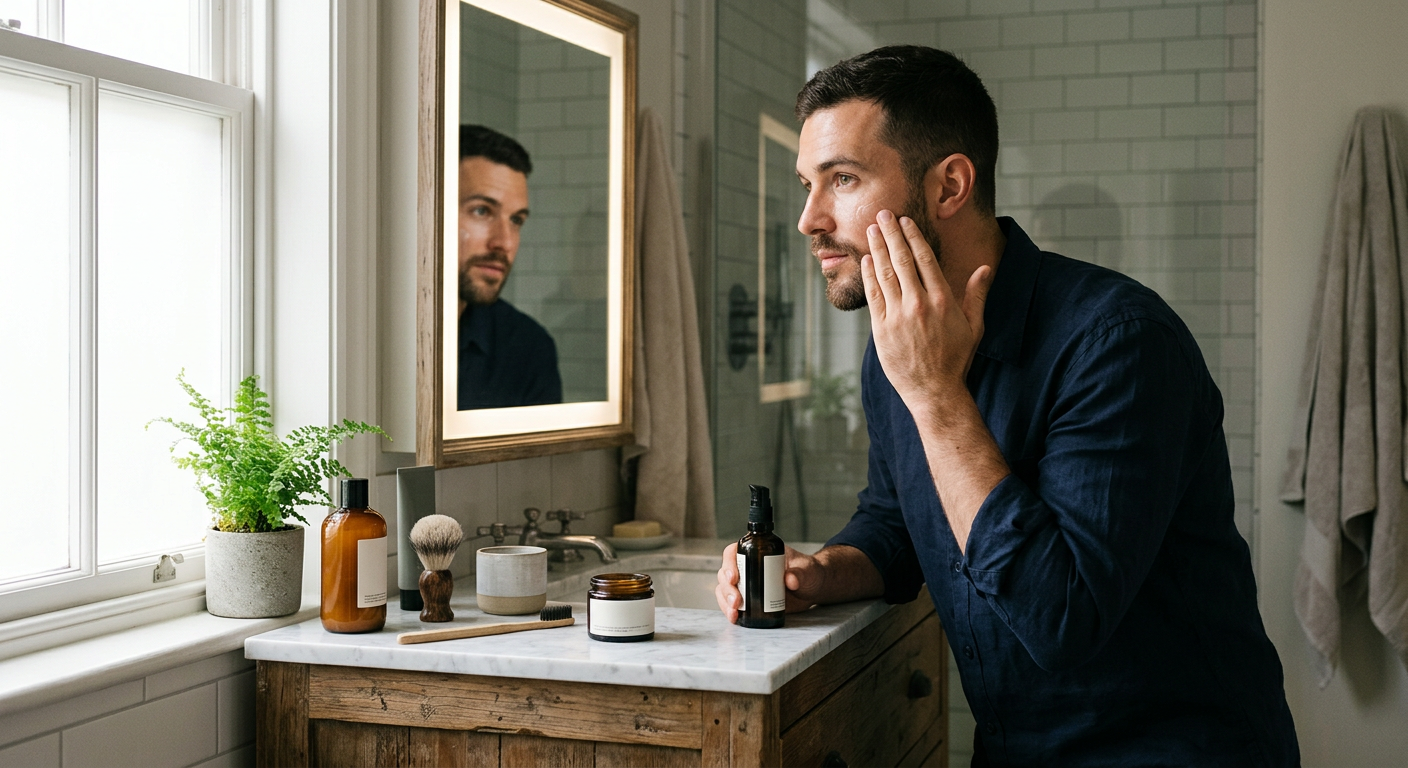
For decades, the men’s grooming market ran on function. Shaving prep, deodorant, and basic hygiene dominated the shelf, and anything past that read as a niche interest. That framing no longer holds.
“The cliché that men who care about skin care represent a small, select group is gone,” Augusto Garzon, global brand vp for Unilever’s men’s personal care portfolio, told Glossy. Men are “better informed, more confident and actively choosing products across categories they never engaged with before.” Unilever’s Dove Men+Care and Axe each pull in over $1.08 billion in revenue, so the business case isn’t theoretical.
The data points the same direction. Mintel’s GNPD data shows a 14.7% increase in men’s skincare product launches over the past three years, along with a 12.3% rise in hair treatments and colorants. Those aren’t traditional grooming staples, which tells you men are placing more weight on appearance and self-expression.
The Numbers Behind the Grooming Boom

The men’s grooming category is large and expanding quickly. Custom Market Insights estimates the global male grooming products market at USD 89.7 billion in 2025, with a forecast to reach roughly USD 157.6 billion by 2035 at a 5.8% CAGR.
Skin care is the standout segment within that market. Persistence Market Research values the global men’s skincare products market at US$20.1 billion in 2026, projecting US$33.8 billion by 2033 at a 7.7% CAGR. Allied Market Research forecasts the men’s skin-care segment will reach $16 billion by 2032, growing around 8% annually, per Glossy.
Market Growth at a Glance
| Metric | Figure | Source |
|---|---|---|
| Global male grooming market (2025) | $89.7 billion | Custom Market Insights |
| Men’s skincare market (2026) | $20.1 billion | Persistence Market Research |
| Men’s skincare projected (2033) | $33.8 billion | Persistence Market Research |
| Surge in male facial treatment searches | 230% | Pinterest 2025, via Glossy |
| Increase in men’s skincare launches (3 yrs) | 14.7% | Mintel |
There’s plenty of room left to grow. StriveSkin reports only 29% of men maintain regular skincare routines compared to 62% of women, a gap it frames as a $20+ billion opportunity as stigma fades.
Gen Z Is Driving the Change

The generational split is stark. A 2025 Barclays Bank study found Gen Z men are the biggest spenders in male beauty, with 42% saying they devote a larger share of income to grooming, ahead of millennials at 29%, according to Glossy.
Retail behavior confirms it. YouGov data from 2024 shows U.S. men ages 18-24 were twice as likely to shop at Sephora in 2024 than in 2020. StriveSkin reports Gen Z men are 62% more likely to use skincare than Gen X, a gap driven by social media, influencer culture, and changing masculinity norms.
Social platforms teach as much as they sell. Dermatologist-led content and influencer routines have normalized ingredient literacy, so younger men now shop by active ingredient rather than by marketing category.
The Everyday Products Gaining Popularity
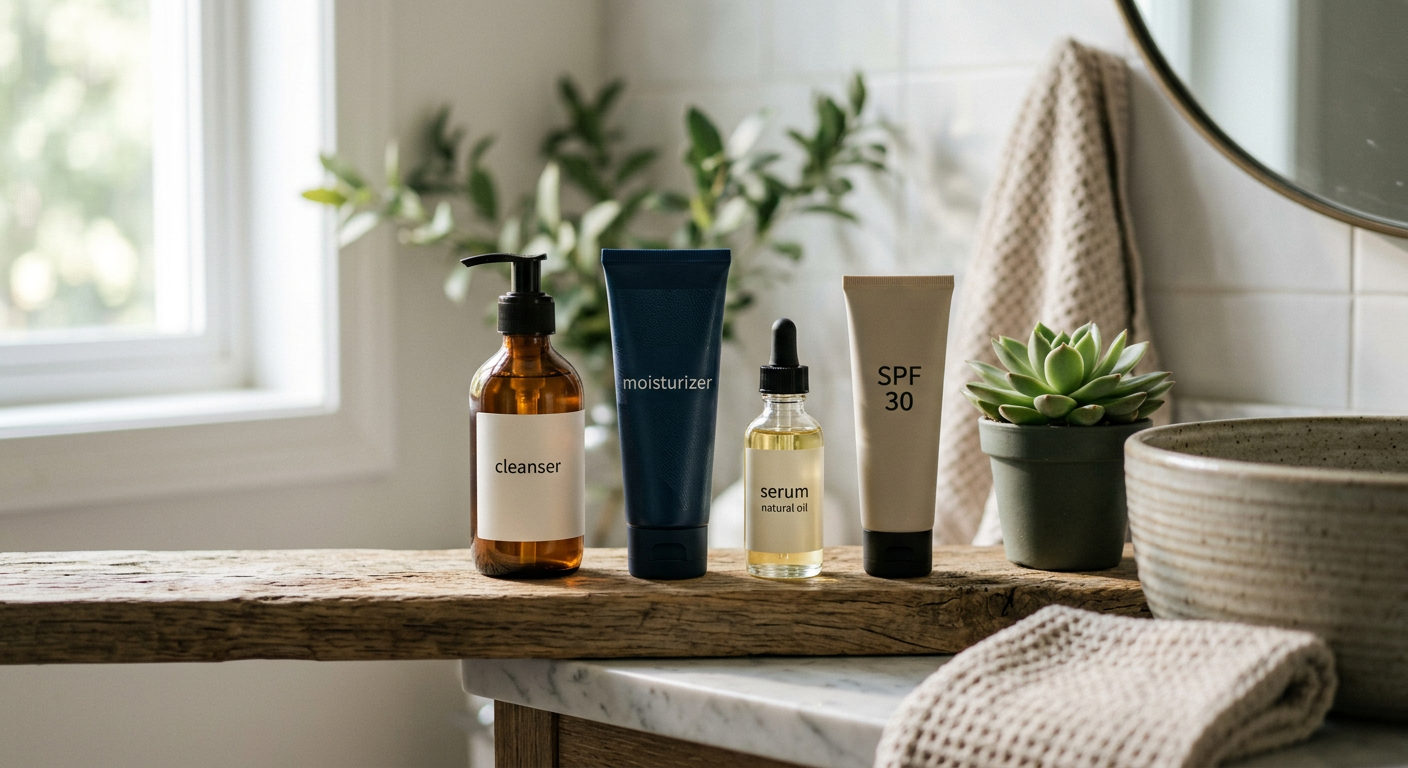
Men are converging on a small set of daily essentials. These products do the heavy lifting in a skin-first routine, and they’re the ones seeing the fastest adoption.
Cleansers
A proper cleanser has replaced bar soap for a growing number of men. Prime Barbershop advises washing your face twice a day with a cleanser matched to your skin type: gel or foaming cleansers with salicylic acid for oily or acne-prone skin, and cream or milk cleansers for normal to dry skin. Bar soap is too alkaline for facial skin.
Moisturizer and Daily SPF
Moisturizer is the single most impactful step in most routines. Applied to damp skin, it prevents water loss, maintains the skin barrier, and reduces visible aging more than any other product category.
Sunscreen is non-negotiable. In Hindustan Times, a physician recommends SPF 30 or higher every day, no exceptions, noting that daily UV exposure quietly accelerates aging and pigmentation while raising skin cancer risk over time.
Targeted Serums and Active Ingredients
Men are increasingly shopping by ingredient. Sourceready reports specific demand for hyaluronic acid, niacinamide, retinol, and vitamin C, with interest in men’s premium skincare projected to peak in March-April 2026.
Post-Shave and Barrier Care
Shaving itself is going skin-first. Future Market Insights describes a shift from basic hair removal toward regimen-based systems with glide-enhancing formulations and post-shave barrier support. Personal Care Insights notes that soothing barrier-repair creams and post-shave treatments are becoming more important as men prioritize long-term skin resilience.
Building a Simple Skin-First Routine
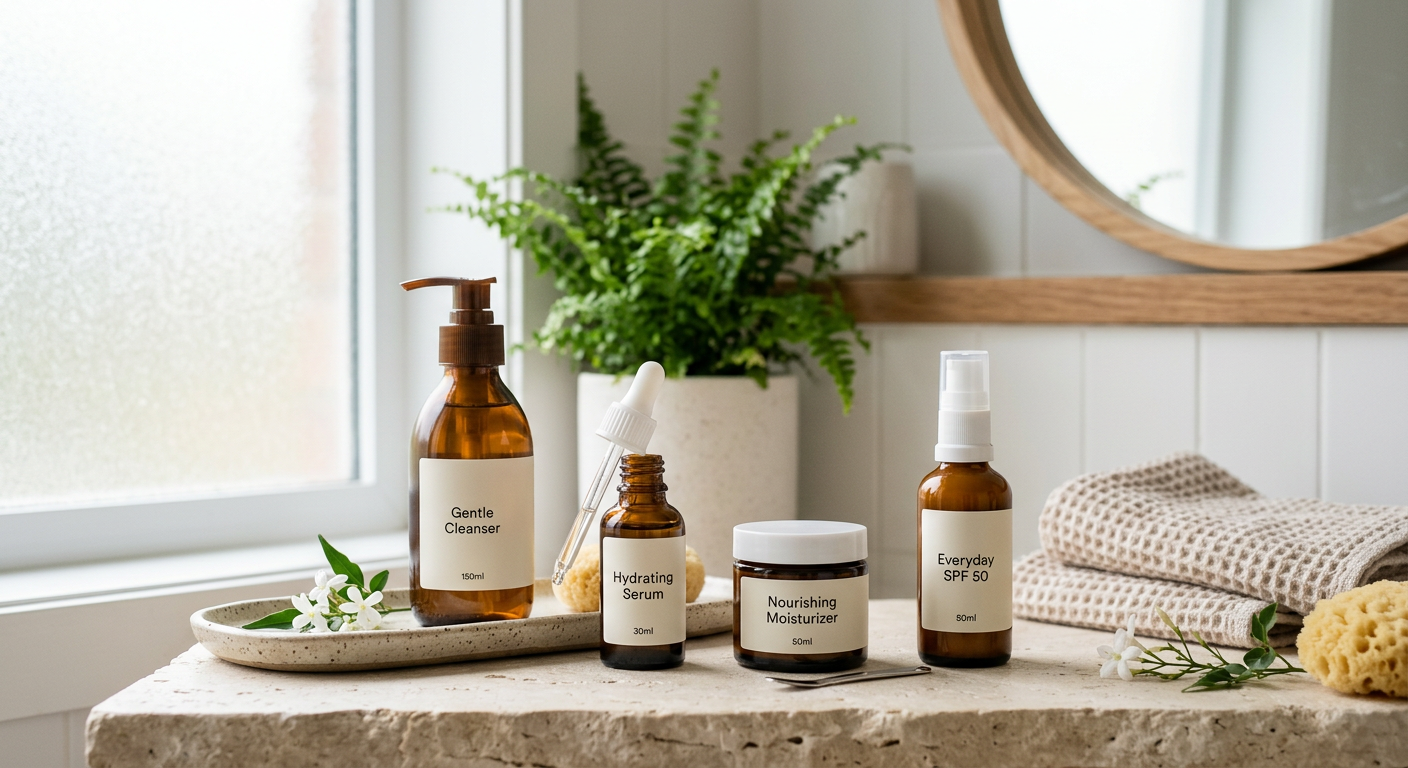
A ten-step regimen isn’t the point. A minimal routine done consistently outperforms a complicated one you abandon by week two.
The Modern Observer recommends a dermatologist-backed baseline: a gentle cleanser plus SPF 30+ moisturizer in the morning, and the same cleanser plus a basic night moisturizer in the evening. The total cost runs $30 to $50, and the whole routine takes two minutes, twice a day.
A Starter Routine
- Morning: Gentle cleanser, then moisturizer with SPF 30 or higher
- Evening: Same cleanser to remove sweat and buildup, then a night moisturizer
- When ready to add actives: Introduce niacinamide, hyaluronic acid, or a retinoid one at a time
For oily, uneven, or early-aging skin, ingredients like niacinamide, hyaluronic acid, and retinoids can help. Hindustan Times advises choosing these with dermatologist guidance where possible, ideally after an in-person consultation. Start slow, patch test, and give any new product two weeks before you judge the results.
The Takeaway
Men’s grooming has moved decisively skin-first, and the numbers back it: a market approaching $90 billion, skincare launches up nearly 15% in three years, and a Gen Z cohort that treats cleansers, moisturizers, and SPF as everyday essentials rather than indulgences. The stigma is fading, the education is improving, and the products keep getting better.
None of this requires overhauling your routine overnight. Start with a cleanser, a moisturizer, and a daily SPF 30, build the habit, then add targeted actives as you go. If you’ve been meaning to move past bar soap, a simple, consistent routine is where to begin, and the results compound from there.
Frequently Asked Questions
What are the essential products for a men’s skincare routine?
Start with three: a cleanser matched to your skin type, a moisturizer, and a daily sunscreen of SPF 30 or higher. This baseline costs $30 to $50 and takes two minutes, twice a day, according to The Modern Observer.
Why is men’s skincare growing so fast?
Grooming is shifting from function to lifestyle, driven largely by Gen Z. Barclays found 42% of Gen Z men devote a larger share of income to grooming, and Mintel reports a 14.7% increase in men’s skincare launches over three years.
Can men use skincare products marketed as gender-neutral?
Yes. Mintel notes an 8.4% increase in gender-neutral skincare launches over three years, reflecting men’s openness to a wider range of products. Some formulations are still tailored to coarser facial hair and the oilier skin common in men.
How big is the men’s grooming market?
Custom Market Insights estimates the global male grooming market at $89.7 billion in 2025, projected to reach roughly $157.6 billion by 2035. The skincare segment alone is valued at $20.1 billion in 2026.
What ingredients should men look for in skincare?
Hyaluronic acid, niacinamide, retinol, and vitamin C are in high demand and have strong clinical support, per Sourceready. Introduce actives one at a time and consult a dermatologist for retinoids if possible.
Is daily sunscreen really necessary for men?
Yes. A physician quoted by Hindustan Times recommends SPF 30 or higher every day without exception, because daily UV exposure accelerates aging and pigmentation and raises long-term skin cancer risk.