

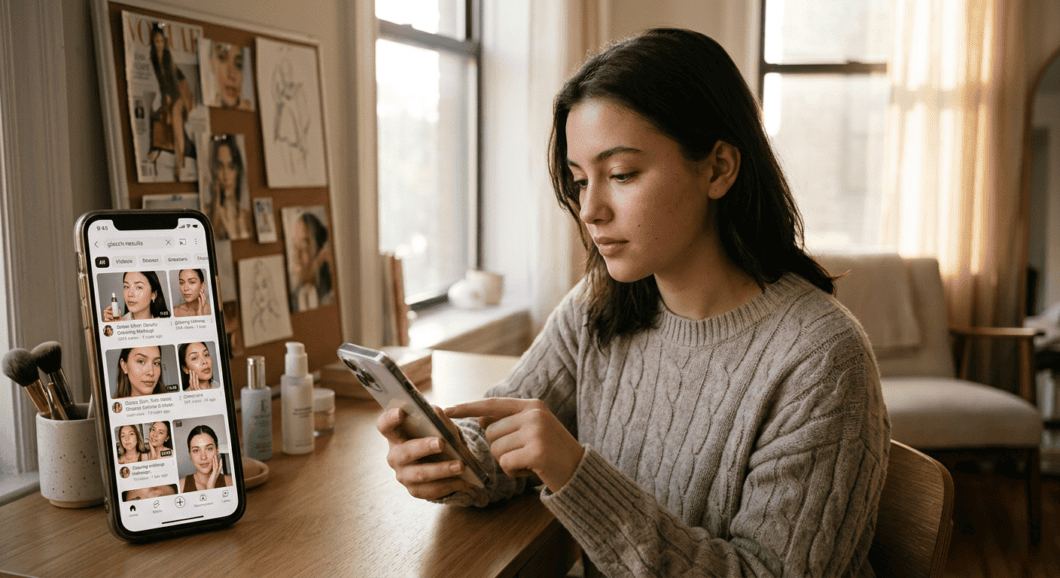
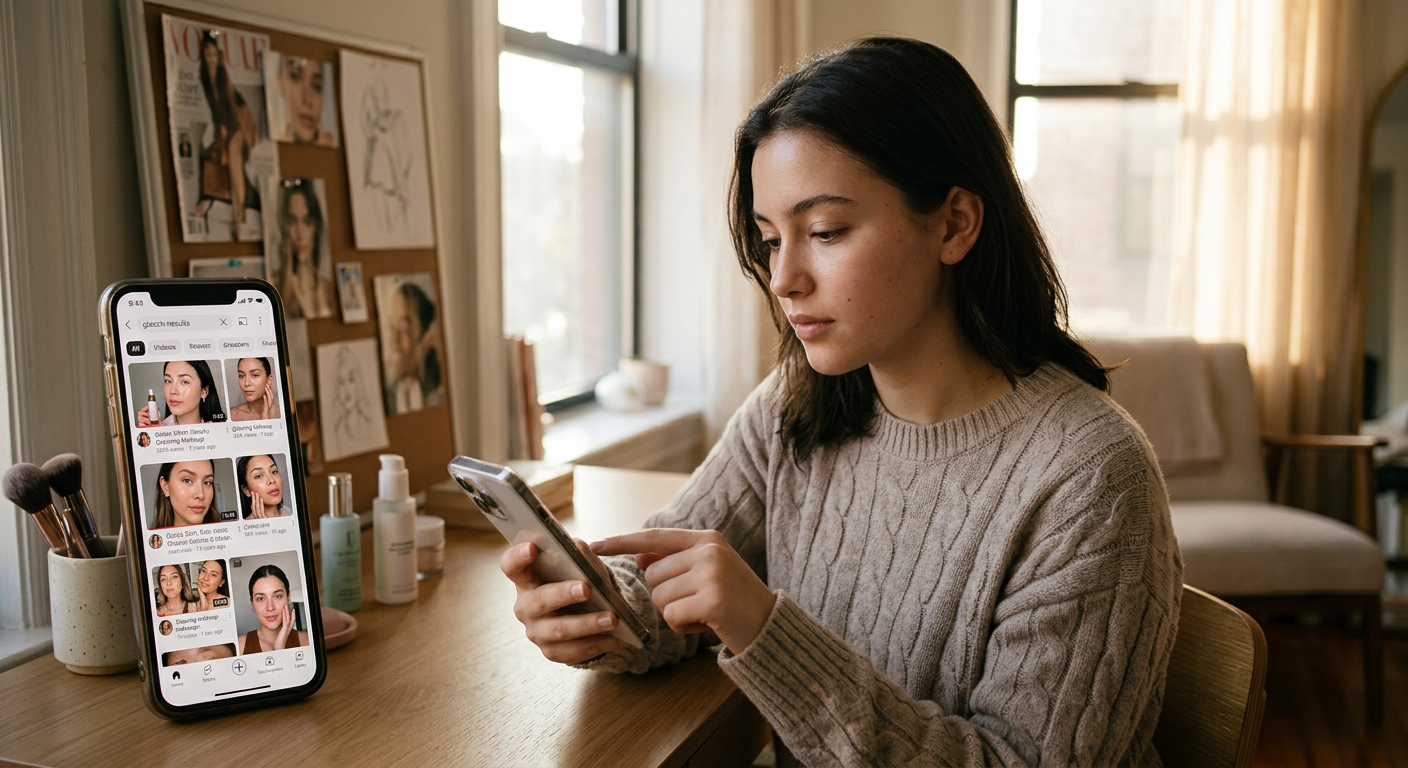
A teenager who wants “glass skin” doesn’t open Google. She opens TikTok, types the phrase into the search bar, and watches a dozen tutorials before settling on a product. This isn’t an edge case anymore. It’s the default. Social media search is changing how beauty trends spread and turn into global obsessions. NU reports that social networks are now the main channel for online brand research among people aged 16 to 34, with social scrolling overtaking text-based search as the primary discovery engine for younger adults.
For beauty brands, salons, and creators, this shift decides who gets found and who gets skipped.
Why Social Media Became the New Search Engine

The way people find information has changed. Younger consumers treat TikTok, Instagram, and YouTube as answer engines rather than entertainment feeds. When they want a product recommendation or a technique, they search inside the app.
Beauty is a visual category, which is why the change hits so hard. A text result on Google can’t show how a “latte makeup” gradient blends or how “glass skin” catches the light. A 15-second video shows both instantly. That advantage explains why beauty content performs so well in social search.
NU’s 2026 analysis points to three structural shifts: platforms working as primary search engines, community outweighing raw virality, and a growing backlash against AI-generated content. All three affect how beauty trends form and how long they last.
How a Beauty Trend Goes Viral Through Search

Virality once depended on a single moment, a celebrity endorsement or a magazine spread. Trends now build through repeated search and discovery loops that feed each other.
The Discovery-to-Purchase Loop
A trend usually moves through predictable stages once it enters social search:
- Seeding: A creator posts a look or technique using a searchable term (“cloud skin,” “blush draping”).
- Search spike: Viewers search the term to find more examples and tutorials.
- Content multiplication: Other creators post their own versions, flooding search results.
- Purchase intent: Users search the specific products mentioned in the videos.
- Reinforcement: Those purchases generate reviews and user content, which feeds the loop again.
IGD notes that social media now shapes the discovery, engagement, and purchasing stages of the health and beauty shopper journey, not just the top of the funnel.
Speed Is the Defining Feature
Social media can push a trend viral within hours, according to TSPA DC. Ombré hair, glass skin, and latte makeup each went from niche idea to global search term in days. That compression rewards brands and creators who move quickly and punishes those who wait.
Traditional Search vs. Social Media Search for Beauty
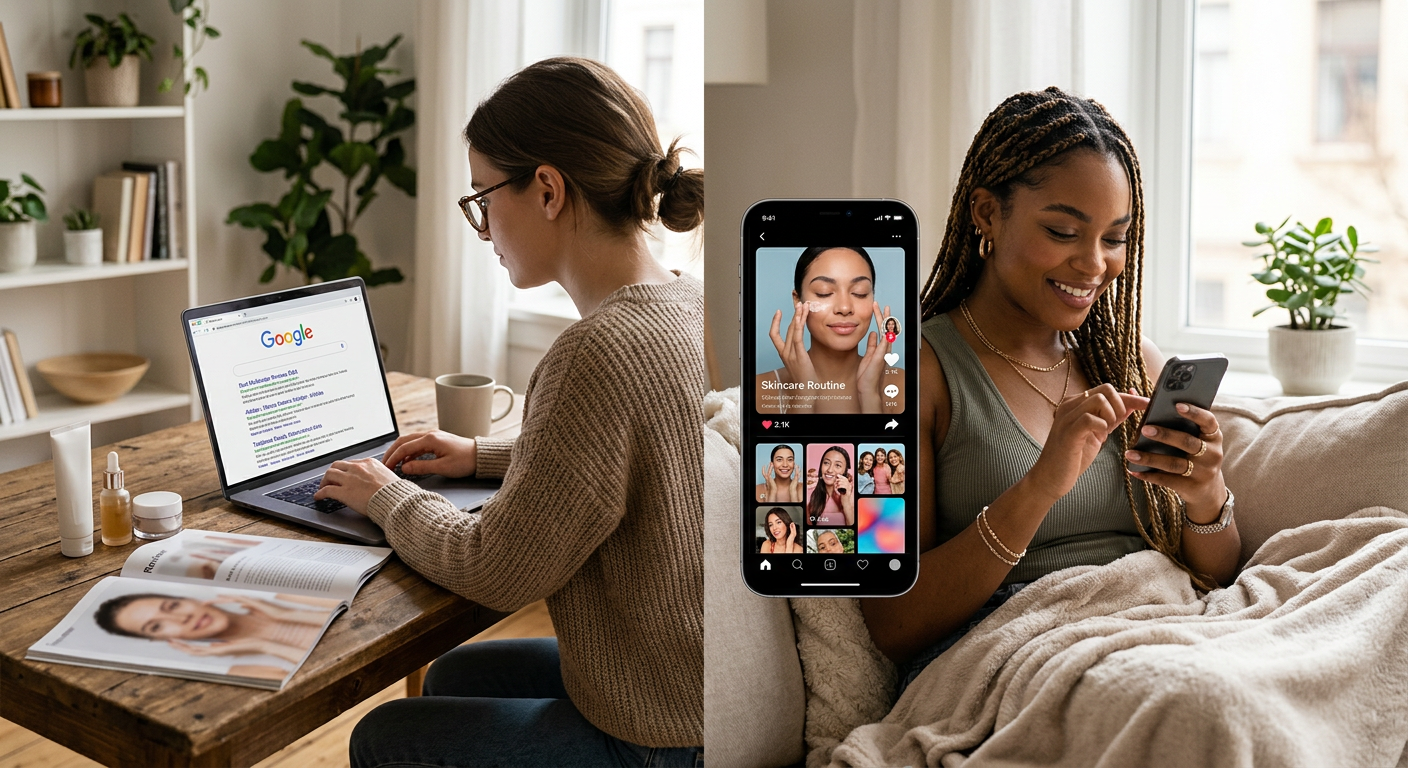
The gap between the old and new discovery models explains why brands have to rethink their approach.
| Factor | Traditional Search (Google) | Social Media Search |
|---|---|---|
| Primary format | Text and static images | Short-form video |
| Discovery driver | Keywords and backlinks | Hashtags, captions, spoken words |
| Trust signal | Domain authority | Creator credibility and community |
| Speed of trends | Days to weeks | Hours to days |
| Purchase influence | Reviews, comparison pages | Live demos, before/after clips |
| Dominant audience | Broad, all ages | Ages 16–34 skew heavily |
Optimizing only for Google leaves a large and growing audience out of reach. Beauty brands need content that’s searchable inside the apps where trends actually start.
The Role of Creators and Community in Search Visibility

Influencers are still central, but the dynamic has changed. Northbridge explains that beauty influencer collaborations and TikTok trends have upended salon marketing and reshaped how products reach consumers.
Community Over Raw Virality
The biggest strategic change is that community now outweighs one-off viral hits. A creator with a loyal, engaged niche audience often drives more consistent search traffic and sales than a video that spikes once and vanishes. People trust recommendations from creators they follow regularly.
That’s why smaller, specialized creators focused on textured hair, mature skin, or specific skin conditions can dominate search results in their niche. Their content answers precise questions that broad campaigns miss.
Optimizing Content for Social Search
To surface in social search, creators and brands should:
- Say the trend or product name aloud in the video, since platforms transcribe audio.
- Use the exact search terms in captions and on-screen text.
- Include specific, relevant hashtags rather than only generic ones.
- Answer a clear question the viewer is likely to type.
- Post consistently to build community signals, not just chase views.
What This Means for Beauty Brands and Salons
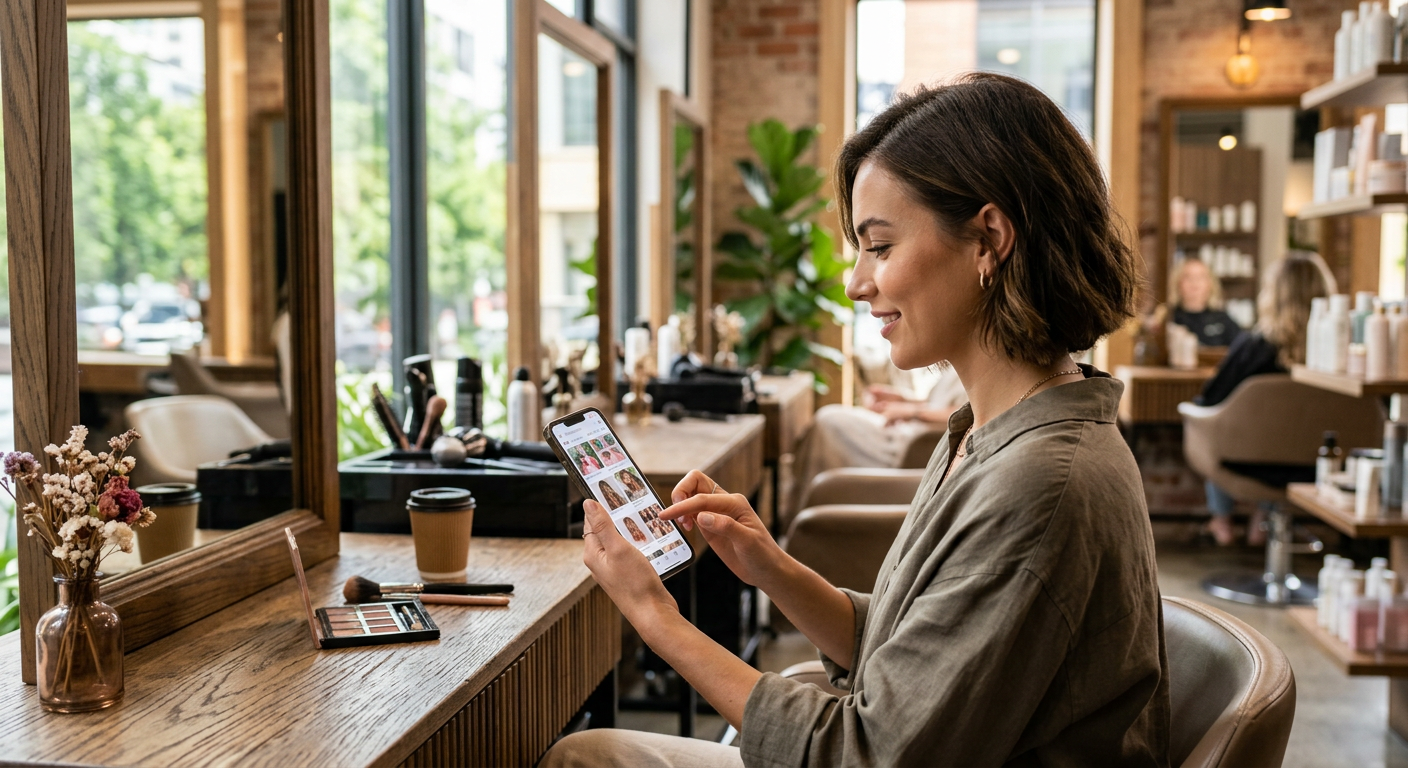
The move to social search brings both opportunity and pressure. GWI notes that social media lets brands ride trends and create them, but only if they react fast enough to avoid being left behind.
Brands now have new ways to reach refined consumer segments, many of them low-cost or free. A well-optimized video answering a common search query can beat an expensive ad campaign. GWI argues that the brand-consumer connection has moved to the forefront, which means responsiveness and authenticity now matter more than polish.
For salons, the reality is direct. TSPA DC points out that stylists should expect guests to walk in asking about trends they saw online. Staying connected to social search is how professionals stay ahead instead of reacting after the fact.
One caution: NU reports a rising consumer backlash against AI-generated content. Beauty audiences reward real demonstrations, honest reviews, and true before-and-after results over synthetic or heavily staged material.
Key Takeaways and Next Steps

Social media search has become the main way younger consumers discover beauty trends, products, and techniques. The brands and creators who treat platforms as search engines, not just broadcast channels, will win visibility as trends form.
The core lessons:
- Younger audiences search inside apps and favor video over text.
- Trends now go viral in hours through discovery-to-purchase loops.
- Community and creator trust matter more than one-time viral spikes.
- Optimizing captions, audio, and hashtags for search drives discovery.
- Authentic content beats AI-generated or overly polished material.
Audit your current content today. Would it surface when someone types your product or a trend into a social search bar? If not, start optimizing for social discovery. That’s where your next customer is already looking.
Frequently Asked Questions
Q: What is social media search and how is it different from Google?
Social media search is when users find information by searching directly inside apps like TikTok, Instagram, or YouTube. Unlike Google, it prioritizes short-form video, creator credibility, and community signals over text and backlinks.
Q: Why do beauty trends go viral faster on social media?
Beauty is highly visual, and short videos demonstrate techniques and results instantly. Social platforms can push a trend from niche to global within hours through repeated search and content multiplication, according to TSPA DC.
Q: How can beauty brands optimize for social media search?
Say product and trend names aloud in videos, use exact search terms in captions and on-screen text, and add specific hashtags. Consistent posting builds the community signals that platforms reward in search results.
Q: Are influencers still important for beauty trends?
Yes, but the dynamic has shifted toward niche creators with loyal, engaged communities. Northbridge notes that influencer collaborations now heavily shape how products reach consumers.
Q: Does AI-generated beauty content perform well in social search?
Not reliably. NU reports a growing consumer backlash against AI-generated content, and beauty audiences tend to trust authentic demonstrations and honest reviews far more.
Q: Which age group relies most on social media search for beauty?
Audiences aged 16 to 34 rely most heavily on social platforms for brand research, with social scrolling now outpacing traditional text search as their main discovery engine, per NU.