

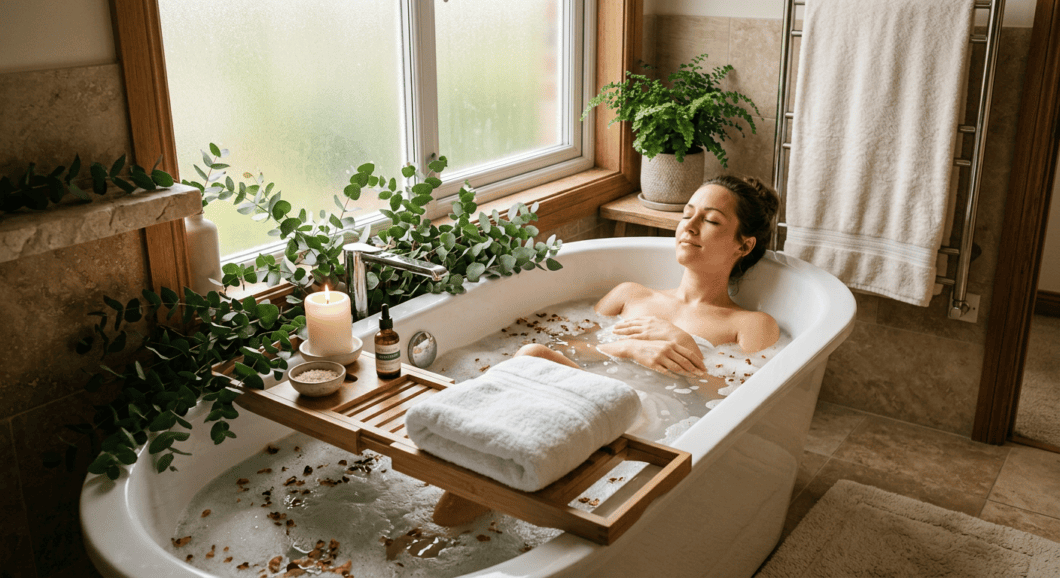
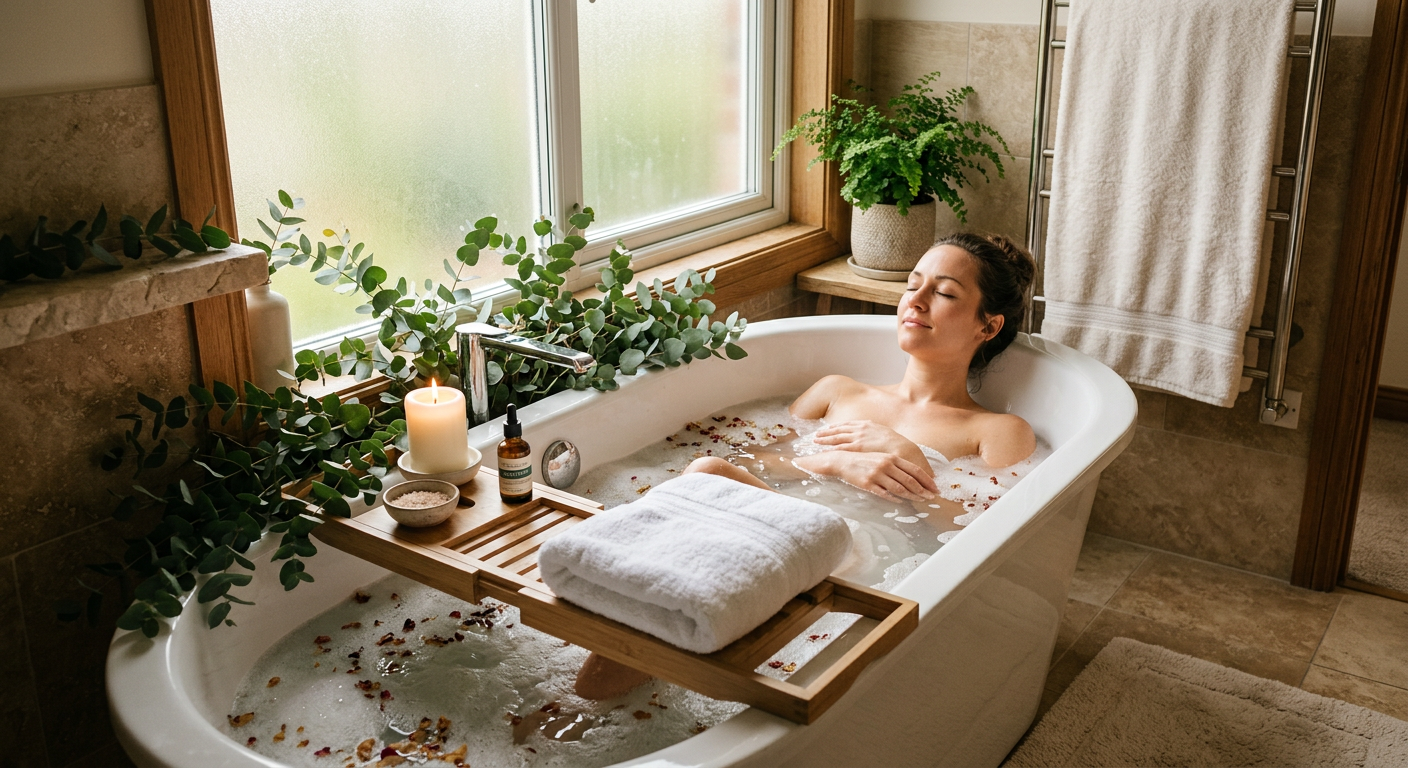
Soft lighting, a warm towel, eucalyptus in the air. No booking fee, no commute, no bill that makes you wince. A recent YouGov study found that 82% of Brits spend their free time relaxing, yet 51% still struggle to properly switch off (SpaSeekers). A home spa day closes that gap: the ritual of a professional retreat, running on the plumbing you already have.
The global spa industry keeps growing as more people prioritise wellness (Market.us), but the benefit doesn’t cost hundreds. A decent setup, the right products, and an hour with the door shut are enough to build a restorative escape at home. This is how.
Why a Home Spa Day Is Worth Your Time
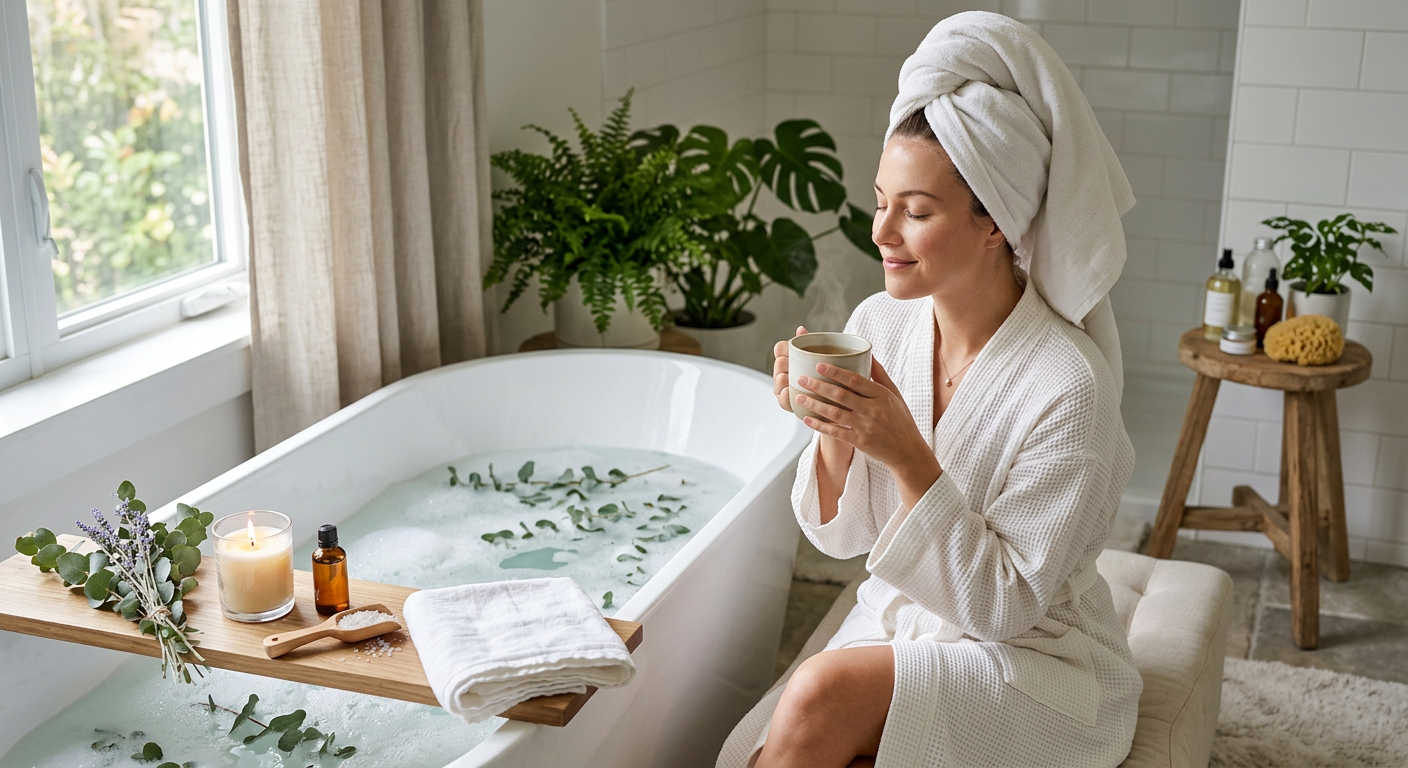
A spa day supports both physical and mental health, and it doesn’t take much to feel the difference. As Condé Nast Traveler puts it, “There’s magic in these moments when we allow time to slow down and our bodies to catch up to our minds” (CN Traveler).
Doing it at home removes the friction that stops people from unwinding in the first place. No appointment, no travel, no clock-watching. You set the temperature, pick the playlist, and move at whatever pace suits you, which makes actually relaxing far more likely.
Then there’s the money. A single luxury spa visit runs $150 or more. A well-stocked at-home setup pays for itself after one or two sessions, because you buy quality products once and use them for months.
Set the Mood Before You Touch a Single Product
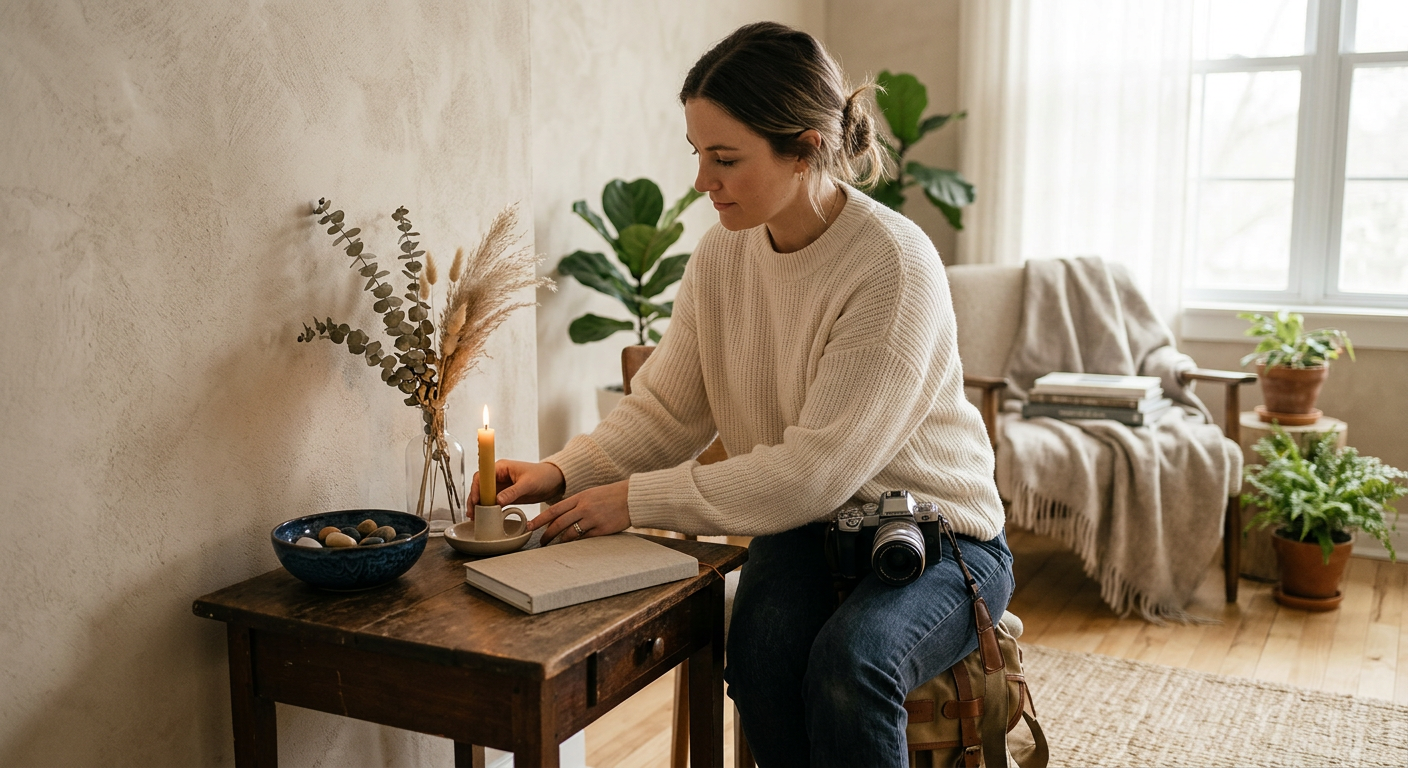
The environment does most of the work. Photographer and lifestyle creator Abby Murphy builds her routine around the atmosphere first: “Turn down the lights, light a candle, and put on a relaxing playlist. Get in your robe and silence your phone” (Abby Murphy).
Dim, warm lighting tells your brain it’s time to switch off in a way harsh overheads never will. Candles, string lights, or a salt lamp all do the job.
The Five-Minute Ambiance Checklist
- Lighting: Dim the overheads, light two or three candles
- Sound: Queue a calming playlist or nature sounds
- Scent: Essential oils, incense, or a reed diffuser. Eucalyptus and lavender are the reliable classics
- Temperature: Warm the room slightly, set out a robe and slippers
- Distraction control: Silence your phone and close the door
Sort these five out first and the rest of the ritual unfolds without interruption.
Build Your Home Spa Toolkit
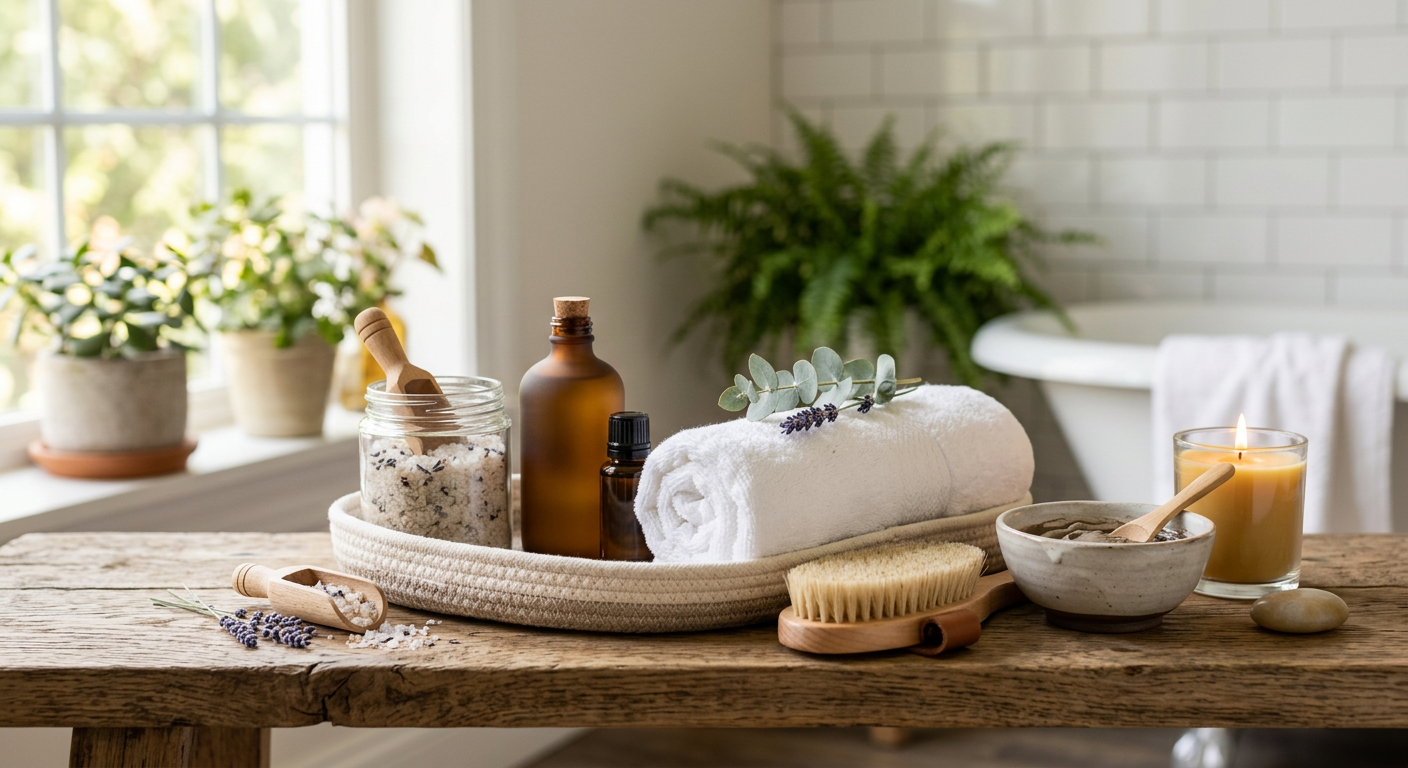
A cabinet full of expensive gear isn’t the point. A focused set of quality products covers most treatments. Below is a breakdown of the essentials by function and typical cost.
| Category | Essential Items | Typical Cost | Purpose |
|---|---|---|---|
| Skin | Cleanser, exfoliant, clay or sheet mask | $15–$60 | Deep cleaning and glow |
| Body | Dry brush, body scrub, rich moisturizer | $20–$50 | Circulation and hydration |
| Bath | Epsom salts, bath oil, bath bomb | $10–$30 | Muscle relaxation |
| Ambiance | Candles, essential oils, diffuser | $15–$40 | Mood setting |
| Comfort | Plush robe, headband, warm towels | $25–$70 | The luxury touch |
Start with one category and expand over time. On a tight budget, DIY works fine. TheChicNatural’s tutorial walks through a full pamper routine built entirely on drugstore staples (YouTube).
Prioritize Multi-Use Products
A good facial oil doubles as a body treatment. Epsom salts cover both a foot soak and a full bath. Versatile items keep the kit small and the spending in check.
Follow a Spa-Style Sequence
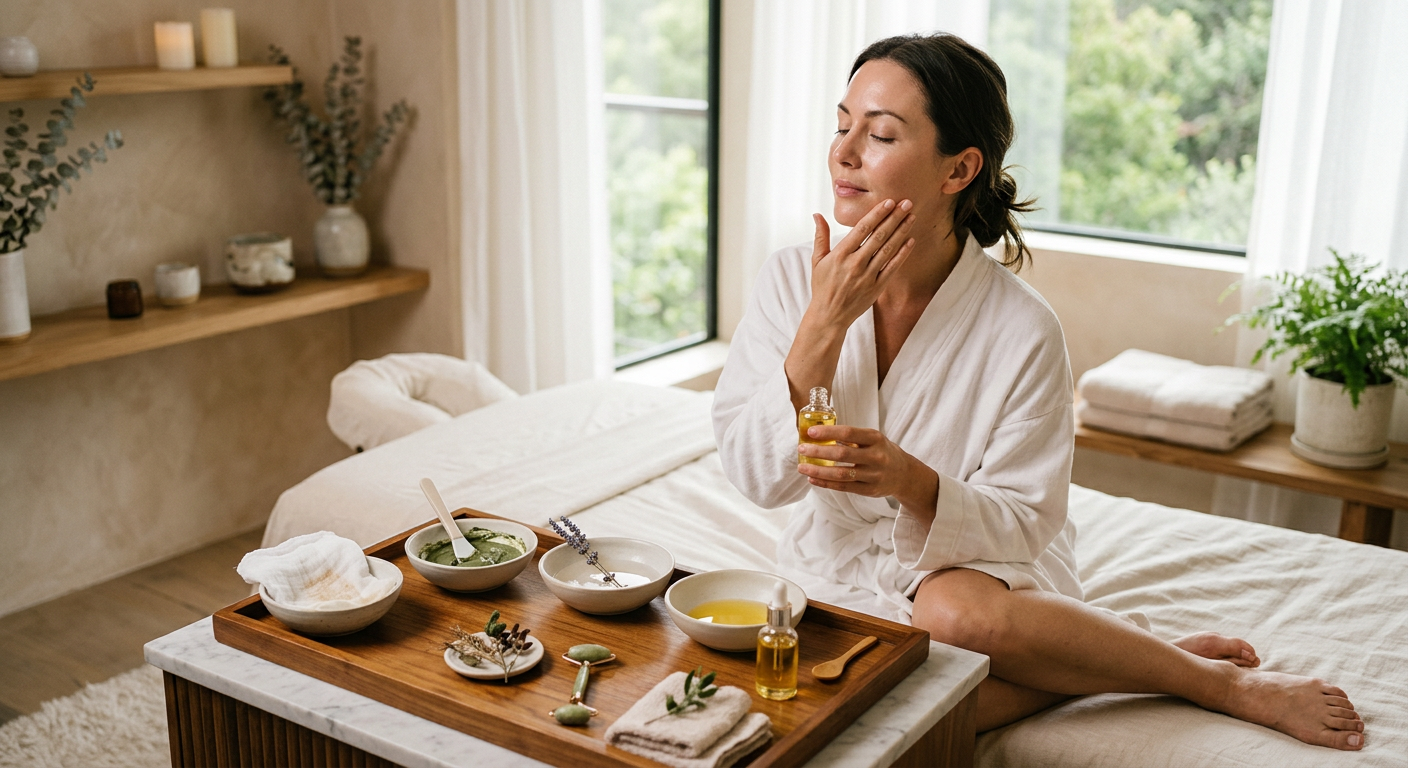
Order matters. A professional treatment moves logically from cleansing to hydration, and a home routine should follow the same flow. Mokara Spa Director Hubert Bazan recommends breaking a luxury spa day into simple, deliberate steps (Omni Hotels).
A reliable sequence you can adapt to your mood:
- Warm up: Shower or soak to open pores and loosen muscles
- Exfoliate: Dry brush your body, then use a gentle scrub
- Cleanse and mask: Wash your face and apply a clay or sheet mask
- Soak: Draw a bath with Epsom salts and oil while the mask works
- Hydrate: Moisturize head to toe while your skin is still damp
- Rest: Wrap up in your robe and sit with a cup of tea
Add a High-Value Wellness Layer
Professional spas increasingly add “wellness layers” that boost the experience at almost no cost (SpaSphere), and the same idea works at home. Try a five-minute facial lymphatic drainage massage, or the cold reset that’s been making the rounds: plunging your face into ice water to bring down puffiness (SpaSeekers).
Do Not Rush the Finish
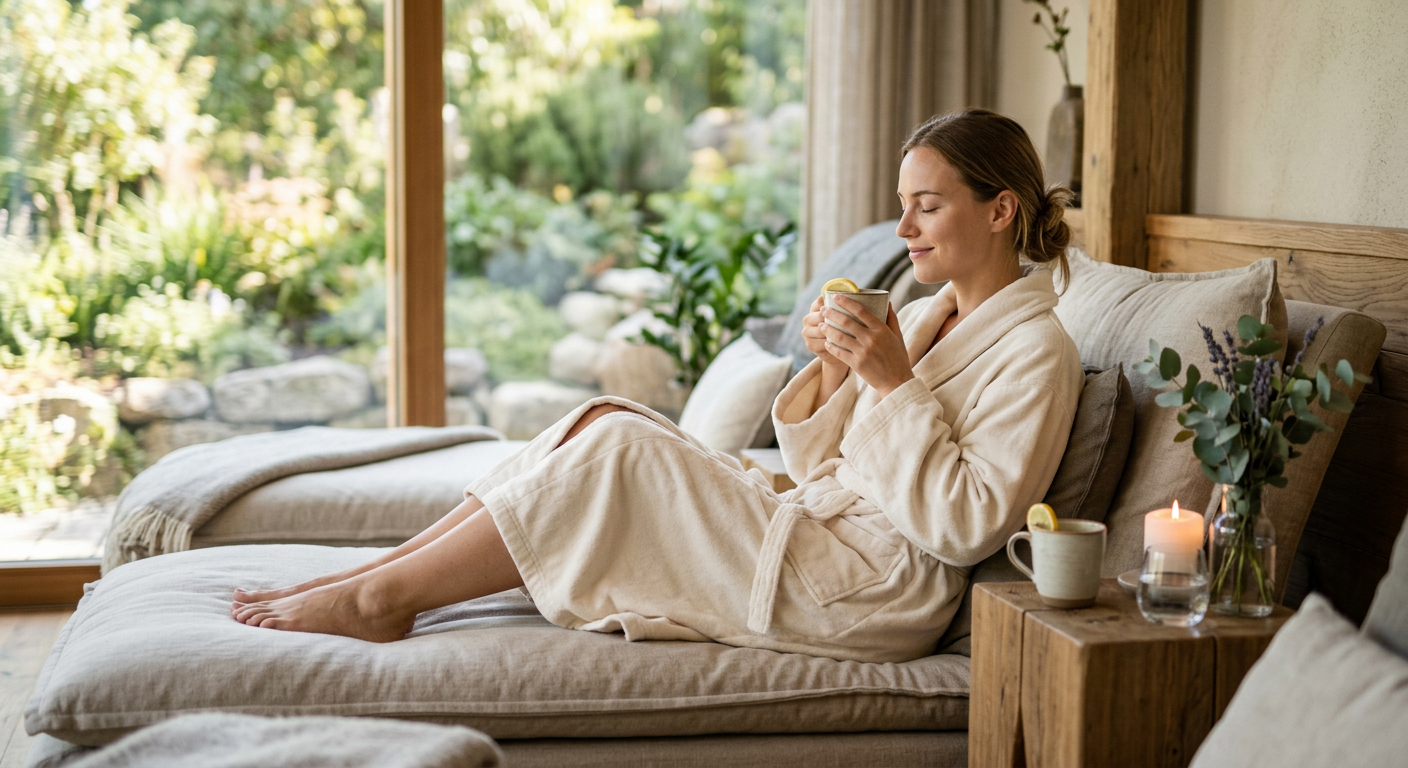
The end of your spa day matters as much as the start. The team at goop warns against jumping straight into the next task: “Part of the experience is slowing down—and allowing yourself to stay with that feeling” (goop).
Give yourself time to “return back to earth,” as facialist Elmurr describes it. Sit a little longer, breathe, let your body settle.
When you schedule the session changes how far the benefits stretch. An evening spa sets you up for deep sleep. A daytime one works best when you’ve got something relaxing lined up afterwards. Either way, protect the calm you just built.
Incorporate 2026 Wellness Trends at Home
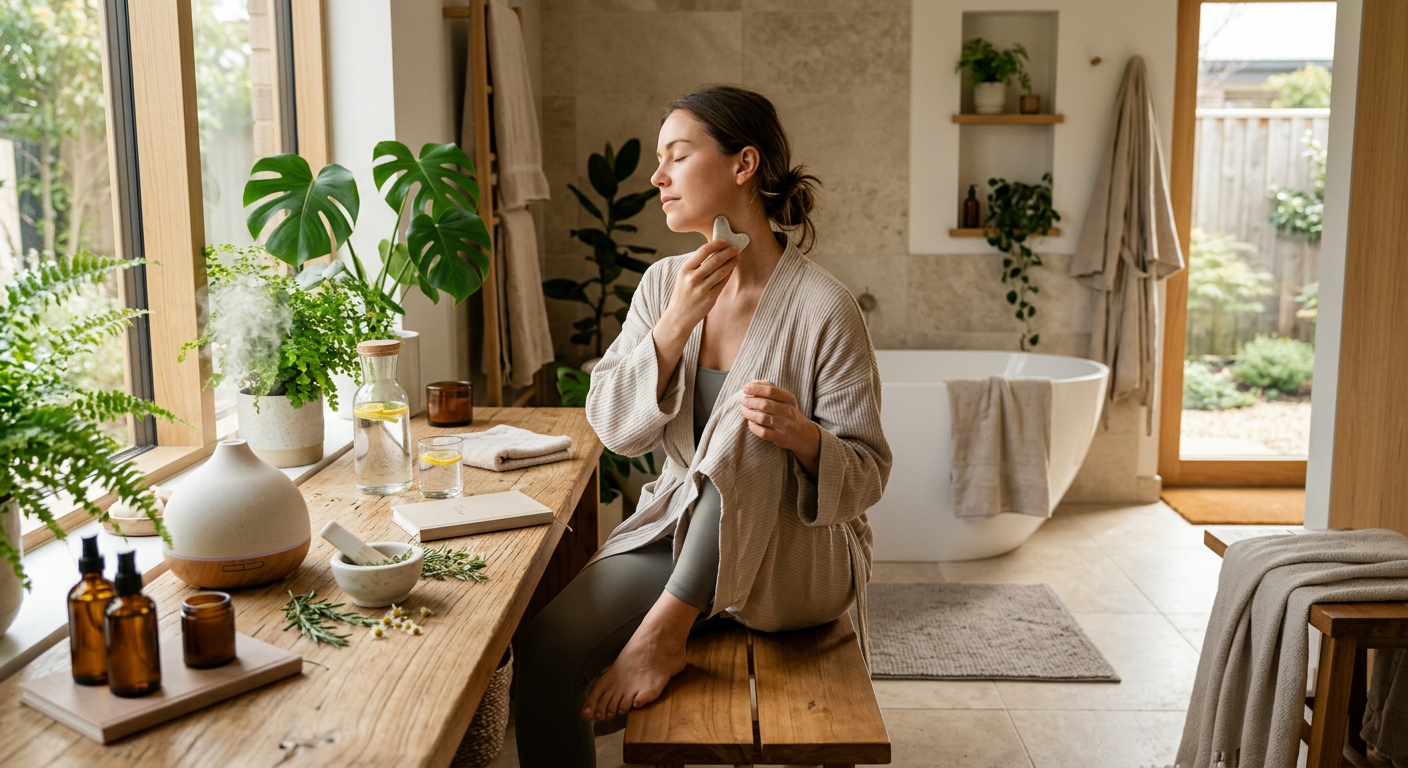
The line between spa treatment and daily self-care is getting blurry. Micro-habits are gaining ground, from micro-gratitude to quick daily resets that take a few minutes (SpaSeekers).
Movement-based self-care is climbing too. Soft Pilates and Reformer Pilates have each grown roughly 50% in interest, and walking pads have surged as people look for easy ways to stay active at home (SpaSeekers).
These slot into a spa ritual with no effort. Add ten minutes of gentle stretching before your bath, or close the evening with a short round of gratitude journaling. Small additions like these turn a one-off treat into something you’ll actually keep doing.
Key Takeaways and Next Steps
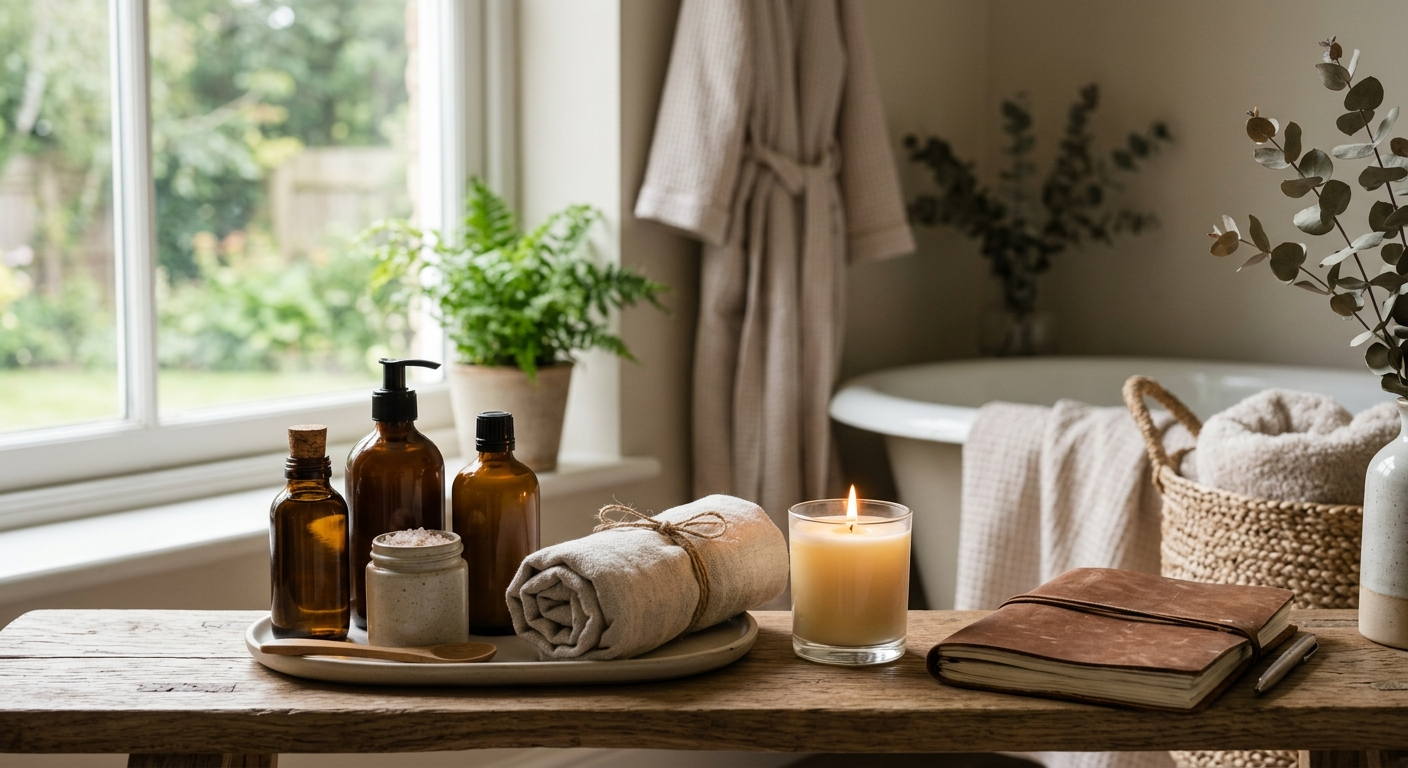
A good home spa day comes down to three things: intention, environment, and a handful of quality products. Set the mood first, keep your toolkit focused, follow a logical sequence, and let yourself slow down at the end.
Your action plan:
- Run the five-minute ambiance checklist before you start
- Buy one or two multi-use products this week
- Follow the six-step sequence at your own pace
- Add a wellness layer like lymphatic drainage or a cold reset
- Protect your calm and don’t rush back into your day
Pick a night this week, block off 90 minutes, and take the escape you keep putting off. The first at-home spa session is the hardest one to schedule and the easiest to get hooked on.
Frequently Asked Questions
Q: How much does it cost to create a home spa experience?
You can start for $30–$50 using drugstore products and things you probably already own, like candles and towels. A fuller setup with quality skincare and comfort items runs $100–$200, still less than one or two professional visits.
Q: How long should an at-home spa day last?
Most people find 60 to 90 minutes about right, enough to move through a full sequence without feeling rushed. If time is short, a focused 30-minute session with a mask and a soak still delivers real benefits.
Q: What are the essential products for a home spa?
Start with a cleanser, an exfoliant, a face mask, a body moisturizer, and Epsom salts for soaking. Add candles or essential oils for ambiance and a plush robe for the finishing touch.
Q: What is the best time of day for a home spa session?
Evening sessions set you up for deep, restorative sleep and need no follow-up plans. Daytime sessions work well when you’ve scheduled something relaxing afterwards to extend the calm.
Q: Can I recreate professional spa treatments at home?
Yes. Facial lymphatic drainage massage, dry brushing, and cold-water face plunges are simple to learn and need little or no equipment. They mirror the wellness add-ons professional spas now offer.
Q: How often should I do a home spa day?
Once a week is sustainable for most people, but even a monthly session offers meaningful stress relief. Consistency matters more than frequency, so pick a schedule you can actually keep.