



Walk into any office, gym, or coffee shop and take a discreet sniff. The perfume clouds of a decade ago have thinned out. In their place is something quieter: skin scents, the close-to-skin fragrances that smell like a better version of you rather than a bottle. Millions of people now use them as their default way to smell. The numbers back that up. The global perfume market was valued at USD 53.04 billion in 2025 and is projected to reach USD 87.17 billion by 2034, with subtle, skin-friendly compositions leading much of that growth (Fortune Business Insights).
So why do skin scents keep winning? Three things are working together: culture, chemistry, and commerce.
What Exactly Is a Skin Scent?
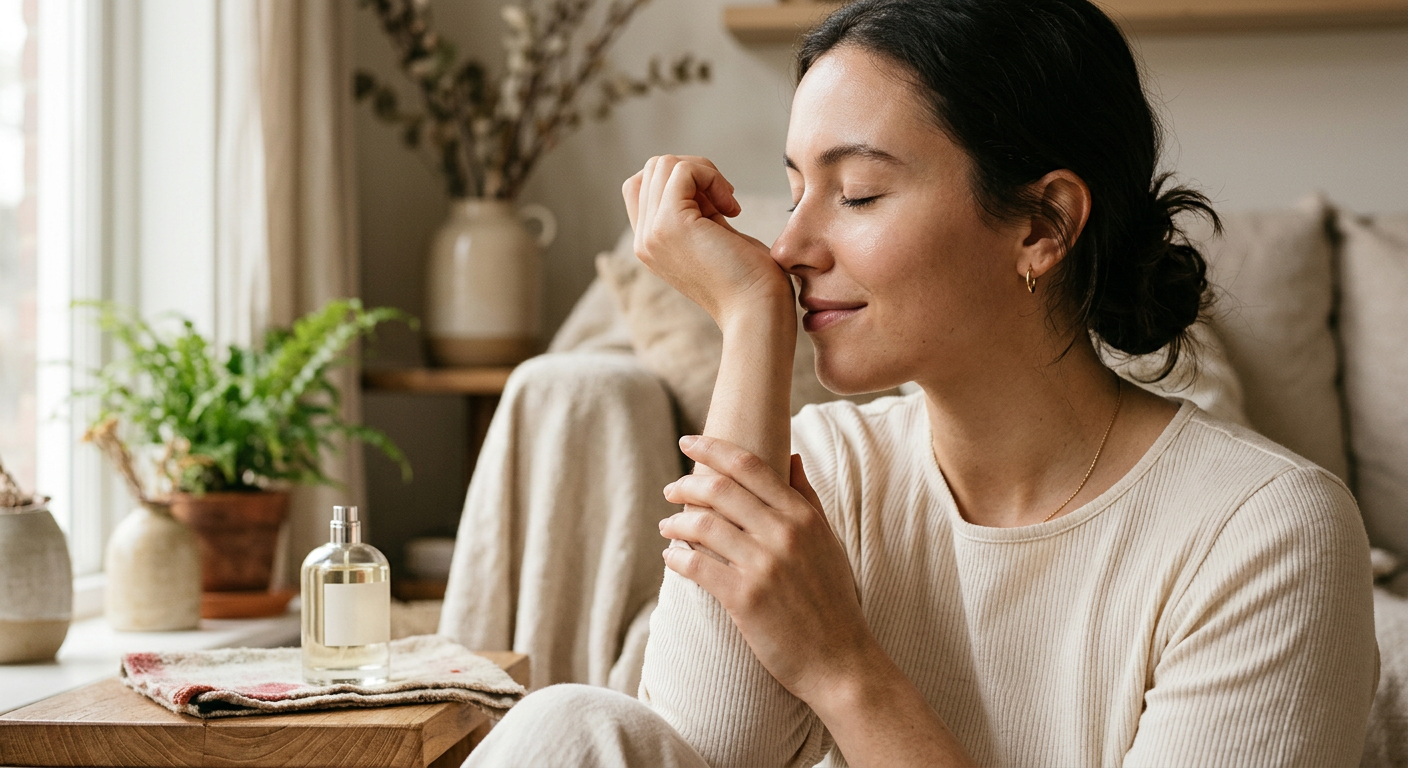
A skin scent, sometimes called a “second skin” fragrance, is a perfume built to sit close to your body rather than project across a room. It creates a soft, warm aura that other people notice only when they get near you.
These fragrances lean on musks, clean woods, light florals, and comforting notes like cashmeran, a synthetic material meant to evoke a cashmere blanket. The composition reads as clean, put-together, and effortless.
The Signature Notes
Most skin scents share a recognizable DNA. Learn these building blocks and you can spot one before you spray.
- White musks — soft, laundry-clean warmth that mimics bare skin
- Cashmeran — a cozy, slightly sweet woody note that adds comfort
- Ambrette (musk mallow) — a natural, skin-like musk
- Sheer florals — iris, light jasmine, or magnolia for softness
- Clean woods — sandalwood and blond cedar for a smooth base
The Cultural Shift Toward Quiet Luxury
Skin scents didn’t rise in a vacuum. They mirror a broader cultural pivot away from loud displays and toward understated confidence.
The “quiet luxury” movement, which prizes quality over logos and subtlety over spectacle, has reshaped fashion and beauty alike. In fragrance, that means sheerer structures and “less but better” compositions, as Ashlee Posner, founder and CEO of lucént, describes it (BeautyMatter).
Overstimulation Fatigue Is Real
There’s a wellness angle too. After years of sensory overload, plenty of people crave calm, and a heavy fragrance can feel like one more thing shouting for attention.
Fragrance-free workplaces have become common, especially across Western offices. That environment rewards fragrances that smell clean and intentional without triggering complaints, which is exactly the space skin scents occupy (YouTube).
Premium Demand Fuels the Category
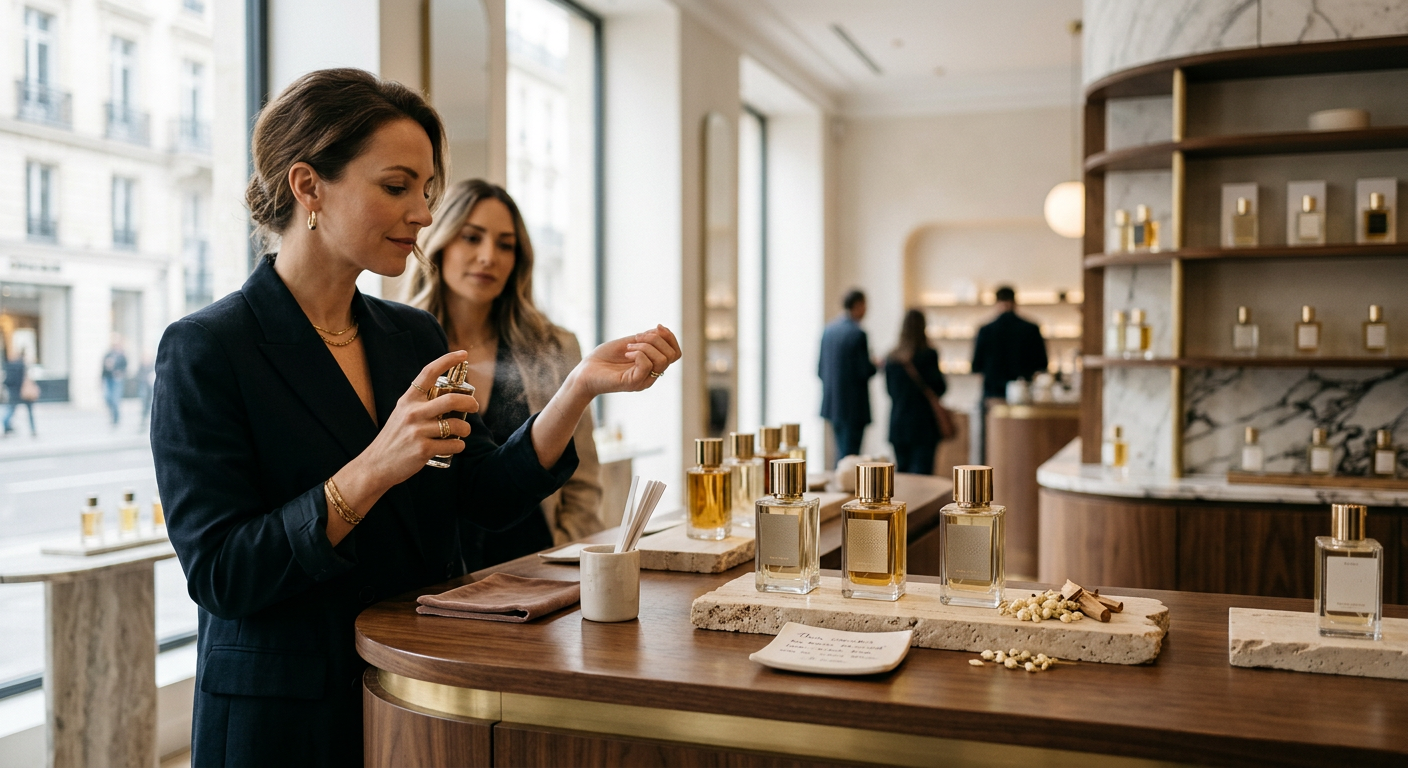
Skin scents thrive in the premium tier, and premium is where the money is. The premium segment is expected to lead the perfume market with a 56.2% share in 2026, driven by consumer interest in luxury, exclusivity, and personalized experiences (Coherent Market Insights).
Shoppers increasingly want superior quality, longer wear, and a scent nobody else at the party is wearing. Skin scents deliver perceived sophistication precisely because they feel refined rather than aggressive.
High Concentration Meets Subtle Projection
Subtle does not mean weak, and this is where most people get it wrong. The perfume type segment, which carries the highest fragrance concentration and a large share of essential oils, is projected to hold 33.98% of the market in 2026, with staying power of 6 to 8 hours (Fortune Business Insights).
Well-made skin scents use rich concentrations to achieve longevity while keeping projection low. The fragrance lasts through the workday but never overwhelms the elevator.
Why Skin Scents Perform Differently on You
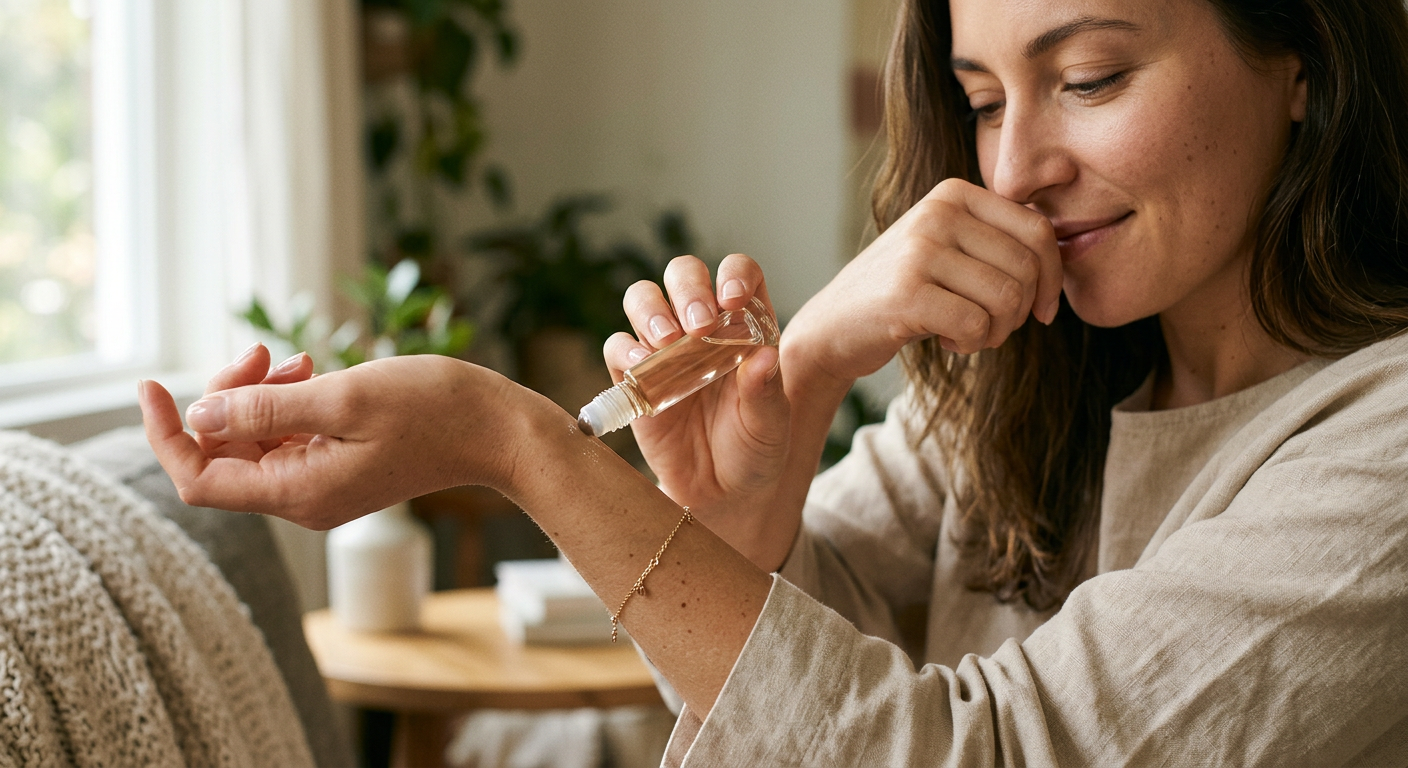
Part of the appeal is personalization. A skin scent literally becomes yours, because your skin chemistry shapes how it smells.
Skin type plays a major role. According to Michael Donovan, founder of London perfume line St Giles, “Perfumes tend to last longer and smell more intense on oily skin because the skin oils capture and hold fragrance molecules” (Alpha Aromatics).
Skin Type and Scent Performance
Use this quick reference to predict how a skin scent will behave on you.
| Skin Type | How Fragrance Behaves | Best Approach |
|---|---|---|
| Oily | Amplifies and extends scent; notes read more intense | Choose lighter, cleaner compositions |
| Dry | Absorbs and fades faster; less projection | Moisturize first; reapply midday |
| Normal | Balanced wear and projection | Most skin scents perform as intended |
| Sensitive | May react to synthetics | Look for skin-friendly, low-allergen materials |
That individuality is a selling point. A skin scent that smells a little different on you than on your friend feels like a signature rather than a mass-market product.
The Gen Z and Unisex Connection
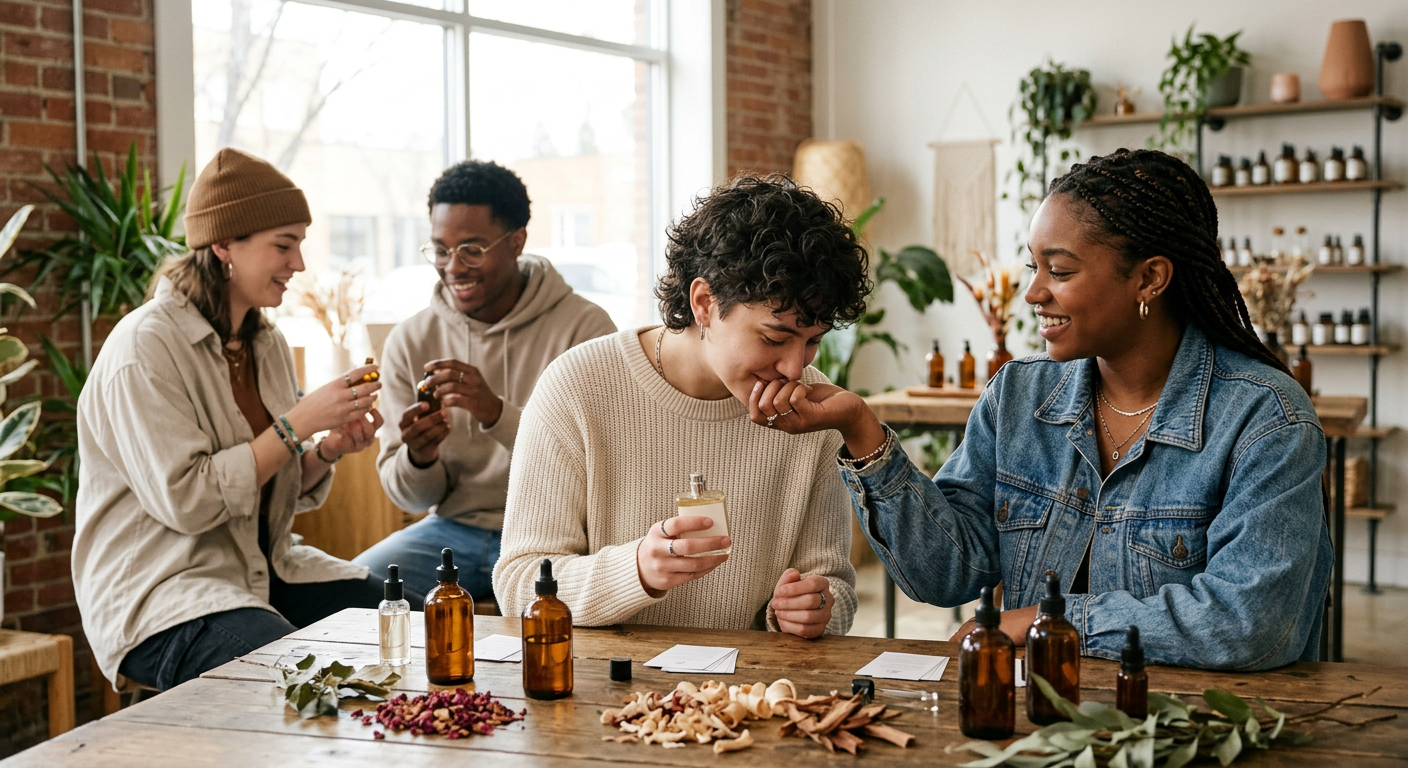
Younger buyers accelerated the skin scent boom. Gen Z gravitates toward fragrances that blur gender lines and prioritize authenticity over tradition.
Unisex launches rose to 40% of all new fragrance entries in 2024, largely driven by Gen Z (Scento). Skin scents fit this shift naturally, since their clean, musky, woody profiles rarely read as strictly masculine or feminine.
Sampling Culture Lowers the Risk
Discovery habits changed too. Direct-to-consumer subscription sampling is growing 16.2% a year as buyers test smaller sizes before committing to a full bottle (Scento).
Because skin scents perform so differently from one person to the next, sampling matters more here than in most categories. Buyers who try before they buy tend to land on subtle, wearable options, which gives the category another push. Online sales, expanding 13.95% annually, make that experimentation even easier.
What This Means for Buyers and Brands

For consumers, skin scents offer versatility that few loud fragrances can match. They work in scent-restricted offices, on dates, and at the gym without taking over the room.
For brands, the category lines up with several trends at once: quiet luxury aesthetics, clean-label preferences, regulatory pressure on allergens, and Gen Z’s unisex demand. That convergence is why “close-to-skin” is a phrase you’ll keep seeing on new launches through 2026.
If you’re building or refining a fragrance wardrobe, a versatile skin scent earns its place as a reliable everyday anchor. Pair it with a bolder statement fragrance for evenings and you’ve covered nearly every occasion.
Conclusion
Skin scents dominate because they sit at the intersection of culture, chemistry, and commerce. They answer a cultural craving for subtlety, reward premium formulation, personalize to individual skin chemistry, and appeal to the unisex-minded Gen Z buyers driving 40% of new launches.
With the premium segment holding a 56.2% market share and the overall perfume market climbing toward USD 87 billion by 2034, the momentum behind quiet, close-to-skin fragrances shows no sign of slowing.
Ready to find yours? Order a discovery sample set, test a few skin scents against your own skin chemistry, and commit only to the one that feels unmistakably like you.
Frequently Asked Questions
Q: What is the difference between a skin scent and a regular perfume?
A skin scent projects softly and stays close to your body, creating an intimate aura rather than filling a room. Regular perfumes often project more aggressively and are noticeable from several feet away.
Q: Do skin scents last as long as stronger perfumes?
Yes, many do. Well-formulated skin scents use high fragrance concentrations that can last 6 to 8 hours, even though their projection stays low (Fortune Business Insights).
Q: Why does my skin scent smell different than it does on my friend?
Your skin chemistry, especially whether your skin runs oily or dry, changes how fragrance molecules develop. Oily skin tends to amplify and extend scents, while dry skin absorbs and fades them faster.
Q: Are skin scents good for people with fragrance sensitivities?
Often, yes. Many skin scents use skin-friendly, low-allergen materials that read as premium, though sensitive individuals should still patch-test and check ingredient lists first.
Q: Are skin scents unisex?
Most are. Their clean, musky, and woody profiles rarely lean strictly masculine or feminine, which is why they align with the rise in unisex launches now making up 40% of new fragrances (Scento).
Q: What is the best way to shop for a skin scent?
Order a sample or discovery set before buying full size, since skin scents vary so much by individual chemistry. Subscription sampling services make this affordable and lower the risk of an expensive mistake.